DIY Off-Grid Shower Setups for Summer Camping
An off-grid shower makes it possible to stay clean while camping, living without utility hookups, or dealing with an extended power outage. You do not need a permanent bathroom or a conventional water heater to get a useful rinse.
This post contains affiliate links. I may earn a small commission at no extra cost to you. Learn more.
Depending on your available water, fuel, and equipment, you can build a simple gravity-fed shower, warm water with sunlight or a camp stove, or use a rechargeable pump for more consistent flow.
This guide covers five practical off-grid shower systems, including the materials you need, setup instructions, advantages, limitations, and important safety precautions. For broader camping preparation, see our Ultimate Camping Guide.
Use clean water, test the temperature before bathing, and make sure any elevated water container is securely supported. Fuel-burning water heaters must be operated outdoors according to the manufacturer’s instructions. Never operate a propane camping water heater inside a tent, vehicle, bathroom, or other enclosed space.
Quick Comparison: 5 DIY Off-Grid Shower Systems
| Shower System | Heating Method | Best For | Main Limitation |
|---|---|---|---|
| Solar Shower Bag | Sunlight | Weekend camping | Weather-dependent heating |
| Wood-Heated Bucket Shower | Campfire or outdoor stove | Remote camps with permitted fires | Requires careful handling of hot water |
| Gravity-Fed Shower | Preheated or unheated water | Cabins and basecamps | Requires a secure elevated reservoir |
| Propane-Powered Shower | Propane | Family car camping and outdoor wash stations | Requires fuel, water supply, and strict outdoor safety |
| Bucket-and-Pump Shower | Preheated or unheated water | Portable camping and emergency hygiene | Depends on battery charge |
Our assessment: A solar shower bag is one of the simplest starting points for occasional camping. A rechargeable pump offers greater flexibility, while a gravity-fed setup can work well at a semi-permanent camp. Propane systems provide more convenient hot water but require additional equipment and careful operation.
How to Choose the Right Off-Grid Shower
Water Capacity
Water conservation is important when every gallon must be carried, pumped, or stored. A short shower using an on-off sprayer may require only a few gallons, but actual consumption depends on flow rate and how long the water runs.
For example, a shower flowing at one gallon per minute uses five gallons during five minutes of continuous operation. Turning off the flow while soaping can substantially reduce consumption.
Heating Method
- Solar heating: Requires no fuel but depends on sunlight, air temperature, and heating time.
- Wood or stove heating: Works when a safe, permitted outdoor heat source is available.
- Propane heating: Offers on-demand heating with compatible equipment and adequate fuel.
- Unheated water: Can be practical in warm conditions when a hot shower is unnecessary.
Portability and Setup
Backpackers generally benefit from small, lightweight systems, although carrying enough water remains a significant weight consideration. Vehicle campers can accommodate larger reservoirs, pumps, and heaters.
For cabins or long-term basecamps, a securely mounted gravity-fed system may be more convenient than repeatedly assembling portable equipment.
Water Source and Drainage
Plan where your water will come from and where used water will go. Follow campground rules for graywater disposal. Keep soap and wash water away from streams, lakes, and other natural water sources, even when using products marketed as biodegradable.
1. Solar Shower Bag: Simplest Off-Grid Shower
Best for: Weekend camping, vehicle camping, and simple warm-weather rinses.
A solar shower bag is one of the easiest ways to shower without electricity. The bag holds water, absorbs solar heat, and uses gravity to move water through a hose and shower head.
The Coleman Solar Shower is an example of this type of system. Its compact design makes it useful for campsites where you have a suitable place to heat and suspend the bag.
Materials Needed
- Solar shower bag
- Clean water
- Secure hanging support rated for the filled bag’s weight
- Water thermometer, if available
- Privacy shelter or designated outdoor washing area
How to Set It Up
- Fill the bag: Add clean water without exceeding the manufacturer’s stated capacity.
- Heat in sunlight: Place the bag in a sunny location according to its instructions. Heating time varies with weather and water temperature.
- Check the temperature: Test the water carefully before bathing. Solar bags can become unexpectedly hot.
- Hang securely: Use a strong support capable of safely carrying the full bag.
- Shower: Open the valve to rinse, close it while soaping, and reopen it for a final rinse.
Advantages
- No electricity or fuel required.
- Simple operation with few moving parts.
- Portable and relatively easy to store.
- Useful for occasional camping and emergency washing.
Limitations
- Heating performance varies with sunlight and weather.
- Gravity flow may be weaker than a pumped shower.
- A filled bag can be heavy and difficult to hang.
- Hot water must be checked before use.
Recommended Amazon Gear: Coleman Solar Shower
A practical option for campers who want a straightforward solar-heated shower without carrying a separate pump or fuel source.

2. Wood-Heated Bucket Shower: Hot Water Without Propane
Best for: Remote camps, off-grid cabins, and locations where outdoor fires or camp stoves are permitted.
This method involves heating water separately in a suitable cooking pot, mixing it with cooler water, and transferring it into a compatible shower container. The shower itself can operate through gravity or a pump.
You do not need to build a complicated wood-fired heat exchanger. Heating a manageable quantity of water in an ordinary outdoor cooking vessel is simpler and avoids many of the hazards associated with improvised pressurized heating systems.
Materials Needed
- Suitable metal pot for heating water
- Approved outdoor stove or permitted campfire
- Heat-resistant gloves
- Water thermometer
- Clean bucket or shower reservoir
- Gravity shower bag or compatible portable pump
How to Build and Use It
- Prepare the heating area: Set up a stable outdoor cooking location that complies with fire restrictions.
- Heat a manageable quantity: Warm water in a suitable pot while monitoring it carefully.
- Remove from heat: Use protective gloves and place the pot on a stable, heat-safe surface.
- Mix with cooler water: Add heated water gradually to a separate shower container containing cooler water.
- Test thoroughly: Stir and measure the mixed water temperature before anyone uses it.
- Shower: Use a gravity outlet or a pump approved for the water temperature.
Never pour boiling water directly into an ordinary plastic shower bag or pump reservoir. Never connect a sealed container directly to a fire or heat source. Use comfortably warm water, test it before bathing, and keep children away from hot pots and transfer areas.
Advantages
- Does not require a propane water heater.
- Can work in cloudy or cold conditions.
- Uses common camping equipment.
- Can be paired with a gravity shower or rechargeable pump.
Limitations
- Requires time and attention to heat water safely.
- Campfire use may be prohibited during burn bans.
- Handling hot water creates burn and spill risks.
- Less convenient than an on-demand heater.
Best approach: Use this as a water-heating method, not as a reason to build a complicated homemade boiler. A simple bucket and compatible shower attachment are usually sufficient.
3. Gravity-Fed Shower: Best for a Basecamp or Off-Grid Cabin
Best for: Semi-permanent campsites, hunting cabins, and outdoor washing stations.
A gravity-fed shower uses an elevated water reservoir to create flow without electricity. Water travels from the container through a hose to a valve or low-flow shower head.
Because gravity creates relatively low pressure, the system works best with short, unrestricted tubing and a shower head designed for low-pressure operation.
Materials Needed
- Clean water reservoir with a suitable outlet
- Secure platform or mounting structure rated for the filled reservoir
- Compatible hose and fittings
- Shutoff valve
- Low-pressure shower head or simple spray outlet
- Hose clamps or manufacturer-approved connectors
How to Build It
- Choose the reservoir: Select a container suitable for water storage and fitted with a compatible outlet.
- Build or select the support: Use a stable structure engineered to hold the reservoir’s full weight.
- Connect the outlet: Attach the hose and shutoff valve using compatible fittings.
- Install the shower head: Choose an outlet that functions at low pressure.
- Test with a small amount of water: Check for leaks, movement, and inadequate flow before filling the reservoir.
- Fill and operate: Confirm the support remains stable, then open the valve to shower.
A gallon of water weighs approximately 8.34 pounds. A ten-gallon reservoir therefore holds more than 83 pounds of water before including the weight of the container and mounting equipment.
Do not place a heavy reservoir on an improvised PVC frame, unstable ladder, or weak tree branch. A falling water container can cause serious injury. Use a properly rated support and keep the reservoir securely restrained.
Advantages
- Requires no electrical power.
- Quiet operation.
- Few mechanical parts to maintain.
- Well suited to a stationary outdoor shower location.
Limitations
- Requires a secure elevated water supply.
- Flow pressure may be limited.
- Reservoirs require cleaning and refilling.
- Water must be heated separately if a warm shower is desired.
4. Propane-Powered Off-Grid Shower: Best for On-Demand Hot Water
Best for: Family car camping, outdoor wash stations, and off-grid locations where reliable hot water is a priority.
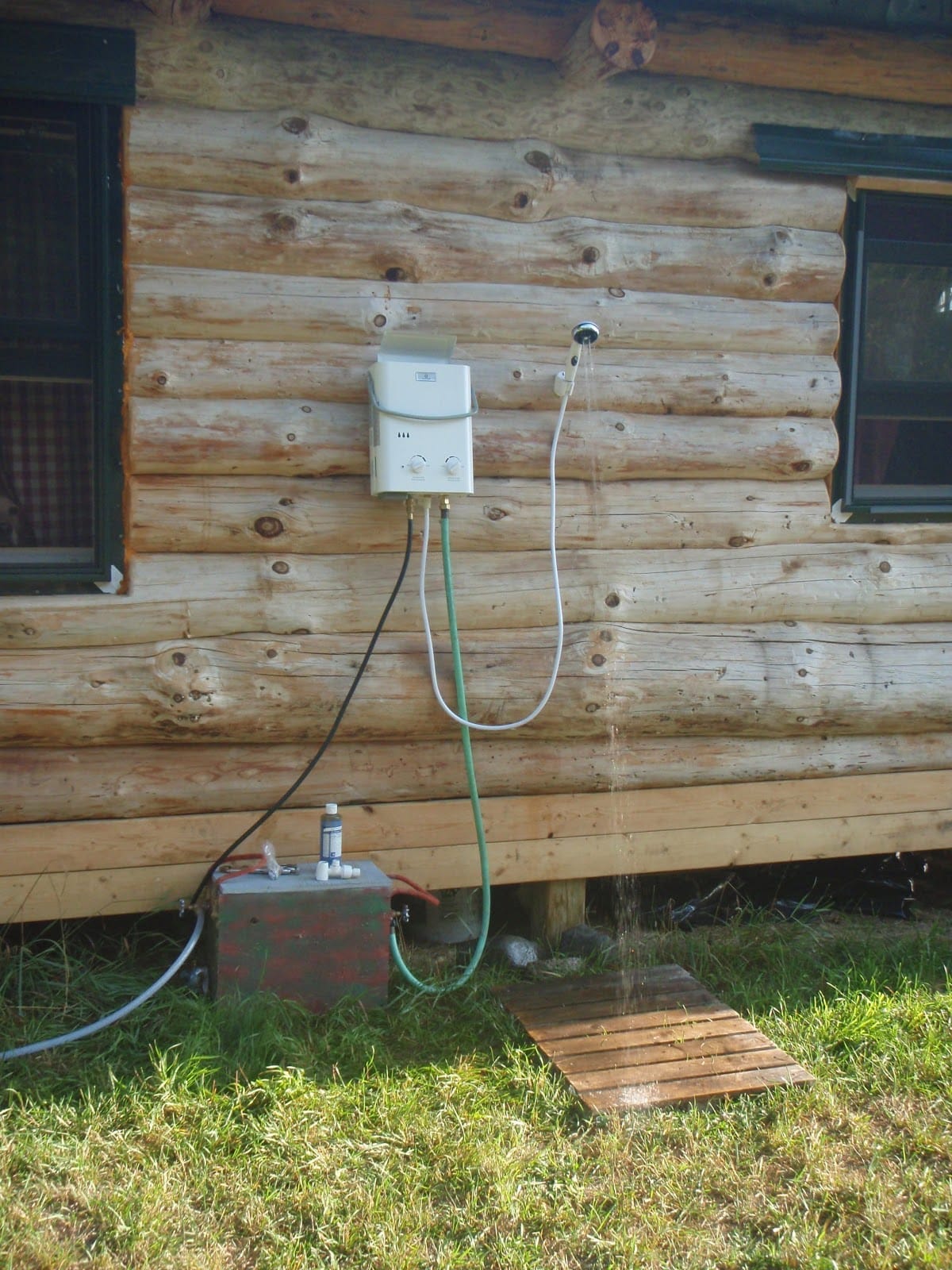
A purpose-built portable propane water heater can warm water as it flows through the unit. Compared with a solar bag or manually heated bucket, this arrangement offers more convenient temperature adjustment when the heater has an adequate water supply and fuel source.
The CAMPLUX portable water heater is an example of the equipment used for this type of setup. Check the exact model’s instructions for required water pressure, compatible fuel supply, mounting method, and permitted uses.
Materials Needed
- Portable outdoor propane water heater
- Manufacturer-approved propane supply, hose, and regulator
- Compatible water supply or pump
- Water inlet and outlet hoses
- Suitable shower head
- Approved mounting location or stable support
- Water thermometer
How to Set It Up
- Choose an outdoor location: Position and mount the heater exactly as directed by the manufacturer, away from enclosed or poorly ventilated areas.
- Connect the water supply: Use compatible hoses and the required water pressure or pump arrangement.
- Connect propane: Follow the heater’s instructions for the correct cylinder, regulator, and gas connections.
- Inspect the connections: Perform the manufacturer-recommended leak checks before operation.
- Start the heater: Follow the prescribed ignition and startup procedure.
- Check outlet temperature: Adjust the heater and water flow to obtain comfortably warm water before bathing.
- Shut down safely: Turn off the heater and fuel supply according to the instructions, then drain and store equipment as directed.
Portable propane camping water heaters can produce deadly carbon monoxide. Operate outdoor-rated models outdoors only, with the clearances specified by the manufacturer. Never run one inside a tent, RV, vehicle, garage, enclosed shower stall, or other occupied enclosure. A carbon monoxide alarm does not make indoor use safe.
Advantages
- Hot water without waiting for solar heating.
- Useful for multiple showers when water and fuel are available.
- Can support a more comfortable outdoor washing station.
- Some models offer adjustable water temperature and flow.
Limitations
- Requires propane and a compatible water supply.
- More equipment to transport and maintain.
- Must be operated according to strict outdoor safety requirements.
- Higher initial equipment cost than a simple solar bag.
Recommended Amazon Gear: CAMPLUX Portable Water Heater
Consider a purpose-built outdoor heater rather than attempting to construct an improvised propane heating system. Verify the current listing’s specifications and installation requirements before buying.

5. Bucket-and-Pump Shower: Best Portable Electric Option
Best for: Vehicle camping, emergency hygiene, and portable outdoor washing.
A rechargeable camping shower pump provides water flow from a bucket or other suitable reservoir. Unlike a gravity shower, it does not require lifting several gallons of water overhead.
It is especially useful when you want to shower beside a vehicle, at a campsite, or near an off-grid cabin without installing permanent plumbing.
Materials Needed
- Clean bucket or compatible water container
- Rechargeable camping shower pump
- Compatible shower hose and spray head
- Clean water at a safe bathing temperature
- Charging cable or compatible backup power source
- Suitable outdoor washing area
How to Set It Up
- Charge the pump: Fully charge it before leaving home.
- Prepare the water: Fill the bucket with clean water. If warm water is desired, heat it separately and allow it to reach a temperature permitted by the pump manufacturer.
- Connect the hose: Attach the shower head and tubing according to the pump instructions.
- Position the pump: Place the water intake or submersible portion into the container as directed.
- Start the flow: Turn on the pump and check the water temperature.
- Conserve water: Pause the flow while applying soap, then rinse.
- Clean and store: Flush and dry components according to the manufacturer’s instructions.
Advantages
- Does not require an elevated reservoir.
- Portable and relatively easy to assemble.
- Works with water heated by several different methods.
- Convenient for quick outdoor rinses.
Limitations
- Battery charge limits operating time.
- Water must be heated separately if desired.
- Flow rate affects how quickly the reservoir empties.
- Pumps have temperature and water-quality restrictions.
Recommended Amazon Gear: FLEXTAIL Rechargeable Shower
A rechargeable shower is a flexible option for campers who already have a suitable water container and want portable water flow without a permanent installation.

Which Off-Grid Shower System Is Best for Your Situation?
- Weekend camping: Choose a solar shower bag for simplicity and minimal equipment.
- Camping without reliable sunshine: Heat water separately and use a bucket or gravity shower.
- Family car camping: Consider an outdoor-rated propane heater when you have sufficient water, fuel, and space for safe operation.
- Remote cabin or hunting camp: A properly supported gravity-fed system can provide a convenient permanent or semi-permanent arrangement.
- Emergency hygiene during a power outage: A bucket-and-pump system can work well if the battery is charged, while a gravity system offers a non-electric alternative.
No single system is ideal for every situation. Water availability, heating requirements, portability, and maintenance matter more than choosing the most complicated equipment.
How Much Water Does an Off-Grid Shower Use?
Water use depends on the shower’s flow rate and how long the spray remains on.
| Flow Rate | 3 Minutes of Flow | 5 Minutes of Flow |
|---|---|---|
| 0.5 gallon per minute | 1.5 gallons | 2.5 gallons |
| 1 gallon per minute | 3 gallons | 5 gallons |
| 1.5 gallons per minute | 4.5 gallons | 7.5 gallons |
These are calculated examples, not guaranteed flow rates for the products mentioned above. A simple rinse-soap-rinse routine can help stretch a limited water supply.
If you are planning a longer emergency, read our Long-Term Water Storage Guide before allocating stored water to bathing.
Off-Grid Shower Safety and Hygiene
Use Water Appropriate for Bathing
Clean water is preferable, particularly for washing the face or cleaning cuts and other broken skin. Untreated natural water can contain microorganisms and other contaminants. Avoid swallowing shower water, and use properly treated water when necessary.
Prevent Burns and Scalds
Always test water temperature before use. Never assume water heated by sunlight, fire, or propane is automatically safe. Be especially careful when bathing children or anyone who may have difficulty sensing or reacting to hot water.
Dispose of Graywater Responsibly
Follow the rules of the campsite or land manager. Use designated wastewater facilities when available. Do not discharge soapy water directly into lakes, rivers, streams, or drinking-water sources.
Protect Privacy and Prevent Slips
Choose a level, stable washing area. A nonslip mat and a properly secured privacy shelter can make showering safer and more comfortable. Keep electrical charging equipment away from water unless specifically designed and rated for wet environments.
Maintenance and Troubleshooting
Weak Water Flow
- Check that the reservoir contains enough water.
- Inspect hoses for kinks or blockages.
- Clean the shower head and inlet filter as instructed.
- For gravity systems, confirm the reservoir is sufficiently elevated and the shower head supports low-pressure operation.
- For rechargeable pumps, check the battery and intake position.
Leaks Around Connections
- Inspect seals, washers, and hose connections.
- Use appropriate thread-sealing materials only where specified.
- Replace damaged tubing and fittings.
- Avoid overtightening plastic connectors.
Unpleasant Odors or Dirty Water Containers
Drain and clean shower bags, hoses, and buckets according to manufacturer instructions. Allow components to dry thoroughly before storage. Avoid mixing household cleaning chemicals, and do not assume combining vinegar and baking soda provides reliable disinfection.
Cold-Weather Storage
Drain pumps, hoses, shower bags, and heaters before freezing conditions when required by the manufacturer. Trapped water can expand and damage fittings or internal components.
Battery and Propane Equipment
Recharge battery-powered showers before trips and follow safe storage instructions. For propane heaters, inspect hoses and connections, maintain required clearances, and follow the manufacturer’s maintenance and winterization procedures.
Frequently Asked Questions About Off-Grid Showers
How can I shower off-grid without electricity?
A solar shower bag or gravity-fed reservoir can provide water flow without electricity. You can warm the water with sunlight or heat it separately using a safe outdoor cooking method.
What is the cheapest DIY off-grid shower?
A basic gravity-fed container or solar shower bag is often among the least expensive approaches, especially if you already have a suitable water container and secure support. Costs depend on the equipment you own and current product prices.
Can a solar shower work on cloudy days?
It may provide some warming, but performance is less predictable with limited sunlight. In cooler or cloudy conditions, separately heated water may be more practical.
How much water do I need for one shower?
A short, carefully controlled rinse may use only a few gallons. Actual requirements depend on flow rate, bathing time, and whether you shut off the water while soaping.
Can I use a rechargeable camping shower with hot water?
Only if the water temperature falls within the manufacturer’s approved operating range. Some portable pumps are not designed for hot water. Check the specific product instructions before use.
Is a propane camping shower safe inside a tent?
No. Outdoor-rated propane camping water heaters must not be operated inside tents or other enclosed spaces. Carbon monoxide poisoning and fire are serious hazards. Follow the manufacturer’s outdoor installation and operation requirements.
Can I use an off-grid shower during a power outage?
Yes. Solar and gravity-fed showers do not need electricity, while a charged portable pump can provide water flow without household power. However, drinking water, sanitation, and other essential household needs should take priority when stored water is limited.
Related Camping and Emergency Preparedness Guides
- Ultimate Camping Guide
- Staying Fresh While Camping Without a Shower
- How to Stay Cool Without Power
- Long-Term Emergency Water Storage
- Permethrin Clothing and Gear Treatment
- How to Treat Bug Bites Naturally
Final Thoughts: Building the Right Off-Grid Shower
The best off-grid shower is one that matches your available water, heating method, and camping conditions.
A solar shower bag provides a simple starting point. A bucket-and-pump shower offers portable convenience. Gravity-fed systems are useful for longer-term camps, while propane water heaters can provide on-demand hot water when installed and operated safely outdoors.
Start with the simplest system that meets your needs. Prioritize clean water, safe temperatures, stable equipment, and responsible wastewater disposal before adding more complicated features.
A reliable off-grid shower does not need to be elaborate. It needs to be safe, practical, and easy to maintain.