
How to Choose the Best Waterproof Tent for Camping
Choosing the best waterproof tent involves more than finding a product labeled waterproof. A dependable camping tent needs a properly designed rainfly, sealed seams, a water-resistant floor, reliable poles, and enough ventilation to manage condensation.
This post contains affiliate links. I may earn a small commission at no extra cost to you. Learn more.
Heavy rain can expose weaknesses that are difficult to notice when shopping online. A tent may have waterproof fabric but still leak through poorly sealed stitching, door openings, or a floor placed in standing water.
Whether you’re preparing for weekend camping, backpacking, family trips, or emergency shelter, understanding how tent waterproofing works will help you choose a more dependable shelter.
This guide explains waterproof ratings, tent construction, different shelter styles, and the features that matter most when camping in wet weather.
For a broader camping setup, see The Ultimate Camping Guide.
Quick Answer: What Makes a Good Waterproof Tent?
Look for a tent with a full-coverage rainfly, factory-sealed or properly sealed seams, a bathtub-style floor, adequate ventilation, and a sturdy pole structure. Check the manufacturer’s hydrostatic-head ratings for the fly and floor, but don’t judge waterproof performance by a single number.
Best general choice: A quality double-wall tent with a full rainfly is a practical starting point for most three-season camping conditions.
1. What Makes a Tent Waterproof?
Most modern camping tents use coated or laminated fabrics to resist water penetration.
However, waterproof fabric alone does not guarantee a dry interior. Rain can enter through seams, doors, vents, damaged coatings, and areas where the inner tent touches the outer fly.
A dependable shelter manages water through several features working together:
- Water-resistant or waterproof fabric coatings.
- Properly sealed seams.
- A rainfly that provides adequate coverage.
- A floor designed to resist ground moisture.
- Well-positioned doors, vents, and zippers.
- A stable frame and effective guyline system.
For wet-weather camping, the entire tent system matters more than any single specification.
2. Understanding Tent Waterproof Ratings
One of the most useful specifications when comparing tents is the hydrostatic-head rating, often abbreviated HH.
What Is a Hydrostatic-Head Rating?
Hydrostatic head measures how much water pressure a fabric can resist before water penetrates it under a standardized test.
The result is typically expressed in millimeters (mm).
For example, a 1,500 mm rating means the material resisted pressure equivalent to a 1,500-millimeter column of water under the specified test conditions.
It does not mean the tent can be submerged to that depth, and it is not a measure of rainfall in milliliters.
Common Waterproof Ratings Explained
| Rating | Practical Interpretation |
|---|---|
| 1,000 mm | A modest rating found on some lightweight shelter fabrics; overall performance depends heavily on construction. |
| 1,500 mm | A common specification on three-season rainflies. |
| 2,000–3,000 mm | A higher water-pressure resistance rating that may be useful for demanding wet-weather applications. |
| 5,000 mm or higher | A relatively high rating often encountered on certain tent floors and heavier-duty fabrics. |
These are general comparisons, not guarantees of performance in specific storms.
A well-designed tent with a lower published rating can perform better than a poorly constructed tent advertising a much higher rating.
Rainfly Ratings Versus Floor Ratings
The rainfly sheds falling rain, while the floor must resist moisture and pressure from the ground.
Floor fabrics may need greater resistance to water pressure because kneeling, sleeping, or placing equipment on the floor concentrates force against wet ground.
Compare both specifications when the manufacturer provides them.
3. Why a Full-Coverage Rainfly Matters
A rainfly is the outer weather-resistant layer that protects the tent interior.
It redirects rainwater away from the sleeping compartment and helps create an air gap between the outer shelter and inner tent.
Full-Coverage Rainflies
A full-coverage fly extends close to the ground around much of the tent, while maintaining the clearances needed for ventilation.
These designs generally provide better protection against wind-driven rain than minimal roof-only covers.
Partial Rainflies
Partial rainflies cover less of the tent body.
They can reduce weight and improve airflow in favorable conditions, but exposed mesh, doors, and wall panels may be more vulnerable during blowing rain.
Vestibules
A vestibule is a covered area outside the main sleeping compartment.
It provides space for shoes, backpacks, and other wet equipment without bringing everything inside.
For frequent rainy-weather camping, a full rainfly with a usable vestibule is worth prioritizing.
4. Seam Sealing: One of the Most Important Waterproof Features
Stitching creates small holes in tent fabric. Without appropriate protection, these areas can allow water to enter.
Factory-Taped Seams
Some manufacturers apply waterproof seam tape during production.
This helps protect stitched areas, although the tape can deteriorate with age, heat, and storage conditions.
Seam-Sealed Construction
Other tents use liquid seam sealant applied to specific seams.
Some lightweight shelters require owners to seal certain seams before their first trip.
Always check the manufacturer’s instructions before applying a product.
Silicone and Polyurethane Coatings
Tent fabrics may use silicone, polyurethane, or other coatings.
These materials have different properties and maintenance requirements.
Importantly, seam sealants are not universally interchangeable. Use a product compatible with the tent’s fabric and coating.
5. Choose a Tent With a Reliable Waterproof Floor
Water can enter a tent from below even when the rainfly performs well.
Wet ground, poor drainage, worn coatings, and standing water can all contribute to floor leakage.
Bathtub-Style Floors
A bathtub floor extends the waterproof floor material several inches up the lower walls.
This positions the floor-to-wall seams above the ground and helps reduce water entry.
Floor Material and Durability
Pay attention to fabric durability, waterproof coating, and construction quality.
Lightweight floors reduce pack weight but may need more careful handling on rocky or abrasive surfaces.
Do You Need a Tent Footprint?
A footprint can help protect the tent floor from abrasion and sharp debris.
However, it must fit correctly. A footprint extending beyond the tent floor can collect rainwater and direct it underneath the shelter.
Learn more in our Tent Footprint vs. Tarp Comparison.
6. Best Types of Waterproof Tents for Different Camping Needs
There is no single tent design that is best for every camper.
Consider how the shelter will be transported, how many people will use it, and the weather conditions expected.
Backpacking Tents
Backpacking tents emphasize manageable weight, compact packed dimensions, and efficient use of space.
Many use double-wall construction with a waterproof rainfly and breathable inner compartment.
Lightweight designs can perform well in rain, but weight-saving materials and smaller vestibules may involve tradeoffs.
See our Lightweight Two-Person Tent Guide for additional options.
Family Camping Tents
Family tents typically provide more floor space, headroom, and storage capacity.
Some include multiple rooms, large doors, and extended awnings.
Because these tents have larger wall surfaces, pole stability, guyline placement, and rainfly coverage are especially important during storms.
Dome Tents
Dome tents use curved poles to create a rounded structure.
Their shape can help shed rain and distribute some wind loads, although performance varies considerably between models.
Quality of construction and proper anchoring matter more than shape alone.
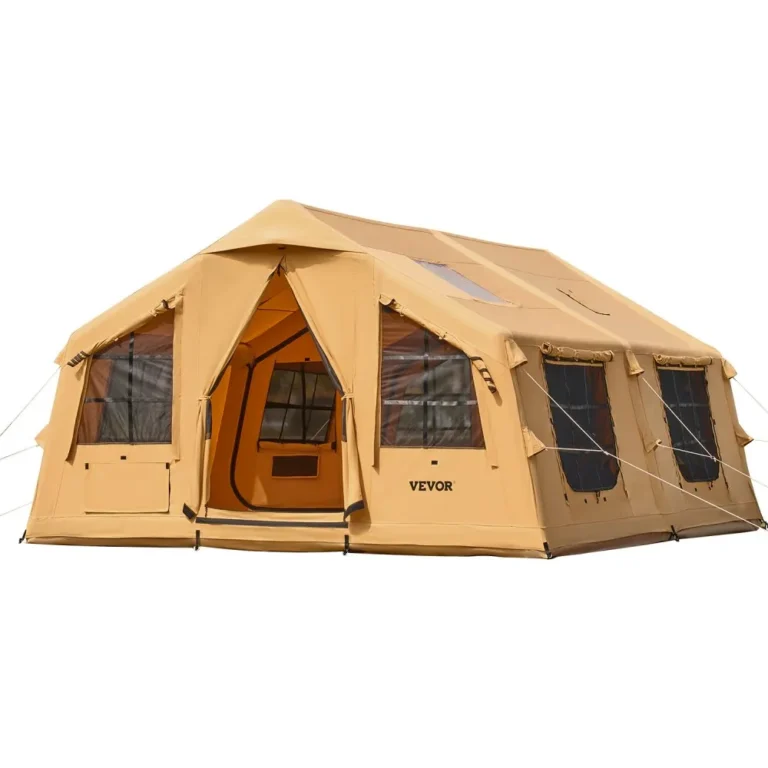
Cabin Tents
Cabin-style tents emphasize interior space and near-vertical walls.
They can be comfortable for established campgrounds, but large wall panels may catch more wind.
Evaluate the manufacturer’s weather-use recommendations before choosing one for exposed campsites.
Pop-Up and Instant Tents
Pop-up and instant tents simplify setup through integrated or preassembled structures.
Convenience is their main advantage, but waterproofing, pole strength, packed size, and repairability vary.
Fast setup should not be treated as proof of storm resistance.
Four-Season and Mountaineering Tents
Four-season tents are generally designed with greater emphasis on wind, snow loading, and harsh-weather shelter.
However, a four-season label does not automatically mean a tent is best for warm, rainy conditions.
These shelters may be heavier, more expensive, and less ventilated than typical three-season models.
7. Single-Wall vs. Double-Wall Waterproof Tents
Construction style affects weight, ventilation, condensation, and weather protection.
| Feature | Single-Wall | Double-Wall |
|---|---|---|
| Construction | One primary shelter layer | Inner tent and separate fly |
| Weight | Often lighter | Often heavier |
| Condensation | Can require careful ventilation management | Inner layer helps separate occupants from condensation on the fly |
| Best Use | Weight-conscious applications | General-purpose three-season camping |
For most recreational campers, a well-designed double-wall tent offers a practical balance of weather protection and ventilation.
8. Ventilation and Condensation Control
Not all moisture inside a tent comes from rain.
Breathing, damp clothing, humid air, and temperature differences can cause condensation to form on interior surfaces.
Condensation can drip onto sleeping bags and equipment, creating the impression that a tent is leaking.
Look for Adjustable Vents
Roof vents, protected openings, and mesh panels can help moisture escape.
Ventilation should remain usable during rainfall without allowing excessive wind-driven water into the shelter.
Keep the Inner Tent Away From the Fly
In a double-wall tent, the inner body should not press against the wet rainfly.
Correct pitching tension helps maintain separation between layers.
Manage Wet Equipment
Store wet boots and outerwear in the vestibule when appropriate.
Avoid bringing unnecessary moisture into the sleeping area.
9. Wind Resistance and Storm Stability
A tent that keeps out vertical rainfall may still struggle during storms with strong winds.
Wind can deform the structure, pull stakes loose, and push rain toward doors and ventilation openings.
Pole Construction
Aluminum poles are common on higher-quality backpacking tents because they offer a useful balance of strength, flexibility, and weight.
Fiberglass poles are found on many budget and recreational tents, although performance varies by design.
Guyline Attachment Points
Guylines help stabilize a tent and maintain tension on the rainfly.
Look for reinforced attachment points and enough guyline locations to support the structure in challenging weather.
Stakes and Ground Conditions
Standard stakes may not hold well in sand, loose soil, or saturated ground.
Choose suitable anchors for the campsite and follow the manufacturer’s setup instructions.
Even a well-designed tent has limits. Avoid exposed sites and seek more substantial shelter when dangerous weather is expected.
10. How Much Should You Spend on a Waterproof Tent?
Price alone does not establish waterproof performance, but extremely inexpensive tents may compromise on materials, seam construction, hardware, or quality control.
Instead of choosing solely by price, compare:
- Published fly and floor waterproof ratings.
- Seam sealing and coating information.
- Rainfly coverage and vestibule design.
- Pole materials and guyline attachment points.
- Warranty and replacement-part availability.
- Weight and packed dimensions.
- Long-term owner reports about leakage and durability.
Spending more can make sense when the tent will be used frequently, carried over long distances, or exposed to unpredictable weather.
For occasional fair-weather campground trips, a properly constructed budget tent may be sufficient.
11. How to Compare Waterproof Tents Before Buying
Use the following checklist to evaluate a tent before making a purchase.
Waterproof Tent Buying Checklist
- Check the rainfly’s waterproof rating.
- Check the floor’s waterproof rating.
- Confirm which seams are factory-sealed.
- Look for a bathtub-style floor.
- Evaluate rainfly coverage around doors and windows.
- Check vestibule size and protected storage space.
- Review pole construction and guyline attachment points.
- Confirm adequate ventilation.
- Check realistic sleeping capacity and dimensions.
- Review warranty, replacement parts, and maintenance instructions.
Check the Tent’s Actual Dimensions
Manufacturer capacity ratings generally describe how many sleeping positions fit inside the tent, not how comfortably people and equipment will fit.
For greater comfort, some campers prefer a tent rated for one more person than the actual group size.
Check Setup Requirements
Freestanding tents can often stand without stakes, but they still need appropriate anchoring in wind.
Non-freestanding shelters depend more heavily on stakes, trekking poles, or other supports.
Check Replacement Parts
Replacement poles, stakes, guylines, and repair materials can extend the useful life of a tent.
Availability may be especially important for a shelter intended for emergency preparedness.
Recommended Waterproof Tents: Premium vs. Budget
After comparing waterproof ratings, rainfly coverage, and tent construction, it helps to look at two different price categories. These options offer different approaches to balancing weather protection, weight, and affordability.
Premium Pick: MSR Hubba Hubba HD 2-Person Tent
The MSR Hubba Hubba HD 2-Person Tent is a premium three-season backpacking shelter designed for campers who prioritize weather protection, durability, and interior comfort.
Its polyester rainfly features a manufacturer-listed 3,000 mm waterproof coating, along with StayDry doors, integrated rain gutters, and adjustable kickstand vents. These features help manage rainfall while maintaining ventilation.
The freestanding tent accommodates two people and includes two doors and two vestibules, providing convenient access and covered storage space for camping equipment.
A rectangular floor plan and near-vertical sidewalls maximize usable interior space, while micromesh panels help improve airflow and manage condensation.
For structural support, the tent uses DAC NFL lightweight aluminum poles with a unified hub-and-pole system designed for straightforward setup. Oversized interior pockets provide additional storage for smaller essentials.
Key specifications:
- Capacity: 2 people
- Season rating: 3-season
- Rainfly waterproof rating: 3,000 mm
- Floor: Water-resistant; separate hydrostatic-head rating not confirmed
- Construction: Freestanding
- Doors: 2
- Vestibules: 2
- Pole system: DAC NFL aluminum with unified hub-and-pole design
Best for: Frequent backpackers and campers seeking a premium two-person tent with documented rainfly waterproofing, generous interior space, and practical wet-weather features.


Budget Pick: Naturehike Cloud Up Base 2-Person Tent
The Naturehike Cloud Up Base 2-Person Tent is a budget-friendly three-season backpacking tent designed for campers who want waterproof protection, manageable weight, and practical features without paying premium prices.
Constructed from 210T polyester with a manufacturer-listed PU 3,000 mm+ waterproof coating, the Cloud Up Base features taped seams, a double-wall design, and a separate rainfly to help protect against rainfall.
The upgraded design includes a larger front entrance, a vestibule for storing equipment, and an additional ventilation window above the door. Its B3 mesh inner tent also helps improve airflow and manage condensation.
At approximately 4.25 pounds without the footprint, the tent is suitable for backpacking, hiking, cycling, and weekend camping. Its 7001 aluminum-alloy poles provide structural support, while the included footprint helps protect the tent floor from abrasion.
Key specifications:
- Capacity: 2 people
- Season rating: 3-season
- Waterproof rating: PU 3,000 mm+ (manufacturer-listed)
- Fabric: 210T polyester
- Construction: Freestanding, double-wall
- Weight: Approximately 4.25 lb without footprint
- Interior dimensions: 82.7 × 49.2 × 41.3 inches
- Packed dimensions: 15.7 × 5.1 × 5.1 inches
- Rooms: 1
- Pole material: 7001 aluminum alloy
- Seams: Taped
- Footprint: Included
Best for: Budget-conscious campers seeking a lightweight two-person tent with documented waterproof specifications, taped seams, and an included footprint.

Which should you choose? The MSR Hubba Hubba HD is the premium option, offering a 3,000 mm-rated rainfly, DAC aluminum poles, two doors, and two vestibules. The Naturehike Cloud Up Base provides a more affordable alternative with a manufacturer-listed 3,000 mm+ waterproof coating, taped seams, aluminum poles, and an included footprint. Both are designed for three-season camping, so choose based on your budget, expected weather, and preferred features.
12. Waterproof Tent Accessories Worth Considering
Even a well-designed tent benefits from a few practical accessories.
Tent Footprint
A properly sized footprint protects the floor from abrasion and sharp objects.
Extra Stakes and Guylines
Additional anchoring equipment can improve flexibility across different campsites.
Compatible Seam Sealant
Use a manufacturer-recommended seam sealant when repairs or maintenance are needed.
Repair Tape and Patch Materials
Fabric repair products designed for the tent’s material can help address small punctures or tears.
Waterproof Gear Storage
Dry bags or waterproof pack liners provide secondary protection for sleeping bags, clothing, and essential supplies.
For a broader equipment checklist, see What to Pack for Camping.
13. How to Keep Your Tent Dry in Heavy Rain
Buying a waterproof tent is only the beginning. Proper campsite selection and setup can make a substantial difference.
Choose Elevated, Well-Drained Ground
Avoid depressions where rainwater may collect.
Do not pitch in dry streambeds, drainage channels, or other locations vulnerable to flash flooding.
Inspect the Ground
Remove small sticks, sharp rocks, and debris that could damage the tent floor.
Do not unnecessarily disturb the campsite or vegetation.
Position the Tent Carefully
Consider prevailing wind direction, terrain exposure, and how rainwater will move across the site.
Avoid placing doors directly into driving rain when a safer orientation is available.
Pitch the Rainfly Correctly
Use the manufacturer’s instructions to establish proper tension and separation between the rainfly and inner tent.
Loose fabric can flap, collect water, or make contact with the inner walls.
Stake and Guy Out the Shelter
Secure the tent according to the expected conditions and the manufacturer’s recommendations.
Keep the Footprint Under the Tent
Do not allow a groundsheet to extend beyond the rainfly’s protected footprint where it could catch and channel rain underneath the tent.
Keep Essential Gear Off Wet Surfaces
Use suitable storage bags and avoid placing sleeping equipment against damp tent walls.
Storm Safety Reminder
A waterproof tent is not a safe substitute for a substantial building or hard-topped vehicle during thunderstorms. If lightning is a threat, follow established lightning-safety guidance and seek appropriate shelter.
14. How to Test a Tent Before Your First Camping Trip
A backyard setup can reveal problems before they become emergencies in the field.
- Pitch the tent according to the manufacturer’s instructions.
- Inspect the fly, seams, floor, zippers, and pole connections.
- Confirm that vents and doors function correctly.
- Check the clearance between the rainfly and inner tent.
- If the manufacturer permits it, use a gentle hose spray to simulate rain.
- Inspect the interior for leaks and areas where water collects.
- Dry the tent completely before storing it.
A controlled water test can help identify defects, but it cannot reproduce every condition encountered during a severe storm.
For organizing and storing the rest of your equipment, see How to Organize Camping Gear.
15. Common Waterproof Tent Buying Mistakes
Buying Based Only on Waterproof Rating
A high hydrostatic-head rating cannot compensate for poorly sealed seams or weak construction.
Choosing an Undersized Tent
Cramped sleeping arrangements can push equipment and occupants against wet tent walls.
Ignoring Ventilation
Poor airflow can create substantial condensation even when the tent fabric does not leak.
Assuming All Tents Include Sealed Seams
Some models require seam sealing before use. Read the manufacturer’s documentation.
Overlooking the Floor
A strong rainfly does little good if the floor leaks under pressure from wet ground.
Using the Wrong Groundsheet
An oversized footprint can trap rainwater beneath the shelter.
Assuming a Tent Is Stormproof
Every tent has weather limits. Severe winds, flooding, lightning, and falling branches can create hazards that waterproof fabric cannot solve.
Frequently Asked Questions
What is the best waterproof rating for a camping tent?
There is no single ideal rating. Many three-season tents use rainfly ratings around 1,500 mm or higher, while floors may have different specifications. Seam construction, fly coverage, and overall design are equally important.
Is a 3,000 mm tent waterproof?
A 3,000 mm hydrostatic-head rating indicates substantial resistance to water pressure under the relevant test conditions. Actual performance still depends on seams, design, fabric condition, and correct setup.
Are expensive tents more waterproof?
Not necessarily. More expensive tents may offer better materials, lower weight, stronger poles, and improved construction, but waterproof performance should be evaluated using actual specifications and design.
Do waterproof tents need a rainfly?
Many double-wall tents depend on their rainfly for primary rain protection. Some single-wall tents use waterproof outer fabric without a separate fly.
Can you waterproof an old tent?
Some older tents can be maintained through cleaning, compatible seam sealing, or appropriate coating treatment. However, severely degraded fabrics, coatings, or structural components may require replacement.
Why is my tent wet inside if it isn’t leaking?
Condensation may form when humid air contacts cooler tent surfaces. Improved ventilation and careful management of wet gear can help reduce the problem.
Do tent footprints prevent leaks?
A footprint primarily protects against abrasion and ground damage. It does not repair a leaking tent floor or replace proper campsite drainage.
Are pop-up tents waterproof?
Some pop-up tents provide effective rain protection, while others are intended mainly for fair weather. Check the exact model’s rainfly, seams, floor, and waterproof specifications.
What type of tent is best for heavy rain?
A well-constructed double-wall tent with a full-coverage rainfly, protected doors, sealed seams, and a dependable floor is a strong general-purpose choice. Conditions beyond the tent’s design limits require safer shelter.
Final Thoughts: Choosing the Best Waterproof Tent
The best waterproof tent is not necessarily the one with the highest rating or the largest number of advertised features.
It is the tent that provides dependable weather protection for the intended environment, accommodates the people and equipment using it, and can be pitched correctly when conditions deteriorate.
Prioritize full rainfly coverage, quality seam construction, a reliable floor, ventilation, and storm stability. Then compare weight, size, durability, and cost.
Before relying on a new tent during a long trip or emergency, inspect it, practice setup, and confirm that its waterproofing performs as expected.
Further Reading
- The Ultimate Camping Guide
- Tent Footprint vs. Tarp: Which Should You Carry?
- Best Lightweight Two-Person Tents
- What to Pack for Camping
- How to Organize Camping Gear
- Family-Friendly Camping Checklist
- Camping With Pets in Summer
- 11 Hammock Camping Tips
Affiliate disclosure: As an Amazon Associate, we earn from qualifying purchases.