Car Camping in Summer: Why Getting the Setup Right Matters
Car camping in summer might sound simple—until triple-digit heat turns your vehicle into an oven, your cooler into warm soup, and your tent into a mosquito-filled sauna. When it’s done right, however, hot-weather car camping can actually be one of the most comfortable and flexible ways to enjoy the outdoors. You can keep cold drinks within reach, sleep on a real mattress in the back of your vehicle, and move locations quickly if the weather turns brutal. In this guide, you’ll learn exactly how to make summer car camping work, including smart shade strategies, essential gear, campsite setup, food safety tips, and ways to prevent heat-related illness so you can camp comfortably even during the hottest months.
This post contains affiliate links. I may earn a small commission at no extra cost to you. Learn more.
If you’re new to outdoor preparedness, start with our complete Emergency Preparedness Master Plan
to learn how to secure water, power, shelter, and communication during emergencies.
Car camping setups can quickly turn into survival setups during emergencies — here’s how modern bug-out strategies actually work when things go wrong: The New Rules of Bugging Out in 2025
👉 If you want a complete survival strategy (not just one piece of the puzzle), start with the full system here: Emergency Preparedness Plan 2026
Quick Gear List
- ✅ KingCamp Awning Tarp
- ✅ Lifestraw Personal Water Filter Straw
- ✅ Anker 633 10,000 mAh Power Bank
- ✅ Coleman Sundome Hot-Climate Tent
- ✅ REDCAMP Folding Camp Table with Sink
- ✅ YETI Roadie 48 Wheeled Cooler
- ✅ Trekology Inflatable Pillow
- ✅ Naturehike Camping Cot
- ✅ DEET-Free Picaridin Spray
- ✅ Rechargeable Camp Fan + Lantern
Shade & Shelter Strategy
Rule #1 for car camping in summer: keep direct sunlight off both you and your vehicle. Asphalt and steel absorb heat like sponges; shaded sites run 15–25 °F cooler by afternoon.
Pick the Right Site
- Look for north-facing pull-outs or natural tree canopies. Use the NPS campsite locator for developed parks, or FreeCampsites.net for dispersed options.
- Check topographic maps for elevation. Each 1,000 ft climb can drop air temps ~3 °F.
- Avoid black-top pads; gravel or dirt radiate less heat after sunset.
Deploy a Two-Layer Shade System
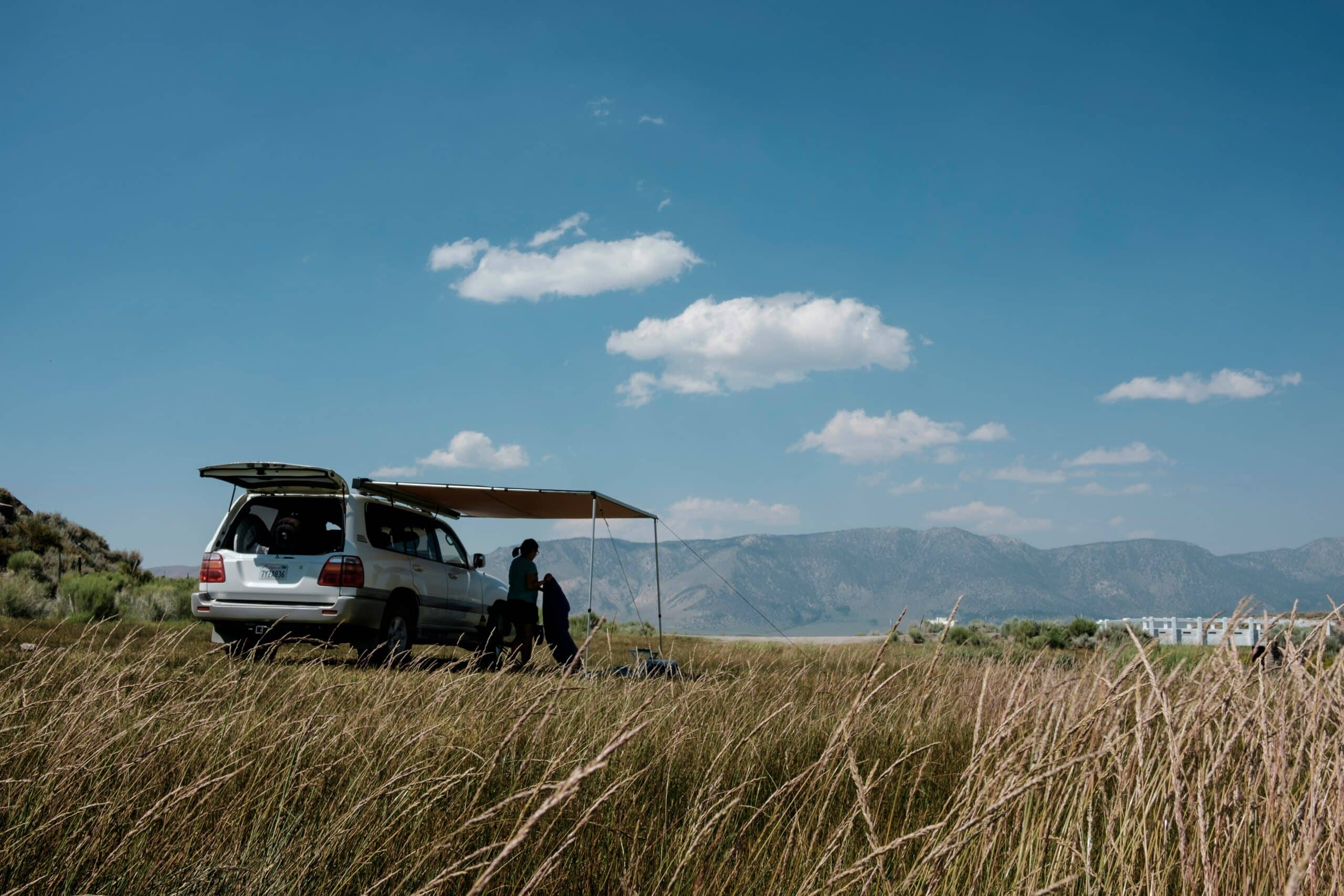
- Vehicle Awning: Fast-pitch tarps like the KingCamp create 110 sq ft of shade in 2 min.
- Reflective Barrier: Line the roof of your tent with a cheap reflective emergency blanket to bounce IR radiation back into the sky.
Ventilation Tricks
- Install inexpensive mesh window screens on both driver & passenger doors; crack windows 2–3″ for cross-breeze without bugs.
- Use a 12-volt fan clipped to a rear grab handle to push hot air outward. Pair with the Anker power bank for 2-night runtimes.
🔗 Related reading: DIY Cooling Neckwraps for an ultralight personal chiller.
Sleep System That Breathes
Forget winter-rated bags. You need airflow and moisture management.
Choose the Right Bed
- ✅ Cot + Mesh: A cot like the Therm-a-Rest Mesh lifts you 6″ off the floor, letting air circulate 360°.
- ✅ Ventilated Mattress: Self-inflating pads with open-cell foam trap less heat than solid foam.
- ✅ 100% Cotton Sheets: Wick sweat better than slick nylon bag liners.
Temperature-Rated Bags
A 40 °F quilt sounds warm but is perfect for 60–80 °F nights because it opens flat. Look at Enlightened Equipment’s Revelation Apex (external link).
Noise & Light Control
Cars near trailheads mean headlights at 2 a.m. Hang a dark microfiber towel over windows with magnetic clips and keep foam earplugs handy.
Cooling & Hydration Hacks
Beat the Heat From the Inside Out
- Water Goal: 1 gal per person per day plus 1 qt per hour of activity (CDC recommendation).
- Carry a Lifestraw water filter to convert creek or spigot water instantly.
- Freeze two milk jugs before departure; they double as ice blocks and drinking water when melted.
You should also understand proper emergency water storage. See our guide on how to store water long term.
DIY Evap Cooler
- Soak a microfiber towel.
- Hang it in the breeze of your rechargeable fan.
- Place a shallow tray of water beneath to extend evaporation.
Combine that with our Stay Cool Without Power Guide for blackout scenarios.
Food Storage & Cooking
Keep the Cooler Cold
- Pre-chill everything 24 h before packing.
- Pack in ice layers: frozen meat on bottom, produce in the middle, drinks on top.
- Shield cooler with reflectix wrap and park it on a foam pad to stop ground heat.
Cook Smart, Not Sweaty
- Carry a butane tabletop stove; it burns cleaner and cooler than white gas.
- Plan no-cook or quick-cook meals to save fuel.
- Use freezer-to-skillet packets: frozen burritos keep the cooler cold and heat in 5 min.
Bug Defense That Actually Works
Layered Approach
- Physical Barrier: Mesh tent + vehicle window screens.
- Chemical Repellent: 20% picaridin spray lasts 8 h without melting plastics.
- After-Bite Care: Carry Green Goo First Aid Salve.
Need natural remedies? See our bug-bite guide.
Power & Lighting
Energy Budget
Phone (10 Wh/day) + fan (8 Wh/h) + LED lantern (5 Wh/night) ≈ 60 Wh per 24 h. The Anker 533 holds 100 Wh—perfect for two days before solar recharge.
Solar Strategy
- 100 W folding panel angled at 30° can refill the power bank in ~6 h of direct sun.
- Run heavy-draw items—like laptop charging—while the panel is active to bypass battery cycles.
Lighting Plan
- String USB LED fairy lights under awning for ambiance.
- Headlamp + lantern redundancy; keep one in the glove box for midnight bathroom runs.
Safety & First Aid
Heat-Related Illness Checklist
- Muscle cramps → hydrate + electrolytes
- Headache/dizziness → move to shade, cool packs on neck & armpits
- Core temp > 103 °F & confusion = heat stroke—call 911
First-Aid Kit Must-Haves
- Oral rehydration salts or Liquid IV
- Tick removal tool
- Burn gel (camp-stove accidents spike in summer)
Navigation & Comms
- Download offline maps in Gaia GPS.
- Carry a personal locator beacon if venturing beyond cell service.
Camp Organization Tips
Modular Bins
Use three 18-gal totes: Kitchen / Sleep / Misc. Label lids with painter’s tape so nighttime gear grabs take seconds.
Dirty Gear Zone
Lay a cheap 5×7 ft tarp beside the car for boots and sweaty clothes. Keeps the sleeping area funk-free.
Morning Tear-Down Drill
- Extinguish fire & scatter cold ashes (Leave No Trace principle #5).
- Pack trash in odor-proof bags and store in rooftop box.
- Do a final 10-step grid walk to snag micro-litter.
Leave No Trace + Site Etiquette
Summer crowds mean popular sites get hammered. Follow LNT’s 7 Principles, but pay double attention to:
- Secure Food & Trash: Heat accelerates odor spread; wildlife will raid unsecured coolers.
- Respect Quiet Hours: Windows down + Bluetooth speaker = 3 a.m. bad-neighbor special.
- Road-Side Parking: Stay within one vehicle length of road edge to protect fragile plants.
Weather Monitoring & Backup Plans
Summer heat is only half the battle—pop-up thunderstorms, red-flag wind, and ozone alerts can blow up a mellow camp in minutes. Pro trip planners track weather like thru-hikers count ounces. Here’s how to stay a step ahead:
Know Before You Go
- Check the NWS point forecast for your exact GPS coordinates—not the nearest town.
- Use Windy.com or Ventusky to visualize temp gradients and thunderstorm cells 24–48 h out.
- Enable Emergency Alerts on iOS/Android so severe-weather warnings buzz through Do-Not-Disturb.
In-Camp Real-Time Intel
- A NOAA-capable hand-crank radio lets you pull forecasts after your phone dies.
- The free MyLightningTracker app shows strikes within 25 mi—pack up tarp poles when the map lights up.
- Clip a cheap mini anemometer to your awning pole; fold gear when gusts top 25 mph to prevent fabric tears.
Rapid Evac & Shelter Options
- 30/30 Lightning Rule: If thunder follows a flash in <30 s, shelter in the car with windows up.
- Flash-Flood Buffer: Never camp in a dry wash—choose ground at least 10 ft higher than creek beds.
- Smoke Plan: Check AirNow Fire Map; relocate if AQI >100 to avoid heat-plus-smoke respiratory stress.
If you’re staying in one place longer, your setup becomes critical — here’s how to build a self-powered survival base: Grid-Down Camp Setup
🔗 Related reading: Surviving Summer Storms Guide
Final Thoughts
Car camping in summer can feel like you’ve rented nature’s own beach-house—if you engineer the environment. Control shade, airflow, and hydration first. Dial in a sleep system that breathes, keep food ice-cold, and charge devices off the sun, and you’ll wonder why anyone pays campground fees for hook-ups. Don’t settle for sweaty misery; set up smarter, travel lighter, and turn the hottest months into your favorite camping season.
Further Reading
- Minimalist Summer Survival Gear (4 lb Base)
- How to Stay Cool Without Power
- Best Fire Starters for Extreme Heat