
10 Best Camping Tents for Survival and Emergency Preparedness
Choosing one of the best survival tents is about more than finding an inexpensive place to sleep outdoors. During an evacuation, extended power outage, or emergency camping trip, a dependable tent can provide temporary protection from rain, wind, insects, and changing temperatures.
This post contains affiliate links. I may earn a small commission at no extra cost to you. Learn more.
But not every tent belongs in the same emergency kit. A lightweight backpacking shelter might be practical for someone evacuating on foot, while a larger cabin tent makes more sense for a family traveling by vehicle. Heavy canvas tents can offer greater durability and living space at a prepared basecamp, but they are far too bulky for a backpack.
In this guide, we compare ten camping tents across different budgets and preparedness scenarios, explain their strengths and limitations, and help you choose a shelter that matches your emergency plan.
Quick Answer: Best Survival Tents by Use
- Budget emergency shelter: Coleman Sundome
- Solo or two-person bug-out kit: ALPS Mountaineering Lynx 2
- Lightweight backpacking: Naturehike Cloud Up 2
- Family vehicle evacuation: CORE 6-Person Instant Cabin Tent
- Fast vehicle-based setup: Gazelle T4 Hub Tent
- Extended basecamp: Kodiak Canvas Flex-Bow
The best choice depends on your transportation, expected weather, number of occupants, and how long you may need shelter.
Before buying a tent, make sure your overall preparedness plan covers water, food, communication, and evacuation. Our Emergency Preparedness Master Plan explains how these systems work together.
10 Best Survival Tents for Camping and Emergency Preparedness
The following tents are arranged in a general progression from affordable camping shelters to more specialized and premium options. Actual prices, availability, and specifications vary by model and configuration.
| Tent | Capacity | Best Use | Budget Category |
|---|---|---|---|
| Coleman Sundome | 2–4 people, depending on model | Basic emergency camping | Budget |
| Coleman Skydome | 4 people | Vehicle-based camping | Budget to midrange |
| ALPS Mountaineering Lynx 2 | 2 people | Compact emergency shelter | Midrange |
| Naturehike Cloud Up 2 | 2 people | Lightweight travel | Midrange |
| Kelty Late Start 2 | 2 people | Backpacking and short evacuations | Midrange |
| CORE Instant Cabin | 6 people | Family vehicle evacuation | Midrange |
| ALPS Mountaineering Lynx 3 | 3 people | Two people with extra gear | Midrange |
| MSR Elixir 2 | 2 people | Regular backcountry use | Premium |
| Gazelle T4 Hub | 4 people | Rapid vehicle-based setup | Premium |
| Kodiak Canvas Flex-Bow | Varies by size | Extended basecamp | Premium |
1. Coleman Sundome — Best Budget Emergency Camping Tent
The Coleman Sundome is a practical starting point for someone building an affordable emergency camping kit. Its familiar dome-style construction, straightforward setup, and ventilation make it suitable for occasional camping in relatively mild conditions.
Available in multiple capacities, the Sundome can work as a backup shelter for a vehicle kit or an inexpensive option for learning basic tent setup.
Key Advantages
- Generally affordable compared with specialized backpacking tents.
- Simple dome-style design.
- Ventilation through windows and ground-level airflow features on applicable models.
- Suitable for occasional recreational camping and backup use.
Limitations
- Not intended for heavy snow or severe winter storms.
- Fiberglass poles and budget construction require careful handling.
- Not particularly compact compared with dedicated backpacking shelters.
Best for: Budget-conscious campers who need a basic emergency shelter for mild-weather situations.
Our assessment: The Sundome makes sense as an entry-level tent, but it should not be treated as an all-weather survival shelter.


2. Coleman Skydome 4-Person Tent — Best Affordable Tent for Extra Headroom
The Coleman Skydome is designed to offer more usable interior space than many traditional dome tents. Its steeper walls can make changing clothes, arranging sleeping gear, and managing supplies easier.
For someone preparing to evacuate by vehicle, that additional space may be more valuable than minimizing every pound.
Key Advantages
- Roomier interior design than many conventional dome tents.
- Practical for short family camping trips.
- Relatively straightforward setup.
- Useful for keeping essential supplies close at hand.
Limitations
- Too bulky for most backpacking applications.
- Four-person capacity does not necessarily mean comfortable sleeping space for four adults plus equipment.
- Not a substitute for a winter-rated shelter.
Best for: Couples or small families traveling by vehicle who want an affordable tent with more interior space.

3. ALPS Mountaineering Lynx 2 — Best Compact Tent for a Two-Person Emergency Kit
The ALPS Mountaineering Lynx 2 is a freestanding, two-person camping tent with a practical design for hikers and emergency-preparedness enthusiasts.
Compared with larger family tents, it is easier to transport and requires less campsite space. Its rainfly and vestibule arrangement also provide useful separation between sleeping space and equipment storage.
Key Advantages
- Freestanding pole structure.
- Rainfly protection and vestibule storage.
- More portable than large cabin-style tents.
- Useful for solo campers who want room for equipment.
Limitations
- Two adults and bulky emergency gear may feel cramped.
- Not intended for severe winter conditions.
- Heavier than some ultralight backpacking alternatives.
Best for: Solo travelers or two-person emergency kits where portability matters more than standing room.

For additional options, see our guide to lightweight two-person tents.
4. Naturehike Cloud Up 2 — Best Lightweight Shelter for Foot Travel
When an emergency plan involves walking significant distances, tent weight and packed size become major considerations. The Naturehike Cloud Up 2 is a lightweight backpacking-oriented shelter that may appeal to campers who need to keep their loads manageable.
Its compact design makes it more appropriate for foot travel than heavy cabin or canvas tents.
Key Advantages
- Lightweight-oriented construction.
- Compact packed size.
- Suitable for solo backpackers who want some extra room.
- Available in different material and configuration options.
Limitations
- Limited interior living space.
- Lightweight fabrics require careful campsite selection.
- Weight and waterproof specifications differ by version.
Best for: Backpacking-oriented emergency kits and people prioritizing lower carried weight.

Important Backpacking Consideration
A lighter tent is not automatically safer. Compare the complete packed weight, rainfly coverage, pole construction, floor durability, and intended seasonal rating before choosing a shelter for emergency travel.
5. Kelty Late Start 2 — Best Straightforward Backpacking Tent
The Kelty Late Start 2 offers a relatively simple backpacking design for people who want an uncomplicated shelter without moving into expensive ultralight equipment.
For emergency preparedness, simplicity matters. A tent that can be assembled correctly in poor light or during stressful conditions is more useful than an unfamiliar shelter with a complicated setup.
Key Advantages
- Backpacking-oriented construction.
- Freestanding design.
- Suitable for shorter trips and solo camping.
- Manageable footprint for smaller campsites.
Limitations
- Limited room for two occupants and substantial gear.
- Not designed for heavy snow accumulation.
- Less living space than a vehicle-based family tent.
Best for: People who want a conventional backpacking shelter for hiking, camping, and portable emergency use.

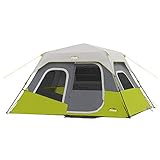
6. CORE 6-Person Instant Cabin Tent — Best for Family Vehicle Evacuations
A family evacuation often requires more than a compact sleeping shelter. Children, bedding, clothing, and emergency supplies all take up space.
The CORE 6-Person Instant Cabin Tent is designed around convenient setup and a relatively roomy cabin-style interior. It is better suited to vehicle transportation than carrying on foot.
Key Advantages
- Instant-style frame designed to simplify setup.
- Cabin layout provides useful interior space.
- Practical for family camping and prepared vehicle-based trips.
- More comfortable for organizing bedding and supplies than a small backpacking tent.
Limitations
- Large packed dimensions.
- Not suitable for backpack evacuation.
- Tall cabin profiles require particular attention to staking and wind conditions.
Best for: Families who have a vehicle and a planned, safe location where temporary outdoor shelter is appropriate.
Remember that official emergency shelters, hotels, or staying with family may be safer than camping during a major disaster. A tent is one possible backup, not the preferred destination in every evacuation.
7. ALPS Mountaineering Lynx 3 — Best for Two People Carrying Extra Gear
The ALPS Mountaineering Lynx 3 provides additional sleeping and storage space compared with the two-person version.
Although marketed as a three-person tent, it may be more comfortable for two occupants who need to keep important equipment organized.
Key Advantages
- Additional interior room.
- Freestanding structure.
- Rainfly and vestibule protection.
- Useful for two campers carrying extra equipment.
Limitations
- Heavier and bulkier than smaller backpacking shelters.
- Three adults may find the interior crowded.
- Not a dedicated winter mountaineering tent.
Best for: Two-person emergency camping setups where interior room is more important than minimizing pack weight.

8. MSR Elixir 2 — Best Premium Backpacking-Oriented Shelter
The MSR Elixir 2 is designed for campers who value a well-developed backpacking shelter with practical interior space and weather protection for its intended conditions.
For someone who camps regularly, spending more on a tent may be justified by construction details, ease of use, and long-term suitability.
Key Advantages
- Backpacking-focused shelter design.
- Practical interior layout for two occupants.
- Rainfly and vestibule protection.
- Suitable for repeated recreational backcountry use.
Limitations
- More expensive than many entry-level camping tents.
- Still limited in living space.
- Not a substitute for a dedicated four-season mountaineering shelter.
Best for: Campers who regularly travel outdoors and want a more specialized backpacking tent that can also support an emergency kit.

9. Gazelle T4 Hub Tent — Best Rapid-Setup Tent for Vehicle-Based Preparedness
The Gazelle T4 Hub Tent is built around a hub-style frame that allows much of the tent structure to unfold as a connected assembly.
This approach can make campsite setup more convenient, particularly when you have a vehicle to transport the tent and enough space to deploy it.
Key Advantages
- Hub-style design for convenient deployment.
- Roomy interior compared with small backpacking tents.
- Useful for car camping and prepared basecamp trips.
- Practical for campers who frequently set up and take down their shelters.
Limitations
- Bulky packed dimensions.
- Unsuitable for most backpacking applications.
- Requires adequate staking and safe weather conditions.
- Not intended to replace a dedicated heavy-snow shelter.
Best for: Vehicle-based emergency kits, recreational camping, and temporary basecamp arrangements where setup convenience is a priority.

10. Kodiak Canvas Flex-Bow — Best Heavy-Duty Tent for an Extended Basecamp
The Kodiak Canvas Flex-Bow is a heavier, canvas-based shelter designed for campers who prioritize durability, interior comfort, and repeated use over portability.
Its canvas construction and substantial frame make it a very different type of shelter from a lightweight backpacking tent.
For a prepared rural property or established vehicle-accessible campsite, this type of tent may provide a more comfortable temporary living arrangement than a small dome tent.
Key Advantages
- Durable canvas construction.
- Substantial frame components.
- More usable interior space in larger configurations.
- Appropriate for campers who prioritize long-term durability and basecamp comfort.
Limitations
- Heavy and difficult to transport without a vehicle.
- Requires more storage space.
- Canvas must be properly dried before long-term storage.
- Higher purchase cost than basic camping tents.
- Weather limitations still apply, including snow accumulation and severe winds.
Best for: Established basecamps, extended recreational camping, and prepared rural locations where transporting a heavy tent is practical.
Important: A standard Kodiak Flex-Bow should not be assumed to support a wood-burning stove. Never install a stove or operate combustion heating equipment inside a tent unless the exact tent and heating system are specifically designed and approved for that application. Carbon monoxide and fire remain serious hazards.

How to Choose the Right Survival Tent
The most expensive tent is not automatically the best emergency shelter. Start with the type of situation you are preparing for and select equipment that fits your transportation, climate, and household.
1. Match the Tent to Your Evacuation Plan
If your plan involves leaving on foot, packed weight and volume matter. A lightweight two-person backpacking tent is more realistic than a large family cabin tent.
If your household will evacuate by vehicle, a larger tent may provide valuable room for sleeping, changing clothes, and organizing supplies.
For an established property or long-term campsite, a heavier canvas shelter may be practical if you can transport, maintain, and safely pitch it.
2. Consider the Actual Sleeping Capacity
Manufacturer capacity ratings usually describe how many people can sleep inside under relatively compact arrangements. They do not guarantee generous room for mattresses, backpacks, children, or emergency supplies.
For greater comfort, consider a tent rated for more occupants than you expect to shelter.
3. Evaluate Weather Protection
Look at rainfly coverage, seam construction, floor waterproofing, ventilation, pole design, and the manufacturer’s intended weather conditions.
A three-season tent may be suitable for ordinary spring, summer, and fall camping, but that does not make it safe in blizzards, heavy snow, or severe thunderstorms.
Our waterproof tent buying guide explains what to examine before purchasing.
4. Compare Packed Weight and Dimensions
A tent weighing several pounds may be manageable for a short backpacking trip, while a large instant cabin or canvas shelter may require a car, truck, or trailer.
Always compare the complete packed weight, including poles, stakes, rainfly, and storage bag.
5. Practice Setting It Up Before an Emergency
Even an easy-pitch tent can become frustrating in darkness, rain, or strong wind.
Set up your tent at home, check the included components, inspect the rainfly, and practice packing everything away. Replace missing stakes, damaged guylines, and worn components before you need the shelter.
Emergency Tent Selection Checklist
- Enough sleeping space for the expected occupants
- Suitable weather rating for the planned location and season
- Manageable packed weight and size
- Reliable rainfly, floor, and seam construction
- Adequate ventilation
- Complete stakes, guylines, and poles
- Setup instructions and repair supplies
- A safe, legal destination where the tent can be pitched
Which Survival Tent Is Best for Different Emergency Situations?
Short-Term Power Outage
Most households should remain in a safe home during a short outage rather than move into a tent unnecessarily.
However, if a residence becomes uninhabitable and safe temporary accommodations are unavailable, a vehicle-accessible camping tent may be part of a backup shelter plan.
Evacuation on Foot
For walking, weight and packed size become critical. A compact backpacking shelter such as the ALPS Lynx 2, Naturehike Cloud Up 2, or Kelty Late Start 2 may be more appropriate than a large cabin tent.
Remember that carrying a tent also means carrying sleeping insulation, water, food, clothing, and other survival essentials.
Family Vehicle Evacuation
For a family traveling by vehicle, interior space and convenient setup often matter more than minimum weight.
The Coleman Skydome, CORE Instant Cabin, or Gazelle T4 may suit this type of planned camping arrangement.
Extended Rural Basecamp
For an established site where heavy equipment can be transported, a canvas tent such as the Kodiak Flex-Bow may offer useful durability and space.
However, extended occupancy also requires a plan for sanitation, drinking water, food storage, temperature management, and severe-weather alternatives.
For electricity needs, see our Emergency Power and Energy Backup Guide.
Can You Use a Regular Camping Tent in Winter?
Some camping tents can be used during cool weather when conditions remain within their design limits and occupants have appropriate sleeping insulation.
But cold weather and heavy snow are different challenges.
Ordinary three-season tents are generally not engineered for significant snow loads or severe alpine winds. A four-season or mountaineering shelter is designed for more demanding conditions, although its specific limitations still matter.
A tent also provides very little insulation by itself. Your sleeping pad, sleeping bag or quilt, dry clothing, and protection from wind and moisture are essential.
Read our guide to insulating a tent for winter camping for additional cold-weather considerations.
Critical Heating SafetyNever use a charcoal grill, camp stove, portable generator, or unvented combustion heater inside an ordinary tent or enclosed vestibule. These devices can cause fatal carbon monoxide poisoning and create fire hazards.
Use sleeping insulation and shelter appropriate to the conditions. If the weather exceeds your equipment’s capabilities, relocate to a safer building or designated shelter.
Do You Need a Tent Footprint?
A tent footprint is an additional protective layer placed beneath the tent floor. It can help reduce abrasion and keep dirt off the underside of your shelter.
A properly sized tarp may serve a similar purpose, but it should not extend beyond the tent floor where exposed edges can collect rainwater.
Learn the differences in our Tent Footprint vs. Tarp comparison.
Essential Accessories for an Emergency Camping Tent
A tent alone does not make a complete shelter system. Consider the following supporting equipment:
- Sleeping pad: Provides insulation from cold ground.
- Appropriate sleeping bag or quilt: Matches the expected nighttime temperatures.
- Extra stakes and guylines: Help secure the tent according to manufacturer instructions.
- Repair kit: Includes compatible fabric patches and basic repair materials.
- Headlamp: Allows hands-free setup after dark.
- Waterproof storage bags: Help protect clothing and important supplies.
- Groundsheet: Protects the tent floor where appropriate.
- Emergency communication equipment: Supports weather monitoring and contact with others.
For additional recommendations, see our essential tent accessories guide and 15 essential survival tools.
Common Mistakes When Buying a Survival Tent
Buying Based Only on Price
An inexpensive tent may be sufficient for occasional fair-weather camping, but it may not provide the durability or weather protection required for more demanding conditions.
Confusing Tent Capacity With Comfort
A four-person tent may not comfortably accommodate four people and their equipment. Examine actual floor dimensions before purchasing.
Ignoring Transportation Requirements
A heavy canvas shelter may work well at a prepared campsite but becomes impractical when evacuation requires walking.
Assuming All Tents Are Suitable for Winter
Many camping tents are designed for three-season use. Always check the manufacturer’s intended conditions and avoid exposing a tent to weather beyond its capabilities.
Failing to Test Equipment
Missing stakes, damaged zippers, and unfamiliar setup instructions can turn a manageable situation into a serious problem. Inspect and practice with your shelter before relying on it.
Choosing an Unsafe Campsite
Avoid flood-prone depressions, unstable slopes, dead trees, exposed ridgelines during thunderstorms, and other obvious hazards. Follow local restrictions and evacuation instructions.
Frequently Asked Questions
What is the best survival tent for beginners?
The Coleman Sundome is an accessible budget option for basic camping, while the ALPS Mountaineering Lynx 2 may be more appropriate when portability is important. Neither should be treated as a severe-weather shelter.
What is the best tent for a bug-out bag?
A lightweight backpacking tent that fits your pack, climate, and number of occupants is usually the most practical choice. Compare packed weight and weather protection rather than focusing only on sleeping capacity.
Are canvas tents better for survival?
Canvas tents can offer durability and comfortable living space for established camps, but their substantial weight makes them unsuitable for many evacuation scenarios. The best material depends on how the shelter will be transported and used.
Can a three-season tent be used during an emergency?
Yes, when conditions remain within its design limitations. A three-season tent is not automatically appropriate for heavy snow, severe winds, or extreme winter conditions.
Is an instant tent good for emergency preparedness?
An instant tent can be useful for vehicle-based camping because it simplifies setup. However, packed dimensions, wind resistance, and weather limitations still need consideration.
How many people should an emergency tent hold?
Choose enough capacity for the expected occupants plus essential gear. For greater comfort, a tent rated above the number of actual occupants may be preferable.
Do survival tents keep you warm?
Tents reduce exposure to wind and precipitation but usually provide little thermal insulation. Sleeping pads, properly rated sleeping bags, dry clothing, and suitable shelter conditions are essential for staying warm.
Should I store a tent in my vehicle?
A compact tent can be useful in a vehicle emergency kit, but prolonged heat and moisture can damage some materials. Inspect stored equipment periodically and follow the manufacturer’s storage recommendations.
Final Verdict: Which Survival Tent Should You Buy?
The best survival tent is the one that fits your realistic emergency plan, expected weather, and transportation limits.
- For an inexpensive backup: Consider the Coleman Sundome.
- For portable emergency camping: Compare the ALPS Lynx 2, Kelty Late Start 2, and Naturehike Cloud Up 2.
- For two people with additional gear: The ALPS Lynx 3 provides extra space.
- For family vehicle camping: Consider the CORE Instant Cabin or Coleman Skydome.
- For convenient vehicle-based setup: The Gazelle T4 is worth comparing.
- For regular backpacking: The MSR Elixir 2 offers a more specialized option.
- For a prepared, vehicle-accessible basecamp: The Kodiak Canvas Flex-Bow may be appropriate.
Whatever you choose, practice setting it up, understand its weather limitations, and make sure your shelter plan includes sleeping insulation, water, communication, and a safe evacuation destination.
A reliable tent is one component of emergency preparedness—not a replacement for a complete survival plan.
Related Camping and Preparedness Guides
- Emergency Preparedness Master Plan
- Inflatable Tents vs. Regular Tents
- Best Lightweight Two-Person Tents
- How to Choose a Waterproof Tent
- Tent Footprint vs. Tarp
- How to Insulate a Tent for Winter
- Essential Tent Accessories
- Emergency Power and Energy Backup Guide
Affiliate disclosure: As an Amazon Associate, we earn from qualifying purchases.