
Best Fire Starters for Extreme Heat: 7 Survival Options
Fire starters for extreme heat need to withstand hot-weather storage, rough handling, and the demanding conditions of summer camping, desert travel, and emergency preparedness. A dependable ignition tool can help you prepare food, start an authorized campfire, or operate an emergency cooking setup when other options are unavailable.
This post contains affiliate links. I may earn a small commission at no extra cost to you. Learn more.
But hot, dry weather creates an important complication: the same conditions that make reliable survival gear necessary can also increase wildfire danger. In many situations, the safest choice is to avoid an open fire entirely.
Ferrocerium rods, magnesium fire starters, commercial tinder, and resin-rich fatwood each have different advantages. Some provide sparks, while others supply the combustible material needed to turn a spark into a sustained flame.
This guide compares seven fire-starting products, explains their strengths and limitations, and covers safe storage and responsible use in high-temperature environments.
Quick Answer: What Fire Starter Works Best in Extreme Heat?
A quality ferrocerium rod is a practical primary ignition tool because it does not depend on pressurized fuel or a liquid reservoir. Pair it with suitable tinder and a backup ignition method. For a compact emergency kit, a ferro rod combined with properly stored commercial tinder offers useful versatility. Always check local fire restrictions before attempting to ignite anything outdoors.
Why Extreme Heat Matters for Fire-Starting Gear
Hot weather does not automatically prevent a fire starter from working. In fact, dry natural tinder may ignite readily under favorable conditions.
The bigger concerns are storage damage, material degradation, accidental ignition, and increased wildfire risk.
Temperatures inside parked vehicles, direct sunlight, and enclosed gear compartments can become substantially hotter than the surrounding air.
Heat Can Affect Certain Materials
Some wax-based tinder products may soften in high temperatures. Adhesives, plastic housings, seals, and packaging may also deteriorate after prolonged exposure to heat and sunlight.
Pressurized lighters and other fuel-containing devices require particular attention to manufacturer storage limits.
These concerns do not mean that every plastic lighter or wax fire starter is unsuitable for summer use. Product design, packaging, storage conditions, and manufacturer instructions matter.
Dry Conditions Increase Fire Danger
Extreme heat often occurs alongside low humidity, dry vegetation, and seasonal drought.
When wind is added to those conditions, a small flame or stray ember can spread rapidly.
Always check fire restrictions and current conditions before lighting a campfire, stove, or other outdoor flame.
During a fire ban, certain ignition sources and cooking methods may be prohibited. Rules vary by location and restriction level.
What Makes a Good Fire Starter for Hot Weather?
The best fire starter is not necessarily the one that produces the largest spark. A useful survival fire kit combines reliability, portability, compatible tinder, and a practical backup.
Ignition Reliability
A fire starter should produce a usable spark or flame when operated correctly.
Ferro rods are popular because they can generate sparks without requiring lighter fluid or a pressurized fuel reservoir.
Durable Construction
Metal components, protective cases, and sturdy handles can improve durability during transportation and storage.
However, even rugged tools should be protected from unnecessary exposure to extreme temperatures and moisture.
Compatible Tinder
An ignition tool and tinder serve different purposes.
A ferro rod creates sparks. Tinder catches those sparks and helps establish a flame.
Carrying one without the other can make fire starting much more difficult.
Ease of Use
A tool that works well during practice is generally more useful than a complicated device you have never operated.
Consider whether the striker is easy to grip and whether the tinder requires extensive preparation.
Safe Storage
Fire-starting supplies should be stored according to their manufacturer instructions, away from unintended ignition sources and excessive heat.
Keep ignition tools and combustible materials organized so they do not become damaged or accidentally activated inside a pack.
Best Fire Starters for Extreme Heat: Comparison Table
These seven options include both ignition tools and tinder products. They are not interchangeable, so the most useful kit may contain more than one type.
| Fire Starter | Type | Best Use | Main Limitation |
|---|---|---|---|
| Trekker Emergency Fire Starter | Magnesium and ferro rod | Versatile survival kits | Requires preparation and practice |
| Bayite Ferro Rod | Ferrocerium ignition tool | Repeated spark ignition | Separate tinder required |
| InstaFire | Prepared tinder | Convenient fire preparation | Consumable material |
| UST WetFire | Compact tinder | Small emergency kits | Limited quantity per package |
| Zippo Emergency Fire Kit | Spark-wheel kit with tinder | Self-contained backup | Tinder requires replenishment |
| Exotac nanoSTRIKER XL | Compact ferro rod | Premium portable ignition | Higher cost |
| Fatwood Sticks | Natural resin-rich tinder | Campfire preparation | Requires an ignition source |
7 Fire Starters for Extreme Heat and Survival Kits
1. Trekker Emergency Fire Starter: Magnesium and Ferro Rod
The Trekker-style magnesium fire starter combines two useful fire-starting materials: a magnesium component and a ferrocerium rod.
The ferro rod provides sparks, while magnesium shavings can help establish an intense initial flame when ignited correctly.
For emergency preparedness, this combination offers flexibility without relying on a pressurized fuel container.
Advantages:
- Combines a spark-producing tool with magnesium fire-starting material.
- Suitable for repeated use until its materials are consumed.
- Does not require lighter fluid.
- Can fit into a dedicated emergency fire kit.
Limitations:
- Magnesium shavings require preparation.
- Effective operation takes practice.
- It is not a substitute for properly prepared tinder and kindling.
Best for: Campers and preparedness-minded readers who want a combination ignition tool and magnesium fire starter.

2. Bayite Ferro Rod Fire Starter: Best for Repeated Ignition
The Bayite ferro rod is designed around a straightforward ignition principle: striking ferrocerium to generate sparks.
Ferro rods are useful in survival kits because they do not depend on a fuel reservoir and can remain functional after exposure to moisture when properly maintained.
The tool still requires appropriate tinder and sufficient technique.
Advantages:
- Reusable spark-producing design.
- No liquid fuel or pressurized gas required.
- Can be paired with multiple tinder types.
- Practical for camping, hiking, and emergency preparedness.
Limitations:
- Does not produce a sustained flame by itself.
- Requires practice and a suitable striker.
- Can be more difficult to use than a lighter in some situations.
Best for: Readers seeking a durable primary ignition tool that can be paired with separately stored tinder.

For additional ignition techniques, read our primitive fire-starting guide.
3. InstaFire Fire Starter: Convenient Prepared Tinder
InstaFire is a prepared fire-starting material intended to help establish a flame without requiring users to gather all their tinder from the surrounding environment.
Prepared tinder can be useful when natural materials are scarce or conditions make fire preparation inconvenient.
Unlike a ferro rod, however, this product is combustible material rather than a reusable spark-producing tool.
Advantages:
- Convenient prepared fire-starting material.
- Useful as part of a larger fire kit.
- Reduces dependence on gathering natural tinder.
- Can be packed with a compatible ignition source.
Limitations:
- Consumed during use.
- Requires an appropriate ignition source.
- Packaging and storage instructions must be followed.
Best for: Campers who want a convenient tinder option to pair with matches, a lighter, or another suitable ignition method.

4. UST WetFire Tinder Cubes: Compact Emergency Tinder
UST WetFire is a compact commercial tinder option intended for use with an ignition source.
Small tinder packages can be helpful in emergency kits where space is limited and carrying large quantities of natural kindling is impractical.
As with any prepared tinder, performance depends on the product’s condition and correct use.
Advantages:
- Compact format for small survival kits.
- Convenient to organize alongside ignition tools.
- Can reduce the need to gather tinder immediately.
Limitations:
- Consumable rather than reusable.
- Packaging should be inspected for damage.
- Must be used according to the manufacturer’s instructions.
Best for: Emergency bags, compact camping kits, and backup tinder storage.

5. Zippo Emergency Fire Kit: Self-Contained Backup
The Zippo Emergency Fire Kit combines a spark-wheel ignition mechanism with stored tinder.
This arrangement can be convenient for people who prefer keeping an ignition mechanism and tinder together in one compact package.
Like other mechanical fire-starting devices, it should be inspected periodically and practiced with before an emergency.
Advantages:
- Combines ignition and tinder in a portable kit.
- Convenient backup for outdoor gear.
- Organized design helps keep components together.
Limitations:
- Included tinder is consumable.
- Mechanical components can wear or become damaged.
- May be less versatile than a separate ferro rod paired with several tinder options.
Best for: Campers who want an organized secondary fire-starting system.

6. Exotac nanoSTRIKER XL: Premium Compact Ferro Rod
The Exotac nanoSTRIKER XL is a compact ferrocerium-based ignition tool designed for portable outdoor use.
Its protective construction makes it an interesting option for people who prioritize compact equipment and organized storage.
As with any ferro rod, successful ignition depends on technique and the availability of suitable tinder.
Advantages:
- Compact design for portable emergency kits.
- Reusable ferrocerium ignition system.
- Protective construction helps organize and store components.
- Does not require liquid lighter fuel.
Limitations:
- Generally positioned as a premium option.
- Separate tinder is required.
- Small components can be easier to misplace.
Best for: Hikers and preparedness enthusiasts who prefer compact, purpose-built ignition equipment.

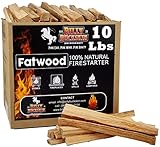
7. Fatwood Fire Starter Sticks: Natural Resin-Rich Tinder
Fatwood is resin-rich pinewood commonly used as a fire-starting aid.
Its natural resin content can make it useful as tinder or kindling when properly prepared and ignited.
Fatwood is different from a ferro rod or lighter because it supplies combustible material rather than creating the initial spark or flame.
Advantages:
- Natural wood-based fire-starting material.
- Can be processed into smaller pieces or shavings.
- Useful for conventional campfire preparation where fires are permitted.
- Does not depend on a pressurized fuel container.
Limitations:
- Requires a separate ignition source.
- Can be heavier and bulkier than compact commercial tinder.
- Should be stored dry and protected from contamination.
Best for: Campers who want a natural tinder option for permitted campfires and outdoor cooking fires.
For another challenging environment, see our guide to starting a fire in wet weather.
Ferro Rods, Magnesium, and Tinder: What’s the Difference?
Understanding the distinction between ignition and fuel helps you build a more reliable emergency fire kit.
Ferrocerium Rods
A ferro rod produces hot sparks when scraped with a suitable striker. It does not create a continuous flame and generally requires tinder that can catch a spark.
Magnesium Fire Starters
Magnesium fire starters supply combustible metal that can be prepared for ignition. They require careful handling and should only be used where starting a fire is legal and safe.
Commercial Tinder
Prepared tinder products are intended to help establish and sustain an initial flame. They may come as cubes, pouches, fibrous materials, or other forms.
Natural Tinder
Fatwood, dry plant fibers, and other natural materials can sometimes be used for fire preparation, although availability and condition vary.
A practical fire kit combines an ignition method with compatible tinder instead of relying on either component alone.
How to Store Fire Starters in Extreme Heat
Proper storage is especially important when fire-starting supplies remain inside vehicles, garages, camping trailers, or outdoor emergency containers.
Protect Gear From Direct Sunlight
Keep fire-starting equipment in a shaded compartment when possible. Avoid leaving products on dashboards or other surfaces exposed to intense sunlight.
Follow Manufacturer Temperature Limits
Fuel-containing lighters, chemical tinder, and other packaged products may have specific storage restrictions.
Do not assume that a product is safe to store indefinitely in a hot vehicle simply because it is marketed for survival use.
Inspect Packaging and Components
Before a camping trip or seasonal emergency-kit review, inspect equipment for:
- Cracked housings or damaged caps.
- Leaking or deteriorated packaging.
- Corrosion or damaged metal components.
- Deformed tinder containers.
- Missing strikers or other essential parts.
Replace damaged supplies rather than depending on them during an emergency.
Separate and Secure Equipment
Store combustible materials and ignition devices so they cannot rub together, become crushed, or activate accidentally.
Keep all fire-starting supplies away from children and unauthorized users.
When You Should Not Start a Fire
In extreme heat, fire restrictions and wildfire conditions are more important than the performance of any ignition tool.
Do not start an outdoor fire when local rules prohibit it or when conditions make ignition unsafe.
Situations that may require avoiding an open flame include:
- Active burn bans or fire restrictions.
- Red Flag Warning conditions or other severe fire-weather alerts.
- High winds and rapidly changing weather.
- Extremely dry grass, brush, or nearby vegetation.
- Locations without an authorized fire area.
- Situations where you lack water, tools, or another means of safely extinguishing a permitted fire.
A Red Flag Warning does not automatically establish the same legal restrictions everywhere, but it signals weather conditions associated with elevated fire danger.
Check the applicable land-management agency, campground authority, or local fire department for current rules.
Safer Alternatives to an Open Fire
Depending on local restrictions, alternatives may include commercially prepared food, shelf-stable meals, or cooking equipment specifically permitted under the current rules.
Some restrictions also prohibit certain stoves or other flame-producing devices. Never assume that a camping stove is automatically permitted.
For emergency drinking water, consider properly maintained filtration and disinfection methods suitable for the suspected contaminants instead of depending on a campfire.
Boiling can inactivate many disease-causing microorganisms, but it does not remove chemical contamination.
Building a Practical Summer Survival Fire Kit
A well-organized kit should be simple enough to use under pressure and compact enough to carry when needed.
Consider including:
- A dependable primary ignition tool.
- A separate backup ignition method.
- Appropriate tinder in protective packaging.
- A small protective storage pouch or container.
- Any necessary striker or replacement components.
- Instructions for unfamiliar equipment.
Practice using your equipment only in a legal, controlled environment where fires are permitted.
Do not conduct fire-starting tests in dry grass, on combustible surfaces, or during elevated wildfire conditions.
For a broader look at essential survival techniques, visit our Core Survival Skills Guide.
Common Fire Starter Mistakes in Hot Weather
Relying on One Ignition Method
A single tool can be lost, damaged, or difficult to operate under certain conditions.
A backup method provides redundancy without requiring a large amount of additional equipment.
Forgetting Tinder
A ferro rod may generate sparks successfully while still failing to ignite poorly prepared material.
Carry compatible tinder and understand how your ignition tool is intended to work.
Leaving Equipment in Excessive Heat
Long-term exposure to high temperatures can damage some components and packaging.
Follow product-specific storage instructions rather than assuming all fire starters tolerate the same conditions.
Ignoring Fire Restrictions
Even a small cooking fire can be dangerous or illegal during severe fire conditions.
Check current restrictions before using any flame-producing equipment outdoors.
Failing to Practice
Fire-starting tools vary in technique and difficulty.
Familiarity with your equipment is more useful than relying solely on marketing claims about reliability.
Frequently Asked Questions
Do ferro rods work in extreme heat?
Yes. Ferrocerium rods can generate sparks in hot weather when used correctly. They still require suitable tinder and safe conditions for ignition.
Can you leave a fire starter in a hot car?
It depends on the product. Pressurized lighters, packaged tinder, and other supplies may have specific temperature limits. Follow the manufacturer’s storage instructions and avoid unnecessary exposure to vehicle heat.
Are magnesium fire starters better than ferro rods?
They serve different functions. A ferro rod generates sparks, while magnesium supplies combustible material. Some fire starters combine both components.
Do wax fire starters melt in summer?
Some wax-based products can soften or change shape in high temperatures. Their performance and storage requirements depend on the formulation and packaging.
Is fatwood a good survival fire starter?
Fatwood can be useful as natural tinder or kindling because of its resin content. It still requires an ignition source and should only be used where fires are permitted.
Are disposable lighters safe in hot weather?
Disposable lighters can be useful ignition tools, but they must be kept away from excessive heat and used according to their manufacturer’s warnings. Do not leave them in locations that exceed their specified storage limits.
What is the best fire starter for a bug-out bag?
A compact ferro rod paired with suitable tinder and a backup ignition method is a practical arrangement. The best combination depends on your skills, available space, and expected conditions.
Can you start a campfire during a Red Flag Warning?
Fire restrictions vary by jurisdiction. A Red Flag Warning indicates elevated fire-weather danger, and additional restrictions may apply. Check current rules and avoid open flames when conditions are unsafe.
Should you start a fire if stranded in the desert?
Not automatically. Prioritize immediate threats such as dehydration, excessive heat exposure, and the need for rescue. A fire may be unnecessary or dangerous, particularly in dry vegetation or during fire restrictions.
Final Thoughts: Choosing Fire Starters for Extreme Heat
The best fire starters for extreme heat are those that suit your equipment, skills, storage conditions, and intended use.
Ferro rods provide a reusable ignition method, magnesium offers an additional combustible material, and commercial or natural tinder can help establish a flame.
No single product guarantees successful ignition in every situation, and no fire starter makes an unsafe fire location acceptable.
For summer camping, desert travel, and emergency preparedness, focus on dependable equipment, proper storage, realistic practice, and strict attention to wildfire restrictions.
Sometimes the most important fire-starting skill is recognizing when not to light one.
Further Reading
- Does All Wax Burn? Survival Fire Starters Explained
- Starting a Fire in Wet Weather
- Primitive Fire-Starting Guide
- Ultimate Survival Fire Starters Guide
As an Amazon Associate, The Savvy Survivalist earns from qualifying purchases.