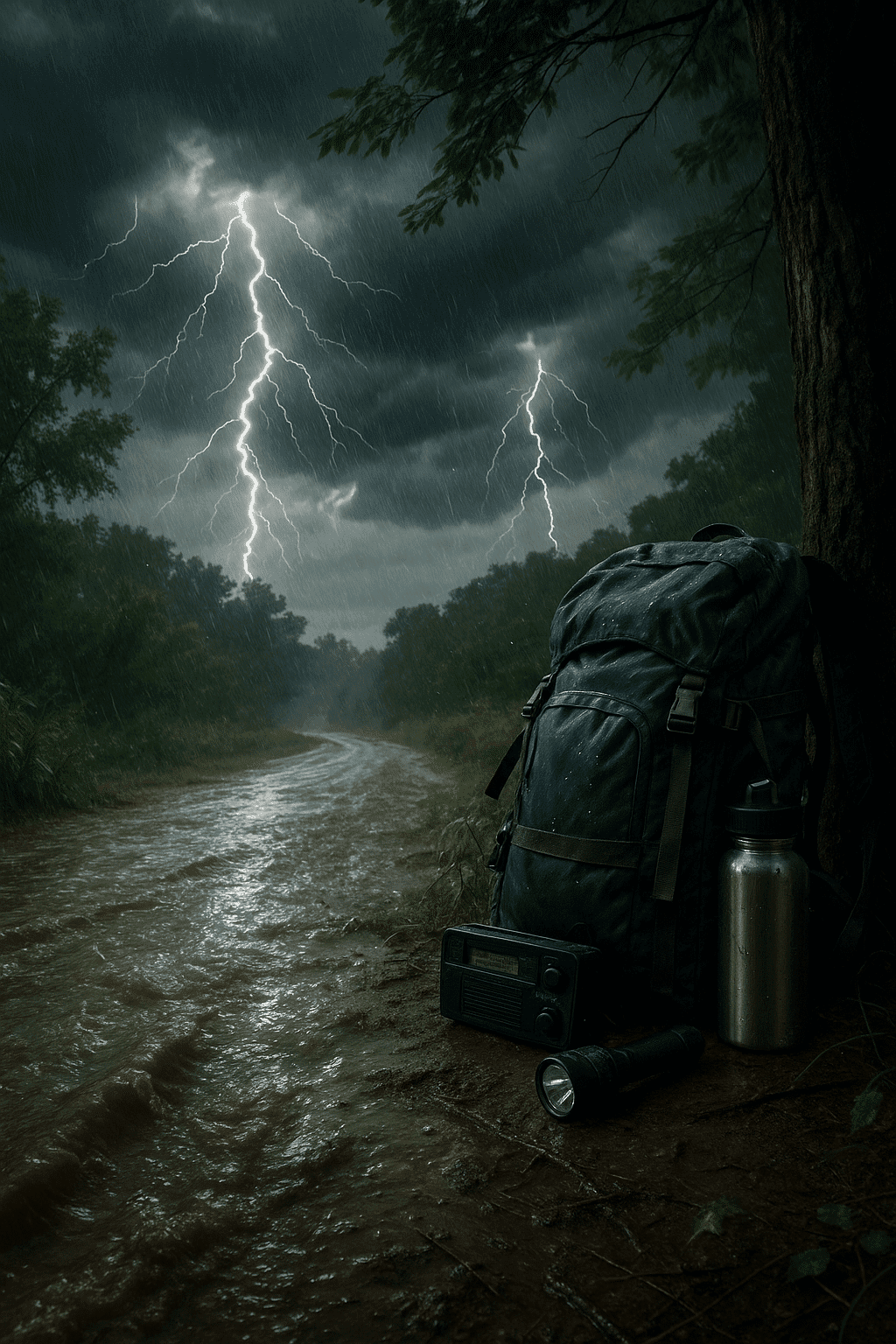
Summer Storm Survival Guide: What Actually Kills and How to Prepare
Summer storm survival isn’t guesswork—it’s a skill set. If you only skim one guide this season, let it be the one in front of you. In the next few minutes you’ll learn how to read the sky, dodge lightning, outrun flash floods, beat blackout heat, and harden your home against triple-digit winds. Keep scrolling, gear up, and take action before thunder starts rumbling.
This post contains affiliate links. I may earn a small commission at no extra cost to you. Learn more.
Quick Takeaways
- ✅ Lightning outruns warnings—treat the 30/30 rule as gospel.
- ✅ Flash floods kill within minutes; six inches of moving water can topple an adult.
- ✅ Heatwaves kill silently after blackouts; build a cool-room and hydrate on a timer.
- ✅ Derechos & tornadoes flatten wide areas—reinforce weak points before storm season.
- ✅ Redundant comms (NOAA radio, power bank, whistle) are your lifeline when the grid dies.
The Big Five Summer Killers
1. Lightning — A Bolt From the Blue
Lightning masquerades as a flash-bulb moment, but its consequences linger for life. Each bolt superheats air to 50,000 °F—five times hotter than the surface of the sun—causing nerves to fry and hearts to spasm. NPS statistics show most victims were within eyesight of blue sky. Why? Because lightning can arc ten miles ahead of the rain shaft. The smart move: track storms on a radar app before the picnic starts, then assign one person “weather watch.” When the flash-to-bang interval drops below thirty seconds, call it—indoors, metal-roofed car, or fully enclosed RV only.
Inside, ban contact with plumbing and wired appliances—lightning rides copper. Unplug gaming systems, route phone-charging through a surge protector, and skip that post-workout shower until the storm passes. Outdoors with no shelter? Squat on the balls of your feet, feet together, heel touching heel. It reduces ground-contact area and forces current up one leg and down the other, sparing your vital organs. Drop metal trekking poles and keep 15 ft between people to avoid multiple casualties.
Field Drill: Time your family sprint from backyard to hard shelter. Shave seconds until everyone makes it in under a minute—because you won’t get more warning than that.
2. Flash Floods — Water That Sprints
Flash floods don’t rise—they explode. Monsoon rain in distant hills funnels into arroyos, channels beneath city streets, and concrete storm drains until water hits a choke point, bounces, and leaps skyward. By the time the roar alerts campers, it’s game-over. FEMA tags flash floods as the deadliest U.S. weather event per incident because the human body is terrible at judging water momentum. One cubic foot of water weighs 62 lb; a three-foot-deep surge smashing a sedan pushes more tonnage than a semi-truck.
Pre-Storm Tactics: Scout campsites above creek beds and canyon floors. Urban dwellers: memorize two uphill escape routes that don’t rely on underpasses. Digitally bookmark NOAA’s flood-watch map and local river gauges—set push alerts for rapid-rise thresholds.
During the Warning: Kill the idea you can “wait and see.” Grab the go-bags, lock the door, drive out on high ground. In town, avoid viaducts and low-water crossings; the road may have washed away. If trapped, abandon the vehicle before water reaches the doorsills. Climb the hood, then the roof, then a tree or signpost—height buys time for rescuers.
Post-Flood Hazards: Water hides debris, downed lines, and sewage bacteria. Disinfect all cuts, toss any food that touched floodwater, and photograph damage for insurance before cleanup.
3. Heatwaves — The Silent Multiplier
Heatwaves rarely headline because they lack cinematic visuals, yet they kill more Americans annually than hurricanes, tornadoes, and floods combined. The risk doubles after storms that sever power. An attic in Texas can hit 140 °F within three blackout hours. Seniors succumb first—medications impair thermoregulation, and dehydration sneaks up when thirst wanes with age.
Pre-Blackout Prep: Stock reflective emergency blankets, painter’s tape, and blackout curtains. Freeze 2-liter bottles—low-cost thermal batteries. Charge every power bank, aim solar panels, and gather electrolyte packets.
When the Grid Falls: Convert one interior room into a “cool bunker.” Tape blankets reflective-side-out on sun-facing windows, run battery fans across ice jugs, and hang damp towels in doorways for evaporative cooling. Set a phone alarm to sip water every fifteen minutes; dehydration triggers confusion, making self-rescue impossible.
Medical Redline: Disorientation, hot dry skin, or a pulse over 140 means heatstroke—strip outer clothing, pour tepid water on skin, fan vigorously, and call 911. Ice baths are last resort; rapid cooling can cause arrhythmia.
4. Straight-Line Winds & Derechos — Bulldozers in the Sky
The 2020 Midwest derecho felled 600,000 acres of corn and left Iowa looking shell-shocked—no funnel cloud required. Derechos are bow-shaped clusters of thunderstorms that race hundreds of miles, dragging a wall of 70–110 mph wind. Unlike tornadoes they hit everywhere at once, so “take shelter in neighboring counties” isn’t an option.
Fortify in Advance: Retrofit garage doors—the primary structural failure point—with bracing kits. Pre-cut ⅝-inch exterior-grade plywood to window size, label each piece, and store with screws. Secure patio sets, grills, and trampolines with earth anchors. Dead-limb trimming is cheaper than a new roof.
Sheltering-In: Interior hallway, bathtub under a mattress, or basement corner under stairwell. Motorcycle or batting helmets slash head-injury odds. If driving, exit underpass lanes; wind tunnels there magnify gusts. Park facing the wind so debris smashes windshield, not side glass.
Aftermath: Treat all wires as live. Document damage by daylight; at night use flash photography from a safe distance.
5. Tornadoes — Funnels in a Flash
Northern plains, southern Dixie Alley, and even East Coast suburbs now record summer twisters. NOAA average warning: thirteen minutes. Your options hinge on readiness, not heroics.
Safe-Zone Engineering: Basement or FEMA-rated interior safe room bolted to slab. No basement? Hallway closet with double-stud walls lined in ¾-inch plywood. Store helmets, crowbar (for debris exit), whistle, work gloves, and hard-soled shoes inside.
Mobile-Home Reality Check: You own a kite with plumbing. Identify a neighbor with a permanent foundation or local community shelter. Conduct a timed run—if you can’t reach it in five minutes, rethink your living arrangement.
Driving? If visible funnel and traffic-free road runs at right angles to its path, hit the gas. Otherwise, ditch-crawl to the lowest ground well clear of drainage channels, cover head, and avoid overpasses—wind accelerates underneath.
Shelter-In-Place vs. Bug-Out — Make the Call Before You Panic
Indecision kills. Create a binary decision tree now.
- Shelter-In: Home is outside floodplain and wildfire interface, roof rated for local wind zone, two-week pantry, gravity water filter, battery bank ≥20,000 mAh, and meds refrigerated via solar generator.
- Bug-Out: Mandatory order issued; rising water within 1 ft of threshold; utility pole down on roof; or medical gear (CPAP, insulin) depends on grid. Leave early—evac lanes gridlock fast.
Map two escape routes on paper—GPS dies when cell towers lose backup generators. Stage go-bags and pet carriers at the exit. Keep fuel tank over half and a 5-gal can in trunk (treated with stabilizer and vented weekly). Rally point: out-of-county relative’s house with generator.
Blackout Heat Survival — Turning a House into a Cooler
With the grid down, think like a firefighter sealing a burn unit.
- Block Heat Gain: Reflective blankets, foil wrap, or even car sunshades on every sun-facing pane. Shut doors on east- and west-side rooms during peak rays.
- Create Airflow: Box fan powered by inverter-connected car battery (engine off to save fuel). Open upper window on shaded side two inches, lower window opposite one inch to stack-vent hot air.
- Leverage Phase-Change: Melt frozen bottles in front of fan; as ice absorbs heat, airflow cools you.
- Hydrate on a Schedule: 8 oz every fifteen minutes; add pinch of salt or electrolyte tab every quart.
Pets dissipate heat poorly—offer kiddie pool or damp towel wrap. Check on neighbors; isolation is lethal.
Power, Water & Light — Redundancy Rules
Three tiers: primary, backup, fail-safe.
- Light: Primary LED lantern (USB-C rechargeable); backup headlamp with AAAs; fail-safe tea light candles in mason jars (ventilate).
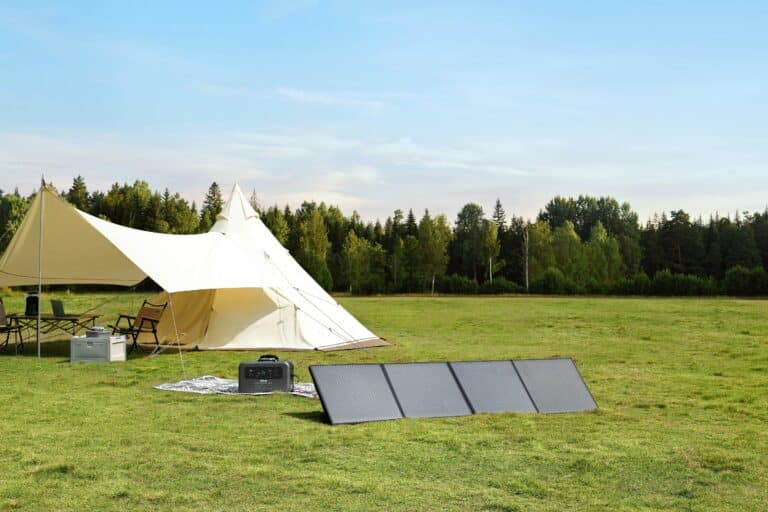
- Power: Portable lithium station (500–1,000 Wh) for fridge or meds; backup 20,000 mAh bank; fail-safe hand-crank generator.
- Water: City tap + storage barrels (primary); dual-bag gravity filter (backup); iodine tablets (fail-safe).
Label containers, rotate supplies every six months, and note last change-out date in permanent marker on lids.
The 72-Hour Go Bag — Storm Edition
Build once, refine quarterly.
- 3 L hydration bladder + Sawyer Squeeze filter
- 6,000 kcal Millennium bars + dehydrated meals (no cook)
- Ultralight bivvy, silnylon tarp, and compact rain suit
- IFAK: tourniquet, trauma pads, clotting gauze, ibuprofen, antihistamine, electrolytes
- Headlamp, spare batteries, ferro rod, BIC lighter
- Multiband hand-held radio (NOAA + GMRS)
- Cash $200 in 5s and 10s, spare debit card, laminated IDs, insurance docs
- Paracord 50 ft, duct tape roll, compact folding saw
- Pet kit: 3-day kibble, collapsible bowl, vet records, waste bags
Packing Hack: Vacuum-seal clothing and flat-pack meals. Saves space, adds water-proofing.
Communications — Triple-Layer Strategy
- High-Tech: Smartphone with FEMA, Red Cross, MyRadar; offline Google Maps; dark-sky SMS alerts.
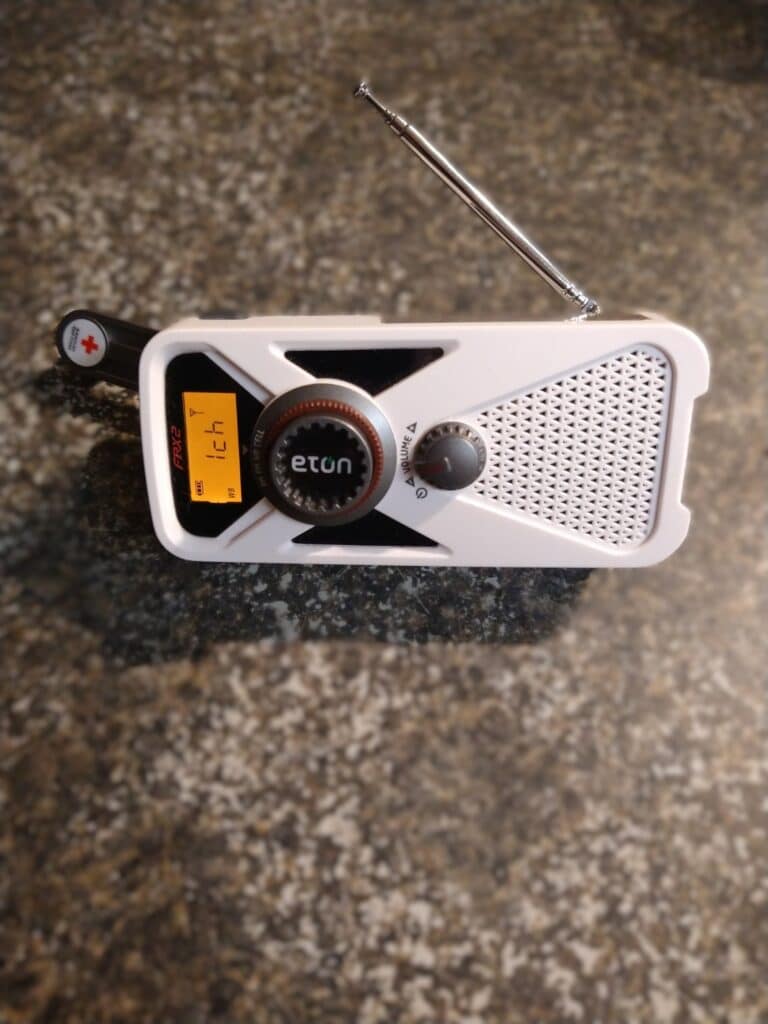
- Radio: Hand-crank NOAA for broadcasts; GMRS walkies for half-mile family comms; HAM handheld for regional coordination (license up!).
- No-Tech: Whistle (3 blasts = help), signal mirror, chalk marks (→ arrow to indicate evac direction).
Family Protocol: Daily check-in 07:00 and 19:00 on GMRS Channel 18; if missed, assume assistance required.
Community Resilience — Your Neighborhood Is Your Lifeboat
Storm survival scales with cooperation. Organize a block-level phone tree, share tool inventories, and assign roles: medical lead, chain-saw operator, elder-care buddy. Hold a quarterly drill: 1) mock flood warning, 2) simulate power loss, 3) set 30-minute timers to account for everyone. Success breeds confidence long before sirens wail.
Post-Storm Reality Check
The last raindrop isn’t the finish line.
- Electrocution: Stay 30 ft from downed wires; puddles can carry current.
- Carbon-Monoxide: Run generators 20 ft from doors and windows; use battery CO detector inside.
- Chainsaw Trauma: Full PPE—helmet, chaps, eye protection—before clearing limbs.
- Spoiled Food: Refrigerator above 40 °F for four hours? Trash it.
Photograph damage for claims—wide shot, close-up, serial numbers. Notify insurance within 48 hours to fast-track adjuster visits.
Related Reads
- Ultimate Water Purification Guide
- DIY Bug Repellent: Natural Summer Protection
- Campfire-Free Cooking Outdoors
- Best Solar Gear for Summer Survival
- How to Stay Cool Without Power
Disclosure: This post contains affiliate links; as an Amazon Associate we earn from qualifying purchases—at no extra cost to you.