
Campfire-Free Cooking: 10 Outdoor Methods With Easy Recipes
Cooking outdoors does not always require building a traditional campfire. Whether you’re camping in hot weather, dealing with wet firewood, or simply want a more convenient way to prepare meals, there are several practical campfire-free cooking methods worth considering.
This post contains affiliate links. I may earn a small commission at no extra cost to you. Learn more.
Portable propane stoves, solar ovens, backpacking burners, electric cooking equipment, and no-cook meals can all make campsite food preparation easier. Each option has different fuel requirements, advantages, limitations, and safety considerations.
This guide compares ten outdoor cooking methods, includes a simple recipe for each one, and explains how to choose equipment that fits your camping style.
Campfire-Free Cooking Methods: Quick Comparison
| Cooking Method | Best For | Heat Source | Main Limitation |
|---|---|---|---|
| Propane stove | Family camping | Propane flame | Requires fuel |
| Butane stove | Compact campsite cooking | Butane flame | Wind and cold sensitivity |
| Solar oven | Sunny-day cooking | Sunlight | Weather dependent |
| Jetboil system | Backpacking meals | Canister-fuel flame | Limited cooking flexibility |
| Camping griddle | Group meals | Gas or other compatible heat source | Bulky equipment |
| Canned-heat stove | Warming prepared foods | Canned-fuel flame | Low heat output |
| Electric hot plate | Powered campsites | Electricity | Needs substantial electrical power |
| Thermal cooker | Fuel conservation | Stored heat after initial heating | Food-temperature management |
| Alcohol stove | Minimalist backpacking | Alcohol flame | Fire restrictions and limited control |
| Cold soaking | No-cook backpacking meals | None | Limited food choices |
1. Portable Propane Stove: Best for Family Camping
A portable propane stove is one of the most versatile alternatives to a traditional campfire. It allows campers to boil water, prepare breakfast, cook meat, and make one-pot dinners using familiar cookware.
The Coleman Triton Propane Stove is a practical option for car camping and group meals. Its two-burner layout allows you to prepare multiple components of a meal at once.
Advantages
- Adjustable cooking heat
- Suitable for a wide range of meals
- Useful for car camping and family trips
- Works with familiar pots and pans
Limitations
- Requires propane fuel
- Produces an open flame
- Bulkier than backpacking stoves
- May be restricted during fire bans


Easy Recipe: Southwest Chicken and Rice Skillet
Ingredients:
- 1 pound boneless chicken breast, cut into bite-size pieces
- 1 can black beans, drained
- 1 cup corn
- 1 cup salsa
- 1 cup fully cooked rice
- 1 teaspoon chili powder
- 1 tablespoon cooking oil
Instructions:
- Heat the oil in a skillet over medium heat.
- Add the chicken and cook, stirring occasionally, until its thickest pieces reach 165°F.
- Stir in the beans, corn, salsa, and chili powder.
- Heat the mixture until hot throughout.
- Add the cooked rice and continue heating until everything is thoroughly hot.
Safety tip: Operate propane camping stoves outdoors in accordance with the manufacturer’s instructions. Never use a camping stove inside a tent, vehicle, or enclosed shelter because of fire and carbon monoxide hazards.
2. Butane Stove: Best for Compact Campsite Cooking
Portable butane stoves offer a convenient way to prepare meals without carrying a full-size camp kitchen. Many models use a single burner and a replaceable fuel canister.
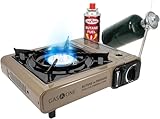
The Gas One Portable Butane Stove is useful for simple skillet meals, heating water, and preparing food at established campsites.
Advantages
- Compact design
- Quick setup
- Useful for small meals
- Convenient for car camping and picnics
Limitations
- Requires compatible fuel canisters
- Can perform poorly in cold weather
- Needs protection from excessive wind
- Produces a flame and may be restricted during fire bans
Easy Recipe: Camp Breakfast Hash
Ingredients:
- 3 medium potatoes, diced small
- 1 onion, chopped
- 1 bell pepper, diced
- 4 eggs
- 1 tablespoon cooking oil
- Salt and pepper
Instructions:
- Heat oil in a skillet over medium heat.
- Add potatoes and cook until tender and lightly browned, stirring regularly.
- Add onion and bell pepper and cook until softened.
- Make four spaces in the mixture and crack an egg into each one.
- Cover and cook until the eggs reach your preferred doneness. For the safest preparation, cook eggs until both yolks and whites are firm.
Safety tip: Never use oversized cookware that extends over the butane canister compartment. Excessive heat around the canister can create a serious hazard. Follow the stove manufacturer’s cookware-size limits.
3. Solar Oven: Best for Fuel-Free Outdoor Cooking
A solar oven uses sunlight to heat food without propane, charcoal, or firewood. It can be useful for sunny-day camping and as a supplemental cooking option during an emergency.
The MrMapMax 4.5L Portable Solar Oven is designed to concentrate sunlight for outdoor cooking. Its advertised 4.5-liter capacity and included thermometer make it an option for campers interested in solar cooking.
Advantages
- No combustible cooking fuel required
- Useful during sunny weather
- Can help conserve stored fuel
- Does not require an electrical hookup
Limitations
- Requires adequate sunlight
- Cooking times vary with weather and food quantity
- Needs suitable positioning
- Cannot replace a dependable backup cooking method

Easy Recipe: Solar-Baked Vegetable Lasagna
Ingredients:
- Oven-ready lasagna noodles
- 1 zucchini, thinly sliced
- 1 cup ricotta cheese
- 2 cups marinara sauce
- 1 cup shredded mozzarella
- Water as needed according to noodle directions
Instructions:
- Use cookware approved for your particular solar oven.
- Spread a layer of marinara sauce in the cooking container.
- Add noodles, ricotta, zucchini, and mozzarella in alternating layers.
- Repeat until the ingredients are used, following the noodle package’s liquid requirements.
- Place the covered cooking container in the preheated solar oven according to its instructions.
- Cook until the noodles are tender and the center of the dish reaches at least 165°F.
Safety tip: Do not rely on a fixed cooking time. Solar cooking performance depends heavily on sunlight, ambient conditions, food volume, and oven design. Use a food thermometer and keep perishable ingredients properly chilled before cooking.
4. Jetboil System: Best for Backpacking and Quick Meals
Integrated backpacking cooking systems are designed to heat water efficiently with relatively little equipment. They are especially useful for dehydrated meals, instant foods, and hot drinks.
The Jetboil Flash Cooking System is a compact backpacking option primarily intended for boiling water.
Advantages
- Compact equipment
- Convenient for dehydrated meals
- Designed for efficient water heating
- Useful for solo camping and backpacking
Limitations
- Requires compatible fuel
- Less versatile than a full-size stove
- Limited cooking capacity
- Produces a flame and may be prohibited during fire restrictions

Easy Recipe: Backpacking Ramen Bowl
Ingredients:
- 1 package instant ramen
- 1 fully cooked, properly stored egg
- 1 tablespoon soy sauce
- 1 teaspoon sesame oil
- Sliced green onions
Instructions:
- Boil water using the cooking system according to the manufacturer’s directions.
- Transfer the water to a suitable heat-safe bowl or meal container.
- Add ramen and follow the package instructions.
- Top with the cooked egg, soy sauce, sesame oil, and green onions.
Safety tip: Do not assume every integrated boiling system is approved for cooking food directly inside its vessel. Follow the instructions for your exact model.
5. Camping Griddle: Best for Family-Style Outdoor Meals
A portable camping griddle provides a broad cooking surface for breakfast foods, burgers, vegetables, and other meals that benefit from direct contact with a hot surface.
The Blackstone Tabletop Griddle is an option for car campers who want to prepare multiple servings without building a campfire.
Advantages
- Large cooking surface
- Useful for breakfast and family meals
- Good for searing and browning foods
- Convenient for established campsites
Limitations
- Bulkier than backpacking equipment
- Requires a compatible fuel supply
- Needs a stable cooking surface
- Gas-powered versions produce flames

Easy Recipe: Griddle Smash Burgers
Ingredients:
- 1 pound ground beef, divided into four portions
- 4 hamburger buns
- 4 slices cheese
- Pickles
- Ketchup and mustard
- Salt and pepper
Instructions:
- Preheat the griddle according to its instructions.
- Place the beef portions on the hot surface and flatten using a suitable spatula or burger press.
- Season with salt and pepper.
- Cook, turning as needed, until each burger reaches an internal temperature of 160°F.
- Add cheese, transfer to buns, and serve with your preferred toppings.
Safety tip: Use heat-resistant utensils and keep children away from hot cooking surfaces. Operate gas-powered griddles outdoors as directed by the manufacturer.
For more cooking techniques, see our How to Cook on an Outdoor Griddle guide.
6. Folding Canned-Heat Stove: Best for Warming Prepared Foods
Folding canned-heat stoves use packaged fuel to provide a small cooking flame. They are compact and can be useful for warming certain prepared foods when larger cooking equipment is unavailable.
However, canned-heat systems generally provide less heat than conventional camping stoves. They are better suited to warming foods than preparing large meals from raw ingredients.
Advantages
- Compact equipment
- Simple setup
- Useful for limited food-warming tasks
- Does not require a pressurized gas canister
Limitations
- Relatively low heat output
- Longer heating times
- Fuel must be stored and transported properly
- Still produces an open flame
Easy Recipe: Camp Chili Bowl
Ingredients:
- 1 can commercially prepared, fully cooked chili
- 1/2 cup canned diced tomatoes
- Chili seasoning to taste
- Crackers or tortillas for serving
Instructions:
- Pour the chili and tomatoes into an appropriate cooking pot.
- Add seasoning and stir.
- Heat using a stove approved for the cookware and fuel.
- Stir frequently and heat thoroughly before serving.
Safety tip: Canned-heat flames can be difficult to see. Never refill a burning or hot fuel container, and never use these stoves inside tents or enclosed shelters.
7. Electric Hot Plate: Best for Campsites With Electrical Hookups
An electric hot plate provides outdoor cooking capability without a combustion flame at the appliance. It can be useful at established campgrounds with suitable electrical hookups.
Electric cooking equipment must be matched to the available electrical supply. Many hot plates consume hundreds or more than a thousand watts, making them impractical for small portable batteries.
Advantages
- No combustion flame at the cooking surface
- Useful with compatible cookware
- Convenient at powered campsites
- No propane or butane canisters required
Limitations
- Requires sufficient electrical power
- Hot surfaces can cause burns
- Outdoor moisture creates electrical hazards
- Not practical for most backpacking trips
Easy Recipe: Camp Macaroni and Cheese
Ingredients:
- 2 cups dry macaroni
- 1/2 cup milk
- 1 cup shredded cheddar cheese
- 1 tablespoon butter
- Salt and pepper
Instructions:
- Bring a pot of water to a boil using the hot plate.
- Add macaroni and cook according to package directions.
- Drain the pasta carefully.
- Reduce the heat and stir in milk, butter, and cheese.
- Continue stirring until the cheese melts and the sauce is hot.
Safety tip: Use electrical equipment only in conditions and locations approved by its manufacturer. Protect connections from moisture and use appropriately rated campground electrical outlets.
8. Thermal Cooker: Best for Conserving Cooking Fuel
A thermal cooker uses an insulated outer container to retain heat after food has been heated separately. It can reduce the amount of active stove time required for certain dishes.
Unlike a conventional slow cooker, a thermal cooker does not continuously add heat. Food gradually cools after being placed inside, so safe cooking and holding temperatures require particular attention.
Advantages
- Can reduce fuel consumption
- Useful for certain soups and grain dishes
- Requires no continuing heat input during the insulated stage
- Convenient for planned campsite meals
Limitations
- Requires initial heating
- Cooking temperatures decline over time
- Not suitable for every recipe
- Requires careful food-safety monitoring
Easy Recipe: Insulated Rice and Vegetable Bowl
Ingredients:
- 1 cup white rice
- Water according to rice package directions
- 1/2 cup finely diced carrots
- 1/2 cup peas
- Salt and seasonings
Instructions:
- Combine rice, water, and vegetables in the thermal cooker’s inner pot.
- Bring the mixture to a boil using a separate approved stove.
- Follow the thermal cooker’s manufacturer instructions for required boiling time, transfer, and insulated cooking duration.
- Check that the rice is fully cooked and the food is hot throughout.
- Serve promptly. If safe temperatures cannot be confirmed, reheat thoroughly using a conventional stove before serving.
Safety tip: Do not use a thermal cooker as an unmonitored way to cook raw meat. Cooked rice and other perishable foods should not remain in the temperature danger zone between 40°F and 140°F for extended periods.
9. Backpacking Alcohol Stove: Best for Minimalist Cooking
Alcohol stoves are compact burners commonly used by minimalist backpackers. They can heat water and support simple meals without a traditional campfire.
The Trangia Spirit Burner is a recognizable example of this style of backpacking stove.
Advantages
- Compact and relatively lightweight
- Simple mechanical design
- Useful for boiling water
- Suitable for basic backpacking meals
Limitations
- Produces an open flame
- Alcohol flames can be difficult to see
- Limited heat control compared with some gas stoves
- May be prohibited during fire restrictions

Easy Recipe: Tuna Couscous Bowl
Ingredients:
- 1 cup quick-cooking couscous
- 1 pouch shelf-stable tuna
- Water according to couscous package directions
- 1 tablespoon olive oil
- Lemon juice
- Dried herbs
Instructions:
- Boil the required water using the stove according to its instructions.
- Transfer the water to a heat-safe container with the couscous.
- Cover and let stand for the time specified on the package.
- Stir in tuna, olive oil, lemon juice, and herbs.
- Serve promptly.
Safety tip: Never add fuel to a hot or burning alcohol stove. Allow it to cool completely before refilling. Use only approved fuel and follow all local fire restrictions.
For more information about backpacking stove fuels, see our Propane vs. Isobutane Backpacking Stove Fuel Guide.
10. Cold Soaking: Best for No-Flame Backpacking Meals
Cold soaking is a method of rehydrating suitable dried foods without heating them. It is popular among some lightweight backpackers because it eliminates the need to carry a stove and cooking fuel.
However, not every food is safe or suitable for cold soaking. Use foods intended for rehydration or consumption without cooking, and pay attention to food storage temperatures.
Advantages
- No flame or electrical power required
- Minimal cooking equipment
- Useful for certain dried foods
- Reduces fuel weight
Limitations
- Limited meal choices
- Requires safe drinking water
- Some foods require refrigeration after preparation
- Does not make unsafe or contaminated food safe to eat
Easy Recipe: Overnight Oats
Ingredients:
- 1/2 cup rolled oats
- 1/2 cup milk or suitable milk alternative
- 1 tablespoon chia seeds
- Honey, berries, or nuts
Instructions:
- Combine oats, milk, and chia seeds in a clean, sealable container.
- Mix thoroughly.
- Refrigerate at 40°F or below while soaking overnight.
- Add toppings and eat while properly chilled.
Safety tip: Shade alone is not refrigeration. If you cannot keep milk-based overnight oats at a safe temperature, choose a shelf-stable, ready-to-eat meal instead.
Which Campfire-Free Cooking Method Should You Choose?
The best cooking method depends on where you are camping, how many people you need to feed, and what fuel or electricity is available.
- Family car camping: A two-burner propane stove offers flexibility for full meals.
- Solo campsite cooking: A compact butane stove can handle basic recipes.
- Backpacking: An integrated water-boiling system or a permitted alcohol stove may reduce equipment weight.
- Sunny-day off-grid cooking: A solar oven can conserve fuel when conditions are favorable.
- Powered campsites: An appropriate electric cooking appliance avoids combustion at the appliance.
- Strict no-flame situations: Cold meals or approved electric equipment may be the most practical choices.
Never assume a cooking device is permitted solely because it does not require a wood campfire.
Campfire-Free Cooking Safety: What Every Camper Should Know
Check Fire Restrictions Before You Cook
Fire restrictions vary by location and severity. Some areas may allow certain pressurized-fuel stoves while prohibiting alcohol burners, charcoal, wood fires, or other devices. Other restrictions may be more comprehensive.
Check the managing agency’s current rules before using any flame-producing equipment. Follow campground-specific rules even when broader regional restrictions differ.
Prevent Carbon Monoxide Exposure
Fuel-burning camping equipment can produce carbon monoxide. Never use propane, butane, alcohol, or canned-heat stoves inside tents, vehicles, or other enclosed sleeping spaces.
Operate equipment outdoors with adequate ventilation and according to manufacturer instructions.
Use Safe Food Temperatures
Camp cooking requires the same basic food-safety practices as cooking at home. A digital food thermometer is one of the most useful additions to a camp kitchen.
| Food | Minimum Internal Temperature |
|---|---|
| Poultry | 165°F |
| Ground meats | 160°F |
| Whole cuts of beef, pork, veal, and lamb | 145°F plus a 3-minute rest |
| Fish | 145°F |
| Leftovers and casseroles | 165°F |
Keep cold perishable foods at 40°F or below and hot foods at 140°F or above. Refrigerate perishables within two hours, or within one hour when the surrounding temperature is above 90°F.
Choose a Safe Cooking Location
- Use stable, level surfaces approved for your cooking equipment.
- Keep cooking devices away from tents, dry vegetation, and combustible materials.
- Protect children and pets from hot cookware.
- Keep fuel containers away from heat.
- Never leave an operating stove unattended.
- Use only cookware and accessories approved for your specific equipment.
Essential Campfire-Free Cooking Checklist
- Cooking equipment suitable for your campsite
- Approved fuel or electrical supply
- Compatible cookware
- Cooking utensils
- Food thermometer
- Potable drinking and cooking water
- Cooler or refrigerator for perishables
- Food storage containers
- Cleaning supplies
- Backup meal options
- Current campground fire-restriction information
Frequently Asked Questions
Can you cook outdoors without a campfire?
Yes. Propane stoves, butane burners, solar ovens, electric hot plates, and no-cook meals are among the alternatives. Some still use flames, so their use depends on local restrictions.
Are propane stoves allowed during fire bans?
Sometimes. Certain restrictions permit specified pressurized-fuel stoves, while others prohibit them. Check the current rules for the exact area where you plan to cook.
What is the best way to cook while camping without electricity?
A propane or butane stove is often practical when fuel-burning equipment is permitted. Solar ovens offer another option during sunny conditions, while shelf-stable no-cook meals require no heat source.
Can a solar oven cook meat safely?
It can, provided the oven reaches and maintains suitable cooking conditions and the meat reaches its required safe internal temperature. Use a food thermometer and do not rely solely on estimated cooking times.
Is cold soaking safe for camping?
Cold soaking can be appropriate for foods intended to be eaten without cooking. Use safe water, clean containers, and proper refrigeration for perishable ingredients.
What should I use during a strict no-flame restriction?
Consider shelf-stable ready-to-eat meals or approved electric cooking equipment if power is available. Confirm local restrictions before using any appliance.
Final Thoughts: Better Outdoor Meals Without a Traditional Campfire
Campfire-free cooking gives campers more ways to prepare satisfying meals without building a wood fire. A propane stove may be best for family meals, a compact backpacking system can simplify trail cooking, and a solar oven can help conserve fuel on sunny days.
The important distinction is that many alternatives still produce flames. Always check local restrictions, follow equipment instructions, and use safe food-handling practices.
Choose a cooking method that matches your campsite, available fuel, and meal requirements, and test your setup before depending on it during an extended trip or emergency.
Further Reading
- How to Cook on an Outdoor Griddle (With Video)
- DIY Soda Can Stove Guide
- Propane vs. Isobutane Backpacking Stove Fuel Guide
- How to Build a Bushcraft Cooking Tripod
- 15 Best Foods to Pack for Hot-Weather Camping
Stay prepared.