
Best Hydration Packs for Hiking in Hot Weather
Choosing the best hydration packs for hiking in hot weather starts with finding a backpack that carries enough water, fits comfortably, and makes drinking easy while moving. When temperatures rise, a poorly fitting pack or inconvenient water bottle can make an already demanding hike more difficult.
This post contains affiliate links. I may earn a small commission at no extra cost to you. Learn more.
A hydration backpack combines a water reservoir, drinking hose, and wearable storage system. Instead of stopping to retrieve a bottle, hikers can take small drinks while walking. The right pack also provides room for essentials such as snacks, sun protection, a first-aid kit, and additional water.
Five hydration backpacks stand out for different hiking needs, from lightweight trail outings to longer summer day hikes. The comparisons below cover water capacity, storage, ventilation, comfort, and practical limitations.
Quick Answer: Best Hydration Packs for Hiking in Hot Weather
- Best overall: CamelBak M.U.L.E. 12
- Best budget daypack: TETON Sports Oasis 18L
- Best lightweight value: N NEVO RHINO 12L Hydration Backpack
- Best ventilated daypack: Osprey Hikelite 18L
- Best for short hikes: CamelBak HydroBak
Important: Water capacity should be planned around the weather, route, exertion, individual needs, and access to safe refill points. No single reservoir size guarantees enough water for every hot-weather hike.
5 Best Hydration Packs for Hiking in Hot Weather Compared
Each hydration backpack offers a different balance of reservoir capacity, gear storage, weight, and ventilation. A larger pack provides more flexibility for carrying supplies, while a compact model may be more comfortable on short, familiar trails.
| Hydration Backpack | Included Reservoir | Pack Capacity | Best For |
|---|---|---|---|
| CamelBak M.U.L.E. 12 | 3L | 12L total, including 9L cargo | Longer day hikes |
| TETON Sports Oasis 18L | 2L | 18L backpack | Budget hiking and extra gear |
| N NEVO RHINO 12L | 2L | 12L advertised | Lightweight recreational hiking |
| Osprey Hikelite 18L | Up to 3L compatible; sold separately | 18L backpack | Ventilated warm-weather day hikes |
| CamelBak HydroBak | 1.5L | Minimal gear storage | Short outings and quick walks |
Buying note: Product colors, revisions, included accessories, and prices can vary. Check the exact Amazon listing for the selected version before purchasing.
1. CamelBak M.U.L.E. 12 — Best Overall Hydration Backpack
The CamelBak M.U.L.E. 12 is a versatile choice for hikers who need substantial water capacity without carrying a full-size backpacking pack. Its 3-liter Crux reservoir provides a larger starting water supply than many compact hydration backpacks, while the 9-liter cargo area accommodates essential hiking equipment.
Originally designed with active cycling in mind, the M.U.L.E. 12 also has features that translate well to hiking, including an organized storage layout, adjustable straps, and a ventilated back panel.
Key Advantages
- 3-liter reservoir: Provides generous water capacity for a compact hydration pack.
- 9 liters of cargo storage: Holds snacks, lightweight layers, basic first-aid supplies, and other trail essentials.
- Air Support back panel: Designed to promote airflow between the backpack and the wearer’s back.
- Magnetic drinking tube holder: Keeps the hose accessible while hiking.
- Organized compartments: Helps separate smaller equipment from the hydration system.
Limitations
- More expensive than many entry-level hydration backpacks.
- Smaller cargo capacity than a conventional full-size hiking daypack.
- A filled 3-liter reservoir adds approximately 6.6 pounds of water weight.
- Fit and load support may not suit every body type or long-distance hiking setup.
Best for: Day hikers who want a substantial water reservoir, convenient hose access, and organized space for essential equipment.

Practical tip: Fill the reservoir before leaving, check the hose connection for leaks, and adjust the shoulder and sternum straps while the pack is loaded.
2. TETON Sports Oasis 18L — Best Budget Hydration Daypack
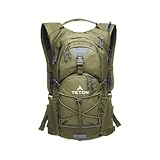
The TETON Sports Oasis 18L is an appealing option for hikers who need more equipment storage without paying premium-backpack prices. The selected configuration includes a 2-liter hydration bladder and an 18-liter backpack designed for hiking, cycling, and other outdoor activities.
Its larger cargo compartment makes it useful when carrying sunscreen, snacks, a rain layer, a basic emergency kit, and other supplies needed for a summer day hike.
Key Advantages
- Included 2-liter bladder: Provides a ready-to-use hydration system.
- 18-liter pack capacity: Offers room for more equipment than minimalist hydration packs.
- Adjustable shoulder and chest straps: Help improve stability and fit.
- Rain cover: Adds protection for the pack during changing weather.
- Multiple storage areas: Makes it easier to organize trail supplies.
Limitations
- Bulkier than lightweight running-style hydration backpacks.
- A 2-liter reservoir may not provide enough water for longer or particularly demanding hot-weather routes.
- Ventilation and fit may be less refined than on higher-priced technical packs.
- A rain cover does not make the entire backpack waterproof.
Best for: Budget-conscious hikers who want a hydration reservoir and useful daypack storage in one package.

Practical tip: Use the extra storage space for sun protection, emergency supplies, and additional drinking water when the route requires it.
3. N NEVO RHINO 12L Hydration Backpack — Best Lightweight Value
The N NEVO RHINO 12L Hydration Backpack offers a lightweight alternative for recreational hikers who prefer a compact pack with an included water reservoir. The selected version is advertised with a 2-liter bladder and a 12-liter backpack design.
Its straightforward construction makes it suitable for walking trails, casual hiking, cycling, and outdoor activities where keeping equipment weight down is a priority.
Key Advantages
- Included 2-liter water bladder: Allows hands-free drinking through a hose.
- Lightweight design: Reduces the weight of the empty pack.
- Adjustable shoulder and chest straps: Help keep the backpack positioned during movement.
- Compact storage: Accommodates basic hiking accessories.
- Budget-oriented construction: Offers an accessible entry point for occasional hikers.
Limitations
- Lightweight materials may offer less structure than heavier hiking packs.
- Less suitable for carrying bulky or heavy equipment.
- Comfort depends on fit, adjustment, and how the load is distributed.
- Water resistance should not be mistaken for complete waterproofing.
Best for: Recreational hikers seeking an affordable, lightweight hydration backpack for day-to-day outdoor use.

Practical tip: Before a long hike, wear the loaded pack on a shorter walk to check for rubbing, bouncing, or pressure points.
4. Osprey Hikelite 18L — Best Ventilated Hiking Daypack
The Osprey Hikelite 18L is a lightweight hiking backpack designed for warm-weather day hikes. Its standout feature is the AirSpeed suspended mesh back panel, which creates space between the backpack and the wearer’s back to improve ventilation.
The 18-liter main compartment provides room for snacks, extra clothing, first-aid supplies, and other trail essentials. An internal hydration sleeve accommodates a compatible reservoir of up to 3 liters, although the reservoir must be purchased separately.
Key Advantages
- AirSpeed ventilation: A suspended mesh back panel promotes airflow and reduces direct contact with the back.
- 18-liter storage capacity: Provides useful space for day-hiking equipment.
- Hydration compatibility: An internal sleeve and hose routing system accommodate a compatible reservoir of up to 3 liters.
- Included rain cover: Helps protect the backpack and its contents during wet weather.
- Adjustable harness: Shoulder straps, sternum strap, and hipbelt help stabilize the load.
- Trail organization: Includes water-bottle pockets, trekking-pole attachments, and storage for smaller essentials.
Limitations
- Hydration reservoir not included: A compatible water bladder must be purchased separately.
- Costs more than many entry-level hydration backpacks.
- Its 18-liter capacity may be insufficient for trips requiring substantial overnight equipment.
- The suspended back panel does not eliminate sweating during extreme heat.
Best for: Day hikers who prioritize ventilation, comfort, and flexible gear storage while using a separately purchased hydration reservoir.

Practical tip: Install and fill the hydration reservoir before hiking to confirm that it fits the internal sleeve and that the drinking hose routes comfortably through the pack.
5. CamelBak HydroBak — Best Hydration Pack for Short Hikes
The CamelBak HydroBak is a compact hydration backpack intended for outings where water is the main item being carried. The selected configuration includes a 1.5-liter reservoir and a small amount of additional storage.
Its lightweight construction makes it a practical option for short hikes, walks, and recreational activities where a large daypack would be unnecessary.
Key Advantages
- 1.5-liter reservoir: Provides hands-free access to drinking water.
- Compact profile: Reduces bulk compared with larger hydration daypacks.
- Adjustable straps: Help secure the pack during movement.
- Small accessory pocket: Offers space for a few personal essentials.
- Simple layout: Keeps the focus on carrying water comfortably.
Limitations
- Smallest reservoir capacity among these five recommendations.
- Very limited room for hiking equipment.
- Not ideal as the only water-carrying system for long or remote hikes.
- Less versatile than a larger hydration daypack.
Best for: Short, familiar trails and outdoor activities where water refill opportunities and additional supplies are readily available.

Practical tip: The HydroBak’s smaller reservoir makes route planning especially important. Carry additional water when conditions or distance require it.
How to Choose a Hydration Pack for Hot-Weather Hiking
The best hydration backpack is not necessarily the one with the largest reservoir or the most storage pockets. A good choice balances available water, fit, comfort, equipment capacity, and the conditions expected along the route.
1. Select an Appropriate Water Capacity
Hydration reservoirs commonly hold between 1.5 and 3 liters, although other sizes are available. A larger reservoir provides more carrying capacity but also increases pack weight.
Water requirements vary with temperature, humidity, exertion, body size, fitness, acclimatization, and access to refill points. A strenuous uphill hike in direct summer sunlight may require a very different water plan than a short shaded walk.
Before leaving, consider the total route distance, expected duration, available water sources, and how much extra water may be needed if the hike takes longer than planned.
Hot-Weather Water Planning
Do not assume that a 2-liter reservoir is automatically enough for a particular number of hiking hours. Plan water supplies for the actual conditions and include an appropriate safety margin.
Drinking excessively can also be harmful. Avoid forcing large amounts of water beyond what is needed, and account for electrolyte replacement during prolonged heavy sweating.
2. Prioritize Ventilation
Backpacks can trap heat and perspiration against the body. Ventilated back panels, breathable shoulder straps, and appropriate fit can improve comfort during warm-weather activity.
Mesh materials and airflow channels may reduce the feeling of trapped moisture, but no backpack can eliminate heat buildup entirely.
3. Check Fit and Stability
A hydration pack should remain stable without creating excessive pressure on the shoulders or chest. Adjustable shoulder and sternum straps help control movement.
For longer outings or heavier loads, consider whether the pack provides adequate support and distributes weight comfortably.
Always evaluate fit with the reservoir filled and the expected hiking equipment inside.
4. Consider Gear Storage
A small hydration pack may be sufficient for a short outing on a familiar trail. Longer hikes often require additional space for navigation equipment, food, sun protection, first-aid supplies, and weather-appropriate clothing.
Choose a pack that accommodates necessary equipment rather than selecting the smallest possible model solely to reduce weight.
5. Look for Easy Reservoir Cleaning
Hydration systems require regular cleaning and drying. A wide reservoir opening can make filling and washing easier, while removable hoses and bite valves simplify maintenance.
Check the manufacturer’s cleaning instructions and make sure the reservoir can dry thoroughly between uses.
6. Evaluate Insulation Realistically
Insulated reservoir sleeves and drinking hoses may help slow warming, but they do not guarantee cold water throughout a long summer hike.
Water temperature depends on the starting temperature, ambient conditions, direct sunlight, pack construction, and duration of exposure.
Insulation is a comfort feature, not a substitute for carrying sufficient safe drinking water.
Hydration Bladder vs. Water Bottles: Which Is Better?
Hydration bladders and conventional water bottles both have advantages. Many hikers benefit from carrying a combination of the two.
Advantages of Hydration Bladders
- Allow convenient drinking without removing the backpack.
- Distribute water within a dedicated pack compartment.
- Can carry substantial water volume in a flexible container.
- Encourage convenient access during continuous movement.
Advantages of Water Bottles
- Usually easier to inspect, clean, and refill.
- Make remaining water volume easier to monitor.
- Can serve as an independent backup if a hydration hose or bladder fails.
- May be more convenient for mixing electrolyte drinks or treating water.
For longer hikes, a hydration bladder paired with a separate bottle can provide both convenience and redundancy.
How to Keep Water Cooler in a Hydration Backpack
Warm drinking water is not necessarily unsafe, but cooler water can be more pleasant during summer hiking. Several practical steps can help slow warming.
- Start with chilled drinking water when possible.
- Use a compatible insulated reservoir sleeve.
- Keep the backpack out of direct sunlight during breaks.
- Use ice only when permitted by the reservoir manufacturer’s instructions.
- Consider an insulated drinking hose to reduce warming in exposed tubing.
- Refill with safe drinking water whenever appropriate opportunities are available.
Never assume that insulation makes untreated natural water safe to drink. Water from streams, lakes, and other outdoor sources may require appropriate treatment before consumption.
For additional water safety information, see Natural Water Purification Methods: What Actually Works.
Hot-Weather Hiking Safety: Hydration Is Only One Part of the Plan
Carrying enough water is essential, but hydration alone cannot prevent heat-related illness. High temperatures, humidity, strenuous activity, and prolonged sun exposure can overwhelm the body’s ability to regulate temperature.
Hot-weather hiking preparation should also include route planning, appropriate clothing, rest opportunities, sun protection, and a realistic assessment of weather conditions.
Watch for Heat Exhaustion
Possible symptoms include headache, dizziness, nausea, weakness, heavy sweating, and unusual fatigue. Stop exertion, move to a cooler place, and begin appropriate cooling measures if symptoms occur.
Heatstroke is a medical emergency. Confusion, altered mental status, collapse, or other severe symptoms require immediate emergency assistance and rapid cooling. Do not delay emergency care while attempting to finish a hike.
Learn more in How to Spot Heat Exhaustion in the Wild.
Plan Around the Weather
Whenever possible, avoid the hottest part of the day, choose shaded routes, and reduce strenuous activity during dangerous heat conditions.
Check the weather forecast and local heat advisories before departure. Postpone the hike when conditions create unacceptable risk.
Carry Basic Emergency Equipment
Even on familiar trails, consider carrying a charged phone, navigation tools, first-aid supplies, appropriate clothing, and a way to communicate if assistance is needed.
For additional strategies, read How to Stay Cool While Camping in Extreme Heat.
How to Clean and Maintain a Hydration Backpack
Routine cleaning helps keep a hydration system ready for repeated use. Moisture left inside a bladder or drinking tube can encourage unpleasant odors and microbial growth.
- Empty the reservoir after use.
- Wash the bladder according to the manufacturer’s instructions.
- Clean the drinking hose and bite valve using compatible tools.
- Rinse thoroughly when required by the cleaning procedure.
- Allow all components to dry completely before storage.
- Inspect seals, hose connections, and the reservoir for leaks or damage.
Follow the specific manufacturer’s guidance for approved cleaning solutions and dishwasher compatibility. Do not assume every hydration reservoir can be cleaned using the same methods.
Frequently Asked Questions
What is the best hydration pack for hiking in hot weather?
The CamelBak M.U.L.E. 12 is a strong all-around choice because it combines a 3-liter reservoir, organized storage, and a ventilated back panel. The best option for an individual hiker still depends on fit, route length, and equipment requirements.
Is a 2-liter hydration pack enough for a summer hike?
Sometimes, but not always. Water requirements depend on the conditions, duration, exertion, and availability of safe refill points. A 2-liter reservoir should not be treated as a guaranteed supply for a fixed number of hours.
Are hydration backpacks better than water bottles?
Hydration backpacks make drinking more convenient while moving, while bottles are generally easier to inspect and refill. Carrying both can provide additional flexibility and backup water storage.
Do insulated hydration packs keep water cold all day?
Not necessarily. Insulation can slow temperature changes, but its effectiveness depends on the weather, starting water temperature, and the design of the hydration system.
Can a hydration backpack be used for emergency preparedness?
Yes. A hydration backpack can be useful for evacuation planning, outdoor work, and emergency travel. However, it should complement rather than replace a broader emergency water supply.
How often should a hydration bladder be cleaned?
Follow the manufacturer’s cleaning recommendations. Emptying, cleaning as needed, and thoroughly drying the reservoir after use helps prevent residue buildup and unpleasant odors.
Can electrolyte drinks go inside a hydration bladder?
Only when permitted by the reservoir manufacturer. Some drinks leave residue that requires additional cleaning. A separate bottle may be more convenient for electrolyte mixtures.
Are hydration backpacks suitable for children?
Some hydration packs are designed specifically for children, but fit, load weight, reservoir capacity, and supervision matter. Adult-sized packs may not fit younger hikers properly.
Final Verdict: Which Hydration Backpack Should You Choose?
The best hydration packs for hiking in hot weather make drinking water convenient while providing a comfortable and practical way to carry trail essentials.
The CamelBak M.U.L.E. 12 offers the strongest overall combination of reservoir capacity, ventilation, and equipment storage among these five recommendations. For a more affordable daypack with additional room for supplies, the TETON Sports Oasis 18L is a practical alternative.
The N NEVO RHINO 12L suits lightweight recreational hiking, while the Osprey Hikelite 18L offers excellent ventilation and additional storage for warm-weather day hikes, although its hydration reservoir is sold separately. The CamelBak HydroBak is best reserved for shorter activities where its smaller reservoir and limited storage are sufficient.
Regardless of the model selected, reliable hydration planning depends on carrying adequate safe drinking water, choosing a comfortable fit, and adjusting outdoor activity to the actual heat conditions.
Related Hiking and Summer Survival Guides
- How to Spot Heat Exhaustion in the Wild
- How to Stay Cool While Camping in Extreme Heat
- DIY Cooling Neckwraps
- How to Find Natural Shade and Build Sun Shelters
- Best Foods to Pack for Hot-Weather Camping
- How to Stay Cool Without Power
Affiliate disclosure: As an Amazon Associate, we earn from qualifying purchases.