Wildfire Evacuation Plan: Your Complete Summer Readiness Checklist
Wildfires are no longer rare, backwoods events — they’re now an annual threat to millions of Americans. From California to Texas to the Carolinas, longer dry seasons, hotter temperatures, and stronger winds have made summer wildfire risk more widespread and unpredictable than ever. Wildfire evacuation plans save lives — but most people don’t have one.
This post contains affiliate links. I may earn a small commission at no extra cost to you. Learn more.
If you live in a fire-prone region — or even if you don’t — having a clear evacuation plan is no longer optional. Wildfires move at breakneck speed, and you might have only minutes to respond. That’s why we’ve built this ultimate guide — not just a checklist, but a fully loaded evacuation blueprint.
You’ll learn:
- How to assess your property’s fire risk
- What gear to pack and what mistakes to avoid
- How to build escape routes, prep your car, and protect your animals
- What to do before, during, and after an evacuation order
Did You Know?
- Embers from a wildfire can travel over a mile ahead of the main flame front
- Over 90% of homes that burn are ignited by flying embers — not direct flames
- FEMA estimates that 1 in 3 Americans now live in the wildland–urban interface (WUI), where fire risk is highest
This guide is broken into easy-to-follow steps. Whether you’re a homeowner, renter, RV camper, or homesteader — these tips will help you stay calm, move fast, and return safely.
Let’s jump in.
Top 10 Mistakes People Make During Wildfire Evacuations
Even with the best intentions, panic can cause people to make deadly mistakes during a wildfire evacuation. Here are the most common — and how to avoid them:
- Waiting Too Long to Leave
- Many people wait until flames are visible — by then, it’s often too late. Evacuate as soon as an order is issued.
- Packing at the Last Minute
- Rummaging through drawers wastes precious time. Your go bag should already be packed and accessible.
- Only Knowing One Route
- Roads can become blocked or jammed. Have at least 2–3 backup routes planned.
- Leaving Without Pets
- Pets panic during fire events. Train and pack for them ahead of time.
- Wearing the Wrong Clothes
- Shorts, flip-flops, and synthetic fabrics offer no protection. Always dress in long sleeves, pants, and boots.
- Forgetting Vital Documents
- IDs, medical records, insurance documents — store copies in your go bag or cloud.
- Underestimating Fire Speed
- Wildfires can overtake entire neighborhoods in minutes. Never assume you have time.
- Relying Solely on GPS
- Offline maps fail when signals drop. Keep a paper map and know your routes by heart.
- Not Having a Meeting Spot
- If your family is separated, confusion multiplies. Designate rally points in and out of town.
- Ignoring Re-entry Warnings
- Returning too soon can expose you to falling trees, unstable structures, or toxic ash.
Pro Tip: Practice makes panic-proof. Running through your evacuation plan regularly prevents these mistakes from happening when it matters most.
Understanding Fire Behavior: Why Wildfires Spread So Fast
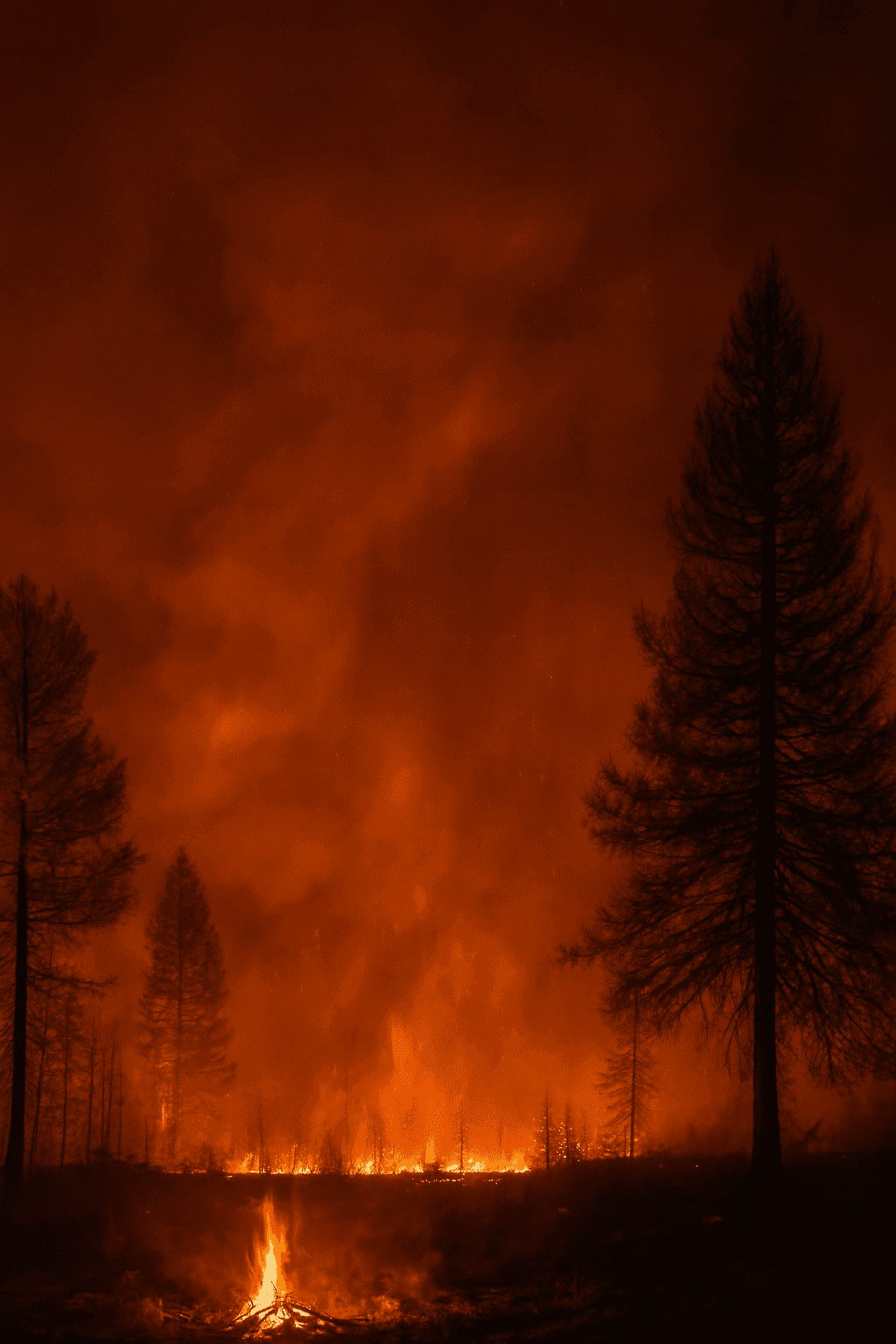
Understanding how wildfires behave is essential to building a plan that actually works. Most people assume wildfires crawl slowly through the forest. In reality, they often race through landscapes at 15+ mph, especially when driven by wind or slope.
Key Drivers of Fire Spread:
Wind: The #1 accelerator of wildfires. Wind pushes flames forward and launches embers miles ahead.
Fuel Type: Dry grass burns in seconds. Shrubs and chaparral ignite rapidly. Pine trees explode from internal resins. Even wood fences and mulch beds can feed flames.
Slope: Fires move faster uphill — for every 10° increase in slope, flame speed and intensity double.
Weather: Low humidity and high temperatures prime landscapes for combustion. Drought-stressed trees burn hotter and faster.
Ember Storms – The Invisible Threat
Flying embers are the leading cause of home ignition during wildfires — not walls of flame. These embers land in:
- Attic vents
- Roof shingles
- Gutters full of leaves
- Patio furniture or firewood stacks
Pro Tip: Installing ember-resistant vents and removing roof clutter can reduce ignition risk by over 75%.
How Fires Create Their Own Weather:
Large fires generate heat columns that alter wind patterns, pull in oxygen, and even create fire tornadoes. This unpredictability is why firefighting agencies use infrared and satellite tools to predict fire behavior in real time.
As temperatures rise and droughts deepen, wildfires are no longer a matter of if — but when. Every year, thousands of families are forced to flee their homes with little warning. But those who prepare ahead of time? They escape faster, safer, and with far less chaos.
Step 1: Know Your Local Wildfire Risk
Not every region faces the same level of wildfire threat — but no area is immune anymore. Long droughts, rising temperatures, and record-breaking winds have extended wildfire season to nearly year-round in many areas. You must understand your region’s unique exposure to risk.
Do This First:
✅ Use the USDA Wildfire Risk Map to check your zip code’s danger level.
✅ Call your local fire department or emergency services office and ask about historical fire activity.
✅ Research local fuel loads — is your area surrounded by chaparral, pine, grassland, or mixed forest?
✅ Learn what evacuation tier your community uses: Warning, Order, or Shelter-in-Place.
Risk Factors to Consider:
- Proximity to national or state forest boundaries
- Location within the Wildland–Urban Interface (WUI)
- Slope and elevation: Fires move faster uphill
- Access routes: Do you live on a single road or cul-de-sac?
Pro Tip: If you live near undeveloped land, forests, or rural brush areas, your risk of ember ignition skyrockets — even if a fire never directly reaches your home.
Step 2: Set Up Emergency Alerts (Before It’s Too Late)
In a wildfire, every second counts. The faster you get alerted, the faster you can move. Don’t count on sirens or someone knocking. Set up redundant systems.
Essential Alerts:
✅ Wireless Emergency Alerts (WEA): Built into most smartphones — check your settings.
✅ Local County Alerts: Sign up via your county’s emergency management website (text/email).
✅ FEMA App: National alerts + disaster prep tips.
✅ Watch Duty: Real-time wildfire reporting app used in CA, TX, OR, WA.
✅ Social media: Follow your fire department, sheriff, and Cal Fire accounts on Twitter/X.
Setup Tips:
- Enable location services for fire alert apps
- Register everyone in your household for text alerts
- Don’t forget older adults who may not use smartphones
Pro Tip: Watch Duty and PulsePoint provide faster on-the-ground updates than most news stations. Don’t rely on just TV or radio.
Step 3: Build Your Wildfire Go Bag (Bug-Out Bag)
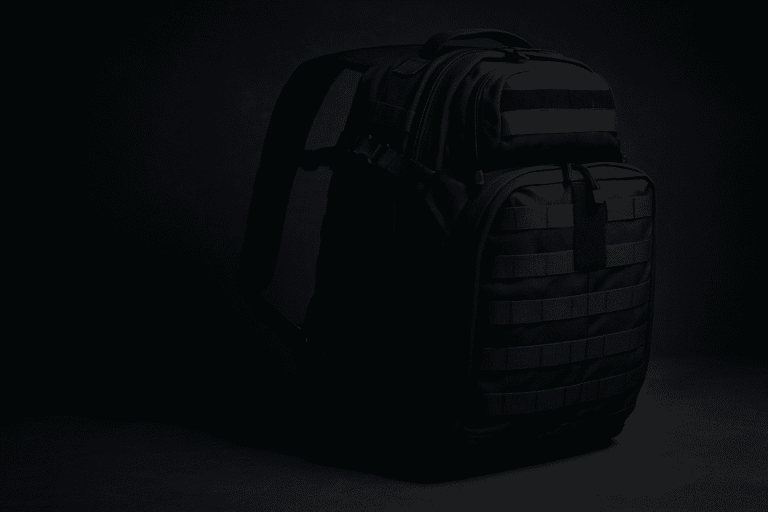
When evacuation orders hit, every second matters. You won’t have time to pack, double-check, or argue about what to bring. A pre-packed go bag gives you speed, confidence, and a critical edge.
What to Pack:
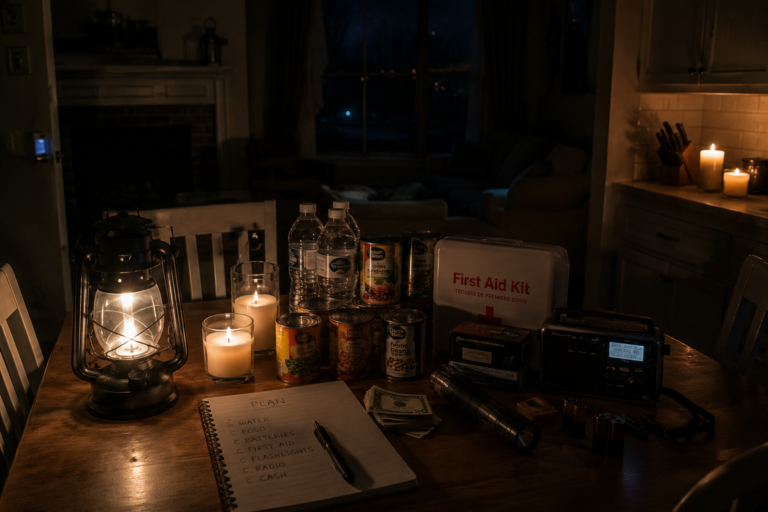
✅ N95 smoke masks: Filters out fine particulate matter from wildfire smoke. Essential for safe breathing.
✅ 3 days of nonperishable food and water: Energy bars, canned meals, and at least one gallon of water per person per day.
✅ LED flashlight and extra batteries: Smoke often cuts visibility and power outages are common.
✅ Multitool and fire-resistant gloves: Useful for opening shelters, repairing gear, or protecting hands.
✅ Copies of essential documents: Include IDs, insurance, titles, medical records, and photos of your home and valuables.
✅ Cash in small bills: ATMs and card readers may be offline during an emergency.
✅ Personal hygiene kit: Toothbrush, soap, feminine products, hand sanitizer, moist wipes.
✅ Medications and a basic first aid kit: Include prescriptions, allergy meds, pain relievers, and medical contact info.
✅ Portable phone charger or battery bank: Communication is survival — don’t let your phone die.
✅ Change of clothes and sturdy shoes: Prioritize flame-resistant materials when possible.
Pack by Person:
- Each adult should have their own bag.
- Make child-specific bags with smaller masks, food, comfort items.
- Don’t forget your pets (more on that in Step 8).
Pro Tips:
- Use a red backpack or duffel bag for visibility and quick grab.
- Label each bag with name, address, and emergency contact.
- Rotate your kit every 6 months — check expiration dates and battery charge levels.
Step 4: Create a Defensible Space Around Your Home
Most homes that burn in wildfires don’t catch from direct flames — they ignite from flying embers, which can travel over a mile ahead of the fire front. That’s why creating a defensible zone around your home is one of the most effective ways to protect it.
A well-maintained buffer zone slows fire spread, gives firefighters room to operate, and can mean the difference between your house surviving or being reduced to ashes.
The 3-Zone Defense Strategy:
Zone 1: 0–5 feet (Immediate Zone)
- ✅ Remove ALL flammable materials — wooden furniture, door mats, firewood, potted plants, decorations
- ✅ Replace mulch with gravel or bare dirt
- ✅ Install ember-resistant vents and screens
- ✅ Trim branches hanging over the roof or touching the structure
Zone 2: 5–30 feet (Intermediate Zone)
- ✅ Maintain lawns and groundcover — mow grass under 4 inches
- ✅ Trim or remove shrubs touching buildings or decks
- ✅ Space out plants so flames can’t leap from one to the next
- ✅ Keep propane tanks and grills at least 10 feet from the home
Zone 3: 30–100+ feet (Extended Zone)
- ✅ Thin tree clusters — keep crowns at least 10 feet apart
- ✅ Remove ladder fuels (vegetation that can carry fire into tree canopies)
- ✅ Clear dry brush, leaves, and pine needles from the ground
- ✅ Use fire-resistant landscaping plants where possible (e.g., lavender, agave, red monkeyflower)
Tools You’ll Need:
- Rake, shovel, and weed trimmer
- Chainsaw (gas or battery)
- Hose with spray nozzle or fire pump if you’re rural
- Heavy-duty trash bags for yard waste
Pro Tips:
- Replace wooden fences near the home with metal or masonry
- Keep gutters clear — dry debris can catch from just a spark
- If you’re in a drought-prone region, install drip irrigation to reduce flammable growth
Creating defensible space isn’t a one-time job — it’s a seasonal habit. Schedule quarterly yard reviews and do a fire-readiness sweep every spring and late summer.
Step 5: Map Out Multiple Evacuation Routes
When it comes to evacuating during a wildfire, having just one way out is dangerous. Roads may be blocked by fire, downed trees, emergency vehicles, or panicked traffic. That’s why your survival may depend on having—and practicing—multiple escape routes.
Route Planning:
✅ Identify at least 3 evacuation routes from your home using both main and back roads.
✅ Include non-highway options: rural roads, fire roads, gravel or private lanes (if accessible).
✅ Plot routes on both digital and paper maps. GPS systems can fail, or your phone may die.
✅ Make sure all family members know the routes by memory.
Route Practice:
- Run quarterly evacuation drills using different routes.
- Practice both daylight and nighttime escapes. Fires often strike at dusk.
- Test routes while pulling a trailer if you plan to evacuate with RV, livestock, or gear.
- Time yourself to see how fast you can load up and leave.
Keep These in Your Vehicle:
- Road atlas or printed map of your county and neighboring counties
- Compass or offline GPS app like Gaia GPS or AllTrails+
- Emergency contact sheet with phone numbers in case you lose service or your phone dies
Pro Tip: Don’t rely on GPS-only routes. In 2020, several families in California got routed into wildfire zones due to automatic re-routing. Stick to your pre-vetted exits.
Step 6: Prepare Your Vehicle for Fast Evacuation
Your vehicle is your lifeline during an evacuation. It needs to be fueled, stocked, and ready to go at a moment’s notice. Treat your car like survival gear.
Vehicle Prep Checklist:
✅ Keep your tank at least half full at all times during wildfire season. Gas stations may be closed or backed up.
✅ Back into your driveway — facing outward makes for a faster escape.
✅ Clear the area around your car — no flammable vegetation, debris, or garage clutter.
✅ Spare keys easily accessible for every vehicle in the household.
✅ Flashlight, paper maps, and charging cables inside the glove compartment.
✅ Emergency car kit: jumper cables, fire extinguisher, tire patch kit, duct tape, road flares.
Preload Your Trunk:
- A small go bag with essentials in case you’re stuck in traffic
- Extra water, snacks, baby wipes, and blanket
- Pet leash or carrier if evacuating with animals
- Battery-powered radio or NOAA weather radio
Paperwork You Should Keep in the Glovebox:
- Proof of insurance
- Registration
- Copy of evacuation plan and local emergency contact numbers
Pro Tips:
- Practice loading your vehicle during a timed drill
- Don’t forget about towing capacity if using trailers
- If you live on a long driveway or rural road, leave your car outside and ready during high alert days
Step 7: Practice a Realistic Evacuation Drill
Plans are only as good as your ability to carry them out — especially under stress. Running real-world evacuation drills helps uncover problems, build confidence, and train your family to act without panic.
Drill Planning:
✅ Schedule a quarterly drill during wildfire season (spring through fall)
✅ Pick random days/times — don’t always rehearse during ideal conditions
✅ Practice during a red flag warning day if safe (to simulate urgency)
What to Include in the Drill:
- Simulate an emergency alert — start with a phone alarm or loud buzzer
- Set a time limit: 10 minutes to load up and be on the road
- Assign roles (e.g., dad grabs go bags, teen loads dog, mom locks house)
- Navigate your secondary evacuation route, not the usual one
Track Your Performance:
- How long did it take to grab the bags and be in the car?
- Did anyone forget anything critical?
- Were any supplies expired or missing?
- Did your pet cooperate or panic?
Document these findings in a family wildfire journal or simple notebook. Adjust your gear, plan, or roles based on what you learn.
Pro Tip: Run at least one nighttime drill when visibility is low and adrenaline is higher — this mimics the conditions of many real wildfire evacuations.
Step 8: Protect Pets, Livestock, and Animals
When a wildfire strikes, your animals rely entirely on you for safety. Whether you have pets, horses, chickens, or livestock, planning ahead is the only way to ensure they’re not left behind or lost in the chaos.
For Household Pets:
✅ Prepare a pet emergency kit with food, water, medications, leash, carrier, vaccination records, and comfort items.
✅ Keep spare collars with ID tags for every pet. Microchip your animals if possible.
✅ Know which hotels or shelters accept pets during emergencies. Create a list with phone numbers.
✅ Practice loading your pet into its carrier under stress-free conditions so it’s familiar.
For Livestock and Horses:
✅ Arrange transport early — trailers and haulers will be in high demand during evacuations.
✅ Keep halters, leads, and documentation near your animal pens.
✅ Have a designated evacuation site for animals (fairgrounds, friends’ land, boarding farms).
✅ Spray paint or tag your phone number on their hooves, flanks, or ID bands in case they escape.
For Small Animals or Backyard Farms:
✅ Preload wire crates or tubs with straw bedding and keep them nearby.
✅ Have a simple bug-out cage or coop cover to use in transport.
✅ Bring enough feed and water for 3–5 days.
✅ Know how to quickly disable electric fencing and open pens safely.
Pro Tips:
- Print out a Pet/Livestock Evacuation Checklist and tape it to your garage wall.
- Talk to your neighbors now about animal transport options — don’t wait until sirens are wailing.
- If you’re not home, keep a sign by the door noting what animals are inside for rescuers.
Step 9: What to Do When an Evacuation Order Is Issued
When the order comes down, it’s not a suggestion — it’s a life-saving command. Don’t delay. Wildfires move fast, and waiting even 10 extra minutes can put you directly in harm’s way.
Evacuation Levels to Know:
- Level 1 – Be Ready: There’s a risk in your area. Prepare to leave, stay alert.
- Level 2 – Be Set: Danger is increasing. Pack the car, check routes, and be ready to go any minute.
- Level 3 – GO NOW: Evacuate immediately. Do not delay for any reason.
Immediate Action Checklist:
✅ Load go bags and pets into your vehicle.
✅ Dress in non-flammable clothing: long sleeves, pants, boots, and a mask.
✅ Shut all windows and doors but leave them unlocked for firefighters.
✅ Turn off HVAC systems.
✅ Turn on exterior and interior house lights to increase visibility in smoke.
✅ Post an “EVACUATED” sign on your front door.
Exit Smart:
- Use your primary or backup evacuation route — not the GPS if it conflicts
- Drive with headlights on even in daylight
- Watch for falling embers, downed trees, and emergency personnel
Pro Tip: If you’re ever trapped and can’t evacuate, shelter in a vehicle with windows rolled up, parked in a clear area with no brush. Lie low and call 911 to report your location.
Step 10: Return Safely and Rebuild Smart
After the flames pass, returning home is emotionally heavy and potentially dangerous. The post-fire landscape is often unstable. Smoke may still linger, power lines might be down, and toxic ash can coat everything.
Before You Return:
✅ Wait for the official all-clear from your local fire or emergency authorities
✅ Monitor updates on InciWeb, local news, or city websites
✅ Wear N95 masks, long sleeves, and gloves — ash and debris can be harmful
Re-entering Your Property:
✅ Check for structural damage from heat, fallen trees, or firefighting activities
✅ Photograph EVERYTHING for insurance: damage, debris, water or chemical residue
✅ Open windows for ventilation — air quality may still be poor
✅ Do not turn on gas or electric systems until cleared by a utility professional
✅ Dispose of spoiled food, charred items, and any plastic that’s melted
Aftermath Essentials:
- File insurance claims immediately — delays reduce your payout window
- Apply for FEMA assistance if eligible: disasterassistance.gov
- Seek counseling or support groups — emotional trauma after evacuation is real
- Begin rebuilding using fire-resistant materials: metal roofs, concrete siding, ember-proof vents
Pro Tips:
- Talk to neighbors about forming a Firewise Community (reduces future risks and may lower insurance)
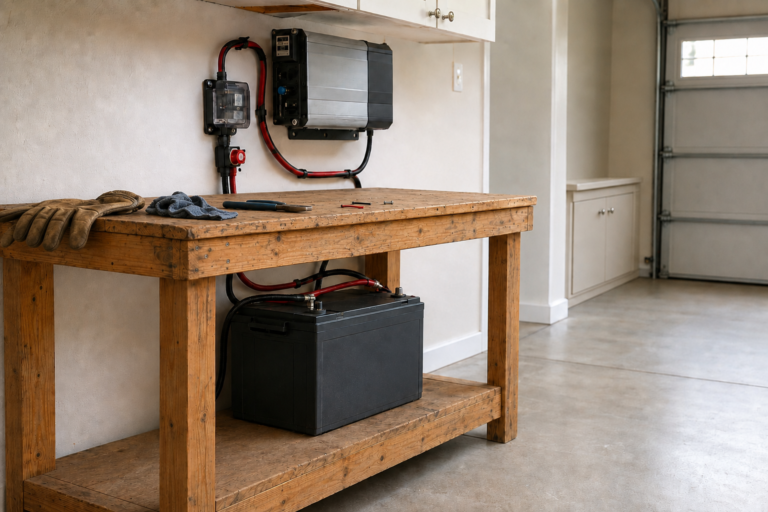
- Install a backup generator and emergency water storage tank for future events
- Review what worked and what didn’t — update your go bag, drill notes, and defensible space
Conclusion: The Fire Season Is Getting Longer — But So Can Your Odds of Survival
Every summer, more Americans face what used to be “once-in-a-lifetime” fires. The truth is, there’s no such thing as fire season anymore — it’s fire reality. Whether you live in the foothills, suburbs, or desert fringe, the difference between panic and preparedness comes down to planning before the smoke ever rises.
A wildfire evacuation plan isn’t paranoia — it’s personal responsibility. It means your family knows exactly what to grab, which road to take, and where to meet when everything turns orange. Practice your plan, update your go bags, and keep your vehicle fueled.
Because when the wind shifts and sirens start wailing, you won’t have time to think — only to act.
Stay sharp, stay ready, and never underestimate how fast the landscape can change.
Further Reading: Level-Up Your Emergency Preparedness
➡️ How to Build the Ultimate 72-Hour Bug-Out Bag: A Complete Guide
Learn how to assemble a grab-and-go kit that covers food, water, power, and protection when evacuation orders hit.
➡️ Best Survival & Off-Grid Generators of 2025
Don’t rely on luck or the grid — compare top portable power options for keeping lights, comms, and fridges running during blackouts.
➡️ Ultimate Water Purification Guide
Wildfire smoke and debris can taint water supplies fast — learn how to make any source safe to drink.
➡️ When the Lights Go Out: Urban Survival Guide for Blackouts, Riots & Everyday Chaos
A hard-truth guide to staying safe when power, order, and communication all collapse.
➡️ Best Solar Gear for Summer Survival and Camping
Use renewable energy to stay powered through long-term outages and remote evacuations.
🔥 Final Wildfire Evacuation Checklist
✅ Before Fire Season:
- Check your wildfire risk map
- Sign up for alerts (WEA, county, FEMA, Watch Duty)
- Inspect and restock go bags
- Schedule defensible space yard work
- Plan and print evacuation routes
🎒 Go Bag Packed:
- N95 masks
- 3 days food and water
- Flashlight + batteries
- Medications & first aid
- Documents & ID copies
- Cash
- Phone charger
- Clothes + shoes
- Hygiene kit
🚗 Vehicle Ready:
- Half-tank of gas
- Emergency car kit
- Pet crate/leash
- Paper maps
- Keys accessible
- Load plan rehearsed
🐾 Pet & Animal Plan:
- Pet bug-out bag
- Hotel or shelter contact list
- Livestock trailer arranged
- Crates and feed preloaded
🔥 In a Fire Emergency:
- Load go bags and pets
- Dress in fire-resistant clothes
- Shut windows, unlock doors
- Turn off HVAC, turn on lights
- Evacuate via planned route
- Post “EVACUATED” sign
🏠 After Returning:
- Check structural safety
- Photograph damage
- File insurance/FEMA claims
- Wear protection for cleanup
- Rebuild with fire-hardened materials
Evacuation timing is a key mobility layer in our Emergency Preparedness Master Plan.
Need more guides like this? Explore:
- Ultimate Water Purification Guide
- DIY Bug Repellent That Actually Works
- Campfire-Free Outdoor Cooking Hacks
- Best Solar Gear for Summer Survival
📌 Bookmark this post. Share it. Print it. Because when wildfire season strikes, this may be the most important checklist you own.