
Best Solar Gear for Summer Camping & Emergency Survival
Choosing the best solar gear for camping means finding equipment that can reliably generate, store, and deliver electricity when you are away from the grid. Whether you’re spending a weekend outdoors, preparing for a summer blackout, or building an emergency survival kit, the right solar equipment can help keep essential devices working.
This post contains affiliate links. I may earn a small commission at no extra cost to you. Learn more.
But not every product advertised as solar-powered is equally useful. Some compact solar chargers work well for small electronics, while others recharge too slowly to be dependable. Larger solar power stations offer more flexibility, but they require compatible panels and sufficient battery capacity.
In this guide, we’ll cover six practical solar camping products, explain what each one does, and help you choose the right setup for your needs.
Best Solar Gear for Camping: Quick Comparison
| Product | Best For | Main Limitation |
|---|---|---|
| BigBlue 28W Solar Charger | Charging small electronics | Depends on direct sunlight |
| LuminAID PackLite Max | Tent and campsite lighting | Limited battery capacity |
| Midland ER310 | Emergency weather information | Small solar charging panel |
| Jackery Explorer 1000 v2 | Fans, laptops and larger electronics | Higher cost and weight |
| ICECO GO20 Refrigerator | Food refrigeration | Requires external power |
| MrMapMax 4.5L Solar Oven | Fuel-free outdoor cooking | Weather-dependent cooking |
1. BigBlue 28W Solar Charger: Best for Phones and Small Electronics
A folding solar panel is one of the most useful pieces of solar survival gear. Unlike a power bank with a tiny solar panel built into its case, a dedicated folding panel provides a larger surface area for collecting sunlight.
The BigBlue 28W Solar Charger is designed for portable USB charging during outdoor activities. It is particularly useful for replenishing compatible power banks and small electronics while camping.
Best for: Backpackers, campers, and emergency kits that need portable USB charging.
Advantages
- Foldable design for transportation
- Dedicated solar charging surface
- Useful for charging compatible small electronics
- Does not require gasoline or disposable fuel
Limitations
- Charging performance changes with sunlight and weather
- Shade can significantly reduce output
- Not intended to operate high-wattage appliances

Buying tip: Check the exact USB output connections before purchasing. A dedicated power bank can store the electricity collected during the day for use after sunset.
2. LuminAID PackLite Max: Best Solar Camping Lantern
Reliable lighting is essential when camping or preparing for a blackout. A solar rechargeable lantern can illuminate a tent, campsite, or emergency shelter without requiring a continuous electrical supply.
The LuminAID PackLite Max is a collapsible rechargeable lantern designed for portable outdoor lighting. Its solar charging capability makes it useful when wall outlets are unavailable.
Best for: Tent lighting, emergency preparedness bags, and lightweight camping setups.
Advantages
- Compact, portable construction
- Solar recharging capability
- Useful for campsite and emergency lighting
- Rechargeable design reduces dependence on disposable batteries
Limitations
- Integrated solar charging can be slow
- Battery capacity is limited compared with a power station
- Not a replacement for a high-output work light

Keep a separate flashlight or headlamp in your emergency kit. Having multiple lighting options is more dependable than relying on a single rechargeable lantern.
3. Midland ER310: Best Solar Emergency Weather Radio
When severe weather disrupts electricity or cellular networks, an emergency radio provides another way to receive important information.
The Midland ER310 Emergency Weather Radio offers multiple charging options, including solar charging and hand-crank operation. It is designed to receive NOAA weather broadcasts and provide useful emergency features.
Best for: Emergency preparedness, severe-weather monitoring, and camping trips where reliable communication is important.
Advantages
- NOAA weather-band reception
- Multiple charging methods
- Hand-crank backup
- Built-in emergency lighting features
Limitations
- Small solar panel provides limited charging power
- Not suitable as a primary smartphone charging system
- Radio reception varies with location and conditions

A weather radio should be part of a broader communication plan rather than your only source of emergency information.
For more options, read our Best Emergency Solar Radios for Blackouts.
4. Jackery Explorer 1000 v2: Best Portable Power Station for Extended Camping
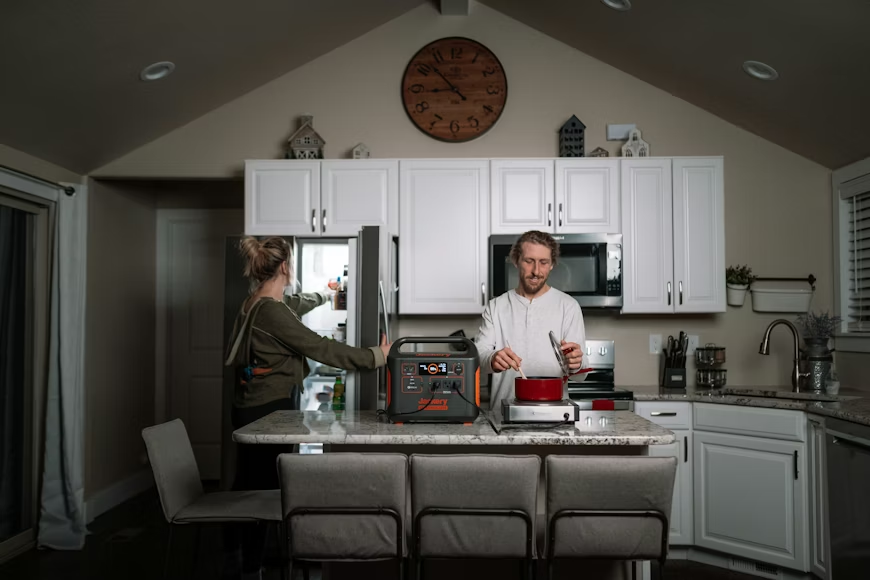
A portable power station stores electricity in a rechargeable battery and supplies power through compatible outlets. It can support devices that require more energy than a small USB power bank can provide.
The Jackery Explorer 1000 v2 is a portable power station with approximately 1,070Wh of battery capacity and a 1,500W continuous AC output rating. It uses lithium iron phosphate battery chemistry.
Best for: Car camping, extended outdoor trips, and emergency backup electricity for selected essential devices.
Advantages
- Much larger energy capacity than a phone power bank
- Multiple charging and output options
- Compatible with appropriately matched solar panels
- Useful for fans, laptops, lighting, and other compatible electronics
Limitations
- More expensive and heavier than basic charging equipment
- Solar panels may need to be purchased separately
- Battery capacity limits how long appliances can operate
- Solar charging performance depends on sunlight and panel configuration

Before purchasing, calculate the energy requirements of the devices you intend to run. Use our Battery and Power Station Runtime Calculator to estimate how long a battery might last.
5. ICECO GO20: Best Portable Refrigerator for Solar Camping Setups
Keeping perishable food cold during an extended camping trip can be difficult without dependable refrigeration. Portable compressor refrigerators offer an alternative to traditional ice-filled coolers.
The ICECO GO20 Portable Refrigerator is a compact powered refrigerator intended for mobile applications such as camping and road trips.
It is important to understand that this type of refrigerator is not solar-powered by itself. It requires an appropriate electrical supply, which may come from a vehicle connection or a compatible battery system recharged by solar panels.
Best for: Car camping, extended outdoor trips, and portable food refrigeration.
Advantages
- Powered refrigeration without continually replacing ice
- Portable design
- Can be incorporated into a properly sized battery and solar setup
- Useful for longer camping trips
Limitations
- Requires continuous access to sufficient stored electricity
- Can consume substantial energy over multiple days
- More expensive than a basic insulated cooler
- Needs appropriate ventilation and temperature monitoring

For food safety, keep refrigerated perishables at 40°F or below. Use a thermometer to verify the internal temperature rather than assuming the refrigerator is maintaining safe conditions.
Before buying a solar-compatible refrigerator, estimate its daily energy consumption and make sure your power station can operate it overnight.
6. MrMapMax 4.5L Solar Oven: Best Fuel-Free Solar Cooking Option
A solar oven provides another way to prepare meals outdoors without using propane, charcoal, or firewood. Solar cooking can be especially useful when conserving fuel is a priority.
The MrMapMax 4.5L Portable Solar Oven is designed for outdoor cooking using concentrated sunlight. Its advertised 4.5-liter capacity and included thermometer make it an option for campers interested in fuel-free cooking.
Best for: Sunny-day camping, supplemental emergency cooking, and off-grid meal preparation.
Advantages
- Uses sunlight instead of combustible cooking fuel
- Advertised 4.5-liter cooking capacity
- Includes a thermometer
- No open cooking flame during solar operation
Limitations
- Cooking depends on sunlight and weather
- Cooking times vary
- Requires outdoor space and proper positioning
- Not a dependable primary cooking method during prolonged cloudy weather

Use a food thermometer to confirm that food reaches safe internal cooking temperatures. Keep an alternative cooking method available for conditions when solar cooking is impractical.
How Much Solar Power Do You Need for Camping?
The amount of solar power you need depends on the devices you plan to operate and how long they will run each day.
Two electrical measurements are especially important:
- Watts (W): The rate at which a device consumes or produces power.
- Watt-hours (Wh): The amount of energy consumed or stored over time.
For example, a 20-watt camping fan operating for five hours consumes approximately 100 watt-hours of electricity.
Example Daily Camping Power Budget
| Device | Usage | Daily Energy |
|---|---|---|
| Camping fan | 20W for 5 hours | 100Wh |
| LED lighting | 5W for 4 hours | 20Wh |
| Phone charging | Estimated daily energy | 20Wh |
| Total | 140Wh |
This example requires approximately 140Wh daily before accounting for conversion losses and other inefficiencies.
A solar panel rated at 100W could theoretically produce 400Wh during four equivalent hours of full-strength sunlight. Actual usable output is generally lower because of weather, panel angle, heat, shading, and charging losses.
That is why solar equipment should be sized with a reasonable margin rather than assuming ideal conditions every day.
How to Choose Compatible Solar Panels and Power Stations
Not every solar panel works with every portable power station. Before purchasing equipment, check the manufacturer’s electrical specifications.
Five Things to Verify
- Solar input wattage: Confirm the maximum amount of solar power the station can accept.
- Input voltage: Make sure the panel operates within the supported charging range.
- Open-circuit voltage: Never exceed the station’s maximum permitted solar input voltage.
- Connector compatibility: Use appropriate manufacturer-approved cables and adapters.
- Charging current: Confirm that the solar configuration remains within the equipment’s limits.
Improvised or incompatible electrical connections can damage equipment and create safety hazards.
For a broader backup power strategy, see our Emergency Power Backup Guide.
How Extreme Summer Heat Affects Solar Camping Gear
Solar panels need sunlight, but high temperatures can reduce their electrical efficiency. Batteries also have temperature limits that must be respected.
During hot-weather camping, take these precautions:
- Place solar panels in direct sunlight where they will not create a trip hazard.
- Keep power stations shaded and ventilated according to the manufacturer’s instructions.
- Do not leave rechargeable batteries inside dangerously hot vehicles.
- Avoid covering power station cooling vents.
- Protect electrical connections from moisture.
- Inspect cables and connectors before use.
- Stop using damaged or abnormally hot battery equipment.
Remember that a solar-powered fan is not a substitute for safe cooling during dangerous heat. According to CDC guidance, fans should not be relied upon when indoor temperatures reach 90°F or higher.
Read our How to Stay Cool Without Power guide for additional heat-safety strategies.
Build a Practical Solar Camping Kit
Basic Camping Kit
For short trips and basic emergency preparedness, start with:
- Foldable USB solar charger
- Fully charged USB power bank
- Rechargeable camping lantern
- Emergency weather radio
- Compatible charging cables
This setup is primarily intended for small electronics, lighting, and communication.
Extended Camping Kit
For multi-day car camping or more demanding electrical needs, consider adding:
- Portable power station
- Compatible 100–200W solar panel
- Rechargeable fan
- Portable refrigerator, if needed
- Additional battery storage or backup charging arrangements
Test the system at home before relying on it outdoors.
Off-Grid Emergency Kit
For extended emergencies, focus on:
- Adequate battery capacity
- Solar panels sized for expected daily energy consumption
- Reliable lighting and communications
- Low-power appliances
- Backup cooking methods
- Alternative charging arrangements for poor weather
A properly planned system should prioritize essential needs rather than attempting to operate every household appliance.
Common Mistakes When Buying Solar Camping Gear
Buying Equipment Based Only on Advertised Wattage
Solar panel ratings represent output under standardized conditions. Actual performance changes with sunlight, temperature, shading, and equipment efficiency.
Choosing a Power Station Without Calculating Runtime
Battery capacity determines how much energy is available. Even a relatively large power station can drain quickly when operating high-wattage appliances.
Ignoring Solar Panel Compatibility
Check electrical specifications and connector requirements before purchasing panels or charging cables.
Depending on Solar Charging During Bad Weather
Cloud cover, storms, smoke, and shade can reduce solar production. Keep batteries charged and maintain a backup plan.
Buying Too Many Solar Gadgets
More equipment does not automatically mean better preparedness. A reliable panel, battery, and essential devices may be more useful than a collection of poorly matched solar accessories.
Solar Camping Gear Packing Checklist
- Portable solar charging panel
- Fully charged power bank or power station
- Compatible charging cables
- Rechargeable lantern or flashlight
- Emergency weather radio
- Weather-resistant electronics storage
- Backup charging method
- Portable refrigerator, if needed
- Solar cooking equipment, if appropriate
- Printed equipment instructions
Before leaving home, verify that every device charges properly and that your stored battery capacity is sufficient for the trip.
Frequently Asked Questions
What is the best solar gear for camping?
For most campers, a folding solar charger, rechargeable power bank, and reliable lantern provide a useful starting point. A weather radio adds emergency information capability, while a portable power station is helpful for larger electrical loads.
Can a 28W solar panel charge a smartphone?
Yes, a compatible 28W solar panel can charge smartphones under suitable conditions. Actual charging speed depends on sunlight, panel output, USB compatibility, and device requirements.
Can solar panels power a camping refrigerator?
Yes, when paired with a compatible battery system and enough solar charging capacity. A portable compressor refrigerator generally needs stored electricity to continue operating overnight.
Is a solar oven worth buying?
A solar oven can be useful for sunny-day outdoor cooking and conserving fuel. However, it is not a dependable sole cooking method during prolonged cloudy weather or emergencies.
How long will a portable power station last while camping?
Runtime depends on battery capacity and device power consumption. A 1,000Wh battery might theoretically operate a constant 100W load for ten hours, but actual runtime will be shorter because of conversion losses and other factors.
Will solar camping gear work on cloudy days?
Some solar panels produce electricity under cloudy conditions, but output is usually lower than in direct sunlight. Heavy clouds and shade can make charging too slow to meet daily energy requirements.
Final Thoughts: Choose Solar Gear That Solves Real Problems
The best solar gear for camping and emergency survival is equipment that meets a specific need. A folding solar charger can replenish small batteries. A rechargeable lantern provides lighting. An emergency radio helps you stay informed. A portable power station can operate larger electronics, while specialized equipment such as refrigerators and solar ovens can expand an off-grid setup.
Start with your essential devices, estimate their energy requirements, and choose equipment that works together.
Above all, test your solar camping system before depending on it during an emergency.
Further Reading
- Best Solar Survival Gear and Kits
- 10 Essential Solar-Powered Survival Items
- Best Emergency Solar Radios for Blackouts
- Battery and Power Station Runtime Calculator
- Emergency Power and Energy Backup Guide
- How to Prepare for a Two-Week Power Outage
- How to Stay Cool Without Power
Stay prepared.