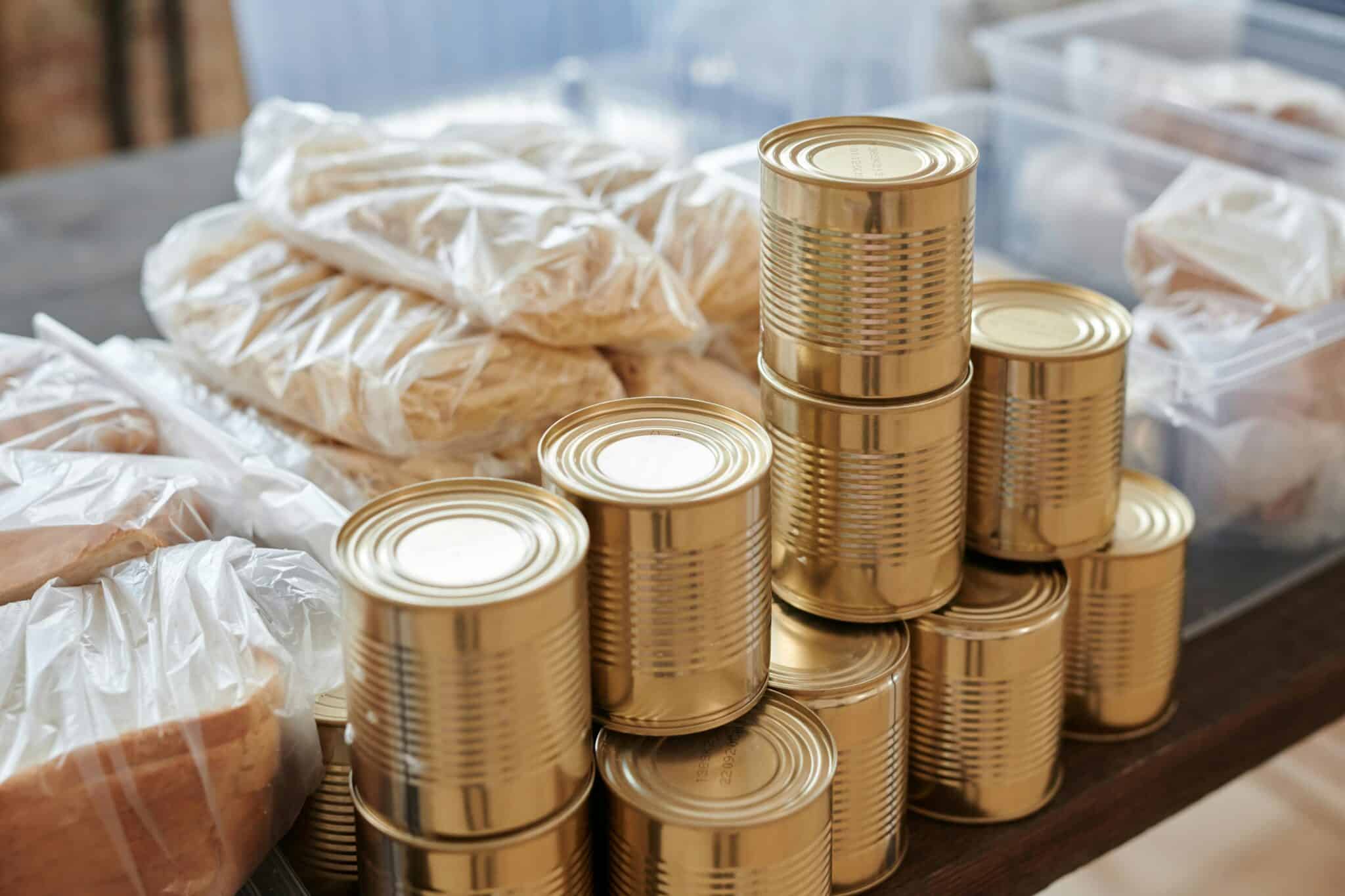
Apartment Emergency Food Storage: $100 Pantry-in-a-Tote
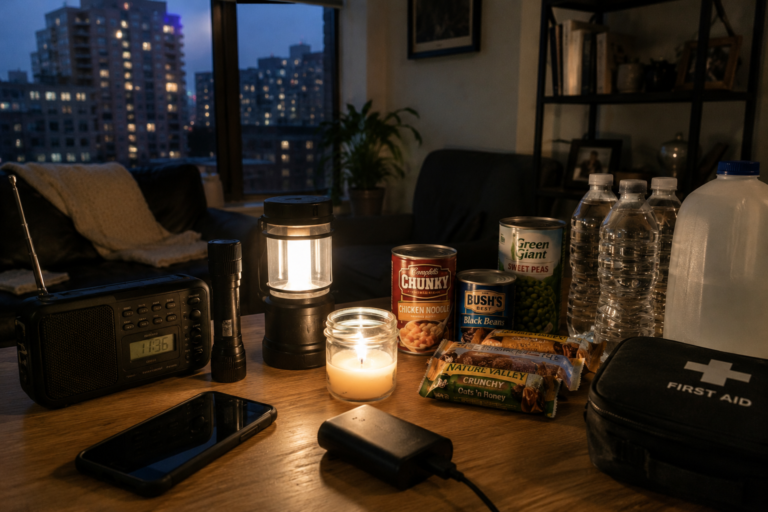
Apartment emergency food storage doesn’t require a basement, garage, or stacks of expensive survival food buckets. Even a small apartment can accommodate a useful emergency pantry when you choose compact, shelf-stable foods and organize them properly.
This post contains affiliate links. I may earn a small commission at no extra cost to you. Learn more.
One practical option is a Pantry-in-a-Tote: a sturdy storage container holding approximately $100 worth of everyday pantry staples. The goal is to keep food organized, accessible, and ready for a power outage, grocery disruption, or temporary financial emergency.
However, a $100 tote is not automatically a complete 30-day food supply for two adults. The number of days it lasts depends on the total calories, household size, dietary needs, and whether you have enough water and cooking equipment.
This guide explains how to build a compact apartment emergency food storage system, estimate its food supply, store it safely, and expand it toward a realistic 30-day preparedness goal.
Quick Answer: Can You Store Emergency Food in One Tote?
Yes. An 18–20-gallon storage tote can hold a useful selection of rice, oats, lentils, pasta, peanut butter, canned foods, and other pantry staples. A $100 grocery budget is a reasonable starting target, but the actual food quantity depends on local prices and package sizes.
Important: This is a starter emergency pantry, not a guaranteed 30-day food supply for two adults. Water, cooking fuel, equipment, and the tote itself are separate costs unless specifically included in your budget.
Why a Pantry-in-a-Tote Works for Apartment Living
Apartment preparedness has different challenges from preparing a house with a garage or basement. Storage space is limited, rental rules may restrict certain equipment, and keeping supplies organized matters.
A compact food tote offers several advantages:
- Space efficiency: Store essential foods in one designated location.
- Organization: Keep an inventory and know what needs replacing.
- Affordability: Start with ordinary grocery-store foods instead of expensive specialty kits.
- Flexibility: Use the foods in everyday meals and replace them through normal shopping.
- Expandability: Add a second food tote, water containers, or cooking supplies as your budget allows.
The most useful emergency pantry is one you can maintain, rotate, and prepare safely.
What You’ll Need to Build the System
Start with a sturdy container and a simple inventory system.
- 18–20-gallon plastic storage tote with a secure lid
- Permanent marker and labels
- Paper inventory sheet
- Manual can opener
- Food-safe bags or containers for appropriate dry goods
- Optional Mylar bags and oxygen absorbers for suitable long-term dry-food storage
Budget note: The example $100 shopping list below covers food. The tote, packaging, cookware, and other equipment are additional purchases.
Before buying the container, measure your intended storage location. Under-bed clearance and closet dimensions vary considerably.
The $100 Apartment Emergency Food Shopping List
This example uses ordinary shelf-stable groceries rather than relying on packaged survival meals. The prices are planning targets based on the original budget concept, not verified current Amazon or local grocery prices.
| Food | Quantity | Target Cost |
|---|---|---|
| White rice | 10 lb | $8 |
| Rolled oats | 5 lb | $7 |
| Dry pasta | 2 lb | $4 |
| Just-add-water pancake mix | 5 lb | $6 |
| Canned chicken or tuna | 6 cans | $10 |
| Peanut butter | 2 jars, 16 oz each | $7 |
| Powdered eggs | Approximately 12-egg equivalent | $10 |
| Dry lentils | 4 lb | $5 |
| Vegetable oil | 48 fl oz | $5 |
| Butter powder or ghee | Small package | $8 |
| Canned vegetables | 6 cans | $6 |
| Canned fruit | 6 cans | $6 |
| Optional multivitamins | 1 package | $7 |
| Sugar | 2 lb | $3 |
| Salt | 1 lb | $2 |
| Instant coffee or tea | Small package | $4 |
| Instant ramen | 4 packets | $2 |
| Estimated Total | Food and optional vitamins | $100 |
Shopping reality: The listed targets total $100, but some products, particularly powdered eggs, specialty fats, and bulk foods, may cost considerably more. If your local total exceeds the budget, prioritize basic calories, protein, and foods you already eat. Specialty ingredients and vitamins can be optional upgrades.
Also check whether everything fits your selected tote. Packaging shape and actual product dimensions can make a difference. If necessary, use two smaller containers rather than forcing heavy packages into one bin.
How Many Calories Are in the $100 Food Tote?
This is the most important calculation in the entire plan. A shopping list cannot be called a 30-day emergency food supply simply because it contains enough packages to fill a storage bin.
For two adults eating approximately 2,000 calories each per day, the planning calculation is:
Two adults for 30 days:
2 adults × 2,000 calories × 30 days = 120,000 calories.
This is an illustrative energy benchmark. Actual needs vary by individual and activity level.
The example $100 shopping list does not establish that amount of food. Its largest calorie contributors are rice, oats, pasta, pancake mix, lentils, peanut butter, vegetable oil, and sugar.
Using typical nutrition values, those eight staples alone provide roughly 65,000–70,000 calories. Other items add calories, but the exact complete total depends on can sizes, powdered-food packages, and brands.
Even if a finished tote contains 75,000 calories, that would represent approximately:
- 18–19 days for two adults at 2,000 calories each per day
- 37–38 days for one adult at 2,000 calories per day
Those figures describe food energy only, not a nutritionally balanced meal plan. A household may also need more calories during physically demanding conditions.
How to Calculate Your Actual Emergency Food Supply
- Read the calories per serving on each product label.
- Multiply by the number of servings in the package.
- Add the calories from every package in your tote.
- Divide by the combined daily calorie requirement of your household.
Example: If your household needs 4,000 calories per day and your stored food contains 64,000 calories, the theoretical supply is 16 household-days.
This calculation is a useful starting point, but nutrition, water, cooking requirements, and food waste also affect how long the supply will last.
What Should a 30-Day Apartment Food Supply Include?
If your goal is a full 30-day supply, start with the number of people in your household and calculate their actual needs.
| Household | 30-Day Calories at 2,000 per Person Daily |
|---|---|
| 1 adult | 60,000 |
| 2 adults | 120,000 |
| 3 adults | 180,000 |
| 4 adults | 240,000 |
These are mathematical examples, not individualized dietary recommendations. Children’s energy requirements differ, and some adults need substantially more or less than 2,000 calories.
For a two-adult household, the $100 tote can serve as the first module. Expand the pantry with additional food until the calculated supply reaches your target.
A Practical Meal Rotation for Apartment Emergencies
A compact pantry works best when ingredients can be combined into several meals. The following rotation uses the example shopping list.
Breakfast Options
- Oatmeal with peanut butter
- Pancakes made with water
- Oatmeal with a small serving of canned fruit
- Prepared powdered eggs, when appropriate cooking equipment is available
Lunch Options
- Rice and lentils
- Pasta with canned chicken
- Rice with canned vegetables and seasoning
- Peanut butter oatmeal when cooking options are limited
Dinner Options
- Lentil and rice bowls
- Chicken pasta with vegetables
- Lentil soup
- Rice with canned fish and vegetables
Use the actual package labels to establish serving sizes. A meal name alone does not tell you how many calories or grams of protein it provides.
Important: This menu assumes access to safe drinking water and a suitable cooking method. Rice, pasta, lentils, pancake mix, and powdered eggs cannot simply be eaten dry or assumed safe without proper preparation.
How to Pack the Pantry-in-a-Tote
Before packing, inspect every package for damage and confirm that the storage container is clean and dry.
- Bottom: Place sturdy, heavier dry-food packages where they will remain stable.
- Middle: Arrange canned goods upright and protect other packaging from sharp edges.
- Top: Place lighter items, smaller packets, and frequently accessed supplies.
- Inside lid: Attach a printed inventory and replacement checklist.
- Outside: Label the container with its contents and last inspection date.
Keep liquids upright and inspect for leaks. Avoid stacking excessive weight on fragile packaging.
The original food list contains more than 30 pounds of dry grains and legumes before adding canned goods, oil, and other products. A fully loaded tote may therefore be quite heavy. Use a container rated for the load and do not assume it can be carried easily during evacuation.
Best Places to Store Emergency Food in an Apartment
Look for cool, dry locations protected from direct sunlight, moisture, insects, and rodents.
- Low closet shelves
- Under-bed storage spaces with sufficient clearance
- Interior pantry cabinets
- Sturdy shelving units secured against tipping
- Storage benches or furniture designed to support the weight
Avoid storing food beside heating appliances, in damp utility spaces, or anywhere temperatures fluctuate significantly.
Storage tip: Keep heavy containers low. Do not place a fully loaded emergency food tote on a high closet shelf where it could fall.
Should You Use Mylar Bags and Oxygen Absorbers?
Mylar bags and oxygen absorbers can help protect certain properly dried foods from oxygen exposure during long-term storage. However, they are not appropriate for every ingredient.
Foods with significant moisture or fat content can present different storage problems. Never assume that adding an oxygen absorber makes an unsafe food shelf-stable.
For a rotating apartment pantry, unopened manufacturer packaging may be sufficient for many everyday groceries when stored under suitable conditions.
If you repackage dry staples, use food-grade materials and follow established food-storage instructions for the exact ingredient. Do not place oxygen absorbers indiscriminately into partially used foods or moist products.
How Long Will the Food Last in Storage?
Shelf life varies by product, packaging, temperature, moisture, and storage conditions.
- White rice: Often suitable for longer storage when properly packaged and kept dry.
- Rolled oats: Rotate according to package guidance; quality declines over time.
- Dry lentils: Store in a cool, dry place and inspect periodically.
- Peanut butter: Follow the manufacturer’s date and storage instructions because its fats can become rancid.
- Vegetable oil: Rotate regularly; exposure to heat, air, and light can accelerate deterioration.
- Canned foods: Inspect cans and follow applicable storage guidance.
- Powdered eggs and butter powder: Shelf life depends heavily on the exact product and whether its packaging has been opened.
Use a first-in, first-out rotation system. Move older groceries into everyday use and replace them with newer purchases.
There is no need to discard every food item automatically after a few months. Check its packaging, condition, and manufacturer guidance instead.
Safe Cooking Options for Apartment Residents
Cooking is often the biggest overlooked problem in apartment emergency food storage. A pantry filled with dry grains provides little immediate benefit when the power is out and no safe cooking method is available.
Use Existing Kitchen Appliances When Utilities Work
A regular kitchen stove, microwave, rice cooker, or electric hot plate may be suitable when the necessary utilities are available.
If using a backup power station, compare the appliance’s wattage and operating time with the power station’s actual capacity. Heating appliances can consume substantial energy.
Never Use Outdoor Camping Stoves Inside an Apartment
Carbon Monoxide and Fire Warning: Do not operate portable butane, propane, charcoal, alcohol, or other outdoor camping stoves inside an apartment, hallway, garage, tent, or other enclosed space. Opening a window does not eliminate the carbon monoxide danger.
Some apartment buildings also prohibit grills and fuel-burning cooking equipment on balconies. Follow building rules, local fire codes, and manufacturer instructions.
Include Ready-to-Eat Foods
If safe cooking is unavailable, an emergency pantry should include foods that require no heating or rehydration.
Examples include unopened canned beans, ready-to-eat canned meals, nut butters, crackers, and other shelf-stable foods that can be eaten directly according to their labels.
These may cost more per calorie than dry rice, but they provide an important backup during a blackout.
How Much Emergency Water Does an Apartment Need?
Water should be planned separately from the food tote. Dry rice, oats, lentils, pasta, and powdered ingredients all require water for preparation, in addition to drinking and sanitation needs.
A common emergency planning starting point is one gallon per person per day for drinking and basic sanitation, with additional amounts required in some conditions.
| Household | 7 Days | 30 Days |
|---|---|---|
| 1 person | 7 gallons | 30 gallons |
| 2 people | 14 gallons | 60 gallons |
| 4 people | 28 gallons | 120 gallons |
These amounts are starting points, not guarantees of sufficiency. Food preparation, heat, illness, and other needs may increase water requirements.
For an apartment, begin with a manageable stored-water reserve and expand it as space and building load limits allow. Water is heavy: one gallon weighs approximately 8.3 pounds before accounting for the container.
Water Filtration Is a Backup, Not an Unlimited Supply
A portable water filter can be useful when an appropriate water source is available, but it does not create water or make every contaminated source safe.
Many personal filters do not reliably remove viruses or chemical contaminants. Choose treatment methods based on the actual water hazard and follow public health instructions during boil-water or do-not-drink advisories.
Learn more in the Water Purification Survival Guide.
Optional Add-Ons for Your Apartment Emergency Kit
These accessories can complement your food storage system. They are not included in the $100 food budget.
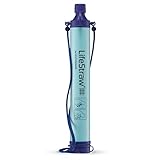
Portable Water Filter
LifeStraw Personal Water Filter
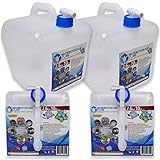
Collapsible Water Container
Collapsible 5-Gallon Water Container
Mylar Bags and Oxygen Absorbers
Mylar Bags and Oxygen Absorbers Pack
Emergency Lighting
Emergency Communications
Battery-Powered Emergency Radio
How to Expand One Food Tote Into a Complete Apartment Preparedness System
Instead of trying to fit every emergency supply into one container, build separate modules.
Module 1: Food
- Dry grains and legumes
- Ready-to-eat canned foods
- Nut butters and shelf-stable snacks
- Food inventory and rotation checklist
Module 2: Water
- Stored drinking water
- Food-grade water containers
- Appropriate backup treatment supplies
Module 3: Cooking and Kitchen Supplies
- Manual can opener
- Pot and utensils
- Cleaning supplies
- Safe cooking equipment appropriate to the building and circumstances
Module 4: Lighting and Communication
- Flashlights and lanterns
- Spare batteries or charging options
- Emergency radio
- Printed emergency contact information
This modular approach makes it easier to locate supplies, distribute weight, and upgrade one part of your preparedness system at a time.
Can You Take the Food Tote During an Evacuation?
A compact pantry is easier to organize than loose groceries, but a fully loaded tote is not necessarily a practical evacuation bag.
During an apartment fire, leave immediately using the designated escape route. Do not delay evacuation to retrieve food, valuables, or a heavy storage container.
For an evacuation with advance warning, a smaller grab-and-go food bag containing lightweight, ready-to-eat items may be more useful than attempting to carry the entire pantry.
Keep your evacuation supplies separate from bulk food storage.
Common Apartment Emergency Food Storage Mistakes
- Assuming one tote equals 30 days of food: Calculate total calories instead of counting packages.
- Buying only foods that require cooking: Include some ready-to-eat options.
- Ignoring water storage: Dry-food preparation can require significant additional water.
- Using camping stoves indoors: This creates serious fire and carbon monoxide hazards.
- Overloading shelves: Store heavy containers low and within furniture load limits.
- Ignoring food rotation: Inspect and replace products as needed.
- Assuming filters remove every contaminant: Match treatment methods to actual hazards.
- Repackaging everything unnecessarily: Some foods are best kept in their original sealed packaging.
- Forgetting nutrition: Calories matter, but protein, vitamins, minerals, and dietary variety also matter.
Frequently Asked Questions
How much emergency food should I store in an apartment?
Start with a manageable supply of shelf-stable foods your household already eats. Calculate how many days the stored calories will provide, then gradually expand toward your preparedness goal.
Can $100 buy 30 days of emergency food?
It depends on the number of people, current food prices, and calorie requirements. The example $100 shopping list is a starter pantry and should not be assumed to provide 30 complete days of food for two adults.
Will an 18–20-gallon tote hold all the groceries?
It may hold a substantial portion of the shopping list, but actual fit depends on packaging dimensions and container shape. Check the products and available space before purchasing.
How do I store rice and beans in a small apartment?
Keep them dry, protected from pests, and away from excessive heat. Unopened packaging may be sufficient for a rotating pantry. Appropriate food-grade containers can provide additional protection.
What emergency foods require no cooking?
Examples include peanut butter, crackers, ready-to-eat canned beans, canned fish, and commercially prepared shelf-stable meals that are labeled ready to eat.
Can I use a butane stove inside my apartment during a blackout?
No. Do not use portable outdoor camping stoves indoors. Follow the appliance manufacturer’s instructions, apartment building rules, and applicable fire-safety requirements.
How much water should two people store for 30 days?
Using a starting benchmark of one gallon per person per day, two people would need 60 gallons for 30 days. Actual needs may be higher, especially when cooking dry foods.
Is a homemade food tote better than an emergency food bucket?
A homemade pantry offers flexibility and can be economical when built from foods you already use. Commercial emergency food kits may offer convenience. Compare actual calories, nutrition, storage life, water requirements, and total cost before deciding.
Final Verdict: Is the $100 Pantry-in-a-Tote Worth Building?
A $100 apartment emergency food storage system can be a practical first step toward household preparedness. It provides a dedicated place for essential groceries, encourages food rotation, and makes it easier to build a reserve gradually.
The important distinction is that a storage container is not a measurement of food security. Calculate the calories in your groceries, account for the number of people you need to feed, and plan separately for drinking water and safe cooking.
Start with one organized tote, improve its nutritional variety, and add additional food and water as your budget and space allow.
Preparedness in a small apartment starts with realistic planning, not the size of your storage space.