

Generator Grounding and Bonding Made Simple
When a winter storm knocks out power, a portable generator becomes critical. But generator grounding and bonding confuse more people than any other safety topic — and bad information can get dangerous fast.
This post contains affiliate links. I may earn a small commission at no extra cost to you. Learn more.
This guide explains generator grounding and bonding in plain English. You’ll learn:
- When a ground rod is actually required
- How floating-neutral and bonded-neutral generators behave
- The right way to hook up cords or a transfer switch
- Common mistakes that cause shock hazards or trip GFCIs
For the full off-grid power strategy that ties everything together, read Grid-Down Survival Power: The 2025 Off-Grid Energy Playbook.
Understanding Generator Grounding and Bonding
Grounding means connecting your system to earth so lightning or fault current has somewhere to go.
Bonding means tying metal parts and the neutral together so a short circuit trips a breaker fast.
- Floating-neutral generator: neutral wire not bonded to the frame.
- Bonded-neutral generator: neutral is connected to the frame at the generator.
Rule #1: there must be one—and only one—neutral-to-ground bond in the system. Double-bonding or none at all both create hazards.
Do You Need a Ground Rod?
The answer depends entirely on how you use the generator. Whether you’re using a transfer switch or extension cords, proper generator grounding and bonding determines if you need a separate ground rod.
Scenario A — Running Extension Cords
If you’re plugging appliances directly into the generator—fridge, lights, chargers—no separate ground rod is required.
You’re using the generator’s built-in GFCI protection, and each appliance has its own grounded cord.
Checklist
✅ GFCI outlets on the generator
✅ Heavy-gauge outdoor cords (12 AWG for 15 A loads; 10 AWG for 30 A)
✅ Generator 20 ft from the house, exhaust pointed away
✅ CO alarm indoors
❌ Never back-feed a wall outlet (“suicide cord”)
Scenario B — Transfer Switch or Interlock
When powering home circuits through a transfer switch or interlock, the bond stays at your main service panel.
A separate ground rod at the generator usually creates a parallel path and is not needed.
Checklist
✅ Listed transfer switch or panel interlock
✅ Proper locking cord (L14-30 / 50 A)
✅ Weatherproof inlet box
✅ CO alarm near bedrooms
✅ Correct neutral configuration verified (see generator & transfer switch manuals)
❌ Never use a dryer outlet for back-feeding
For hardware and wiring layout, see Whole-Home Transfer Switches for Portable Generators (Safest Setup 2025).
Floating Neutral vs Bonded Neutral
Check your manual or data plate. It will state “neutral bonded to frame” or “floating neutral.”
If unclear, test with a multimeter (generator OFF): continuity between neutral slot and frame = bonded.
Why it matters
- Extension cords: either type is fine if GFCI-protected.
- Transfer switch:
- If the switch does not switch the neutral, the system bond remains at the panel → generator must float.
- If the switch does switch the neutral, the generator becomes the bond point while islanded.
- Duplicate bonds cause GFCI nuisance trips and possible shock current on metal frames.
Two Safe Setups
Setup A — Extension Cords Only
- Place generator outside on level ground, exhaust downwind.
- Start generator, warm up.
- Plug in largest load first (refrigerator), then smaller ones.
- Keep total load ≤ 80 % of rated wattage.
- Shut down before refueling.
Pros: quick, cheap, simple.
Cons: cords everywhere, no hardwired circuits.
Setup B — Transfer Switch / Interlock
- Connect locking cord (L14-30 or 50 A) from generator to inlet box.
- Flip interlock: utility OFF → generator ON.
- Start generator and energize priority circuits (fridge, furnace blower, sump pump).
- Monitor amperage; rotate heavy loads like microwaves or window AC.
- Reverse sequence to shut down.
Pros: clean, legal, runs hardwired loads.
Cons: higher cost; requires correct bond configuration.
Each configuration depends on correct generator grounding and bonding to prevent shocks and false trips.
Many local electrical codes require listed transfer equipment and prohibit improvised back-feeding methods for residential generators.
Why Generator Bonding Confuses So Many Homeowners
Many generator grounding problems happen because portable generators behave differently depending on whether they are powering individual appliances through extension cords or connecting directly into household electrical systems through transfer switches and interlocks.
Online advice often mixes these two setups together, leading homeowners to install unnecessary ground rods, create duplicate neutral-ground bonds, or use dangerous back-feeding methods that create shock and fire hazards.
Understanding how your specific generator and transfer equipment handle neutral bonding is the key to building a safe backup power system.
Important Safety Note
Electrical codes vary by jurisdiction, and some generator installations may require inspection or licensed electrical work depending on local regulations. Always verify manufacturer instructions, transfer switch requirements, and local code before modifying generator bonding or grounding configurations.
Dangerous Generator Grounding Mistakes
❌ “Suicide” Back-Feed Cords
These can energize utility lines and electrocute linemen when power is restored.
❌ Adding a Ground Rod to a House-Connected Setup
Creates parallel grounding paths that can energize the ground around your generator.
❌ Two Neutral-Ground Bonds in One System
Causes stray current to travel on metal parts and cords, increasing shock risk.
❌ Neutral-Ground Jumper Plugs or Adapters
Defeats GFCI protection and violates electrical code, creating lethal fault paths.
❌ Non-Locking Cords That Vibrate Loose
Loose plugs can arc, melt, and start fires under heavy load.
❌ Running the Generator in a Garage or Carport
Carbon monoxide buildup can kill within minutes, even with doors open.
Every one of these mistakes is avoidable with correct generator grounding and bonding, proper cords, and placement.
Always follow manufacturer instructions and local code.
Safe generator setups depend just as much on proper transfer equipment and quality cords as they do on correct grounding and bonding configuration.
Recommended Gear
These are field-tested components that work safely with modern portable generators and standard U.S. electrical panels.
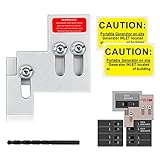
Panel Interlock Kit (UL Listed)
Mechanical interlock that prevents both utility and generator breakers from being ON simultaneously.
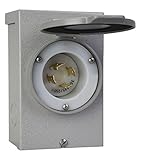
Weatherproof Power Inlet Box (30 A)
Mounts back-to-back with your service panel for the shortest, cleanest run.

30-Amp L14-30 Locking Generator Cord
Heavy-gauge (10 AWG) cord for 30-amp generators; molded locking ends resist moisture and heat.

Portable CO Alarm & Temperature Monitor
Detects carbon monoxide and alerts if indoor temps drop toward freezing during outages.

Why GFCIs Trip on Generator Power
- Duplicate neutral-ground bonds.
- Moisture or damaged cords.
- Faulty adapters that tie neutral and ground together.
- Undersized cords causing voltage drop.
- Certain inverter generators misbehaving with GFCI loads.
Fix it: simplify → verify one bond → retest each load.
Load Management
- Keep total draw ≤ 70-80 % of rated output.
- Rotate heavy hitters—microwave, space heater, kettle—one at a time.
- Prioritize essentials: furnace blower, fridge, sump, lighting, router.
- Use ECO/idle only for light loads; disable it before large motor starts.
- A plug-in watt meter helps balance loads and save fuel.
CO Safety Checklist
- Generator outdoors, 20 ft minimum from openings.
- Exhaust directed away from windows and doors.
- CO alarms inside near bedrooms.
- Never run in garages, sheds, or under awnings.
- If you smell exhaust indoors, shut down immediately.
Generator Grounding Quick Reference
Extension Cord Setup
- Best for: refrigerators, lights, chargers, small appliances
- Ground rod: usually not required
- Bonding: one bond only — never create a second bond
- Safety note: use outdoor-rated cords and keep the generator outside
Transfer Switch / Interlock Setup
- Best for: furnace blower, sump pump, fridge, selected home circuits
- Ground rod: usually not needed when tied into the home system
- Bonding: bond usually stays at the main service panel
- Safety note: use listed transfer equipment and verify neutral setup
FAQ
Do I need to ground a portable generator with a rod?
Usually not. For cord-only setups, rely on the generator’s built-in grounding. For transfer-switch systems, the bond already exists at your main service.
What’s the difference between grounding and bonding?
Grounding ties the system to earth. Bonding connects metal parts and the neutral together once so breakers trip quickly during a fault.
Is floating neutral safer than bonded neutral?
Neither is universally safer—it depends on whether your transfer equipment switches the neutral.
Why does my GFCI trip?
Most often a double bond or bad adapter. Remove extra bonds and test cords.
Can I run my generator in the garage?
Never. Operate only outdoors with exhaust downwind and CO alarms indoors.
Final Takeaway:
Generator grounding and bonding don’t have to be complicated. Once you understand how the neutral, ground, and frame work together, safe backup power systems become much easier to configure correctly.
The key is maintaining a single neutral-ground bond, using proper transfer equipment, eliminating improvised back-feeding methods, and operating generators safely with proper ventilation and CO protection.
Whether you’re powering a refrigerator through extension cords or running selected home circuits through a transfer switch, correct grounding and bonding prevent shock hazards, nuisance GFCI trips, and dangerous wiring mistakes during outages.
Next, reinforce your full backup power system with Grid-Down Survival Power: The 2025 Off-Grid Energy Playbook.