How to Collect Rainwater for Emergency Use
Knowing how to collect rainwater for emergency use can provide a dependable source of water during blackouts, droughts, and other disasters.
This post contains affiliate links. I may earn a small commission at no extra cost to you. Learn more.
When the power goes out or municipal water systems stop working, access to clean drinking water quickly becomes one of the biggest challenges. While storing bottled water and filling containers before a storm are important preparedness steps, those supplies are limited. Once they begin running low, finding another reliable source becomes critical.
Rainwater can help fill that gap. A single rainstorm can produce hundreds of gallons from the roof of an average home, making rainwater harvesting one of the most practical ways to supplement an emergency water supply. Whether you’re preparing for a prolonged blackout, severe weather, or another disaster that disrupts public utilities, knowing how to safely collect and use rainwater can significantly extend your available resources.
However, collecting rainwater isn’t as simple as placing a bucket outside during a storm. As rain flows across roofs, gutters, and other collection surfaces, it can pick up dirt, leaves, bird droppings, insects, and other contaminants. Without proper collection, storage, and treatment, rainwater may not be safe to drink, even if it looks clean.
In this guide, you’ll learn the safest ways to collect rainwater during an emergency, how much you can realistically harvest from your roof, which storage containers work best, and the steps needed to make collected rainwater safe for drinking, cooking, and other essential household uses. You’ll also find a free Rainwater Collection Calculator to estimate how many gallons your roof can collect from a single rainfall.
Quick Answer
Rainwater can be a valuable emergency water source when your stored water begins running low or municipal water systems become unavailable. However, rainwater should always be collected using clean equipment, stored in food-grade containers, and properly filtered and disinfected before drinking. With the right preparation, a single rainstorm can provide hundreds of gallons of water to help your household through an extended emergency.
Did You Know?
Just 1 inch of rain falling on a 1,000-square-foot roof can produce more than 600 gallons of water under ideal conditions. After accounting for normal collection losses, many homes can still capture well over 500 gallons from a single storm—enough to significantly extend an emergency water supply for drinking, cooking, sanitation, and other essential needs.
Why Rainwater Collection Matters During an Emergency
Stored water should always be your first line of defense, but even the best-prepared households have a limited supply. Rainwater collection provides a renewable backup source that can help bridge the gap during prolonged emergencies, especially when municipal water systems are disrupted or bottled water becomes difficult to find.
During a blackout, water problems can happen faster than many people expect. Electric pumps may stop working, municipal treatment systems may lose pressure, and boil water notices can make tap water questionable even when it still flows. If the outage lasts long enough, every gallon starts to matter.
Rainwater is especially useful because it can be collected close to home. You do not have to drive across town, stand in long lines, or carry heavy cases of bottled water from crowded stores. A roof, gutter system, tarp, barrel, or clean container can all become part of an emergency water plan when used correctly.
The biggest mistake is treating rainwater like it is automatically safe. It is a useful source, but it still needs to be collected carefully, stored properly, and treated before drinking. Used the right way, rainwater can help cover drinking, cooking, toilet flushing, cleaning, garden use, and basic sanitation when normal systems are disrupted.
Is Rainwater Safe to Drink?
Rainwater is often viewed as one of the cleanest natural water sources, but it should never be assumed safe to drink without treatment. While rain begins as water vapor in the atmosphere, it can collect contaminants long before it reaches your storage container. Dust, pollen, smoke, and airborne pollutants may become mixed with the water as it falls. Once the rain reaches your roof, it can pick up leaves, bird droppings, insects, roofing materials, and other debris before flowing into your collection system.
That doesn’t mean rainwater is unsafe to use during an emergency. In fact, millions of people around the world rely on harvested rainwater every day for drinking, cooking, and household use. The difference is that properly designed collection systems and appropriate water treatment greatly reduce the risk of harmful bacteria, parasites, and other contaminants.
If you’re collecting rainwater during a blackout or another disaster, think of it as untreated source water rather than ready-to-drink water. Just as you would filter and purify water from a lake or stream, collected rainwater should also be treated before it is consumed. Taking a few extra precautions can significantly reduce the risk of waterborne illness when clean drinking water is difficult to find.
Important Safety Warning
Unless you have a professionally designed potable rainwater system, do not drink collected rainwater without first filtering and disinfecting it. Boiling, chemical disinfection, or a high-quality water filter designed to remove bacteria and protozoa should always be part of your emergency water treatment plan.
What Can Contaminate Collected Rainwater?
Even a clean-looking roof can introduce contaminants into your emergency water supply. Understanding where those contaminants come from helps you collect cleaner water and choose the right treatment method afterward.
- Bird and animal droppings can introduce harmful bacteria and parasites.
- Leaves, twigs, and insects add organic material that can affect water quality and encourage bacterial growth during storage.
- Dust and pollen naturally accumulate on roofs between rainstorms and are washed into gutters when rainfall begins.
- Roofing materials may release small amounts of asphalt particles, paint, or other contaminants depending on the type and age of the roof.
- Airborne pollutants from wildfire smoke, industrial emissions, or heavy traffic can settle on collection surfaces before being washed into your storage containers.
Fortunately, most of these risks can be managed with proper collection techniques, first-flush diverters, filtration, and disinfection. The cleaner the water is when it enters your storage container, the easier it will be to make it safe for emergency use.
Best Ways to Collect Rainwater During an Emergency
You don’t need an expensive rainwater harvesting system to begin collecting water during an emergency. While permanent collection systems are more efficient and produce cleaner water, even simple methods can provide valuable water when your primary supply is running low. The key is using clean collection surfaces, food-grade containers whenever possible, and minimizing contamination before the water enters storage.
If you prepare before disaster strikes, you’ll have more options available. However, even improvised collection methods can help supplement your emergency water supply during an extended blackout or natural disaster.
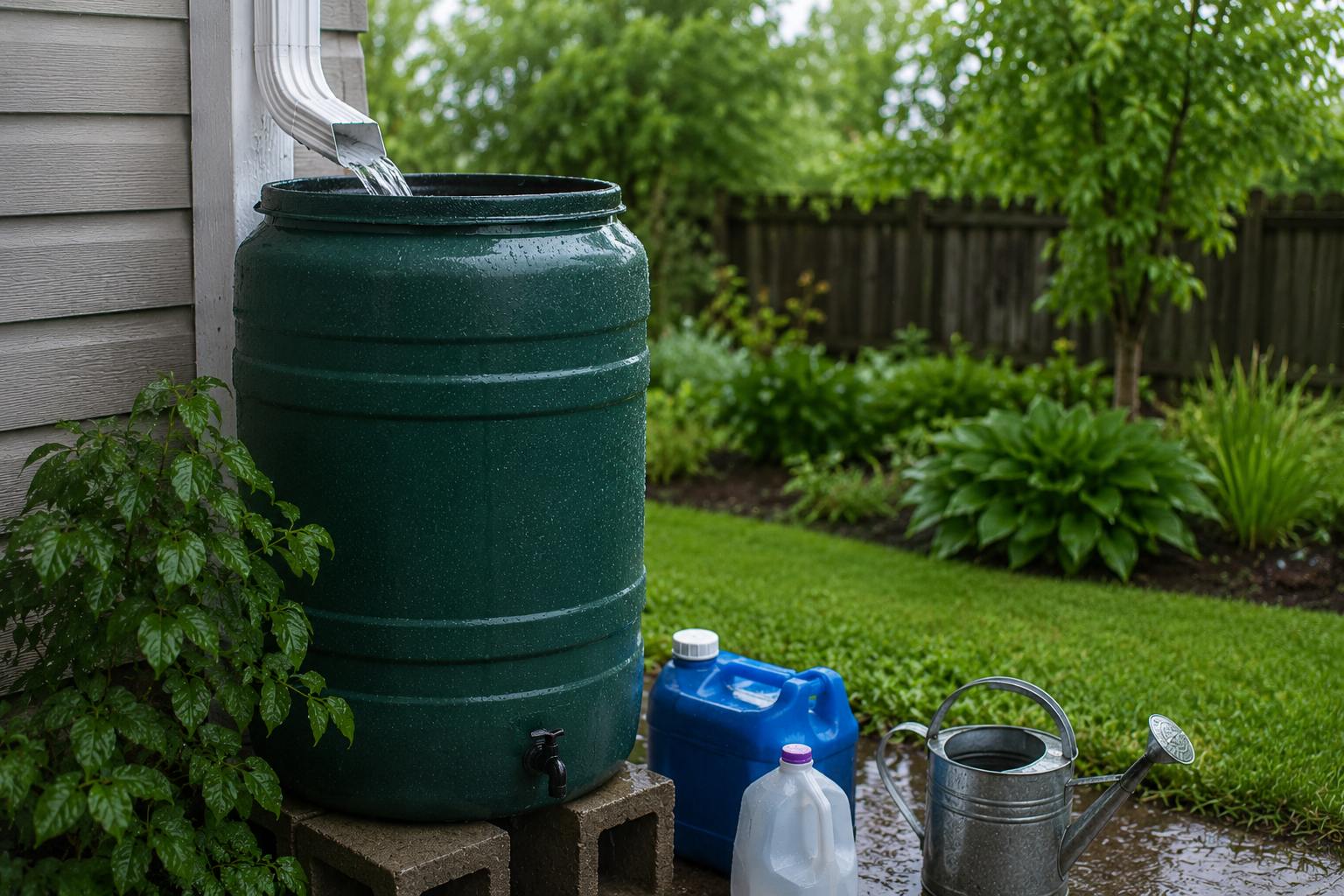
Rain Barrels Connected to Gutters
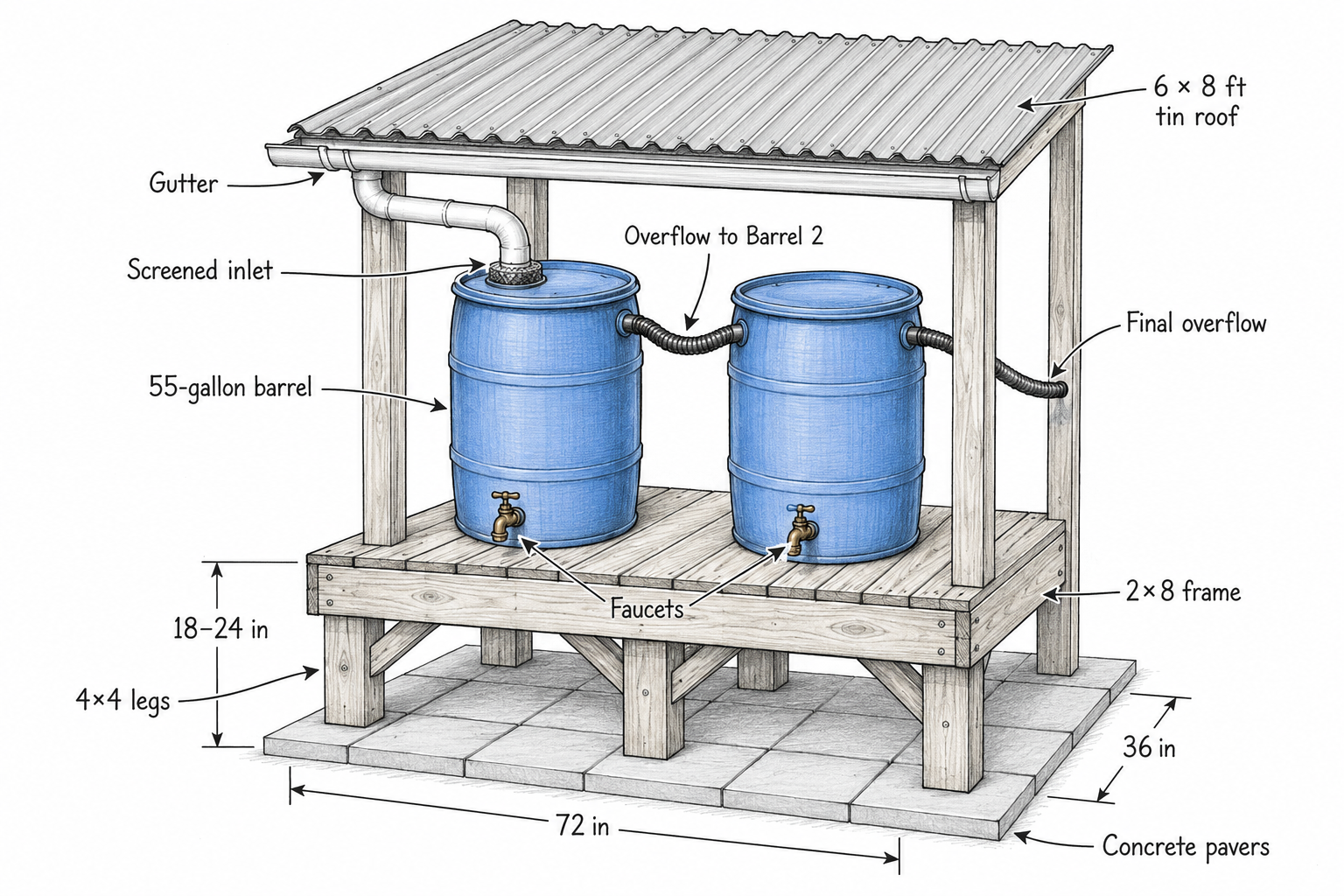
Rain barrels are one of the easiest and most effective ways to collect rainwater. Installed beneath a home’s downspout, they capture water that would normally flow away from the house. Many commercially available rain barrels hold between 50 and 100 gallons, and multiple barrels can be connected together to increase storage capacity.
Keeping gutters clean before storm season greatly improves water quality. Installing a screen over the barrel opening also helps keep out leaves, insects, and other debris while reducing mosquito breeding.
Food-Grade Drums and Large Storage Containers
If you expect long-term emergencies, larger food-grade barrels or storage tanks allow you to capture much more water than a standard rain barrel. These containers are durable, designed for water storage, and easier to keep sealed against contamination.
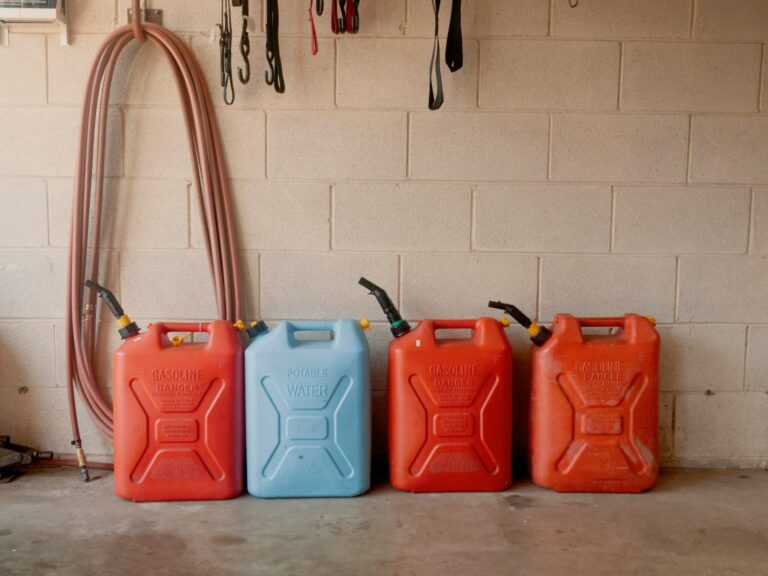
Never use containers that previously held chemicals, pesticides, fuels, or other hazardous materials. Residue can remain even after thorough cleaning and may contaminate your emergency water supply.
Tarps and Temporary Collection Systems
If you don’t have gutters or rain barrels, a clean tarp can serve as an effective temporary collection surface. Stretch the tarp at an angle so rainwater naturally flows toward one corner, where it can drain into a clean bucket or food-grade container. This method works well during emergencies because it requires very little equipment and can be set up quickly.
Inspect the tarp before use and rinse away dirt, leaves, or bird droppings if possible. A clean collection surface reduces the amount of debris entering your storage container.
Buckets and Other Clean Containers
Even simple buckets, coolers, stock pots, and other clean containers can capture useful amounts of rainwater during a storm. While these methods won’t collect as much water as a roof and gutter system, they can still provide several gallons that can later be filtered and disinfected.
Wide openings generally collect water more efficiently during lighter rainfall, but containers should be covered or transferred to sealed storage as soon as practical to reduce contamination.
| Collection Method | Typical Capacity | Cost | Best For |
|---|---|---|---|
| Rain barrel with gutter | 50–100+ gallons | Moderate | Long-term home preparedness |
| Food-grade barrel | 55 gallons | Moderate | Extended emergency storage |
| Tarp collection system | Varies by rainfall | Low | Temporary emergency use |
| Buckets and containers | 1–10 gallons each | Very Low | Quick storm collection |
Preparation Tip
Set up your rainwater collection equipment before storm season arrives. Waiting until heavy rain has already begun often means losing valuable water during the first part of the storm. Having clean gutters, collection containers, and basic filtration supplies ready ahead of time allows you to begin collecting safely as soon as rainfall starts.
Every roof is capable of collecting a different amount of water depending on its size and how much rain falls. Even a relatively small home can produce hundreds of gallons from a single storm, making roof size one of the biggest factors in emergency rainwater collection.
In the next section, use our Rainwater Collection Calculator to estimate exactly how much water your roof could collect from a rainfall at your location.
Rainwater Collection Calculator: How Much Water Can Your Roof Collect?
One of the biggest advantages of harvesting rainwater is how much can be collected from a relatively small amount of rainfall. Many homeowners are surprised to learn that even a modest-sized roof can produce hundreds of gallons of water during a single storm. The larger your roof and the heavier the rainfall, the more water you can potentially capture.
Of course, no collection system is 100% efficient. Some water is lost to evaporation, splashing, leaks, and the first-flush runoff that carries dirt and debris away from your roof. Even so, a properly designed rainwater collection system can capture the majority of the rainfall that lands on your roof.
How Is Rainwater Collection Calculated?
A commonly used estimate is that 1 inch of rain falling on 1 square foot of roof produces approximately 0.623 gallons of water. Multiply your roof’s collection area by the amount of rainfall, then account for collection efficiency to estimate how much water you can realistically capture.
Use the calculator below to estimate how many gallons your roof could collect during a rainfall. The results can help you determine the size of rain barrels or storage tanks you’ll need and how much your emergency water supply could be extended during an outage.
Rainwater Collection Calculator
Estimate how many gallons of rainwater your roof can collect during a storm.
0 gallons
0 sq ft
0
0
0 days
0 days
0 lbs
80%
This calculator uses the standard estimate of 0.623 gallons per square foot per inch of rain, adjusted for collection efficiency. Results are estimates and may vary based on roof material, gutter condition, first-flush runoff, leaks, overflow, and collection setup.
The calculator provides an estimate based on your roof size, the amount of rainfall, and collection efficiency. Actual results will vary depending on your roof material, gutter condition, first-flush diverters, and how quickly your storage containers fill during the storm.
Planning Tip
Don’t size your storage based on a single storm. Rainfall can be unpredictable, so it’s better to have enough storage capacity to capture several storms throughout the year. If your barrels overflow during heavy rain, you’re losing water that could be stored for future emergencies.
Knowing how much water you can collect is only part of the equation. You also need safe containers that protect your water from contamination, sunlight, insects, and algae growth. Choosing the right storage method is just as important as collecting the water itself.
Recommended Rainwater Collection Gear
The right equipment can make collecting and treating rainwater much safer and more efficient during an emergency. These preparedness essentials help you capture cleaner water, store it properly, and make it safe to use when municipal water is unavailable.




Choosing the Right Containers for Rainwater Storage
Collecting rainwater is only half of the process. Once the water reaches your storage container, protecting it from contamination becomes the next priority. Even clean rainwater can quickly become unsafe if it is stored in unsuitable containers, exposed to sunlight, or left uncovered where insects and debris can enter.
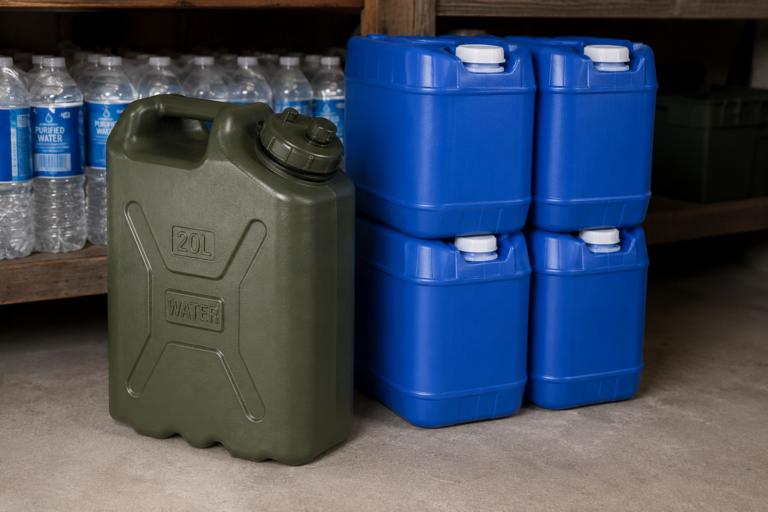
For emergency preparedness, food-grade containers are the safest option. These containers are manufactured using materials designed for storing drinking water and are less likely to leach unwanted chemicals into the water over time. They are also easier to sanitize before filling and can be sealed tightly to help keep out contaminants.
If you’re building a long-term emergency water supply, consider using several smaller containers instead of one very large tank. Multiple containers are easier to move, reduce the risk of losing your entire water supply if one develops a leak, and allow you to rotate stored water more efficiently.
| Container | Typical Capacity | Advantages | Things to Consider |
|---|---|---|---|
| Food-grade water barrels | 55 gallons | Excellent for long-term storage | Heavy when full and difficult to move |
| Stackable water containers | 5–7 gallons | Easy to carry and rotate | Require more storage space |
| IBC totes | 275–330 gallons | Large storage capacity | Best for permanent installations |
| Rain barrels | 50–100 gallons | Designed for roof collection | Water still requires treatment before drinking |
Avoid Using These Containers
Never store drinking water in containers that previously held gasoline, pesticides, cleaning chemicals, paint, or other hazardous substances. Even small amounts of residue can contaminate the water and create serious health risks. Likewise, avoid containers that are cracked, difficult to clean, or unable to be sealed securely.
Store Rainwater Properly
Once collected, rainwater should be kept in a cool, shaded location whenever possible. Direct sunlight encourages algae growth and can shorten the usable life of stored water. Containers should remain tightly covered to keep out mosquitoes, rodents, insects, leaves, and airborne debris.
If you’re collecting water throughout the year, inspect your storage containers regularly for leaks, damaged lids, or signs of contamination. Cleaning and sanitizing containers before each refill helps maintain better water quality and makes future treatment more effective.
Storage Tip
Label every container with the collection date and whether the water has been treated. This simple habit prevents confusion during an emergency and makes it easier to rotate your emergency water supply over time.
Even when rainwater is collected in clean, food-grade containers, it should still be treated before drinking. The next step is learning how to properly filter and disinfect collected rainwater so it can be used safely for drinking, cooking, and other essential household needs.
How to Make Rainwater Safe to Drink
Even if you’ve collected rainwater using clean gutters, food-grade containers, and proper storage practices, you should still treat it before drinking. Rainwater may contain bacteria, viruses, parasites, or other contaminants that aren’t visible to the naked eye. Proper treatment greatly reduces the risk of waterborne illness and helps ensure your emergency water supply is safe for drinking, cooking, and brushing your teeth.
The best treatment method depends on the quality of the collected water, the equipment you have available, and how long the emergency is expected to last. In many situations, combining filtration with disinfection provides the greatest level of protection.
Filter Out Dirt and Debris First
If the collected rainwater contains leaves, insects, sediment, or other visible debris, filter those materials out before disinfecting the water. A clean cloth, coffee filter, or fine mesh screen can remove larger particles, while gravity-fed water filters and portable survival filters can remove much smaller contaminants. Removing sediment first also makes boiling or chemical disinfection more effective.
Boil the Water
Boiling remains one of the most dependable ways to disinfect emergency drinking water. Bring the water to a rolling boil for at least one minute. At elevations above 6,500 feet, extend the boiling time to three minutes because water boils at a lower temperature. After boiling, allow the water to cool naturally before transferring it to a clean, covered container.
Use Chemical Disinfectants
When boiling isn’t practical, unscented household bleach or water purification tablets can be used to disinfect rainwater. Follow the manufacturer’s instructions carefully or use current public health guidance for the correct bleach dosage based on the amount of water being treated. After treatment, allow the water to stand for the recommended amount of time before using it.
Use a Quality Water Filter
High-quality gravity filters and portable emergency water filters are excellent tools for treating collected rainwater. Many are designed to remove bacteria, protozoa, sediment, and other contaminants while improving the taste and clarity of the water. Depending on the filter, additional disinfection may still be recommended if viral contamination is a concern.
Steps to Treat Emergency Rainwater
- Collect the cleanest rainwater possible using gutters, tarps, or food-grade containers.
- Remove leaves, insects, and visible sediment with a pre-filter or clean cloth.
- Disinfect the water by boiling, using purification tablets, or applying the proper amount of unscented household bleach.
- Store treated water in clean, sealed food-grade containers.
- Label treated containers and keep them in a cool, shaded location until needed.
Don’t Assume Clear Water Is Safe
Rainwater that looks crystal clear can still contain harmful microorganisms. Appearance alone cannot tell you whether water is safe to drink. Whenever possible, treat collected rainwater before consuming it, even if it appears clean and has no noticeable odor.
Proper treatment makes rainwater much safer for emergency use, but drinking isn’t its only purpose. During an extended blackout or disaster, harvested rainwater can also be used for cooking, cleaning, flushing toilets, and other essential household tasks, helping you conserve your stored drinking water for when you need it most.
Using Rainwater During a Long-Term Blackout
During a prolonged blackout, every gallon of stored water becomes more valuable. Families often focus on drinking water first, but water is also needed for cooking, washing dishes, basic hygiene, flushing toilets, and cleaning. Without a plan, even a well-stocked emergency water supply can disappear faster than expected.
Collected rainwater helps bridge that gap. While it should always be properly treated before drinking, harvested rainwater can reduce the demand on your stored potable water by supplying many of your household’s other needs. The more you conserve your treated drinking water, the longer your emergency supplies will last.
For example, untreated rainwater can often be used for flushing toilets, cleaning outdoor equipment, washing muddy boots, or other non-drinking purposes. Once properly filtered and disinfected, it can also be used for cooking, making hot beverages, washing fruits and vegetables, and drinking. Having separate containers for treated and untreated rainwater helps prevent accidental cross-contamination during stressful situations.
It’s also important to continue collecting rainwater whenever conditions allow. Instead of waiting until your barrels are nearly empty, use each rainfall as an opportunity to replenish your emergency supply. Regularly inspecting gutters, screens, and storage containers ensures your collection system remains ready throughout the emergency.
Conserve Your Best Water First
Use your highest-quality stored drinking water for immediate consumption, medications, and infant formula. Save properly treated rainwater for cooking and drinking as needed, while reserving untreated rainwater for sanitation, cleaning, and other non-potable uses whenever appropriate. This layered approach helps stretch your emergency water supply much longer.
Develop a Water Use Plan
Successful emergency preparedness isn’t just about storing more water—it’s about using the water you have wisely. Establishing priorities before an emergency makes daily decisions much easier when resources are limited. By balancing stored water with safely collected rainwater, many households can remain self-sufficient far longer than those relying only on bottled water.
Whether you’re preparing for a severe storm, an extended power outage, or another disaster, rainwater collection should be viewed as one part of a larger emergency water strategy. Combined with proper storage, treatment, and conservation, it can become one of the most valuable resources available when normal water service is disrupted.
Common Mistakes to Avoid When Collecting Rainwater
Rainwater collection is a practical way to supplement your emergency water supply, but small mistakes can reduce water quality or even make the water unsafe to use. Fortunately, most of these problems are easy to avoid with a little planning. By understanding the most common mistakes before an emergency occurs, you’ll be better prepared to collect cleaner water and store it safely.
| Mistake | Why It’s a Problem | Better Practice |
|---|---|---|
| Using non-food-grade containers | May introduce harmful chemicals into the water. | Use containers specifically designed for drinking water storage. |
| Collecting the first runoff from the roof | The first rain often washes away dirt, leaves, bird droppings, and debris. | Allow the initial runoff to drain away or install a first-flush diverter. |
| Leaving containers uncovered | Allows insects, mosquitoes, leaves, and debris to enter the water. | Keep all storage containers tightly covered. |
| Drinking untreated rainwater | Clear-looking water may still contain harmful microorganisms. | Always filter and disinfect water before drinking. |
| Ignoring gutters and collection equipment | Dirty gutters contaminate otherwise clean rainwater. | Clean gutters, downspouts, and screens before storm season. |
| Depending on rainwater alone | Rainfall may be limited during droughts or extended emergencies. | Maintain stored water as your primary supply and use rainwater to supplement it. |
Avoid These Costly Errors
One of the biggest mistakes is waiting until a disaster has already begun to think about collecting rainwater. By then, gutters may be clogged, storage containers may not be clean, and essential equipment such as filters or purification tablets may be difficult to find. Preparing your collection system before storm season gives you the best chance of capturing clean water when you need it most.
Rainwater collection should be viewed as one layer of a complete emergency preparedness plan rather than your only source of water. Combining stored drinking water, rainwater harvesting, and reliable water treatment methods gives your family multiple options when normal water service is disrupted.
Frequently Asked Questions
Can you drink rainwater straight from the sky?
Although rainwater begins as water vapor in the atmosphere, it can collect dust, airborne pollutants, and contaminants as it falls. After landing on a roof or other collection surface, it may also pick up leaves, bird droppings, insects, and other debris. For emergency preparedness, it’s safest to filter and disinfect collected rainwater before drinking it.
How much rainwater can an average house collect?
The amount depends on your roof size and how much rain falls. As a general rule, 1 inch of rain on 1 square foot of roof produces approximately 0.623 gallons of water before collection losses. Even a modest-sized home can collect hundreds of gallons during a single storm.
What is the best container for storing collected rainwater?
Food-grade water barrels, stackable water containers, and other containers specifically designed for drinking water storage are the best choices. They help prevent contamination, are easier to sanitize, and can be sealed tightly to keep out insects and debris.
How long can rainwater be stored?
Properly stored rainwater can remain usable for an extended period, especially when kept in clean, sealed food-grade containers away from direct sunlight. However, water intended for drinking should still be treated before use, and storage containers should be inspected regularly for contamination or damage.
Can rainwater be used without treatment?
Yes, untreated rainwater can often be used for non-potable purposes such as flushing toilets, cleaning outdoor equipment, or watering plants. However, it should be properly filtered and disinfected before it is used for drinking, cooking, or brushing teeth.
Should I install a first-flush diverter?
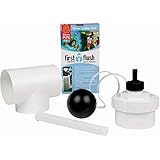
A first-flush diverter is one of the best upgrades for a rainwater collection system. It helps divert the initial runoff that washes dirt, pollen, bird droppings, and other debris from your roof before cleaner rainwater enters your storage container.
Is rainwater collection legal?
Rainwater harvesting is legal in most parts of the United States, but some states and local jurisdictions have regulations regarding collection methods, storage, or permitted uses. Check your state and local requirements before installing a permanent rainwater harvesting system.
Key Takeaways
- Stored drinking water should always be your primary emergency water supply, while rainwater serves as an excellent backup source.
- Rainwater can become contaminated by roofs, gutters, airborne pollutants, leaves, insects, and animal droppings, so it should always be treated before drinking.
- Food-grade containers, clean collection equipment, and proper storage practices help maintain better water quality during long-term emergencies.
- Using first-flush diverters, screens, and regular gutter maintenance reduces the amount of debris entering your collection system.
- Filtering and disinfecting collected rainwater greatly reduces the risk of waterborne illness and makes it safer for drinking and cooking.
- Rainwater is valuable for more than drinking—it can also be used for sanitation, cleaning, and other household tasks to conserve treated water.
- A combination of stored water, rainwater collection, and reliable water treatment provides multiple layers of protection during blackouts and other disasters.
Further Reading
Building a dependable emergency water supply involves more than simply collecting rainwater. Continue with these guides to strengthen your overall blackout preparedness plan:
- How Long Does Stored Water Last?
- Free Water Storage Calculator
- How Long Will Municipal Water Systems Work During a Blackout?
- How Much Water Does a Family Need for 30 Days?
- 2-Week Blackout Survival Plan
Used together, these resources will help you develop a more resilient emergency water strategy for both short-term outages and extended disasters.
Final Thoughts
Rainwater collection isn’t a replacement for storing emergency water, but it is one of the best ways to extend your supply when an emergency lasts longer than expected. With a basic collection system, clean storage containers, and dependable water treatment methods, you can turn a passing rainstorm into a valuable source of water for drinking, cooking, sanitation, and other daily needs.
The best time to prepare is before severe weather or a prolonged blackout occurs. Cleaning your gutters, selecting food-grade storage containers, and having reliable filtration or disinfection supplies on hand requires far less effort than trying to find safe water after an emergency has already begun. Even a simple rain barrel or temporary collection system can provide peace of mind when traditional water sources become unavailable.
By making rainwater collection part of your overall emergency preparedness plan, you’ll be better equipped to handle power outages, natural disasters, and other situations where access to clean water becomes uncertain. Combined with a well-stocked emergency water supply and safe treatment practices, harvested rainwater can help your family stay prepared for whatever comes next.