No Signal? 7 Ways to Communicate When Your Phone Stops Working
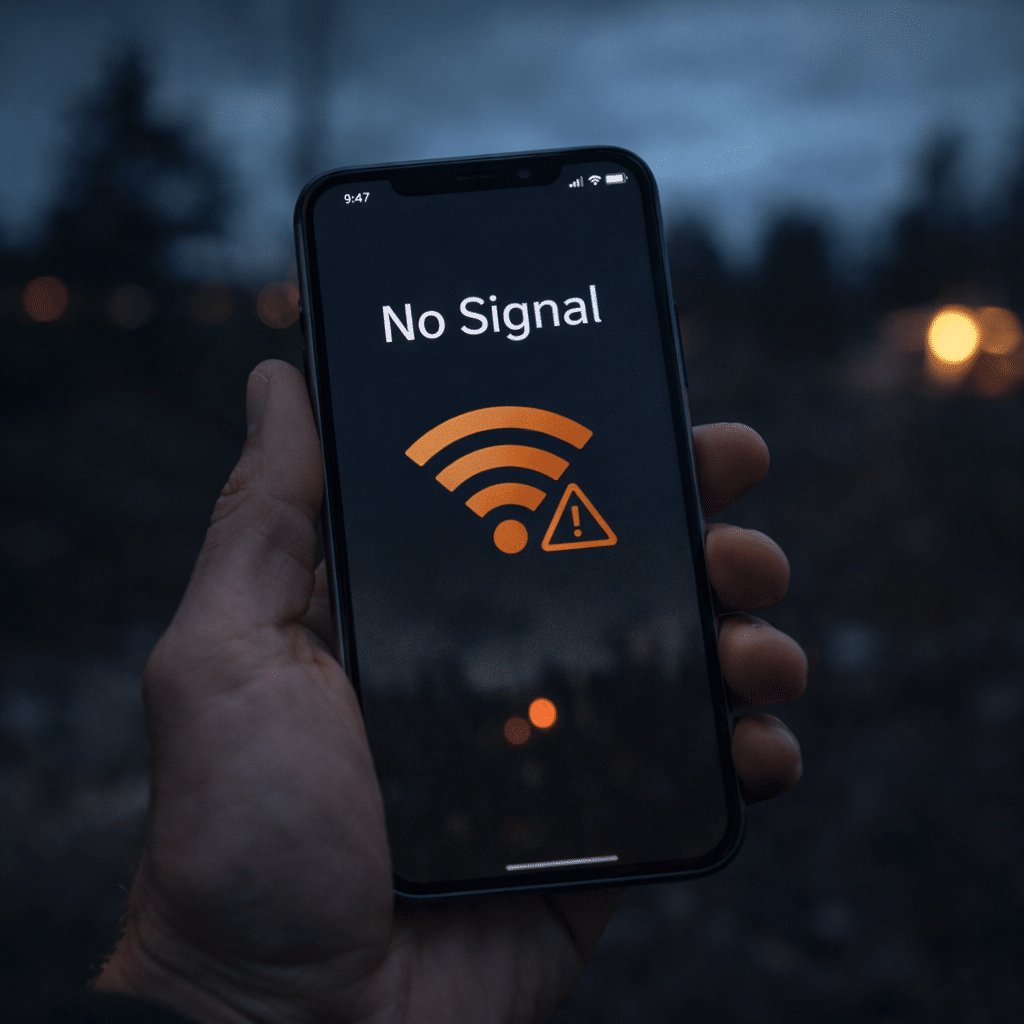
No signal? Knowing how to communicate when phones fail is something most people don’t think about—until it’s too late.
This post contains affiliate links. I may earn a small commission at no extra cost to you. Learn more.
When phones fail, towers go down, and the internet disappears, the only people who stay connected are the ones who planned ahead.
No signal means no updates.
No updates mean no situational awareness.
And without awareness, you’re reacting blind.
Most people assume their phone will carry them through an emergency. It won’t.
If you don’t know how to communicate when phones fail, you’re already at a serious disadvantage.
In a real grid-down scenario, communication depends on preparation, redundancy, and knowing exactly what works when modern systems fail.
This guide breaks down how communication actually works during a crisis—and how to stay connected when everyone else goes silent.
This guide is part of a complete communication strategy. See the full Communication Survival Hub for radios, power, and planning.
❓ What is the best way to communicate when the grid goes down?
The best way to communicate when the grid goes down is to use multiple methods like emergency radios, walkie talkies, and backup signal tools.
The most reliable ways to communicate during a grid-down scenario include:
- Emergency radios for receiving updates
- Walkie talkies for short-range communication
- HAM radios for long-distance contact
- Signal methods like whistles and lights as backup
The key is using multiple systems so you’re not relying on one method.
Why Communication Fails in a Grid-Down Scenario
Understanding failure points is the first step to staying ahead.
1. Cell Towers Don’t Last Long
Cell towers rely on grid power with limited battery backups—typically 4–8 hours. After that, they go offline unless supported by generators.
Even before that happens, networks get overloaded.
- Everyone calls at once.
- Bandwidth collapses.
- Signals drop.
👉 That’s why your phone shows “No Service” even when towers are technically still up.
2. The Internet Depends on Infrastructure
No power = no routers, no ISPs, no fiber hubs.
Even if your phone has signal, data services are usually the first to fail.
Apps, messaging, GPS syncing—all unreliable or completely down.
3. Power Is the Real Bottleneck
Everything depends on electricity:
- Phones
- Radios
- Internet equipment
- Emergency systems
If you haven’t secured backup power, your communication window is short.
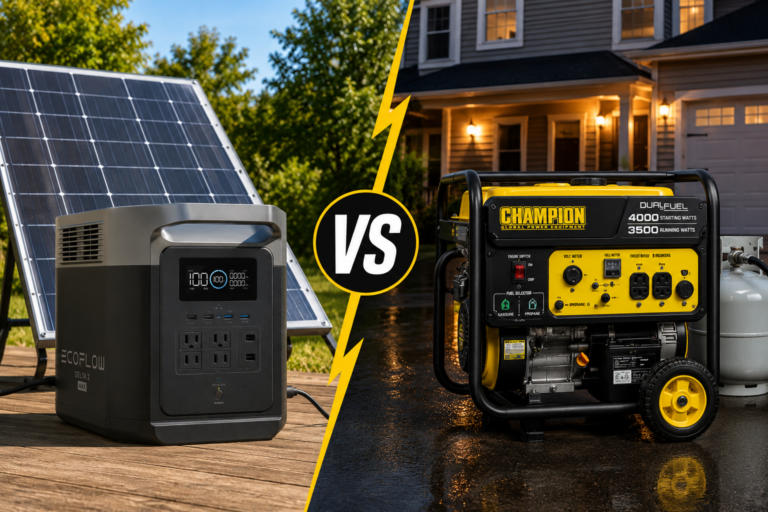
This is why having a backup system matters—especially if you’re relying on a solar generator during a blackout.
Best Communication Methods That Actually Work
When the grid goes down, you need off-grid communication tools—not apps.
Here’s what actually works in the real world.
1. Emergency Radios (Your First Line of Info)
Emergency radios don’t transmit—they receive.
But they’re critical.
They provide:
- Weather alerts
- Emergency broadcasts
- Government instructions
- Evacuation notices
A solid solar or hand-crank radio keeps you informed even when everything else fails.
For a full breakdown of what actually works, see our guide to the best emergency solar radios for grid-down situations.
Recommended Emergency Communication Gear
If you’re building a reliable communication setup, start with these essentials:
Emergency Radio (Stay Informed)
- NOAA alerts
- Solar + hand crank backup
- Works when everything else fails
This is your only reliable source of information when phones and internet fail.
👉 Check Price on Amazon

Walkie Talkies (Stay Connected)
- Reliable short-range communication
- No towers required
- Perfect for families and bug-out situations
This is how you stay connected with your group when everything else stops working.
👉 Check Price on Amazon


Solar Charger (Stay Powered)
- Keeps radios and phones running
- Lightweight and portable
- Critical for extended outages
Without power, your communication dies—this keeps everything running.
👉 Check Price on Amazon

2. Two-Way Radios (Walkie Talkies)
Simple. Reliable. Underrated.
Best for:
- Family communication
- Short-range coordination
- Neighborhood alerts
Range realities:
- City: 0.5–2 miles
- Open terrain: 2–10 miles
They don’t rely on infrastructure—which makes them one of the most dependable options.
3. HAM Radio (Long-Distance Communication)
This is where things get serious.
HAM radios can:
- Communicate across states
- Reach emergency networks
- Tap into global radio systems
But there’s a catch:
You need training and (normally) a license.
That said, in a true emergency, rules become secondary to survival.
If you want real communication capability beyond your immediate area, HAM is the gold standard.
4. Mesh Radios (Modern Survival Communication)
This is one of the most relevant tools for your setup.
Mesh radios create device-to-device networks without towers.
Benefits:
- No infrastructure required
- Works in groups
- Expands range with more users
- Ideal for families or small teams
For your use (2–3 people, bug-out + hiking), this is a perfect fit.
5. Signal-Based Communication (Low-Tech but Critical)
When electronics fail—or batteries die—you fall back on signals.
Examples:
- Whistles (3 blasts = distress)
- Flashlights (night signaling)
- Mirrors (daytime signaling)
- Fire and smoke
Low-tech doesn’t mean outdated—it means reliable.
Communication Priority Levels (What Matters First)
Not all communication is equal in a crisis.
You need to prioritize based on survival impact—not convenience.
Learning how to communicate when phones fail gives you a major advantage.
Level 1: Immediate Safety Communication
This is life-or-death communication:
- Calling for help
- Warning others of danger
- Coordinating movement
Examples:
- “Fire spreading toward camp”
- “Injured—need assistance”
- “Evacuating now”
👉 These must be fast, simple, and reliable
Level 2: Coordination Communication
This is how groups stay organized:
- Meeting locations
- Movement timing
- Supply coordination
This is where walkie talkies and mesh radios shine.
Level 3: Information Gathering
This includes:
- News updates
- Weather alerts
- Situational awareness
👉 This is why radios are critical—even if they don’t transmit.
Building a Layered Communication System (What Actually Works)
Most people rely on one method.
That’s a mistake.
You need layers, just like your water or fire systems.
Layer 1: Passive Listening (Always On)
- Emergency radio
- NOAA alerts
Purpose:
👉 Stay informed without transmitting
Layer 2: Local Communication
- Walkie talkies
- Mesh radios
Purpose:
👉 Coordinate with your group or nearby people
Layer 3: Long-Range Communication
- HAM radio
Purpose:
👉 Reach outside your immediate area
Layer 4: Non-Electronic Backup
- Whistles
- Flashlights
- Signals
Purpose:
👉 Last-resort communication when everything else fails
Key Rule:
If your system depends on one device, it’s not a system—it’s a failure waiting to happen.
Real-World Grid-Down Scenarios (How Communication Actually Plays Out)
Most guides stay theoretical.
Here’s what really happens.
Scenario 1: Sudden Power Outage (First 24 Hours)
What happens:
- Phones still work (temporarily)
- Cell networks overloaded
- Confusion everywhere
Best move:
- Switch to radio for information
- Limit phone usage
- Begin charging rotation
Scenario 2: Widespread Grid Failure (2–5 Days)
What happens:
- Cell towers begin shutting down
- Internet gone
- Panic increases
Best move:
- Transition fully to radios
- Establish check-in times
- Start using backup communication methods
Scenario 3: Full Infrastructure Collapse
What happens:
- No signal
- No updates
- No outside communication
Now you rely on:
- HAM radio
- Signals
- Pre-planned routes and meetups
👉 This is where preparation separates people fast
Communication Gear You Should Actually Carry (No Fluff)
Forget huge gear lists. You need practical, field-ready tools.
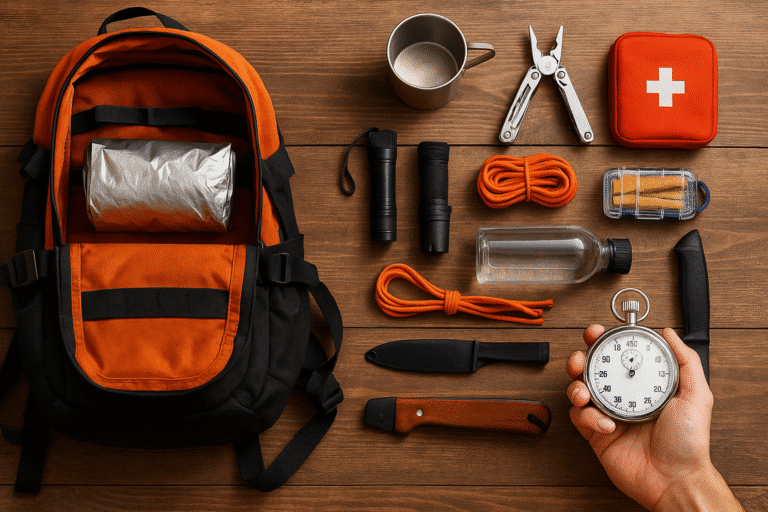
Bug-Out Bag Communication Kit
Keep this simple and reliable:
- Compact emergency radio
- Pair of walkie talkies
- Backup battery bank
- Headlamp or flashlight
- Whistle
This gives you immediate capability without weight overload
These communication tools should always be included in your bug-out bag setup so you’re never caught without a way to stay connected.
Home Backup Setup
- Solar charging setup
- Larger radio system
- Spare batteries
- Optional HAM or mesh system
🧠 Pro Tip:
Store gear in one dedicated communication kit. If it’s scattered, you’ll lose time when it matters.
Communication Security (Most People Ignore This)
In a real crisis, communication isn’t just about talking—it’s about who’s listening.
⚠️ Why This Matters
Broadcasting openly can:
- Reveal your location
- Attract unwanted attention
- Expose supplies or plans
🔒 Basic Security Practices
- Keep transmissions short
- Avoid sharing exact locations
- Use simple codes with your group
- Don’t broadcast unnecessary information
🧠 Example:
Instead of “We’re at the red house near the highway,” say “Location 2 secured.”
Psychological Advantage of Communication
This part gets overlooked—but it matters.
Communication isn’t just technical.
It affects survival mentally.
What Happens Without Communication
- Isolation
- Panic
- Poor decision-making
People start guessing—and guessing leads to bad moves.
What Communication Provides
- Confidence
- Coordination
- Awareness
Even basic contact with others keeps morale stable.
Training Your Communication System (Don’t Skip This)
Owning gear is useless if you don’t know how to use it.
Practice Before You Need It
- Test radios monthly
- Practice range limits
- Run communication drills
You’ll quickly learn:
- What works
- What doesn’t
- Where your gaps are
⚠️ Reality Check:
Most people will try to figure this out during the emergency.
That’s already too late.
Communication Failure Timeline (What to Expect)
Here’s a realistic breakdown most people don’t think about:
0–6 Hours
- Phones working
- Networks overloaded
6–24 Hours
- Cell service unreliable
- Internet failing
1–3 Days
- Towers going offline
- Only radio systems reliable
3+ Days
- Full communication collapse (for most people)
👉 If your system doesn’t go beyond day one—you’re not prepared
🚨 Here’s the reality: most people don’t lose communication all at once—it disappears piece by piece until they realize they’re completely cut off.
How to Choose the Right Setup (Keep It Simple)
Don’t overbuild this.
Match your setup to your situation.
Solo / Small Family
- Walkie talkies
- Emergency radio
- Solar charging
- Optional mesh radios
Group / Community
- Multiple radios
- Structured communication plan
- Backup power systems
- Signal methods
🧠 Key Rule:
Your system should be:
- Simple
- Reliable
- Repeatable
If it’s complicated, it will fail under stress.
How to Power Communication Devices Off-Grid
Communication without power is temporary.
Power is what keeps it alive.
1. Solar Charging Systems
Small solar panels can keep:
- Radios
- Phones
- Battery packs
running indefinitely.
For communication alone, you don’t need massive setups—just consistent daily charging.
2. Battery Banks (Must-Have)
Power banks are your short-term lifeline.
Best practice:
- Keep multiple banks charged
- Rotate usage
- Store in your bug-out bag
3. Solar Generators (Long-Term Solution)
If you want reliable, extended communication capability:
You need a solar generator.
It allows you to run:
- Radios
- Charging stations
- Lights
- Even small communication hubs
If you’re not sure what size system you need, start with this complete solar generator sizing guide for blackouts.
4. Redundancy Is Non-Negotiable
Never rely on one system.
Stack your setup:
- Primary: Radio
- Backup: Walkie talkie
- Backup: Signal methods
If one fails, the others keep you connected.
Power Setup That Keeps You Connected
If your devices die, your communication is gone.
A basic setup should include:
- Solar charging system
- Backup battery banks
- Portable solar generator
👉 See Top Solar Power Stations for Blackouts

Quick Reality Check
If your communication plan looks like this:
- ❌ Only a phone
- ❌ No backup power
- ❌ No check-in plan
You will lose communication within the first 24 hours.
If it looks like this:
- ✅ Radio + walkie talkies
- ✅ Backup power
- ✅ Pre-planned communication times
You stay connected when others can’t.
Urban vs Rural Communication Strategy
Your location changes everything.
For city-specific survival strategies, read our full urban survival guide.
Urban Survival Communication
Challenges:
- Signal congestion
- Interference
- High population panic
Best tools:
- Walkie talkies
- Mesh radios
- Pre-set meeting points
Urban strategy is about short-range coordination, not long-distance comms.
Rural / Wilderness Communication
Challenges:
- Distance
- Isolation
- Terrain blocking signals
Best tools:
- HAM radio
- Signal methods
- Satellite (if available)
Rural survival depends on range and independence.
Build a Family Communication Plan (Most People Skip This)
Gear doesn’t matter if you don’t have a plan.
This is where most people fail.
Step 1: Establish Primary and Backup Methods
Example:
- Primary: Walkie talkie channel 3
- Backup: Meet at location
- Emergency: Signal whistle
Step 2: Set Check-In Times
Don’t constantly transmit—save power.
Instead:
- Every hour
- Twice a day
- At specific times
Step 3: Pre-Plan Meeting Points
If communication fails:
Where do you go?
You need:
- Primary location
- Secondary location
- Final fallback
Step 4: Use Simple Codes
Keep it basic:
“All good”
“Need help”
“Move location”
No confusion. No wasted time.
Common Communication Mistakes That Will Get You in Trouble
Most people make these—and they cost them.
❌ Relying Only on a Cell Phone
- Biggest mistake.
- Phones fail first.
❌ No Backup Power
Dead battery = zero communication.
❌ No Plan
Gear without a plan is useless.
❌ Overcomplicating It
You don’t need 10 systems.
You need a few that work reliably.
Recommended Basic Communication Setup (Simple + Effective)
✅ Short-Term (Bug-Out / Immediate Use)
- Walkie talkies
- Emergency radio
- Power bank
✅ Mid-Term (Extended Outage)
- Solar charger
- Extra batteries
- Signal tools
✅ Long-Term (Serious Preparedness)
- Solar generator
- HAM radio or mesh system
- Structured communication plan
Simple Grid-Down Communication Kit (Recommended Setup)
If you want a no-guess setup:
Minimum Kit:
- Emergency radio
- Walkie talkies
- Power bank
Better Setup:
- Solar charger
- Extra batteries
- Signal tools
Advanced Setup:
- Solar generator
- HAM or mesh radio
- Full communication plan
⚠️ Most cheap emergency radios and solar chargers fail when you actually need them—stick with proven gear that’s tested for real outages.
🚨 Most people think they’re prepared—until communication disappears. That’s when the real problems start.
If communication fails, everything else becomes harder. Make sure your full setup is covered with the complete emergency preparedness system.
🚨 If you can’t communicate, you’re operating blind. Make sure your setup is ready before the next outage hits.
⚡ Free Blackout Preparedness Planner
Not sure where your blackout plan is weak? Download the FREE 17-page planner and organize your water, food, fuel, medical supplies, communication plan, and evacuation strategy.
Final Thoughts: Communication = Survival Awareness
When the grid goes down, information becomes your most valuable resource.
If you can communicate:
- You stay informed
- You coordinate movement
- You avoid danger
If you can’t:
You’re guessing.
And guessing gets people hurt.
The goal isn’t just to have gear—it’s to build a system that works when everything else fails.
Bottom Line: Communication Is a Force Multiplier
- Water keeps you alive.
- Fire keeps you warm.
- Shelter protects you.
But communication?
It ties everything together.
It tells you:
- Where to go
- What’s coming
- Who needs help
Without it, you’re reacting blindly.
With it, you’re making decisions ahead of the problem.
And in a grid-down scenario—that difference matters more than anything else.