How to Keep Your House Cool During a Summer Power Outage
Learning how to keep your house cool during a summer power outage can help protect your family when extreme heat and an unexpected blackout happen at the same time.
This post contains affiliate links. I may earn a small commission at no extra cost to you. Learn more.
When the power goes out during the hottest part of summer, your home can become dangerously warm much faster than many people realize. Air conditioners stop immediately, fans no longer circulate air, refrigerators gradually lose their cooling ability, and indoor temperatures continue climbing even after the sun goes down.
For healthy adults, a few uncomfortable hours may seem manageable. For young children, older adults, people with chronic medical conditions, and pets, however, prolonged heat inside the home can quickly become a serious health risk. High humidity only makes the situation worse by reducing your body’s ability to cool itself through sweating.
The good news is that keeping your house cooler during a blackout isn’t about one perfect solution. It’s about slowing how quickly heat enters your home, using ventilation strategically, staying hydrated, and knowing when it’s time to leave for a cooler location.
In this guide, you’ll learn practical ways to reduce indoor temperatures before, during, and after a summer power outage so you can stay safer until electricity returns.
🚨 Emergency Scenario
It’s 3:15 p.m. in late July when a severe thunderstorm knocks out power across your community. Outside temperatures are hovering around 97°F, and the humidity makes it feel even hotter. Within an hour, your air conditioner shuts down, ceiling fans stop spinning, and your house begins trapping heat. By early evening, indoor temperatures have climbed into the mid-80s and continue rising. Family members become tired and irritable, pets begin panting constantly, and everyone is searching for relief. Households that prepared ahead of time have already closed blinds, limited heat-producing activities, hydrated regularly, and created a cooler room inside the house. Others are scrambling to figure out what to do as the heat continues building.
Why Your House Gets Hot So Quickly During a Summer Power Outage
Most homes are designed to keep conditioned air inside, but once the electricity goes out, that insulation begins working against you. Without an air conditioner removing heat and humidity, the warm air that builds inside the house has nowhere to go. Every hour the outage continues, more heat enters through the roof, walls, windows, and attic.
Sunlight is one of the biggest contributors to rising indoor temperatures. Windows facing east absorb morning sun, while south- and west-facing windows can pour heat into your home throughout the afternoon. Even with the windows closed, direct sunlight can quickly warm furniture, floors, and walls, causing those surfaces to radiate heat back into the room long after the sun has moved.
Heat also comes from everyday activities inside your home. Cooking, baking, long hot showers, and even some gas appliances can gradually raise indoor temperatures, making an already uncomfortable house even warmer. During a blackout, every extra degree matters.
Humidity makes the situation even worse. Your air conditioner normally removes moisture from the air as it cools your home. Once it stops running, humidity levels rise, making it harder for sweat to evaporate and cool your body. That’s why an 85°F house with high humidity can feel much hotter than the thermometer suggests.
How quickly your home heats up depends on several factors, including outdoor temperatures, the amount of direct sunlight, insulation quality, roof color, window size, and how often doors are opened. Smaller homes and upper floors often become uncomfortable faster because heat naturally rises.
| Factor | Effect on Indoor Temperature |
|---|---|
| Direct sunlight through windows | Rapidly heats rooms throughout the day. |
| Poor attic insulation | Allows roof heat to transfer into the home faster. |
| High outdoor humidity | Makes the air feel hotter and slows your body’s natural cooling. |
| Cooking indoors | Adds unnecessary heat to your living space. |
| Frequent door openings | Allows hot outside air to replace cooler indoor air. |
| Second-story rooms | Usually become the hottest part of the house because heat rises. |
💡 Savvy Tip
Your goal during a summer blackout isn’t necessarily to make your house cold—it’s to slow how quickly it heats up. Every degree you keep out of your home can make the outage more comfortable and reduce the risk of heat-related illness.
What to Do Immediately After the Power Goes Out
The first 30 minutes after a summer power outage can make a significant difference in how comfortable your home remains over the next several hours. Instead of waiting for the house to heat up, focus on keeping as much heat out as possible while the indoor temperature is still relatively comfortable.
Start by closing blinds, curtains, and shades on windows receiving direct sunlight. Sunlight pouring through glass can quickly raise the temperature inside a room, especially during the afternoon. Blackout curtains, insulated drapes, or even temporary window coverings can help slow solar heat gain.
Next, avoid activities that generate unnecessary heat. Delay using the oven, stove, clothes dryer, or dishwasher until temperatures outside begin cooling or electricity returns. Even small appliances such as coffee makers and toaster ovens contribute additional warmth inside the house.
If everyone is home, consider gathering in one of the naturally cooler rooms rather than spreading throughout the house. Lower floors, shaded rooms, and spaces with fewer windows generally stay cooler longer than upstairs bedrooms or rooms with western exposure.
Finally, begin thinking ahead instead of assuming the outage will be brief. Fill reusable water bottles while tap water is still available, fully charge phones with backup batteries if you have them, and monitor local weather or utility updates before cellular networks become congested.
| Priority | What to Do | Why It Helps |
|---|---|---|
| Immediate | Close blinds and curtains. | Blocks much of the sun’s heat before it enters your home. |
| Immediate | Turn off heat-producing appliances. | Prevents additional indoor heat buildup. |
| Within 30 Minutes | Fill water bottles and stay hydrated. | Helps your body regulate its temperature. |
| Within 30 Minutes | Move everyone to the coolest room. | Concentrates efforts where temperatures stay lower. |
⚠️ Common Mistake
Many people immediately open every window as soon as the power goes out. If the outdoor temperature is hotter than the air inside your home, you’ll simply allow even more heat indoors. Wait until the outside air becomes cooler than the indoor temperature before opening windows wide to maximize natural ventilation.
Should You Open Windows or Keep Them Closed?
One of the first questions many people ask during a summer power outage is whether opening the windows will cool the house. The answer depends entirely on the temperature outside. Opening every window may seem like the obvious choice, but it can actually make your home hotter if the outdoor air is warmer than the air already inside.
During the hottest part of the day, especially from late morning through the afternoon, it’s usually best to keep windows and exterior doors closed. This helps slow the amount of hot air entering your home while blinds and curtains continue blocking direct sunlight. Your goal is to preserve the cooler indoor air for as long as possible.
As the sun begins to set and outdoor temperatures fall below the temperature inside your home, your strategy should change. Opening windows on opposite sides of the house creates cross-ventilation, allowing trapped heat to escape while drawing in cooler evening air. If there’s even a light breeze, this natural airflow can noticeably improve comfort.
Two-story homes benefit even more from this approach because heat naturally rises. Opening upstairs windows along with lower-level windows encourages hot air to move upward and out of the house. Just be sure to secure windows and doors if they’re left open overnight.
Keep in mind that humidity also affects comfort. On very humid evenings, the temperature may drop, but the air can still feel oppressive. While opening windows may improve airflow, it won’t remove moisture from the air the way an air conditioner does. Drinking plenty of water and limiting physical activity remain important even after sunset.
| Outside Conditions | Best Strategy |
|---|---|
| Outside is hotter than inside. | Keep windows and doors closed to reduce heat entering the home. |
| Outside temperature begins dropping after sunset. | Open windows on opposite sides of the house to create cross-ventilation. |
| Cool overnight temperatures. | Ventilate the house overnight, then close windows again before the next morning heats up. |
| Very humid conditions. | Use natural airflow when possible, but continue focusing on hydration and limiting physical activity. |
💡 Savvy Tip
Wake up early to take advantage of the coolest part of the day. Open windows before sunrise to flush out trapped heat, then close the windows and blinds again once outdoor temperatures begin climbing. This simple routine can help your home stay noticeably cooler through the afternoon.
The Best Ways to Block Heat From Entering Your Home
Keeping your house cool during a blackout is often less about removing heat and more about preventing it from entering in the first place. Every ray of direct sunlight that comes through a window and every blast of hot outdoor air that enters through an open door gradually raises the temperature inside. Taking a few simple steps early in the outage can help your home remain more comfortable for several extra hours.
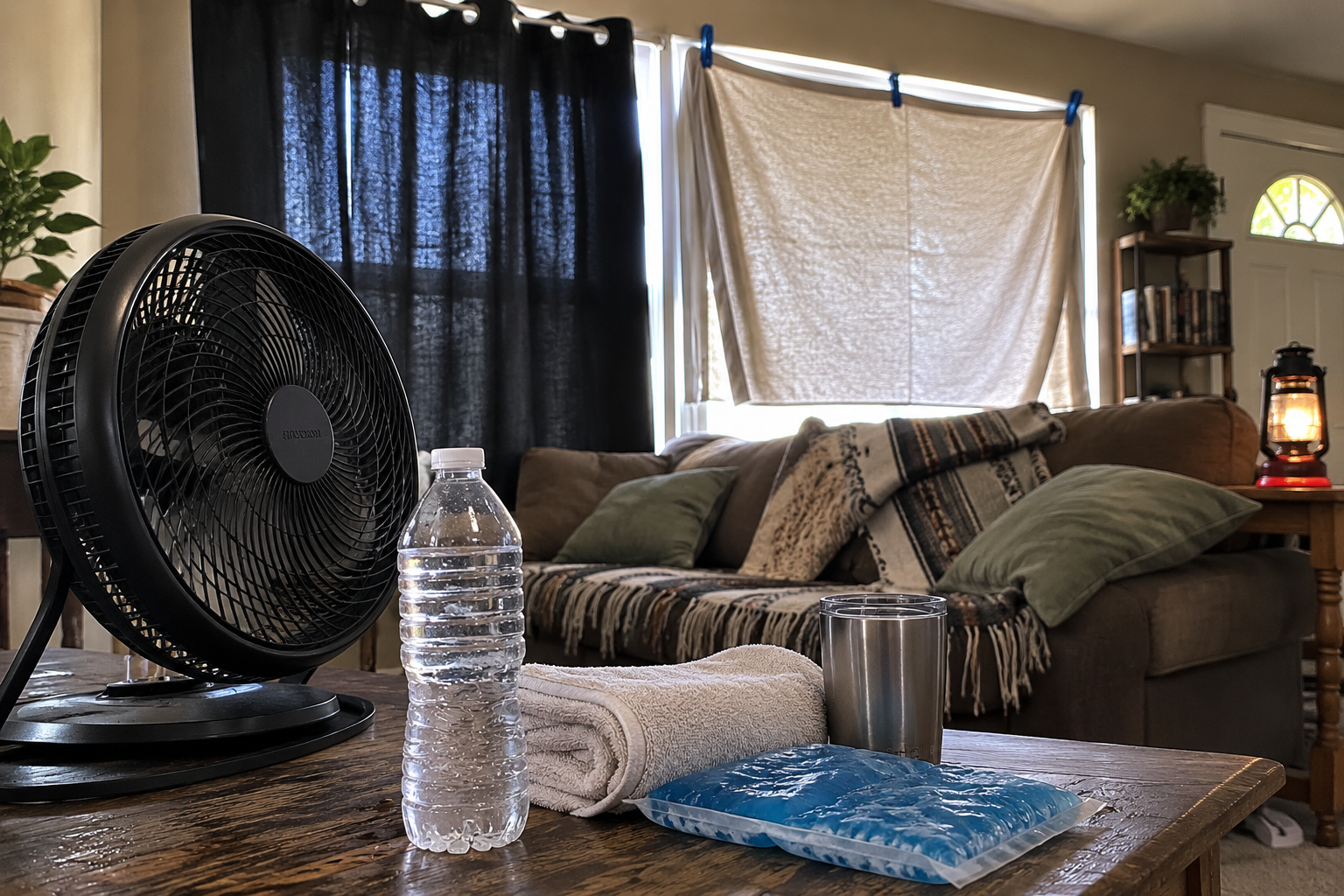
Windows are usually the biggest source of unwanted heat. South- and west-facing windows receive the strongest afternoon sun, making them the highest priority. Close blinds, curtains, or blackout drapes before these windows are exposed to direct sunlight. If you don’t have blackout curtains, thick blankets, towels, or reflective emergency blankets can temporarily reduce solar heat gain.
Exterior shade also makes a noticeable difference. Covered porches, awnings, shade trees, and even temporary canopies can help keep the sun from heating walls and windows. Unlike indoor coverings, outdoor shade blocks much of the heat before it ever reaches the glass.
Limit how often exterior doors are opened. Every time a door opens during a hot afternoon, cooler indoor air escapes while warmer outdoor air rushes inside. If family members are coming and going frequently, your home will heat much faster than necessary.
Finally, don’t overlook the attic. During the summer, attic temperatures can exceed 120°F, and that heat slowly transfers into the rooms below. While you can’t eliminate this during a blackout, keeping attic access panels closed and avoiding unnecessary trips into the attic helps prevent additional heat from entering your living space.
| Heat Source | How to Reduce It |
|---|---|
| Direct sunlight through windows | Close blinds, blackout curtains, or reflective window coverings before sunlight reaches the glass. |
| Hot air entering the home | Keep exterior doors closed except when absolutely necessary. |
| Heat from the roof and attic | Leave attic access closed and avoid opening it during the hottest part of the day. |
| Sun warming exterior walls | Use shade from trees, awnings, or temporary coverings whenever possible. |
💡 Savvy Tip
If you know storms are expected, close your blinds and curtains before the power goes out. Once the house starts heating up, blocking the sun is still helpful, but preventing that heat from entering in the first place is even more effective.
How to Stay Cool Without Air Conditioning
Even if you can’t significantly lower the temperature inside your home, you can still reduce the amount of heat your body absorbs. Staying comfortable during a summer blackout often comes down to cooling yourself rather than trying to cool the entire house. Small adjustments throughout the day can lower the risk of heat exhaustion and make long outages much easier to manage.
Hydration should be your first priority. Drink water consistently instead of waiting until you feel thirsty, since thirst is often an early sign that your body is already becoming dehydrated. If you’re sweating heavily, consider replacing lost electrolytes with sports drinks or electrolyte packets, especially if the outage lasts more than a few hours.
Wear lightweight, loose-fitting clothing made from breathable fabrics like cotton or moisture-wicking materials. Dark colors absorb more heat from sunlight, while light-colored clothing reflects it. If you’re indoors, avoid unnecessary physical activity during the hottest part of the afternoon, since even routine chores can quickly raise your body temperature.
Simple cooling methods can also make a noticeable difference. Place a cool, damp towel around your neck, wrists, or forehead, take a cool shower if water service is still available, or soak your feet in cool water. These techniques help your body release heat without requiring electricity.
If you have battery-powered or rechargeable fans, use them wisely. A fan doesn’t lower the room’s temperature, but it helps sweat evaporate from your skin, making you feel cooler. Position portable fans near open windows after sunset to improve airflow as cooler evening air begins entering the house.
| Cooling Method | How It Helps |
|---|---|
| Drink water regularly | Replaces fluids lost through sweating and helps regulate body temperature. |
| Wear light, breathable clothing | Allows heat to escape more easily while reducing heat absorption. |
| Use cool, wet towels | Provides quick relief by cooling pulse points on the body. |
| Take a cool shower | Temporarily lowers body temperature if water service is available. |
| Battery-powered fan | Improves evaporation of sweat, helping you feel cooler. |
🌡️ Heat Safety Fact
A fan can make you feel more comfortable, but it doesn’t actually lower the air temperature inside your home. During extreme heat, hydration, limiting physical activity, and recognizing the early signs of heat-related illness are just as important as improving airflow.
When It Becomes Too Hot to Stay Inside Your Home
There comes a point during some summer power outages when staying inside your home is no longer the safest option. While every house is different, prolonged high indoor temperatures combined with high humidity can place dangerous stress on the body, particularly for young children, older adults, pregnant women, people with chronic medical conditions, and pets.
Don’t rely solely on how the house feels. If you have a battery-powered thermometer, monitor the indoor temperature throughout the day. Homes with poor insulation, dark roofs, or large west-facing windows often become dangerously hot by late afternoon, especially if the outage continues into a second day.
Pay close attention to how everyone in the household is feeling. Early signs of heat exhaustion include heavy sweating, dizziness, weakness, headache, nausea, muscle cramps, and unusually fast fatigue. These symptoms should never be ignored. Move the person to a cooler location, provide water if they are alert, loosen tight clothing, and begin cooling them with damp towels or cool water.
Heat stroke is a life-threatening emergency that requires immediate medical attention. Warning signs include confusion, fainting, slurred speech, seizures, hot skin that may be dry or only lightly sweating, and a body temperature that continues rising. If you suspect heat stroke, call 911 immediately while taking steps to cool the person as quickly as possible.
If your home continues heating with no sign that power will be restored soon, consider relocating before conditions become dangerous. Public cooling centers, libraries, shopping centers, community centers, or the home of a friend or relative with electricity may provide a much safer environment during an extended outage.
| Warning Sign | Recommended Action |
|---|---|
| Heavy sweating and dizziness | Move to a cooler area, drink water, and rest immediately. |
| Muscle cramps or nausea | Cool the body, replace fluids, and avoid further activity. |
| Confusion, fainting, or slurred speech | Call 911 immediately. These may be signs of heat stroke. |
| Indoor temperatures continue rising for many hours | Consider relocating to an air-conditioned public building or another safe location. |
⚠️ Don’t Wait Too Long
Many people hesitate to leave because they expect the power to return “any minute.” If the house is becoming dangerously hot and someone in your family is showing signs of heat-related illness, it’s safer to relocate early than to wait until the situation becomes an emergency.
Keeping Children, Older Adults, and Pets Safe During a Summer Blackout
Not everyone tolerates extreme heat the same way. Young children, older adults, pregnant women, people with chronic health conditions, and pets can overheat much faster than healthy adults. During a prolonged summer power outage, these family members should be monitored closely, even if the house doesn’t seem excessively hot.
Infants and young children are especially vulnerable because their bodies don’t regulate temperature as efficiently. Dress them in lightweight clothing, encourage frequent drinks of water if they’re old enough, and keep them out of direct sunlight. Babies should never be left in a hot room without regular supervision, as they can become overheated surprisingly quickly.
Older adults face additional risks because many medications, medical conditions, and age-related changes reduce the body’s ability to cool itself. Some may not recognize the early symptoms of heat exhaustion or may avoid drinking enough water. Check on elderly family members often, encourage regular hydration, and move them to the coolest part of the house whenever possible.
Pets also struggle during prolonged heat. Dogs and cats cool themselves differently than people, and excessive panting, drooling, lethargy, or difficulty standing can all signal dangerous overheating. Make sure fresh drinking water is always available, avoid walks during the hottest hours of the day, and provide access to shaded or cooler areas inside the home. Never leave a pet inside a parked vehicle, even for a few minutes.
If anyone in your household depends on electricity for medical equipment, refrigerated medications, or other critical medical needs, don’t wait for conditions to worsen. Have a backup plan before an outage occurs, and relocate to a safe location with reliable power if necessary.
| Who Needs Extra Attention? | Why They’re More Vulnerable |
|---|---|
| Infants and young children | Their bodies heat up faster and regulate temperature less efficiently. |
| Older adults | Age, medications, and chronic illnesses can reduce the body’s ability to cool itself. |
| People with chronic medical conditions | Some health conditions and medications increase the risk of heat-related illness. |
| Pets | Animals can overheat quickly and may not show serious symptoms until they’re already in distress. |
✅ Quick Heat Safety Checklist
- Keep drinking water available for every family member and pet.
- Check on children, older adults, and anyone with medical conditions frequently.
- Watch for early signs of heat exhaustion throughout the day.
- Keep pets indoors with access to shade and fresh water.
- Relocate to an air-conditioned building if conditions become unsafe.
How to Prepare Before the Next Summer Power Outage
The best time to prepare for a summer blackout is long before the lights go out. Once electricity is lost, stores become crowded, batteries disappear from shelves, and temperatures inside your home continue rising with every passing hour. A little preparation ahead of time can make the difference between simply being uncomfortable and facing a dangerous situation.
Start by identifying the coolest areas of your home. Basements, lower floors, and shaded rooms often stay several degrees cooler than upstairs bedrooms. Knowing where your family will gather during an outage saves valuable time when temperatures begin climbing.
Next, build a small heat emergency kit. Include bottled water or filled reusable containers, electrolyte packets, cooling towels, flashlights, extra batteries, battery-powered or rechargeable fans, power banks for charging phones, and a battery-powered weather radio. If someone in your household depends on refrigerated medication or electrically powered medical equipment, develop a backup plan before an emergency occurs.
Preparing your home is just as important as preparing your supplies. Install blackout curtains on windows that receive afternoon sun, trim trees that provide natural shade without creating storm hazards, and seal gaps around doors and windows that allow hot air to enter. These improvements help keep your home cooler during both short and extended outages.
Finally, have a plan for where you’ll go if your home becomes too hot to remain safe. Know the locations of nearby cooling centers, libraries, community centers, or trusted friends and family members who may still have electricity. Deciding this ahead of time eliminates unnecessary stress if temperatures continue rising for many hours or even several days.
| Preparation Task | Why It Matters |
|---|---|
| Store extra drinking water | Helps prevent dehydration during extended heat. |
| Keep rechargeable fans and power banks charged | Provides airflow and keeps phones operational. |
| Install blackout curtains | Reduces solar heat entering your home. |
| Identify a nearby cooling location | Provides a safe backup if indoor temperatures become dangerous. |
| Practice your blackout plan | Allows everyone in the household to know what to do immediately. |
📌 Key Takeaway
You can’t stop a summer power outage, but you can dramatically reduce its impact. Keeping heat out of your home, staying hydrated, recognizing the warning signs of heat-related illness, and preparing essential supplies before the next outage will help your family remain safer and more comfortable until electricity is restored.
🛠️ Recommended Gear for Staying Cool During a Summer Power Outage
Having the right equipment before the power goes out can make a major difference in both comfort and safety. These preparedness essentials help improve airflow, keep important devices powered, and reduce the risk of heat-related illness during extended summer blackouts.
No products found.

Frequently Asked Questions
How hot can a house get during a summer power outage?
It depends on the outside temperature, humidity, insulation, and amount of direct sunlight. During extreme summer heat, indoor temperatures can climb into the 80s or 90s within several hours, especially in homes without good insulation or shade. Upper floors often become much hotter than lower levels.
Should I leave my windows open during a power outage?
Not always. If the outdoor temperature is hotter than the air inside your home, keeping windows closed usually helps slow heat buildup. Once the outside temperature drops below the indoor temperature, opening windows on opposite sides of the house can improve airflow through cross-ventilation.
Do battery-powered fans actually cool a room?
No. Battery-powered fans don’t reduce the temperature of a room, but they help sweat evaporate from your skin, making you feel cooler. Combined with proper hydration and good airflow, they can make a significant difference during a power outage.
How can I keep my house cooler without electricity?
Close blinds and curtains before direct sunlight reaches your windows, avoid using ovens or other heat-producing appliances, keep exterior doors closed during the hottest part of the day, and ventilate the house after sunset when outdoor temperatures become cooler.
When should I leave my house during a summer blackout?
If indoor temperatures continue rising, someone begins showing signs of heat-related illness, or a family member depends on electricity for medical equipment, it’s safer to relocate to an air-conditioned location such as a cooling center, library, community center, or the home of a friend or relative with power.
What supplies should I have before a summer power outage?
At a minimum, keep plenty of drinking water, rechargeable power banks, battery-powered fans, flashlights, extra batteries, a weather radio, cooling towels, and a basic first-aid kit. If anyone in your household has medical needs, include any supplies required to support them during an extended outage.
Final Thoughts
A summer power outage doesn’t have to turn into a dangerous emergency. While you may not be able to keep your entire house cool without electricity, you can slow how quickly it heats up and protect yourself from the worst effects of extreme heat. Closing blinds before the sun reaches your windows, limiting indoor heat sources, staying hydrated, and using natural ventilation at the right time of day can make a noticeable difference in your comfort.
It’s also important to recognize when conditions are becoming unsafe. Young children, older adults, people with chronic medical conditions, and pets are much more vulnerable to heat-related illnesses than healthy adults. Monitoring everyone closely and relocating to an air-conditioned building when necessary is always the safest decision if indoor temperatures continue climbing.
The most effective strategy is preparing before the next outage occurs. Stocking essential supplies, identifying the coolest areas of your home, and having a plan for extended blackouts allows you to act immediately instead of scrambling once the power fails. Even a few simple preparations can make a stressful summer blackout far easier to manage.
With a solid plan and the right supplies, you’ll be ready to keep your family safer, more comfortable, and better prepared no matter how long the electricity stays out.
Knowing how to keep your house cool during a summer power outage is one of the most valuable summer preparedness skills you can have.
Continue Building Your Blackout Preparedness Plan
A summer power outage is only one part of emergency preparedness. Continue strengthening your blackout plan with these related guides: