How Long Does Stored Water Last?
How Long Does Stored Water Last? The answer depends on the container, storage conditions, and whether contamination is introduced during storage.
This post contains affiliate links. I may earn a small commission at no extra cost to you. Learn more.
Stored water can last for years when it is kept in clean, food-grade containers and protected from heat, sunlight, chemicals, and contamination. Water itself does not spoil the same way food does, but the container, storage conditions, and handling method can make stored water unsafe or unpleasant to drink over time.
For most families, emergency water storage is one of the first preparedness steps that looks simple until they actually start doing the math. A few cases of bottled water may feel like a solid backup supply, but during a power outage, water main break, winter storm, boil-water notice, or long emergency, that supply can disappear quickly once drinking, cooking, hygiene, pets, and basic cleaning are included.
This is why stored water should not be treated as a random pantry item. It should be treated as part of your emergency plan. If you already read How Much Water Does a Family Need for 30 Days?, you already know that most households need far more water than they think. The next question is how long that water will stay usable once it is stored.
Quick Answer
Stored water does not expire like food, but it can become contaminated or develop unpleasant tastes if it is stored improperly. Water kept in clean, food-grade containers, protected from heat, sunlight, and chemicals, can remain safe for years when properly maintained.
| Water Storage Type | Typical Lifespan |
|---|---|
| Factory-Sealed Bottled Water | 1–2 Years |
| Food-Grade Water Barrels | 5+ Years |
| Water Bricks | 5+ Years |
| Glass Containers | Indefinite If Properly Stored |
| Milk Jugs | Not Recommended |
✓ Key Takeaways
- Water itself does not expire.
- Storage containers determine how long water remains safe.
- Heat and sunlight shorten storage life.
- Food-grade containers provide the best long-term storage.
- Rotate bottled water every 1–2 years.
Does Stored Water Actually Expire?
Water does not technically expire on its own. Pure water does not go bad because there are no sugars, fats, proteins, or organic ingredients breaking down inside it. The problem is that most emergency water is not stored in a perfect laboratory environment. It is stored in plastic bottles, jugs, barrels, tanks, closets, garages, sheds, basements, and pantry shelves where heat, light, dust, chemicals, and bacteria can eventually become a problem.
When people ask whether stored water expires, they are usually asking the wrong question. A better question is whether the water has stayed protected from contamination. If the container was clean, sealed tightly, stored properly, and kept away from heat and chemicals, the water may remain usable for a very long time. If the container was dirty, reused from a milk jug, left open, stored in direct sunlight, or kept beside gasoline, pesticides, paint, or cleaning supplies, the water may become unsafe much sooner.
This is also why bottled water usually has a date printed on the package. The date is not always about the water becoming poisonous on that exact day. It is often about taste, packaging quality, plastic breakdown, and manufacturer freshness standards. Water stored in cheap thin plastic bottles inside a hot garage will not age the same way as water stored in a sealed food-grade barrel inside a cool interior closet.
How Long Does Bottled Water Last?
Factory-sealed bottled water is usually one of the easiest ways to start an emergency water supply. It is affordable, already sealed, easy to stack, easy to move, and simple to hand out during an emergency. For short-term preparedness, bottled water is useful.
As a practical rule, most families should rotate store-bought bottled water every 1 to 2 years, especially if it is stored in plastic bottles. That does not mean the water instantly becomes dangerous after that point, but the bottles can weaken, the taste can change, and poor storage conditions can shorten the useful life.
Bottled water stored in a cool, dark pantry will usually last longer than bottled water stored in a hot vehicle, garage, shed, or porch. Heat is one of the biggest enemies of bottled water because it can affect the plastic and make the water taste stale or plasticky. Sunlight can also encourage algae growth if the container allows light through and the water is exposed long enough.
If bottled water is part of your emergency plan, do not make the mistake of hiding it somewhere and forgetting about it for years. Use older cases for normal drinking, camping trips, road trips, and daily use, then replace them with fresh cases. Rotation keeps the supply useful without wasting money.
💡 Pro Tip
Write the purchase or fill date directly on every container with a permanent marker. This makes rotating your emergency water supply quick and prevents older water from being forgotten.
How Long Does Water Last in Different Storage Containers?
The container matters as much as the water. A clean, food-grade water barrel can store water much longer than a flimsy disposable bottle. A reused milk jug may fail quickly because milk proteins are difficult to fully remove and the plastic is not designed for long-term water storage.
| Storage Container | Practical Storage Life | Best Use |
|---|---|---|
| Factory-Sealed Bottled Water | 1 to 2 Years | Short-Term Emergency Supply |
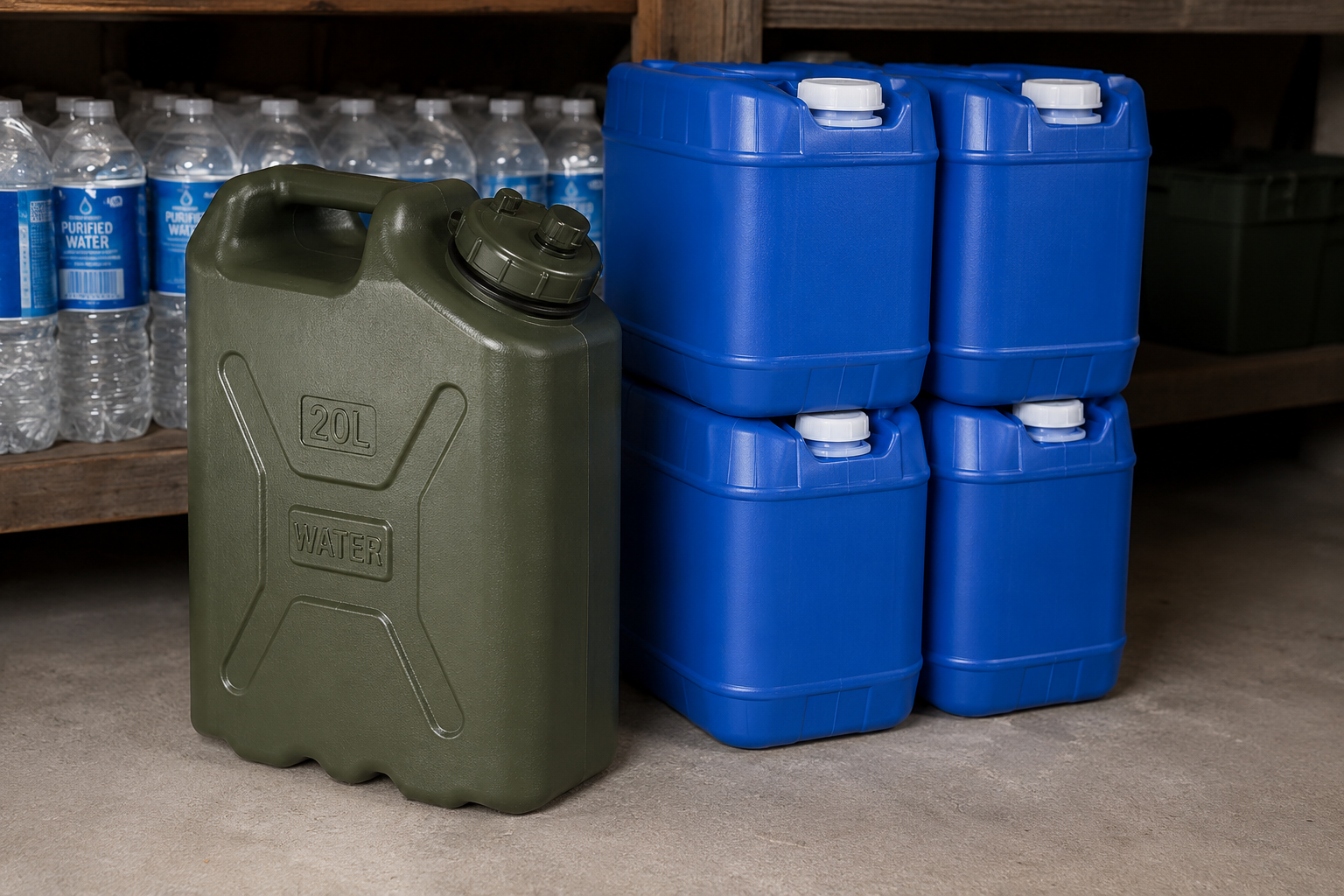
| Food-Grade Water Barrels | 5+ Years With Proper Treatment | Large Home Water Storage |
| Water Bricks or Stackable Containers | 5+ Years With Proper Treatment | Closets, Apartments, Garages, Storage Rooms |
| Glass Containers | Very Long-Term If Properly Stored | Small Indoor Storage |
| Reused Soda Bottles | 6 Months to 1 Year | Backup Storage Only |
| Milk Jugs | Not Recommended | Avoid for Emergency Drinking Water |
Can You Store Tap Water for Emergencies?
Yes. Municipal tap water can be stored for emergency use if it is placed into clean, food-grade containers and sealed properly. Many preparedness experts recommend filling dedicated water storage containers directly from the tap because treated municipal water already contains disinfectants that help slow bacterial growth. For long-term storage, some families choose to add a water preserver according to the manufacturer’s instructions and rotate the supply periodically.
For serious emergency storage, food-grade water containers are the better choice. They are designed to hold water safely, resist leaks, and protect the supply better than thin retail bottles. This matters even more if you are storing water for a full household instead of just keeping a couple of cases in the pantry.
Large barrels make sense when you have space and want a bigger reserve. Stackable water bricks make sense when floor space is limited or when you want smaller containers that are easier to carry. For apartments, closets, pantries, and small homes, smaller stackable containers are usually easier to manage than one heavy barrel.
What Makes Stored Water Go Bad?
Stored water usually becomes questionable because something gets into it, grows inside it, or affects the container. The biggest problems are dirty containers, heat, sunlight, bacteria, algae, damaged lids, and chemical exposure.
A clean container is the starting point. If you fill a container that was not sanitized, you may be storing bacteria along with the water. If you touch the inside of the cap, dip a dirty hose into the container, use a non-food-grade bucket, or leave the lid loose, the water may not stay clean.
Heat is another major issue. Water stored in a hot garage, attic, vehicle, or shed may develop a stale taste faster. Plastic containers can also age faster in high heat. That does not always mean the water is immediately unsafe, but it does mean the supply is not being stored under ideal conditions.
Sunlight creates a different problem. Clear containers left in light can allow algae growth, especially if the water was not perfectly clean or the container is not fully sealed. Emergency water should be kept in a dark area whenever possible.
Chemical exposure is one of the most overlooked problems. Water containers should never be stored beside gasoline, kerosene, pool chemicals, pesticides, paint, solvents, fertilizer, or strong cleaners. Plastic can absorb odors and chemical vapors over time. If your emergency water smells like fuel, chemicals, or plastic, do not treat it like normal drinking water.
⚠ Important Warning
Never store drinking water beside gasoline, pesticides, paint, pool chemicals, solvents, or other hazardous products. Plastic containers can absorb chemical vapors that may make water unsafe to drink.
Where Should You Store Emergency Water?
The best place to store emergency water is somewhere cool, dark, clean, and easy to access. A basement, interior closet, pantry, utility room, or temperature-stable storage room is usually better than a hot garage or shed.
That does not mean garage storage is impossible. Many families have no choice because water takes up space. If you store water in a garage, keep it off bare concrete, away from chemicals, out of direct sunlight, and protected from freezing or extreme heat when possible. Use sturdy shelving only if the shelf can actually handle the weight. Water is heavy, and a full storage setup can weigh hundreds or even thousands of pounds.
If you are storing water for blackouts, place some of it where you can reach it without digging through the garage in the dark. A household that loses power at night during a storm should not have to move boxes, tools, and storage bins just to get drinking water. Keep at least part of your supply inside the living area.
This matters because municipal water may keep working for a while during a power outage, but that does not mean it will work forever. Pumping stations, pressure systems, backup generators, treatment plants, and local damage all affect how long the system stays reliable. I covered that in more detail in How Long Will Municipal Water Systems Work During a Blackout?.
📌 Did You Know?
One gallon of water weighs about 8.3 pounds. A 55-gallon barrel weighs well over 450 pounds when full, making it important to choose its storage location before filling it.
Signs Stored Water May Not Be Safe
Stored water should be inspected before you drink it, especially if it has been sitting for a long time. Clear water is not always guaranteed to be safe, but visible problems are a warning sign that the supply needs to be treated, filtered, or replaced.
| Warning Sign | What It May Mean |
|---|---|
| Bad Odor | Possible Contamination, Chemical Exposure, or Stale Container |
| Cloudiness | Sediment, Bacteria, Algae, or Container Contamination |
| Green Tint | Possible Algae Growth |
| Floating Particles | Dirty Container or Breakdown Inside the Storage Container |
| Leaking Container | Seal Failure or Plastic Damage |
| Fuel or Chemical Smell | Unsafe Storage Location or Chemical Exposure |
If stored water smells like gasoline, chemicals, pesticides, or solvents, do not drink it. Boiling may kill organisms, but it will not remove many chemical contaminants. That water should be considered unsafe for drinking unless you have a reliable treatment method designed for that type of contamination.
Should You Rotate Stored Water?
Yes, most families should rotate stored water on a schedule. Rotation is not complicated. It simply means using older water before it becomes questionable and replacing it with fresh water before an emergency happens.
For factory-sealed bottled water, a 1 to 2 year rotation schedule is practical. For home-filled water containers, many families rotate every 6 to 12 months unless the water was treated and stored in proper long-term containers. For large food-grade barrels treated with the right water preserver and stored correctly, the rotation window can be much longer.
The best system is the one you will actually follow. Write the fill date on each container. Keep an inventory sheet. Put a reminder on your calendar. Use older bottled water for camping, road trips, workouts, or daily drinking, then replace it with fresh cases. Do not rely on memory because emergency supplies are easy to forget once they are stacked in a closet or garage.
🚨 Imagine This…
A winter ice storm knocks out power for five days. Grocery store shelves are empty, the local water system issues a boil-water notice, and your family has only two cases of bottled water left. Families that planned ahead can focus on staying safe instead of searching for water.
Can You Make Stored Water Safe Again?
Sometimes stored water can be made safer, depending on what is wrong with it. If the concern is bacteria, viruses, or biological contamination, boiling, disinfecting, and filtering may help. If the concern is chemical contamination, fuel exposure, pesticides, or unknown toxins, the water is much harder to trust.
Boiling is one of the most reliable emergency methods for biological contamination. If you can bring water to a rolling boil, you can make many unsafe water sources safer for drinking. The problem during a blackout is that boiling requires fuel, a stove, a fire-safe setup, or backup power. That is why water storage, water filtration, and emergency cooking plans should work together instead of being treated as separate subjects.
If you are preparing for an extended outage, water treatment is only one part of the equation. Families should also understand how long their existing water supply may remain available. You can learn more in How Long Will Municipal Water Systems Work During a Blackout?.
Water filters are also useful, especially when stored water has sediment, particles, or questionable taste. Not all filters do the same job, though. Some are designed for taste. Some are designed for bacteria and protozoa. Some are designed for viruses or chemicals. Read the product specifications before assuming one filter handles every possible emergency.
Water purification tablets are useful as a compact backup. They do not take up much space, and they can help treat questionable water when boiling is not practical. They are not a replacement for storing enough clean water, but they are smart to keep in a blackout kit, bug-out bag, vehicle kit, or emergency pantry.
If water is cloudy, strain it through a clean cloth or coffee filter before disinfecting it. If it smells like chemicals or fuel, do not try to fix it with basic bleach or boiling. Chemical contamination is a different problem than biological contamination.
🛒 Recommended Water Storage Gear
These are the water storage products I recommend for building a reliable emergency water supply. Each one solves a different preparedness need, whether you’re storing water for an apartment, a family home, or a long-term blackout.
Food-Grade Water Barrel
Best for storing large amounts of water for whole-home emergency preparedness.

Stackable Water Bricks
Perfect for apartments, closets, and homes where space is limited.

Emergency Water Filter
Provides another layer of protection if stored water becomes questionable or additional water sources must be treated.

Aquatabs 397mg Water Purification Tablets
These Aquatabs are a compact backup for treating water during blackouts, camping trips, boil-water notices, and other emergencies. Each 397mg tablet can disinfect up to four gallons of clear water in approximately 30 minutes. They are designed to handle biological contaminants such as bacteria, viruses, and Giardia cysts, but they do not remove mud, sediment, chemicals, or heavy metals. Always follow the package directions before drinking treated water.

How Much Stored Water Should a Family Keep?
A common emergency rule is to store at least 1 gallon of water per person per day for drinking and basic sanitation. That is a minimum starting point, not a comfortable long-term amount. Hot weather, children, pets, medical needs, hygiene, cooking, and cleanup can push the real number higher.
| Family Size | 2 Weeks Minimum | 30 Days Minimum |
|---|---|---|
| 1 Person | 14 Gallons | 30 Gallons |
| 2 People | 28 Gallons | 60 Gallons |
| 4 People | 56 Gallons | 120 Gallons |
| 6 People | 84 Gallons | 180 Gallons |
Those numbers are only for the basic 1-gallon-per-person-per-day level. A more comfortable plan may require 1.5 to 2 gallons per person per day, especially if the emergency happens during summer or if your family needs water for pets, formula, medical equipment, or more frequent cleaning.
For a deeper breakdown by family size, storage weight, and 30-day planning, read How Much Water Does a Family Need for 30 Days?.
How Stored Water Fits Into a Blackout Plan
Stored water becomes more important during a blackout because every other system starts depending on it. Cooking, cleaning, hygiene, flushing toilets, pets, first aid, and basic comfort all become harder when the faucets stop working or when the water is no longer safe to drink.
During a short outage, you may never touch your stored water. During a longer outage, it may become one of the most important supplies in the house. If power stays out for several days, stores may run low, card readers may fail, gas stations may struggle, and public water systems may face pressure problems or boil-water notices. That is why water should be one of the first supplies handled in any serious emergency plan.
If you are building this as part of a larger blackout plan, it also connects directly to What Happens After 7 Days Without Power? and What Stops Working First in a Long-Term Blackout?. Water is not just another item on a checklist. It is the supply that affects almost every other decision.
☑ Water Storage Checklist
- ☑ Store at least one gallon per person per day.
- ☑ Use food-grade containers.
- ☑ Label every container with the fill date.
- ☑ Keep water in a cool, dark location.
- ☑ Rotate bottled water every 1–2 years.
- ☑ Keep a water filter as backup.
- ☑ Store water away from chemicals.
FAQ: How Long Does Stored Water Last?
Does stored water expire?
Water itself does not expire, but stored water can become contaminated or develop a bad taste if the container, cap, or storage conditions are poor.
How often should I replace bottled water?
A practical rotation schedule is every 1 to 2 years, especially if the water is stored in plastic bottles.
Can I store water in my garage?
Yes, but it is not ideal if the garage gets very hot or cold. Keep water away from sunlight, gasoline, pesticides, paint, pool chemicals, and cleaners.
Are milk jugs good for water storage?
No. Milk jugs are not a good choice for emergency drinking water because they are hard to fully clean and the plastic breaks down faster than proper food-grade water containers.
What is the best container for long-term water storage?
Food-grade water barrels, stackable water bricks, and dedicated water storage containers are better choices than disposable bottles or reused household jugs.
Can stored water grow bacteria?
Yes. Bacteria can grow if the container was dirty, the cap was handled poorly, the water was contaminated during filling, or the container was not sealed correctly.
Can I drink old stored water if I boil it?
Boiling can help with biological contamination, but it does not fix chemical contamination. If water smells like fuel, chemicals, or solvents, do not drink it.
How much water should a family of four store?
At minimum, a family of four should store 56 gallons for two weeks or 120 gallons for 30 days. More is better if you need water for pets, cooking, hygiene, or hot weather.
📚 Continue Reading
Continue building your emergency water and blackout preparedness plan.
Final Thoughts
Stored water can last a long time, but only if it is stored the right way. The water itself is not usually the weak point. The container, storage location, temperature, light exposure, and sanitation habits are what determine whether that water stays dependable.
Store more water than you think you need, use food-grade containers, keep the supply cool and dark, rotate bottled water every 1 to 2 years, label your containers, and keep filters or purification tablets as a backup. Many families discover they need significantly more water than expected, which is why planning ahead with calculations like those found in How Much Water Does a Family Need for 30 Days? can prevent serious shortages later.