How Much Firewood Do You Need to Heat a House for Winter?
How much firewood do you need for winter depends on your climate, house size, insulation, stove efficiency, wood species, and whether wood is your primary or supplemental heat source. Most homes that rely heavily on wood heat use between three and six full cords of properly seasoned firewood during a typical heating season.
This post contains affiliate links. I may earn a small commission at no extra cost to you. Learn more.
A small, well-insulated home in a relatively mild climate may burn fewer than three cords. A larger or draftier house in a region with long periods of freezing weather could require six to ten cords. Someone who only uses a wood stove during cold nights and power outages may need just one or two cords.
Buying too little firewood can leave you searching for expensive seasoned wood in the middle of winter. Buying considerably more than you need is less dangerous, but it requires additional storage space and ties up money. The goal is to estimate your likely consumption, add a reasonable reserve, and have the wood stacked and drying well before heating season begins.
This guide explains how many cords of firewood different homes typically use, how climate and wood species affect consumption, and how to calculate a more dependable estimate for your own house.
Quick Answer
Plan on approximately three to six full cords of seasoned firewood if a wood stove is your primary winter heat source. A small, efficient home in a mild climate may use two or three cords, while a large, poorly insulated home in a cold climate may burn six to ten cords. For supplemental or emergency heating, one to three cords may be enough.
Get an Estimate for Your Home
General cord estimates are useful, but home size, winter severity, insulation and heating equipment can substantially change the amount you need. Use the free calculator to estimate a practical range for your household.
Key Takeaways
- A full cord is a tightly stacked pile measuring 4 feet high, 4 feet deep, and 8 feet long, totaling 128 cubic feet.
- Most wood-heated homes use approximately three to six cords during an average winter.
- Climate, house size, insulation, stove efficiency, and wood species can substantially change that amount.
- Dense hardwoods such as oak, hickory, and locust generally provide more heat per cord than softer woods such as pine or poplar.
- Firewood should normally contain less than 20% moisture before being burned.
- Adding a 15% to 25% reserve helps cover unusually cold weather, longer heating seasons, and estimation errors.
What Is a Cord of Firewood?
A cord is the standard measurement used when buying and storing firewood. One full cord contains 128 cubic feet of stacked wood, including the air spaces between the logs. The traditional dimensions are 4 feet high, 4 feet deep, and 8 feet long.
Firewood does not have to be arranged in those exact dimensions to equal a cord. For example, a stack measuring 4 feet high, 2 feet deep, and 16 feet long also contains 128 cubic feet. What matters is the total stacked volume.
Most residential firewood is cut into pieces approximately 16 inches long. When these pieces are stacked in a single row measuring 4 feet high and 8 feet long, the stack is commonly called a face cord or rick. A face cord is not necessarily a full cord.
If the pieces are 16 inches long, approximately three face cords equal one full cord. However, the term “rick” does not have a nationally standardized volume. Log length and local selling practices can change how much wood is included.
Do Not Compare Firewood Prices by “Rick” Alone
Before purchasing firewood, ask for the stack’s height, length, and average log length. A low-priced rick may contain considerably less wood than another seller’s load. Comparing the total stacked cubic footage gives you a more accurate price comparison.
How Many Cords of Firewood Does a House Use?
A house that uses a wood stove as its main heat source will commonly burn between three and six full cords during one winter. That range works as a starting point, but it should not be treated as a guarantee. Two houses with the same square footage can consume very different amounts of firewood.
A tightly sealed 1,500-square-foot house with a modern EPA-certified stove may use less wood than a drafty 1,000-square-foot house with an older stove. The number of hours the stove operates each day also makes a major difference.
| Heating Situation | Estimated Firewood for Winter |
|---|---|
| Occasional fires for comfort | Half a cord to 1 cord |
| Supplemental heat during cold weather | 1 to 3 cords |
| Small, well-insulated house with primary wood heat | 2 to 4 cords |
| Average house using wood as the main heat source | 3 to 6 cords |
| Large, drafty, or poorly insulated house | 6 to 10 cords or more |
These estimates assume the firewood is properly seasoned and that a reasonably efficient wood stove is being used. An open fireplace is not an efficient substitute for a wood stove. Much of the heat from a fireplace escapes through the chimney, and the draft can pull already-heated indoor air out of the house.
If you have never heated the house with wood before, begin with the estimate that most closely matches your situation and add a reserve of at least 15% to 25%. For example, if your expected consumption is four cords, having five cords available provides protection against a longer or colder winter.
Start Tracking Your Firewood Use
Record the date you begin heating and how quickly you use each stack. After one full winter, you will have a much more dependable estimate for your particular house, stove, climate, and heating habits.
What Affects How Much Firewood You Need?
Square footage receives much of the attention when estimating firewood, but it is only one part of the calculation. Heat loss and stove performance often matter more than the size of the house by itself.
Local Winter Temperatures
A home in a mild southern climate will normally require less firewood than a similar home in the Upper Midwest or northern New England. The length of the heating season matters along with the lowest nighttime temperatures.
A region with cool nights from November through March may require steady but moderate heating. A region that remains below freezing for weeks at a time places a much heavier demand on the stove and the firewood supply.
Wind exposure can increase consumption as well. Houses on open hills, farmland, and other exposed locations often lose heat faster than homes protected by trees or nearby buildings.
House Size and Layout
Larger houses generally require more firewood because there is more indoor space to heat. However, an open floor plan may be easier to heat with one centrally located stove than a house divided into several rooms and hallways.
Two-story homes can benefit from heat naturally rising, but the upper floor may become warmer than the rooms farthest from the stove. Vaulted ceilings can also collect heat above the occupied part of the room, increasing the amount of wood needed to keep the lower living area comfortable.
Insulation and Air Leakage
Insulation may be the biggest difference between a house that burns three cords and one that burns twice that amount. Heat escapes through poorly insulated attics, walls, floors, windows, doors, and crawl spaces.
Small air leaks around windows, exterior doors, attic hatches, plumbing openings, and electrical penetrations can create a constant flow of cold air. Weatherstripping, caulk, door sweeps, insulated curtains, and additional attic insulation can reduce firewood consumption without changing the stove.
Wood Stove Efficiency
Modern EPA-certified wood stoves generally extract more usable heat from each load than older stoves and open fireplaces. A properly sized stove can maintain a cleaner, more controlled burn while using less wood.
An oversized stove is not always better. If it produces too much heat, the user may repeatedly restrict the airflow and create a low, smoky fire. An undersized stove may have to operate at its maximum output continuously, requiring frequent reloads and shortening burn times.
The chimney and stovepipe also affect performance. Poor draft, heavy creosote buildup, incorrect stove settings, and damaged door gaskets can reduce efficiency and increase firewood consumption.
Firewood Species
Dense hardwoods normally contain more usable heat per cord than less-dense woods. Oak, hickory, black locust, beech, and hard maple can provide longer burns when properly seasoned. Pine, spruce, poplar, and other lighter woods usually burn faster and require a larger volume to produce the same seasonal heat.
Softwoods are not automatically bad firewood. Properly seasoned pine can be useful for starting fires and quickly warming a cold stove. The important difference is that a cord of lightweight wood will not usually last as long as a cord of dense hardwood.
Firewood Moisture Content
Wet firewood wastes energy because part of the fire’s heat must evaporate water before the wood can burn effectively. It can also produce more smoke, reduce heat output, dirty the stove glass, and contribute to creosote buildup.
Firewood should generally contain less than 20% moisture when checked on a freshly split face. Depending on the species, log size, stacking method, and climate, wood may require six months to two years of drying before it is ready to burn.
Do Not Depend on Freshly Cut Wood
Firewood sold as “seasoned” is not always dry enough to burn efficiently. Use a moisture meter on the freshly exposed center of a split log instead of testing only the dry outer surface.
How to Calculate Your Winter Firewood Needs
There is no single formula that can predict firewood consumption perfectly, but you can build a practical estimate by starting with your heating situation and then adjusting for the house, climate, and type of wood available.
Step 1: Decide How Much You Will Use the Stove
First, determine whether the stove will provide occasional, supplemental, or primary heat. Someone who burns wood only during cold evenings needs far less than someone who keeps a stove running around the clock.
- Occasional use: Start with half a cord to one cord.
- Supplemental heating: Start with one to three cords.
- Primary heat in an average home: Start with three to six cords.
- Primary heat in a large or drafty home: Start with six to ten cords.
Step 2: Adjust for the House
Move toward the upper end of the range if the house has older windows, noticeable drafts, limited attic insulation, high ceilings, or rooms that are difficult to heat. Move toward the lower end if the house is compact, tightly sealed, well insulated, and equipped with an efficient stove.
If you are heating only part of the house, base the estimate on the area you intend to keep warm rather than the home’s total square footage. Closing off unused rooms can reduce the heating load, provided doing so does not put plumbing at risk of freezing.
Step 3: Adjust for Your Climate
Add more wood if your heating season regularly lasts five or six months, temperatures remain below freezing for long periods, or the house is exposed to strong winter winds. In a milder climate where freezing weather arrives in shorter stretches, the starting estimate may already provide enough wood.
Step 4: Consider the Type of Wood
If most of your supply consists of dense hardwood such as oak, hickory, or locust, the estimated number of cords will generally provide more usable heat. If you will burn mostly pine, poplar, cottonwood, or other lightweight species, plan on using a greater volume.
Step 5: Add a Winter Reserve
Once you have a working estimate, add 15% to 25%. This reserve covers colder-than-normal weather, wet or poor-quality logs, increased time at home, and delays in obtaining more wood.
Example Firewood Estimate
A family plans to use a modern wood stove as the primary heat source for a 1,600-square-foot house during a moderately cold winter. They begin with an estimate of four cords. Because the house has some drafts and they want protection from an unusually cold season, they add a 25% reserve.
4 cords × 1.25 = 5 cords
Starting the winter with five full cords gives the family a more dependable supply than purchasing exactly four cords and hoping the original estimate is perfect.
If the wood will also serve as emergency fuel, keeping an additional reserve supports a broader homestead blackout preparedness plan. A prolonged outage can increase firewood consumption because the stove may need to run continuously instead of only during the coldest parts of the day.
How Long Does a Cord of Firewood Last?
One full cord may last anywhere from a few weeks to an entire winter. The difference depends on how often the stove runs, the amount loaded each day, outdoor temperatures, stove efficiency, and wood density.
| How the Wood Is Used | Approximate Time One Cord May Last |
|---|---|
| Occasional evening or weekend fires | Several months or longer |
| Supplemental heat during cold weather | 6 to 12 weeks |
| Daily primary heating | 4 to 8 weeks |
| Continuous heating during severe cold | 2 to 4 weeks |
These ranges assume a full cord rather than a face cord or loosely thrown load. They also assume that the wood is seasoned and protected from rain and ground moisture.
A household that burns five cords during a five-month heating season averages approximately one cord per month. Consumption will not be even throughout the season. The household may use only a small amount during mild fall weather and burn considerably more during January and February.
Estimate Your Burn Rate During Winter
Divide the woodpile into clearly measured sections before the heating season begins. If five equal stacks make up five full cords, it becomes easy to see how quickly each cord is being consumed.
For example, suppose the first cord lasts six weeks during mild early-winter weather. That does not guarantee every remaining cord will last six weeks. Once daytime temperatures remain below freezing, the stove may use wood much faster.
Check the remaining supply at least once a month. Compare the number of cords left with the amount of winter still ahead. If half the wood is gone before the midpoint of the heating season, begin conserving fuel or arranging for another delivery before local supplies become limited.
Mark Your Wood Stacks
Use stakes, signs, or separate storage rows to mark each full cord. This makes it easier to track actual consumption and create a more accurate firewood estimate for the following winter.
Buying and Storing Enough Firewood for Winter
Firewood should be purchased, split, and stacked well before cold weather arrives. Waiting until winter increases the chance of paying more for wood that is not fully seasoned. Local sellers may also run short during extended periods of freezing weather.
If possible, obtain the entire winter supply by spring or early summer. This provides additional drying time and gives you an opportunity to measure the stacks before depending on them for heat.
Confirm How Much Wood You Are Receiving
Ask whether the price is for a full cord, face cord, rick, pickup load, or another local measurement. Measure the stacked wood after delivery instead of relying on how full the truck appeared.
Multiply the stack’s height, length, and depth to find its volume in cubic feet. Divide the result by 128 to estimate the number of full cords.
For example, a stack measuring 4 feet high, 16 feet long, and 2 feet deep contains 128 cubic feet:
4 × 16 × 2 = 128 cubic feet, or one full cord
Wood should be stacked tightly enough to prevent large empty spaces, but it does not need to be packed so closely that air cannot move through it.
Store Firewood Off the Ground
Place firewood on a rack, pallets, pressure-treated runners, or another raised base. Logs stacked directly on soil absorb moisture, attract insects, and decay more quickly.
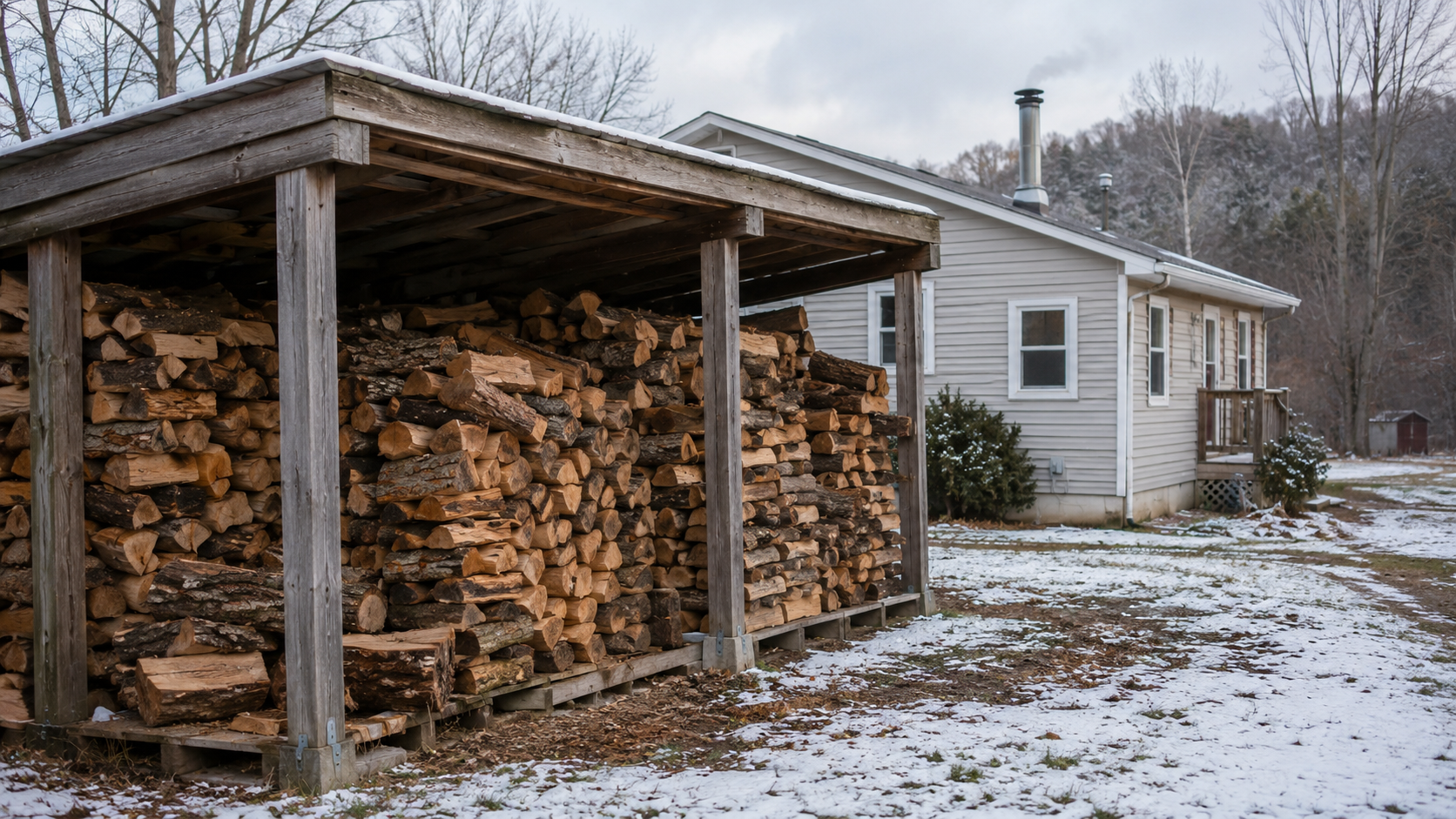
Choose a location with sunlight and good air movement. Stack the rows neatly, leave the sides exposed, and cover only the top unless severe wind-driven rain makes additional protection necessary. Completely wrapping green or damp wood in a tarp can trap moisture and slow the seasoning process.
A woodshed with a roof and open or slatted sides provides better long-term protection than a tarp. Keep the stacks stable and avoid making them so tall that they could fall onto children, pets, or anyone removing logs.
Avoid storing an entire winter’s supply inside the house. Large indoor woodpiles can bring in insects, release moisture, and place combustible material too close to the heating area. Bring only a small working supply indoors at one time.
Winter Firewood Checklist
- Estimate your normal seasonal consumption.
- Add a 15% to 25% emergency reserve.
- Confirm whether you are buying a full cord or face cord.
- Measure the delivered stack before accepting the stated volume.
- Split oversized logs so they dry and burn more effectively.
- Stack the wood off the ground in a sunny, ventilated location.
- Protect the top of the pile from rain and snow.
- Test several freshly split pieces with a moisture meter.
- Move only a small working supply indoors at one time.
Firewood Heating Safety
Having enough wood does not make a home ready for winter unless the stove, chimney, alarms, and storage area are also prepared. A wood-burning system should be inspected and cleaned before regular seasonal use. Creosote, animal nests, damaged chimney liners, and loose stovepipe connections can create serious fire and carbon monoxide hazards.
Keep combustible materials away from the stove and follow the appliance manufacturer’s required clearances. Use a sturdy metal container with a tight-fitting lid for ashes. Even ashes that appear cold can conceal live embers for several days, so store the container outdoors on a noncombustible surface away from the house.
Install working smoke alarms and carbon monoxide alarms in appropriate locations throughout the home. Test them regularly and replace batteries or expired alarms as necessary.
Burn only dry, untreated firewood. Do not burn painted lumber, pressure-treated wood, plywood, household garbage, plastics, or glossy paper. These materials can release harmful fumes and contribute to dangerous deposits inside the chimney.
Never Leave a Wood Stove Unattended With the Door Open
An open stove door can allow sparks and burning material to escape. Operate the stove with its doors fully closed unless the manufacturer’s instructions specifically require the door to remain open during ignition.
Useful Firewood Tools
A firewood moisture meter helps confirm that split logs are dry enough to burn efficiently. A large metal ash bucket with a lid provides a safer place to hold ashes and hidden embers after cleaning the stove.


Frequently Asked Questions
Is four cords of wood enough for winter?
Four cords may be enough for an average-size, reasonably insulated home in a moderate climate. It may not be enough for a large, drafty house or a home in a region with a long, severe winter. Adding at least 15% to 25% provides a safer margin.
How many trees does it take to make one cord of firewood?
The number varies according to tree species, trunk diameter, height, and how much of the tree is usable. One large mature tree may produce approximately a cord or more, while several smaller trees may be required. Measuring the final split and stacked volume is more reliable than counting trees.
Can firewood become too old to burn?
Properly stored firewood can remain usable for several years. Wood loses value when it repeatedly gets wet, develops extensive rot, or becomes soft and crumbly. Older dry wood may burn faster, but it can still provide useful heat.
Should firewood be covered completely?
Usually, only the top needs to be covered. Leaving the sides open promotes airflow and allows moisture to escape. Completely covering damp wood can trap humidity and encourage mold or decay.
How can you tell whether firewood is seasoned?
Seasoned wood is often lighter, darker at the ends, and marked by drying cracks. Two dry pieces may produce a sharper sound when struck together. The most dependable method is to split a log and test the freshly exposed center with a moisture meter. A reading below 20% is generally appropriate for burning.
Continue Reading
Firewood can provide dependable heat when electricity and other utilities fail. For a broader plan covering backup power, water, heating, lighting, and essential supplies, read How to Make Your Homestead Blackout-Ready.
Final Thoughts
Most households using wood as their primary heat source should begin with an estimate of three to six full cords for winter. Smaller efficient homes may need less, while larger, draftier homes in colder climates may require six to ten cords or more.
The most dependable estimate comes from considering the house, climate, stove efficiency, wood species, and previous consumption. Add a 15% to 25% reserve instead of planning around the minimum possible amount.
Buy or cut firewood early, season it properly, store it off the ground, and track how quickly each cord is used. After one complete heating season, you will have a much more accurate number for your own home and will be better prepared before the next winter begins.