How to Keep Chickens Out of Your Vegetable Garden
Free-range chickens can be useful around a homestead, but their scratching and pecking can quickly damage a vegetable garden. They scatter mulch, uproot seedlings, expose plant roots, and sample ripening produce—sometimes undoing weeks of work in a single afternoon.
This post contains affiliate links. I may earn a small commission at no extra cost to you. Learn more.
This is not misbehavior. Scratching, foraging, and dust bathing are natural instincts, so the goal is to protect vulnerable crops while giving the flock appropriate places to explore.
This guide explains how to keep chickens out of your vegetable garden using practical barriers for entire gardens, raised beds, and individual plants. It also covers fencing heights, alternative scratching areas, and which temporary deterrents are worth trying.
Quick Answer: How Do You Keep Chickens Out of a Vegetable Garden?
The most reliable way to keep chickens out of a vegetable garden is to surround it with a physical barrier. A fence approximately 5 to 6 feet tall works for most backyard flocks, although lightweight or determined breeds may require a covered enclosure. Use smaller openings near ground level so chickens cannot squeeze through or reach seedlings through the fence.
For raised beds and smaller growing areas, cover the plants with garden hoops and securely fastened poultry netting or welded wire. You can reduce pressure on the garden by giving the flock a separate shaded scratching area with loose soil, mulch, leaves, and occasional treats. Scent repellents, plastic decoys, and shouting at the chickens may provide temporary relief, but they will not protect a garden consistently.
Key Takeaways
- A physical fence is the only consistently reliable way to keep free-range chickens out of an entire vegetable garden.
- A 5- to 6-foot fence is suitable for most flocks, but lightweight and active breeds may require overhead netting.
- Raised beds alone will not stop chickens because most can easily jump onto the sides.
- Garden hoops, wire covers, and plant cages work well for protecting seedlings and individual beds.
- Providing a separate scratching and dust-bathing area can make the vegetable garden less tempting.
- Scare devices and homemade repellents may help temporarily, but chickens usually become accustomed to them.
Why Chickens Are Drawn to Vegetable Gardens
A vegetable garden contains nearly everything a chicken naturally wants: loose soil, insects, tender leaves, seeds, moisture, shade, and places to dust bathe. Freshly cultivated soil is especially attractive because it is easy to scratch apart and may contain worms, beetles, grubs, and other small creatures.
Mulched beds can be even more tempting. Chickens instinctively rake leaves, straw, wood chips, and compost backward with their feet while looking for food. This can scatter mulch into pathways, uncover irrigation lines, expose shallow roots, and bury small seedlings.
Chickens may also eat lettuce, spinach, kale, young brassicas, tomatoes, strawberries, peas, and other garden crops. Even when they do not eat the entire plant, repeated pecking can damage leaves and fruit enough to reduce the harvest. Newly planted seeds and small seedlings are particularly vulnerable because they can be scratched out before their roots become established.
Dust bathing creates another problem. A chicken may choose a dry garden bed and dig a bowl-shaped depression, damaging several plants in the process. Once one bird finds a desirable location, others often follow.
Some gardeners allow chickens into established gardens because they eat pests. Although chickens may remove beetles, grasshoppers, caterpillars, and other insects, they do not distinguish between a harmful pest and a beneficial earthworm. Their scratching can cause more damage than the insects they consume, especially around seedlings and shallow-rooted crops.
Understanding this behavior is important because it explains why most scent repellents and scare tactics eventually fail. The food and scratching opportunities inside the garden are strong rewards. Instead of trying to change the chickens’ instincts, the better approach is to control where those instincts can be expressed.
The Most Reliable Solution: Garden Fencing
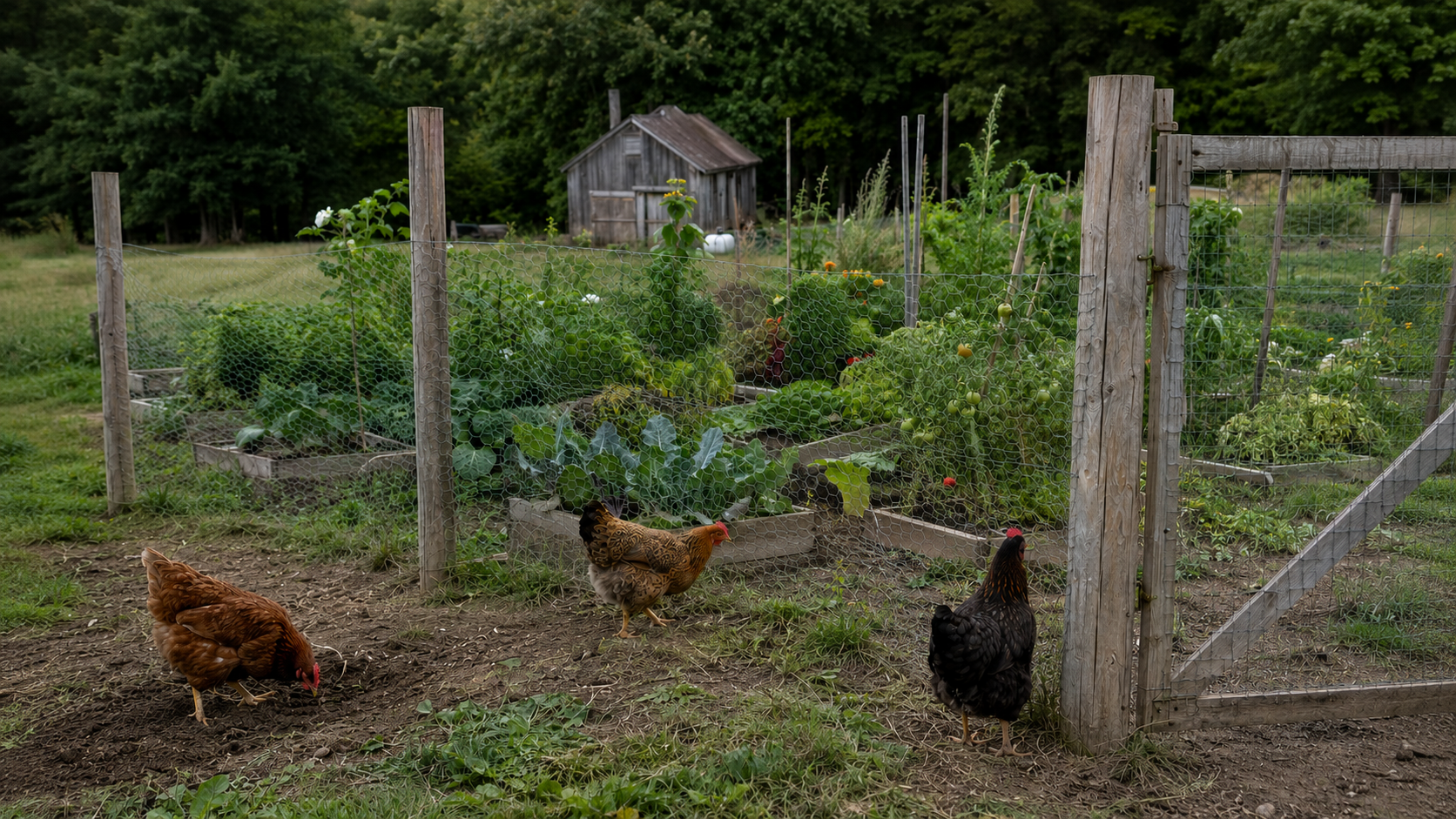
A fence is the most dependable way to protect an entire vegetable garden while allowing chickens to free-range elsewhere. Unlike repellents and scare devices, fencing continues working after the chickens become curious or discover food inside the garden.
Surround the complete growing area instead of fencing only the side where the chickens normally enter. Chickens will walk along a barrier looking for gaps, open gates, loose corners, and places where the bottom has lifted away from the ground.
Secure the bottom of the fencing with landscape staples, stakes, boards, or tightly stretched wire. Chickens generally do not dig underneath fences like some predators, but they can push beneath loose netting. Avoid leaving openings around gates, posts, and uneven ground.
The entrance should have a gate that closes automatically or is easy to latch every time you leave. An effective fence does little good when the gate is regularly left open. If children use the garden, choose a simple latch they can operate but that will not open when bumped.
Keep containers, compost piles, low structures, and other objects away from the outside of the fence. Chickens may use them as platforms to jump or fly into the garden. Trimming vegetation around the fence also makes holes and loose sections easier to spot.
Practical Tip
If you are building a new garden, fence a slightly larger area than you currently need. This leaves room for wider pathways, additional beds, compost storage, and future expansion without rebuilding the entire enclosure.
Best Fencing Materials and Heights
A fence does not need to be expensive, but it must be tall enough, securely attached, and free of large openings. The best material depends on whether you need a permanent enclosure or a temporary seasonal barrier.
A 4-foot fence may contain heavier, less-active breeds, but it is not dependable for every flock. A height of 5 to 6 feet is a better general recommendation for a vegetable garden. Lightweight breeds and chickens that frequently fly onto fences may still cross a 6-foot barrier.
For the highest level of protection, cover the garden with securely stretched poultry netting or bird netting. Overhead protection is especially useful for small gardens, enclosed raised-bed areas, and flocks with active breeds. The covering must remain tight and visible so birds do not become tangled in loose material.
Hardware cloth is strong, but surrounding an entire garden with it is usually unnecessarily expensive if the only goal is excluding adult chickens. It makes more sense around the lower portion of a garden that also needs protection from chicks, rabbits, rodents, or other small animals.
Protecting Raised Beds, Seedlings, and Individual Plants
Raised beds make gardening easier, but their sides are not high enough to stop most chickens. Even a heavy chicken can jump onto a bed that is 18 to 24 inches tall. The loose soil inside may make a raised bed more attractive than an in-ground garden.
One of the simplest solutions is to install flexible garden hoops across the bed and cover them with poultry netting, welded wire, or another durable garden mesh. Secure the covering along every side with clips, boards, landscape staples, or hooks so chickens cannot push underneath it.
Build the cover tall enough to accommodate mature plants. Low covers work for lettuce, carrots, onions, and young seedlings, while tomatoes, peppers, and other tall crops need higher hoops or removable cages. A hinged wooden frame covered with wire is another practical option for beds that require frequent watering, weeding, and harvesting.
Individual plants can be protected with wire cylinders, tomato cages wrapped in mesh, or rigid garden cloches. Place the protection around the plant immediately after transplanting rather than waiting until the chickens discover it. Make the protected area wide enough that chickens cannot reach through the openings and peck the leaves.
Seedlings need protection until their roots are established and their stems can tolerate minor disturbance. However, mature plants are not completely safe. Chickens may still peck tomatoes, berries, squash, leafy greens, and other produce, so edible portions should remain behind a barrier until harvest.
Do Not Use Loose Netting
Loosely draped bird netting can trap a chicken’s feet, wings, or neck. Keep all netting stretched tightly, fasten the edges securely, and inspect it regularly for sagging or torn sections.
Give Free-Range Chickens a Better Place to Scratch
Providing an alternative foraging area will not replace a fence, but it can reduce how much time the flock spends testing the garden barrier. Choose a shaded location where the chickens are already comfortable and give them materials they can scratch through safely.
A designated chicken area can contain dry soil, untreated wood chips, fallen leaves, straw, and other loose organic material. Toss occasional treats or a small portion of their regular feed into this area so the birds learn to search there. Avoid placing food near the vegetable garden because it encourages the flock to remain close to the fence.
Chickens also need a dry place for dust bathing. A shallow area filled with loose soil and sand may prevent them from digging dust-bathing holes beside garden plants. Position it under a roof, tree, or simple shade cover so it remains usable during hot weather.
If the flock repeatedly damages landscaped areas, consider limiting free-range time or using a large run, movable poultry fence, or chicken tractor. Rotating chickens through different sections of the yard gives them fresh ground to explore while allowing scratched areas to recover.
Chickens can be allowed into the vegetable garden after the final harvest to eat leftover produce, disturb insect hiding places, and scratch through crop residue. Remove plants that may be unsafe for them, protect perennial crops, and supervise their access. Close the garden again before planting seeds or setting out transplants.
Temporary Deterrents That Can Help
Temporary deterrents are most useful as a second layer of protection or while a permanent fence is being built. A motion-activated sprinkler can startle chickens when they approach the garden, but it must be positioned so the sensor detects them before they reach the plants. Move it occasionally so the flock does not learn how to avoid it.
Reflective tape, spinning pinwheels, and moving garden decorations may discourage cautious chickens for a short time. These are most effective around newly planted beds and should be rotated or repositioned regularly. Once the birds realize the objects are harmless, they commonly ignore them.
Supervised free-ranging can also prevent damage. Allow the flock outside when someone can redirect them from the garden, then return them to their run when supervision ends. This requires more effort but can work for a small backyard flock.
Methods That Usually Do Not Work
Many popular chicken deterrents produce inconsistent results because they do not remove the food, loose soil, and insects attracting the birds. Common examples include:
- Fake owls and scarecrows: Chickens usually recognize that stationary decoys are harmless after a few days.
- Citrus peels and strong-smelling herbs: Some chickens avoid them temporarily, while others walk around them or scratch them aside.
- Spraying chickens with a hose: This works only while someone is present and does not teach the flock to avoid the garden permanently.
- Raised-bed sides: Chickens can jump or fly onto most raised beds without difficulty.
- Wing clipping: Clipping one wing may reduce flight in some birds, but determined chickens can still jump over low barriers. It can also limit their ability to escape predators.
Avoid spreading cayenne pepper, concentrated vinegar, mothballs, or questionable chemical repellents around food crops. These products may irritate animals, damage plants, contaminate soil, or create unnecessary risks for children and pets. A secure barrier is safer and more dependable.
A Practical Setup for Protecting a Backyard Garden
For most backyard gardens, the simplest dependable setup is a 5- to 6-foot perimeter fence supported by sturdy posts. Secure the bottom to the ground and install a self-closing or easily latched gate. Keep objects that chickens could use as launching points away from the outside of the fence.
Inside the enclosure, protect newly planted beds with removable wire covers or hoops and tightly stretched netting. These smaller barriers provide extra protection if someone accidentally leaves the main gate open. They can be removed once plants are established if the perimeter remains secure.
Create a separate shaded scratching and dust-bathing area away from the garden. If the birds continue flying over the perimeter, add overhead netting or keep them in a spacious run during the growing season. Check the enclosure weekly for loose corners, damaged mesh, and gaps beneath the fence.
Backyard Garden Protection Checklist
- Install a secure perimeter fence.
- Fasten the bottom edge to the ground.
- Add a dependable gate latch.
- Cover vulnerable seedlings and raised beds.
- Move jumping platforms away from the fence.
- Provide a separate scratching and dust-bathing area.
- Inspect the barrier regularly for damage.
🛒 Recommended Garden Protection Gear
These products can help create a physical barrier around the garden, protect individual raised beds, or provide an additional temporary deterrent.
6-Foot Galvanized Poultry Netting
A 6-foot roll of poultry netting can create an affordable perimeter barrier around a backyard vegetable garden.

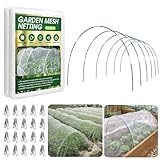
Garden Hoops and Mesh Netting Kit
This kit includes flexible hoops and mesh netting for covering seedlings, vegetables, and other vulnerable plants in raised beds.
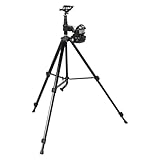
Orbit Garden Enforcer Motion-Activated Sprinkler
A motion-activated sprinkler can provide a secondary deterrent near the garden, but it should not replace secure fencing.

Frequently Asked Questions
How tall should a garden fence be to stop chickens?
A 5- to 6-foot fence will stop most backyard chickens. Heavy breeds may respect a 4-foot barrier, but lightweight and active breeds may fly over taller fences. Overhead netting provides the most complete protection.
Can chickens be trained to stay out of a vegetable garden?
Chickens can learn routines and may respond when redirected, but training alone is not reliable. They are likely to return when nobody is watching, especially after discovering insects, seedlings, or loose soil inside the garden.
Will chickens eat vegetable plants?
Chickens commonly peck leafy greens, seedlings, tomatoes, berries, peas, and other crops. They may also damage plants they do not eat by scratching around their roots.
Can chickens enter the garden after the growing season?
Yes. After harvesting, supervised chickens can eat leftover produce and some insects while scratching through crop residue. Protect perennial plants and remove anything that may be unsafe before allowing the flock inside.
Further Reading
- How to Build a Self-Sufficient Garden for a Family of Four
- Best High-Calorie Crops for a Survival Garden
- How to Save Vegetable Seeds for Next Year
- Best Perennial Food Plants for a Self-Sufficient Backyard
Final Thoughts
Keeping chickens out of a vegetable garden is easier when you work with their natural behavior instead of trying to eliminate it. Chickens will continue scratching, pecking, and searching for insects wherever they find loose soil and food. A physical barrier gives them a clear boundary while protecting the time and work invested in the garden.
For most backyard flocks, a secure 5- to 6-foot fence combined with covered seedling beds is the most practical solution. Add a separate scratching and dust-bathing area, inspect the fence regularly, and reserve garden access for supervised cleanup after harvest. This allows chickens and a productive vegetable garden to share the same property without constant damage or frustration.