
Best Compact Survival Gear for Bug-Out Bags (2026 Guide)
Choosing the best compact survival gear for a bug-out bag means finding equipment that solves real emergency problems without adding unnecessary weight. Whether you’re preparing for a power outage, unexpected evacuation, vehicle breakdown, or wilderness emergency, a few carefully selected tools can make your survival kit more practical.
This post contains affiliate links. I may earn a small commission at no extra cost to you. Learn more.
Still choosing the right backpack? Read our Top 10 Bug-Out Bags for Survivalists to compare backpack sizes, carrying comfort, storage capacity, and features before building your emergency kit.
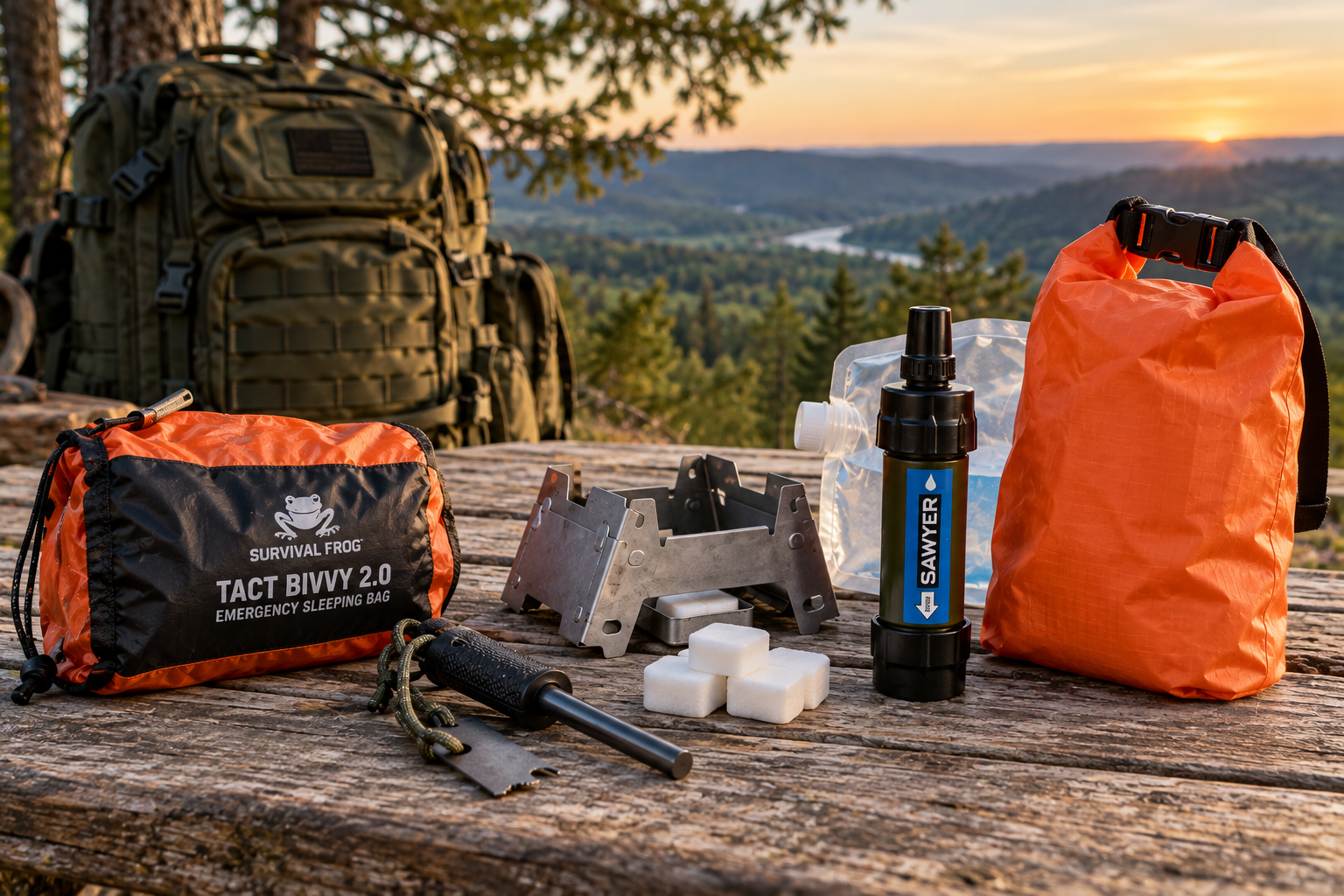
In this 2026 guide, we compare five useful types of lightweight survival equipment: emergency bivvy sacks, ferro rod fire starters, folding pocket stoves, compact water filters, and waterproof dry bags. We’ll explain their advantages, limitations, and best uses so you can decide what belongs in your own emergency kit.
Quick Comparison: 5 Best Compact Survival Gear Essentials
Each of these survival tools serves a different purpose. Here’s how they compare before we get into the individual recommendations.
Emergency Bivvy Sack
Best For: Emergency shelter
Main Benefit: Lightweight wind and rain protection
Limitation: Not a replacement for an insulated sleeping bag
Ferro Rod Fire Starter
Best For: Backup fire starting
Main Benefit: Compact and does not require lighter fuel
Limitation: Requires dry tinder and practice
Folding Pocket Stove
Best For: Outdoor emergency cooking
Main Benefit: Small and easy to pack
Limitation: Requires fuel and outdoor ventilation
Compact Water Filter
Best For: Backcountry water treatment
Main Benefit: Helps reduce certain waterborne pathogens
Limitation: Does not remove all viruses or chemicals
Waterproof Dry Bag
Best For: Protecting emergency supplies
Main Benefit: Keeps clothing and important items dry when properly sealed
Limitation: Does not replace a properly fitted backpack
1. Emergency Bivvy Sack: Compact Protection From the Elements
An emergency bivvy sack is a lightweight shelter layer designed to reduce exposure to wind and precipitation. It can be valuable when an evacuation takes longer than expected, a vehicle becomes stranded, or a hike turns into an unplanned overnight stay.
The Survival Frog Tact Bivvy 2.0 is one example of this category available through Amazon. It is marketed as a compact emergency sleeping bag with a stuff sack and survival accessories. Before recommending a specific listing, verify its dimensions, weight, material, and included accessories.

Pros and Cons of an Emergency Bivvy
Advantages
- Compact enough for most bug-out bags and vehicle kits.
- Provides an additional barrier against wind and precipitation.
- Useful as a backup when an overnight stop is unexpected.
Limitations
- Does not replace an insulated cold-weather sleeping system.
- Condensation can accumulate inside reflective materials.
- Thin emergency materials can be vulnerable to punctures.
Best for: Emergency exposure protection when space and weight are limited.
What to Look For
- Weather resistance: A design that helps block wind and precipitation.
- Enough room: Dimensions that fit the intended user and clothing layers.
- Low packed bulk: Small enough to remain in the bag rather than getting left behind.
- Reusable construction: Materials and seams that tolerate careful repacking.
Where It Works Best
Keep one in a vehicle emergency kit or bug-out bag as a backup exposure barrier. Pair it with insulating clothing, a sleeping pad, and an appropriate sleeping system when cold weather is likely.
A reflective emergency bivvy is not a reliable substitute for a properly rated cold-weather sleeping bag; condensation can also become an issue.
2. Ferro Rod Fire Starter: A Reliable Backup With Practice
A ferrocerium rod produces hot sparks when scraped with a suitable striker. Unlike a lighter, it does not depend on a pressurized fuel reservoir, making it useful as a redundant ignition method in an outdoor kit.

Pros and Cons of a Ferro Rod Fire Starter
Advantages
- Does not rely on lighter fuel or batteries.
- Compact and convenient to carry as a backup.
- Can produce sparks even when the rod is wet.
Limitations
- Requires suitable tinder and proper technique.
- Harder to use than a lighter for many beginners.
- Does not guarantee ignition in wet or windy conditions.
Best for: A secondary fire-starting method alongside a dependable lighter.
What to Look For
- A rod large enough to grip while wearing gloves.
- A striker that produces sparks consistently.
- A secure attachment point so the striker and rod stay together.
- Room in the kit for dry tinder and a backup lighter.
Practical tip: Practice using the ferro rod before relying on it. Sparks alone do not guarantee a fire, especially with damp tinder. Carry a lighter and weather-protected tinder as your primary fire-starting setup, and follow local fire restrictions.
3. Folding Pocket Stove: A Small Outdoor Cooking Backup
A compact folding stove with compatible solid-fuel tablets can heat a small pot without the bulk of a full-size camp stove. It may be useful for outdoor meals during short evacuations, vehicle-based stops, or planned camping trips.
Look for a stove with stable pot supports and fuel that is clearly identified by the manufacturer. A folding stove from a known camping brand, paired with its specified fuel, is generally easier to evaluate than an unbranded assortment of tablets.

Pros and Cons of a Folding Pocket Stove
Advantages
- Compact design makes it easy to pack.
- Useful for heating small meals or water outdoors.
- Can be simpler to transport than larger camping stoves.
Limitations
- Requires a supply of compatible fuel.
- Performance may decrease in wind or cold weather.
- Must not be operated inside enclosed or partially enclosed spaces.
Best for: Outdoor cooking when your emergency plan includes food that requires heating.
What to Look For
- Stable support for the pot you intend to use.
- Fuel availability, storage guidance, and manufacturer compatibility.
- Realistic heating performance in windy or cold conditions.
- A safe way to carry and cool the stove after use.
For a bug-out bag, remember that a stove is optional if your emergency food is ready to eat. A cooking system adds weight, consumes fuel, and creates additional safety considerations.
4. Compact Water Filter: Useful, but Know Its Limits
A small backpacking filter can be one of the most useful additions to an emergency kit when you may need to collect water from streams or other natural sources.
The Sawyer MINI is a familiar example of a compact hollow-fiber filter, but any choice should be based on the manufacturer’s current treatment claims and instructions.


Pros and Cons of a Compact Water Filter
Advantages
- Lightweight and easy to include in a small emergency kit.
- Can reduce certain waterborne bacteria and protozoa when used correctly.
- Provides a backup option for suitable freshwater sources.
Limitations
- Does not reliably remove viruses or dissolved chemical contaminants.
- Requires proper cleaning and maintenance.
- Can be damaged by freezing after use.
Best for: Supplemental water treatment during backcountry travel and emergency evacuation.
What to Look For
- Verified treatment claims: Understand which bacteria, protozoa, and other hazards the product is designed to reduce.
- Easy cleaning: A practical backflushing or maintenance method.
- Compatible containers: A setup that works with your bottles or squeeze bags.
- Cold-weather care: Protection from freezing after the filter has been used.
Important limitation: Typical backpacking microfilters do not reliably remove viruses, dissolved chemicals, salt, or every other contaminant. Water affected by fuel, industrial chemicals, or unknown pollution may require a different source or treatment system.
Follow official emergency water guidance and the filter manufacturer’s instructions. Carry stored drinking water whenever practical. A filter is a backup, not a reason to leave water out of your evacuation plan.
5. Waterproof Dry Bag or Pack Liner: Protect What Matters
Rain can ruin spare clothing, medications, paper maps, and other essential supplies. A compact dry bag or waterproof pack liner helps organize gear while reducing the chance that a wet backpack becomes a bigger emergency.

Pros and Cons of a Waterproof Dry Bag
Advantages
- Helps protect spare clothing and important supplies from moisture.
- Useful for organizing emergency equipment inside a larger backpack.
- Available in different capacities for different kits.
Limitations
- Protection depends on proper closure and intact seams.
- Not every dry bag is rated for submersion.
- Does not replace a comfortable, properly fitted backpack.
Best for: Keeping essential supplies dry during rainy or wet-weather evacuations.
What to Look For
- Appropriate capacity for the items you need to protect.
- A closure system you can seal correctly under stress.
- Durable seams and material suitable for the expected conditions.
- Enough visibility or labeling to find important items quickly.
A bright-colored dry bag can also make key supplies easier to locate. However, a dry bag alone may not offer comfortable straps, proper weight distribution, or enough organization for a full bug-out loadout. Use it inside a properly fitted backpack when possible.
How to Choose Compact Survival Gear Without Overpacking
Start With the Problem, Not the Gadget
Ask what each item does in a realistic emergency. Exposure protection, drinking water, medications, communication, lighting, and navigation generally deserve attention before novelty survival tools.
Check Total Weight and Packed Size
Small items add up. Pack your bag with water, food, clothing, and all other essentials, then carry it on a realistic walk. If the weight slows you down or causes discomfort, reassess what you packed.
Choose Equipment You Can Actually Operate
A simple lighter you have practiced with may be more useful than a complicated survival tool you have never opened. Learn to use the gear before an emergency and inspect it periodically.
Build Redundancy Where Failure Matters
Carry a primary and backup method for essential functions when reasonable: for example, a lighter plus ferro rod, or stored water plus a suitable treatment method. Avoid carrying several gadgets that all solve the same low-priority problem.
What Not to Waste Space On
- Oversized novelty multi-tools: Many combine weak versions of tools you rarely need.
- Unfamiliar fire-starting gadgets: A device that looks impressive is not useful without practice.
- Heavy cooking setups: Consider ready-to-eat food when mobility matters more than meal preparation.
- Duplicate low-priority accessories: Make room for water, clothing, medications, and weather protection first.
- Unverified emergency claims: Be skeptical of products promising unrealistic warmth, water treatment, or survival performance.
Build a Practical Bug-Out Bag Around the Essentials
Compact gear is only one part of a workable emergency plan. Before buying more equipment, confirm that your bag includes drinking water, appropriate food, necessary medications, weather-ready clothing, a first-aid kit, a headlamp, charging options, and copies of important information.
Then match the extras to your actual risks. A vehicle evacuation in summer requires a different setup than walking through cold, wet conditions. Families also need to account for children, pets, and the ability of each person to carry their own supplies.
More Survival and Emergency Preparedness Guides
Compact equipment is only one part of preparing for an emergency. These additional guides can help you build a more complete survival plan.
- How to Build a Bushcraft Cooking Tripod — Learn another approach to outdoor cooking.
- Tracking Animals for Food — Explore traditional wilderness survival skills.
- What Stops Working First in a Long-Term Blackout? — Understand how extended outages affect everyday essentials.
Frequently Asked Questions
What Is the Most Important Compact Survival Item?
There is no single best item for every emergency. Protection from dangerous weather and access to safe drinking water are often more urgent than cooking tools or specialty gadgets. Your location, season, and evacuation plan determine priorities.
Is an Emergency Bivvy Enough for Winter Survival?
Not by itself. A compact bivvy may reduce wind and rain exposure, but it does not replace adequate insulation, dry clothing, ground insulation, and a sleeping system appropriate for the conditions.
Can I Use a Backpacking Water Filter on Any Water Source?
No. Many small filters are intended for certain biological hazards in freshwater and do not remove viruses or dissolved chemical contaminants. Avoid visibly or potentially chemically contaminated sources, and follow the product’s treatment guidance.
Do I Need a Stove in a 72-Hour Bug-Out Bag?
Not necessarily. Ready-to-eat foods can eliminate the need to cook. A compact stove makes more sense when your plan includes outdoor meal preparation and you can carry fuel safely.
How Often Should I Check My Survival Gear?
Inspect it at least seasonally and after each use. Check batteries, fuel, water containers, damaged packaging, medications, food dates, and clothing sizes. Reassess your kit whenever your household or travel plans change.
Final Verdict: Buy Less Gear, Choose Better Gear
The best compact survival gear is not necessarily the most expensive or the most heavily advertised. It is equipment that addresses a genuine risk, fits your bag, and works reliably when you need it.
For most people, an emergency bivvy, dependable ignition backup, appropriate water-treatment option, and waterproof storage offer more practical value than novelty gadgets. Add a compact stove only if it fits your emergency plan and you can use it safely outdoors.
Build your kit around the essentials first, practice using what you carry, and make improvements based on real conditions rather than product hype.


