
15 Essential Survival Tools You’ll Regret Not Packing
Emergencies rarely happen when you’re fully prepared. A sudden power outage, unexpected overnight hike, vehicle breakdown, or severe storm can leave you relying on whatever equipment you have available.
This post contains affiliate links. I may earn a small commission at no extra cost to you. Learn more.
The right survival tools can help you stay warm, find safe drinking water, navigate unfamiliar terrain, treat minor injuries, and signal for help. But packing more equipment isn’t always better. The goal is to choose dependable tools you understand how to use.
Below are 15 essential survival tools worth considering for a bug-out bag, vehicle emergency kit, camping pack, or home preparedness supplies. Each serves a practical purpose, and many can handle more than one emergency task.
For a complete approach to emergency planning, including food, water, communication, and backup power, see our Emergency Preparedness Master Plan.
1. Multi-Tool With Knife and Screwdrivers
A quality multi-tool combines several useful implements into one compact piece of equipment. Depending on the model, it may include pliers, wire cutters, screwdrivers, a knife blade, a saw, scissors, and a can opener.
During an emergency, a multi-tool can help repair loose equipment, adjust a camp stove, cut cordage, remove a splinter, or open food packaging. It is especially useful in a vehicle kit or everyday carry setup because it handles small problems without requiring a full toolbox.
What to Look For
- Stainless-steel construction with minimal blade wobble
- Comfortable handles and securely locking tools
- Pliers, a usable knife, and both flathead and Phillips screwdrivers
- A practical size and weight for your pack
Choose reliability over the number of advertised functions. A well-made tool with eight useful features is often better than a flimsy one with twenty.
Amazon gear option:

2. Ferro Rod Fire Starter
A ferrocerium rod produces hot sparks when scraped with a suitable striker. Unlike ordinary matches, the rod can still produce sparks after getting wet, although the tinder itself must be dry enough to ignite.
Fire can provide warmth, help cook food, and boil water when conditions permit. It can also support signaling and improve morale during a difficult night outdoors.
What to Look For
- A rod thick enough to grip and use repeatedly
- A dependable striker or compatible knife spine
- A handle that remains manageable with cold hands
- Waterproof storage for tinder and ignition materials
Practice starting a fire before an emergency. Sparks alone do not guarantee a flame, particularly in heavy rain or high wind. Follow local fire restrictions and never build a fire in an enclosed shelter.
Our guides to starting a fire in wet weather and primitive fire-starting methods explain additional techniques.
Amazon gear option: See ferro rod fire starter kits.
3. Portable Water Filter Straw
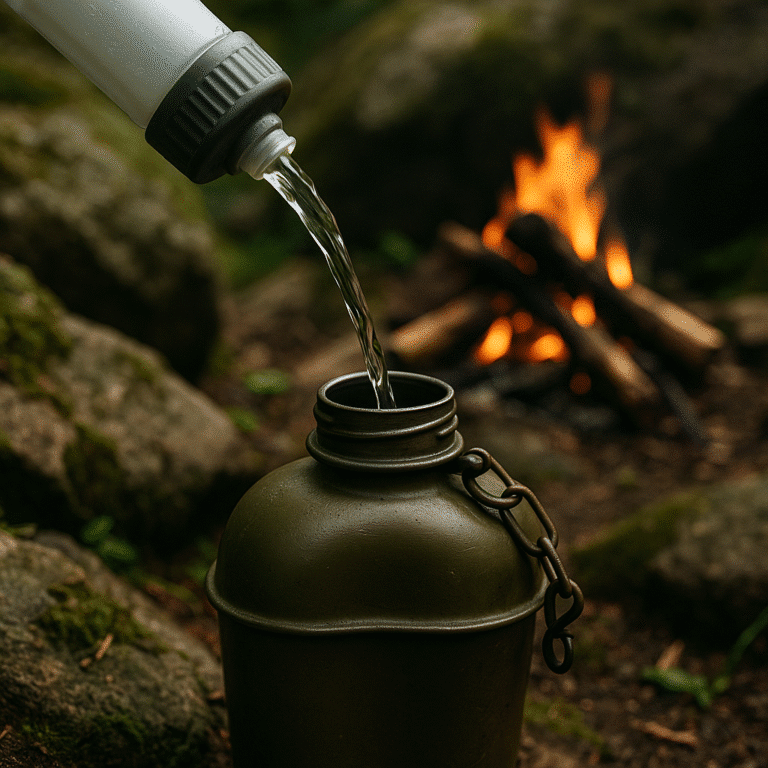
A portable water filter is one of the most useful tools for outdoor emergencies. Filter straws are lightweight and allow you to drink from certain untreated freshwater sources without carrying a bulky filtration system.
However, not all filters remove the same contaminants. Many popular hollow-fiber straw filters reduce bacteria and protozoan parasites but do not reliably remove viruses, dissolved chemicals, heavy metals, or salt. Water that looks clear may still be unsafe.
What to Look For
- Clearly documented contaminant-removal performance
- A usable flow rate and manageable cleaning requirements
- A durable housing and protective caps
- Storage instructions for freezing temperatures
When collecting water, prefer the cleanest available source and avoid suspected chemical contamination. A filter can be part of a treatment system, but it is not a universal solution.
For methods that address different water hazards, read our Ultimate Water Purification Guide.
Amazon gear option:


4. Rechargeable LED Flashlight
Reliable lighting makes everyday tasks safer when the power goes out. A flashlight helps you inspect a damaged building, locate supplies, walk along dark trails, or work on equipment after sunset.
Rechargeable models can reduce dependence on disposable batteries, especially when paired with a charged power bank. However, a flashlight is only useful if its battery has power when you need it.
What to Look For
- Multiple brightness settings rather than maximum output alone
- A clearly stated runtime at a practical brightness level
- Water resistance suitable for outdoor use
- A dependable charging port and battery indicator
Keep the flashlight charged and consider a backup headlamp for hands-free tasks. Avoid relying on advertised maximum lumens without checking runtime and durability.
For lighting throughout the home, see our guide to the best emergency lights for power outages.
Amazon gear option: Browse rechargeable LED flashlights.
5. Fixed-Blade Survival Knife
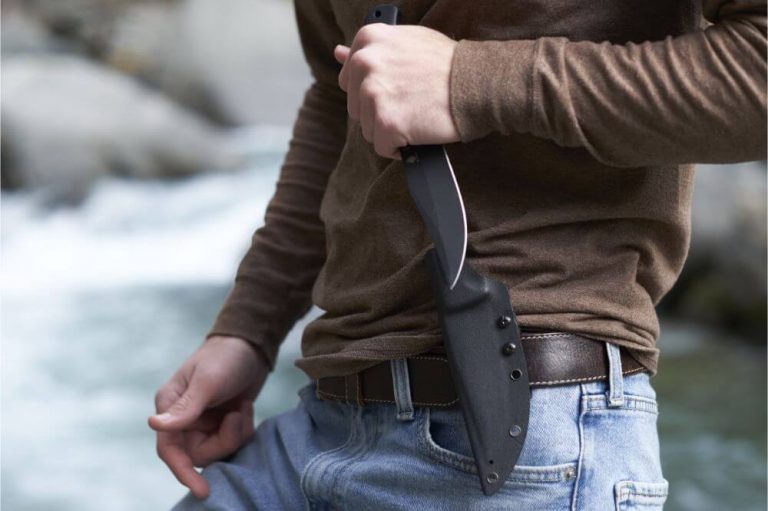
A sturdy fixed-blade knife is useful for preparing tinder, cutting rope, processing food, and performing controlled woodcraft tasks. Its simple construction can be easier to maintain than a folding knife with multiple moving parts.
A survival knife should be selected for practical cutting tasks, not aggressive marketing or intimidating appearance. Oversized blades add weight and may be less useful for precise work.
What to Look For
- A comfortable, secure handle
- A durable blade appropriate for camp chores
- A sheath that retains the knife safely
- A size you can carry and control comfortably
Keep the edge maintained and practice safe cutting techniques. Never use a knife as a substitute for equipment designed for heavy prying or chopping.
Our survival knife guide covers common techniques and handling considerations.
Amazon gear option:

6. Emergency Bivvy or Sleeping Bag
Exposure to cold, wind, and moisture can become dangerous faster than many people expect. An emergency bivvy is a compact barrier designed to help reduce heat loss and provide some protection from the elements.
Reflective emergency bivvies are useful backups, but they do not generate heat and should not be treated as replacements for insulated sleeping bags in freezing conditions. Condensation can also build up inside some models.
What to Look For
- Enough length and width for the intended user
- Weather-resistant construction
- Low packed weight and volume
- Clear instructions on ventilation and reuse
Pair an emergency bivvy with insulation from the ground and appropriate clothing whenever possible. Staying dry and sheltered is as important as retaining body heat.
Learn more about protection from the elements in our Survival Shelter Guide.
Amazon gear option:

7. Compass and Paper Map
Phones and GPS devices are convenient navigation tools, but batteries fail and electronic maps may be unavailable without a signal or downloaded data. A physical compass and appropriate paper map provide a useful backup.
A compass does not tell you where you are by itself. You must understand how to orient the map, follow a bearing, and identify landmarks.
What to Look For
- A clear baseplate with readable markings
- A rotating bezel and direction-of-travel arrow
- A map covering the area you plan to travel
- A waterproof map case or protective bag
Practice navigating in familiar terrain before relying on these tools in an emergency. A map and compass are most valuable when you know how to use them together.
Our Navigate Without a Compass Guide discusses additional orientation skills.
Amazon gear option: Browse outdoor navigation compasses.
8. Paracord
Paracord is lightweight, compact, and useful for securing equipment, setting up tarps, making temporary repairs, and organizing supplies. A length of quality cordage can solve problems that would otherwise require several specialized items.
For general preparedness, 25 to 50 feet is a practical starting amount, although the right quantity depends on your pack and activities.
What to Look For
- Clearly labeled cord construction and strength
- Resistance to abrasion and everyday wear
- A length suited to your expected tasks
- Storage that prevents tangles
Do not use ordinary paracord for climbing, rappelling, fall protection, or other life-support applications. Its advertised breaking strength does not make it certified climbing equipment.
Our Bushcraft Skills Guide includes practical outdoor uses for cordage.
Amazon gear option: Shop paracord.
9. Folding Shovel
A folding shovel is not necessary in every survival kit, but it can be useful for vehicle preparedness, camping, and longer-term outdoor setups. It helps with tasks such as clearing loose debris, digging small holes, and preparing a campsite where digging is permitted.
Its main disadvantage is weight. For a lightweight bug-out bag, a folding shovel may be less important than water, shelter, navigation, and first-aid supplies.
What to Look For
- A strong hinge and reliable locking mechanism
- A comfortable handle
- Corrosion-resistant materials
- A protective carrying case
Check local rules before digging, avoid underground utilities, and follow Leave No Trace practices in wilderness areas.
Amazon gear option: See compact folding shovels.
10. Emergency Whistle
An emergency whistle is inexpensive, lightweight, and one of the simplest ways to signal for assistance. It can be especially helpful if you are injured, exhausted, separated from a group, or unable to shout continuously.
Sound travels differently depending on terrain, wind, and surrounding noise. A whistle may carry farther than your voice under favorable conditions, but no whistle guarantees that rescuers will hear it from a particular distance.
What to Look For
- A pealess design that works reliably when wet
- A bright color for visibility
- A secure attachment point
- A comfortable shape that is easy to grip
Keep it attached to your pack strap or clothing rather than buried in a pocket. Three short blasts are a commonly used distress signal in outdoor settings.
Amazon gear option: Browse emergency signaling whistles.
11. Portable Power Bank and Solar Charging Option
A power bank can keep a phone, rechargeable flashlight, GPS device, or small radio operating when electrical outlets are unavailable. It is particularly valuable during short outages and vehicle emergencies.
Many compact solar power banks have tiny built-in panels that recharge very slowly in real-world conditions. For extended off-grid use, a separate folding solar panel paired with a compatible power bank is often a more effective arrangement.
What to Look For
- Battery capacity appropriate for your devices
- USB-C charging and suitable output ratings
- Reliable weather protection when used outdoors
- Clear solar-input compatibility if using an external panel
Fully charge your power bank before trips or severe weather. Test your cables and charging setup rather than assuming every device will work together.
For larger backup systems, see What Size Solar Generator Do I Need?
Amazon gear option: Explore portable solar power banks.
12. Compact First Aid Kit
Even a routine outdoor trip can involve blisters, cuts, sprains, or other injuries. A well-organized first aid kit helps you respond promptly while arranging further care when needed.
Preassembled kits are convenient, but their contents vary. Some contain many adhesive bandages and very few supplies for more serious problems. Review the contents and customize the kit for your activities and training.
What to Look For
- Assorted bandages, sterile gauze, and medical tape
- Disposable gloves and wound-cleaning supplies
- Blister treatment and a compact elastic wrap
- Personal medications and a first aid reference
Consider taking a recognized first aid and CPR course. Supplies are most useful when you understand how and when to use them. Serious bleeding or other life-threatening injuries require immediate emergency assistance.
Amazon gear option: Shop compact first aid kits.
13. Signal Mirror
A signal mirror uses reflected sunlight to attract attention over open terrain. It is small enough to carry in a pocket and requires no batteries, making it a useful backup signaling tool.
Its effectiveness depends on sunlight, visibility, the user’s aiming technique, and whether someone is looking in the right direction. It is less useful at night or during heavy cloud cover.
What to Look For
- A durable reflective surface
- An aiming sight or targeting aid
- A protective pouch
- A lanyard attachment
Learn the aiming technique before you need it. A whistle, brightly colored clothing, and other signaling methods provide useful redundancy.
Amazon gear option: Find emergency signal mirrors.
14. Duct Tape or Repair Tape
A small roll of duct tape can repair torn fabric temporarily, secure loose equipment, bundle supplies, and reinforce damaged packaging. It is a practical addition to almost any emergency kit.
Not all tape performs equally in wet, cold, or dirty conditions. Some adhesives lose their grip or leave residue, and tape is not suitable for every structural or safety-critical repair.
What to Look For
- Strong adhesion and tear resistance
- Performance appropriate for expected weather
- A compact roll or flattened wrap
- Compatibility with the materials you expect to repair
For backpacks and shelters, consider carrying a few purpose-made repair patches alongside duct tape. Use proper medical dressings for wounds rather than placing household tape directly on damaged skin.
Amazon gear option: Browse heavy-duty repair tape.
15. Waterproof Matches or a Reliable Lighter
A ferro rod is a dependable backup, but a lighter or waterproof matches can make routine fire starting faster and easier. Carrying two different ignition methods gives you options when weather or equipment problems interfere with one.
Stormproof matches can perform well in wind and damp conditions, but they still need suitable tinder and safe storage. Butane lighters can also become difficult to use in very cold weather.
What to Look For
- Water-resistant packaging
- Reliable ignition in expected conditions
- Compact size and safe storage
- Enough matches or fuel for repeated use
Store ignition tools away from children and heat sources. Always follow local fire bans and use safe ventilation around combustion equipment.
Amazon gear option: Shop waterproof survival matches.
Quick Survival Gear Checklist
Use this checklist when reviewing your bug-out bag, camping pack, or emergency supplies.
- Multi-tool with knife and screwdrivers
- Ferro rod and dry tinder
- Portable water filter
- Rechargeable LED flashlight
- Fixed-blade survival knife
- Emergency bivvy or sleeping bag
- Compass and appropriate paper map
- Paracord
- Folding shovel, if needed
- Emergency whistle
- Charged power bank and optional solar panel
- First aid kit
- Signal mirror
- Duct tape or repair tape
- Waterproof matches or lighter
This is a tool checklist, not a complete survival kit. You also need drinking water, food, weather-appropriate clothing, personal medications, and a realistic emergency plan.
For a complete packing framework, use our Ultimate 72-Hour Bug-Out Bag Guide.
How to Choose Survival Tools Without Overpacking
Before buying every item on this list, consider the emergencies you are actually preparing for. A vehicle kit in winter has different priorities than a lightweight hiking pack or a home blackout kit.
Prioritize Immediate Needs
Water, shelter, temperature protection, medical supplies, and communication generally deserve attention before convenience items. A folding shovel may be helpful, but it should not displace essential water or insulation in a small pack.
Choose Tools You Can Operate
A map and compass are of limited value without navigation skills. The same is true of fire starters, water-treatment systems, and medical supplies. Test your equipment in safe, controlled conditions.
Build in Redundancy
Carry backups for critical functions when practical. A flashlight and headlamp, a lighter and ferro rod, or a filter and appropriate disinfection method can provide flexibility if one system fails.
Inspect Your Kit Regularly
Check batteries, inspect packaging, replace expired consumables, and verify that your supplies still fit your needs. A dependable emergency kit is maintained, not simply purchased and forgotten.
Final Thoughts: The Best Survival Tool Is One You Know How to Use
The best survival equipment is practical, dependable, and appropriate for your situation. These 15 tools can improve your ability to manage common outdoor and emergency problems, but no collection of gear guarantees safety.
Start with the essentials, practice the skills associated with each tool, and build your kit over time.
If you also want to strengthen your food preparedness, read our guide to survival foods that last the longest. For additional low-tech techniques, explore 100 Forgotten Survival Skills.
Get Your Free Camping Checklist
Never forget the essentials again. Enter your email below and I’ll send you a ready-to-use 48-hour survival & camping checklist.
We respect your privacy. No spam—just survival tips & gear updates.