
How to Power a CPAP During a Power Outage (Indoor-Safe Backup Options for Blackouts)
CPAP blackout power is something most people don’t think about until the power fails. For anyone relying on sleep therapy, a sudden outage can turn from a mild inconvenience into a genuine health risk. Without electricity, your CPAP can’t maintain air pressure or oxygen levels — disrupting sleep and potentially triggering dangerous apnea events. This guide covers how to secure reliable, quiet, and indoor-safe power sources that keep your CPAP running through any blackout, using proven Amazon-available gear that works in real-world emergencies.
This post contains affiliate links. I may earn a small commission at no extra cost to you. Learn more.
The biggest mistake CPAP users make during outages is assuming any battery will work. Heated humidifiers, pressure ramps, and AC-only power bricks can drain small packs in hours — and running gas generators indoors is never an option. CPAP backup power requires clean, quiet electricity that’s safe for bedrooms and reliable night after night.
Disclaimer: This article is for informational purposes only. Always follow manufacturer instructions and consult your healthcare provider before operating medical equipment off-grid.
As an Amazon Associate, The Savvy Survivalist earns from qualifying purchases — at no extra cost to you.
Why Backup Power for CPAPs Matters
A CPAP (Continuous Positive Airway Pressure) device requires a consistent power supply, typically 30–60 watts. Even a brief outage can trigger apnea events or disrupt sleep cycles.
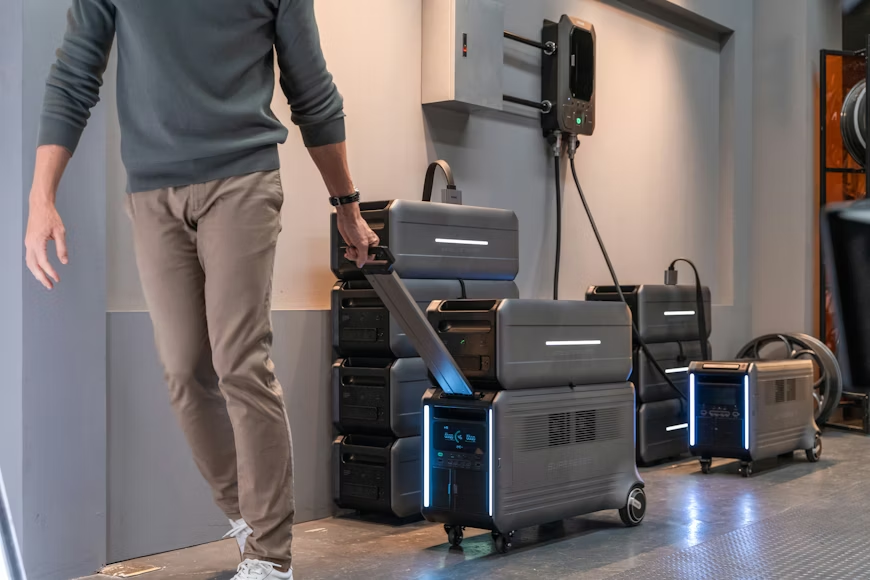
For short blackouts, a compact battery pack may suffice. For longer outages, you’ll need a lithium power station or generator-solar hybrid that can deliver clean sine-wave output indoors without fumes or noise.
Battery capacity is critical when powering medical devices overnight. Our guide explains
what size solar generator you need for a blackout if you’re running appliances like refrigerators on a solar generator during outages.
If you’re planning for outages that last longer than a single night, CPAP backup power should be part of a larger blackout power strategy—not a standalone solution.
For a complete breakdown of indoor-safe power systems that support medical devices, lighting, and communication during extended outages, see:
Grid-Down Survival Power: The 2025 Off-Grid Energy Playbook
Understanding Your CPAP’s Power Needs
Quick Answer: What Do You Actually Need to Run a CPAP in a Blackout?
- Minimum: 500 Wh lithium power station (1 night, no humidifier)
- Recommended: 1,000 Wh station + DC adapter (2–3 nights)
- Best long-term: 1,500–2,000 Wh LiFePO₄ + solar panel
- Avoid: Gas generators, modified sine wave inverters, cheap jump packs
Before buying backup gear, identify three key numbers:
- Wattage Draw – Most CPAPs use 30–60 W in standard mode, but adding heated humidifiers can double usage.
- Voltage & Plug Type – Many models accept 12 V DC, which lets you skip inverter losses and extend runtime.
- Runtime Requirement – Multiply your wattage by hours of sleep.
- Example: 40 W × 8 h = 320 Wh per night.
- Factor in 10–15 % inverter loss if running off AC.
A 500 Wh station powers roughly one CPAP night. A 1,000 Wh unit covers multiple nights or multiple users.
The Best Quiet, Indoor-Safe Power Stations
These 2025-verified units deliver pure sine-wave AC, built-in protections, and USB/12 V outputs safe for sensitive medical devices.
Jackery Explorer 1000 v2 — Multi-Night Blackout Power

With 1,070 Wh capacity and dual 100 W USB-C ports, the 1000 v2 covers several nights of CPAP plus lights, phone charging, and radios.
Highlights:
- Indoor-safe operation (no gas, no fumes)
- Recharges fully in ~1.7 hrs from AC + solar
- Built-in UPS-style pass-through charging
Ideal for: 2–3 night outages or couples using two CPAPs. - ⚠️ Tip: Disable heated humidifiers to double runtime.
Jackery Explorer 500 v2 — Reliable Compact CPAP Backup

Lightweight yet robust at 512 Wh, this lithium-ion station runs a standard CPAP 8–10 hours.
Why it works:
- Pure sine-wave AC + 12 V DC outputs
- Weighs only 13 lbs – portable for travel or bug-outs
- Recharge from wall, vehicle, or solar panel
Ideal for: Overnight use or mobile setups. - ⚠️ Tip: Disable heated humidifiers to double runtime.
BLUETTI Elite 200 V2 — Heavy-Duty Grid-Down Solution

At 2,073 Wh with a high-efficiency LiFePO₄ battery, the Elite 200 V2 is designed for extended blackouts.
Why preppers love it:
3,500 charge cycles lifespan
- 2,000 W inverter handles CPAP + refrigerator or heater
- Expandable with external battery modules
Ideal for: Full-home medical preparedness or off-grid cabins. - ⚠️ Tip: Disable heated humidifiers to double runtime.
Anker PowerHouse 535 — Budget & Travel-Ready

A 512 Wh LiFePO₄ option roughly equivalent to the Explorer 500 but often lower cost. Reliable for short emergencies or road trips.
- ⚠️ Tip: Disable heated humidifiers to double runtime.
Key CPAP Power Accessories
Power stations work best when paired with the right cables and tools. These extend runtime, enable solar recharging, and reduce electrical noise that can affect CPAP sensors.
DC Efficiency & Runtime Extenders
Medistrom DC Output Cable for ResMed AirSense 10 / AirMini
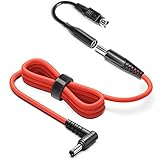
Direct 12 V DC connection avoids inverter losses and doubles effective runtime. A must-have for any ResMed user.
TalentCell 12 V / 9 6000 mAh Battery Pack

Ultra-portable mini-battery for single-night backup or travel. Use as an inline source between the CPAP DC adapter and your main station.
DROK DC Watt Meter (100 V / 20 A)

Monitors current draw, voltage, and total watt-hours. This lets you plan runtime precisely and avoid unexpected shutdowns mid-night.
Solar Recharging & Distance Management
Lion Energy 25-Foot Anderson Extension Cable (Outdoor Rated)

A heavy-duty 25-foot Anderson extension cable designed for solar panels and portable power stations. Ideal for placing your power station indoors while leaving solar panels in direct sunlight outdoors. Compatible with 12V/24V systems and built for long-term outdoor use.
Why it’s valuable in a blackout setup:
- Allows safe distance between solar panels and your power station
- Anderson connectors ensure high current transfer with minimal loss
- Perfect for Lion Energy, Jackery (with adapter), and Bluetti systems
Jackery SolarSaga 100 W Foldable Panel

Keep your station topped up indefinitely. Foldable, weather-resistant, and plug-and-play with Jackery’s 8 mm input.
Approx. 7 hrs to recharge an Explorer 500 v2 in full sun.
Bedroom Safety & Comfort
Tripp Lite Hospital-Grade Power Cord (Shielded)

For AC setups, this shielded cord reduces hum and RF interference — crucial for quiet bedrooms or sensitive medical devices.
For whole-home blackout lighting ideas, see our guide to the best emergency lights for power outages.
Ayl Rechargeable Starlight 1000

Energy-efficient LED light source that can charge off your station’s USB-A port. Ideal for blackout bedside lighting.
LTGEM Hard Carrying Case for Portable Power Station

Protects your CPAP power supply from dust and shock; quick-grab handle for emergency evacuations.
These estimates assume DC power where possible, no heated humidifier, and 85–90% inverter efficiency for AC setups.
Runtime Examples
| CPAP Model (Est. Watt Draw) | Explorer 500 v2 (512 Wh) | Explorer 1000 v2 (1,070 Wh) | BLUETTI Elite 200 V2 (2,073 Wh) |
|---|---|---|---|
| Standard CPAP (no humidifier 40 W) | 9–10 hrs (≈ 1 night) | 20–22 hrs (≈ 2–3 nights) | 45–50 hrs (≈ 5 nights) |
| CPAP + Humidifier (70 W) | 6 hrs | 13 hrs | 28 hrs |
| Two CPAPs (80 W total) | 5.5 hrs | 12 hrs | 25 hrs |
Actual runtimes vary with inverter efficiency, humidity, altitude, and device model.
Recharging During Extended Blackouts
- Solar: 100 W panel ≈ 70–90 Wh/hr in direct sun. Chain panels for faster recharge.
- Vehicle 12 V: Use DC input while driving to maintain charge.
- AC Grid: When power returns, recharge to 80 % and store cool/dry.
For homes using generators alongside battery stations, a solar generator hybrid backup system can recharge your batteries efficiently while reducing fuel consumption.
For preppers, combining Jackery 1000 v2 + SolarSaga panel gives semi-independent sleep-therapy power indefinitely.
Storage & Safety Practices
- Store lithium units 40–60 % charged in 50–70 °F room.
- Cycle every 3–6 months to maintain cell health.
- Keep away from heat sources or enclosed bedding.
- Label cables clearly (“CPAP only”) to prevent mix-ups during emergencies.
- Never operate gas or propane generators indoors — these stations are your indoor-safe solution.
Building a Layered Backup Strategy
- Primary: Jackery 1000 v2 + DC adapter (main nightly power).
- Secondary: Explorer 500 v2 or TalentCell pack (one-night redundancy).
- Renewable: SolarSaga 100 W panel for daytime recovery.
- Monitoring: DROK meter for watt tracking.
This layered system ensures continuous CPAP use through blackouts lasting days to weeks.
Extended outages also require planning food that doesn’t rely on refrigeration.
See our guide to survival foods with a long shelf life.
Test this setup at least once before an outage to confirm runtime and cable compatibility.
Final Takeaway: Building True CPAP Blackout Power Independence
Losing power doesn’t have to mean losing sleep or risking your health. With the right combination of a lithium power station, DC adapter, and solar recharge option, you can maintain CPAP blackout power safely and quietly indoors for days at a time.
If you’re comparing models, see our guide to the best solar power stations for blackouts.
Whether you’re preparing for short-term outages or long-term grid disruptions, investing in portable, indoor-safe systems like the Jackery Explorer or Bluetti ensures you’re never dependent on the grid for something as vital as breathing through the night.
The most prepared households treat backup power as more than convenience — it’s survival-grade reliability. Build your setup, test it before you need it, and sleep easy knowing your system is ready when the lights go out.
Medical redundancy is a non-negotiable layer in a structured emergency preparedness system.