Does a Well Pump Work During a Power Outage?
Does a well pump work during a power outage? In most homes, the answer is no because residential well pumps depend entirely on electricity. You may still have a small amount of water stored inside the pressure tank, but once that supply is used, the faucets, toilets, showers, and water-dependent appliances will stop working.
This post contains affiliate links. I may earn a small commission at no extra cost to you. Learn more.
How quickly this happens depends on the size of your pressure tank, the amount of water being used, and whether your system includes any backup power. A generator can operate many well pumps, but it must provide the correct voltage and enough starting wattage. Some larger battery power stations and solar systems may also work, although the startup demand of a deep-well pump can make this more complicated than powering ordinary household devices.
Understanding how your well system responds during an outage allows you to protect the pump, conserve the remaining pressure-tank water, and choose a realistic backup plan. This guide explains how long your water may continue flowing, how much power a well pump requires, and what options can keep water available during both short and extended blackouts.
Quick Answer
A standard electric well pump will not continue pumping water during a power outage. Your faucets may work temporarily because the pressure tank holds a limited amount of usable water, but that supply will not refill until electricity is restored. A properly sized generator, compatible battery system, dedicated solar setup, or manual well pump is required to regain access to the water in the well.
Emergency Scenario
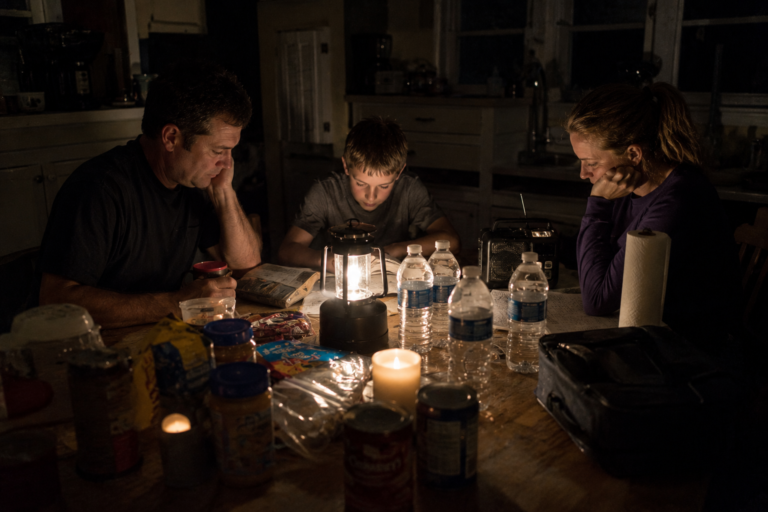
A severe storm knocks out electricity while your family is relying on a private well. The faucets continue working at first, so everyone assumes the water supply is fine. After several toilet flushes, a shower, and normal kitchen use, the pressure tank empties and the water stops completely. Although the well still contains water, the electric pump cannot bring it into the house until power is restored or a properly sized backup system is connected.
Why a Well Pump Stops Working During a Power Outage
A private well does not normally send water into a home through natural pressure. The water must be lifted from underground and pushed through the plumbing by an electric pump. When utility power fails, the pump loses the energy needed to move water from the well into the pressure tank.
Most residential wells use either a submersible pump installed below the water level or a jet pump located above ground. Submersible pumps are common in deeper wells and typically operate on 240-volt power. Jet pumps are generally used with shallower wells and may run on either 120 or 240 volts. Although the equipment differs, both types depend on electricity and stop operating when their power supply is interrupted.
How the Pump and Pressure Tank Work Together
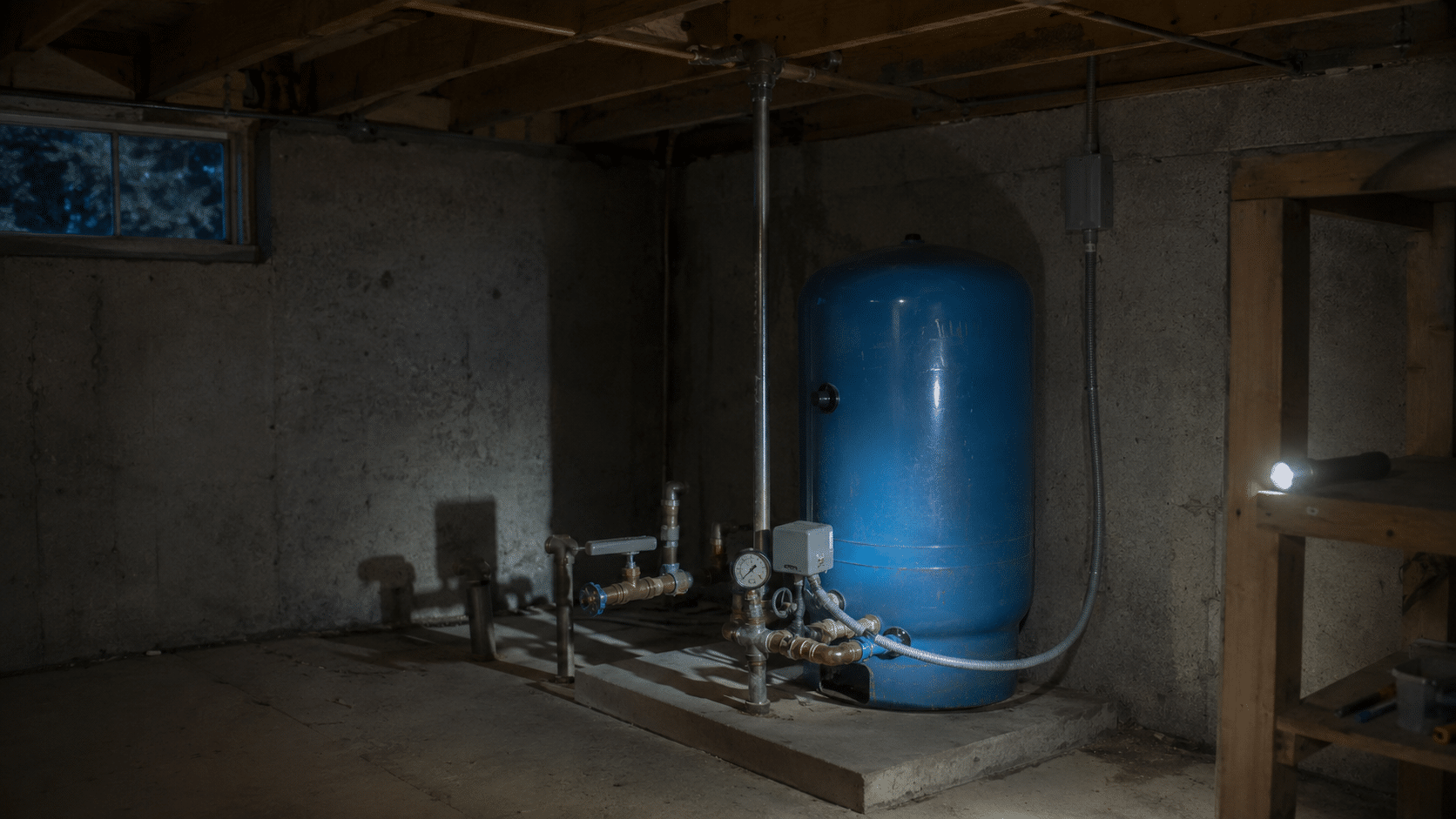
Under normal conditions, the well pump does not run every time someone opens a faucet. Instead, it fills a pressure tank that stores water under pressure. When water is used, the tank pushes it through the plumbing without immediately turning on the pump.
As the pressure falls to a predetermined level—often around 30 or 40 pounds per square inch—the pressure switch activates the pump. The pump then refills the tank until it reaches its shutoff pressure, which is commonly around 50 or 60 pounds per square inch.
During a blackout, this automatic cycle cannot continue. The pressure tank can release whatever usable water it held when the power failed, but the pump cannot refill it. Once the pressure drops below the system’s usable range, water flow slows and eventually stops.
The Well Still Contains Water
A loss of running water does not usually mean the well itself has gone dry. In most cases, plenty of groundwater remains inside the well casing. The problem is that the home no longer has a powered method for bringing that water to the surface and pressurizing the plumbing system.
This distinction is important when planning for outages. Restoring access may only require supplying the existing pump with safe, correctly sized backup power. During a longer emergency, a manual deep-well pump, dedicated solar pumping system, or stored water supply may provide a more dependable alternative.
What Actually Stops During a Blackout?
The underground water supply usually remains available. It is the electric pump and pressure system that stop moving that water into your home. Turning a faucet repeatedly will not restart the pump and will only use the limited water remaining in the pressure tank.
How Long Will Water Continue Working After the Power Goes Out?
Water may continue flowing for a short time after an outage because the pressure tank holds a limited reserve. The exact amount available depends on how much water was in the tank when the electricity failed, the tank’s usable capacity, and how quickly the household begins using it.
In many homes, the remaining supply may only be enough for several toilet flushes, some handwashing, and a small amount of drinking or cooking water. A shower, washing machine cycle, or outdoor faucet can drain it much faster. Once the stored pressure falls too low, the flow from faucets will weaken before stopping completely.
Tank Size Is Not the Same as Usable Water
A pressure tank labeled as holding 40, 60, or 80 gallons does not provide that entire amount during an outage. Part of the tank contains pressurized air, and the pump normally turns on before all the water has been released. The amount that can actually be drawn between the pump’s shutoff and activation pressures is known as the tank’s drawdown capacity.
Depending on the tank and pressure settings, a residential system might provide approximately 5 to 20 gallons of usable water after the pump stops. Some systems provide more, while smaller tanks may provide considerably less. The manufacturer’s specifications or tank label may list the drawdown capacity for different pressure settings.
Conserve Water Immediately
As soon as the power fails, avoid showers, laundry, dishwashers, and unnecessary toilet flushing. Save the remaining pressurized water for drinking, essential cooking, medication, and basic hygiene until you know how long the outage may last.
Place containers beneath faucets before opening them because the remaining pressure can disappear unexpectedly. If water is still flowing, filling clean containers immediately gives you greater control over how that limited supply is used.
Pro Tip
Find your pressure tank’s drawdown capacity before an emergency and write it on the tank or inside your preparedness plan. The tank’s advertised size can be misleading, so use its actual drawdown rating when estimating how much water will remain available during a blackout.
Why the Type of Well Pump Matters During an Outage
The kind of pump installed on your property determines how difficult it will be to restore water with backup power. The two most common residential systems are submersible pumps and jet pumps. Both require electricity, but their location, voltage, and startup requirements can be significantly different.
Submersible Well Pumps
A submersible pump sits inside the well casing, usually below the water level. These pumps are commonly used for deep wells because they push water upward rather than pulling it from the surface. Most residential submersible pumps operate on 240 volts, although smaller 120-volt models exist.
Submersible pumps are efficient and dependable, but their brief startup surge can be several times higher than their normal running demand. This means a generator or battery power station cannot be selected by looking only at the pump’s running wattage.
Jet Pumps
A jet pump is installed above ground, often inside a basement, utility room, crawl space, or well house. Shallow-well jet pumps are generally used where the water level is within approximately 25 feet of the pump. Deep-well jet systems use additional piping and can reach greater depths.
Jet pumps may operate on either 120 or 240 volts. They can also require priming if the pump or suction line loses water, which creates another complication after a prolonged outage or plumbing repair.
Well Depth Alone Does Not Determine Power Requirements
A deeper well often uses a more powerful pump, but depth is only one factor. Pump horsepower, water level, pipe size, required pressure, and the vertical distance the water must travel all affect electrical demand. Two homes with wells of similar depth may have pumps with very different power requirements.
Do Not Guess Your Pump’s Voltage
Connecting a well pump to the wrong voltage can damage the motor, generator, wiring, or control equipment. Check the pump documentation, control box, electrical panel, or have a licensed electrician identify the system before purchasing or connecting backup power.
Can a Portable Generator Run a Well Pump?
A portable generator can run many residential well pumps, but only when it supplies the correct voltage and enough power to handle the motor’s startup surge. The generator must also be connected through equipment designed to prevent electricity from feeding back into utility lines.
Many submersible pumps require 240-volt power. A generator with only standard 120-volt household outlets cannot operate one of these pumps, regardless of its advertised wattage. You would need a generator that provides 120/240-volt output through a compatible connection.
Running Wattage Versus Starting Wattage
A well pump briefly draws much more electricity when its motor starts than it uses while running. A generator may appear large enough based on continuous wattage but still overload, trip a breaker, or fail to start the pump when that surge occurs.
These figures are general planning estimates rather than guaranteed requirements. Actual demand varies by pump design, well depth, voltage, wiring, control equipment, and system pressure. Check the pump nameplate, control box, owner’s manual, or electrical measurements from a qualified professional before choosing a generator.
How Large Should the Generator Be?
A generator should have enough surge capacity to start the pump while also supporting any other devices operating at the same time. Many well owners use a 5,000- to 7,500-watt generator for a typical 240-volt pump and several basic household loads, but some pumps require more and smaller systems may require less.
You do not need to run the pump continuously. A practical approach is to operate the generator long enough to refill the pressure tank and any clean storage containers, then shut it down to conserve fuel. Large electrical loads such as water heaters, electric ranges, dryers, and central air conditioners should remain off while the pump is starting unless the generator and connection were specifically sized for them.
Never Backfeed a Well Pump
Do not connect a generator to the house by plugging it into a wall outlet or modifying an extension cord. This can energize utility lines, electrocute workers, start a fire, and damage equipment. Use a properly installed transfer switch, generator interlock, or dedicated pump connection that meets local electrical requirements. Always operate a portable generator outdoors, at least 20 feet from the home, with the exhaust directed away from windows, doors, and vents. Never operate one inside a garage, basement, crawl space, shed, or enclosed porch, and keep working carbon-monoxide alarms inside the home.
Recommended Backup Power Equipment
A generator used for a well pump must provide the correct voltage and enough surge capacity to start the motor. The Westinghouse WGen9500DFc supplies 120/240-volt output and includes transfer-switch-ready connections, making it a practical example for larger household backup systems. The Reliance Controls Pro/Tran 2 provides a safer way to supply selected household circuits, including compatible 240-volt circuits, when professionally installed.


Important: These products are not automatically compatible with every well system. Confirm the pump’s voltage, amperage, startup demand, breaker size, and connection requirements before purchasing equipment.
Can a Portable Power Station Run a Well Pump?
Some large portable power stations can operate a well pump, but most smaller models cannot. The main obstacles are voltage, startup surge, and battery capacity. A unit may have enough stored energy to run the pump for several minutes but still be unable to produce the brief surge required to start its motor.
Many portable power stations provide only 120-volt AC power. That may work for a compatible shallow-well jet pump, but it will not directly operate the 240-volt submersible pumps commonly installed in deeper residential wells. Running a 240-volt pump generally requires a power station or paired battery system designed to produce true 120/240-volt split-phase output.
Check Output Before Battery Capacity
Battery capacity is measured in watt-hours, while inverter output is rated in watts. Both numbers matter, but they describe different capabilities. The inverter must supply the pump’s starting and running wattage, while the battery must store enough energy to operate it for the desired amount of time.
For example, a power station with a 2,000-watt inverter and a 2,000-watt-hour battery might appear large enough for a modest pump. However, it will still fail if the pump requires 240 volts or briefly draws 3,500 watts at startup. Connection losses and the power used by other devices further reduce its practical capacity.
How Long Could a Battery System Run the Pump?
Well pumps normally operate in short cycles rather than running continuously. A sufficiently sized battery system may only need to run the pump long enough to refill the pressure tank and several water containers. This makes backup operation more realistic than powering the pump around the clock.
However, repeated pump cycles can drain a battery bank quickly, especially when a household continues using water normally. Laundry, showers, outdoor watering, and frequent toilet flushing can turn an occasional electrical load into a major demand.
Pro Tip
Before buying a power station for a well pump, verify four things: the pump’s voltage, running wattage, starting surge, and the backup system’s connection method. A high-capacity battery is useless if its inverter cannot supply the correct voltage or start the motor.
Can Solar Panels Power a Well Pump During an Outage?
Solar panels can support a well-pump backup system, but standard panels usually cannot be connected directly to an existing household pump. The system generally needs a compatible charge controller, battery bank, inverter, safety disconnects, and wiring capable of providing the pump’s required voltage and startup power.
A battery bank allows solar energy to be stored and then released quickly when the pump starts. Without that storage, passing clouds or weak sunlight may cause voltage fluctuations or leave the system unable to handle the startup surge. A dedicated solar well pump is another option, but installing one may require separate piping or modifications to the existing well.
Solar works best as part of a planned long-term water system rather than an improvised connection made after the electricity fails. When properly sized, it can reduce dependence on stored generator fuel and provide a renewable way to pump water during an extended grid outage.
How to Get Water From a Well Without Electricity
If backup electricity is unavailable, accessing groundwater becomes much more difficult. The best solution depends on the well’s depth, casing diameter, static water level, and existing equipment. A method that works for a shallow well may be completely ineffective for a submersible pump located hundreds of feet underground.
Install a Manual Well Pump
A manual hand pump can provide dependable emergency access without gasoline, batteries, or utility power. Some models are designed for shallow wells, while specialized deep-well hand pumps can lift water from much greater depths. Certain systems can be installed alongside an existing submersible pump, allowing the electric system to remain in normal use.
Deep-well hand pumps are more expensive and complicated to install than basic shallow-well models. The equipment must match the well casing, water level, climate, and plumbing configuration. Planning and installation should take place before an outage rather than after the household has already lost water.
Use an Emergency Well Bucket
An emergency well bucket is a narrow container designed to fit inside a well casing and retrieve small amounts of water manually. This method may work in certain accessible wells after the cap and other obstructions have been safely addressed, but it is slow and can introduce contamination.
Do not open the well casing casually or lower an ordinary household bucket into it. Dirt, rope fibers, insects, and surface water can contaminate the well. Electrical wiring and suspended pump equipment inside the casing can also obstruct the container. If an emergency well bucket is part of your plan, confirm beforehand that it is compatible with your system and learn how to sanitize the equipment.
Store Water Before You Need It
Stored water remains the simplest backup because it requires no mechanical system to access. Keep enough drinking water to carry the household through at least the first several days of an outage, even if you own a generator or hand pump. Equipment can fail, fuel can run out, and severe weather may prevent immediate repairs.
Rotate portable containers and keep additional water available for cooking, hygiene, and flushing toilets. Our guide explaining how long stored water lasts covers container selection, rotation, and the warning signs that stored water may no longer be safe to use.

Protect the Well From Contamination
Any method that requires opening the well casing can allow contaminants to enter the water supply. Use sanitized equipment, prevent surface water from entering the casing, and disinfect or test the well when contamination may have occurred.
The Best Backup Plan for Homes With Private Wells
A reliable plan should not depend on a single piece of equipment. Generators fail, batteries lose charge, fuel becomes difficult to find, and well components can break independently of the electrical grid. Layering stored water with at least one way to operate or bypass the pump provides much stronger protection.
Prepare for Short Outages
For outages lasting several hours, the water already inside the pressure tank and a modest supply of stored drinking water may be enough. Conserve water immediately, avoid laundry and showers, and postpone unnecessary toilet flushing until electricity returns.
Keep several clean containers ready so you can capture any remaining pressurized water. If severe weather is approaching and electricity is still available, fill the containers beforehand rather than relying on the pressure tank alone.
Prepare for Multi-Day Blackouts
A properly sized generator is often the most practical way to restore an existing pump during a multi-day outage. Store fuel safely, test the generator regularly, and know exactly how it connects to the home. Run it periodically to refill the pressure tank and water containers instead of operating it continuously.
A large battery system may serve the same purpose when it provides the required voltage and surge output. Solar panels can extend battery operation, although weather conditions and recharge rates must be considered.
Prepare for Extended Grid Failure
Long-term planning requires a solution that does not depend entirely on stored fuel. A professionally installed hand pump, dedicated solar pumping system, gravity-fed storage tank, or combination of these methods can provide greater independence. Stored water should still remain part of the plan because even permanent backup systems require maintenance and can fail.
Well-Water Blackout Preparedness Checklist
- Identify whether the pump uses 120 or 240 volts.
- Record the pump’s horsepower, running wattage, and starting demand.
- Find the pressure tank’s actual drawdown capacity.
- Store drinking water separately from water intended for sanitation.
- Choose a generator or battery system that can safely start the pump.
- Install an approved transfer switch, interlock, or dedicated connection.
- Keep compatible extension equipment and operating instructions together.
- Test the complete backup system before an emergency.
- Store generator fuel safely and rotate it regularly.
- Consider a manual or solar-powered option for prolonged outages.
Private-well owners should include water loss in every larger blackout plan. The Blackout Survival Hub can help you prepare for the other systems that may stop working when electricity is unavailable.
Frequently Asked Questions About Well Pumps and Power Outages
Will a well pump work without electricity?
A standard residential well pump will not operate without electricity. Water already stored under pressure may continue flowing briefly, but the pressure tank cannot refill until the pump receives power again.
How much water is available in the pressure tank?
The usable amount depends on the tank’s drawdown capacity rather than its advertised total size. Many residential systems may provide approximately 5 to 20 gallons, although the actual amount can be higher or lower depending on the tank and pressure settings.
Will a 3,500-watt generator run a well pump?
It may run a smaller pump, but the answer depends on voltage and starting wattage. A 240-volt pump cannot run from a generator that only provides 120-volt output. The generator must also handle the pump’s startup surge without overloading.
Can a well pump be plugged directly into a generator?
Most submersible well pumps are hardwired and should receive generator power through an approved transfer switch, interlock, or dedicated connection. Some 120-volt jet pumps use a standard plug, but the generator, cord, and receptacle must still meet the pump’s electrical requirements.
Will the well pump restart automatically when power returns?
Most systems resume normal operation once electricity returns and the pressure switch calls for water. However, a jet pump may require priming if it lost its prime, and electrical surges or rapid cycling can sometimes trip a breaker or damage controls. Check the system if pressure does not return normally.
Can you flush a toilet when the well pump is not working?
You can flush until the pressure tank no longer supplies water to the toilet. After that, most gravity-fed toilets can be flushed manually by pouring stored nonpotable water into the bowl or filling the toilet tank to its normal level.
Further Reading
Key Takeaways
- Most electric well pumps stop operating immediately when utility power fails.
- The pressure tank only provides a limited amount of usable water after the pump stops.
- A backup system must provide the pump’s correct voltage, running wattage, and startup surge.
- Many deep-well pumps require 240-volt power that smaller generators and power stations cannot supply.
- Generators must be connected through an approved transfer switch, interlock, or dedicated connection.
- Stored water remains essential even when a home has backup power for its well.
- A manual pump or properly designed solar system can provide greater protection during extended outages.
Final Takeaway
A private well can provide a dependable supply of groundwater, but the pump that delivers it to your home remains vulnerable to a power outage. Once the limited water inside the pressure tank is gone, normal water service will not return until the pump receives electricity or another method is used to access the well.
The strongest plan combines stored drinking water with a properly sized generator, compatible battery system, manual pump, or dedicated solar setup. Identify your pump’s voltage and startup requirements now, install a safe connection method, and test the complete system before a blackout. Waiting until the faucets stop running leaves very little room to correct a sizing or connection mistake.
Continue Building Your Blackout Preparedness Plan
Water is only one system affected by a prolonged outage. Use our complete blackout preparedness hub to plan for backup power, food storage, communication, sanitation, heating, cooling, and other essential household needs.