Best High-Calorie Crops for a Survival Garden
A productive survival garden should grow more than fresh tomatoes, lettuce, and cucumbers. Those crops add flavor, vitamins, and variety, but they do not provide enough calories to serve as the foundation of your food supply. If you want a garden that can meaningfully feed your household during a prolonged emergency, you need crops that produce substantial amounts of carbohydrates, protein, or fat.
This post contains affiliate links. I may earn a small commission at no extra cost to you. Learn more.
The best high-calorie survival crops include potatoes, sweet potatoes, dry beans, dent corn, winter squash, peanuts, sunflowers, grain sorghum, Jerusalem artichokes, and calorie-dense root vegetables. Many of these crops can also be cured, dried, or stored without relying on a refrigerator or freezer.
That does not mean you should fill the entire garden with one crop. Potatoes may produce plenty of food in a relatively small area, but they do not supply everything your body needs. Dry beans provide protein but require more preparation. Sunflowers and peanuts supply valuable fat, while winter squash and root crops help carry the harvest into winter. A dependable survival garden combines several crops so one pest, disease, drought, or poor harvest cannot wipe out your entire food supply.
This guide compares the best high-calorie crops for a survival garden, explains their strengths and limitations, and shows how to build a practical mixture of staple crops for long-term self-sufficiency.
Quick Answer
The best high-calorie crops for most survival gardens are potatoes, sweet potatoes, dry beans, dent or flint corn, and winter squash. Potatoes and sweet potatoes produce dependable carbohydrates, dry beans add protein, corn can be dried and stored, and winter squash keeps for months under suitable conditions. Peanuts and sunflowers are also valuable because they provide dietary fat, which is one of the hardest nutrients to produce in a backyard garden.
For the strongest food-security garden, grow at least one root crop, one dry storage bean, one grain crop, one source of fat, and several nutrient-rich vegetables rather than depending on a single high-calorie plant.
Key Takeaways
- Prioritize calories: Leafy greens are nutritious, but potatoes, sweet potatoes, beans, corn, and winter squash contribute far more usable food energy.
- Include protein and fat: Dry beans provide protein, while peanuts and sunflower seeds help supply calorie-dense fat.
- Consider storage: A large harvest has limited survival value if it spoils before you can use it.
- Match crops to your conditions: Climate, soil, rainfall, pests, and available garden space should determine which staples receive the most room.
- Plant several staple crops: Crop diversity reduces the risk of losing your entire food supply to one weather event, disease, or insect problem.
- Keep growing familiar vegetables: High-calorie crops should form the foundation, but fruits and vegetables remain important for vitamins, minerals, flavor, and dietary variety.
What Makes a Crop Valuable in a Survival Garden?
A high-calorie crop is not automatically a good survival crop. The number of calories in the harvested food matters, but so do reliability, storage life, space requirements, and the amount of work needed to turn the harvest into an edible meal.
For example, sunflower seeds contain considerably more calories per pound than potatoes. However, potatoes can produce a much larger amount of food from a modest garden bed and require relatively little processing before cooking. Dry corn stores well but must mature fully, dry properly, and usually be ground or processed before eating. Each crop has a different role.
When comparing crops for a survival garden, consider the following factors:
- Calories produced: The crop should contribute a meaningful amount of food energy instead of merely adding flavor or bulk.
- Production per square foot: Garden space is limited, especially for households growing food in a backyard or raised beds.
- Growing reliability: A useful staple should perform reasonably well in your climate and resist common weather problems.
- Storage life: Crops that can be cured, dried, or stored for months are more useful than vegetables that spoil within days.
- Processing requirements: Some crops can be cooked immediately, while others require shelling, drying, grinding, or lengthy preparation.
- Seed-saving potential: Open-pollinated varieties may allow you to save planting seed for future seasons.
- Nutritional contribution: A resilient garden needs a combination of carbohydrates, protein, fat, vitamins, and minerals.
The strongest survival garden does not depend on whichever crop has the highest calorie count on paper. It combines productive staple crops with dependable storage crops and nutrient-rich vegetables that fit the gardener’s actual conditions.
High-Calorie Survival Crop Comparison
No crop wins in every category. This comparison shows the primary role each crop can fill and the practical limitations to consider before dedicating valuable garden space to it.
| Crop | Primary Value | Storage Potential | Main Limitation |
|---|---|---|---|
| Potatoes | Productive source of carbohydrates | Several months when properly cured and stored | Vulnerable to heat, disease, and improper storage |
| Sweet potatoes | Carbohydrates, fiber, and edible leaves | Several months after proper curing | Need warm soil and a long growing season |
| Dry beans | Protein, carbohydrates, and fiber | Long-term when completely dried | Lower production by area than most root crops |
| Dent or flint corn | Storable grain and carbohydrates | Long-term when thoroughly dried and protected | Requires space, fertility, and proper pollination |
| Winter squash | Carbohydrates and dependable storage | Approximately two to six months, depending on variety | Vines require considerable growing space |
| Peanuts | Calorie-dense fat and protein | Several months when thoroughly dried | Need warm weather and loose soil |
| Sunflowers | Fat-rich seeds and pollinator support | Long-term when dried and protected from pests | Birds and rodents can take much of the harvest |
| Grain sorghum | Drought-tolerant storable grain | Long-term after threshing and drying | Requires processing before use |
| Jerusalem artichokes | Productive perennial tubers | Best stored in the ground until needed | Can spread aggressively and become difficult to remove |
| Rutabagas and parsnips | Cold-tolerant storage roots | Several months under suitable conditions | Provide fewer calories than the leading staple crops |
For most households, potatoes or sweet potatoes provide the calorie-producing foundation, while beans, dry corn, winter squash, and oil-rich seeds create a more balanced and storable harvest.
Potatoes: One of the Best Calorie Crops for Limited Space
Potatoes are one of the most practical staple crops for a survival garden because they can produce a substantial amount of filling food in a relatively small area. They can be planted in traditional rows, raised beds, or large containers, making them useful for households without a large field or homestead.
Potatoes primarily provide carbohydrates, but they also contribute vitamin C, potassium, fiber, and a modest amount of protein. They are familiar, versatile, and require less processing than dry grains. After harvest, they can be boiled, baked, roasted, added to soups, or combined with beans and other vegetables to make a more complete meal.
Why Potatoes Work Well in a Survival Garden
- They produce more substantial food than most common salad vegetables.
- They can grow in several types of garden layouts.
- Harvesting does not require specialized equipment.
- Smaller potatoes can be reserved as seed stock for the following season.
- Properly cured potatoes can remain usable for several months.
Potatoes are not completely dependable in every location. Prolonged heat can reduce tuber production, while wet soil encourages rot and disease. Gardeners in hot regions generally benefit from planting early enough for the crop to develop before the most intense summer heat arrives. Starting with certified disease-free seed potatoes also reduces the chance of introducing serious problems into the garden.
Harvesting and Storing Potatoes
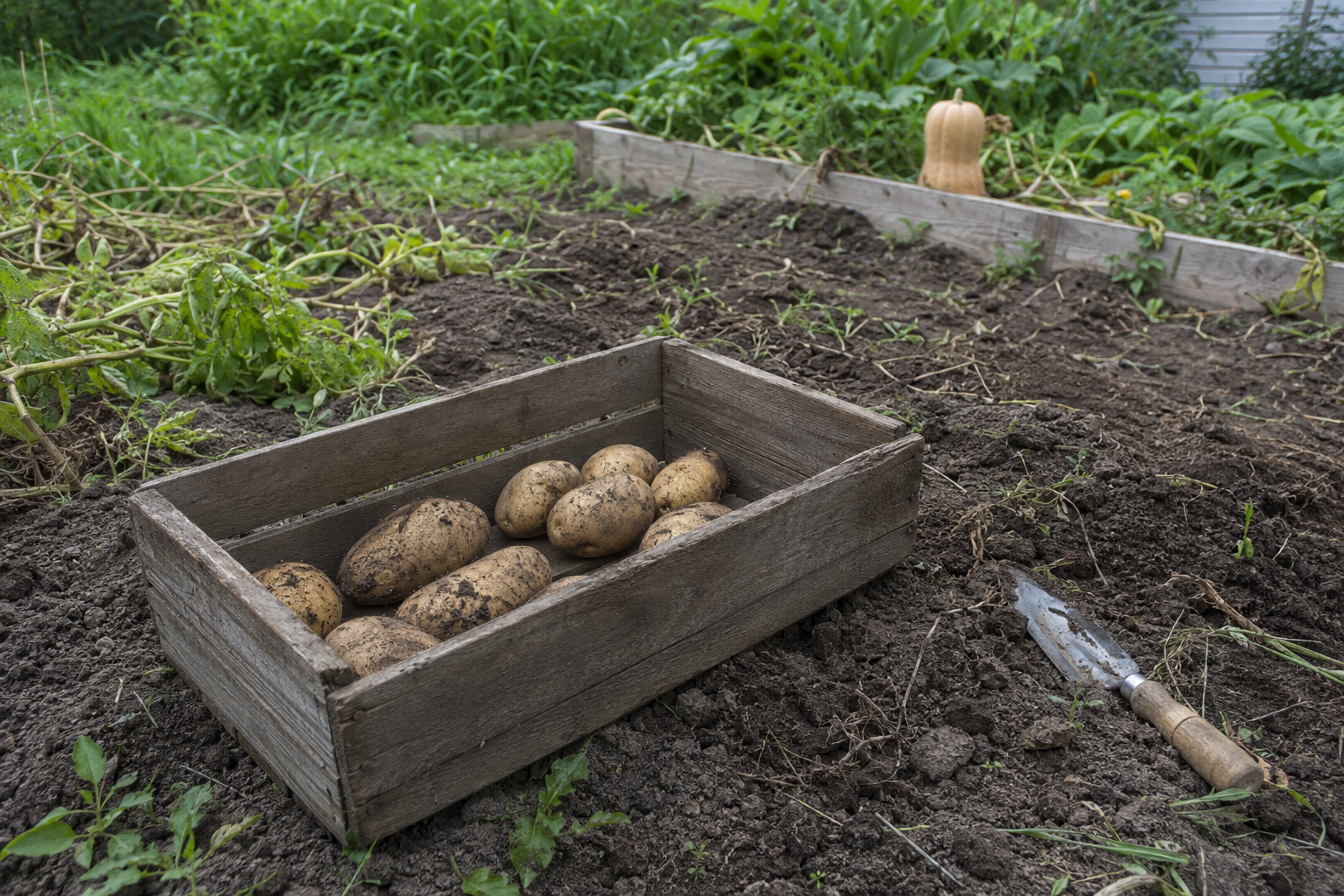
For storage potatoes, wait until the vines naturally die back and the skins have toughened. Carefully lift the tubers without cutting or bruising them, brush away loose soil, and allow them to cure in a dark, ventilated location. Do not wash potatoes before storage.
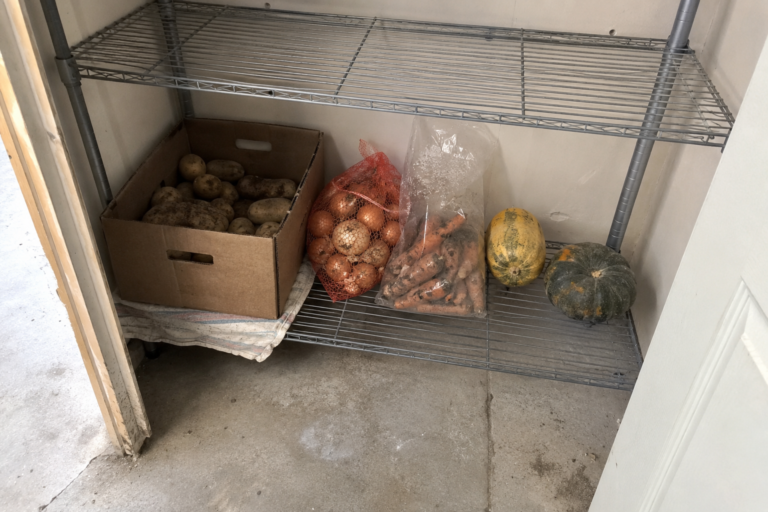
Store the cured crop in a cool, dark place with enough ventilation to prevent moisture buildup. Check it regularly and remove soft, damaged, sprouting, or rotten potatoes before they affect the rest of the harvest. Light causes potatoes to turn green, and heavily green potatoes should not be eaten.
Sweet Potatoes: A Heat-Tolerant Survival Staple
Sweet potatoes are an excellent alternative to regular potatoes in regions with hot summers and a sufficiently long growing season. The plants thrive in warm soil, spread into dense vines that help shade the ground, and produce calorie-rich storage roots beneath the surface.
The roots supply carbohydrates, fiber, potassium, and beta-carotene, particularly in orange-fleshed varieties. The young leaves and tender vine tips are also edible when properly cooked, giving the crop additional value while the roots continue developing underground.
Why Sweet Potatoes Belong in a Survival Garden
- They perform well during hot summer weather.
- Established plants can tolerate short dry periods better than many garden vegetables.
- Dense vines help suppress weeds and protect the soil from direct sunlight.
- Both the storage roots and tender leaves are edible.
- Healthy roots can be used to produce slips for the following season.
Sweet potatoes need room to spread, although compact or bush-type varieties can work in smaller gardens. They also require warm soil and several frost-free months to form a worthwhile harvest. Gardeners in cooler climates may need to start slips indoors, warm the planting bed, or select short-season varieties.
Curing Sweet Potatoes for Storage
Harvest sweet potatoes before a hard frost, digging carefully because their thin skins bruise easily. Freshly harvested roots should be cured in a warm, humid, ventilated location before being moved into storage. Curing helps small injuries heal and improves sweetness and storage life.
After curing, keep the roots in a dark, moderately cool location with good airflow. Avoid refrigerating raw sweet potatoes because cold temperatures can damage their texture and flavor. Inspect the stored crop periodically and use bruised or damaged roots first.
Dry Beans: A Storable Source of Protein and Calories
Dry beans are one of the most important crops for creating a balanced survival garden. Potatoes, sweet potatoes, and grains supply plenty of carbohydrates, but beans contribute considerably more protein while also providing carbohydrates, fiber, iron, and other essential nutrients.
Black beans, pinto beans, kidney beans, navy beans, cowpeas, and lima beans can all be grown for dry storage. Bush varieties mature over a relatively concentrated period and do not require supports. Pole varieties use vertical space efficiently and may continue producing over a longer period, but they need a sturdy trellis.
Advantages of Growing Dry Beans
- Dried beans store for an extended period in sealed containers.
- They provide both protein and carbohydrates.
- Most varieties are relatively easy to grow from seed.
- Open-pollinated beans make practical seed-saving crops.
- Beans can be combined with corn, potatoes, or squash to create more substantial meals.
Allow beans intended for storage to mature fully on the plant until the pods become dry and brittle. If wet weather threatens near harvest, pull the plants and finish drying them under cover in a well-ventilated location. Shell the beans only after the pods are dry, then spread the seeds out until no remaining moisture is evident before placing them in storage containers.
The Main Drawback of Dry Beans
Dry beans require water, cooking time, and fuel. That matters during an emergency when propane, firewood, or generator power may be limited. Soaking beans before cooking reduces cooking time, while a pressure cooker can conserve additional fuel when one is available.
Dry beans must be cooked thoroughly. Raw or undercooked beans—especially red kidney beans—can contain enough natural lectins to cause severe nausea, vomiting, and diarrhea. The FDA advises soaking dry kidney beans for at least five hours, discarding the soaking water, and boiling them in fresh water for at least 30 minutes. Do not rely on a slow cooker to make raw kidney beans safe.
Dent and Flint Corn: A Grain Crop That Stores Well
Corn can be a valuable survival crop, but the type matters. Sweet corn is harvested while the kernels are tender and contains considerable moisture, so it does not provide the same storage value as mature grain corn. Dent corn and flint corn are allowed to dry fully and can be ground into meal, cracked for porridge, or used in other shelf-stable foods.
Dry corn supplies concentrated carbohydrates and can remain usable for a long time when protected from moisture, insects, and rodents. Open-pollinated varieties also allow gardeners to save seed, although corn requires more careful seed saving than beans or potatoes.
What Corn Needs to Produce Reliably
- Block planting: Corn is wind-pollinated and should be planted in several short rows or a block instead of one long row.
- Fertile soil: Corn is a heavy feeder and performs poorly in exhausted ground.
- Consistent moisture: Water shortages during tasseling and ear development can seriously reduce the harvest.
- Enough plants: A small patch may produce poorly pollinated ears and too little grain to justify the space.
- Variety separation: Different corn varieties can cross-pollinate, complicating seed saving.
Leave grain corn on the stalk until the husks are brown and the kernels are hard whenever weather permits. After harvest, continue drying the ears under cover before shelling them. Store only thoroughly dried kernels in sealed, food-safe containers.
Limitations of Corn in a Survival Garden
Corn uses considerable space, water, and soil fertility compared with many root crops. It also requires shelling and usually grinding before it becomes practical human food. If corn will make up a major portion of the household diet, learn proper alkaline processing methods such as nixtamalization, which improves the availability of certain nutrients.
For most backyard gardeners, corn works best as one part of a diversified staple-crop plan rather than the only major source of calories.
Winter Squash and Pumpkins: Dependable Food for Winter Storage
Winter squash does not contain as many calories per pound as potatoes, dry beans, or grain corn. Its survival value comes from dependable production, useful nutrition, edible seeds, and the ability to remain usable for months without refrigeration.
Butternut, Hubbard, kabocha, cushaw, and other storage varieties provide carbohydrates, fiber, potassium, and important vitamins. Their seeds can also be cleaned, roasted, and eaten as a calorie-dense source of fat and protein. However, varieties differ considerably in flavor, productivity, disease resistance, and storage life.
Why Winter Squash Is Worth Growing
- The hard shells protect the edible flesh during storage.
- Many varieties remain usable well into winter.
- The plants can produce a large amount of food from a relatively small number of seeds.
- Vines can cover unused edges, slopes, or corners of the property.
- Both the flesh and mature seeds can be eaten.
The primary drawback is space. Vigorous vines can spread far beyond their original planting area and overwhelm nearby crops. Directing vines along garden borders or growing smaller-fruited varieties on strong trellises can conserve productive bed space. Large pumpkins and heavy squash should generally remain on the ground unless the trellis and fruit supports are built to handle their weight.
Harvesting Squash for Storage
Harvest winter squash after the rind has hardened but before a damaging freeze. Cut the stem instead of pulling the fruit from the vine, leaving a short section attached. A missing or damaged stem creates an opening where decay can begin.
Some squash benefit from a curing period, while others—particularly many acorn types—should not be cured in high heat. Follow the recommendations for the variety you grow. Store sound squash in a cool, dry, ventilated area, and use any bruised, cracked, or stemless fruit first.
Peanuts and Sunflowers: Producing Dietary Fat
Fat is one of the hardest nutritional needs to meet with an ordinary backyard garden. Most vegetables contain very little, which makes peanuts and sunflowers especially useful. Their seeds are calorie-dense and provide fat, protein, and minerals that complement potatoes, grains, beans, and squash.
Peanuts
Peanuts grow best in warm climates with a long frost-free season and loose, well-drained soil. After flowering, the plant sends pegs into the ground, where the pods develop. Compacted or rocky soil can interfere with pod formation and make harvesting more difficult.
Lift the entire plant when the pods are mature, shake away loose soil, and allow the plants and pods to dry in a protected, ventilated location. Peanuts require careful drying because moisture trapped inside the shells can lead to mold. They also need protection from rodents during curing and storage.
Sunflowers
Sunflowers are easier to fit around garden borders and can attract pollinators while producing edible seeds. Select an oilseed or large-seeded edible variety rather than choosing plants solely for ornamental flowers.
Birds, squirrels, and rodents may take much of the harvest before it is ready. Covering mature seed heads with breathable mesh bags can reduce losses. Harvest when the backs of the flower heads begin turning yellow or brown and the seeds are fully developed, then finish drying them under cover.
Neither crop should replace the garden’s primary staples. Their best role is adding concentrated calories and fat to meals built around potatoes, beans, corn, squash, and other storage crops.
Other High-Calorie Crops Worth Considering
Several secondary crops can strengthen a survival garden when they match your climate, soil, and available space. They may not replace potatoes, beans, or corn, but they can provide additional calories and reduce dependence on a single harvest.
Grain Sorghum
Grain sorghum handles heat and dry conditions better than many traditional grains. The mature seed can be dried, stored, and cooked whole or ground into flour. Its main disadvantages are the work required for threshing and processing and the difficulty of protecting ripening grain from birds.
Jerusalem Artichokes
Jerusalem artichokes, also called sunchokes, are hardy perennial plants that produce edible underground tubers. They can generate a dependable crop with relatively little attention and can often remain in the ground until needed.
Plant them in a permanent, contained location because overlooked tubers readily regrow and spread. The tubers are rich in inulin, which can cause significant gas or digestive discomfort for people who are not accustomed to eating them. Test them as part of your normal diet before depending on them during an emergency.
Rutabagas and Parsnips
Rutabagas and parsnips contain fewer calories than the leading staple crops, but they tolerate cool weather and extend production beyond the summer garden. Both can remain in the ground during cold weather in many climates or be stored under suitable cool, humid conditions.
These crops are most valuable as dependable backups that improve harvest diversity rather than as the garden’s primary calorie source.
How to Choose and Balance Your Survival Crops
The best crop list for one household may fail in another garden. Start with your average frost dates, summer temperatures, rainfall, soil drainage, pest pressure, and available growing area. Then prioritize crops that already perform reliably in your region.
A gardener with hot summers and loose soil may favor sweet potatoes, cowpeas, peanuts, and sorghum. Someone with a shorter or cooler season may depend more heavily on regular potatoes, dry beans, winter squash, rutabagas, and parsnips. Corn can be valuable where enough sunny, fertile ground is available, but it may not justify the space in a small backyard.
Once you choose your crops, use the Vegetable Planting Date Calculator to build a planting schedule using your local frost dates.
Build the Garden Around Several Food Roles
A balanced survival garden should include:
- At least one dependable root or tuber crop
- A dry bean or another practical protein crop
- A storable grain if sufficient space is available
- A source of fat, such as peanuts or sunflower seeds
- Winter squash or another long-keeping vegetable
- Leafy greens, fruits, herbs, and vegetables for nutritional variety
Give the largest amount of space to crops you already know how to grow, harvest, prepare, and store. Use smaller test plots for unfamiliar crops until they prove dependable. Planting an entire garden with a new staple based only on its theoretical calorie yield creates unnecessary risk.
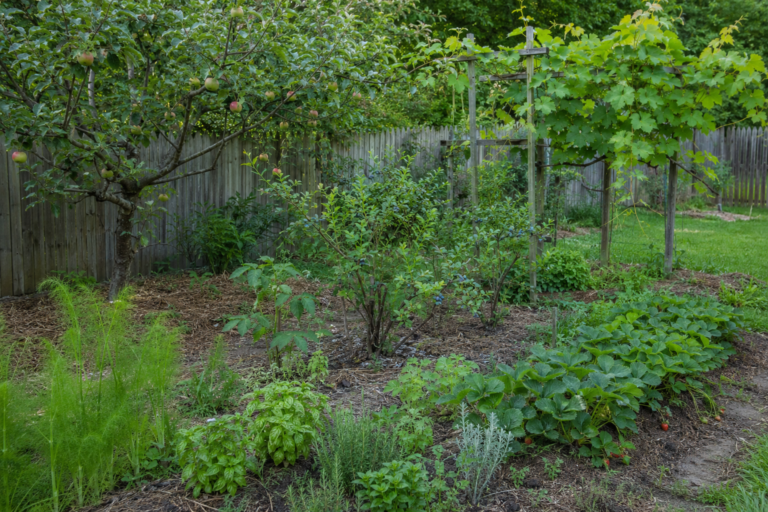
A survival garden also becomes stronger when annual staples are combined with established fruit trees, berries, asparagus, and other perennial food plants for a self-sufficient backyard. Annual crops provide concentrated seasonal production, while perennials create a food system that does not have to be replanted from scratch every year.
Storage Planning and Common Survival-Garden Mistakes
Growing the crop is only half the job. Potatoes need cool, dark, humid storage, while winter squash prefers a drier environment. Beans, corn, sunflower seeds, and sorghum must be thoroughly dried and protected from insects and rodents. Storing everything together under the same conditions can shorten the life of the entire harvest.
Plan the storage location before planting large quantities. A household without a cool storage area may need to grow fewer potatoes and place greater emphasis on dry beans, grain, or crops that can be preserved by another dependable method.
Common Mistakes to Avoid
- Planting mostly low-calorie salad vegetables and assuming the harvest can feed the household
- Depending on one staple crop that could be lost to weather, pests, or disease
- Growing unfamiliar foods the family does not normally eat
- Ignoring the water, fuel, and equipment required to prepare dry beans and grains
- Harvesting storage crops too early or placing them in storage before they are properly cured or dried
- Saving seed from hybrid plants and expecting identical results the following season
- Failing to track actual harvest weights, losses, and storage life
Record how much usable food each crop produces and how long it lasts in storage. Those real results are more valuable than generalized yield estimates when deciding what to plant the following year.
Frequently Asked Questions
Which garden crop produces the most calories?
Potatoes and sweet potatoes are among the strongest calorie-producing choices for limited garden space. Actual production depends on climate, soil, variety, water, disease pressure, and the gardener’s experience, so no crop produces the highest yield under every condition.
Can a survival garden completely feed a family?
A large, carefully managed garden can provide a meaningful portion of a household’s food, but producing nearly all required calories is difficult. It requires substantial space, fertile soil, water, storage, seed, labor, and dependable harvests. Our guide to building a self-sufficient garden for a family of four explains the broader planning involved.
What are the easiest high-calorie crops for beginners?
Potatoes, sweet potatoes, bush beans, and winter squash are reasonable starting points in climates suited to them. Begin with small plantings and expand the crops that perform well in your garden instead of trying to become self-sufficient during the first season.
Should wheat or rice be grown in a backyard survival garden?
They can be grown, but they are rarely the easiest staples for a small garden. Harvesting, threshing, cleaning, and processing require considerable work. Potatoes, dry beans, corn, and winter squash are usually more practical starting crops for inexperienced growers.
Can seed be saved from survival-garden crops?
Seed can be saved from many open-pollinated beans, corn varieties, sunflowers, squash, and grains. Potatoes and sweet potatoes are commonly propagated from tubers or slips. Learn the isolation and storage requirements for each crop, and avoid assuming seeds collected from hybrids will produce the same characteristics.
Recommended Gear for a Survival Garden
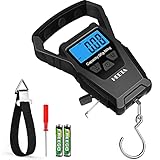
HEETA Digital Hanging Scale
Tracking the actual weight of potatoes, squash, beans, and other harvested crops helps identify which plants produce the most useful food in your garden. This portable scale can weigh harvest baskets or filled storage bags up to 110 pounds.
Ball Complete Book of Home Preserving
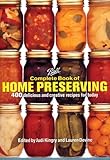
Producing extra food has little value if the harvest spoils. This preserving reference covers tested methods and recipes for canning, pickling, and preparing a wide range of homegrown foods for storage.
Important: Always follow current, tested food-preservation instructions rather than relying on unverified recipes or outdated processing times.
Further Reading
Continue building a more dependable home food system with these related guides:
Final Thoughts
The best high-calorie crops for a survival garden are not necessarily the most unusual plants or the crops with the highest theoretical yields. They are the ones that grow reliably on your property, provide food your household will eat, and can be stored or preserved with the equipment you actually have.
Begin with dependable staples such as potatoes, sweet potatoes, dry beans, grain corn, and winter squash. Add peanuts or sunflowers for fat, then fill nutritional gaps with leafy greens, fruits, herbs, and other vegetables.
Most importantly, practice before the food is urgently needed. Track each harvest, improve your soil, learn proper storage methods, and save seed from suitable varieties. A survival garden becomes dependable through repeated seasons of experience—not by planting unfamiliar crops after an emergency has already started.