How to Build a Self-Sufficient Garden for a Family of Four
Building a self-sufficient garden for a family of four means creating a dependable food-producing system rather than simply planting a few vegetables each spring. A well-planned garden should provide a steady supply of fresh produce during the growing season, enough surplus to preserve for later, and reliable crops that can be stored for several months without requiring constant refrigeration.
This post contains affiliate links. I may earn a small commission at no extra cost to you. Learn more.
However, self-sufficiency does not have the same meaning for every household. One family may want to replace most of the vegetables they normally buy, while another may be working toward producing a substantial portion of its yearly food supply. The amount of space, labor, water, equipment, and experience required changes considerably depending on that goal.
A productive family garden must also account for what the household actually eats. Growing large quantities of vegetables that nobody enjoys will not reduce grocery expenses or improve food security. The strongest plan combines frequently eaten vegetables with calorie-producing crops, storage crops, herbs, berries, and varieties suitable for canning, freezing, dehydrating, fermenting, or curing.
This guide explains how much growing space a family of four may need, which crops provide the greatest practical value, how to design the garden, and how to keep it productive from one season to the next.
Quick Answer
A self-sufficient garden for a family of four generally requires at least several hundred square feet for meaningful fresh vegetable production, while producing enough vegetables for preservation and extended storage may require 1,000 square feet or considerably more. A garden intended to supply most of the family’s calories would need substantially more land because staple crops such as potatoes, dry beans, corn, winter squash, and grains require more growing space.
The best approach is to decide which foods the family wants to produce, calculate realistic yearly quantities, and build the garden in stages. Begin with dependable crops, improve the soil each season, install reliable irrigation, practice succession planting, and preserve surplus harvests before expanding into a larger food-production system.
Key Takeaways
- A self-sufficient garden should be planned around the foods the family actually eats and preserves.
- Producing fresh vegetables requires much less space than producing most of a household’s yearly calories.
- High-yield vegetables should be balanced with calorie-rich and long-storage crops.
- Healthy soil, dependable water, crop rotation, and succession planting matter as much as the garden’s total size.
- Starting with a manageable garden and expanding from actual harvest records is more dependable than planting an oversized garden during the first year.
What Does a Self-Sufficient Garden Actually Mean?
A self-sufficient garden does not necessarily produce every calorie, ingredient, or meal a family consumes. For most households, it means producing a dependable percentage of their vegetables, herbs, fruits, and storage crops while reducing how often those foods must be purchased. The exact level of self-sufficiency depends on the available land, local climate, growing experience, preservation capacity, and the amount of time the family can devote to maintaining the garden.
A smaller garden may supply fresh tomatoes, peppers, cucumbers, squash, green beans, salad greens, and herbs throughout the growing season. This can noticeably reduce grocery expenses, but the household will still depend on outside food sources during the winter and for calorie-dense staples.
The next level involves growing enough surplus to can, freeze, dehydrate, ferment, cure, or store for use after the growing season ends. This requires additional planting space because the garden must produce more than the family can eat fresh. It also requires suitable varieties, preservation equipment, storage space, and a planting schedule that prevents the entire harvest from ripening simultaneously.
Producing most of a family’s yearly calories is a much larger undertaking. Vegetables such as lettuce, cucumbers, and tomatoes provide valuable nutrients but relatively few calories. A calorie-focused garden must dedicate substantial space to potatoes, sweet potatoes, dry beans, corn, winter squash, and other staple crops that can be stored for extended periods.
The Important Difference
A garden can supply nearly all of a family’s vegetables without supplying most of its total food. True caloric self-sufficiency requires considerably more growing space than vegetable self-sufficiency because staple crops need room, time, and dependable storage conditions.
For most families, the most realistic goal is gradual food independence: first replacing commonly purchased produce, then preserving surplus harvests, and finally adding calorie-producing crops as the garden expands and the household gains experience.
How Much Garden Space Does a Family of Four Need?
The amount of garden space required for a family of four depends primarily on what the garden is expected to provide. A compact garden can produce a meaningful amount of fresh food, but growing enough vegetables for preservation requires more room, while producing calorie-dense staples for year-round use requires substantially more.
Some intensive gardening estimates recommend approximately 150 to 200 square feet per person for a strong supply of vegetables, placing a family of four near 600 to 800 square feet. Other recommendations are much larger. The University of Georgia Cooperative Extension suggests allowing approximately one-tenth acre per family member when planning a garden that includes enough produce for canning and freezing. One-tenth acre equals about 4,356 square feet, demonstrating how quickly space requirements increase when preservation and storage are included.
These figures should be treated as planning ranges rather than guarantees. A well-managed intensive garden with fertile soil, vertical supports, dependable irrigation, and repeated plantings can outperform a much larger neglected plot. At the same time, paths, composting areas, crop rotation, fruit plantings, and permanent structures require additional room beyond the space occupied by vegetables.
Practical Starting Point
For a family building its first serious food garden, approximately 600 to 1,000 square feet is a manageable starting point. This is large enough to grow a meaningful supply of produce without creating an unmanageable workload. The garden can then be expanded using actual harvest records instead of uncertain estimates.
Calculate What Your Family Actually Eats
Before buying seeds or deciding how many garden beds to build, make a list of the vegetables, herbs, and fruits your household regularly eats. A self-sufficient garden should be based on real meals rather than a generic planting chart because two families of four can have completely different food preferences and preservation habits.
Begin by reviewing grocery receipts, pantry supplies, freezer contents, and the meals your family prepares most often. Record how many pounds, cans, jars, or packages of each food the household uses during an average month. Tomatoes used for sandwiches, salads, salsa, pasta sauce, and soup may deserve a large portion of the garden, while a vegetable eaten only occasionally may require one or two plants.
Separate the list into three categories: foods eaten fresh, foods used for cooking, and foods the family is willing to preserve. This distinction matters because a few productive cucumber plants may provide enough for fresh eating, but making a year’s supply of pickles would require additional plants. The same applies to tomatoes, green beans, peppers, corn, potatoes, onions, and other crops commonly stored or preserved.
Next, consider how much of each food can realistically be replaced. Attempting to grow 100 percent of everything during the first year usually creates an oversized garden and an overwhelming harvest. A more practical goal might be producing all the family’s summer tomatoes and peppers, half its yearly green beans, several months of potatoes and onions, and enough herbs to use fresh and dry for winter.
Use a Food Inventory Before Creating the Planting Plan
Track the family’s normal produce use for at least four weeks. Multiply those quantities to estimate seasonal or yearly demand, then reduce the first planting target to a manageable amount. Actual harvest weights can be recorded throughout the season and used to create a more accurate plan the following year.
Food preferences should also determine which crops receive the most valuable garden space. High-yield vegetables are only useful when the family will eat them, and growing excessive amounts of an unpopular crop wastes soil nutrients, water, labor, and preservation supplies. The strongest garden plan prioritizes dependable foods that already have a regular place in the household’s meals.
What Should a Family of Four Grow?
A self-sufficient garden should contain a mixture of high-yield vegetables, calorie-producing staples, storage crops, and foods that the family can preserve. Filling the entire garden with tomatoes, cucumbers, and salad greens may create an impressive summer harvest, but those crops will not provide enough calories or store well enough to support the household through winter.
The first priority should be dependable vegetables the family already eats regularly. Tomatoes, peppers, green beans, cucumbers, summer squash, carrots, onions, and leafy greens can replace a noticeable amount of purchased produce without requiring an enormous garden. Herbs are also valuable because they are expensive to buy in small packages, take up little space, and can be dried or frozen.
A second portion of the garden should be reserved for crops that provide more calories or remain usable for several months. Potatoes, sweet potatoes, dry beans, winter squash, onions, garlic, and dent corn can strengthen the household’s stored food supply, although they generally require more growing space than fresh salad crops.
These amounts are starting estimates rather than fixed requirements. A family planning to can a large quantity of tomato sauce may need 20 or more tomato plants, while a household that eats tomatoes only during summer may need six. Yield also changes with the variety, soil fertility, weather, pest pressure, plant spacing, and length of the growing season.
Do Not Plant Everything in Equal Amounts
Garden space should reflect how often each food is eaten and how well it stores. Lettuce and radishes mature quickly but provide few calories, while potatoes, sweet potatoes, dry beans, and winter squash occupy the ground longer but contribute more toward a dependable stored food supply.
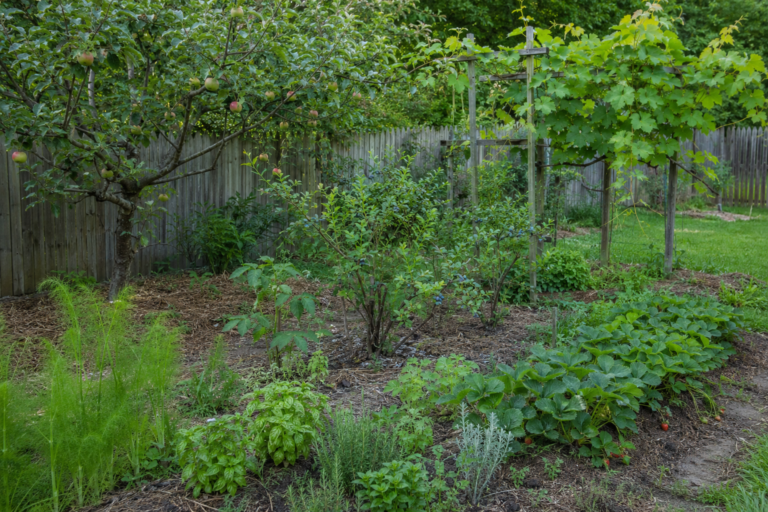
Perennial foods can strengthen the garden without being replanted every spring. Strawberries, raspberries, blueberries, asparagus, rhubarb, grapes, fruit trees, and perennial herbs may take several seasons to reach full production, but once established, they can provide dependable harvests while reducing yearly seed-starting and planting work.
Choose the Right Location and Garden Layout
A productive food garden should receive at least six to eight hours of direct sunlight each day, although tomatoes, peppers, corn, squash, and other fruiting crops generally produce better with additional sun. The location should also have well-drained soil, convenient access to water, protection from strong winds, and enough room for the garden to expand without relocating established beds.
Avoid placing the garden in a low area where water remains after heavy rain. Nearby trees can create additional problems by shading vegetables and sending roots into fertile garden soil. The site should be close enough to the house that pests, irrigation failures, and vegetables ready for harvest can be noticed during normal daily routines.
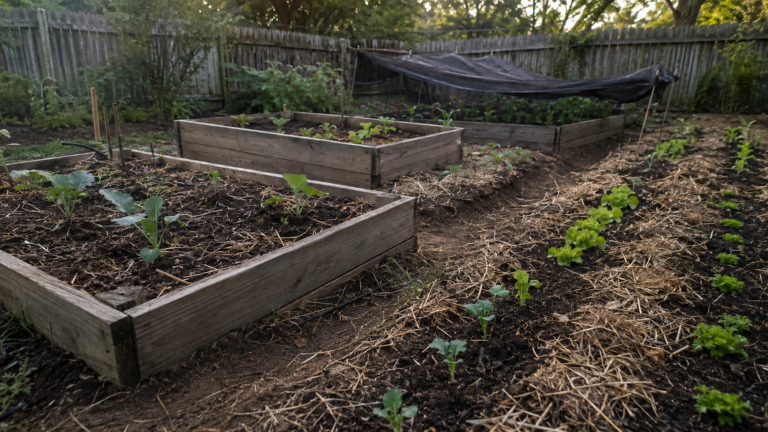
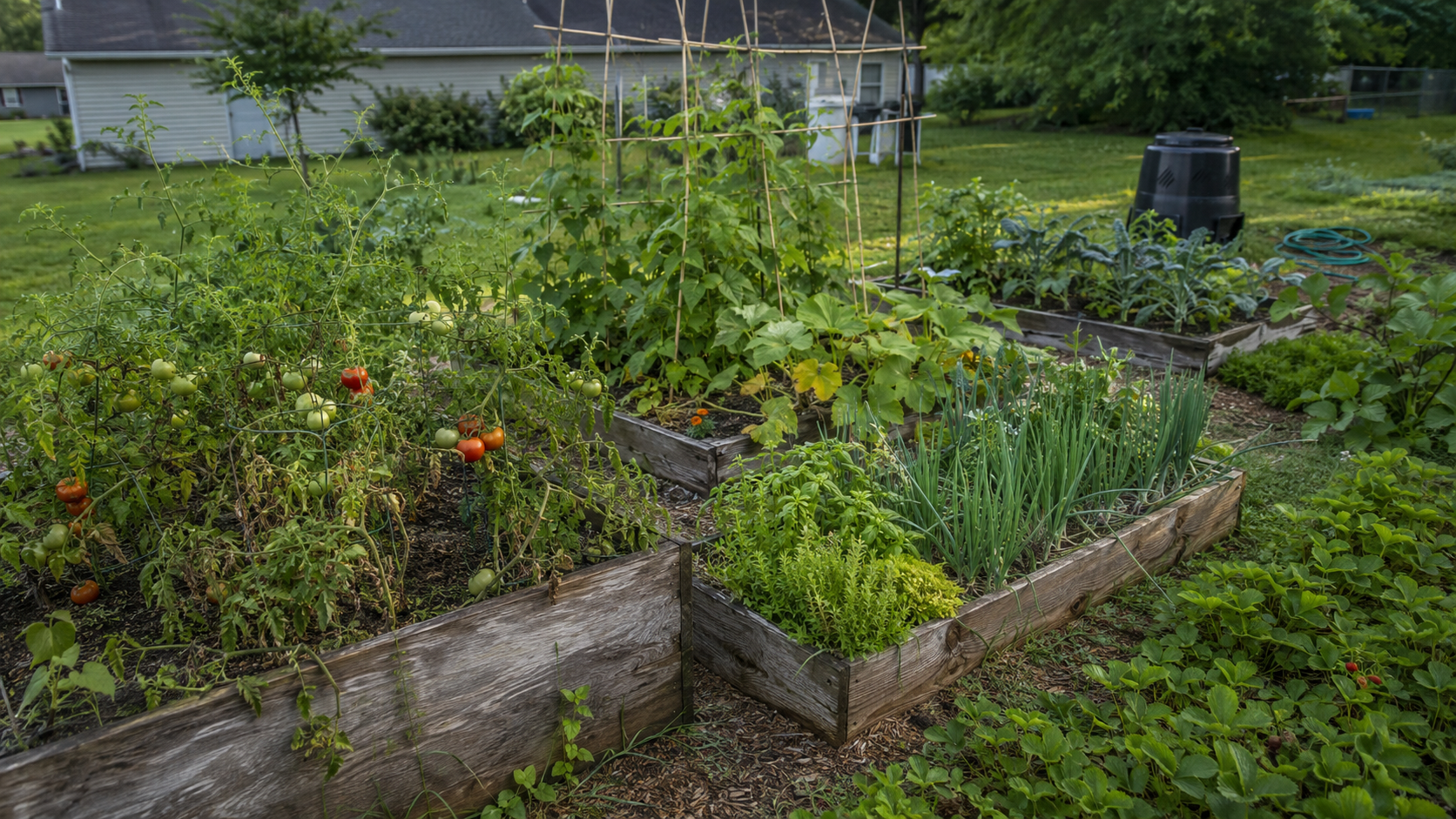
Garden beds should be narrow enough to reach from the sides without stepping on the growing soil. A width of approximately four feet works well for most permanent beds, while paths should be wide enough for comfortable movement, harvesting baskets, hoses, and a wheelbarrow. Tall crops and trellises generally belong along the northern side of the garden so they are less likely to shade shorter plants.
Sample Garden Layout for a Family of Four
A 30-by-30-foot space provides 900 square feet before accounting for paths, composting areas, and permanent structures. The following layout can be adjusted to match the family’s preferred foods and local growing season.
Leave space near the garden for compost, tools, soil amendments, and harvested produce waiting to be processed. Fencing should be installed before serious animal damage occurs, particularly where deer, rabbits, or groundhogs are common. A good layout should make planting, watering, weeding, harvesting, and crop rotation easier rather than simply fitting the maximum number of plants into the available ground.
A reliable food garden also requires proper timing. Our vegetable planting calculator estimates when to start seeds indoors, transplant seedlings, direct sow, and plant for a fall harvest.
Build Soil That Can Support Continuous Food Production
A self-sufficient garden removes a considerable amount of organic matter and nutrients from the soil each season. If those resources are not replaced, yields gradually decline, plants become more vulnerable to stress, and the garden requires increasing amounts of purchased fertilizer. Building healthy soil is therefore one of the most important parts of creating a dependable food-producing system.
Begin with a soil test rather than guessing which amendments are needed. A basic test can reveal the soil’s pH and major nutrient levels, helping prevent unnecessary fertilizer applications. Most vegetables perform well in slightly acidic to neutral soil, but individual crops have different requirements, and adding amendments without test results can create nutrient imbalances that are difficult to correct.
Finished compost improves soil structure, water retention, drainage, and biological activity, but it should be treated as part of the fertility plan rather than an unlimited substitute for every nutrient. Compost can be produced from garden residue, untreated grass clippings, fallen leaves, kitchen scraps, and other appropriate organic materials. Diseased plants, mature weed seeds, and material treated with persistent herbicides should be kept out unless the composting system can safely process them.
Cover exposed soil with several inches of clean straw, shredded leaves, untreated grass clippings, or another suitable mulch. Mulch reduces evaporation, limits weed growth, moderates soil temperature, and protects the surface from erosion during heavy rain. As organic mulch breaks down, it also contributes additional material to the soil.
Create a Closed-Loop Fertility System
Return healthy crop residue to the compost pile, collect fallen leaves, grow cover crops when beds would otherwise remain empty, and use finished compost to replenish the garden. This will not eliminate every outside input, but it can substantially reduce the amount of fertilizer and soil amendment that must be purchased.
Crop rotation also protects long-term soil productivity. Heavy-feeding crops such as tomatoes, corn, squash, and cabbage should not occupy the same beds year after year. Rotating plant families, adding compost according to soil-test results, and planting cover crops can help prevent nutrient depletion while interrupting some pest and disease cycles.
Use Succession Planting and Season Extension
A self-sufficient garden should produce food for as much of the year as the local climate allows. Planting every crop at the same time often creates a short period of abundance followed by empty beds and declining harvests. Succession planting spreads production across the season by replacing harvested crops and staggering plantings of vegetables that mature quickly.
Instead of planting an entire supply of lettuce, radishes, carrots, beets, bush beans, or sweet corn on one date, plant smaller quantities every two to three weeks. This creates multiple harvest periods and reduces the chance that poor weather, insects, or disease will destroy the entire crop at once. The exact interval should be adjusted according to the crop’s days to maturity and the length of the local growing season.
Garden beds should also be replanted after early crops finish. Spring peas, spinach, lettuce, and radishes can be followed by beans, cucumbers, summer squash, or another warm-season crop. Later in the year, declining summer plants can be removed to make room for fall carrots, beets, cabbage, broccoli, kale, spinach, and other cool-season vegetables.
Season-extension equipment can keep the garden productive beyond its normal limits. Row covers, low tunnels, cold frames, shade cloth, and mulch protect plants from light frost, excessive heat, wind, and some insect damage. These methods do not make every vegetable grow year-round, but they can add several productive weeks to spring and fall.
Plan the Next Crop Before the Current One Is Harvested
Keep replacement seedlings ready and record the expected harvest date for each bed. When one crop finishes, clear the residue, add compost if needed, and plant the next crop promptly. Leaving productive soil empty for several weeks wastes growing time that could provide another harvest.
Succession planting requires more planning than a single spring planting, but it allows a smaller garden to produce considerably more food. A written calendar containing sowing dates, transplant dates, expected harvest periods, and first-frost estimates makes this system easier to manage from year to year.
Create a Reliable Garden Watering System
A family food garden cannot be considered dependable if its entire harvest depends on occasional rainfall. Vegetables need consistent moisture during germination, flowering, fruit development, and root formation, and even a short period of severe drought can reduce yields or permanently damage a crop.
Drip irrigation or soaker hoses are generally more efficient than overhead sprinklers because they deliver water close to the roots with less evaporation. They also help keep leaves dry, which can reduce the conditions that encourage certain fungal diseases. Divide a large garden into watering zones so each section receives the appropriate amount without reducing water pressure across the entire system.
Water deeply enough to encourage roots to grow downward instead of applying a light surface watering every day. The correct schedule will depend on temperature, rainfall, soil type, mulch depth, crop maturity, and whether the plants are growing in containers, raised beds, or the ground. Check the soil below the surface before watering rather than relying only on a fixed schedule.
Organic mulch helps the garden retain moisture and reduces the amount of irrigation required during hot weather. Straw, shredded leaves, and untreated grass clippings can also prevent soil from splashing onto lower leaves during heavy rain.
Rain barrels or larger storage tanks can supplement the main water supply, particularly when runoff is collected from a suitable roof and stored correctly. Our guide explaining how to collect rainwater for emergency use covers collection, storage, and treatment considerations in greater detail. However, stored rainwater should not be the garden’s only watering plan because the supply can run out during the same prolonged dry period when plants need it most.
Plan for Water Interruptions
Keep a backup method for moving and applying water if the primary irrigation system, well pump, or electrical supply stops working. A gravity-fed tank, watering cans, stored non-potable water, or a generator-supported well system can prevent a temporary utility failure from destroying months of work.
Protect the Harvest From Pests and Disease
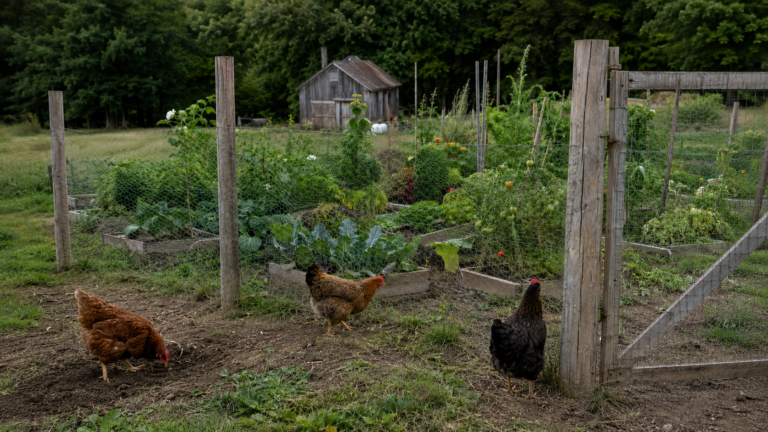
A garden large enough to supply meaningful food for a family also creates an attractive feeding area for insects, birds, rabbits, deer, groundhogs, and other wildlife. Waiting until damage appears can result in losing an entire planting, so physical protection should be included in the original garden plan.
Install fencing suited to the animals common in the area, and inspect the bottom regularly for gaps or digging. Insect netting, row covers, collars around young plants, and protective cages can prevent damage without requiring repeated pesticide applications. Row covers must be removed or opened when crops requiring insect pollination begin flowering.
Walk through the garden several times each week and examine the undersides of leaves, stems, flowers, and developing fruit. Early infestations are easier to control than established ones. Remove pests by hand when practical, prune seriously affected plant material, and identify the problem before applying any treatment because the wrong product can harm pollinators and beneficial insects without correcting the actual cause.
Disease prevention begins with healthy soil, appropriate spacing, resistant varieties, clean tools, and watering near the soil rather than repeatedly soaking the foliage. Remove severely diseased plants instead of allowing the problem to spread throughout the bed. Plant debris should only be composted when the composting process can reliably destroy the disease organism.
Crop rotation provides another layer of protection. Avoid growing members of the same plant family in the same bed year after year. Tomatoes, peppers, potatoes, and eggplants belong to the same family, while broccoli, cabbage, kale, cauliflower, and radishes form another group. Moving these related crops can interrupt some disease and pest cycles while preventing the same soil nutrients from being repeatedly depleted.
Keep a Garden Problem Log
Record where each crop was planted, which pests or diseases appeared, the date the problem began, and which response worked. These records make future crop rotation more effective and help identify recurring problems before they cause another major loss.
A completely pest-free garden is not a realistic goal. The objective is to monitor conditions, tolerate minor cosmetic damage, protect beneficial organisms, and intervene before pests or disease reduce the harvest below what the family needs.
Save Seeds and Reduce Outside Inputs
Saving seeds can reduce yearly expenses and preserve plant varieties that perform well in the garden’s specific soil and climate. However, dependable seed saving requires more than collecting seeds from any mature vegetable. Hybrid plants may not produce offspring with the same characteristics, while open-pollinated varieties generally reproduce more predictably when unwanted cross-pollination is prevented.
Beans, peas, lettuce, and many open-pollinated tomatoes are practical crops for beginning seed savers. Beans and peas can remain on the plant until the pods become dry and brittle, while tomato seeds require removal, cleaning, and thorough drying. Seeds should be collected from healthy, productive plants rather than weak specimens or the last damaged fruit remaining at the end of the season.
Crops such as squash, cucumbers, corn, carrots, cabbage, and onions require additional planning. Some cross readily with related varieties, while biennial crops must survive winter and grow for a second season before producing seed. Corn also needs seed collected from numerous healthy plants to maintain genetic diversity.
Store fully dried seeds in labeled, airtight containers in a cool, dark, and dry location. Each label should include the crop, variety, harvest year, and any useful notes about yield, disease resistance, flavor, or growing conditions. Germination rates usually decline over time, so older seeds should be tested before depending on them for a major planting.
Seed Saving Is Only One Part of Garden Independence
A more self-reliant garden also produces compost, reuses stakes and containers, collects organic mulch, propagates perennial plants, and maintains durable tools. Some seeds, minerals, replacement irrigation parts, and preservation supplies may still need to be purchased, so the realistic goal is reducing vulnerable outside inputs rather than pretending they can all be eliminated.
Begin with one or two easy seed crops, keep careful records, and expand only after the saved seeds have successfully germinated and produced dependable plants. This approach builds a reliable local seed supply without risking the family’s entire garden on untested seed.
Preserve and Store the Harvest Safely
A garden does not provide year-round food simply because it produces a large summer harvest. Surplus vegetables must be preserved, cured, or stored before they become overripe, damaged, or unsafe to eat. Preservation planning should therefore begin before seeds are planted, not after baskets of produce are already covering the kitchen counters.
Choose crop varieties suited to the intended preservation method. Paste tomatoes are generally more practical for sauce, pickling cucumbers produce better pickles, and storage onions, winter squash, potatoes, and sweet potatoes are selected for their ability to remain usable after harvest. Planting smaller amounts at different times can spread the workload, while crops intended for canning may be planted to produce a larger harvest within a shorter processing period.
Freezing works well for many vegetables, but most require proper preparation and blanching to protect their flavor, color, and texture. Dehydrating can reduce storage space for herbs, peppers, tomatoes, onions, and other suitable foods, while fermentation and pickling provide additional ways to preserve seasonal produce.
Canning requires particular attention to safety. Use current, research-tested instructions from the National Center for Home Food Preservation, the USDA, or a university cooperative extension program. Low-acid vegetables generally require pressure canning because boiling-water processing does not reach the temperature needed to control the botulism risk. Never change ingredient proportions, processing pressure, jar size, or processing time in a tested canning recipe.
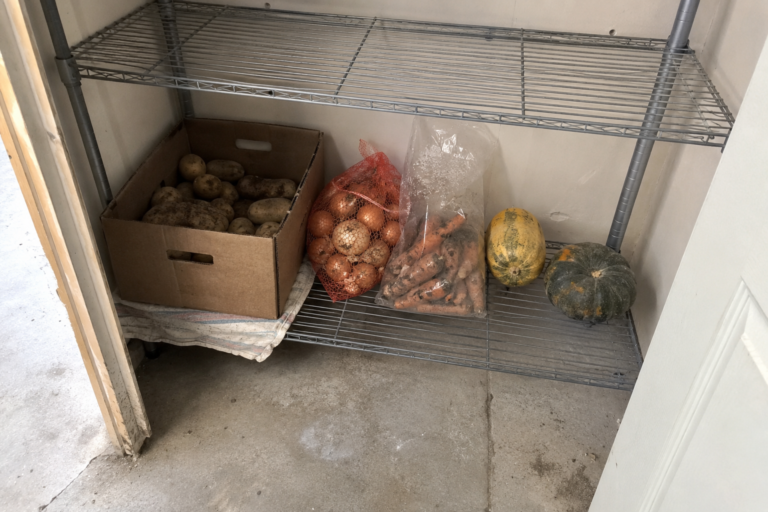
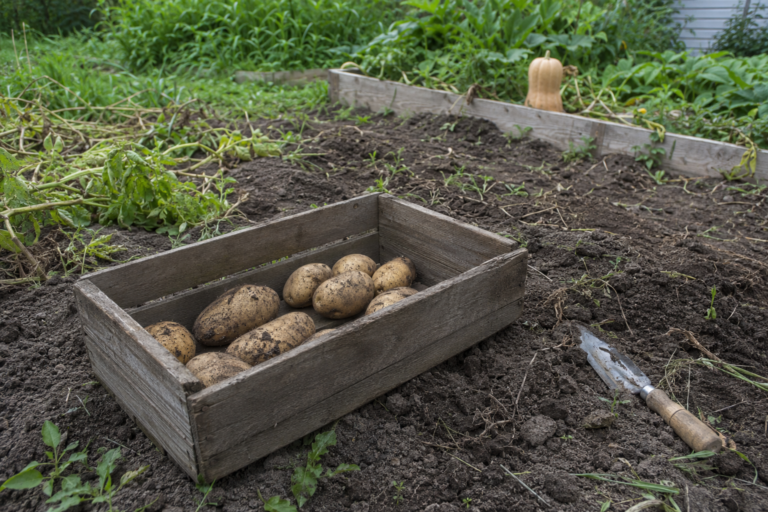
Potatoes, onions, garlic, sweet potatoes, pumpkins, and winter squash may be stored without canning when the correct varieties are harvested carefully, cured properly, and kept under suitable conditions. Storage requirements differ by crop, so placing everything in the same basement, pantry, or root-cellar area can shorten shelf life.
Preservation Must Follow Tested Safety Guidance
A sealed jar is not proof that its contents are safe. Do not rely on untested family methods, oven canning, open-kettle canning, or altered online recipes. When a jar leaks, spurts liquid, smells unusual, shows mold, or has a bulging lid, do not taste the food to determine whether it is safe.
Label every preserved container with the food, preservation date, and recipe or batch information. Keep an inventory and use the oldest food first. These records reveal how much the family actually consumes during winter, allowing the following year’s planting plan to be based on real storage needs rather than estimates.
Common Self-Sufficient Gardening Mistakes
The most common mistake is creating a garden that is larger than the family can maintain. An oversized plot quickly becomes difficult to water, weed, inspect, harvest, and preserve, especially during the busiest part of summer. Starting with a manageable area and expanding successful crops produces better long-term results than preparing thousands of square feet during the first year.
Another mistake is concentrating entirely on high-yield summer vegetables while ignoring calories, storage, and preservation. Tomatoes, cucumbers, and zucchini are useful, but they cannot provide a dependable winter food supply without additional crops and a plan for processing the harvest.
Poor fencing, unreliable irrigation, weak soil, and planting everything on one date can also cause major losses. Families should avoid depending on expected yields until they have recorded several seasons of actual production under their own growing conditions.
Self-Sufficient Garden Planning Checklist
- Define whether the goal is fresh produce, preserved vegetables, or broader food independence.
- Track what the family currently eats before choosing crops and quantities.
- Select a sunny, well-drained location with dependable access to water.
- Test the soil and create a long-term compost and fertility plan.
- Include fresh vegetables, storage crops, calorie-producing foods, herbs, and perennial plants.
- Use succession planting to spread harvests across the growing season.
- Install fencing and pest protection before serious damage occurs.
- Choose preservation methods and storage space before planting large quantities.
- Save seeds only from suitable varieties and healthy, productive plants.
- Record planting dates, harvest weights, pest problems, preservation totals, and remaining food at the end of winter.
A self-sufficient garden becomes more dependable through observation and adjustment. Accurate records reveal which crops deserve more space, which varieties perform poorly, and how much preserved food the household actually uses.
Frequently Asked Questions
How big should a garden be to feed a family of four?
Approximately 600 to 1,000 square feet can provide a meaningful supply of fresh vegetables when the soil is productive and the space is managed intensively. Producing large amounts for preservation, storage, or calorie replacement may require several thousand square feet. The correct size depends on the family’s diet, climate, growing methods, and definition of self-sufficiency.
Can a family of four live entirely from a backyard garden?
Most backyard gardens cannot provide every calorie and nutrient a family requires. Producing vegetables is considerably easier than producing enough grains, oils, proteins, and calorie-dense staples for an entire year. A productive backyard garden can still replace a large percentage of purchased produce and improve the household’s food security.
What are the best calorie-producing garden crops?
Potatoes, sweet potatoes, dry beans, dent corn, winter squash, and other storage crops provide more calories than salad greens, cucumbers, or tomatoes. The best choices depend on the available growing space, climate, soil, storage conditions, and foods the family regularly eats.
How much should be planted per person?
Planting quantities vary too much for a single number to work for every household. Begin with the family’s normal food use, estimate how much will be eaten fresh or preserved, and use planting charts as starting ranges. Record actual harvest weights so future planting quantities can be adjusted using results from the property.
Which vegetables are easiest to preserve for winter?
Potatoes, onions, garlic, sweet potatoes, pumpkins, and winter squash can often be cured and stored under suitable conditions. Tomatoes, green beans, peppers, carrots, beets, corn, and leafy greens can be canned, frozen, dehydrated, fermented, or pickled using methods appropriate for each food. Safe preservation instructions should always come from a current research-tested source.
How long does it take to build a self-sufficient garden?
A productive annual garden can provide food during its first season, but developing reliable soil, realistic planting quantities, effective pest control, preservation routines, and dependable perennial crops usually takes several years. Most families will achieve better results by expanding gradually after learning which crops perform well in their location.
🛒 Recommended Gear for a Self-Sufficient Garden
The right equipment can make a family garden easier to maintain while helping preserve more of the harvest for later. These three products directly support the watering and food-storage systems covered in this guide.
As an Amazon Associate I earn from qualifying purchases.
Rain Bird Landscape and Garden Drip Watering Kit
This customizable drip-irrigation kit connects to an outdoor faucet or garden hose and delivers water directly around vegetable plants, raised beds, and other growing areas.

Presto 01781 23-Quart Pressure Canner and Cooker
A full-size pressure canner allows low-acid vegetables such as green beans, carrots, and corn to be processed safely when current research-tested instructions are followed. Check compatibility with your cooktop before purchasing.


NESCO FD-1040 Gardenmaster Digital Pro Food Dehydrator
The adjustable temperature and timer controls make this dehydrator suitable for preserving herbs, peppers, tomatoes, fruits, and other garden produce. Its tray capacity can also be expanded as harvest quantities increase.

Always follow current USDA or National Center for Home Food Preservation instructions when canning, dehydrating, or otherwise preserving homegrown food.
Continue Reading
Final Thoughts: Building a More Self-Sufficient Family Garden
A self-sufficient garden for a family of four is not created through one oversized planting or a single successful harvest. It develops gradually as the family improves its soil, identifies dependable crops, records actual yields, builds preservation skills, and learns how much food it can realistically produce and use.
Begin with the vegetables and herbs the household already purchases regularly, then add storage crops, calorie-producing staples, berries, fruit trees, and perennial foods as space and experience allow. Every pound of food grown, preserved, and stored at home reduces dependence on outside supply chains, even when the garden does not provide every meal.
The strongest garden is not necessarily the largest. It is the one the family can consistently plant, water, protect, harvest, preserve, and rebuild from season to season. Start with a manageable plan, improve the system each year, and allow practical experience to determine how far the household can move toward genuine food independence.