How to Survive a 6-Month to One-Year Power Outage
A long-term power outage lasting six months to one year would not be an ordinary emergency. It would change how you obtain water, prepare food, manage waste, heat or cool your home, communicate with others, and get medical care. Fuel, batteries, medications, replacement parts, and store inventories could become increasingly difficult to find as the outage continued.
This post contains affiliate links. I may earn a small commission at no extra cost to you. Learn more.
The seriousness of the situation would depend on how much of the country was affected. A local outage with functioning roads, stores, hospitals, and neighboring utilities would be far easier to survive than a widespread grid failure. According to Ready.gov, power outages can disrupt communications, water, transportation, retail businesses, medical devices, and other essential services.
You cannot prepare for a year without electricity by simply buying a bigger emergency kit. Stored water, food, fuel, and batteries can carry a household through the early stages, but those supplies will eventually run low. Long-term survival requires dependable systems for collecting and treating water, producing and preserving food, handling sanitation, maintaining shelter, and working with trustworthy people nearby.
This guide explains how to prepare for those needs and how priorities would change from the first few days through the first full year.
Quick Answer
Surviving a six-month to one-year power outage requires more than a large stockpile of emergency supplies. A household needs stored resources for the early stages and dependable long-term systems for water, food, cooking, sanitation, shelter, basic electricity, medical needs, and communication. The safest plan also includes trusted neighbors, seasonal preparation, and a clear point at which leaving home becomes safer than staying.
Key Takeaways
- A six-month to one-year outage must be treated as a long-term disruption, not an extended camping trip.
- Stored supplies are most valuable during the first weeks while you establish renewable water, food, sanitation, and energy systems.
- Water, safe shelter, sanitation, medical needs, and temperature control take priority over comfort and convenience.
- Generators can provide temporary backup power, but limited fuel makes them unsuitable as a household’s only year-long power source.
- The season, location, size of the affected area, and availability of outside assistance will determine whether remaining home is realistic.
- Trusted neighbors and useful skills become increasingly important as supplies, replacement parts, and professional services become harder to obtain.
What Could Cause a 6-Month to One-Year Power Outage?
A power outage lasting half a year or longer would be extremely unusual. It would likely require severe damage across a large area, repeated damage during recovery, or the loss of specialized equipment that could not be replaced quickly. A normal storm outage, even a destructive one, would not automatically become a year-long national emergency.
Possible causes include a major hurricane, earthquake, wildfire, ice storm, flood, coordinated physical attack, widespread cyberattack, severe space-weather event, or a combination of disasters occurring before the grid can be repaired. The U.S. Department of Energy identifies large power transformers as essential grid components and notes that extended replacement lead times can complicate recovery from widespread transformer failures.
Local, Regional, and Nationwide Outages Would Be Very Different
A local outage could leave your home without power while stores, hospitals, fuel suppliers, and utility crews continue operating nearby. In that situation, relocation and outside assistance may remain available.
A regional outage could affect several counties or states at once. Repair crews, generators, fuel, shelter space, and replacement equipment would be spread across a much larger area. Water systems, communications, stores, and transportation could also be disrupted.
A nationwide failure would be the most serious scenario, but it should not be treated as the automatic outcome of every grid emergency. Conditions would vary from one community to another, and some areas could regain limited service before others.
The Cause Changes the Survival Plan
A storm-damaged grid may leave roads blocked and homes physically damaged. A cyberattack may interrupt utilities without destroying buildings. Flooding may contaminate water, while a winter disaster creates an immediate heating emergency. Prepare for the consequences you could face rather than assuming every long-term outage will unfold the same way.
The Five Stages of a Long-Term Power Outage
Your priorities would change as the outage continued. During the first few days, the goal is to prevent immediate injuries and preserve the resources already available. After several weeks, temporary solutions must be replaced with routines that can continue for months.
The First 72 Hours: Determine What Happened
Treat the beginning like any serious blackout. Check for downed lines, electrical damage, fire, flooding, gas leaks, and injured household members. Disconnect sensitive electronics, preserve phone batteries, and use flashlights instead of candles when possible.
Find out whether the outage is limited to your neighborhood or extends across a larger region. Listen to local radio broadcasts and utility announcements. Fill clean containers while water pressure remains, especially if your home depends on a municipal pumping system or an electric well pump. Keep refrigerator and freezer doors closed until you have a plan for the food inside.
Days 4 Through 14: Control Consumption
Once it becomes clear that restoration will not happen quickly, stop using supplies as though replacements will arrive tomorrow. Inventory food, water, medications, fuel, batteries, hygiene products, animal feed, and essential repair materials. Record what you have instead of relying on memory.
Establish fixed times for cooking, water treatment, radio monitoring, generator operation, and device charging. Set up a safe toilet and handwashing system before plumbing problems create unsanitary conditions. Check on trusted neighbors and identify who has medical knowledge, useful tools, transportation, water access, or other practical capabilities.
Weeks 3 Through 8: Replace Temporary Fixes
By this stage, improvised arrangements begin to fail. Disposable batteries run down, generator fuel becomes harder to replace, refrigerated food is gone, and ordinary household waste begins to accumulate. Shift toward solutions that can be repeated with locally available resources.
That could mean collecting rainwater, operating a well from a carefully sized backup system, cooking with conserved wood or propane, planting fast-growing crops, preserving food, repairing equipment, and organizing shared work with nearby households. Reevaluate the safety of your home based on water access, weather, medical needs, and conditions in the surrounding community.
Months 3 Through 6: Prepare for the Next Season
Long-term planning becomes more important than the original emergency response. A garden planted in spring may help during summer, but it will not automatically feed a family through winter. Firewood, preserved food, livestock feed, warm clothing, shade, insect control, and water storage must be prepared before the season in which they are needed.
Tools and equipment will also require maintenance. Filters clog, batteries lose capacity, seals leak, blades dull, and small engines need oil and replacement parts. Protect repair supplies and avoid operating equipment unnecessarily.
Months 6 Through 12: Live Within Renewable Limits
After six months, survival depends less on what was originally stored and more on what can be produced, collected, repaired, or obtained locally. Water sources must remain dependable through changing weather. Food production must be supported by preservation and calorie-dense staples. Any solar-electric system must operate within the energy it can actually generate during poor weather and shorter winter days.
Community relationships also become increasingly important. One household may know gardening, another may handle mechanical repairs, and another may have medical training or reliable water access. Cooperation does not remove risk, but trying to provide every essential service alone is rarely a strong year-long plan.
Secure Water Before Stored Supplies Run Out
Water is the first long-term problem that must be solved. Food can be rationed and electricity can be limited to essential tasks, but a household cannot safely operate for months without dependable water for drinking, cooking, hygiene, cleaning, and sanitation.
Calculate the Minimum Before Planning Storage
Ready.gov recommends storing at least one gallon of water per person per day for several days. That is a useful emergency baseline, but it includes only limited drinking and sanitation water. Hot weather, illness, pregnancy, physical labor, pets, livestock, and certain medical conditions can raise the amount considerably.
At the one-gallon minimum, a family of four would require approximately 720 gallons for six months or 1,460 gallons for one year. That does not include a garden, livestock, laundry, or normal bathing. The numbers demonstrate why most households cannot depend entirely on stored water during a year-long outage.
Use your stored supply to cover the beginning of the emergency while you establish a repeatable source. Your long-term water storage plan should use clean, food-grade containers protected from sunlight, excessive heat, fuel, pesticides, and other chemicals.
Know How Your Normal Water Supply Depends on Electricity
Municipal water may continue flowing temporarily because elevated tanks and stored pressure can keep parts of the system operating. However, treatment plants, pumps, sewage facilities, and monitoring equipment all depend on power and trained personnel. Your guide to how long city water may work during a blackout explains why continued pressure does not always mean the water remains safe to drink.
A private well does not solve the problem unless you can operate the pump. Most residential well pumps stop when utility power fails, although water remaining in the pressure tank may provide a small temporary supply. Review the options for powering and using a well during an outage before an emergency, because pump voltage, starting wattage, well depth, and wiring determine what backup equipment will work.
Build a Renewable Water System
A realistic long-term plan may combine several sources:
- Stored drinking water for the beginning of the outage
- A private well with properly sized backup power
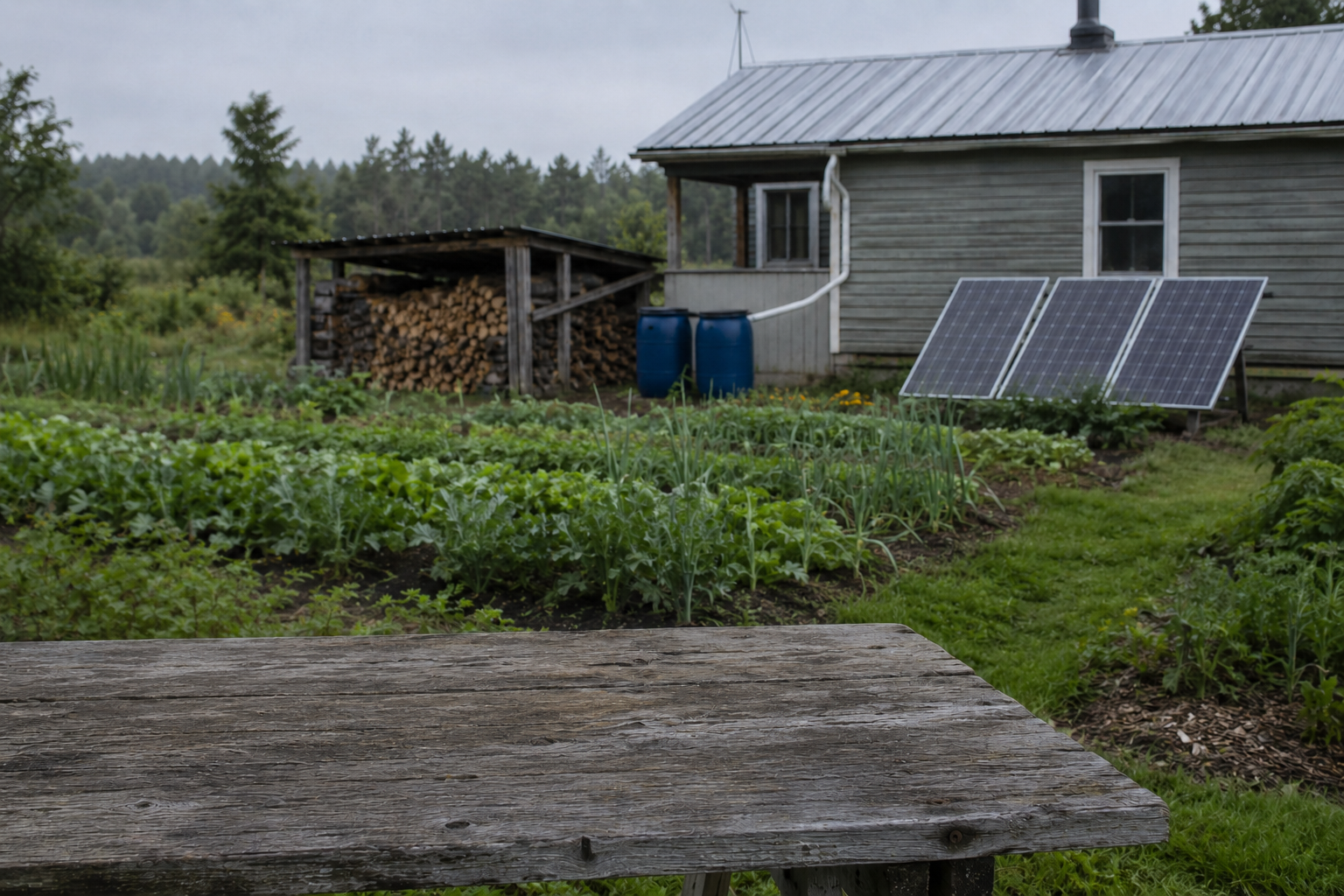
- Rainwater collected from a clean, maintained catchment surface
- A spring or other protected groundwater source
- Surface water used only with treatment appropriate to its risks
- Nonpotable water reserved for flushing, cleaning, or irrigation
Rainfall is not evenly distributed throughout the year, so a rain barrel alone is not a complete plan. Roof area, local rainfall, storage capacity, and dry periods all matter. Use the rainwater collection calculator to estimate potential roof runoff, then size storage around the longest dry period you reasonably expect.
Treat Questionable Water Correctly
Clear water is not automatically safe. Disease-causing organisms may be present even when water looks and smells normal. Chemical contamination is a separate problem and may not be corrected by boiling or an ordinary camping filter.
The Centers for Disease Control and Prevention advises bringing water to a full rolling boil for one minute when a boil-water advisory applies, or three minutes above 6,500 feet. Boiling kills germs, but it does not make water containing dangerous chemicals or toxins safe. Follow local instructions during a do-not-drink or do-not-use advisory.
Keep separate, clearly labeled containers for treated drinking water and untreated utility water. Use clean utensils when removing stored water, and prevent hands, cups, hoses, or dirty funnels from contaminating the supply.
Do Not Wait Until the Tanks Are Empty
Identify, test, and maintain your backup water source before an outage. A filter still requires replacement elements, a well pump still needs compatible power, and rainwater storage must already be installed when the rain arrives. Stored water should buy you time to transition—not become the entire six-month plan.
Build a Food Plan That Lasts Beyond the Stockpile
A six-month food supply can be stored, but a full year becomes expensive, bulky, and difficult to manage. The stronger approach is to combine shelf-stable food with gardening, preservation, and dependable local food sources. Stored food protects you while those slower systems begin producing.
Plan by Calories, Not Package Servings
Emergency-food labels may count a small drink, side dish, or low-calorie portion as one serving. Calculate the calories your household actually requires based on age, health, activity level, temperature, and body size. Physical labor and cold weather can increase food needs.
Your 30-day emergency food calculator can provide a starting estimate. Multiply the result cautiously for longer periods, then account for food waste, spoilage, extra household members, and the possibility that gardening produces less than expected.
Use Several Layers of Stored Food
- Ready-to-eat food: Useful when cooking fuel, water, or time is limited.
- Everyday pantry food: Canned meat, vegetables, fruit, soup, pasta, sauces, oats, and other familiar foods.
- Bulk staples: Rice, dry beans, flour, cornmeal, pasta, sugar, salt, and cooking oil.
- Long-term emergency food: Properly packaged dry goods and freeze-dried food held for later stages.
- Nutritional support: Sources of protein, fat, vitamins, minerals, and fiber rather than calories alone.
Cooking oil deserves special attention because it supplies concentrated calories but does not store indefinitely. Rotate fats through normal meals instead of buying a large quantity and forgetting about it. Store foods your household already eats and knows how to prepare.
Eat Food in the Right Order
Use refrigerator food first, followed by thawing freezer food. Cook or preserve anything that can still be handled safely. Next, use fresh produce and pantry items with shorter shelf lives while protecting long-lasting staples for later.
Do not risk illness to save questionable food. During a long emergency, vomiting or diarrhea can quickly create dehydration, and medical help may be limited. Food that has been kept at unsafe temperatures may be dangerous even when it looks and smells normal.
Start Producing Food Before You Need It
A first-time garden is unlikely to feed a family immediately. Weather, insects, poor soil, plant disease, wildlife, and inexperience can reduce the harvest. Begin growing food before an emergency so you already understand your soil, planting dates, irrigation needs, and storage conditions.
Prioritize high-calorie survival crops such as potatoes, sweet potatoes, dry beans, winter squash, dent corn, peanuts, and grain sorghum where climate and space allow. Vegetables such as greens and tomatoes add nutrients and variety but will not provide enough calories by themselves.
Chickens, rabbits, and other small livestock may provide food, but they also require water, feed, shelter, protection, and medical care. Do not assume animals can live entirely on scraps or free-ranging, especially during winter or drought.
Preserve the Harvest for the Next Season
Use methods appropriate to each food, including pressure canning, water-bath canning, dehydrating, fermenting, freezing while power remains dependable, and cool storage. Follow tested canning instructions rather than improvising processing times.
Your root cellar alternatives can help extend the life of potatoes, carrots, onions, winter squash, and other suitable crops without a traditional basement. Saving seeds from suitable open-pollinated plants can also reduce dependence on future purchases, but the seed must be mature, dry, labeled, and stored correctly. Review the complete guide to saving vegetable seeds for the next growing season.
Cook Safely and Conserve Fuel
Most shelf-stable food still requires heat and water. A long-term plan therefore needs more than one cooking method and enough fuel to use those methods safely. Propane, charcoal, gasoline, and seasoned firewood are finite resources, so daily cooking habits must change as the outage continues.
Build Several Cooking Options
- A propane camp stove or outdoor gas burner
- An outdoor grill used with the correct fuel
- A properly installed wood cookstove or heating stove
- A rocket stove used outdoors on a fire-resistant surface
- A solar cooker for suitable foods during clear weather
- Small electric appliances powered by a solar-and-battery system
No single option will work under every condition. Solar cooking depends on weather, wood may be scarce or wet, and propane eventually runs out. Redundancy allows you to match the cooking method to the meal, season, and fuel available.
Reduce the Fuel Used for Each Meal
Soak dry beans before cooking, keep lids on pots, cut ingredients into smaller pieces, and cook several portions at once. A pressure cooker can reduce cooking time when used correctly. Retained-heat cooking can finish some foods in an insulated container after they have been brought to the required temperature, but foods must still be handled safely and should not be left for long periods at temperatures where bacteria can grow.
Plan meals around the available fuel. Rice, pasta, oats, canned food, and pre-soaked beans generally require less cooking than baking bread or roasting large cuts of meat. Reserve no-cook foods for periods when weather or safety conditions prevent outdoor cooking.
Carbon Monoxide Can Kill Without Warning
Never operate a portable generator, charcoal grill, camp stove, or other fuel-burning equipment inside a home, basement, garage, shed, tent, or enclosed porch. The CDC advises keeping generators outdoors at least 20 feet from doors, windows, and vents. Maintain battery-powered carbon-monoxide alarms anywhere fuel-burning equipment is used near a home.
Use Backup Electricity for Essential Loads
Trying to power a home normally for an entire year would consume enormous amounts of fuel and require a much larger solar-and-battery system than most households own. Start by identifying the few loads that protect health, water, food, and communication.
Prioritize What Actually Needs Power
- Medical equipment and temperature-sensitive medication
- A well pump or other water equipment
- Refrigeration for essential food and medicine
- Radios, phones, and rechargeable batteries
- Efficient lighting
- Fans or limited heating-system controls during dangerous temperatures
- Tools needed for repairs and food production
Measure the running wattage, starting wattage, and daily operating time of each load. A refrigerator does not draw its rated power every minute, while a well pump may require a brief but substantial surge when starting. Use the power station runtime calculator to estimate how long a battery may operate selected equipment.
Treat a Generator as a Fuel-Dependent Tool
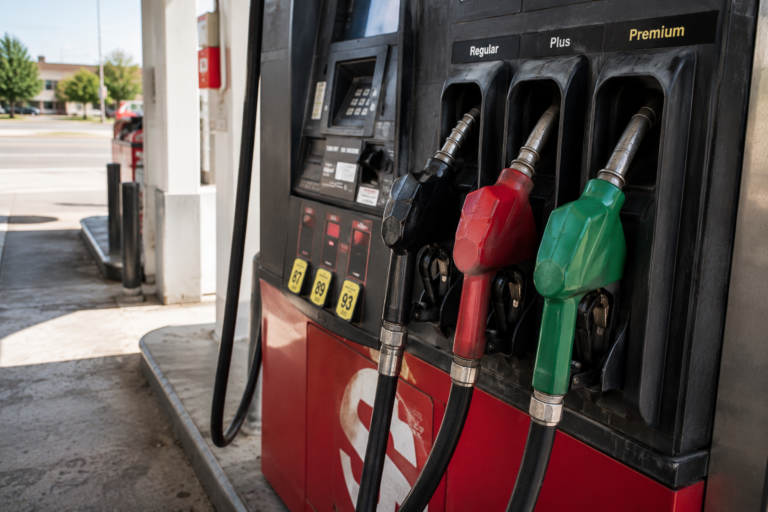
A generator can run high-demand equipment and recharge batteries, but it remains dependent on gasoline, propane, diesel, or natural gas. Fuel may become unavailable, degrade during storage, or be needed for transportation and machinery. Noise can also advertise that your household has fuel and working equipment.
Instead of running a generator continuously, operate it during planned periods to pump water, cool freezers, charge batteries, and complete high-demand tasks. The generator runtime and fuel calculator can help estimate consumption based on load and daily operating time. Store fuel only in approved containers and follow local storage limits, fire codes, and manufacturer instructions.
Solar Power Must Include Storage and Proper Controls
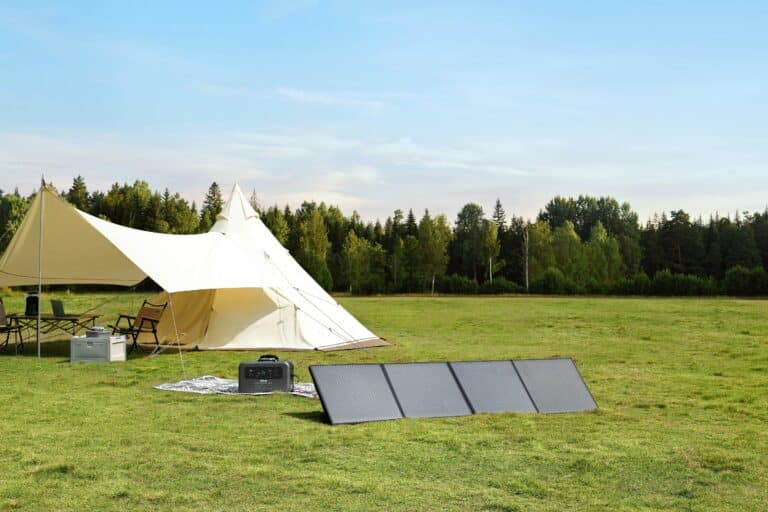
Solar panels can support a repeatable source of electricity, but panels alone do not provide dependable nighttime or bad-weather power. A functional system may also require batteries, a charge controller, an inverter, overcurrent protection, properly sized wiring, disconnects, and compatible connectors.
Size the system around critical loads rather than the home’s normal electric bill. Account for conversion losses, cloudy weather, shade, seasonal changes, battery limits, and the energy needed to recover after several poor solar days. Your solar panel charging calculator can provide a realistic starting estimate.
Create a Daily Power Schedule
Assign specific times for refrigeration, water pumping, communication checks, and battery charging. A schedule makes energy use measurable and prevents small convenience loads from quietly draining the system before an essential device needs it.
Keep the Home Livable Through Heat and Cold
The season may determine whether staying home remains possible. Extreme heat and cold can become life-threatening long before food supplies run out, especially for young children, older adults, and people with medical conditions.
Concentrate Heat During Winter
Close off unused rooms and concentrate normal activity in the smallest practical living area. Block drafts, close curtains at night, wear layered clothing, and use insulated sleeping bags or layered bedding. Do not seal the room so tightly that fuel-burning appliances lack required ventilation.
A properly installed wood stove can provide repeatable heat where firewood is available, but the stove, chimney, clearances, and carbon-monoxide alarms should be in place before the emergency. Portable heaters should be approved for their intended location and operated exactly as directed. Never use a gas oven, charcoal grill, or improvised open flame to heat the home.
Monitor indoor temperature and protect plumbing before pipes freeze. Your guide covering what to do when a furnace stops working in freezing weather provides immediate steps for protecting people, pipes, and the house.
Reduce Heat Gain During Summer
Shade sun-facing windows during the day, ventilate the home when outdoor air becomes cooler, and avoid cooking indoors. Move strenuous work to early morning or evening. Use battery-powered fans strategically rather than attempting to cool every room.
Hydration, airflow, shade, and rest matter more than comfort. Watch for heavy sweating, weakness, headache, nausea, dizziness, confusion, fainting, or worsening medical conditions. Move to a cooler location and seek medical help when heat illness is suspected.
Nighttime heat can prevent the body from recovering. Use the methods in your guide to sleeping without air conditioning during a power outage to reduce heat exposure overnight.
When the House Is No Longer Safe
If indoor temperatures cannot be kept within a safe range, relocation may be necessary even when the home still has food and water. Decide in advance where you could go, how you would get there, and what conditions would trigger the move.
Prevent Sanitation and Medical Problems
Once water and sewer services become unreliable, sanitation can deteriorate quickly. Human waste, dirty hands, spoiled food, insects, rodents, and contaminated water can spread illness at a time when clinics, pharmacies, and emergency services may be difficult to reach.
Set Up a Safe Toilet System Early
Do not continue flushing simply because water still comes from the faucet. The municipal sewer system, septic equipment, or lift stations may not be operating normally. Your guide explaining when toilets may stop working during a blackout covers the differences between gravity sewer systems, pumped systems, septic tanks, and private wells.
Depending on local conditions, a backup may include a lined bucket toilet, a portable camping toilet, or a properly located latrine where permitted. Keep human waste separated from drinking-water sources, gardens, food-storage areas, children, and animals. Follow local public-health instructions whenever they remain available.
Create a handwashing station with treated water, soap, a catch basin, and a clean drying method. Wash hands after using the toilet, handling waste, caring for someone who is sick, and before preparing food. Store trash securely and keep food scraps from attracting rodents and insects.
Prepare for Medical Needs Before the Outage
Maintain a household first-aid kit, written medication list, copies of prescriptions, spare eyeglasses, and supplies for existing medical conditions. Ask healthcare providers and insurers what lawful options exist for maintaining an emergency medication reserve. Do not change doses or substitute medicines without professional guidance.
Create a specific backup-power plan for CPAP machines, oxygen equipment, mobility devices, refrigerated medications, and other electrically dependent equipment. Record each device’s wattage, battery requirements, and safe operating instructions.
Minor injuries require careful attention when medical care is limited. Clean wounds with safe water, keep them protected, and watch for spreading redness, swelling, drainage, fever, increasing pain, confusion, or other signs that professional care is needed. Dehydration, diarrheal illness, heat injury, hypothermia, carbon-monoxide exposure, and uncontrolled chronic conditions can become emergencies quickly.
Know the Limits of Home Treatment
Emergency supplies and first-aid training do not replace a doctor, pharmacist, or emergency department. Identify nearby clinics, hospitals, pharmacies, shelters, and medically capable neighbors before a crisis, and maintain more than one route for reaching care.
Maintain Communication, Security, and Community Support
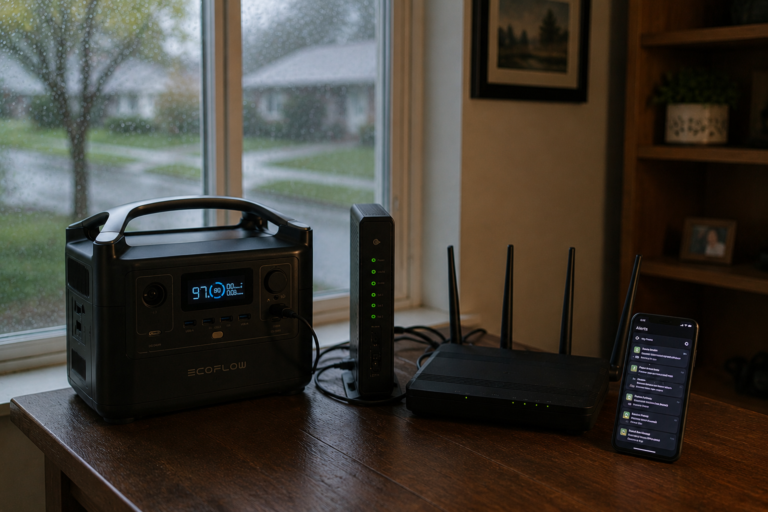
Reliable information helps you decide whether to remain home, seek supplies, avoid a hazardous area, or evacuate. Cell service and internet access may continue briefly, operate intermittently, or fail as backup batteries and generator fuel are exhausted.
Use More Than One Communication Method
- A battery-powered or hand-crank radio for official broadcasts
- A NOAA Weather Radio for warnings and forecasts
- Two-way radios for short-range household or neighborhood contact
- Amateur radio equipment operated under applicable licensing rules
- Written contact information, meeting locations, and check-in times
Monitor news at scheduled times instead of leaving equipment running continuously. Record useful information on paper, including road closures, water advisories, shelter locations, medical services, and distribution points. Your communication failure timeline explains how different systems may be affected as an outage continues.
Treat rumors cautiously. Before traveling or changing plans, compare information from official broadcasts, direct observation, and more than one trustworthy source whenever possible.
Make the Property Less Vulnerable
Keep doors, windows, gates, vehicles, fuel, tools, and outbuildings secured. Repair broken fencing and exterior lighting while materials remain available. Avoid displaying food, fuel, generators, or other scarce supplies where they can be seen from the road.
Security should focus on awareness, deterrence, communication, and avoiding confrontation. Establish household rules for answering the door, admitting visitors, lending equipment, and responding to fire or medical emergencies. Any firearm must be stored and handled in accordance with the law and kept inaccessible to unauthorized users and children.
Work With People You Already Know
A trustworthy local network can share information, skills, labor, tools, transportation, and emergency assistance. One neighbor may understand small engines, another may have medical training, and another may have dependable water or livestock experience.
Set boundaries before resources become scarce. Decide which equipment may be shared, how fuel or food will be replaced, and who is responsible for maintenance. Cooperation works best when expectations are clear and contributions are fair.
Conserve Transportation and Cash
Avoid unnecessary driving. Fuel may be unavailable even when gas remains underground because most retail pumps and payment systems require electricity. Keep vehicles maintained, preserve fuel for evacuation and critical trips, and have nonmotorized options such as bicycles, handcarts, or wagons where practical.
Keep some cash in small denominations because card networks and ATMs may be unavailable. Barter may develop locally, but useful skills, repair work, food production, and trusted relationships are more dependable than buying piles of items solely because they might become trade goods.
Know When to Stay and When to Leave
Staying home usually provides access to familiar shelter, stored supplies, tools, neighbors, and local knowledge. However, remaining in place is not automatically the safest choice. Conditions should be reevaluated throughout the outage rather than waiting until every resource is exhausted.
Remaining Home May Be Reasonable When:
- You have a dependable source of safe water.
- The home can be kept within a safe temperature range.
- Sanitation and waste can be managed without contaminating the property.
- Food supplies or local food production remain adequate.
- Medical needs can still be managed.
- The surrounding area is stable and you have trustworthy local support.
Leaving May Become Necessary When:
- Safe water is unavailable or the local supply is chemically contaminated.
- Fire, flooding, structural damage, hazardous materials, or violence threatens the property.
- Extreme heat or cold makes the home unsafe.
- A household member requires medical treatment that cannot be provided locally.
- Authorities issue a credible evacuation order.
- You have a confirmed safer destination and a passable route to reach it.
Do not evacuate without a destination simply because conditions are difficult. Roads may be blocked, fuel may be scarce, and shelters may be full. Plan primary and alternate destinations, routes, meeting points, and transportation before an outage. Keep essential documents, medications, water, food, clothing, communication equipment, and maps ready to move.
Set Your Leaving Triggers in Advance
Write down the conditions that would force your household to relocate, such as loss of safe water, an indoor temperature below or above a chosen safety limit, an evacuation order, or an unmet medical need. Preselected triggers reduce the chance of waiting until travel becomes more dangerous.
Six-Month to One-Year Power Outage Checklist
Prepare the Systems Before You Need Them
- Water: Stored drinking water, food-grade containers, renewable source, filters, treatment supplies, and a safe transport method
- Food: Calorie-based pantry plan, bulk staples, ready-to-eat meals, garden seeds, hand tools, animal feed, and tested preservation equipment
- Cooking: At least two safe cooking methods, appropriate fuel, cookware, fire extinguishers, and carbon-monoxide alarms
- Power: Generator or solar-and-battery system sized for essential loads, approved fuel storage, spare cables, fuses, filters, oil, and charging equipment
- Shelter: Seasonal clothing, bedding, window coverings, ventilation supplies, weatherproofing materials, and a safe backup heating or cooling plan
- Sanitation: Backup toilet, liners, soap, disinfecting supplies, gloves, trash containers, hygiene products, and a waste-disposal plan
- Medical: First-aid supplies, medication list, allowable prescription reserve, spare glasses, medical-device power plan, and basic first-aid training
- Communication: Battery or hand-crank radio, NOAA Weather Radio, two-way radios, printed contacts, paper maps, and scheduled check-in times
- Repairs: Hand tools, fasteners, tape, cordage, lubricants, sharpening tools, spare parts, and printed equipment manuals
- Evacuation: Primary and alternate destinations, multiple routes, vehicle maintenance, cash, documents, medications, and ready-to-carry supplies
Do not attempt to buy everything at once. Begin with water, sanitation, food, and temperature safety, then add backup power, repair supplies, and longer-term production systems. Test every major piece of equipment under normal conditions and replace supplies as they expire or are used.
Frequently Asked Questions
Can a generator power a house for six months to one year?
A generator could operate selected household equipment for an extended period if fuel, maintenance supplies, and replacement parts remained available. Running an entire home continuously would consume too much fuel for most households. A more realistic plan uses a generator periodically for high-demand tasks and a solar-and-battery system for smaller essential loads.
How much water should be stored for a long-term power outage?
Store at least one gallon per person per day for the initial emergency period, with additional water for hot weather, illness, pets, and sanitation. Storing enough water for an entire year is impractical for most homes. The long-term plan must include a renewable source that can be collected, transported, treated, and stored safely.
Can a garden feed a family during a year-long outage?
A well-established garden can provide valuable food, but most household gardens do not produce enough calories or fat to feed a family by themselves. Combine gardening with stored staples, high-calorie crops, food preservation, and other dependable local food sources. Begin gardening before an emergency so the first harvest is not your first attempt.
Is solar power enough for a one-year outage?
Solar power can support essential loads when the panels, batteries, inverter, wiring, and controls are properly sized. Output changes with weather, shade, location, and season. Most small portable systems cannot power normal whole-house consumption, so refrigeration, water pumping, medical equipment, lighting, and communication should receive priority.
Would it be safer to evacuate immediately?
Not necessarily. Leaving without a safe destination, reliable route, fuel, and current information may create greater risk. Evacuate when the property becomes unsafe, essential medical care is unavailable, safe water cannot be obtained, authorities issue a credible order, or you have confirmed that another location offers better conditions.
Continue Reading
- Emergency Preparedness Plan 2026: Build a Complete Survival System
- How to Make Your Homestead Blackout-Ready
- What Stops Working First in a Long-Term Blackout?
- Winter Blackout Survival Guide
- Free Preparedness Calculators for Food, Water, Power, and Fuel
Final Thoughts
Surviving a six-month to one-year power outage is not about storing enough products to continue living normally. It requires reducing consumption, protecting essential resources, and replacing short-term supplies with dependable systems for water, food, sanitation, shelter, and limited electricity.
Start with the failures that could threaten life first: unsafe water, extreme temperatures, sanitation problems, medical needs, and carbon monoxide. Then strengthen food production, repair capability, communication, and relationships with trustworthy people nearby.
No household can eliminate every risk, but each working system gives you more time and more options. Prepare in stages, test your equipment before an emergency, and decide in advance what conditions would make staying home more dangerous than leaving.