Best Perennial Food Plants for a Self-Sufficient Backyard
A productive backyard does not have to be replanted from scratch every spring. The best perennial food plants return year after year, allowing you to grow fruits, vegetables, herbs, and even nuts with less annual planting. Once established, many of these plants can provide dependable harvests for years or even decades.
This post contains affiliate links. I may earn a small commission at no extra cost to you. Learn more.
Perennial plants are especially valuable when building a more self-sufficient food system. Fruit trees can provide bushels of food, berry bushes can produce fresh fruit for eating and preserving, and crops such as asparagus and walking onions can return each season with relatively little work. These plants will not replace an annual vegetable garden, but they can reduce your dependence on it.
The best choices depend on your available space, climate, soil, sunlight, and willingness to wait for plants to mature. Some perennial foods begin producing within a year, while fruit and nut trees may take several years to provide a meaningful harvest. Planning carefully now can eventually give your family a backyard food supply that becomes more productive over time.
Quick Answer
The best perennial food plants for a self-sufficient backyard include apple and pear trees, blueberries, blackberries, raspberries, strawberries, grapes, asparagus, rhubarb, Jerusalem artichokes, walking onions, sorrel, chives, thyme, oregano, sage, elderberries, and suitable nut trees. The strongest backyard system combines several types of plants so food becomes available at different times of the year.
Key Takeaways
- Perennial food plants return for multiple growing seasons without being replanted every year.
- Fruit trees and nut trees require patience but can produce food for decades.
- Berries, asparagus, strawberries, herbs, and walking onions generally provide faster results.
- The best backyard plan combines trees, shrubs, vines, vegetables, and herbs.
- Always choose varieties suited to your USDA growing zone and local conditions.
What Is a Perennial Food Plant?
A perennial food plant is an edible plant that survives for more than two growing seasons. Instead of completing its life cycle in a single year, it remains alive through winter or regrows from established roots when warm weather returns. Depending on the plant and climate, it may produce edible fruit, leaves, shoots, roots, seeds, or nuts for many years.
Fruit trees, berry bushes, grapevines, asparagus, rhubarb, and many culinary herbs are familiar examples. Some remain visible throughout the year, while others die back to the ground after frost and reappear in spring. Asparagus may look completely dead during winter, but an established crown can produce new edible spears for 15 years or longer.
Perennial does not mean maintenance-free. These plants still need suitable soil, adequate sunlight, water, nutrients, pruning, and protection from pests. Young trees and shrubs often require several years of attention before producing a dependable harvest. However, once their root systems become established, many perennial foods need less yearly work than crops that must be started from seed, transplanted, and replanted every season.
Perennials Are Different From Self-Seeding Annuals
Some annual plants, including lettuce, tomatoes, dill, and certain greens, may drop seeds and return the following year. These are still annuals because the original plant dies after one season. The next crop grows from its seeds rather than from the same living root system.
Biennial plants complete their life cycle over two growing seasons. True perennials continue living and producing beyond that point, making them a long-term part of a self-sufficient backyard rather than a crop that must be replaced regularly.
Why Perennials Belong in a Self-Sufficient Backyard
Annual vegetables remain important because they provide familiar staples such as tomatoes, beans, squash, corn, and potatoes. However, depending entirely on annual crops means preparing beds, buying or saving seeds, starting plants, and replanting nearly everything each year. A self-sufficient backyard becomes more dependable when perennial foods share that workload.
Established perennial plants usually develop deeper and more extensive root systems than annual vegetables. Those roots can help plants reach moisture and nutrients below the surface, making some perennials better able to handle short dry periods. Permanent roots also reduce how often the soil must be disturbed, helping limit erosion and preserve soil structure.
Perennials can spread harvests throughout the growing season. Asparagus and chives may emerge early in spring, strawberries and raspberries follow as temperatures rise, and apples, pears, grapes, and nuts can provide food later in the year. This staggered production prevents the entire backyard food supply from depending on one short harvest window.
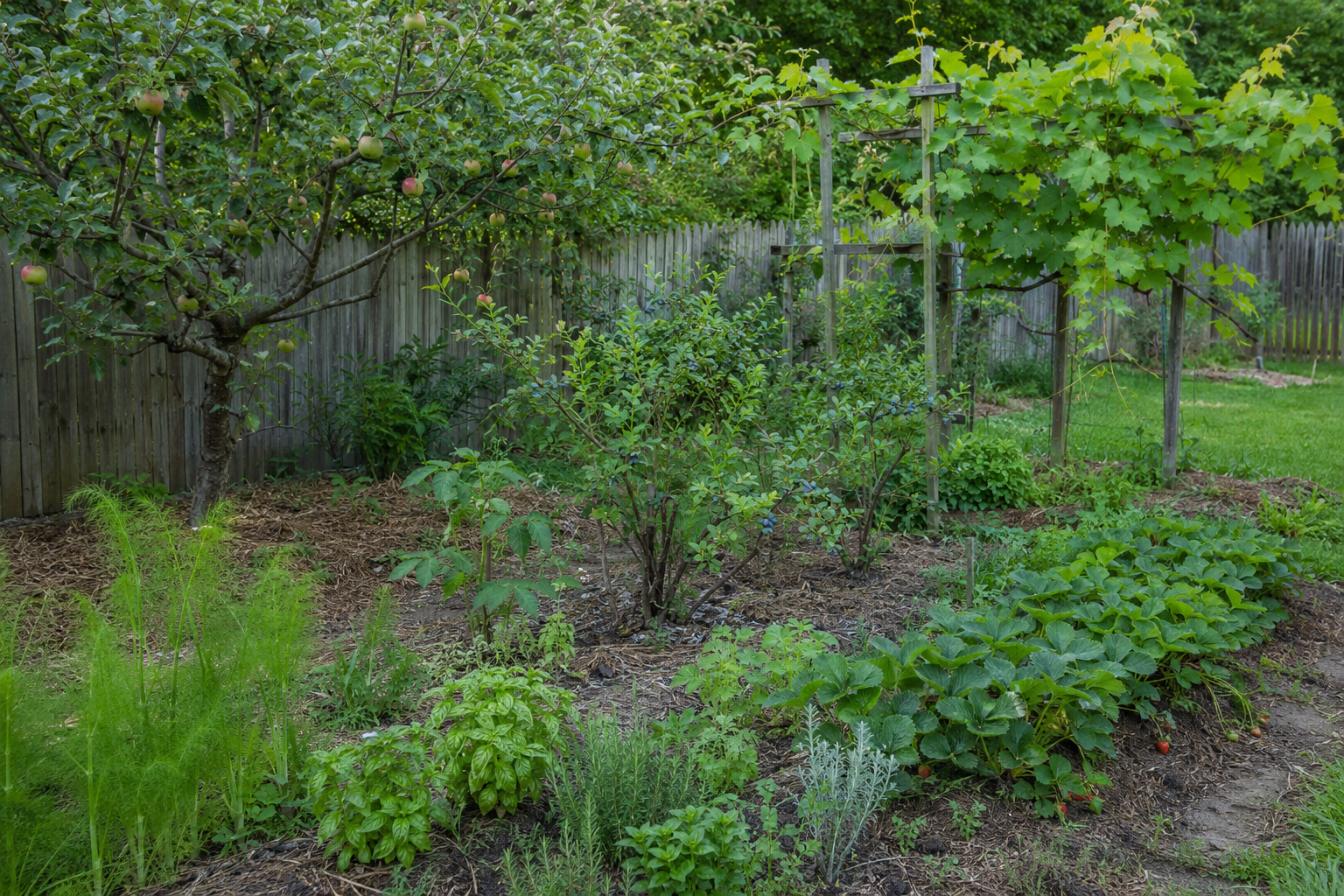
They also make better use of vertical space. Fruit trees form an upper canopy, berry bushes occupy the middle layer, and strawberries, herbs, or other low-growing plants can cover the ground below. Grapes and hardy kiwi can produce vertically on trellises without taking over the main vegetable garden.
The greatest advantage is long-term production. A properly placed fruit tree may feed a family for decades, while asparagus beds, berry patches, and culinary herbs can continue producing with routine care. If you are already learning how to build a self-sufficient garden for a family of four, adding perennial crops creates a more resilient foundation around the annual garden.
Perennials will not eliminate gardening work or guarantee a harvest. Late freezes, drought, insects, disease, and wildlife can still cause losses. Their value comes from diversification: when one crop struggles, several other established food plants may continue producing.
Choosing Plants for Your Climate and Growing Zone
A plant can be perennial somewhere without being perennial everywhere. Winter temperatures, summer heat, rainfall, humidity, soil drainage, and the length of the growing season all affect whether a food plant survives and produces reliably. Before buying anything, check its recommended USDA hardiness zones and confirm that the specific variety is suitable for your area.
Hardiness zones are based mainly on average annual minimum winter temperatures. They help determine whether roots, crowns, vines, shrubs, and trees can survive winter, but they do not tell the entire story. A plant may tolerate your winter temperatures but struggle with extreme summer heat, high humidity, poor drainage, or late spring freezes.
Match the Variety, Not Just the Plant
Different varieties of the same fruit can have very different growing requirements. Apple, pear, blueberry, grape, and nut varieties are not automatically interchangeable. Some fruit trees need more winter chill hours than warmer regions normally receive, while others bloom too early and frequently lose flowers to late freezes.
Pollination requirements also matter. Some plants are self-fertile and can produce with one variety, but many apple, pear, blueberry, and nut varieties produce better—or only produce—when a compatible second variety grows nearby. Buying a single tree without checking pollination requirements can leave you with a healthy plant that produces little or no food.
Strong Choices for Zone 7a
In Zone 7a, practical perennial choices generally include apples, pears, peaches, plums, grapes, blueberries, blackberries, raspberries, strawberries, elderberries, asparagus, Jerusalem artichokes, walking onions, chives, thyme, oregano, and sage. Pecans, Chinese chestnuts, and certain hazelnuts may also work when given enough space and suitable soil.
Choose for Local Conditions
Use the growing zone as a starting point, then consider drainage, sunlight, summer heat, disease pressure, and local variety performance. Plants sold at a nearby nursery are not automatically well suited to your property, so always check the variety label before buying.
Perennial Food Plant Comparison
The best plants for your backyard depend on how quickly you need food, how much room you have, and how long you are willing to wait. The estimates below are general planning ranges. Variety, plant age at purchase, climate, soil, pollination, and care can all affect production.
| Plant | Food Type | First Useful Harvest | Typical Productive Life |
|---|---|---|---|
| Apple tree | Fruit | 2–5 years | 20–50+ years |
| Blueberry | Berry | 2–3 years | 20–30+ years |
| Blackberry | Berry | 1–2 years | 10–15 years |
| Grape | Vine fruit | 2–3 years | 30–50+ years |
| Strawberry | Berry | First or second year | 3–5 years per planting |
| Asparagus | Vegetable | 2–3 years | 15–20+ years |
| Rhubarb | Edible stalk | 1–2 years | 10+ years |
| Walking onion | Vegetable | First year | Indefinite with care |
| Jerusalem artichoke | Tuber | First year | Returns annually |
| Culinary herbs | Leaves and stems | First year | 3–10+ years |
| Pecan tree | Nut | 4–10+ years | 50–100+ years |
For faster results, begin with herbs, strawberries, walking onions, Jerusalem artichokes, and established berry plants. Add fruit and nut trees for long-term production.
Best Perennial Fruits and Berries
Fruits and berries are among the most valuable perennial foods because they can be eaten fresh, frozen, dehydrated, canned, or turned into sauces, jams, and juice. The best backyard choices provide dependable harvests without consuming more space than your family can manage.
Apple and Pear Trees
Apple and pear trees are strong long-term choices because properly stored fruit can remain usable well beyond harvest season. Their fruit can also be canned, dried, baked, pressed into juice, or made into sauce.
Dwarf and semi-dwarf trees are usually easier to fit into a backyard than full-sized trees. They begin producing sooner and are easier to prune, spray, protect, and harvest. Full-sized trees may live longer and produce larger harvests, but they require considerably more room.
Check each variety’s chill-hour requirements, disease resistance, and pollination needs before planting. Many apples and pears need a compatible second variety nearby. In humid areas, selecting disease-resistant varieties can reduce problems with fire blight, rust, scab, and other common diseases.
Blueberries
Blueberry bushes provide highly nutritious fruit without taking up much space. Mature bushes can remain productive for decades when planted in the correct conditions. The berries freeze well and can also be dehydrated or turned into jam.
Blueberries require acidic soil, generally around a pH of 4.5 to 5.5. They may grow poorly even in otherwise fertile garden soil if the pH is too high. Test the soil before planting and create a separate acidic bed when necessary. Planting more than one compatible variety can improve pollination, berry size, and overall production.
Blackberries and Raspberries
Blackberries and raspberries can begin producing sooner than most fruit trees. Their spreading growth makes them useful along fences or at the edge of a garden, although they need regular pruning and control. Thornless varieties make harvesting and maintenance easier around children and frequently used walkways.
Individual canes normally live for only two years, but the root system produces replacement canes. Learn which canes your variety fruits on before pruning because removing the wrong growth can eliminate the following harvest. A simple trellis keeps canes upright, improves airflow, and makes picking easier.
Grapes
Grapevines can produce large harvests from a relatively narrow planting area because most of their growth is trained vertically. Once established, a healthy vine may remain productive for decades. Grapes can be eaten fresh or preserved as juice, jelly, raisins, and other shelf-stable foods.
Grapes need full sun, well-drained soil, sturdy support, and yearly pruning. They should not be planted beside a weak decorative trellis because mature vines become heavy. Choose a variety suited to your climate and intended use, since table, juice, wine, and muscadine-type grapes have different growing requirements.
Strawberries
Strawberries are a practical choice for small backyards, raised beds, borders, and containers. They produce faster than trees and shrubs while spreading through runners that can be rooted to replace older plants.
June-bearing varieties usually provide one concentrated harvest that works well for preserving. Everbearing and day-neutral types produce smaller harvests over a longer period. Strawberry beds require renovation and replacement as production declines, so they are not as permanent as fruit trees or berry bushes.
Elderberries
Elderberries are vigorous shrubs that can provide flowers and dark berries while also supporting pollinators and wildlife. The berries are commonly cooked for syrup, jelly, juice, and other preserved foods. Two compatible varieties are generally recommended for dependable fruit production.
Give elderberries room to spread because they can produce suckers and form a thicket. Only properly identified, fully ripe berries should be harvested. Elderberries should generally be cooked before consumption, and the leaves, stems, roots, and unripe berries should not be eaten.
A balanced backyard does not need every fruit on this list. Choose a few dependable varieties your family will actually eat, then provide enough space to prune, harvest, and preserve what they produce.
Best Perennial Vegetables
Perennial vegetables are less common than perennial fruits, but several dependable choices can fill gaps in the annual garden. Many appear early in spring or continue growing when common vegetables are not yet ready to harvest.
Asparagus
Asparagus is one of the best long-term vegetables for a self-sufficient garden. A properly prepared bed can produce spring spears for 15 to 20 years or longer. It requires patience because newly planted crowns need time to establish before they can support a full harvest.
Plant asparagus in a permanent, sunny location with well-drained soil. Avoid harvesting during the first year and take only a limited harvest during the second. After the harvest period ends, allow the remaining spears to grow into tall ferns. This growth replenishes the crowns for the following year.
Rhubarb
Rhubarb produces thick, tart stalks commonly used in pies, sauces, jams, and preserves. Established crowns can return for many years in climates with cold winters and moderate summers.
Rhubarb may struggle in hot, humid regions, including parts of Zone 7. Give it afternoon shade, well-drained soil, mulch, and consistent moisture. Never eat the leaves because they contain compounds that can be toxic. Only the stalks are used for food.
Jerusalem Artichokes
Jerusalem artichokes, also called sunchokes, are tall sunflower relatives grown for their edible underground tubers. They can produce heavily in ordinary soil and return from any tubers left in the ground. The tubers can be roasted, boiled, added to soups, or eaten raw in small amounts.
This plant spreads aggressively and can become difficult to remove. Grow it in an isolated bed where expansion will not interfere with other crops. Sunchokes contain inulin, which can cause digestive discomfort when eaten in large quantities, especially by someone who is not accustomed to them.
Egyptian Walking Onions
Egyptian walking onions produce edible green tops, underground bulbs, and clusters of small bulblets at the tops of their stalks. As the stalks bend, the bulblets touch the ground and root, allowing the planting to move gradually across the bed.
They are cold-hardy, dependable, and useful when regular storage onions are unavailable. Their strong flavor works well in cooked meals, soups, and sauces. Harvest selectively and leave enough bulbs and bulblets in place to maintain the patch.
Sorrel
Sorrel is a leafy perennial with a sharp, lemon-like flavor. Its young leaves can be added to salads, soups, sauces, and egg dishes. It emerges early in spring, making it useful before most annual greens are producing.
Remove flower stalks to encourage continued leaf growth and prevent unwanted seedlings. Sorrel contains oxalic acid, so it should be eaten in moderation, particularly by people who have been advised to limit high-oxalate foods.
Globe Artichokes
Globe artichokes produce edible flower buds and make an attractive addition to a food landscape. However, they are most dependable as perennials in climates with mild winters. In Zone 7a, winter protection may be required, and severe cold can kill the crowns.
Gardeners in colder areas sometimes grow artichokes as annuals or overwinter protected crowns. Because they occupy considerable space and are less reliable than asparagus or walking onions, they should be treated as an optional crop rather than a foundation of the backyard food supply.
For the most dependable production, begin with asparagus, walking onions, and a controlled patch of Jerusalem artichokes. Add the other vegetables only when your climate and available space suit their needs.
Best Perennial Herbs for a Self-Sufficient Backyard
Perennial herbs provide flavor, attract pollinators, and make preserved foods more useful without taking up much garden space. Most can be harvested throughout the growing season and dried or frozen for winter use. Their strong scents may also discourage some pests, although no herb should be expected to protect an entire garden by itself.
Chives
Chives are cold-hardy, compact, and among the first herbs to return in spring. Both the leaves and flowers are edible and have a mild onion flavor. Mature clumps can be divided every few years to create additional plants. Garlic chives provide a similar harvest with a stronger garlic flavor.
Thyme
Thyme is a low-growing herb that performs best in full sun and well-drained soil. Once established, it tolerates dry conditions better than many garden plants. The leaves can be used fresh or dried for soups, meat, vegetables, beans, and sauces. Avoid placing thyme where heavy or constantly wet soil may rot its roots.
Oregano
Oregano is a vigorous perennial that produces strongly flavored leaves throughout summer. It can spread beyond its original planting area, but regular harvesting helps control its growth. Cut stems before or as flowering begins for the best culinary quality, then hang or spread them out to dry.
Sage
Culinary sage forms a small woody shrub with leaves that work well in poultry, sausage, beans, bread, and preserved foods. It needs full sun, good airflow, and excellent drainage. Plants may become woody and less productive after several years, but cuttings or divided plants can replace them.
Rosemary
Rosemary is an evergreen herb in mild climates, but winter survival varies by variety and location. In Zone 7a, cold temperatures, wet winter soil, and sudden freezes can damage or kill unprotected plants. A sheltered location near a south-facing wall may improve survival. Rosemary can also be grown in a container and moved into a protected area during severe weather.
Mint
Mint grows rapidly and can supply leaves for tea, desserts, sauces, and flavored water. Its biggest strength is also its primary drawback: underground runners allow it to spread aggressively through garden beds. Plant mint in a large container or a separate area where its growth can be controlled.
Start with the herbs your family already uses in everyday cooking. A smaller collection that is regularly harvested, dried, and stored contributes more to self-sufficiency than a large herb garden that goes unused.
Perennial Nuts and Protein-Producing Plants
Most backyard fruits and vegetables provide vitamins, minerals, and carbohydrates but relatively little fat or protein. Nut trees can help fill that gap by producing calorie-dense food that stores longer than fresh produce. Their disadvantages are the amount of space they require and the years they may take to reach meaningful production.
Pecan Trees
Pecans are well suited to many areas of the South, including portions of Zone 7. A mature tree can produce a substantial harvest, but it also becomes extremely large. Pecans are best planted where their eventual canopy will not shade the main vegetable garden, damage structures, or interfere with power lines.
Most pecans produce better with a compatible pollinating variety. Disease resistance is especially important in humid climates where pecan scab can reduce production. Grafted trees usually begin producing sooner and provide more predictable nut quality than trees grown from seed.
Chinese Chestnuts
Chinese chestnuts produce starchy nuts that can be roasted, ground into flour, or incorporated into meals. Compared with most nuts, chestnuts are higher in carbohydrates and lower in fat. The trees need well-drained soil, full sun, and sufficient room to develop.
At least two compatible trees are generally needed for pollination. Choose blight-resistant stock from a reputable nursery rather than planting an unidentified chestnut.
Hazelnuts
Hazelnuts grow as large shrubs or small multi-stemmed trees, making them easier to fit into some backyards. The nuts are rich in calories, fat, and protein and can be eaten roasted, added to baked foods, or stored after proper drying.
Production usually requires two genetically different but compatible varieties. Select varieties with resistance to Eastern filbert blight and proven performance in your region.
Black Walnuts
Black walnut trees produce nutritious nuts and are native across much of the eastern United States. However, the nuts are difficult to crack, the trees become large, and their roots and fallen material release juglone, which can harm certain nearby plants.
Nut trees are a long-term investment rather than a quick food source. Plant them along the outer edge of the property where their mature size and shade will not compete with smaller food crops.
Best Perennial Food Plants for Small Backyards
A small backyard can still produce a meaningful amount of perennial food, but every plant must earn its space. Focus on compact plants, vertical growers, and foods your family regularly eats. Avoid filling limited ground with large trees or aggressive plants that are difficult to control.
Dwarf and semi-dwarf fruit trees provide apples, pears, peaches, or plums without creating the massive canopy of a full-sized tree. The mature size depends on the rootstock, not simply the variety named on the label. Confirm the expected height and width before planting because the word “dwarf” does not guarantee that a tree will remain small enough for every yard.
Grapes are another efficient choice because their vines can be trained along a sturdy fence, arbor, or trellis. Blackberries and raspberries can also be grown in narrow rows when their canes are tied to supports and pruned regularly.
Strawberries fit along garden borders, beneath suitable shrubs, in raised beds, or in containers. Blueberries can provide both food and attractive landscaping, but they need acidic soil and enough room for mature growth. Compact elderberry varieties may work in medium-sized yards, although standard plants can spread too widely for tight spaces.
Perennial herbs offer some of the highest value per square foot. Chives, thyme, oregano, sage, and rosemary can grow near a kitchen door, along pathways, or at the front of a sunny bed. Asparagus also works in a narrow permanent row if its tall summer ferns will not shade shorter crops.
Avoid pecans, black walnuts, standard fruit trees, uncontrolled Jerusalem artichokes, and uncontained mint where space is limited. A small yard planted with one compact fruit tree, two berry bushes, a grapevine, strawberries, asparagus, and several herbs can provide a wider range of food than one oversized tree occupying the same area.
How to Design a Perennial Food Garden
A perennial food garden should be planned around the mature size of each plant rather than how small it looks at the nursery. Trees, shrubs, and vines are difficult to relocate after their roots become established, so careful placement prevents years of crowding, shade, and maintenance problems.
Start With Sunlight and Drainage
Most fruiting plants need at least six to eight hours of direct sunlight for dependable production. Observe the yard during different parts of the day and remember that nearby trees cast longer shadows during spring and fall. Avoid low areas that remain wet after heavy rain unless the selected plant tolerates those conditions.
Place the Largest Plants First
Position fruit and nut trees where their mature canopies will not shade the main vegetable beds. In the Northern Hemisphere, placing taller plants toward the northern side of the growing area generally reduces the amount of shade they cast over shorter crops.
After placing the trees, add berry shrubs, trellised vines, vegetables, herbs, and ground-level plants. Keep enough open space around each plant for airflow, pruning, harvesting, and future growth.
Plan for Pollination
Before planting, determine whether each fruit or nut variety is self-fertile or requires a compatible pollinator. Two trees that bloom at different times may not pollinate one another even when they are the same type of fruit. Place compatible plants close enough for bees and other pollinators to move between them.
Keep Harvesting Practical
Do not place thorny berry canes across a commonly used walkway or plant spreading crops beside delicate vegetables. Leave paths wide enough to carry baskets, mulch, compost, ladders, and pruning equipment. Position frequently harvested herbs and berries closer to the house so they are easy to use.
Provide Water Without Creating Dependence
Newly planted perennials need consistent watering while their root systems become established. Drip irrigation or soaker hoses deliver water directly to the root zone and reduce evaporation. Mulch helps retain moisture and suppress weeds, but it should be kept several inches away from tree trunks and woody stems.
Combine Perennials With Annual Crops
Use permanent beds for asparagus, berries, herbs, and other long-lived plants while keeping separate areas available for annual vegetables. This prevents yearly tilling and bed preparation from damaging perennial roots.
The finished design should provide food across multiple seasons without becoming too crowded to maintain. It is better to begin with a manageable group of well-placed plants and expand gradually than to create an overgrown planting that cannot be properly pruned, watered, or harvested.
How Long Until a Perennial Food Garden Produces Enough to Matter?
A perennial garden develops in stages. A plant may produce a handful of fruit during its first season without supplying enough food for preserving or storage. The more useful question is when the entire planting begins contributing meaningful harvests.
| Growing Period | What to Expect | Likely Harvests |
|---|---|---|
| First year | Root establishment is the priority. Harvest lightly from young plants. | Herbs, walking onions, strawberries, sorrel, and Jerusalem artichokes |
| Years 2–3 | Beds begin filling in, and several plants provide usable seasonal harvests. | Asparagus, grapes, blackberries, raspberries, blueberries, and dwarf fruit trees |
| Years 4–5 | Established plants provide larger harvests suitable for preserving. | Apples, pears, mature berry patches, grapes, and full asparagus harvests |
| Year 6 and beyond | Trees and shrubs approach mature production with proper care. | Larger fruit harvests and the beginning of production from some nut trees |
These stages are estimates rather than guarantees. A larger nursery tree may produce earlier, while drought, poor pollination, transplant stress, or unsuitable soil can delay production. Removing excessive fruit from a young tree can sometimes improve long-term growth by allowing it to direct energy toward roots and branches.
Plant fast-producing herbs, berries, and vegetables alongside slower trees. This provides early harvests while the long-term food system matures.
Recommended Tools for a Perennial Food Garden
Useful Garden Gear
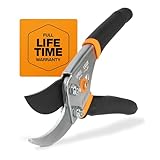
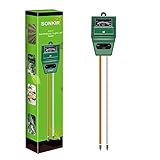
A dependable pair of pruning shears, a soil pH testing kit, and a sturdy trellis system will cover many of the basic maintenance needs of fruit trees, berry bushes, grapes, and perennial herbs.


Perennial Food Garden Checklist
- Choose plants suited to your USDA growing zone.
- Test the soil before planting blueberries or fruit trees.
- Confirm mature size and pollination requirements.
- Place trees where they will not shade vegetable beds.
- Provide trellises before vines and berry canes become established.
- Combine fast-producing plants with long-term fruit and nut trees.
Further Reading
Final Thoughts
The best perennial food plants are the ones suited to your property, climate, available space, and eating habits. Begin with dependable crops such as berries, asparagus, walking onions, strawberries, grapes, and culinary herbs. Add fruit and nut trees where there is enough room for their mature growth.
A perennial food garden will not become productive overnight. However, careful planting now can create a backyard food system that grows stronger and more useful with every passing season.