How Long Does Food Last Without Power? Refrigerator & Freezer Safety
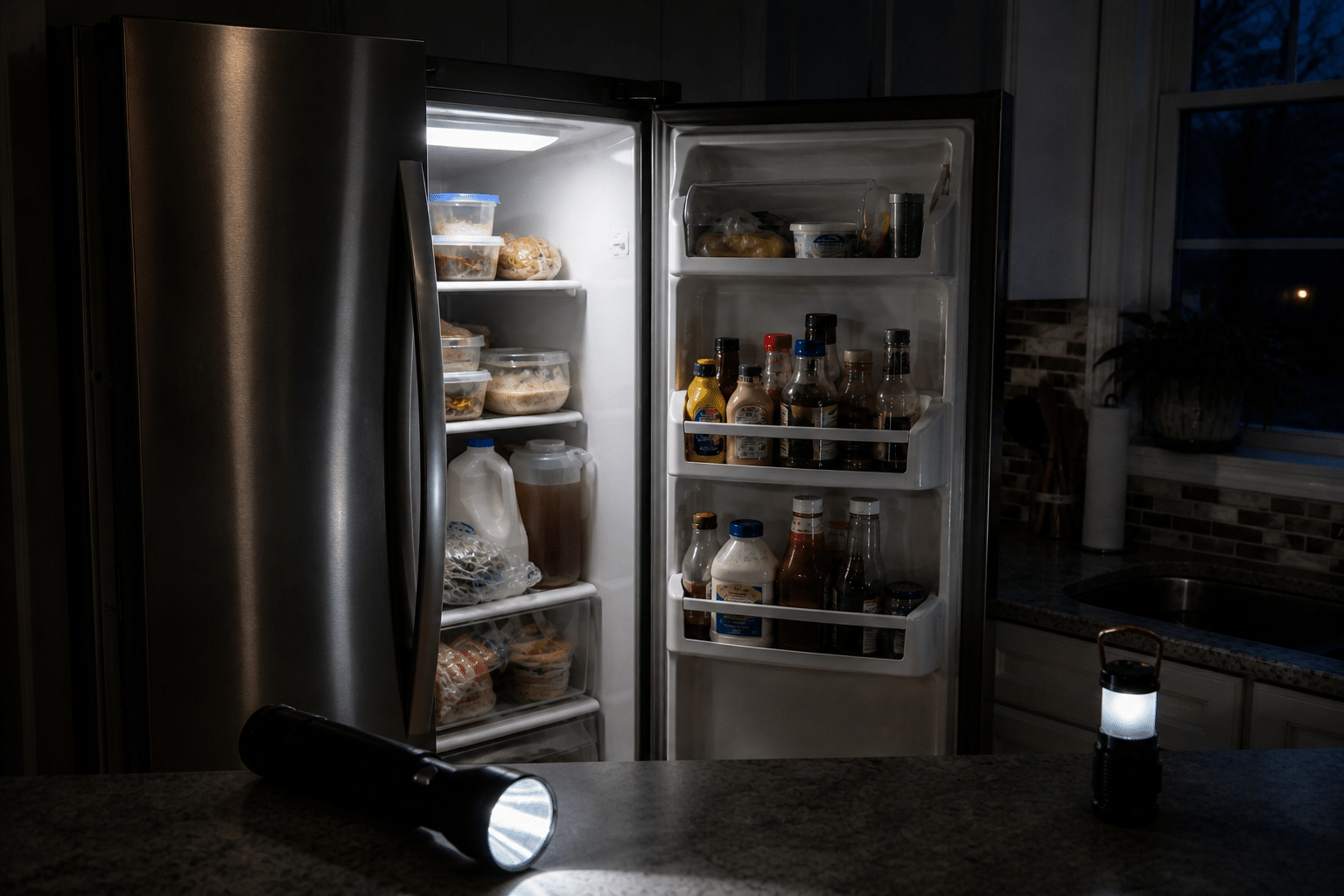
How long does food last without power? During a blackout, an unopened refrigerator generally keeps food safely cold for about four hours. A full freezer can maintain safe temperatures for approximately 48 hours, while a half-full freezer typically lasts around 24 hours if the door stays closed.
This post contains affiliate links. I may earn a small commission at no extra cost to you. Learn more.
Those are the general food-safety guidelines from the U.S. Department of Agriculture (USDA), but the actual condition of your food depends on temperature, how long it has been warm, and whether you have an alternative source of refrigeration.
A power outage lasting just a few hours can create difficult decisions. Should you throw away the milk? Is frozen meat still safe? Can you refreeze food that has partially thawed? What happens if the electricity remains off for several days?
Knowing the answers can help prevent foodborne illness, reduce unnecessary waste, and protect your household’s emergency food supply.
This guide explains how long refrigerated and frozen foods can last without electricity, which foods should be discarded, how to preserve cold storage, and what to eat when your refrigerator and freezer are no longer reliable.
Quick Answer: How Long Does Food Last Without Power?
- Refrigerator: About 4 hours if the door remains closed.
- Full freezer: Approximately 48 hours if unopened.
- Half-full freezer: Approximately 24 hours if unopened.
- Refrigerated perishables: Discard after 4 hours without power or another cold source unless reliable temperature information establishes that they remained safe.
- Food above 40°F: Discard perishable food held above 40°F for more than 2 hours.
- Partially frozen food: May generally be refrozen if ice crystals remain or the food is 40°F or below, provided it has not otherwise been mishandled.
Important: Never taste food to determine whether it is safe. Harmful bacteria may be present even when food looks and smells normal.
How Long Does Food Last Without Power? Quick Reference Chart
The following chart summarizes the main planning guidelines for common household cold-storage situations.
| Storage Situation | General Time | What to Do |
|---|---|---|
| Unopened refrigerator | About 4 hours | Keep closed and arrange alternative cooling if the outage will continue. |
| Full, unopened freezer | About 48 hours | Keep the door closed and monitor the outage duration. |
| Half-full, unopened freezer | About 24 hours | Consider backup cooling before food begins thawing. |
| Perishable food above 40°F | More than 2 hours | Discard affected perishable foods. |
| Frozen food with ice crystals | Evaluate individually | Generally safe to cook or refreeze if otherwise handled safely. |
| Shelf-stable pantry food | Depends on product and storage | Follow packaging instructions and inspect for damage or contamination. |
These estimates assume properly functioning appliances that were already at safe temperatures before the power failed. Hot surroundings, poor insulation, frequent door openings, and partially cooled food can shorten the available time.
For broader emergency planning, see our Two-Week Power Outage Preparedness Guide.
What Happens to Refrigerated Food When the Power Goes Out?
A refrigerator depends on electricity to remove heat from its interior. Once the compressor stops, the appliance gradually begins absorbing heat from the surrounding room.
Food does not become unsafe the instant electricity fails. A properly cooled refrigerator retains cold temperatures for a limited period, particularly when its doors remain closed.
However, without additional cooling, the refrigerator will eventually become too warm to store perishable foods safely.
The First 0–2 Hours
During the first couple of hours, a refrigerator that was properly chilled before the outage may still maintain a safe temperature.
The best action is usually to leave the door closed. Repeatedly opening it to inspect food allows warm room air inside and can shorten the time food remains cold.
Record when the outage began, check your utility’s restoration information, and identify whether you have ice, a cooler, or backup power available.
Hours 2–4: Prepare for Alternative Cooling
As the outage continues, refrigerator temperatures may rise. The exact rate depends on the appliance, its contents, room temperature, and how frequently the door has been opened.
If electricity is unlikely to return soon, prepare an insulated cooler with ice or frozen gel packs.
Prioritize high-risk foods such as meat, poultry, seafood, milk, eggs, and cooked leftovers. Any alternative cooling arrangement must maintain these foods at 40°F or below.
Do not wait until food has already warmed into an unsafe temperature range before arranging cold storage.
After 4 Hours: Evaluate Perishable Foods
According to federal food-safety guidance, refrigerated perishable foods should generally be discarded after four hours without electricity or another cold source.
There is an important exception when reliable temperature records establish that the food remained at safe temperatures. For example, an adequately iced cooler or continuously powered refrigerator may preserve food beyond the normal outage window.
When evaluating individual items, use an accurate thermometer and the official food-by-food guidance rather than relying on how cold a package feels.
If perishable food has been above 40°F for more than two hours, discard it. In conditions above 90°F, the general food-safety limit for perishables exposed to those temperatures is one hour.
After 12–24 Hours
During an extended outage without alternative cooling, ordinary refrigerated perishable foods should no longer be treated as safe.
Some foods normally kept in a refrigerator, including whole fruits, certain condiments, hard cheeses, and butter, may still be usable. Their safety depends on the specific product and whether it has been contaminated.
At this point, your priority should be protecting any remaining safe frozen food and switching to a planned supply of shelf-stable meals.
Which Refrigerated Foods Should You Throw Away After a Power Outage?
Not every food in a refrigerator requires the same treatment. Meat and dairy products generally pose different risks from unopened condiments or whole produce.
The following table is based on federal guidance for refrigerated foods exposed to temperatures above 40°F for more than two hours.
| Food Category | Examples | Recommendation |
|---|---|---|
| Raw and cooked meat | Beef, pork, poultry, ground meat, leftovers | Discard |
| Fish and seafood | Fresh fish, shrimp, shellfish, cooked seafood | Discard |
| Milk and soft dairy | Milk, cream, yogurt, cottage cheese, ricotta | Discard |
| Eggs and prepared egg dishes | Refrigerated eggs, quiche, egg salad | Discard |
| Cooked starches | Cooked rice, pasta, potatoes | Discard |
| Prepared meals | Pizza, casseroles, soups, stews | Discard |
| Cut produce | Cut fruit, cut vegetables, packaged pre-cut greens | Discard |
| Hard cheeses | Cheddar, Parmesan, Swiss | Generally keep if uncontaminated |
| Butter and margarine | Ordinary butter and margarine | Generally keep if uncontaminated |
| Whole produce | Whole apples, oranges, carrots, peppers | Generally keep if sound and uncontaminated |
| High-acid condiments | Mustard, ketchup, pickles, many jams | Generally keep according to product guidance |
Use the FoodSafety.gov power outage charts for additional food categories and exceptions.
Why Meat and Poultry Are High Risk
Raw and cooked meats require controlled refrigeration because disease-causing microorganisms can multiply when temperatures rise.
Ground meat requires particular care because grinding distributes microorganisms throughout the product. Poultry and seafood also require strict temperature control.
Cooking meat after it has been improperly stored is not a dependable way to restore its safety. Some hazards associated with temperature abuse may remain even after reheating.
Milk, Eggs, and Soft Cheeses
Milk, cream, yogurt, refrigerated eggs, and soft cheeses should be treated as perishable foods.
Do not assume milk is safe because it has not developed a sour smell. Similarly, a carton of eggs may appear completely normal even after unsafe storage.
Hard cheeses are different from many soft cheeses because their composition and moisture content provide greater stability. However, not every cheese labeled firm or semi-hard belongs in the same category.
Cooked Rice, Pasta, and Leftovers
Cooked rice, pasta, potatoes, casseroles, and leftovers should not be treated like dry pantry staples.
Once cooked, these foods generally require prompt refrigeration. Extended warm storage can permit bacterial growth and, in some circumstances, toxin production.
If their safe temperature history is unknown after a prolonged outage, discard them.
Condiments and Foods That May Be Saved
Mustard, ketchup, pickles, jams, whole produce, butter, and some hard cheeses are generally more tolerant of a temporary loss of refrigeration.
However, exceptions matter. Cream-based dressings, opened sauces requiring refrigeration, and products contaminated by raw meat juices may need to be discarded.
Opened mayonnaise and certain similar condiments have specific temperature limits in USDA guidance. Do not assume all condiments are interchangeable.
How Long Does a Freezer Last Without Power?
A freezer typically provides more protection than a refrigerator because frozen food starts at a much lower temperature and contains substantial thermal mass.
As long as the freezer remains closed, frozen food can absorb heat for many hours before it fully thaws.
However, freezer performance depends on how full the appliance is, its insulation, the surrounding temperature, and whether it is a standalone freezer or a compartment inside a refrigerator.
Full Freezer: Approximately 48 Hours
A completely stocked, unopened freezer can generally maintain safe temperatures for approximately two days.
The large quantity of frozen food helps slow warming. Packages grouped together retain cold better than individual items separated by empty space.
This is a planning estimate, not a guarantee that every food item will remain completely frozen for exactly 48 hours.
Half-Full Freezer: Approximately 24 Hours
A half-full freezer generally has about one day of cold-storage protection if the door remains closed.
With less frozen mass inside, the freezer may warm more quickly.
Before an outage, fill unused freezer space with sealed containers of water that have room for expansion, frozen gel packs, or additional frozen foods.
Nearly Empty Freezers and Refrigerator Freezer Compartments
A nearly empty freezer may lose safe temperatures sooner than a half-full unit.
Freezer compartments built into refrigerators can also perform differently from standalone chest or upright freezers.
There is no dependable universal timeline for these situations. Use appliance thermometers and prepare alternative cooling rather than assuming the standard 24-hour estimate applies.
Chest Freezer Versus Upright Freezer
Chest freezers can be useful for emergency preparedness because their design often helps retain cold air when the lid is opened.
Upright freezers offer easier access and organization but may lose cold air more readily when the door opens.
Neither design eliminates the need for a thermometer or a backup plan. Actual insulation, appliance condition, food load, and room temperature remain important.
Can You Refreeze Food After a Power Outage?
Yes. Some food can be safely refrozen after a power outage, even if it has partially thawed.
The USDA advises that frozen food may generally be refrozen if it still contains ice crystals or is at 40°F or below, provided it has not otherwise been exposed to unsafe conditions.
Evaluate each package separately. Food near the freezer door may thaw sooner than food deep inside the appliance.
The Refreezing Rule
If frozen food still contains ice crystals or is measured at 40°F or below, it may generally be cooked or refrozen.
If perishable food has been above 40°F for more than two hours, discard it.
When the food’s temperature history is uncertain and there is no reliable evidence it remained safe, do not take unnecessary risks.
Frozen Meat and Poultry
Raw meat and poultry that still contain ice crystals can generally be refrozen.
If they have completely thawed but remain at a verified temperature of 40°F or below, refreezing may also be acceptable.
However, refreezing may reduce texture and quality. Meat that has been held above safe temperatures for too long must be discarded.
Frozen Vegetables and Prepared Meals
Frozen vegetables, soups, and prepared meals can often be refrozen if they still contain ice crystals or remain at safe refrigerator temperatures.
Do not assume that a frozen meal is safe merely because its packaging is intact.
Prepared meals containing meat, dairy, or cooked grains require the same careful evaluation as other perishable foods.
Ice Cream and Frozen Desserts
Ice cream and some frozen desserts are especially sensitive to thawing.
Federal guidance generally recommends discarding soft or melted ice cream rather than refreezing it. Even when other frozen foods remain salvageable, ice cream may be unsuitable for keeping.
What If Food Still Feels Cold?
Touch is not a reliable substitute for measuring temperature.
Food at an unsafe temperature may still feel cool to your hand. When ice crystals are absent, use a clean food thermometer to evaluate individual packages whenever possible.
Never taste questionable food to test whether it is safe.
What Happens During the First 72 Hours of a Blackout?
Understanding the typical progression of a power outage helps you make decisions before cold storage becomes unreliable.
The timeline below assumes no backup electricity or supplemental cooling. It describes recommended actions, not a guarantee of exact food temperatures.
| Time | Food Storage Concern | Recommended Action |
|---|---|---|
| 0–2 hours | Appliances stop actively cooling. | Record the outage time and keep doors closed. |
| 2–4 hours | Refrigerated food approaches the standard outage limit. | Arrange ice, coolers, or safe backup refrigeration. |
| 4–12 hours | Refrigerated perishables may no longer be safe without another cold source. | Evaluate and discard unsafe foods; protect the freezer. |
| 12–24 hours | A half-full freezer approaches its general temperature-holding limit. | Prepare alternative freezer storage and use pantry meals. |
| 24–48 hours | Full freezers may approach their general limit. | Assess food temperatures and safe transfer options. |
| 48–72 hours | Unpowered cold storage is increasingly unreliable. | Rely on safe shelf-stable foods and restore refrigeration when possible. |
If your outage is part of a larger disaster, our First 72 Hours After a Disaster guide covers additional household priorities.
How to Tell Whether Food Is Still Safe to Eat
Foodborne illness is a serious concern during emergencies, particularly when medical services, clean water, or transportation may also be disrupted.
The safest decisions rely on documented temperatures, elapsed time, and the type of food involved.
Use a Refrigerator and Freezer Thermometer
Keep an appliance thermometer inside both the refrigerator and freezer before an emergency occurs.
Under normal operating conditions:
- Refrigerators should maintain 40°F or below.
- Freezers should maintain 0°F or below.
A thermometer provides useful evidence about appliance temperature, but a single reading does not always establish how long food has been warm. A minimum/maximum or temperature-logging device may provide additional information.
Check Food Temperatures Individually
After a prolonged outage, food in different parts of a freezer may have different temperatures.
Use an accurate food thermometer when assessing thawed items. Do not assume that a cold freezer wall means every package is safe.
Never Rely on Smell Alone
Harmful microorganisms do not always produce visible spoilage or an unpleasant odor.
Food may appear normal while containing enough harmful bacteria to cause illness.
Likewise, reheating or cooking food that has been improperly stored is not a universal solution. Discard food that has exceeded recommended time and temperature limits.
Be Especially Careful With Vulnerable Household Members
Young children, older adults, pregnant people, and individuals with weakened immune systems can face greater risks from foodborne illness.
For these households, reliable food storage and a sufficient supply of safe, shelf-stable meals are especially important.
How to Make Refrigerator and Freezer Food Last Longer Without Power
Although an outage stops normal cooling, several practical measures can help preserve safe temperatures.
1. Keep Appliance Doors Closed
Opening refrigerator and freezer doors unnecessarily allows warm air to enter.
Decide what you need before opening a door. Avoid repeated inspections, and use a temperature monitor when available.
2. Prepare Frozen Water Containers Before an Outage
Frozen water bottles, gel packs, and blocks of ice add cold mass to your freezer.
They can also be moved into a cooler when you need to protect refrigerated food.
Use suitable containers with room for water to expand as it freezes.
3. Group Frozen Food Together
Keeping frozen packages close together helps them retain cold.
However, do not repeatedly open and rearrange the freezer during an outage. Organize it ahead of time whenever possible.
Keep raw meat packaged securely so thawing juices cannot contaminate other food.
4. Use a Cooler With Ice
A well-insulated cooler can extend safe storage when electricity is unavailable.
Use sufficient ice or frozen gel packs to keep perishable foods at 40°F or below. Place a thermometer inside the cooler to verify its temperature.
As ice melts, replace it as necessary. A cooler is only effective while it maintains a safe temperature.
5. Consider Block Ice or Dry Ice
Block ice can last longer than small ice cubes and may help protect food during an extended interruption.
Dry ice is another option, but it requires additional precautions. It is extremely cold and releases carbon dioxide gas.
Never handle dry ice with bare hands, store it in an airtight container, or use it in a poorly ventilated space. Follow supplier instructions for safe handling and transportation.
6. Move Food to Working Refrigeration
If a nearby household, business, or emergency facility has reliable electricity and agrees to help, transferring still-safe food to working refrigeration may prevent unnecessary loss.
Use insulated containers and ice during transport, and minimize the time perishable food spends outside controlled temperatures.
7. Use Backup Electricity When Available
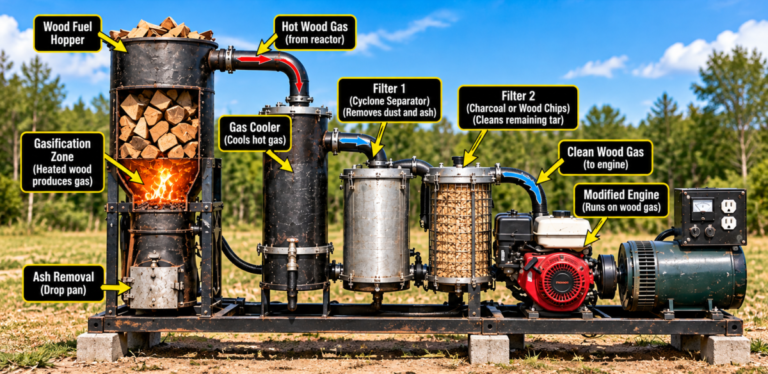
A properly sized generator or portable power station can keep refrigerators and freezers operating during an outage.
However, runtime depends on appliance consumption, compressor startup requirements, battery capacity, and how frequently the compressor operates.
Do not assume that a power station capable of running a refrigerator for a few minutes can sustain it for an entire day.
Use our Emergency Power Planner to estimate backup electricity requirements, and see What Size Solar Generator Do I Need for a Blackout? for equipment-sizing considerations.
Generator Safety
Never operate a gasoline, propane, or diesel generator inside a home, garage, basement, or other enclosed or partially enclosed space. Keep generators outdoors, at least 20 feet from doors, windows, and vents, with exhaust directed away from buildings. Use carbon monoxide alarms and follow the manufacturer’s instructions.
Do not connect a generator directly to household wiring without approved transfer equipment installed by a qualified professional.
Emergency Gear That Helps Protect Food During a Blackout
Useful emergency food-safety equipment should serve a specific purpose: monitoring temperature, preserving cold storage, or providing reliable backup power.
Refrigerator and Freezer Thermometers
Appliance thermometers are among the most practical and affordable tools for blackout preparedness.
They help you confirm normal operating temperatures and assess the condition of cold storage after an outage.


Additional Temperature Monitoring Equipment
A temperature monitor with an appropriate display or logging function can provide useful information about changing conditions.
Choose a device suitable for refrigerator or freezer temperatures, and understand whether it continues recording during a household power outage.

Backup Power for Refrigerators and Freezers
Portable power stations may support refrigeration during shorter outages when their output, capacity, and surge capability match the appliance.
Check the refrigerator’s electrical requirements and estimate actual energy consumption before choosing a backup system.

Recommended Gear: Browse our Emergency Power & Lighting Gear List for additional blackout-preparedness equipment.
What Foods Last the Longest Without Refrigeration?
When an outage extends beyond the safe cold-storage window, shelf-stable food becomes increasingly important.
A properly planned pantry allows your household to continue eating without depending on electricity, refrigeration, or complicated meal preparation.
Canned Foods
Commercially canned foods are among the most useful emergency staples because many are shelf-stable until opened.
Good options include:
- Canned chicken, tuna, and other meats
- Canned beans and lentils
- Canned vegetables
- Canned fruit
- Ready-to-eat soups and stews
Choose foods your household normally eats, rotate supplies, and store cans in a cool, dry location.
Do not use cans that are leaking, bulging, badly damaged, or otherwise show signs of unsafe packaging.
Once opened, perishable canned foods generally require refrigeration unless consumed promptly.
Dry Pantry Staples
Rice, pasta, oats, dry beans, and similar staples can provide substantial calories over extended periods when stored correctly.
However, many require cooking water, fuel, and preparation time.
If a blackout also interrupts municipal water service, a pantry built entirely around dry staples may become difficult to use.
Pair dry ingredients with ready-to-eat meals and an independent water supply.
Our Long-Term Water Storage Guide explains how to prepare for water interruptions.
Ready-to-Eat Foods
Some of the most practical emergency foods require little or no preparation.
- Peanut butter and other shelf-stable nut butters
- Crackers and shelf-stable bread products
- Protein and energy bars
- Trail mix and nuts
- Dried fruit
- Ready-to-eat canned meals
- Shelf-stable milk in unopened packaging
These foods are useful when cooking fuel is limited or when your household needs a meal immediately.
Freeze-Dried and Dehydrated Emergency Foods
Freeze-dried meals and dehydrated foods can provide compact, long-lasting emergency supplies when packaged and stored according to the manufacturer’s instructions.
However, many require potable water for rehydration. Some also require heating.
Compare serving sizes, calories, protein, sodium content, preparation requirements, and storage conditions rather than relying on advertised shelf life alone.

For more options, read Survival Foods With a Long Shelf Life.
How to Build a Three-Day Emergency Food Supply Without Refrigeration
A practical emergency food supply should provide enough usable meals for everyone in the household without requiring the refrigerator or freezer.
Start by planning three days of breakfasts, lunches, dinners, and snacks. Then expand toward a longer reserve.
Choose Foods That Require Minimal Preparation
For the first several days, prioritize foods that can be eaten directly from the package or prepared with minimal cooking.
Examples include oatmeal made with safe water, canned beans, canned meats, peanut butter, crackers, dried fruit, and ready-to-eat meals.
Account for allergies, dietary restrictions, infant feeding needs, and other household requirements.
Plan for Safe Drinking and Cooking Water
Food preparedness depends on water preparedness.
If your emergency menu requires boiling rice, cooking pasta, or rehydrating meals, include that additional water in your storage calculations.
Use our Water Storage Calculator to estimate household requirements.
Keep a Manual Can Opener
An electric can opener may be useless during a blackout.
Keep at least one dependable manual can opener with your emergency food supplies.
Store Foods Where They Will Remain Safe
Choose a cool, dry location away from direct sunlight, excessive heat, chemicals, and flood-prone areas.
Follow package storage instructions and rotate products before they deteriorate.
Build Toward a Two-Week Supply
A three-day food reserve is a useful starting point, but extended power outages can last longer.
A two-week supply gives your household additional flexibility when stores are closed, roads are blocked, or deliveries are delayed.
Include enough variety to support reasonable nutrition rather than relying exclusively on snack foods.
How to Cook During a Power Outage Without Electricity
Even with shelf-stable food, your household may need a way to prepare meals safely.
Use Ready-to-Eat Meals First When Cooking Is Difficult
During severe weather or a widespread blackout, the simplest meal may be the safest option.
Canned foods that are labeled fully cooked or ready to eat can often be consumed without heating, provided the packaging is intact and the food is handled safely.
Use Outdoor Cooking Equipment Safely
Outdoor grills and appropriately designed camping stoves can be useful when conditions permit.
Never operate charcoal grills, camp stoves, or fuel-burning cooking equipment inside a house, garage, tent, or enclosed porch.
Carbon monoxide can accumulate without noticeable warning signs.
Keep Food Preparation Clean
Use safe water for washing hands, cleaning food-contact surfaces, and preparing meals.
If running water is unavailable, use your stored water supply and follow public-health guidance for sanitation.
Keep raw meat separate from ready-to-eat foods and use a food thermometer to verify safe cooking temperatures.
Do Not Attempt to Preserve Unsafe Food by Cooking It
Cooking should never be used as an excuse to keep perishable food that has exceeded safe time and temperature limits.
Some bacteria can produce toxins under improper storage conditions, and reheating may not eliminate every hazard.
When food is unsafe, discard it and use your emergency pantry instead.
What to Do When Electricity Comes Back On
Restored power does not automatically mean every food item is safe.
Before returning to normal routines, evaluate the refrigerator, freezer, and any food that may have warmed during the outage.
Check Refrigerator and Freezer Temperatures
Read your appliance thermometers and determine how long the power was unavailable.
If your refrigerator was without power for more than four hours and had no alternative cold source, discard affected perishable foods unless reliable temperature evidence establishes they remained safe.
For frozen foods, check for remaining ice crystals or measure the temperature of individual items.
Separate Safe Foods From Questionable Foods
Use the official food-safety charts to decide which items can be kept.
Do not allow leaking meat packages to contaminate produce, shelves, or other food.
Dispose of questionable food promptly and securely, especially if animals could access discarded items.
Clean Appliances if Food Has Spoiled
If spoiled food leaked or produced odors, remove affected contents and clean the refrigerator or freezer according to manufacturer and food-safety guidance.
Wash removable components, clean interior surfaces, and use appropriate sanitizing procedures when needed.
Allow appliances to return to normal operating temperatures before restocking them with perishable food.
Replace Emergency Supplies
After the outage, replace used ice packs, refill frozen water containers, restock pantry foods, and inspect your thermometers.
Record what worked and what failed. If your freezer warmed sooner than expected, consider improving your monitoring or backup-power arrangements.
Emergency Food Safety Checklist for Power Outages
Before a Power Outage
- Keep the refrigerator at 40°F or below.
- Keep the freezer at 0°F or below.
- Install appliance thermometers.
- Freeze water containers or gel packs.
- Keep an insulated cooler available.
- Store at least three days of shelf-stable meals.
- Work toward a two-week emergency food supply.
- Plan safe cooking methods and sufficient drinking water.
- Check backup-power compatibility with essential appliances.
During a Power Outage
- Record when electricity stopped.
- Keep refrigerator and freezer doors closed.
- Monitor utility restoration information.
- Prepare ice or alternative refrigeration before food warms.
- Keep perishable foods at 40°F or below.
- Do not taste questionable food.
- Switch to shelf-stable meals when needed.
- Operate fuel-powered generators and cooking equipment outdoors only.
After Power Returns
- Check appliance and food temperatures.
- Discard refrigerated perishables that exceeded safe limits.
- Evaluate frozen food for ice crystals or safe temperatures.
- Discard food contaminated by leaking raw meat.
- Clean appliances if necessary.
- Replace used emergency food and cooling supplies.
Frequently Asked Questions About Food During Power Outages
How long will milk last in the refrigerator without power?
An unopened refrigerator generally maintains safe food temperatures for about four hours without power. If the outage exceeds four hours without another cold source, milk should generally be discarded unless reliable temperature evidence establishes that it remained safe. Discard milk held above 40°F for more than two hours.
How long will eggs last without refrigeration during a blackout?
Refrigerated eggs are perishable. Follow the same four-hour unopened-refrigerator guidance and discard them if they have been above 40°F for more than two hours. Do not judge egg safety by appearance or smell.
How long does frozen meat last without electricity?
A full, unopened freezer can generally maintain safe temperatures for approximately 48 hours, while a half-full freezer typically lasts around 24 hours. Frozen meat may be refrozen if it still contains ice crystals or remains at 40°F or below and has not otherwise been mishandled.
Is food safe after a six-hour power outage?
It depends on the food and its temperature history. Refrigerated perishable foods generally should be discarded after more than four hours without power or another cold source. Freezer contents may still be safe, particularly if the freezer remained closed. Evaluate individual items using temperature measurements and official guidance.
Can I refreeze chicken that thawed during a blackout?
Chicken that still contains ice crystals or remains at 40°F or below may generally be refrozen if it was otherwise handled safely. Discard it if it was held above 40°F for more than two hours.
Does a full freezer stay cold longer than an empty freezer?
Yes. A full freezer contains more frozen mass and generally retains cold longer. Federal guidance estimates approximately 48 hours for a full unopened freezer compared with 24 hours for a half-full freezer.
Can I put refrigerated food outside during a winter blackout?
Placing food outdoors is not a dependable food-safety method. Sunlight, changing temperatures, animals, and contamination can make outdoor storage unsafe. A better approach is to freeze water outdoors when conditions permit and use the ice inside a refrigerator or insulated cooler.
Can I use dry ice to keep my freezer cold?
Dry ice may help preserve frozen food, but it requires careful handling and ventilation. Follow supplier instructions, avoid direct skin contact, and never place dry ice in an airtight container or poorly ventilated area.
Should I cook all the meat in my refrigerator when the power goes out?
Cooking meat while it is still safely refrigerated may be reasonable if you can eat it promptly or maintain safe storage afterward. However, cooking does not make improperly stored meat reliably safe, and cooked leftovers also require refrigeration. Do not cook large quantities without a plan for safely consuming or storing them.
What is the best emergency food when you have no electricity?
Ready-to-eat canned meals, canned meats, beans, peanut butter, crackers, nuts, dried fruit, and other shelf-stable foods are useful choices. The best emergency pantry includes sufficient calories, safe drinking water, appropriate nutrition, and foods that meet your household’s dietary needs.
Can a portable power station run a refrigerator overnight?
Some portable power stations can run certain refrigerators overnight, but runtime depends on usable battery capacity, appliance energy consumption, compressor startup requirements, and operating conditions. Measure your refrigerator’s consumption and size the power station accordingly.
When should I throw away food after a blackout?
Discard refrigerated perishable foods after more than four hours without power or another cold source unless reliable temperature evidence establishes they remained safe. Discard perishable foods held above 40°F for more than two hours. Frozen foods should be evaluated separately using ice crystals, temperature measurements, and official food-safety guidance.
Final Thoughts
Understanding how long food lasts without power can make the difference between protecting your household’s food supply and taking unnecessary health risks during a blackout.
The most important planning numbers are straightforward: approximately four hours for an unopened refrigerator, 48 hours for a full unopened freezer, and 24 hours for a half-full unopened freezer.
However, these estimates should never replace actual temperature information. Food safety depends on the type of food, its temperature history, and whether proper cooling was maintained.
Start with appliance thermometers, keep doors closed during outages, and arrange ice or backup refrigeration before food becomes too warm. Build a shelf-stable pantry so your household can continue eating safely even when cold storage is unavailable.
For a broader preparedness plan, see our Two-Week Power Outage Preparedness Guide and download the Free 72-Hour Survival Checklist.
Further Reading
- Two-Week Power Outage Preparedness Guide — Planning food, water, power, and essential household supplies.
- First 72 Hours After a Disaster — Understanding immediate emergency priorities.
- What Size Solar Generator Do I Need for a Blackout? — Choosing backup electricity for essential appliances.
- Emergency Power Planner — Estimating appliance electricity requirements.
- Survival Foods With a Long Shelf Life — Building a dependable emergency pantry.
- Long-Term Water Storage for Emergencies — Preparing safe water supplies for extended disruptions.
- Best Foods to Pack for Hot-Weather Camping — Choosing foods when refrigeration is limited.
Safety References and Additional Resources
- USDA Food Safety and Inspection Service: Keeping Food Safe During an Emergency — Refrigerator and freezer timelines, food temperature limits, and refreezing guidance.
- USDA Food Safety and Inspection Service: Keep Your Food Safe During Emergencies — Practical preparation and food handling recommendations.
- FoodSafety.gov: Food Safety During a Power Outage — Detailed charts identifying foods to keep or discard.
- U.S. Food and Drug Administration: Food and Water Safety During Power Outages and Floods — Emergency preparation, refrigeration, and food-safety information.
- Centers for Disease Control and Prevention: Keep Food Safe After a Disaster or Emergency — Protecting refrigerated and frozen foods during emergencies.