
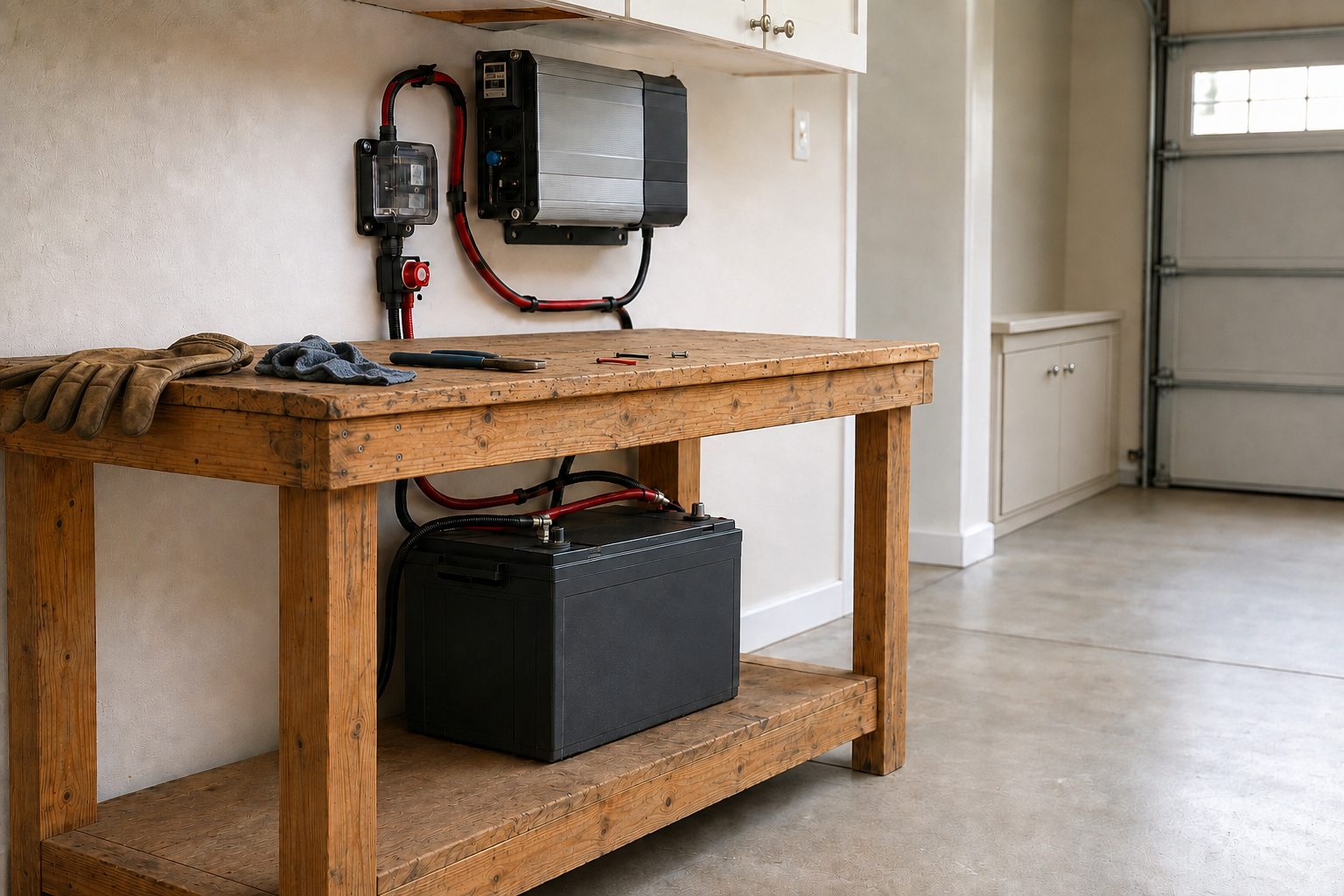
How Long Will a 12V 200Ah Battery Last During a Blackout?
How long will a 12V 200Ah battery last during a blackout? Depending on the appliance and battery type, it may run a heavy load for only an hour or keep lights, communications equipment, and other low-power essentials operating for several days.
This post contains affiliate links. I may earn a small commission at no extra cost to you. Learn more.
A 12V 200Ah battery stores approximately 2,400 watt-hours of nominal energy, but usable capacity, inverter losses, temperature, and battery condition reduce the amount that reaches your equipment. Refrigerators, freezers, and pumps also cycle and require brief starting surges. This guide provides realistic runtime estimates for both a single battery and a larger bank of five 200Ah batteries.
Quick Answer
A 12V 200Ah battery contains approximately 2,400Wh of nominal energy. Under perfect conditions, it could theoretically operate a constant 100-watt load for 24 hours, a 500-watt load for 4.8 hours or a 1,000-watt load for 2.4 hours.
Actual runtime will be shorter after accounting for usable depth of discharge, inverter losses, temperature and battery condition. A lithium battery normally makes more of its rated capacity available, while a lead-acid battery is commonly operated more conservatively to avoid excessive discharge and shortened service life.
For a personalized estimate, enter the battery capacity, appliance wattage, inverter efficiency and usable capacity into the Battery and Power Station Runtime Calculator.
Key Takeaways
- A 12V 200Ah battery stores approximately 2,400Wh of nominal energy. Some batteries marketed as 12V operate at a slightly different nominal voltage, so the manufacturer’s listed watt-hour capacity should be used whenever it is available.
- Nominal capacity is not the same as usable capacity. Battery chemistry, recommended depth of discharge and the battery-management system determine how much stored energy can be used safely.
- AC appliances require an inverter. Energy is lost while converting the battery’s DC electricity into household AC power, reducing the runtime available at the outlet.
- Appliance labels do not always show average consumption. Refrigerators, freezers, pumps and CPAP machines can cycle between different power levels instead of drawing their maximum wattage continuously.
- Starting surge matters as much as runtime. A battery may contain enough energy to operate an appliance for several hours while the inverter remains unable to handle the brief surge required to start its motor or compressor.
- Five 12V 200Ah batteries contain approximately 12,000Wh of nominal energy. Their voltage and amp-hour rating will depend on whether they are connected in series, parallel or a supported combination.
If one 200Ah battery is not enough for your essential loads, use our Battery Bank Size Calculator to estimate how much battery capacity you need based on your power use, desired runtime, system voltage, and usable battery capacity.
Emergency Scenario: One Battery, Several Essential Loads
A severe storm knocks out utility power shortly after sunset, and the restoration estimate remains unknown. You connect a refrigerator, several LED lights, a Wi-Fi router and a CPAP machine to a fully charged 12V 200Ah battery through an inverter. Together, the equipment appears to require less power than the battery can provide, but simply dividing 2,400Wh by one appliance’s advertised wattage will not produce a dependable answer.
The refrigerator draws additional power when its compressor starts and then cycles on and off according to room temperature, door openings and thermostat settings. The CPAP machine may consume considerably more electricity when heated humidification is enabled, while the inverter uses some power even when the connected appliances are temporarily idle. As the night continues, every load draws from the same limited supply.
A practical runtime estimate must therefore account for the battery’s usable capacity, inverter losses and the combined energy consumed over time. Understanding those factors before an outage makes it easier to decide which equipment should remain connected, what can be turned off and whether one 200Ah battery provides enough capacity for the entire night.
What Does a 12V 200Ah Battery Rating Actually Mean?
A battery’s voltage and amp-hour rating describe two different characteristics. Voltage represents the electrical potential supplied by the battery, while amp-hours describe the amount of electrical charge it can theoretically deliver over time under the manufacturer’s specified test conditions. Neither number provides a complete runtime estimate by itself.
To compare a battery with appliances rated in watts, voltage and amp-hours must first be converted into watt-hours:
Nominal battery energy = voltage × amp-hours
For a 12V 200Ah battery, the calculation is:
12V × 200Ah = 2,400Wh
This means the battery contains approximately 2,400 watt-hours of nominal energy. In a perfect system, that would represent enough energy to supply 2,400 watts for one hour, 1,200 watts for two hours, 200 watts for 12 hours or 100 watts for 24 hours. Those figures are theoretical because they do not subtract inverter losses, reserve capacity or other real-world reductions.
| Battery Configuration | Calculation | Nominal Energy |
|---|---|---|
| One 12V 200Ah battery | 12V × 200Ah | 2,400Wh |
| One 12.8V 200Ah LiFePO4 battery | 12.8V × 200Ah | 2,560Wh |
| Two 12V 200Ah batteries | 2 × 2,400Wh | 4,800Wh |
| Five 12V 200Ah batteries | 5 × 2,400Wh | 12,000Wh |
Many lithium iron phosphate batteries marketed as 12V models use a nominal voltage of approximately 12.8V, which produces a listed capacity closer to 2,560Wh. The voltage also changes while a battery charges and discharges, so the nominal rating should be treated as a standardized planning number rather than a constant measured voltage.
When a manufacturer provides an official watt-hour capacity, use that figure instead of estimating it from the rounded voltage printed in the product name. The listed watt-hours provide a more useful starting point when comparing batteries, portable power stations and appliance requirements.
Did You Know?
A 200Ah rating does not mean that every 200Ah battery should deliver 200 amps continuously for one hour. Maximum continuous current is controlled by the battery’s chemistry, internal construction, terminals and battery-management system. Always verify the manufacturer’s continuous-discharge and surge-current limits before connecting a large inverter or high-demand appliance.
Nominal Capacity Versus Usable Capacity
The complete 2,400Wh rating should not automatically be treated as available appliance energy. A portion may need to remain unused to protect the battery, and additional electricity can be lost through the inverter, wiring and connected equipment. The next step is determining how much of the battery’s nominal capacity can realistically reach the load.
How Much of a 12V 200Ah Battery Is Actually Usable?
Usable capacity is the portion of the battery’s nominal energy that can be removed while remaining within the operating limits selected for the system. That amount depends heavily on battery chemistry, manufacturer specifications, battery age, temperature and the desired balance between immediate runtime and long-term service life.
Lithium iron phosphate batteries generally allow a larger percentage of their rated capacity to be used than traditional lead-acid batteries. Many owners use an 80% to 90% planning depth for LiFePO4 systems, although some manufacturers permit deeper discharge under specified conditions. Lead-acid battery banks are often planned around approximately 50% usable capacity when cycle life and dependable voltage are priorities.
These percentages are planning assumptions rather than universal limits. The correct figure must come from the battery manufacturer because the battery-management system, warranty terms and recommended discharge settings differ between products.
Calculating Usable Battery Energy
The following formula estimates the energy available before inverter losses:
Usable battery energy = nominal watt-hours × usable-capacity percentage
For a 2,400Wh battery using an 80% planning allowance:
2,400Wh × 0.80 = 1,920Wh of usable DC energy
If the connected appliances require household AC electricity, inverter efficiency must also be included:
Usable AC energy = nominal watt-hours × usable-capacity percentage × inverter efficiency
Using a 90% inverter-efficiency estimate:
2,400Wh × 0.80 × 0.90 = 1,728Wh of estimated usable AC energy
| Planning Example | Usable Capacity | Energy Before Inverter | Usable AC Energy at 90% Efficiency |
|---|---|---|---|
| LiFePO4 battery, conservative estimate | 80% | 1,920Wh | 1,728Wh |
| LiFePO4 battery, deeper-use estimate | 90% | 2,160Wh | 1,944Wh |
| Lead-acid battery, conservative estimate | 50% | 1,200Wh | 1,080Wh |
The table demonstrates why two batteries with the same 12V 200Ah label can produce substantially different practical runtimes. Using the assumptions above, the lithium example provides between 1,728Wh and 1,944Wh of estimated AC energy, while the conservative lead-acid example provides approximately 1,080Wh.
Why Inverter Efficiency Changes Runtime
An inverter converts the battery’s direct current into the alternating current used by ordinary household appliances. Some energy becomes heat during that conversion, and the inverter may also consume electricity simply by remaining switched on. Efficiency can change according to load size, input voltage, inverter quality and operating temperature.
A 90% efficiency figure is useful for general planning, but it should not replace the efficiency information supplied with the actual inverter. Very small loads connected to an oversized inverter may experience poorer overall efficiency because the inverter’s idle consumption represents a larger portion of the total demand.
Pro Tip
Use watt-hours when comparing batteries with appliances. Convert the battery’s amp-hour rating into watt-hours, subtract the unavailable capacity and inverter losses, and then divide the remaining energy by the appliance’s average wattage. This produces a much more useful estimate than comparing amp-hours directly with watts.
Important Warning
Do not select discharge limits solely from a general percentage found online. Follow the battery manufacturer’s specifications and confirm the battery-management system settings, low-voltage cutoff and warranty requirements. Excessive discharge can shorten battery life, cause an inverter shutdown or leave critical equipment without power earlier than expected.


How Long Will a 12V 200Ah Battery Run Different Loads?
Once usable battery energy has been estimated, runtime can be calculated by dividing the available watt-hours by the average wattage of the connected equipment:
Estimated runtime in hours = usable battery energy ÷ average load in watts
Using the conservative lithium example from the previous section, a 12V 200Ah battery provides approximately 1,728Wh of usable AC energy after allowing for 80% usable capacity and 90% inverter efficiency. A 100-watt continuous load would therefore have an estimated runtime of:
1,728Wh ÷ 100W = 17.28 hours
Using the conservative lead-acid example of 1,080Wh, the same load would operate for approximately:
1,080Wh ÷ 100W = 10.8 hours
| Continuous Load | Possible Equipment Example | LiFePO4 Runtime at 1,728Wh | Lead-Acid Runtime at 1,080Wh |
|---|---|---|---|
| 10W | Small router, modem or charging device | Approximately 173 hours | Approximately 108 hours |
| 20W | Several LED lights | Approximately 86 hours | Approximately 54 hours |
| 50W | Fan or low-power medical device | Approximately 35 hours | Approximately 22 hours |
| 100W | Efficient refrigerator average or electronics | Approximately 17.3 hours | Approximately 10.8 hours |
| 200W | Television and several smaller devices | Approximately 8.6 hours | Approximately 5.4 hours |
| 500W | Small pump or several combined loads | Approximately 3.5 hours | Approximately 2.2 hours |
| 1,000W | Microwave or other high-demand appliance | Approximately 1.7 hours | Approximately 1.1 hours |
| 1,500W | Electric heater or cooking appliance | Approximately 1.2 hours | Approximately 0.7 hours |
High-Load Warning
At a 1,000- to 1,500-watt AC load, a 12V system may pull approximately 93 to 139 amps from the battery at 90% inverter efficiency. Confirm that the battery-management system, inverter, cables, fuse, terminals, and disconnect can safely support that current. Lead-acid batteries may also deliver less than their rated capacity under heavy loads.
The equipment examples are general illustrations rather than guaranteed consumption figures. Two refrigerators of similar size can use different amounts of energy, and operating conditions can change the demand of the same appliance from one day to another. Always use measured average consumption or reliable manufacturer data when planning power for critical equipment.
Continuous Loads Versus Cycling Loads
The table assumes that each load remains constant. That assumption works reasonably well for lights, routers and some electronics, but it can be misleading for equipment controlled by thermostats, pressure switches or variable-speed motors.
A refrigerator might draw 150 watts while the compressor is operating but remain idle for part of each hour. If the compressor runs 30% of the time, its simplified average demand would be approximately 45 watts before accounting for defrost cycles, fans and control electronics:
150W × 0.30 duty cycle = 45W average consumption
Runtime based on that average could be considerably longer than a calculation that assumes the refrigerator consumes 150 watts continuously. However, warmer room temperatures, frequent door openings, damaged seals or recently added food can cause the compressor to operate more often and reduce runtime.
Why Starting Surge Still Matters
Average energy consumption determines how long a battery may last, but the inverter must also handle the highest momentary demand. Refrigerators, freezers, well pumps and sump pumps can briefly require considerably more power when their motors start. A system can therefore have enough stored energy for the expected runtime while still shutting down because the inverter, battery-management system, cables or connections cannot support the startup current.
Check both the appliance’s running demand and startup requirement before depending on the system. The battery’s maximum continuous-discharge current, surge-current limit and inverter capacity must all remain within their respective specifications.
Calculate Your Battery Runtime
Enter your battery capacity, usable percentage, inverter efficiency, appliance wattage and startup load into the free calculator for an estimate based on your actual equipment.
How Long Can a 12V 200Ah Battery Run Common Blackout Equipment?
The following estimates use the same conservative assumptions established earlier: approximately 1,728Wh of usable AC energy from a LiFePO4 battery and 1,080Wh from a lead-acid battery. Actual results will change with the equipment, battery condition, inverter and operating environment.
| Equipment | Estimated Average Load | LiFePO4 Runtime | Lead-Acid Runtime |
|---|---|---|---|
| Wi-Fi router and modem | 10–20W | Approximately 86–173 hours | Approximately 54–108 hours |
| LED emergency lighting | 20–40W | Approximately 43–86 hours | Approximately 27–54 hours |
| Portable fan | 40–80W | Approximately 22–43 hours | Approximately 14–27 hours |
| CPAP without heated features | 30–60W | Approximately 29–58 hours | Approximately 18–36 hours |
| CPAP with heated humidification | 60–100W | Approximately 17–29 hours | Approximately 11–18 hours |
| Refrigerator, averaged over cycling | 50–100W | Approximately 17–35 hours | Approximately 11–22 hours |
| Freezer, averaged over cycling | 40–80W | Approximately 22–43 hours | Approximately 14–27 hours |
| Television | 80–150W | Approximately 12–22 hours | Approximately 7–14 hours |
| Sump pump while actively running | 600–1,000W | Approximately 1.7–2.9 hours | Approximately 1.1–1.8 hours |
These figures represent approximate operating time at the stated average load. A refrigerator or freezer will normally cycle, while a sump pump may run only when water activates its switch. Runtime over an entire day therefore depends on how frequently the equipment operates, not merely its wattage while running.
Refrigerator and Freezer Runtime
A reasonably efficient refrigerator averaging 75 watts would have an estimated runtime of approximately 23 hours on the conservative lithium example or about 14 hours on the lead-acid example. Hot indoor temperatures, frequent door openings, automatic defrost cycles and warm food can increase consumption considerably.
CPAP Runtime
A CPAP machine’s energy use can change significantly when heated tubing or humidification is enabled. Someone who depends on a CPAP should calculate runtime using the exact machine and selected settings, test the complete backup system before an outage and maintain another medically appropriate backup plan.
Sump-Pump Runtime
A sump pump places a much heavier demand on a 12V battery than lights or communications equipment. Even when the calculated energy capacity appears sufficient, the system must support the pump’s startup surge. The inverter, battery-management system, fuse, cables and connections must all be sized correctly for the pump.
Pro Tip: Measure a Full Day
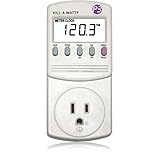
For cycling appliances, measure energy consumption over at least 24 hours instead of relying only on the running-watt label. Daily watt-hours provide a more dependable planning number because they include compressor cycles, standby consumption and changing operating conditions.
Medical Equipment Warning
Runtime tables are planning estimates and should not be treated as a guarantee for life-supporting or medically necessary equipment. Follow the equipment manufacturer’s backup-power instructions and consult the appropriate medical provider when an interruption could create a health risk.
How Many Solar Panels Are Needed to Charge a 200Ah Battery?
The panel wattage required to charge a 12V 200Ah battery depends on how much energy must be replaced, the available peak sun hours, real-world solar efficiency and whether equipment continues using power during the charging period.
Daily solar production can be estimated with the following formula:
Daily solar energy = panel wattage × peak sun hours × real-world efficiency
For example, a 400-watt solar array receiving five peak sun hours at an estimated 70% overall efficiency could produce approximately:
400W × 5 hours × 0.70 = 1,400Wh per day
If a 2,400Wh battery requires a complete recharge, that array would need approximately 1.7 equivalent solar days under the selected conditions. If the battery is only 50% discharged and needs approximately 1,200Wh replaced, it may recover during one strong solar day.
This estimate does not include electricity consumed by appliances while charging. If connected equipment uses 400Wh during the peak-sun window, only approximately 1,000Wh of the example array’s production remains available for increasing the battery’s state of charge.
Solar Input Limits and Compatibility
A larger solar array does not automatically produce faster charging. The charge controller or power station can accept only the voltage, current and wattage permitted by its specifications. An oversized or improperly wired array may be clipped, rejected or potentially damage incompatible equipment.
Panel voltage, open-circuit voltage, current, polarity, connector type and series-or-parallel arrangement must all remain within the charging equipment’s limits. Wattage alone cannot determine compatibility.
Use Conservative Solar Conditions
Plan around peak sun hours rather than total daylight, and include losses from heat, clouds, panel angle, wiring and charge conversion. Run both an expected-weather calculation and a conservative calculation before relying on solar charging during an extended outage.
Common 12V 200Ah Battery Runtime Mistakes
Battery-runtime calculations often become unreliable because one important part of the system is overlooked. Avoiding the following mistakes produces a more realistic estimate and a safer emergency-power plan:
- Using nominal capacity as usable energy: The complete 2,400Wh rating may not be available after depth-of-discharge limits and conversion losses are applied.
- Confusing amp-hours with watt-hours: Amp-hours cannot be compared directly with appliance watts without including battery voltage.
- Ignoring inverter consumption: Conversion losses and inverter standby draw continue reducing stored energy.
- Using only an appliance’s maximum wattage: Cycling equipment requires an average-energy measurement, while motor-driven equipment also requires a separate surge check.
- Combining every appliance into one unrealistic plan: High-demand cooking or heating equipment can consume energy needed for refrigeration, lighting, communication or medical devices.
- Mixing unmatched batteries: Different models, capacities, ages and charge levels may not share current evenly or operate safely in the intended configuration.
- Ignoring cables and overcurrent protection: A runtime calculation does not verify that wiring, fuses, busbars, disconnects or terminals can safely carry the required current.
- Failing to test the system: Equipment that appears compatible on paper may still encounter startup, charging, connector or battery-management limitations.
12V 200Ah Battery Planning Checklist
- Confirm the battery chemistry, nominal voltage and listed watt-hour capacity.
- Check the manufacturer’s recommended usable depth of discharge.
- Measure the average wattage or daily watt-hours of each essential appliance.
- Verify motor and compressor startup requirements.
- Include inverter efficiency and standby consumption.
- Add the wattage of equipment operating at the same time.
- Confirm battery continuous-current and surge-current limits.
- Verify inverter, cable, fuse, busbar and disconnect ratings.
- Check solar-controller voltage, current and wattage limits.
- Test the complete system before depending on it during an outage.
- Recalculate runtime using conservative conditions.
- Maintain another backup option for critical equipment.
Frequently Asked Questions
How long will a 12V 200Ah battery run a 1,000-watt appliance?
Using the conservative assumptions in this guide, a LiFePO4 battery providing approximately 1,728Wh of usable AC energy could operate a constant 1,000-watt load for about 1.7 hours. A lead-acid battery providing approximately 1,080Wh could operate the same load for about 1.1 hours. Actual runtime may be shorter if the inverter, battery-management system or wiring cannot support the required current.
Can a 200Ah battery run a refrigerator overnight?
A properly configured 200Ah battery can often operate an efficient refrigerator overnight, but the result depends on battery chemistry, refrigerator consumption, room temperature and inverter losses. A refrigerator averaging 75 watts would have an estimated runtime of approximately 23 hours using the conservative lithium calculation or about 14 hours using the lead-acid calculation. Measure actual daily consumption for a more dependable estimate.
How many solar panels are needed to charge a 12V 200Ah battery?
A 400-watt array receiving five peak sun hours at 70% estimated efficiency may produce approximately 1,400Wh per day. That could replace roughly half of a 2,400Wh battery’s nominal capacity during one strong solar day. The correct panel arrangement must remain within the charge controller’s voltage, current and wattage limits.
Is a 200Ah battery twice as powerful as a 100Ah battery?
At the same nominal voltage and battery chemistry, a 200Ah battery stores approximately twice as much energy as a 100Ah battery. That does not necessarily mean it can supply twice as much instantaneous power. Continuous and surge-current limits depend on the individual battery and its battery-management system.
How long will five 12V 200Ah batteries last?
Five batteries contain approximately 12,000Wh of nominal energy. Using 80% usable capacity and 90% inverter efficiency, a lithium bank would provide approximately 8,640Wh of estimated usable AC energy. That equals about 8.6 hours at a constant 1,000-watt load or approximately 17.3 hours at 500 watts.
Can a car battery be used for emergency backup power?
A starting battery is designed to deliver a brief burst of current for starting an engine, not repeated deep discharges. Deep-cycle lead-acid or LiFePO4 batteries are generally better suited to sustained backup-power use when installed according to their specifications. Repeatedly draining a starting battery can shorten its life and leave the vehicle unable to start.
Why does my battery run out sooner than the calculation predicts?
Possible causes include higher appliance consumption, inverter standby draw, deeper-than-expected voltage sag, cold temperatures, an aging battery, loose connections, undersized cables or inaccurate state-of-charge readings. Measure the complete system under actual operating conditions and compare the result with the assumptions used in the calculation.
Continue Reading
Final Thoughts
A 12V 200Ah battery contains enough stored energy to support many essential blackout loads, but the 2,400Wh nominal rating is only the beginning of a reliable runtime calculation. Battery chemistry, usable capacity, inverter losses, appliance cycling, startup surge and environmental conditions determine how long the system will actually operate.
Begin with the equipment that must remain available, measure its real energy consumption and calculate the combined load using conservative assumptions. Confirm that the battery, inverter, cables, protection devices and solar-charging equipment remain compatible, then test the complete setup before an emergency. A system verified under real operating conditions is far more dependable than one built around advertised ratings alone.