How to Charge Your Phone During a Blackout (Even When the Power Is Out)
When the power goes out, your smartphone quickly becomes one of the most valuable tools you own. It keeps you connected with family, receives emergency weather alerts, provides maps if you need to evacuate, stores important documents, and gives you access to news as long as communication networks remain operational. During short outages, keeping your phone charged is usually an inconvenience. During a prolonged blackout, however, every percentage of battery life becomes increasingly important.
This post contains affiliate links. I may earn a small commission at no extra cost to you. Learn more.
One of the biggest mistakes people make is assuming electricity will return within a few hours. They continue scrolling social media, watching videos, or constantly checking for updates until their battery is nearly empty. If the outage lasts through the night—or even several days—they suddenly find themselves without a reliable way to communicate when they need it most.
Fortunately, keeping your phone powered during a blackout does not require expensive equipment or a complicated emergency setup. Portable power banks, vehicle chargers, solar panels, and portable power stations can all provide reliable backup power when used correctly. Even more importantly, knowing how to conserve your phone’s battery can often double or even triple the amount of time it remains usable.
In this guide, you’ll learn the most reliable ways to charge your phone during a blackout, how to stretch every bit of battery life, which backup charging methods work best for different situations, and how to build a simple emergency charging kit before the next power outage arrives.
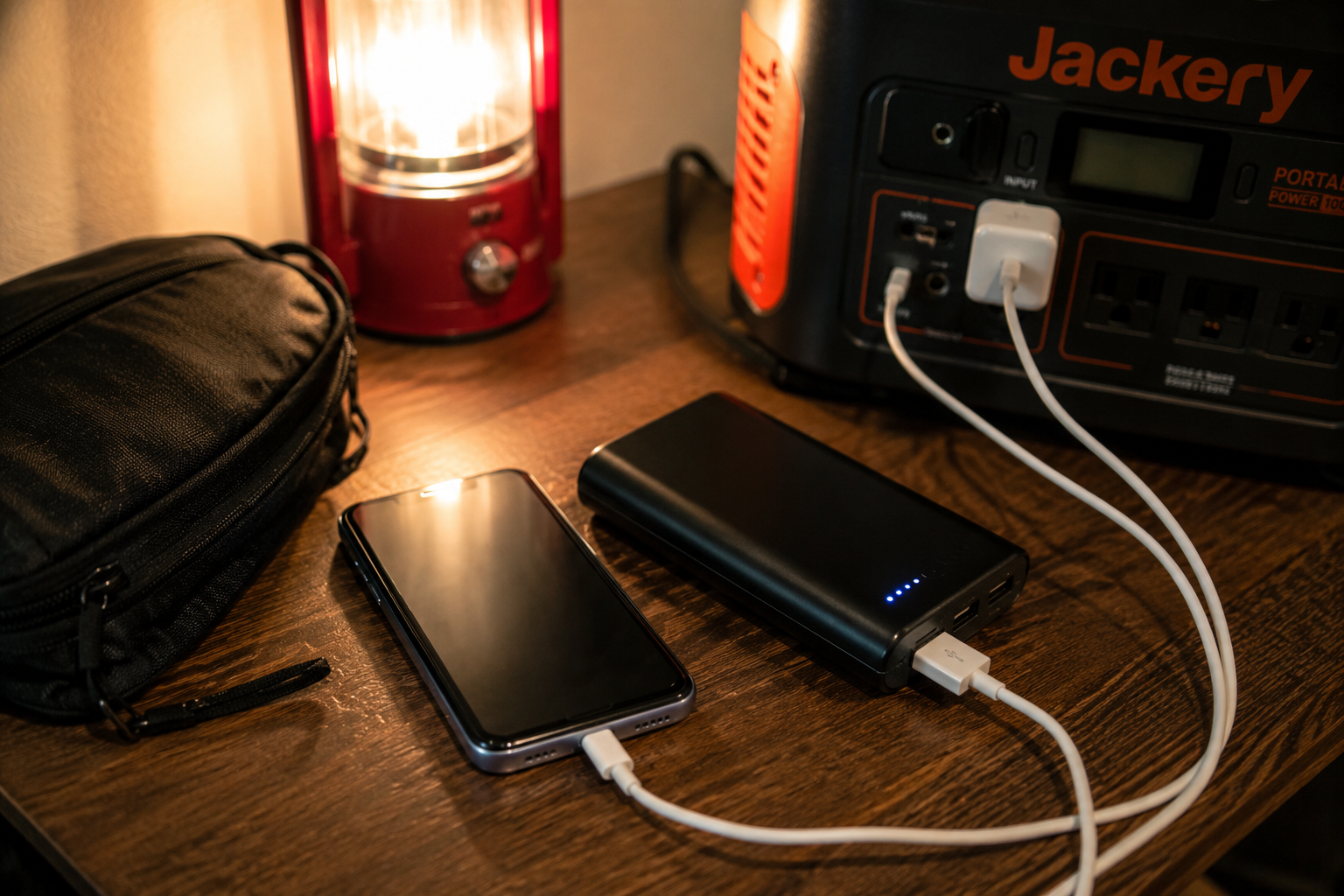
Knowing how to charge your phone during a blackout can keep you connected when normal power sources are unavailable.
⚡ Quick Answer
The best way to charge your phone during a blackout is with a fully charged portable power bank, followed by a portable power station, your vehicle’s USB outlet, or a solar charger during daylight hours. At the same time, conserving battery by enabling Low Power Mode, reducing screen brightness, and limiting unnecessary app usage can dramatically extend your phone’s operating time until electricity is restored.
📌 Key Takeaways
- Keep at least one fully charged power bank ready before storms or severe weather.
- Portable power stations provide the most versatile backup charging for multi-day outages.
- Your vehicle can safely recharge phones as long as fuel is available and the battery is managed properly.
- Solar chargers work best for extended blackouts when sunlight is available.
- Low Power Mode and smart battery management can significantly extend phone runtime.
- Building a dedicated emergency charging kit helps eliminate last-minute scrambling during an outage.
🚨 Emergency Scenario
A powerful thunderstorm knocks out electricity across your community just before sunset. At first, everyone assumes power will return within an hour or two. Family members begin checking social media, streaming local news, and texting friends to see who else lost electricity. By bedtime, every phone in the house has dropped below 25 percent, yet the utility company estimates repairs could take another two days. Without a backup charging plan, communication suddenly becomes uncertain. Families who prepared ahead simply connect their phones to charged power banks or portable power stations, switch on battery-saving settings, and continue receiving important updates while everyone else searches for a place to recharge.
Why Your Phone Becomes One of Your Most Important Survival Tools
During a blackout, your smartphone serves a much greater purpose than simply making calls or sending text messages. It becomes your connection to emergency information, your navigation system, your flashlight, your weather radio, and often your only practical way to stay in contact with loved ones. As long as communication infrastructure continues operating, a charged phone can provide critical information that helps you make safer decisions throughout an emergency.
Emergency alerts issued by local authorities often arrive directly through your phone before they appear anywhere else. Weather warnings, evacuation notices, flash flood alerts, and public safety messages may all be delivered through wireless emergency alerts even if internet service becomes unreliable. Having enough battery to receive these notifications can make a significant difference during rapidly changing situations.
Your phone also plays an important role in family communication. If you’ve already created a communication strategy, such as the one discussed in our Family Emergency Communication Plan, keeping everyone’s phones operational allows family members to check in, share locations, and coordinate safely if they become separated during an emergency.
Even if internet service slows or cell networks become congested, your device may still allow text messaging, emergency calls, downloaded maps, stored medical information, and offline documents to remain accessible. Understanding how long cell towers typically operate during a blackout also helps set realistic expectations about how long mobile communication may continue as the outage extends.
Simply put, protecting your phone’s battery should become one of your first priorities once the lights go out. A few smart decisions during the first hour of a blackout can keep your most important communication tool working long after many other people have exhausted their batteries.
Best Ways to Charge Your Phone During a Blackout
Not every backup charging method is equally reliable, and the best option often depends on how long the outage lasts. A brief neighborhood power outage may only require a small power bank, while a blackout lasting several days calls for more sustainable solutions such as a portable power station or solar charging system. Ideally, your emergency plan should include more than one way to keep your phone powered so you’re not relying on a single device.
Below are the most dependable charging options, ranked from the ones most people should own to those that become increasingly valuable during longer emergencies.
Portable Power Banks
A portable power bank is the easiest and most affordable way to charge a smartphone during a blackout. These rechargeable battery packs store electricity ahead of time and can recharge most modern smartphones multiple times before needing to be recharged themselves.
For most households, a quality 20,000 mAh power bank offers an excellent balance of size, portability, and charging capacity. Depending on your phone model, it can typically provide three to five full charges, making it ideal for outages lasting anywhere from several hours to a couple of days.
The most important habit is keeping your power bank fully charged before severe weather arrives. A power bank sitting empty in a drawer provides no advantage when the electricity suddenly goes out.

Portable Power Stations
For extended outages, portable power stations are one of the most versatile backup power sources available. Unlike small battery banks, these larger rechargeable units can charge phones dozens of times while also powering laptops, radios, LED lighting, CPAP machines, Wi-Fi equipment, and other essential electronics.
Many models include multiple USB-A, USB-C, and standard AC outlets, allowing several family members to charge their devices simultaneously. If paired with compatible solar panels, a portable power station can continue providing electricity long after smaller battery packs have been depleted.
If your preparedness plan already includes backup power for other household essentials, a portable power station often becomes the centerpiece of your emergency power setup.

Charging Your Phone with Your Vehicle
Your vehicle can serve as an excellent backup charging source during a blackout, especially if you already keep a USB charger or 12-volt adapter inside. Running the engine while charging helps prevent the vehicle’s battery from being drained and allows multiple devices to recharge safely.
However, avoid sitting in an enclosed garage with the engine running because of the serious risk of carbon monoxide poisoning. If you need to charge devices using your vehicle, always do so outdoors or in a well-ventilated area.
Vehicle charging works especially well during outages lasting a day or two, but it does depend on having enough fuel available if gasoline supplies become limited.
Solar Chargers
Solar chargers become increasingly valuable as outages stretch beyond a couple of days. While they won’t charge as quickly as a wall outlet, they can generate enough electricity during sunny conditions to recharge phones, power banks, and even portable power stations without relying on the electrical grid.
Performance varies depending on weather, panel size, and sunlight exposure. Small foldable solar panels generally perform much better than inexpensive all-in-one solar power banks that rely on tiny built-in panels.
For households preparing for extended blackouts, combining a portable power station with quality foldable solar panels provides one of the most reliable long-term charging solutions available.


| Charging Method | Best For | Advantages | Limitations |
|---|---|---|---|
| Portable power bank | Short outages | Compact, affordable, and provides several phone charges. | Eventually runs out of stored power. |
| Portable power station | Multi-day blackouts | Large battery capacity and can power multiple devices. | Higher upfront cost and heavier to transport. |
| Vehicle USB charger | Emergency backup | Fast charging using your vehicle’s electrical system. | Requires fuel and proper battery management. |
| Foldable solar panel | Extended outages | Produces renewable power during daylight hours. | Charging speed depends on sunlight and weather. |
| Wall outlet | Normal daily use | Fastest and most convenient charging method. | Unavailable when the power is out. |
How to Make Your Phone Battery Last Much Longer
Finding a way to recharge your phone during a blackout is only half the equation. The other half is making every percentage of battery last as long as possible. Even the largest power bank has a limited amount of stored energy, so reducing your phone’s power consumption can significantly extend both your device’s runtime and the number of times your backup batteries can recharge it.
As soon as the power goes out, assume the outage could last longer than expected. Instead of waiting until your battery falls below 20 percent, begin conserving power immediately. Early battery-saving habits often make the difference between having a working phone on the third day of an outage and watching the battery die long before electricity returns.
Turn On Low Power Mode
Both iPhones and Android devices include battery-saving modes that automatically reduce background activity, lower processing demands, and limit unnecessary features. This is one of the quickest ways to extend battery life without affecting your ability to make calls or receive important messages.
Reduce Screen Brightness
Your display is one of the biggest battery drains on any smartphone. Lowering the brightness to the lowest comfortable level can noticeably reduce power consumption throughout the day. If your phone automatically increases brightness, consider disabling automatic brightness adjustments during the outage.
Limit Unnecessary Apps
Streaming movies, scrolling social media, playing games, and constantly refreshing news feeds all consume considerable battery power. During an emergency, focus on using your phone for communication, weather updates, emergency information, and navigation only when needed.
Disable Features You’re Not Using
If you don’t need Bluetooth, Wi-Fi, location services, or mobile hotspot capabilities, turn them off. Every wireless connection your phone searches for requires additional power. If you’re in an area with poor cellular reception, your phone may also use extra battery trying to maintain a signal, making conservation even more important.
Charge Before the Battery Is Empty
Many people wait until their phone reaches 5 or 10 percent before connecting a charger. During a blackout, it’s often smarter to recharge sooner whenever backup power is available. Keeping your battery comfortably above empty provides a larger safety margin if charging opportunities become limited later.
✔ Battery-Saving Checklist
- Enable Low Power Mode or Battery Saver.
- Reduce screen brightness.
- Close apps running in the background.
- Turn off Bluetooth and Wi-Fi when not needed.
- Avoid streaming video and gaming.
- Keep phone use focused on communication and emergency updates.
- Recharge whenever backup power is available instead of waiting until the battery is nearly empty.
Common Charging Mistakes During a Blackout
Even households with backup batteries sometimes run into problems because of simple mistakes that waste valuable power. Planning ahead is important, but using your backup charging equipment wisely is just as critical. Avoiding a few common errors can help your phone stay operational throughout a much longer outage.
Waiting Too Long to Charge
Many people continue using their phone normally until the battery drops into the single digits before reaching for a power bank. If your backup battery is unavailable, misplaced, or already partially discharged, you may find yourself with almost no time to react. It’s much better to top off your phone whenever you have a reliable charging source available.
Forgetting to Recharge Backup Batteries
A portable power bank only helps if it’s fully charged before the outage begins. After storms, camping trips, or previous blackouts, make it a habit to recharge every backup battery immediately so it’s ready for the next emergency. Checking battery levels every month is also a good addition to your family’s emergency preparedness routine.
Using Low-Quality Charging Cables
Cheap or damaged charging cables can charge slowly, fail unexpectedly, or stop working altogether when you need them most. Keep at least two high-quality charging cables for every type of device your household uses, and store them with your emergency supplies instead of relying on everyday cables that are constantly being moved around.
Draining Your Vehicle Battery
Charging your phone from your vehicle is an excellent backup option, but avoid sitting with the engine off while multiple devices are charging. This can slowly drain your vehicle’s battery, leaving you with transportation problems in addition to a power outage. If you’re using your vehicle as a charging station for an extended period, it’s generally safer to run the engine outdoors for short periods while monitoring fuel usage.
Ignoring Battery Conservation
Some people focus entirely on finding ways to recharge their phone while continuing to use it normally. Conserving battery life is often just as effective as adding more charging capacity. The less power your phone consumes, the longer every power bank, portable power station, or vehicle charger will last.
After electricity is restored, recharge every power bank, portable power station, and backup battery immediately so your emergency charging kit is ready for the next outage.
⚠️ Don’t Depend on Just One Charging Method
Every backup power source has limitations. Power banks eventually run out of stored energy, vehicles require fuel, and solar chargers depend on weather conditions. Having two or three different charging options greatly increases your ability to keep your phone powered throughout an extended blackout, especially if one method becomes unavailable.
Build an Emergency Phone Charging Kit Before the Next Blackout
You don’t need an expensive collection of electronics to keep your phone charged during a blackout. A small emergency charging kit assembled ahead of time can provide reliable backup power for hours or even days, depending on the length of the outage. The goal is to have everything you need stored together so you aren’t searching through drawers after the lights go out.
Start with a high-capacity portable power bank that is fully charged and checked regularly. Add the charging cables your household actually uses, whether that’s USB-C, Lightning, or Micro-USB for older devices. A vehicle charger is another inexpensive addition that gives you a dependable backup if your portable batteries become depleted.
If you prepare for severe weather or extended outages, consider expanding your kit with a foldable solar panel or a portable power station. These larger backup power sources can recharge phones repeatedly while also powering other important electronics such as emergency radios, LED lanterns, and small medical devices. If you’re comparing larger battery systems, our guide to the best solar power stations for blackouts explains what features to look for before buying.


Store everything together inside a waterproof pouch or small organizer, and keep it in the same location as your other emergency supplies. Every few months, inspect the cables for damage, recharge your power bank, and verify that all equipment still works properly. A charging kit only provides peace of mind if it’s ready to use when the next outage occurs.
📱 Emergency Phone Charging Kit Checklist
- High-capacity portable power bank (20,000 mAh or larger)
- USB-C, Lightning, or Micro-USB charging cables
- Dual-port wall charger for quick recharging before storms
- 12-volt vehicle USB charger
- Foldable solar panel for extended outages
- Portable power station for multi-day emergencies
- Waterproof storage pouch or organizer
- Monthly reminder to recharge backup batteries and test equipment
Frequently Asked Questions
How many times can a 20,000 mAh power bank charge a phone?
Most 20,000 mAh power banks can fully charge a modern smartphone approximately three to five times, depending on the size of the phone’s battery and the efficiency of the power bank.
Can I safely charge my phone with my car?
Yes. Charging through your vehicle’s USB port or a quality 12-volt adapter is safe. If you’re charging for an extended period, it’s generally best to have the engine running outdoors so you don’t drain the vehicle’s battery.
Are solar chargers worth buying?
Yes, especially if you prepare for outages lasting several days. Foldable solar panels are generally much faster and more reliable than small solar power banks with built-in panels.
Should I keep my power bank fully charged?
Yes. Recharge it after every use and check its charge level every month so it’s ready before severe weather or unexpected power outages.
What’s the best backup charging option for most families?
For most households, a combination of a high-capacity power bank and a portable power station provides the best balance of affordability, convenience, and emergency preparedness.
Can I use my phone while it’s charging during a blackout?
You can, but it’s more efficient to let your phone charge with the screen off whenever possible. Using power-hungry apps while charging slows the charging process and wastes valuable backup power.
Final Thoughts
Your phone may become your most important piece of emergency equipment during a blackout, but only if it still has power when you need it. Preparing ahead with a charged power bank, reliable backup charging options, and smart battery-saving habits helps ensure you can receive emergency alerts, communicate with family, and access critical information throughout the outage. Spending a few minutes preparing today can save hours of frustration—and could make a real difference during your next blackout.
📚 Continue Building Your Blackout Preparedness Plan
Keeping your phone charged is only one part of staying prepared during a power outage. These related guides will help you build a complete blackout survival plan before the next emergency strikes.
- Family Emergency Communication Plan: How to Stay Connected During a Disaster
- How Long Will Cell Towers Work During a Blackout?
- How Long Will Internet Service Work During a Blackout?
- Best Solar Power Stations for Blackouts
- What Happens After 7 Days Without Power?
- 2-Week Blackout Survival Plan: How to Prepare for an Extended Power Outage