How Long Will Cell Towers Work During a Blackout?
How long will cell towers work during a blackout? In most cases, towers can remain operational for several hours or even days depending on their backup power systems and fuel supplies.
This post contains affiliate links. I may earn a small commission at no extra cost to you. Learn more.
Most people assume that as long as they can keep their phone charged, they will still be able to communicate during a power outage. That assumption is usually true during short disruptions that last a few hours, but it becomes much less reliable as an outage stretches into days. While smartphones have become the primary way most families communicate, navigate, receive emergency alerts, and access information, every one of those functions depends on a network of infrastructure that also needs electricity to operate.
Cell towers are designed with backup systems that allow them to continue functioning when commercial power is lost, but those systems are not unlimited. Batteries eventually run down, generators require fuel, and network equipment can become overwhelmed when thousands of people try to use the system at the same time. In many emergencies, cell service begins degrading long before a tower actually shuts down.
The length of time a cell tower continues operating during a blackout depends on several factors, including the type of backup power installed at the site, local fuel availability, weather conditions, population density, and the overall size of the outage. A single neighborhood power outage may have almost no effect on cellular networks, while a widespread regional blackout can place enormous strain on communication infrastructure within hours.
Recent disasters have shown how quickly communication systems can become stressed when large populations suddenly lose power. During hurricanes, winter storms, wildfires, and other major emergencies, many people discover that having a fully charged phone does not guarantee they can make a call, load a website, or send a message. The network itself must remain operational, and that is where problems often begin.
Understanding how cell towers stay powered, how long their backup systems typically last, and what happens when outages become prolonged can help families prepare realistic communication plans before an emergency occurs. Just as many people store extra water, food, and emergency supplies, it is equally important to consider what happens when the communication systems we depend on every day begin to fail.
In a long-term blackout, communication can become one of the most valuable resources a family has. Being able to receive emergency information, coordinate with relatives, monitor changing conditions, or call for assistance may have a direct impact on safety and decision-making. That is why understanding the limitations of cellular networks is an important part of any preparedness plan.
If you’ve already read our guide on What Stops Working First in a Long-Term Blackout, you know that modern infrastructure is far more interconnected than most people realize. Cellular networks are no exception. While they are built with layers of redundancy, they are still vulnerable to the same power, fuel, and logistical challenges that affect other critical systems during an extended outage.
In this guide, we’ll examine how cell towers receive power, how long their backup systems typically last, what causes service interruptions even when towers remain online, and what communication options are available when cellular networks become unreliable. By understanding what to expect, you’ll be in a much better position to stay connected when the grid goes down.
Quick Answer
Most cell towers continue operating for 4 to 24 hours after a blackout using backup batteries, while generator-equipped sites may remain online for several days if fuel remains available. However, network congestion often causes calls, texts, and mobile data to become unreliable long before towers actually lose power.
✓ Key Takeaways
- Most towers switch to battery backup automatically.
- Generator-equipped towers can operate much longer.
- Network congestion often appears before towers fail.
- Text messages usually work better than voice calls.
- Every family should have backup communication methods.
How Cell Towers Get Power in the First Place
Most people see cell towers as simple structures standing alongside highways, mounted on rooftops, or positioned on hills overlooking surrounding communities. What many do not realize is that each tower is supported by a collection of equipment that requires a continuous supply of electricity to function.
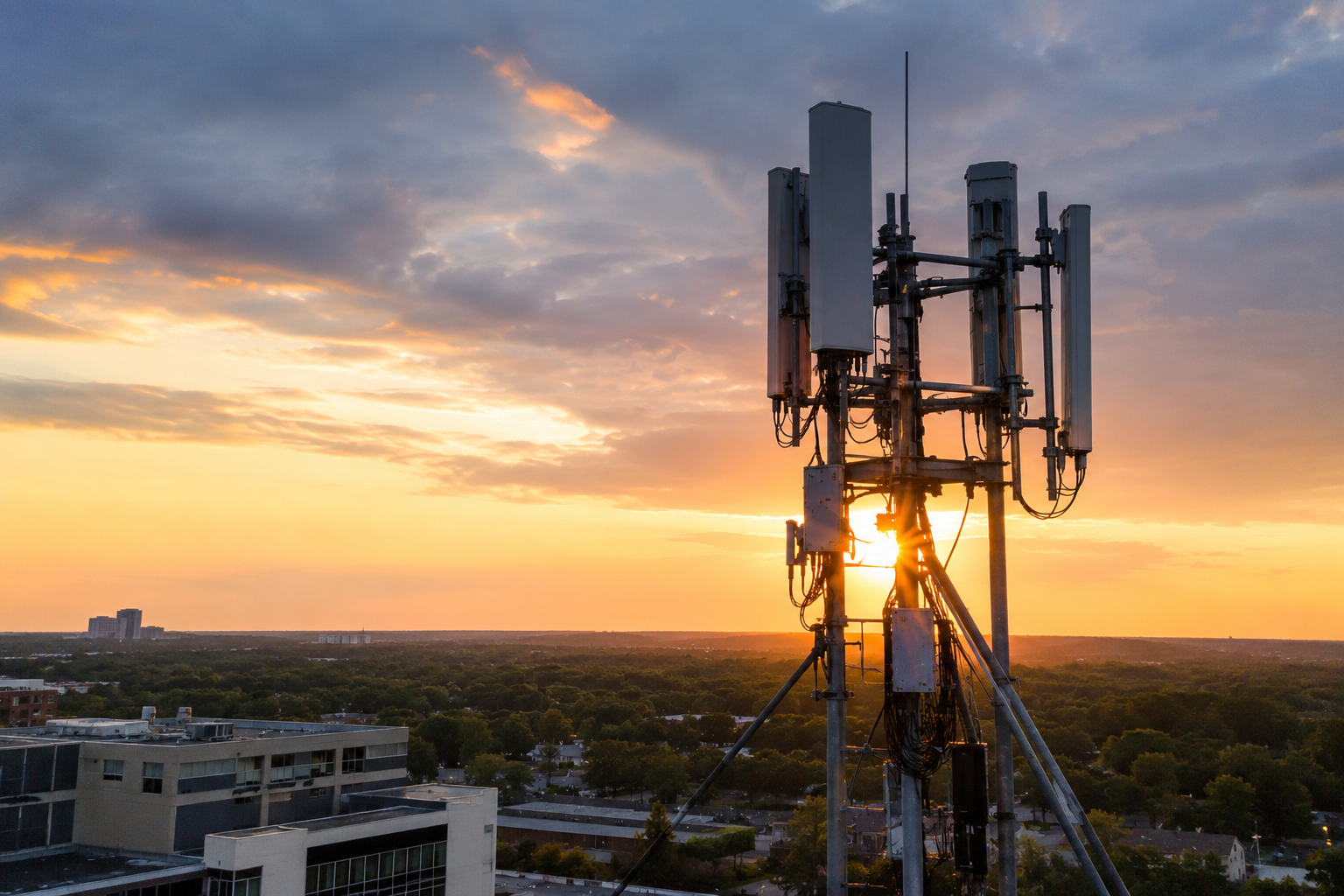
A typical cell site contains far more than the visible tower itself. The antennas mounted on the structure transmit and receive signals, but additional equipment located in nearby cabinets or shelters handles data processing, routing, network management, cooling systems, and communication with the rest of the cellular network. Every one of these components depends on electrical power.
Under normal conditions, cell towers receive electricity directly from the local power grid just like homes, businesses, and other facilities. As long as utility power remains available, the tower operates continuously and users rarely think about the infrastructure supporting their calls, text messages, and internet access.
Because cellular communication is considered critical infrastructure, most providers build redundancy into their systems. When commercial power is interrupted, backup systems automatically activate to keep the site operational. In many cases, this transition occurs so quickly that users never notice anything has happened.
The first layer of backup power is usually a battery bank located at the site. These batteries are designed to provide immediate power while utility service is unavailable. Depending on the tower’s design and the provider’s requirements, battery systems may support operations for several hours before becoming depleted.
Some towers also include permanently installed generators. These generators automatically start when grid power is lost and can continue supplying electricity as long as fuel remains available. Generator-equipped sites typically stay online much longer than towers relying solely on batteries.
However, not every tower receives the same level of backup protection. A major site serving a large urban area may have extensive battery reserves and dedicated generators, while a smaller rural tower may depend entirely on battery backup. The result is that two towers located only a few miles apart could remain operational for very different lengths of time during the same blackout.
Geography also plays a role. Urban areas often contain overlapping tower coverage, allowing neighboring sites to help absorb traffic when one location experiences problems. Rural communities usually have fewer towers spread across larger areas, which means the loss of a single site can create significant coverage gaps.
Even when a tower continues receiving power from batteries or generators, it still depends on connections to the broader communications network. Fiber optic lines, microwave links, switching centers, and data facilities all play important roles in moving information across the system. If one of those supporting components fails, users may experience service disruptions even though the tower itself remains operational.
This complexity explains why predicting exactly how long cellular service will remain available during a blackout is difficult. Power at the tower is only one piece of a much larger infrastructure network. As outages grow larger and last longer, additional vulnerabilities begin to appear throughout the system.
The good news is that modern cellular networks are generally more resilient than many people assume. The bad news is that they are not designed to operate indefinitely without power, fuel, maintenance, and supporting infrastructure. Understanding the limitations of those backup systems begins with examining the component that keeps most towers running immediately after an outage: battery backup power.
How Long Do Cell Tower Batteries Typically Last?
When utility power fails, most cellular sites do not shut down immediately. Instead, they automatically switch to backup battery systems designed to keep essential equipment operating until power is restored or a generator takes over.
The amount of runtime available varies widely from one location to another. Some sites may only have enough reserve power to operate for a few hours, while others are equipped with larger battery banks capable of supporting operations much longer. Factors such as tower size, network traffic, weather conditions, and equipment demands all affect how quickly those batteries are depleted.
In general, most cellular providers design battery systems to bridge short-term outages rather than support operations for several days. That means a brief storm-related outage may have little impact on service, but an extended regional blackout creates a much greater risk of communication disruptions.
Heavy network usage can also shorten battery life. When thousands of people suddenly begin making calls, sending messages, checking news updates, and streaming information during an emergency, towers must handle significantly more traffic than normal. Increased demand places additional strain on equipment and can accelerate power consumption.
The table below provides a general idea of how long different sites may remain operational after losing grid power.
| Tower Type | Typical Backup Runtime |
|---|---|
| Small battery-backed site | 2–4 hours |
| Standard battery-backed site | 4–8 hours |
| Large battery system | 8–24 hours |
| Generator-supported site | 24+ hours if fuel is available |
📌 Did You Know?
A strong signal does not always mean the network is functioning normally. Your phone may show full bars even when fiber connections or switching equipment elsewhere in the network are experiencing problems.
These figures are only estimates. Actual performance depends on the specific equipment installed at the site and conditions during the outage.
Another factor many people overlook is that not every tower in an area loses power at the same time. One site may still be operating normally while another nearby has already exhausted its battery reserves. This can create situations where some neighborhoods retain service while others experience weak signals, dropped calls, or complete coverage loss.
As outages continue, providers often prioritize keeping their most important sites operational. Towers serving major population centers, emergency response areas, transportation corridors, and critical facilities may receive fuel deliveries or maintenance support before lower-priority locations.
For most families, the practical takeaway is simple: cellular networks are generally reliable during short outages, but they should not be viewed as a guaranteed communication method for a blackout lasting several days. The longer the outage continues, the greater the chance that battery reserves will be exhausted and service interruptions will begin to spread.
Even before a tower loses power completely, however, users may notice another problem that often appears first: network congestion. In many emergencies, service becomes unreliable long before any equipment actually shuts down.
Why Cell Service Often Becomes Unreliable Before Towers Shut Down
One of the biggest misconceptions about blackouts is that cellular service works perfectly until a tower loses power. In reality, many people experience communication problems long before backup batteries run out or generators stop operating.
The reason is simple: emergencies create a sudden surge in network traffic.
When a major outage occurs, thousands of people often reach for their phones at the same time. Family members check on relatives, neighbors exchange information, people search for updates, and many attempt to stream news coverage or monitor social media for developing situations. Even if the local network remains fully powered, the sheer volume of activity can overwhelm available capacity.
This is why calls may fail, texts can be delayed, and mobile internet speeds often slow dramatically during large-scale emergencies. The equipment is still operating, but it is being asked to handle far more traffic than it normally would.
Text messages typically have a better chance of getting through because they require much less bandwidth than voice calls or data-heavy applications. If communication becomes difficult, sending a short text is often more reliable than repeatedly trying to place a phone call.
Congestion problems become even more noticeable when multiple towers in an area begin experiencing issues. As one site goes offline, nearby towers must absorb additional users, creating a ripple effect across the network. Coverage may technically still exist, but performance can deteriorate quickly.
This pattern has been observed during hurricanes, ice storms, wildfires, and other large disasters where infrastructure remains partially functional but demand spikes far beyond normal levels. In many cases, people assume the network has failed completely when the real issue is simply that too many users are trying to access it at once.
The longer an outage lasts, the more serious these challenges become. As we discuss in How Fast Society Changes During a Long-Term Power Outage, disruptions tend to compound over time rather than remain isolated. Communication systems, fuel supplies, transportation networks, and emergency services all become increasingly interconnected as conditions worsen.
Mobile data is often affected first because it consumes significantly more network resources than basic texting. Activities such as streaming video, uploading photos, downloading updates, and browsing high-traffic websites can place substantial strain on the system during emergencies.
For preparedness purposes, it is important to understand that “working” and “working well” are not the same thing. A tower may still be online, but if calls constantly fail and internet speeds crawl to a halt, the practical result for users is often similar.
That is why communication planning should never assume cellular service will remain fully functional throughout an extended outage. Even when backup power systems are doing their job, network congestion can create problems much earlier than most people expect.
The first signs of these issues often begin within hours of a widespread outage, which raises an important question: what does communication typically look like as a blackout progresses through the first day?
What Happens During the First 24 Hours Without Power?
The first day of a blackout is usually when cellular networks face their greatest test. Most towers still have backup power available, but user demand rises sharply as people try to gather information, contact family members, and determine how serious the situation will become.
While every outage is different, the timeline below reflects what commonly happens during a widespread power failure.
First Hour
Immediately after the power goes out, most people notice little difference in cellular service. Towers automatically switch to battery backup systems, and many users continue making calls, sending texts, and browsing the internet without realizing anything has changed behind the scenes.
Traffic often increases almost immediately, however. People begin checking outage maps, weather reports, local news updates, and social media feeds. Family members may also start calling relatives to confirm everyone is safe.
4–8 Hours
As the outage continues, network congestion often becomes more noticeable. Call quality may decline, websites can load more slowly, and mobile data speeds may become inconsistent.
This is also the point where some smaller battery-backed sites begin approaching the limits of their backup power. Most users may not notice individual tower issues yet, but providers are already monitoring network performance closely.
If you’re relying on your phone for emergency information, this is a good time to conserve battery life and avoid unnecessary use. Many preparedness-minded families also switch to alternative information sources such as emergency radios. Our guide to Best Emergency Solar Radios for Survival explains why many people consider them a critical backup communication tool.
12–24 Hours
Once an outage reaches the half-day mark, conditions can begin changing more rapidly. Some towers may exhaust their battery reserves, while others continue operating on generators or larger backup systems.
Coverage gaps can start appearing in certain areas, especially in rural communities where fewer towers serve larger geographic regions. Users may notice weaker signals, more frequent dropped calls, or longer delays when sending messages.
At this stage, many of the concerns discussed in The First 24 Hours of a Blackout begin affecting daily life beyond communication alone. Fuel availability, food storage, refrigeration, and access to reliable information all become increasingly important.
Beyond 24 Hours
If power has not been restored after a full day, the situation becomes much more dependent on local conditions. Generator-supported sites may continue operating, while battery-only locations are increasingly likely to experience outages.
Network reliability often becomes inconsistent rather than disappearing completely. One area may still have strong service while another nearby experiences significant communication problems.
For most people, the first 24 hours represent the transition period between a temporary inconvenience and a potentially longer-term emergency. Understanding that transition helps explain why relying on a single communication method can be risky when outages last longer than expected.
The next factor that influences reliability is location, because people living in rural areas often face very different communication challenges than those living in larger cities.
💡 Pro Tip
Switch your phone to Low Power Mode as soon as a prolonged outage begins and avoid unnecessary streaming or social media. Conserving your battery early gives you more communication options later if charging becomes difficult.
Why Rural Areas Usually Lose Service Faster Than Cities
Where you live can have a major impact on how long cellular service remains available during a blackout. While no area is immune to communication problems, rural communities often face greater challenges than cities when outages become prolonged.
One reason is simple coverage density. Urban areas typically have many towers positioned relatively close together, creating overlapping coverage zones. If one site experiences problems, nearby towers may be able to absorb at least part of the lost traffic. Service may slow down, but communication often remains possible.
Rural areas operate differently. Towers are usually spaced much farther apart because they must cover larger geographic regions with fewer customers. When a single site goes offline, there may not be another tower nearby capable of filling the gap. The result can be a significant reduction in coverage or a complete loss of signal for some users.
Backup power differences can also play a role. Larger metropolitan areas often contain sites that serve hospitals, emergency services, transportation corridors, and other critical infrastructure. These locations are more likely to receive priority attention during extended outages.
In contrast, remote sites may wait longer for maintenance crews, fuel deliveries, or repairs if resources are stretched across a large disaster area. Even when providers work quickly, reaching rural locations can become difficult if roads are blocked by storm damage, flooding, or other hazards.
This issue becomes even more important during large-scale emergencies. As discussed in What Stops Working First in a Long-Term Blackout, infrastructure systems often begin affecting one another as an outage grows. Fuel distribution problems, transportation disruptions, and workforce shortages can all delay efforts to keep communication networks running.
Many rural residents also depend on a smaller number of communication options overall. A city may have multiple cellular providers, fiber internet connections, and public information sources available. In rural communities, losing one tower may eliminate the primary communication method for an entire area.
That doesn’t mean rural residents are helpless. In fact, many preparedness-minded households compensate by maintaining alternative communication tools such as GMRS radios, emergency weather radios, and backup power systems. Having these options becomes increasingly valuable as outages extend beyond the first day.
If you live outside a major population center, it is wise to assume cellular coverage may become unreliable sooner than official estimates suggest. Planning ahead for that possibility can prevent a minor inconvenience from becoming a major problem when communication is needed most.
Fortunately, even when networks are under strain, one communication method often remains more reliable than others: text messaging. Understanding why can help you stay connected when voice calls start failing.
Will Text Messages Work Longer Than Phone Calls?
In many emergencies, text messages continue working even when phone calls become difficult or impossible to complete. That is one reason emergency management agencies often recommend texting as a primary communication method during disasters.
The main advantage of text messaging is efficiency. A short SMS message requires far less network capacity than a voice call, video chat, or internet-based messaging service. When networks become congested, providers can often move text messages through the system even when call volumes are overwhelming available resources.
This doesn’t mean texts are guaranteed to work. Delays can still occur, especially during large-scale emergencies when millions of people are trying to communicate at the same time. However, a message that takes several minutes to arrive is usually better than a phone call that never connects at all.
Another benefit is that text messages do not require both parties to be available simultaneously. A family member can receive the message later when signal strength improves, the network becomes less congested, or their phone reconnects to a functioning tower.
For blackout preparedness, it is a good idea to establish simple communication plans before an emergency occurs. Decide who family members should contact, where updates will be shared, and how often everyone should check in. These small preparations can reduce confusion when normal communication becomes unreliable.
If internet-based apps such as Facebook Messenger, WhatsApp, or other messaging platforms stop working because data service is limited, traditional SMS texting may still remain available. That is another reason it is important to keep important phone numbers saved directly on your device rather than relying entirely on app-based contacts.
Many preparedness experts recommend keeping messages brief during emergencies. Short texts place less demand on the network and are generally transmitted more efficiently than long conversations. A simple message such as “We’re safe. Staying home. Battery at 80%.” often communicates everything family members need to know.
As outages continue beyond the first day, however, the issue shifts from network congestion to power sustainability. Even towers equipped with generators cannot operate indefinitely if fuel supplies stop arriving.
That fuel dependency becomes one of the biggest challenges facing communication networks during long-term blackouts.
🚨 Imagine This…
A powerful ice storm knocks out electricity across several counties. Voice calls repeatedly fail because thousands of people are trying to call at once, but a short text message reaches your family within minutes, confirming everyone is safe.
What Happens If Fuel Deliveries Stop?
Battery backups are only the first layer of protection for cellular networks. Once those batteries become depleted, many larger sites rely on generators to continue operating. As long as fuel is available, those generators can keep critical equipment running for days or even weeks.
The problem is that generators do not produce power on their own. They require a steady supply of diesel, gasoline, or propane, and that creates another vulnerability during a prolonged blackout.
In a short outage, fuel availability is rarely a concern. Providers typically maintain reserves at important sites and have contracts in place to replenish supplies when needed. During a widespread emergency, however, refueling thousands of locations becomes much more difficult.
Road closures, flooding, severe weather, fuel shortages, and damaged infrastructure can all interfere with delivery schedules. If fuel trucks cannot reach a site, even the best backup generator eventually becomes useless.
This challenge becomes more significant as outages stretch from days into weeks. Communication providers must prioritize which locations receive fuel first, often focusing on sites that serve hospitals, emergency responders, transportation corridors, and major population centers.
Smaller or less critical locations may not receive the same level of support. That doesn’t mean they are abandoned, but limited resources often force difficult decisions during large-scale disasters.
Fuel distribution problems affect much more than cellular networks. As discussed in How to Store Gasoline Safely for Emergencies, fuel quickly becomes one of the most important resources during an extended outage.
Generators, emergency vehicles, supply trucks, and utility crews all compete for the same limited supply.
This is one reason communication systems tend to become less reliable the longer a blackout continues. Even if towers survive the initial power loss and battery backup period, they still depend on a complex support network to remain operational.
For individuals and families, the lesson is not that cell service will disappear overnight. Rather, it is that every additional day without power introduces new challenges that can affect communication reliability. A network that functions reasonably well after 24 hours may look very different after a week.
That reality also raises another important question: even if towers remain powered, will mobile internet and data services continue working normally? In many cases, the answer is more complicated than people expect.
⚠ Important Warning
Never rely on your smartphone as your only communication method during a prolonged blackout. Batteries fail, towers lose power, and network congestion can make service unreliable even when a signal is present.
How Long Will Internet and Mobile Data Continue Working?
Many people think of cellular service as a single system, but voice calls, text messages, and mobile internet all place different demands on the network. As a result, one service may continue working while another becomes slow or unreliable.
In most emergencies, mobile data is often the first thing users notice deteriorating. Loading websites, streaming videos, downloading files, and using social media require far more bandwidth than sending a simple text message. When thousands of people attempt to access information at the same time, network performance can decline quickly.
Even if a tower remains fully powered, it still needs a connection to the broader communications network.
Most sites rely on fiber-optic cables or microwave links to carry traffic between towers, switching centers, and internet infrastructure. If those connections are damaged or lose power elsewhere in the system, users may experience slow speeds or outages despite having a strong signal on their phones.
This is one reason a phone can show several bars of service while websites refuse to load. The tower may still be functioning, but another part of the network is experiencing problems.
During shorter outages, internet access often remains available, although speeds may fluctuate significantly.
As outages become longer and more widespread, however, congestion, equipment failures, and infrastructure disruptions can create increasing challenges.
Many people discovered this during major hurricanes and winter storms when cellular data became painfully slow despite apparently good signal strength. In these situations, basic communication methods such as texting often remain far more reliable than trying to browse the internet or stream video content.
For preparedness purposes, it is smart to assume that mobile data performance will degrade before complete network failure occurs. Downloading important information ahead of time can reduce dependence on real-time internet access, especially if you’re following an Emergency Preparedness Plan during a prolonged outage.
Before a major storm or anticipated outage, consider downloading:
- Offline maps
- Emergency contact lists
- Local evacuation routes
- Medical information
- Important documents
- Emergency preparedness checklists
Having critical information stored directly on your device can make a significant difference if internet access becomes limited later.
The same principle applies to communication plans. If your family relies entirely on internet-based apps, a slowdown or outage can create unexpected problems. Traditional texting, radios, and prearranged meeting plans provide valuable alternatives when data networks become unreliable.
Of course, some people attempt to improve their odds by boosting weak signals and extending the usefulness of available coverage. While these tools are not magic solutions, they can sometimes help maintain communication when service begins to deteriorate. The next section looks at the equipment that may help during a prolonged outage.
Backup Communication Methods That Still Work
Cellular networks are remarkably resilient, but every backup system has limits. Batteries eventually run down, generators require fuel, and network congestion can make communication difficult long before a tower actually shuts down. That is why emergency preparedness plans should never rely entirely on a smartphone.
One of the simplest backup communication tools is an emergency weather radio. Unlike a phone, a weather radio does not depend on cellular networks or mobile data connections to receive important updates. Many models can be powered by solar panels, hand cranks, or backup batteries, making them useful during extended outages when charging options become limited.
If you do not already have one, our guide to Best Emergency Solar Radios for Survival explains what features matter most and how these radios can help you stay informed when traditional communication channels become unreliable.
For communicating with family members nearby, walkie-talkies are often one of the most practical solutions.
FRS and GMRS radios allow direct communication without relying on towers, internet connections, or outside infrastructure. They are especially useful for neighborhoods, campsites, rural properties, and families who may need to coordinate activities during a prolonged outage.
For a closer look at recommended models and realistic range expectations, see our guide to Best Emergency Walkie-Talkies for Long-Range Communication.
Some preparedness enthusiasts also invest in amateur radio equipment. HAM radio operators can communicate across much greater distances than standard walkie-talkies and often play an important role during disasters when conventional communication systems are damaged. While HAM radio requires additional equipment and licensing, it remains one of the most capable independent communication methods available.
For local communication, many families find that walkie-talkies are easier to learn and deploy than HAM radio equipment.
Beyond equipment, every family should have a basic communication plan. Our Emergency Preparedness Plan guide can help you build a communication strategy before an outage occurs.
Decide in advance who should be contacted during an emergency, where family members will meet if communication is lost, and how often everyone should check in. A simple plan developed before a disaster is far more effective than trying to create one in the middle of an emergency.
Communication is not just about having the right gear. It is also about having multiple options available when one system fails. The families that adapt most effectively during emergencies are usually the ones that prepared alternatives before they needed them.
🛒 Recommended Emergency Communication Gear
Reliable communication during a prolonged blackout depends on having backup power and alternative ways to stay in contact. These products help keep essential devices running and allow your family to communicate even if cellular networks become overloaded or unavailable.
Jackery Portable Power Station with Solar Panel
A portable power station with solar charging can keep phones, radios, laptops, and other communication equipment powered for days during extended outages. Solar recharging also provides a renewable power source when the electrical grid remains offline.

Midland GMRS Two-Way Radios
GMRS radios provide dependable short-range communication between family members without relying on cell towers or internet service. They are ideal for staying in contact around your neighborhood, campsite, or evacuation area when traditional communication systems fail.

Frequently Asked Questions
Do cell towers work when the power goes out?
Most towers switch to backup batteries or generators and continue operating for a limited period.
How long do cell tower batteries last?
Most battery systems provide between 4 and 24 hours of backup power depending on the site.
Will text messages work if phone calls fail?
Often yes. Text messages require less bandwidth and may continue working during periods of network congestion.
What is the best backup communication method during a blackout?
Emergency radios, GMRS radios, and HAM radios are among the most reliable options because they do not depend on cellular infrastructure. Our guide to Emergency Solar Radios for Survival covers one of the easiest backup communication options for most families.
☑ Communication Preparedness Checklist
- ☑ Keep phones fully charged before storms.
- ☑ Store backup battery banks.
- ☑ Keep emergency contact numbers offline.
- ☑ Download offline maps.
- ☑ Own an emergency weather radio.
- ☑ Keep GMRS or FRS radios available.
- ☑ Create a family communication plan.
📚 Continue Reading
Build a complete blackout communication plan with these related guides.
Final Thoughts
Most cell towers do not shut down immediately when the power goes out. Backup batteries, generators, and redundant systems allow many sites to continue operating for hours or even days after a blackout begins.
However, that does not mean cellular service will remain normal throughout an extended outage. Network congestion, exhausted battery reserves, fuel shortages, damaged infrastructure, and prolonged disruptions can all reduce reliability over time. In many cases, users experience dropped calls, delayed messages, and slow internet connections long before towers stop operating altogether.
For short outages, your phone will likely remain one of your most valuable tools. For longer emergencies, relying on cellular service alone becomes increasingly risky, especially during the conditions described in our guide on How Fast Society Changes During a Long-Term Power Outage.
The best approach is to prepare for both possibilities.
Keep devices charged, maintain backup power sources, download critical information in advance, and review your Emergency Preparedness Checklist before severe weather or grid disruptions occur.
Want a printable backup communication and blackout planning resource? Download our free 17-Page Blackout Preparedness Planner and keep important contacts, emergency supplies, communication plans, and outage checklists organized before the next power outage.
Consider adding alternative communication tools such as weather radios and walkie-talkies to your emergency supplies.
As with food, water, and power, communication is most reliable when you have more than one way to accomplish it. A blackout may take away the convenience of modern networks, but it does not have to leave you completely disconnected.