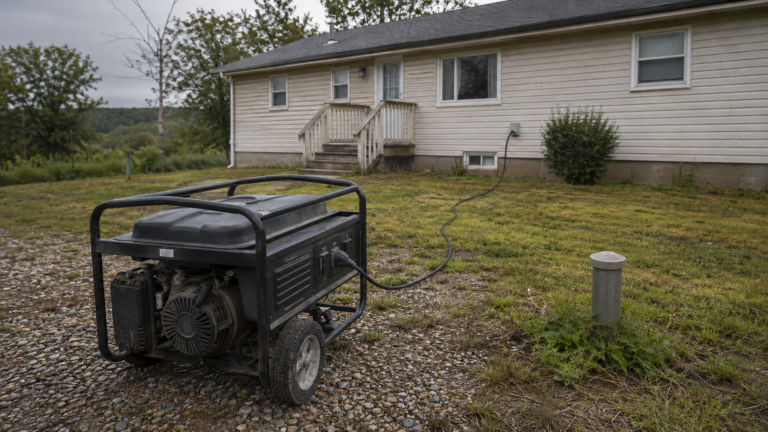
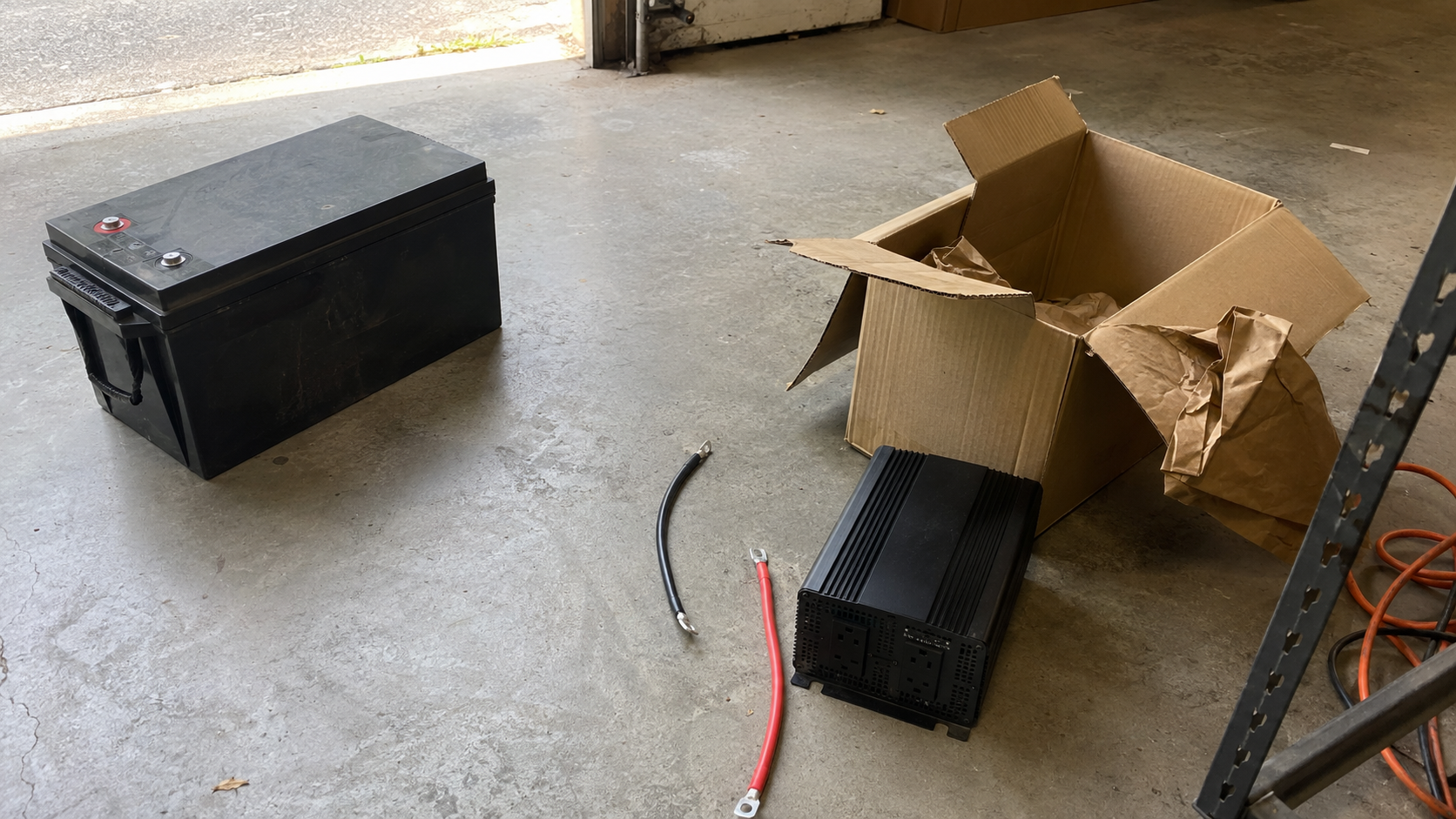
What Size Inverter Do I Need for a 12V 200Ah Battery?
Choosing the correct inverter for a 12V 200Ah battery requires more than matching the inverter’s wattage to the battery’s capacity. A 200Ah rating tells you how much energy the battery can store, but it does not tell you how much power the battery can safely deliver at one time.
This post contains affiliate links. I may earn a small commission at no extra cost to you. Learn more.
A 12V 200Ah battery stores approximately 2,400 watt-hours of energy. However, whether it can safely operate a 1,000-watt, 1,500-watt, or 2,000-watt inverter depends on the battery chemistry, maximum continuous discharge current, battery management system, cable size, fuse protection, and the appliances you intend to power.
Choosing an inverter that is too small can prevent refrigerators, pumps, and other motor-driven appliances from starting. Choosing one that is unnecessarily large can increase cost, idle power consumption, and the amount of current that must safely pass through the battery cables.
Quick Answer: What Size Inverter Do You Need?
For many 12V 200Ah lithium battery systems with a sufficiently high continuous discharge rating, a 1,500-watt pure sine wave inverter is the best overall choice. It provides enough capacity for refrigerators, freezers, televisions, lights, electronics, and many small kitchen appliances without placing the extreme current demands of a larger 3,000-watt inverter on a 12-volt system.
A 2,000-watt inverter may also work, but only when the battery’s continuous discharge rating, BMS, cables, fuse, and connections are designed to handle the required current. Some 200Ah lithium batteries support 200 amps of continuous discharge, while others are limited to only 100 amps.
For a 12V 200Ah AGM or flooded lead-acid battery, a 1,000-watt pure sine wave inverter is generally a more practical match. Lead-acid batteries experience greater voltage drop and lose usable capacity more quickly when subjected to heavy loads.
The inverter should ultimately be sized for the appliances you need to operate—not simply for the battery’s amp-hour rating. You must account for both the normal running wattage and the brief startup surge created by refrigerators, freezers, well pumps, power tools, and other motor-driven equipment.
A larger inverter also does not make the battery last longer. It only determines the maximum amount of AC power the system can deliver at one time. If a 2,000-watt load is placed on a single 12V 200Ah battery, the battery can be depleted surprisingly quickly.
✓ Key Takeaways
- A 1,500-watt pure sine wave inverter is the best overall size for many 12V 200Ah lithium battery systems.
- A 2,000-watt inverter may work, but the battery’s BMS and continuous discharge rating must support the required current.
- A 1,000-watt inverter is generally a more practical choice for a single 12V 200Ah lead-acid battery.
- Size the inverter according to the appliances you plan to operate, including their startup surge wattage.
- The battery’s 200Ah capacity does not automatically mean it can safely power a large inverter.
- Pure sine wave inverters are preferable for refrigerators, freezers, electronics, medical equipment, and motor-driven appliances.
- Correct battery cables, terminal connections, and fuse protection are essential when handling high current on a 12-volt system.
What Size Inverter Can a 12V 200Ah Battery Handle?
A 12V 200Ah battery can generally be paired with an inverter between 1,000 and 2,000 watts, but the battery’s amp-hour capacity alone does not determine the safe inverter size. The most important limitation is how many amps the battery can continuously deliver without overheating, experiencing excessive voltage drop, or triggering its battery management system.
The inverter only draws the amount of power required by the connected appliances. A 2,000-watt inverter does not continuously consume 2,000 watts simply because it is connected. However, the battery, cables, fuse, and connections must still be capable of supporting the inverter’s full potential output.
A basic way to estimate the maximum inverter output supported by a battery is:
Battery voltage × maximum continuous discharge current × inverter efficiency = approximate AC output
Assuming a nominal battery voltage of 12 volts and approximately 90% inverter efficiency, the following estimates show how the battery’s continuous discharge rating affects the inverter size it can support.
| Battery Discharge Rating | Estimated Available AC Power | Practical Inverter Size |
|---|---|---|
| 100 amps continuous | Approximately 1,080 watts | Up to 1,000 watts |
| 150 amps continuous | Approximately 1,620 watts | 1,000 to 1,500 watts |
| 200 amps continuous | Approximately 2,160 watts | 1,500 to 2,000 watts |
These numbers are planning estimates rather than absolute limits. Battery voltage falls while the battery is under load, and the current required by the inverter increases as voltage drops. Startup surges, temperature, battery condition, cable resistance, and inverter efficiency can reduce the amount of usable power.
Check the battery manufacturer’s continuous and peak discharge ratings before selecting an inverter. If the battery has a 100-amp BMS, installing a 2,000-watt inverter does not turn it into a 2,000-watt power source. The BMS will likely shut the battery down when a heavy appliance causes the current to exceed its limit.
Inverter size determines how much power can be delivered at one time, while battery capacity determines approximately how long the load can operate. Our guide explaining how long a 12V 200Ah battery lasts during a blackout provides more detailed runtime examples for common household appliances.
How Battery Type Changes the Recommended Inverter Size
Two batteries can both be labeled 12V 200Ah while performing very differently when connected to a large inverter. Battery chemistry affects usable capacity, voltage stability, discharge current, and how well the battery handles high-wattage appliances.
12V 200Ah LiFePO4 Battery
A 200Ah lithium iron phosphate battery is generally the strongest match for a 1,500-watt inverter. Lithium batteries maintain a steadier voltage under load and usually allow a greater percentage of their stored capacity to be used than lead-acid batteries.
However, not every 200Ah lithium battery has the same discharge capability. One model may include a 100-amp battery management system, while another may support 150 or 200 amps continuously. That difference can determine whether the battery safely operates a 1,000-watt inverter or supports loads approaching 2,000 watts.
A lithium battery with a 100-amp continuous discharge limit is best paired with an inverter around 1,000 watts. A model rated for 150 amps may support a 1,500-watt inverter, but it leaves limited headroom at full output, especially as battery voltage falls. A higher discharge rating provides a more comfortable safety margin. A battery with a genuine 200-amp continuous discharge rating may support a 2,000-watt inverter when the rest of the system is correctly sized.
12V 200Ah AGM Battery
An AGM battery can operate an inverter, but heavy loads cause its voltage to fall more quickly than a comparable lithium battery. Its 200Ah capacity is also normally measured under a relatively slow discharge rate. Pulling more than 100 amps to operate a large inverter can substantially reduce its effective capacity and runtime.
For a single 12V 200Ah AGM battery, a 1,000-watt pure sine wave inverter is usually the most practical choice. A larger inverter can be physically connected, but repeatedly operating high-wattage appliances may produce excessive voltage drop and shorten battery life.
12V 200Ah Flooded Lead-Acid Battery
Flooded deep-cycle batteries have limitations similar to AGM batteries and also require ventilation and regular maintenance. A 750- to 1,000-watt inverter is normally a more reasonable match for a single 200Ah flooded battery.
Lead-acid batteries should not be treated as though their entire rated capacity is available during every blackout. Frequently discharging them deeply—especially under heavy inverter loads—can significantly reduce their service life.
💡 Pro Tip
Check the battery’s specification sheet before purchasing the inverter. Look specifically for the maximum continuous discharge current and peak discharge current. The 200Ah capacity rating cannot replace these two figures when determining how large an inverter the battery can safely support.
Choose the Inverter Based on the Appliances You Need to Run
The best inverter size is determined by the appliances you expect to operate at the same time. Start by adding their running wattages, then account for the brief surge required by the appliance with the largest motor or compressor.
Lights, phone chargers, laptops, and televisions usually have relatively small power requirements. Refrigerators, freezers, pumps, microwaves, coffee makers, and heating appliances place much heavier demands on an inverter and battery.
| Appliance or Device | Typical Running Watts | Possible Startup Watts | Suggested Inverter Range |
|---|---|---|---|
| Phone charger | 5–20 watts | Usually no significant surge | 300 watts or less |
| Laptop computer | 45–100 watts | Usually no significant surge | 300–500 watts |
| Television | 50–150 watts | Small startup increase | 300–500 watts |
| Refrigerator | 100–250 watts | 600–1,200 watts | 1,000–1,500 watts |
| Chest freezer | 100–200 watts | 500–1,000 watts | 1,000–1,500 watts |
| Coffee maker | 800–1,500 watts | Usually close to running wattage | 1,500–2,000 watts |
| Microwave | 1,000–1,800 watts input | Moderate startup increase | 1,500–2,000 watts or larger |
| Small sump pump | 800–1,500 watts | 1,500–3,000 watts | 2,000 watts or larger |
These are general planning ranges. The actual wattage printed on the appliance label or measured with a watt meter should always take priority. Microwave ovens are especially easy to underestimate because the advertised cooking wattage may be lower than the electrical input wattage shown on the appliance label.
Example Inverter Calculation
Suppose you want to power a refrigerator using 180 running watts, a chest freezer using 150 watts, a television using 80 watts, and several LED lights using 40 watts. Together, the normal running load is approximately 450 watts.
If the refrigerator temporarily requires 1,000 watts while starting, the system may briefly need approximately 1,270 watts while the freezer, television, and lights remain on. A 1,500-watt inverter with sufficient surge capacity would be a reasonable choice for this setup.
You can reduce the required inverter size by staggering demanding appliances. For example, avoid using a microwave or coffee maker while refrigerator and freezer compressors are starting. This simple form of load management can prevent inverter overloads and conserve battery power during an extended outage.
🚨 Emergency Scenario
A power outage begins during the night, and you connect a refrigerator, chest freezer, several lights, and a television to a 12V 200Ah lithium battery through a 1,500-watt inverter. The combined running load remains well below the inverter’s continuous rating, and its surge capacity allows the refrigerator and freezer compressors to start.
The next morning, someone plugs in a 1,200-watt coffee maker while both compressors are running. The total load suddenly exceeds the inverter’s continuous output, causing it to shut down. Even though the battery still has plenty of stored energy, the inverter cannot supply every appliance simultaneously.
This is why inverter sizing must account for which appliances may operate at the same time—not merely the total capacity of the battery. Staggering high-wattage loads can often make a modest system far more useful during a blackout.
Continuous Wattage vs. Surge Wattage
Every inverter has a continuous output rating and a surge rating. Understanding the difference is essential when powering refrigerators, freezers, pumps, air conditioners, or other equipment containing a motor or compressor.
The continuous wattage rating is the amount of power the inverter can supply during normal operation. A 1,500-watt inverter should be capable of supplying loads totaling up to approximately 1,500 watts continuously under the conditions specified by its manufacturer.
The surge wattage rating is the higher amount of power the inverter can provide for a short period. This temporary capacity helps motor-driven appliances overcome the additional resistance they experience when starting.
For example, a refrigerator may use only 180 watts after its compressor begins running but briefly require 900 watts or more during startup. A 500-watt inverter could handle the refrigerator’s running wattage while still shutting down every time the compressor attempts to start.
Many 1,500-watt inverters advertise a surge rating near 3,000 watts. However, the duration of that surge varies considerably. One inverter may sustain its advertised surge for several seconds, while another may only deliver it for a fraction of a second. Check the manufacturer’s specifications instead of relying on the advertised number alone.
The Battery Must Also Support the Surge
A high surge rating on the inverter does not guarantee that the battery can provide the necessary current. At 90% efficiency, producing 1,500 watts from a nominal 12-volt battery requires approximately 139 amps. Producing a brief 3,000-watt surge may require approximately 278 amps.
If the battery’s BMS allows only 200 amps of peak discharge, it may shut down before the inverter reaches its advertised surge output. The same problem can occur when battery cables are undersized or connections create excessive resistance.
⚠ Warning
Do not treat an inverter’s surge rating as additional continuous power. A 1,500-watt inverter with a 3,000-watt surge rating cannot continuously operate a 2,000-watt heater, microwave, or coffee maker. Sustained loads must remain within the inverter’s continuous rating.
For reliable blackout power, choose an inverter with a continuous rating above your expected simultaneous load and a surge rating capable of starting the largest motor-driven appliance in the system. Leaving approximately 20% headroom also reduces the chance of overload shutdowns when several appliances cycle on at nearly the same time.
How Many Amps Will the Inverter Draw From the Battery?
Inverter wattage becomes much more demanding when converted into amperage on a 12-volt system. Because the battery voltage is low, producing a large amount of AC power requires a substantial amount of DC current.
The approximate current draw can be calculated with the following formula:
AC load watts ÷ battery voltage ÷ inverter efficiency = DC amps
The table below assumes the inverter is operating at its full continuous rating, the battery is supplying 12 volts, and the inverter is approximately 90% efficient.
| Inverter Output | Estimated DC Current at Full Output | Battery System Consideration |
|---|---|---|
| 300 watts | Approximately 28 amps | Suitable for small electronics and light loads |
| 500 watts | Approximately 46 amps | Moderate demand on most 200Ah batteries |
| 1,000 watts | Approximately 93 amps | Near the limit of a battery with a 100-amp BMS |
| 1,500 watts | Approximately 139 amps | Requires a high-discharge battery and heavy cabling |
| 2,000 watts | Approximately 185 amps | Approaches the limit of many 200-amp lithium BMS units |
| 3,000 watts | Approximately 278 amps | Generally too demanding for one 12V 200Ah battery |
Actual current can be higher than these estimates because battery voltage decreases under load. For example, if the voltage at the inverter terminals falls below 12 volts, the inverter must draw additional amperage to produce the same AC output.
This is one reason a 3,000-watt inverter is usually a poor match for a single 12V 200Ah battery. At full output, it could demand close to 280 amps under ideal conditions and even more as battery voltage falls. Many 200Ah lithium batteries cannot continuously supply that much current, while a single lead-acid battery would experience substantial voltage drop.
The inverter will consume far less current when operating smaller loads. A 1,500-watt inverter powering a 150-watt refrigerator does not pull 139 amps continuously. Its current draw will be based primarily on the refrigerator’s actual power consumption, plus inverter losses and the inverter’s own idle consumption.
Should You Choose a Pure Sine Wave Inverter?
For a 12V 200Ah battery used as emergency household power, a pure sine wave inverter is the better choice. Inverter wattage determines how much equipment can be powered, while the waveform affects how that equipment operates.
A pure sine wave inverter produces smooth AC power that closely resembles the electricity supplied by a household outlet. It is compatible with nearly all common appliances and is especially important for equipment containing sensitive electronics, variable-speed controls, motors, compressors, or digital displays.
Pure sine wave power is recommended for devices such as:
- Refrigerators and freezers
- CPAP machines and other medical equipment
- Laptop computers and televisions
- Microwave ovens
- Furnace blowers and circulation pumps
- Battery chargers and cordless power-tool chargers
- Modern appliances with electronic controls
What About a Modified Sine Wave Inverter?
Modified sine wave inverters are generally less expensive, but their stepped electrical output can create problems with certain appliances. Some motors may run hotter or produce an audible humming sound. Digital clocks may keep inaccurate time, and some chargers, medical devices, or electronically controlled appliances may not operate correctly.
A modified sine wave inverter may be acceptable for simple resistive loads or basic electronics that the manufacturer specifically approves. However, the lower purchase price rarely justifies the compatibility limitations when the inverter will serve as a primary source of household backup power.
📌 Did You Know?
An appliance can remain below an inverter’s wattage rating and still operate poorly if it is incompatible with the inverter’s waveform. Wattage and waveform are separate considerations, which is why a properly sized pure sine wave inverter is the safest general-purpose option for blackout use.
For most readers building a system around a single 12V 200Ah lithium battery, a 1,500-watt pure sine wave inverter offers the best balance of compatibility, usable output, and manageable battery current. Choosing pure sine wave power from the beginning also avoids replacing a cheaper inverter later when more demanding appliances are added.
Battery Cable and Fuse Size Matter Just as Much as Inverter Size
A 12-volt inverter system can carry more than 100 or even 200 amps between the battery and inverter. At those current levels, undersized cables, loose terminals, and improper fuse protection can become more dangerous than the inverter itself.
Battery cables create electrical resistance. If the cables are too small or too long, voltage drops before the power reaches the inverter. The inverter may then sound a low-voltage alarm or shut down even though the battery still has stored energy.
Excessive resistance also produces heat. A connection that feels slightly loose at a low load can become dangerously hot when a microwave, coffee maker, refrigerator compressor, or pump places a heavy demand on the system.
Keep the Battery Cables Short
Mount the inverter as close to the battery as the manufacturer safely allows while maintaining proper ventilation. Longer cable runs require larger conductors to control voltage drop.
Both the positive and negative cables should be appropriately sized for the inverter’s maximum DC current. Use flexible, fine-stranded copper battery cable with properly crimped lugs rather than household extension-cord wire or light automotive accessory wire.
There is no single cable size that is correct for every 1,500- or 2,000-watt inverter. The required size depends on maximum current, cable length, insulation temperature rating, installation method, acceptable voltage drop, and the inverter manufacturer’s instructions. Large 12-volt inverters commonly require heavy cable in the 1/0, 2/0, or larger range, but the inverter manual must provide the final specification.
Install Proper Overcurrent Protection
The positive battery cable should have correctly rated DC overcurrent protection installed close to the battery. Its purpose is to protect the cable if it becomes damaged or shorted—not merely to protect the inverter from an overload.
The fuse or circuit breaker must be rated for DC use, suitable for the battery system’s available fault current, large enough to support the inverter’s normal operation, and small enough to protect the connected cable. Never install a larger fuse simply because the original fuse repeatedly opens.
⚠ Important Safety Warning
A 12V battery may not present the same shock hazard as household voltage, but it can release an enormous amount of current during a short circuit. That current can melt tools, ignite wiring, damage the battery, or start a fire. Follow the battery and inverter manuals, cover exposed terminals, use insulated tools, and have a qualified installer complete the system if you are uncertain about cable, fuse, grounding, or AC wiring requirements.
Secure every connection using the manufacturer’s specified torque and recheck the system after its first few high-load cycles. Discoloration, melted insulation, a burning smell, repeated low-voltage alarms, or a hot cable or terminal indicates a problem that should be corrected immediately.
How Long Will a 12V 200Ah Battery Run an Inverter?
The inverter’s maximum wattage rating does not determine battery runtime by itself. Runtime depends on the actual wattage being used by the connected appliances, the battery’s usable capacity, inverter efficiency, battery condition, temperature, and cable losses.
A 12V 200Ah battery contains approximately 2,400 watt-hours of nominal energy. A lithium battery may provide roughly 80% to 100% of that capacity depending on the manufacturer’s recommendations and the reserve you keep. Lead-acid batteries are commonly limited to a shallower discharge when long service life is a priority.
The estimates below assume 90% inverter efficiency, 90% usable capacity from a lithium battery, and 50% usable capacity from a lead-acid battery.
| Actual AC Load | Estimated Lithium Runtime | Estimated Lead-Acid Runtime |
|---|---|---|
| 100 watts | Approximately 19.4 hours | Approximately 10.8 hours |
| 500 watts | Approximately 3.9 hours | Approximately 2.2 hours |
| 1,000 watts | Approximately 1.9 hours | Approximately 1.1 hours |
| 1,500 watts | Approximately 1.3 hours | Approximately 43 minutes |
| 2,000 watts | Approximately 58 minutes | Approximately 32 minutes |
These figures are planning estimates, not guaranteed runtimes. Actual lead-acid runtime may be considerably shorter under heavy loads because its effective capacity decreases as the discharge rate increases. A lithium battery must also have a BMS capable of supporting the required current.
Does a Larger Inverter Drain the Battery Faster?
A larger inverter does not automatically draw its full rated wattage, but it may consume more power while turned on with little or no load. This is known as idle or no-load consumption.
For example, a 2,000-watt inverter powering a 100-watt television will mainly draw the energy required by the television, conversion losses, and the inverter’s idle consumption. It will not continuously pull 2,000 watts. However, an unnecessarily oversized inverter may waste more battery power during long periods when only small devices are operating.
Turn the inverter off when AC power is not needed, especially overnight. Whenever possible, charge phones and operate other compatible equipment directly from 12-volt DC or USB outlets to avoid inverter conversion losses.
For a more personalized estimate, use our Battery & Power Station Runtime Calculator to calculate how long your battery can power specific appliances based on its capacity, inverter limits, and actual appliance wattage.
Can You Use a 3,000-Watt Inverter With a 12V 200Ah Battery?
A 3,000-watt inverter can be physically connected to some 12V 200Ah batteries, but it is generally too large for a single battery of this capacity. The inverter will not continuously draw 3,000 watts unless the connected appliances demand that much power, but the battery system must still be capable of supporting the inverter’s potential current.
At 90% efficiency, producing 3,000 watts from a nominal 12-volt battery requires approximately 278 amps. As battery voltage falls under load, the current can exceed 300 amps. Most single 200Ah lithium batteries cannot continuously provide that much current, and lead-acid batteries will experience severe voltage drop under such a heavy load.
The inverter’s surge rating creates another limitation. A 3,000-watt inverter may advertise a surge capacity of 6,000 watts or more. Supplying that surge could require well over 500 amps from the battery for a brief period. The battery’s BMS may shut down long before the inverter reaches its advertised surge output.
When a 3,000-Watt Inverter Makes Sense
A 3,000-watt inverter is better suited to a larger battery bank or a higher-voltage system. Multiple compatible batteries connected in parallel can increase the available capacity and discharge current while maintaining a 12-volt system. However, the batteries, cables, fuses, and busbars must be properly matched and balanced.
For systems expected to deliver approximately 3,000 watts regularly, moving to 24 or 48 volts is usually more practical. Increasing system voltage reduces the DC current required to produce the same amount of AC power, allowing the system to operate with more manageable cable sizes and less voltage drop.
If a single 12V 200Ah battery cannot support the runtime or power demands you need, use our Battery Bank Size Calculator to estimate the battery capacity needed for your loads, desired runtime, system voltage, and usable battery capacity.
💡 Pro Tip
Do not buy a 3,000-watt inverter simply because it offers more capacity. If your largest expected simultaneous load is below 1,500 watts, a properly sized 1,500-watt pure sine wave inverter will usually cost less, consume less idle power, and place less strain on a single 12V 200Ah battery.
🛒 Recommended Inverter Sizing Gear
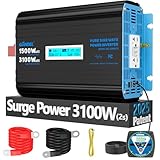
GIANDEL 1,500-Watt Pure Sine Wave Inverter
This 12V pure sine wave inverter closely matches the needs of many 200Ah lithium battery systems. It provides 1,500 watts of continuous output and up to 3,100 watts of brief surge capacity.
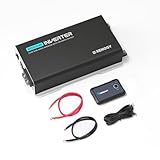
Renogy 2,000-Watt Pure Sine Wave Inverter
This larger option provides 2,000 watts of continuous output and a 4,000-watt surge rating. Use it only when the battery’s BMS, discharge rating, cables, and fuse protection can safely support the higher current.

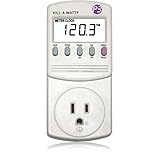
P3 Kill A Watt Electricity Usage Monitor
A plug-in watt meter helps measure the actual running wattage of household appliances before sizing an inverter. It is useful for refrigerators, freezers, televisions, and other standard 120-volt appliances, although it may not capture extremely brief startup surges.
Frequently Asked Questions
Is a 1,500-Watt Inverter Big Enough for a 12V 200Ah Battery?
A 1,500-watt pure sine wave inverter is a good overall choice for many 12V 200Ah lithium batteries. The battery must have a continuous discharge rating and BMS capable of supporting the required current.
Can a 12V 200Ah Battery Run a 2,000-Watt Inverter?
Some 200Ah lithium batteries can support a 2,000-watt inverter, but the system may draw approximately 185 amps at full output. Check the battery’s continuous discharge limit and use correctly sized cables and fuse protection. A single lead-acid battery is generally not a practical choice for loads this large.
Does a Larger Inverter Make the Battery Last Longer?
No. A larger inverter increases the maximum amount of power available at one time but does not increase battery capacity. Runtime depends primarily on the actual appliance load, usable battery energy, and inverter efficiency.
📚 Continue Reading
Continue building your blackout power system with these related guides:
Final Thoughts
For most 12V 200Ah lithium battery systems, a 1,500-watt pure sine wave inverter provides the best balance of usable power, appliance compatibility, and manageable battery current. A 2,000-watt inverter may work when the battery’s discharge rating and BMS support it, while a 1,000-watt inverter is generally more practical for a single lead-acid battery.
Choose the inverter according to the appliances you need to operate, including their startup requirements. Confirm the battery’s discharge limits, follow the inverter manufacturer’s cable and fuse instructions, and avoid installing more inverter capacity than the battery system can safely support.