TopOak Rooftop Tent Review: All 6 Models Compared (2026)
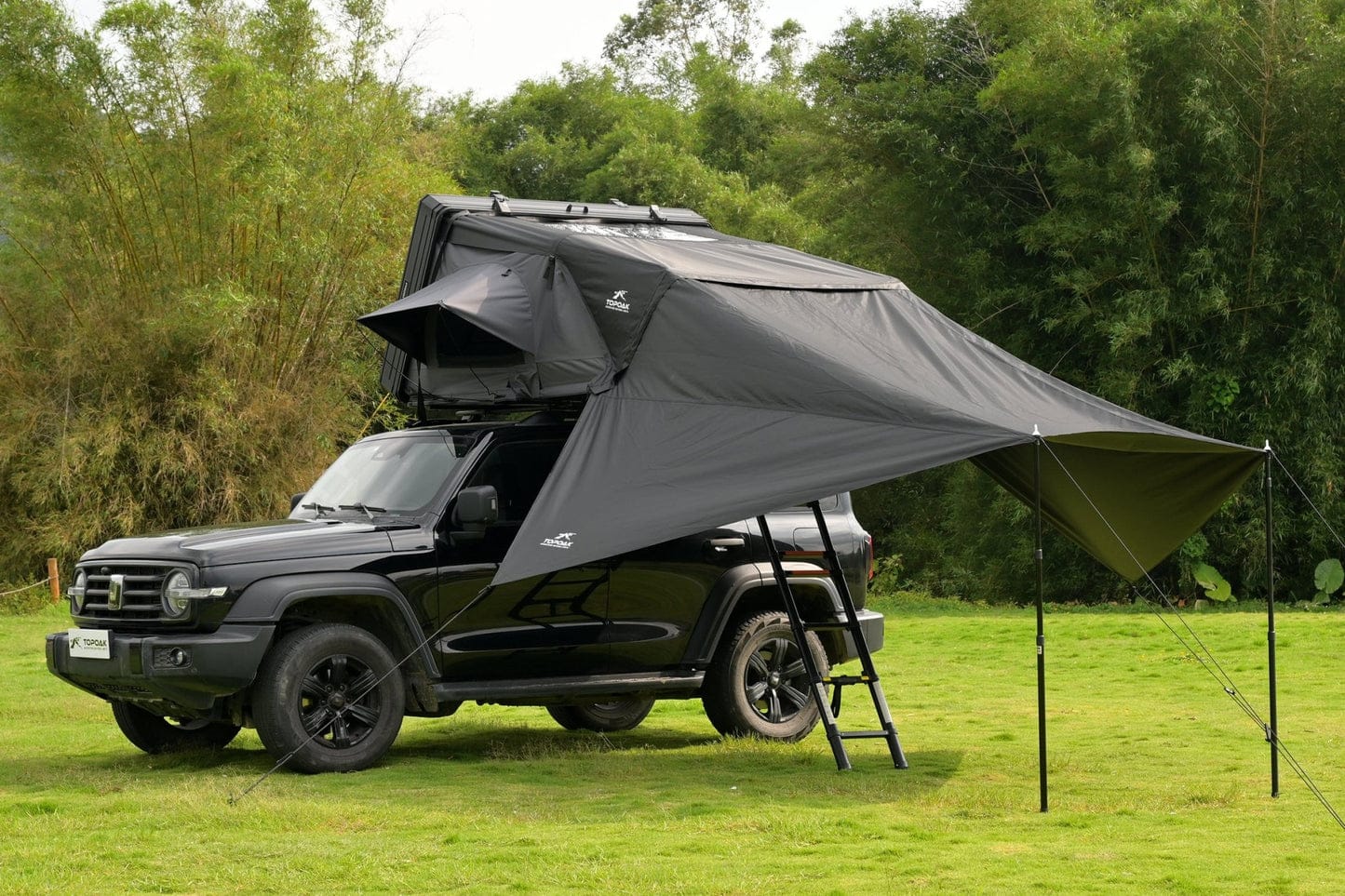
This TopOak rooftop tent review compares all six hard-shell models, from the lightweight 110-pound Galaxy Light to the 187-pound Nebula. Although these tents share aluminum shells, blackout fabric and rapid deployment, they differ considerably in weight, interior space, rainfly coverage, sleeping capacity and vehicle compatibility.
This post contains affiliate links. I may earn a small commission at no extra cost to you. Learn more.
The Galaxy Light is designed for buyers who need a lighter, lower-profile rooftop tent, while the Vision provides the most sleeping space. The Galaxy Pro emphasizes full rainfly coverage, the Stellar provides panoramic views and a skylight, and the Nebula uses an X-frame design to create additional interior height.
This guide compares all six TopOak rooftop tents using manufacturer specifications and feature-by-feature analysis. It also explains the differences between the Galaxy Pro and Stellar, which models work best with smaller vehicles and what to verify before mounting a rooftop tent.
Quick Answer: Which TopOak Rooftop Tent Is Best?
The Galaxy Light is the most practical TopOak tent for vehicles with lower roof-load limits because it weighs 110 or 136 pounds, depending on size. Choose the Galaxy Pro for full rainfly coverage, the Stellar for panoramic views, the Vision for additional sleeping space or the Nebula for its X-frame design and extra interior height. The Galaxy 1.0 provides TopOak’s simplest standard-size hard-shell design.
Our comparison is based on published manufacturer specifications and feature analysis. We have not personally field-tested every tent listed. Product details, prices and availability can change.
Key Takeaways
- TopOak offers six rooftop-tent models with weights ranging from 110 to 187 pounds in the configurations compared here.
- The Galaxy Light is the lightest and lowest-profile model, but it also has a thinner mattress and less room for stored bedding.
- The Galaxy 1.0, Stellar and Galaxy Pro share similar dimensions and sleeping capacity but differ in rainfly coverage and included features.
- The Galaxy Pro is the better choice for buyers prioritizing full rainfly coverage, while the Stellar emphasizes panoramic views and its skylight.
- The Vision offers the greatest sleeping capacity in its larger size.
- The Nebula provides an X-frame design with additional interior height.
- Always verify the vehicle’s dynamic roof-load limit, rack capacity and crossbar spacing before purchasing.
TopOak Rooftop Tent Review: Six-Model Comparison
| TopOak Model | Weight | Sleeping Capacity | Main Difference |
|---|---|---|---|
| Galaxy Light | 110 or 136 lbs | Two adults | Lightest model with a 4.9-inch closed profile |
| Galaxy 1.0 | 165 lbs | Two adults and one child | Straightforward standard-size hard shell |
| Stellar | 165 lbs | Two adults and one child | Panoramic views, skylight and side rainfly |
| Galaxy Pro | 165 lbs | Two adults and one child | Full-cover rainfly for greater weather coverage |
| Vision | 172 or 176 lbs | Two adults, or three adults and one child | Fold-out design with two available sizes |
| Nebula | 187 lbs | Two adults and one child | X-frame design with additional interior height |
Specifications vary by model and size. Check the individual reviews below for detailed features, vehicle compatibility and current Amazon product listings.
Fastest Way to Choose
Start with vehicle compatibility. The Galaxy Light is the first model to consider when weight is the main limitation. If a 165-pound tent works with your vehicle and rack, compare the Galaxy 1.0, Stellar and Galaxy Pro according to rainfly coverage and features. Consider the Vision when sleeping capacity matters most and the Nebula when interior height is the priority.
TopOak Galaxy 1.0 Review: A Straightforward Hard-Shell Option

Quick Verdict
The TopOak Galaxy 1.0 is the company’s most straightforward standard-size hard-shell tent. It offers the same basic sleeping capacity as the Stellar and Galaxy Pro without emphasizing a full-cover rainfly or panoramic design. Its 165-pound weight means vehicle and roof-rack compatibility must be verified before purchasing.
The Galaxy 1.0 is designed for two adults and one child, with an 83-by-56-inch shell and an 8-inch closed height. Gas struts assist with opening, while the aluminum shell protects the tent fabric during travel and storage.
Inside, the tent provides a 79-by-52-inch sleeping surface with a 2¾-inch mattress. Blackout fabric limits early-morning light, while mesh-covered openings provide ventilation and help keep insects outside.
Published Specifications
- Open dimensions: 83 × 56 × 53 inches
- Closed dimensions: 83 × 56 × 8 inches
- Net weight: 165 pounds
- Sleeping capacity: Two adults and one child
- Mattress: 79 × 52 × 2¾ inches
- Crossbar spacing: 30–60 inches
- Maximum ladder extension: 7 feet 6 inches
- Price: Check current Amazon listing
What the Galaxy 1.0 Does Well
The Galaxy 1.0 provides a familiar pop-up hard-shell design without the additional fold-out floor space of the Vision or the X-frame geometry of the Nebula. That makes it easier to understand and compare with other standard hard-shell rooftop tents.
TopOak lists an aluminum-alloy shell, blackout poly-cotton fabric, an insulated honeycomb-aluminum floor and an 8,000 mm waterproof rating. The 8-inch closed profile is taller than the Galaxy Light but remains lower than the 10-inch Vision.
Important Drawbacks
- At 165 pounds, it may exceed the dynamic roof-load rating of smaller vehicles.
- It weighs considerably more than either version of the Galaxy Light.
- Its sleeping area is smaller than the larger Vision.
- It lacks the Nebula’s additional interior height.
- Buyers should compare its current price and features with the Stellar and Galaxy Pro.
Who Should Choose the Galaxy 1.0?
Consider the Galaxy 1.0 if you want a standard-size TopOak hard shell and your vehicle can safely support a 165-pound tent. Before purchasing, compare its current price with the Stellar and Galaxy Pro because all three models may be listed at similar prices during promotions.
TopOak Galaxy 1.0 — Amazon Listing
Check the current Amazon listing for available configurations, seller details, price, delivery and return terms. Verify the model and size before purchasing.
TopOak Galaxy Light Review: Best for Lower Tent Weight

Quick Verdict
The TopOak Galaxy Light is the lightest model in the company’s rooftop-tent lineup compared here. The 51-inch version weighs 110 pounds, while the wider 56-inch version weighs 136 pounds. It is the first TopOak model to consider when vehicle roof capacity, overall tent weight or closed height is the primary concern.
The Galaxy Light uses a slim aluminum shell that measures only 4.9 inches high when closed. That is considerably lower than the 8-inch Galaxy models and the 10-inch Vision. Its low profile may reduce wind exposure and overall vehicle height, although the actual effect on fuel economy will vary by vehicle, rack and driving speed.
TopOak offers the Galaxy Light in 51-inch and 56-inch widths. Both versions sleep two adults, but the wider model provides five additional inches of mattress width. The tradeoff is an additional 26 pounds of tent weight.
Published Specifications
- Available widths: 51 or 56 inches
- Open dimensions: 83 × 51 × 58 inches or 83 × 56 × 58 inches
- Closed height: 4.9 inches
- Net weight: 110 or 136 pounds
- Sleeping capacity: Two adults
- Mattress: 77 × 45 × 1⅝ inches or 77 × 50 × 1⅝ inches
- Crossbar spacing: 30–60 inches
- Maximum ladder extension: 7 feet 6 inches
- Price: Check current Amazon listing
What the Galaxy Light Does Well
The Galaxy Light’s main advantage is its lower weight. The 110-pound version is 55 pounds lighter than the Galaxy 1.0, Stellar and Galaxy Pro. That difference may make it compatible with vehicles and racks that cannot safely support a 165-pound tent, but buyers must still confirm the vehicle’s factory dynamic roof-load rating.
TopOak lists blackout fabric, a skylight, mesh ventilation, integrated lighting, an Anderson power connection and a diesel-heater duct port. Its aluminum shell and slim closed profile also make it easier to store under garages and other overhead clearances than taller rooftop tents.
Important Drawbacks
- The 1⅝-inch mattress is thinner than the mattresses used in the Galaxy models and Nebula.
- The slim closed shell provides limited room for leaving bedding inside.
- Sleeping capacity is limited to two adults.
- The 51-inch version provides a narrower sleeping surface.
- Choosing the wider version increases the tent’s weight from 110 to 136 pounds.
Which Galaxy Light Size Should You Choose?
Choose the 51-inch model when keeping weight as low as possible is the priority. Choose the 56-inch model when two adults need additional sleeping width and the vehicle and rack can safely support the extra 26 pounds.
Verify the Vehicle Rating First
A lighter rooftop tent is not automatically safe for every vehicle. The tent and mounting system must remain within the vehicle manufacturer’s dynamic roof-load rating while driving. The rack must also have enough static capacity to support the tent and occupants while parked.
TopOak Galaxy Light — Amazon Listing
Check the current Amazon listing for available configurations, seller details, price, delivery and return terms. Verify the model and size before purchasing.

TopOak Stellar Review: Best for Panoramic Views

Quick Verdict
The TopOak Stellar is designed for campers who want a standard-size hard-shell tent with panoramic views, a skylight and side-rainfly coverage. It shares its 165-pound weight, sleeping capacity and basic shell dimensions with the Galaxy 1.0 and Galaxy Pro, but its more open design distinguishes it from the Galaxy Pro’s full-cover rainfly.
The Stellar, previously called the Galaxy 2.0, opens to 83 by 56 by 53 inches and sleeps two adults and one child. Its 8-inch closed height matches the Galaxy 1.0 and Galaxy Pro, making these three models similar in overall size.
The main reason to choose the Stellar is visibility. The skylight and panoramic openings provide a more open interior during clear weather. Its side rainfly supplies coverage around the entrance while leaving more of the tent exposed than the Galaxy Pro’s full-cover design.
Published Specifications
- Open dimensions: 83 × 56 × 53 inches
- Closed dimensions: 83 × 56 × 8 inches
- Net weight: 165 pounds
- Sleeping capacity: Two adults and one child
- Mattress: 79 × 52 × 3 inches
- Crossbar spacing: 30–60 inches
- Maximum ladder extension: 7 feet 6 inches
- Rainfly: Side-entry coverage
- Price: Check current Amazon listing
What the Stellar Does Well
The Stellar provides a balance between weather coverage and visibility. Its skylight allows occupants to see outside from the sleeping area, while the side rainfly provides coverage around the entrance during rain.
TopOak lists an aluminum-alloy shell, an insulated honeycomb-aluminum floor, blackout poly-cotton fabric and an 8,000 mm waterproof rating. The tent also includes integrated lighting, storage pockets, mesh ventilation and a three-inch mattress.
The gas-strut-assisted shell allows the tent to open without assembling conventional tent poles. However, buyers should still allow time to position the ladder, inspect the fabric and secure any rainfly components before use.
Important Drawbacks
- At 165 pounds, the Stellar may be too heavy for vehicles with lower dynamic roof-load ratings.
- It weighs 29–55 pounds more than the Galaxy Light, depending on Galaxy Light size.
- The side rainfly provides less surrounding coverage than the Galaxy Pro’s full-cover rainfly.
- Its sleeping capacity is the same as the Galaxy 1.0 and Galaxy Pro.
- Its price may be similar to the Galaxy Pro, making rainfly preference an important deciding factor.
Who Should Choose the Stellar?
Choose the Stellar if you want a standard-size TopOak tent with a skylight, panoramic views and less-enclosed rainfly coverage. Choose the Galaxy Pro instead if maximizing rainfly coverage during wet weather is more important than maintaining an open view.
TopOak Stellar — Amazon Listing
Check the current Amazon listing for available configurations, seller details, price, delivery and return terms. Verify the model and size before purchasing.

TopOak Galaxy Pro Review: Best for Full Rainfly Coverage

Quick Verdict
The TopOak Galaxy Pro is the strongest choice in the standard-size lineup for buyers prioritizing rainfly coverage. Its adjustable full-cover rainfly extends over the tent’s openings, providing more surrounding coverage than the Stellar’s side-rainfly design.
The Galaxy Pro shares its basic dimensions, 165-pound weight and sleeping capacity with the Stellar. Both models open to 83 by 56 by 53 inches and sleep two adults and one child. The primary difference is how each model handles outside views and rainfly protection.
The Galaxy Pro favors broader coverage, while the Stellar favors panoramic views and a more open interior. This distinction matters more than the small similarities in styling because both models may be listed at the same price.
Published Specifications
- Open dimensions: 83 × 56 × 53 inches
- Closed dimensions: 83 × 56 × 8 inches
- Net weight: 165 pounds
- Sleeping capacity: Two adults and one child
- Mattress: 79 × 52 × 3 inches
- Crossbar spacing: 30–60 inches
- Maximum ladder extension: 7 feet 6 inches
- Rainfly: Adjustable full-cover design
- Price: Check current Amazon listing
What the Galaxy Pro Does Well
The full-cover rainfly is the Galaxy Pro’s clearest advantage. It can remain deployed to provide additional coverage around the windows during rain and then be adjusted or stowed when occupants want more light and visibility.
TopOak lists an aluminum-alloy shell, blackout poly-cotton fabric, an insulated honeycomb-aluminum floor and an 8,000 mm waterproof rating. The interior includes a three-inch mattress, integrated lighting, storage pockets, mesh-covered ventilation and an Anderson power interface.
The tent also includes a duct port intended for routing warm air from a compatible external diesel heater. The heater’s combustion unit and exhaust must remain outside, and users should follow the heater manufacturer’s ventilation and clearance requirements.
Important Drawbacks
- The full-cover rainfly creates a more enclosed setup than the Stellar.
- Additional rainfly fabric must be positioned correctly and dried before long-term storage.
- At 165 pounds, the tent may exceed the dynamic roof-load rating of smaller vehicles.
- Its sleeping capacity is no greater than the Galaxy 1.0 or Stellar.
- Buyers who camp mainly in dry weather may not need the additional rainfly coverage.
Who Should Choose the Galaxy Pro?
Choose the Galaxy Pro if rainfly coverage matters more than panoramic views. Choose the Stellar if you prefer a more open interior and side-rainfly design. Both weigh 165 pounds and provide the same basic sleeping capacity, so vehicle compatibility will be similar.
TopOak Galaxy Pro — Amazon Listing
Check the current Amazon listing for available configurations, seller details, price, delivery and return terms. Verify the model and size before purchasing.

TopOak Vision Review: Best for Additional Sleeping Space

Quick Verdict
The TopOak Vision provides the greatest sleeping capacity in the lineup compared here. The 63-inch model sleeps two adults, while the wider 75-inch version is listed for three adults and one child. Its fold-out design creates more sleeping width than the standard Galaxy models.
The Vision differs from TopOak’s pop-up Galaxy tents by using a fold-out sleeping platform. When opened, the tent extends to 83 inches deep while retaining a relatively compact footprint on the vehicle when closed.
TopOak offers the Vision in two widths. The 63-inch model weighs 172 pounds, while the 75-inch version weighs 176 pounds. The difference in tent weight is small, but the larger model requires wider crossbar spacing and additional room beside the vehicle when deployed.
Published Specifications
- Available sizes: 63 or 75 inches
- Open dimensions: 63 × 83 × 47 inches or 75 × 83 × 47 inches
- Closed dimensions: 63 × 46 × 10 inches or 75 × 46 × 10 inches
- Net weight: 172 or 176 pounds
- Sleeping capacity: Two adults, or three adults and one child
- Mattress: 58 × 78 × 1⅝ inches or 70 × 78 × 1⅝ inches
- Crossbar spacing: 25–45 inches or 30–56 inches
- Maximum ladder extension: 7 feet 6 inches
- Closed height: 10 inches
- Price: Check current Amazon listing
What the Vision Does Well
The Vision’s main advantage is usable sleeping width. The larger model’s 70-inch-wide mattress provides substantially more room than the 52-inch mattresses inside the Galaxy 1.0, Stellar and Galaxy Pro.
The fold-out design also keeps the tent’s closed footprint shorter than its open sleeping platform. TopOak lists blackout poly-cotton fabric, an aluminum-alloy shell, an insulated honeycomb-aluminum floor, integrated lighting and an 8,000 mm waterproof rating.
The Vision includes a power connection and a duct port for routing warm air from a compatible external diesel heater. As with any tent heater, the combustion unit and exhaust must remain outside the sleeping enclosure.
Important Drawbacks
- The 172- or 176-pound weight requires a properly rated vehicle and rack.
- The fold-out platform requires additional space beside the parked vehicle.
- The 1⅝-inch mattress is thinner than those in the standard Galaxy models.
- The 10-inch closed height is greater than the other models compared here.
- The larger version requires more mounting width and clearance.
Who Should Choose the Vision?
Choose the Vision when sleeping width matters more than minimizing closed height or tent weight. The 75-inch version is particularly useful for families needing more room, but confirm that the selected Amazon listing corresponds to the intended size.
TopOak Vision — Amazon Listing
Verify whether the Amazon listing is for the 63-inch or 75-inch version before purchasing.

TopOak Nebula Review: Best for Interior Headroom

Quick Verdict
The TopOak Nebula is designed for buyers who want more interior height from a standard-width rooftop tent. Its X-frame opening raises both ends of the shell, creating a 57-inch open height compared with the 53-inch height of the Galaxy models. The tradeoff is a 187-pound weight in the configuration compared here.
The Nebula opens to 83 by 56 by 57 inches and provides a 78-by-51-inch sleeping surface. Its X-frame geometry creates a more upright interior than a traditional wedge-style rooftop tent, making it easier to sit up, change clothes and organize equipment.
Despite its additional open height, the Nebula closes to 7.5 inches. That makes it slightly lower when closed than the Galaxy 1.0, Stellar and Galaxy Pro, although its higher weight remains the larger vehicle-compatibility concern.
Published Specifications
- Open dimensions: 83 × 56 × 57 inches
- Closed dimensions: 83 × 56 × 7.5 inches
- Net weight: 187 pounds
- Sleeping capacity: Two adults and one child
- Mattress: 78 × 51 × 3 inches
- Crossbar spacing: 30–60 inches
- Maximum ladder extension: 7 feet 6 inches
- Opening design: X-frame hard shell
- Price: Check current Amazon listing
What the Nebula Does Well
The Nebula’s primary advantage is its interior shape. Because both ends rise when opened, occupants receive more usable height across the sleeping area instead of having the roof taper sharply toward one end.
The three-inch mattress is thicker than the mattresses used in the Galaxy Light and Vision. TopOak also lists an aluminum-alloy shell, an insulated honeycomb-aluminum floor, blackout poly-cotton fabric, integrated lighting, storage pockets and an 8,000 mm waterproof rating.
The additional height can make the tent more comfortable during extended trips when occupants need to change clothes, arrange bedding or wait inside during ordinary rain.

Important Drawbacks
- At 187 pounds, this configuration is heavier than the other models compared here.
- Its weight may exceed the dynamic roof-load rating of many vehicles.
- Installation will normally require multiple people or mechanical lifting equipment.
- It does not provide the wider sleeping surface available with the larger Vision.
- The X-frame design adds interior height but does not increase the listed sleeping capacity.
Who Should Choose the Nebula?
Choose the Nebula if interior height matters more than keeping tent weight low. It is best suited to trucks, SUVs and rack systems that can safely support the selected tent configuration and meet TopOak’s mounting requirements.
TopOak Nebula — Amazon Listing
Confirm whether this listing is for the standard Nebula or Nebula XL and check its exact dimensions and weight before purchasing.

TopOak Galaxy Pro vs. Stellar: Which Is Better?
The TopOak Galaxy Pro and Stellar are two of the closest competitors in the company’s rooftop-tent lineup. Both weigh approximately 165 pounds, sleep two adults and one child, and use an aluminum hard shell with gas-strut-assisted opening.
Both models also share similar exterior dimensions, three-inch mattresses, blackout fabric, integrated lighting and insulated floors. Because their core specifications are so similar, the decision comes down primarily to their rainfly designs and the camping conditions you expect to encounter.
| Feature | Galaxy Pro | Stellar |
|---|---|---|
| Weight | 165 lbs | 165 lbs |
| Open dimensions | 83 × 56 × 53 in. | 83 × 56 × 53 in. |
| Closed height | 8 in. | 8 in. |
| Sleeping capacity | 2 adults + 1 child | 2 adults + 1 child |
| Mattress thickness | 3 in. | 3 in. |
| Rainfly design | Adjustable full-cover rainfly | Side-entry rainfly |
| Main advantage | Greater surrounding rainfly coverage | Panoramic views and skylight |
| Best suited for | Campers prioritizing rainfly coverage | Campers prioritizing openness and views |
Choose the Galaxy Pro for Rainfly Coverage
The Galaxy Pro’s full-cover rainfly provides more coverage around the tent’s openings. This can be useful when camping in rainy conditions or when you want additional shelter around the windows.
However, no rooftop tent should be considered completely weatherproof under every condition. Wind-driven rain, condensation, damaged seals and improper rainfly positioning can still allow moisture to enter.
For wet-weather camping, inspect the rainfly, seams and zippers regularly. Always dry the tent thoroughly before storing it for extended periods.
Choose the Stellar for Views and Openness
The Stellar emphasizes panoramic openings and a skylight. Its design allows more outside visibility while retaining side-entry rainfly coverage.
This makes the Stellar appealing for camping in scenic areas, especially when you spend time inside the tent during clear weather.
The tradeoff is less extensive surrounding rainfly coverage compared with the Galaxy Pro.
Our Comparison Verdict
Choose the Galaxy Pro for its full-cover rainfly. Choose the Stellar for panoramic views and its skylight.
Because both models weigh 165 pounds and have nearly identical dimensions, neither offers a meaningful weight advantage. Compare the current Amazon prices, included accessories and exact product configurations before deciding.
How Much Weight Can Your Vehicle Roof Support?
Vehicle roof capacity is the most important consideration when selecting a rooftop tent. A tent that looks compatible with your SUV or truck may still exceed the vehicle manufacturer’s roof-load rating.
Before purchasing, understand the difference between dynamic and static roof loads.
Dynamic Roof-Load Rating
The dynamic roof-load rating describes how much weight the vehicle roof can support while driving, according to the vehicle manufacturer’s specifications.
This rating generally includes the combined weight of the rooftop tent, roof rack, crossbars and other equipment carried on the roof.
For example, a 165-pound tent installed on a 25-pound rack creates approximately 190 pounds of roof-mounted weight before adding other equipment.
If your vehicle’s manufacturer specifies a dynamic roof-load limit below that combined weight, the installation is not suitable without an explicitly approved alternative mounting arrangement.
Static Roof-Load Rating
The static roof-load rating describes the load the approved roof and mounting system can support while the vehicle is stationary.
For rooftop-tent use, the static capacity must accommodate the tent, rack, occupants and equipment inside the tent.
However, static capacity should never be assumed from the dynamic rating using a generic multiplier. Consult the vehicle manufacturer, roof-rack manufacturer and tent manufacturer for their applicable limits.
Calculate Your Total Roof Load
Use the following example to understand how quickly roof-mounted weight can increase:
| Component | Example Weight |
|---|---|
| Galaxy Light, smaller version | 110 lbs |
| Roof rack and mounting hardware | 25 lbs |
| Total roof-mounted weight while driving | 135 lbs |
This is an illustrative calculation, not an approval for a particular vehicle. Your actual rack weight and mounting requirements may differ.
Important Roof-Rack Safety Warning
Never install a rooftop tent based only on the roof rack’s advertised weight capacity. The vehicle roof, factory mounting points, rack, crossbars and tent mounting hardware must all be compatible.
Use the lowest applicable rating in the system and follow the manufacturers’ installation instructions. Some factory crossbars and panoramic-roof configurations are not approved for rooftop tents.
Crossbar Spacing Matters Too
TopOak specifies different crossbar spacing ranges depending on the model:
- Galaxy Light: 30–60 inches
- Galaxy 1.0: 30–60 inches
- Stellar: 30–60 inches
- Galaxy Pro: 30–60 inches
- Vision: 25–45 inches or 30–56 inches, depending on size
- Nebula: 30–60 inches
Measure your installed crossbars and verify the spacing required by the exact tent configuration. Also check the rack’s crossbar profile and mounting-hardware compatibility.
How to Choose the Right TopOak Rooftop Tent
Choosing a rooftop tent involves more than comparing sleeping capacity and price. The best model is one that fits your vehicle, provides enough sleeping room and matches the conditions in which you actually camp.
1. Start With Vehicle Compatibility
Check the vehicle manufacturer’s roof-load limits before comparing features. If your vehicle cannot safely support a 165-pound tent plus its rack, the Galaxy 1.0, Stellar and Galaxy Pro should not remain on your shortlist.
The lighter Galaxy Light may be a more suitable starting point, but even the 110-pound configuration requires a properly rated roof and mounting system.
2. Decide How Much Sleeping Space You Need
For two adults, the Galaxy Light may provide sufficient space, especially in its wider configuration.
For two adults and a child, the Galaxy 1.0, Stellar, Galaxy Pro and Nebula provide larger sleeping areas.
If you need room for three adults and one child, the wider Vision is the model to examine first. Confirm the manufacturer-rated capacity for the exact size and consider the real-world comfort of the sleeping dimensions.
3. Consider Mattress Thickness
Mattress thickness varies across the lineup. The Galaxy Light and Vision use mattresses approximately 1⅝ inches thick, while the Galaxy 1.0 uses a 2¾-inch mattress.
The Stellar, Galaxy Pro and Nebula have three-inch mattresses in the configurations compared here.
A thicker mattress may provide greater cushioning, but comfort also depends on mattress density, body weight, sleeping position and personal preference.
If you prefer a softer sleeping surface, check whether additional bedding can fit inside the tent without interfering with the shell’s closure.
4. Match the Tent to Your Camping Weather
For rainy camping conditions, the Galaxy Pro’s full-cover rainfly is worth considering.
For scenic campsites and primarily fair-weather trips, the Stellar’s panoramic openings may be more appealing.
The Galaxy Light prioritizes reduced weight and closed height, while the Nebula prioritizes interior headroom.
Regardless of model, monitor weather forecasts and avoid occupying a rooftop tent during severe thunderstorms, dangerous winds or other hazardous conditions.
5. Consider Closed Height and Everyday Driving
A rooftop tent adds height to your vehicle even when closed. This matters for parking garages, residential garages, drive-throughs, tree branches and other overhead obstacles.
The Galaxy Light has the lowest listed closed height at 4.9 inches. The Nebula follows at 7.5 inches, while the Galaxy 1.0, Stellar and Galaxy Pro close to approximately 8 inches.
The Vision has the tallest closed profile at 10 inches.
These measurements describe the tent itself. Your total vehicle height will also include the roof rack and mounting clearance.
6. Compare the Total Cost, Not Just the Tent Price
A rooftop tent may require additional equipment beyond the tent itself. Depending on your vehicle, that can include:
- A rooftop-tent-compatible roof rack
- Approved crossbars and mounting hardware
- Installation assistance or lifting equipment
- Additional bedding or mattress accessories
- Weather protection and maintenance supplies
- Storage equipment for periods when the tent is removed
Shipping arrangements and return requirements also matter because rooftop tents are large, heavy products.
Check the seller, warranty coverage, shipping terms and return policy before ordering through Amazon.
Are TopOak Rooftop Tents Good for Emergency Preparedness?
Rooftop tents are primarily recreational camping equipment, but they can also provide temporary shelter during certain emergencies when a vehicle remains accessible and conditions are safe.
For households preparing for evacuation, a rooftop tent can offer a sleeping platform that keeps occupants off wet or uneven ground.
However, rooftop tents also have limitations that matter during an emergency.
Potential Preparedness Advantages
- They provide a dedicated sleeping shelter attached to the vehicle.
- Hard-shell designs can deploy relatively quickly.
- Elevated sleeping platforms reduce direct contact with wet ground.
- Integrated mattresses reduce the amount of loose bedding required.
- Some models include lighting and accessory power connections.
Important Emergency Limitations
- The vehicle must remain accessible and safely parked.
- Occupants must be able to climb the ladder safely.
- Rooftop tents are not safe shelters during severe thunderstorms or dangerous winds.
- The tent may need to be closed before the vehicle can move.
- Roof-mounted weight can affect vehicle handling and clearance.
- A rooftop tent does not replace an evacuation plan or a complete emergency shelter strategy.
For emergency preparedness, a rooftop tent works best as one possible shelter option rather than the only shelter your household relies upon.
Build your evacuation plan around reliable transportation, emergency supplies, communication, destination planning and multiple shelter alternatives.
Rooftop Tent Maintenance and Storage
Regular maintenance helps protect the tent fabric, aluminum shell, seals, mounting hardware and mattress.
Because rooftop tents are exposed to highway speeds, rain, dust and temperature changes, inspection should be part of every camping trip.
Before Each Trip
- Inspect the mounting brackets and fasteners according to the manufacturer’s instructions.
- Check the roof rack and crossbars for damage or movement.
- Inspect the hard shell, hinges and gas struts.
- Check zippers, fabric, mesh screens and rainfly attachments.
- Confirm the ladder operates correctly and locks into position.
- Verify the tent is fully closed and secured before driving.
After Camping in Rain
Moisture trapped inside a closed rooftop tent can contribute to mildew and fabric deterioration.
If you must pack the tent while wet, reopen it as soon as practical in a safe location and allow the fabric, mattress and rainfly to dry thoroughly.
Inspect the interior for condensation, particularly beneath the mattress and near the insulated floor.
Long-Term Storage
Follow the manufacturer’s storage instructions. Store the tent clean and dry, avoid placing unsupported loads on the shell and protect the mattress from prolonged moisture exposure.
If removing the tent from the vehicle, use enough people or appropriate lifting equipment to handle its weight safely.
Frequently Asked Questions About TopOak Rooftop Tents
Which TopOak rooftop tent is the lightest?
The Galaxy Light is the lightest model in this comparison. The 51-inch version weighs approximately 110 pounds, while the 56-inch version weighs approximately 136 pounds.
Which TopOak tent is best for a family?
The larger Vision is the first model to consider when additional sleeping space is required. Its 75-inch configuration is listed for three adults and one child. Confirm the exact model’s capacity and dimensions before purchasing.
What is the difference between the Galaxy Pro and Stellar?
The Galaxy Pro emphasizes adjustable full-cover rainfly coverage, while the Stellar emphasizes panoramic views, a skylight and side-entry rainfly coverage. Both weigh approximately 165 pounds and sleep two adults and one child.
Which TopOak tent has the most headroom?
The Nebula has the greatest listed open height among the standard configurations compared here, at approximately 57 inches. Its X-frame design raises both ends of the shell to create additional usable interior height.
Can I install a TopOak rooftop tent on any SUV?
No. Compatibility depends on the vehicle manufacturer’s dynamic roof-load rating, approved roof mounting points, rack capacity, crossbar spacing and the weight of the exact tent configuration. Never assume a tent is compatible based only on vehicle size.
Are TopOak rooftop tents waterproof?
TopOak lists an 8,000 mm waterproof rating for the tent fabrics in the models compared here. However, fabric ratings alone do not guarantee that a complete tent will remain dry in every storm. Rainfly positioning, seam condition, zippers, wind direction and maintenance all affect weather performance.
Can you leave bedding inside a TopOak rooftop tent?
It depends on the model and the thickness of the bedding. The Galaxy Light’s low-profile shell provides less clearance than some of the taller models. Never force a tent closed over bedding or other items that interfere with the shell, seals or locking hardware.
Can you use a diesel heater with a TopOak rooftop tent?
Some TopOak models include a duct port for routing heated air from a compatible external diesel heater. The combustion unit and exhaust must remain outside the tent, and the installation must follow the heater manufacturer’s instructions. Never operate a fuel-burning heater inside the sleeping enclosure.
How long does it take to set up a TopOak rooftop tent?
TopOak markets several of its hard-shell models as rapid-deployment tents. Actual setup time depends on the model, weather, ladder positioning, rainfly configuration and the user’s familiarity with the equipment. Practice setup at home before relying on the tent during a trip.
Are TopOak rooftop tents available on Amazon?
Amazon search results have shown listings for the Galaxy 1.0, Galaxy Light, Stellar, Galaxy Pro, Vision and Nebula families. Available sizes, exact model variants, sellers, prices and inventory may change. Verify the product title and specifications before purchasing.
Final Verdict: Which TopOak Rooftop Tent Should You Buy?
TopOak’s six rooftop tents serve different needs, so there is no single model that will be the best choice for every vehicle or camping style.
The Galaxy Light is our first recommendation for buyers who need a lighter rooftop tent. Its 110- or 136-pound configurations provide a meaningful weight reduction compared with the rest of the lineup.
The Galaxy 1.0 is a straightforward standard-size hard shell. It is worth comparing with the Stellar and Galaxy Pro when prices are close.
The Stellar is the better choice for panoramic views and its skylight, while the Galaxy Pro is better suited to buyers prioritizing full rainfly coverage.
The Vision is the most appealing option when sleeping width and capacity matter most. Its larger configuration provides substantially more room than the standard Galaxy tents.
The Nebula stands out for its X-frame design and additional interior height, although its heavier weight makes vehicle compatibility especially important.
Our Overall Recommendation
Start with the Galaxy Light if weight is your main concern. Choose the Galaxy Pro for rainfly coverage, the Stellar for views, the Vision for sleeping space or the Nebula for headroom.
Before ordering, confirm the exact Amazon model, vehicle roof-load rating, roof-rack compatibility, crossbar spacing, shipping arrangements and return policy.
Further Reading: Camping & Emergency Preparedness
A rooftop tent is only one part of a dependable camping or emergency evacuation setup. These guides from The Savvy Survivalist can help you prepare your shelter, supplies, and backup power before heading off-grid.
- Ultimate 72-Hour Bug-Out Bag Guide
— Build an emergency kit with shelter supplies, water filtration, lighting, food, first aid, and navigation equipment. - 100 Forgotten Survival Skills That Could Save Your Life
— Learn practical outdoor skills, including emergency shelter, water treatment, navigation, and equipment repairs. - Battery & Power Station Runtime Calculator
— Estimate how long portable batteries can run camping lights, fans, phones, and other equipment. - Solar Panel Charging Calculator
— Estimate how long it may take to recharge a portable power station using solar panels. - Emergency Preparedness Master Plan
— Create a complete household emergency plan covering evacuation, shelter, water, backup power, and communications.
Stay prepared. Reliable shelter, essential supplies, and a practical emergency plan can make outdoor travel safer and more comfortable.