
DIY Cooling Neckwraps: The Heat Survival Trick That Can Prevent Heatstroke in a Blackout
DIY cooling neckwraps are an inexpensive way to make hot-weather hiking, camping, gardening, and power outages a little more comfortable. With a cotton bandana, clean water, and a few minutes of preparation, you can make a reusable neckwrap that provides temporary cooling without batteries or electricity.
This post contains affiliate links. I may earn a small commission at no extra cost to you. Learn more.
When temperatures climb, a damp neckwrap can help cool the skin through evaporation. It is especially useful when you’re working outdoors, resting in the shade, or trying to stay comfortable during a summer blackout.
In this guide, you’ll learn how to make a simple cooling neckwrap, compare different materials, use it safely, and add it to your emergency preparedness supplies.
A cooling neckwrap can provide temporary comfort, but it cannot reliably prevent heat exhaustion or heat stroke. Confusion, seizures, collapse, or reduced responsiveness after heat exposure are possible signs of heat stroke. Call 911 or activate emergency rescue and begin rapid cooling immediately.
What Is a DIY Cooling Neckwrap?
A DIY cooling neckwrap is a strip of absorbent fabric worn loosely around the neck after being dampened with water.
As water evaporates from the fabric, it removes heat from the wet surface and can create a cooling sensation against the skin.
Cooling neckwraps are popular for hiking, camping, yard work, outdoor sports, and emergency preparedness because they are lightweight, reusable, and easy to carry.
There are two common designs:
- Simple fabric neckwrap: A damp cotton bandana or lightweight towel that provides evaporative cooling without additional materials.
- Absorbent-core neckwrap: A sewn fabric sleeve containing an appropriate water-absorbing material designed for reusable cooling products.
For most people, the simple fabric version is the easiest and safest place to start.
How Do Cooling Neckwraps Work?
Cooling neckwraps primarily work through evaporative cooling. When water evaporates from the fabric, it absorbs heat from its surroundings, including the surface of your skin.
The effectiveness depends on temperature, humidity, airflow, fabric construction, and how much moisture remains in the wrap.
Why the Neck Is a Convenient Location
The neck is an accessible area where a damp cloth can rest comfortably against exposed skin. Wearing a cooling wrap there may improve your perception of comfort during warm weather.
However, cooling the neck does not automatically produce a meaningful reduction in core body temperature. A neckwrap should not be treated as a medical cooling device.
Why Humidity Matters
Evaporation generally works better in dry air. In humid environments, water evaporates more slowly, which can reduce the cooling effect.
A damp neckwrap may still feel pleasant in humid weather, but it will not compensate for dangerously high temperatures.
| Condition | Expected Performance | What to Remember |
|---|---|---|
| Warm, dry weather | Evaporation may provide noticeable cooling | Rewet the fabric as it dries |
| Hot, humid weather | Cooling may be limited | Prioritize cooler shelter and reduced exertion |
| Light breeze | May improve evaporation when conditions permit | Airflow is not always protective in extreme heat |
| Extreme heat emergency | Not sufficient as emergency treatment | Seek emergency assistance and use effective rapid cooling |
How to Make a DIY Cooling Neckwrap With a Bandana
This is the simplest method and requires no sewing, special chemicals, or absorbent crystals.
Materials You’ll Need
- One clean cotton bandana or lightweight absorbent cloth
- Clean water
- A small bowl or water container
- A clean resealable bag for carrying the wrap
Step-by-Step Instructions
- Choose your fabric. Select a clean bandana or cloth that is comfortable against your skin.
- Fold it lengthwise. Fold the bandana into a strip wide enough to cover part of the back and sides of your neck.
- Wet the fabric. Soak it in clean, cool water until thoroughly damp.
- Remove excess water. Wring the fabric gently so it remains damp without dripping excessively.
- Place it around your neck. Wear the wrap loosely and comfortably. Avoid tying it tightly.
- Rewet as needed. Refresh the wrap when it becomes warm or dry.
You can prepare several wraps ahead of time and rotate between them during outdoor activities.
If you have access to a cooler, briefly chilling a clean, damp bandana may provide additional comfort. Avoid placing frozen fabric directly against the skin for prolonged periods.
How to Sew a Reusable Cooling Neckwrap
If you prefer a more finished neckwrap, you can sew a simple fabric sleeve that holds a removable absorbent cloth insert.
This approach avoids the risks associated with loose water-absorbing crystals and allows the fabric to be washed and dried thoroughly.
Materials
- A strip of lightweight cotton fabric approximately 36 inches long and 3 inches wide
- Needle and thread or a sewing machine
- Scissors
- A smaller strip of absorbent cotton or microfiber fabric
- Clean water
Instructions
- Fold the long fabric strip lengthwise with the finished sides facing inward.
- Sew along the long edge, leaving both ends open.
- Turn the fabric tube right side out.
- Prepare a smaller removable absorbent insert that fits comfortably inside the tube.
- Wet the insert with clean water and wring out the excess.
- Slide the damp insert into the sleeve.
- Wear the neckwrap loosely, keeping the ends secured without restricting movement or breathing.
- Remove the insert after use so both pieces can be cleaned and dried completely.
This reusable design is useful for campers who want a washable cooling accessory without purchasing specialized materials.
Should You Use Water-Absorbing Polymer Crystals?
Some commercial cooling neckwraps use absorbent polymer materials that hold water inside a sewn compartment.
However, not all water-absorbing crystals are appropriate for clothing or prolonged skin contact.
Gardening water beads and absorbent materials removed from disposable diapers are not recommended for homemade neckwraps. These products may not be designed for wearable use, can expand considerably, and may create problems if the fabric leaks or the material is accidentally swallowed.
If you choose to make an absorbent-core neckwrap, use only materials specifically intended for that purpose and follow the manufacturer’s instructions for handling, quantity, washing, and disposal.
For most emergency kits, a washable cotton bandana is a simpler choice.
DIY Cooling Neckwrap vs. Commercial Cooling Towel
Both homemade neckwraps and commercial cooling towels can provide temporary relief from heat. The better option depends on cost, convenience, maintenance, and personal preference.
| Feature | DIY Bandana Wrap | Commercial Cooling Towel |
|---|---|---|
| Cost | Usually inexpensive | Varies by brand and material |
| Materials | Cotton or other absorbent cloth | Often specialized synthetic fabric |
| Preparation | Fold and wet | Wet according to instructions |
| Maintenance | Wash and dry completely | Follow product care instructions |
| Best use | Budget kits and general outdoor comfort | Convenient ready-made cooling accessory |
When to Use a Cooling Neckwrap
During a Summer Power Outage
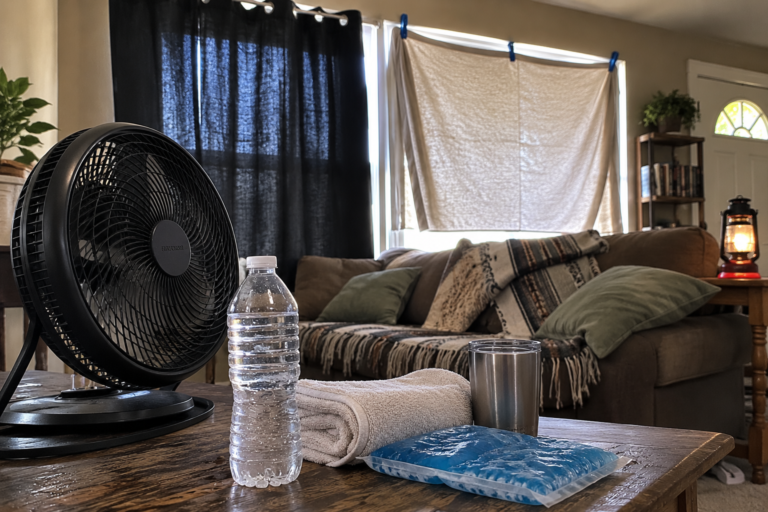
When air conditioning stops working, indoor temperatures may rise to dangerous levels.
A damp neckwrap may make you feel more comfortable while you move to a cooler location or organize supplies. It cannot make an overheated house safe.
Use the strategies in our guide to staying cool without power to prepare a more complete blackout cooling plan.
While Hiking or Evacuating on Foot
A lightweight neckwrap is easy to carry in a hiking pack or emergency bag.
Wet the cloth with clean water during breaks, and combine it with shade, appropriate clothing, adequate drinking water, and reduced exertion.
For longer hikes, see our guide to hydration packs for hiking in hot weather.
During Camping Trips
Cooling neckwraps are useful around the campsite, especially while sitting in the shade, preparing meals, or taking breaks from outdoor activities.
For more ways to manage hot-weather camping, read How to Stay Cool While Camping in Extreme Heat.
During Yard Work and Outdoor Chores
Gardening, mowing, and other outdoor tasks can produce significant heat exposure.
Use a neckwrap as a comfort accessory, but schedule strenuous work during cooler periods and take regular breaks in an adequately cooled location.
How Long Does a Cooling Neckwrap Stay Cool?
There is no reliable universal runtime for a homemade cooling neckwrap.
Its effectiveness depends on the fabric, water content, airflow, humidity, temperature, and activity level.
In dry, breezy weather, evaporation may happen quickly. In humid conditions, the fabric may remain wet longer while providing less noticeable cooling.
Rather than relying on a fixed number of hours, rewet the neckwrap whenever it becomes dry or stops feeling comfortable.
How to Use Cooling Neckwraps Safely
- Use clean water: Avoid soaking fabric in contaminated streams, standing water, or unknown water sources.
- Keep the fit loose: The wrap should never restrict breathing, circulation, or normal neck movement.
- Wash after use: Sweat, dirt, and repeated dampness can cause odors and skin irritation.
- Dry completely before storage: Do not seal a damp wrap in a bag for long-term storage.
- Watch for skin irritation: Stop using the wrap if redness, itching, or discomfort develops.
- Never substitute it for drinking water: Moistening your lips or skin does not adequately hydrate your body.
- Do not rely on it for medical emergencies: Heat stroke requires immediate emergency response and rapid cooling.
Do not use untreated stream water or questionable water sources to soak a neckwrap, especially when you have cuts, irritated skin, or open wounds. Use clean water whenever possible.
What to Do If Someone Shows Signs of Heat Illness
Cooling neckwraps are intended for comfort, not as a substitute for first aid.
Possible signs of heat exhaustion include headache, dizziness, weakness, nausea, heavy sweating, and unusual fatigue.
If symptoms develop, stop activity immediately, move to a cooler location, remove unnecessary clothing, and begin cooling the person with cool water or other appropriate methods.
Offer small sips of water only if the person is fully alert and able to swallow safely. Seek medical care if symptoms are significant, worsen, or do not improve promptly.
Confusion, seizures, collapse, or reduced responsiveness after heat exposure are medical emergencies. Call 911 or activate emergency rescue and begin rapid cooling immediately. Cold-water immersion is an effective method when it can be performed safely with continuous airway protection.
Do not give fluids by mouth to someone who is confused, unconscious, or unable to swallow safely.
For a more detailed explanation, read How to Spot Heat Exhaustion in the Wild.
Ready-Made Cooling Neckwraps and Towels
If you would rather purchase a ready-made product, look for a reusable cooling towel or neckwrap designed specifically for outdoor use.
Consider the fabric, washing instructions, size, comfort, and whether the product requires special absorbent materials.
Ergodyne Chill-Its Cooling Products
Ergodyne offers cooling accessories designed for outdoor work and warm-weather activities. Product designs vary, so check the specific item’s instructions and materials before purchasing.


Other Reusable Cooling Towels
A lightweight cooling towel can also be used around the neck or draped over the shoulders. Choose a washable design that is comfortable against your skin and easy to pack.
Whether you buy one or make your own, remember that evaporative cooling accessories have limitations in extremely hot or humid conditions.
How to Store a DIY Cooling Neckwrap in an Emergency Kit
A cooling neckwrap takes up very little space and can be included in a summer emergency bag, camping kit, or vehicle preparedness supplies.
- Wash the neckwrap after use.
- Allow it to dry completely.
- Fold or roll it neatly.
- Store it in a clean, dry bag or container.
- Keep it with other warm-weather supplies, including drinking water, sun protection, and first-aid materials.
- Inspect it periodically for odors, mildew, or damaged stitching.
For broader preparedness planning, visit our Emergency Preparedness Master Plan.
Frequently Asked Questions
Do DIY Cooling Neckwraps Actually Work?
Yes, damp fabric can provide temporary skin cooling through evaporation. The amount of relief depends on weather conditions, airflow, and fabric moisture. A neckwrap should not be relied upon to prevent heat stroke or reliably lower core body temperature.
What Is the Best Fabric for a Homemade Cooling Neckwrap?
Lightweight cotton is a practical choice because it is widely available, comfortable, and absorbent. Other washable fabrics may also work, depending on their moisture-handling properties.
Can I Make a Cooling Neckwrap Without Sewing?
Yes. A clean bandana folded into a strip and dampened with water works as a basic cooling neckwrap.
Can You Freeze a Cooling Neckwrap?
Some products are designed to be chilled, but frozen fabric or ice packs should not be placed directly against the skin for prolonged periods. Follow the instructions for any commercial product.
Can Cooling Neckwraps Prevent Heat Stroke?
No. They may provide temporary comfort, but they cannot reliably prevent heat stroke. Shade, reduced exertion, adequate hydration, access to effective cooling, and recognizing symptoms remain essential.
Can You Use Cooling Neckwraps During a Blackout?
Yes. A damp bandana requires no electricity and can provide temporary comfort. However, during dangerous indoor heat, reaching a cooler location is more important than relying on a neckwrap.
Final Thoughts: A Simple Addition to Your Summer Survival Kit
DIY cooling neckwraps are easy to make, inexpensive, and convenient for camping, hiking, gardening, and emergency preparedness.
A simple damp cotton bandana is often all you need to create a reusable cooling accessory. More elaborate designs are optional, and they are not necessarily more effective.
The key is to understand what a neckwrap can and cannot do. It can improve comfort in suitable conditions, but it cannot replace drinking water, shade, proper rest, or effective treatment for heat illness.
Keep a clean neckwrap in your summer preparedness supplies, pair it with a reliable hydration plan, and always prioritize getting to a safer environment when extreme heat becomes dangerous.
Further Reading From The Savvy Survivalist
- How to Spot Heat Exhaustion in the Wild
- How to Stay Cool While Camping in Extreme Heat
- How to Find Natural Shade and Build Sun Shelters
- Best Foods for Hot-Weather Camping
- Hydration Packs for Hiking in Hot Weather
- How to Stay Cool Without Power
- Natural Water Purification Methods
Safety References
- CDC/NIOSH: Heat-Related Illnesses
- CDC: Heat and Your Health
- American Heart Association and American Red Cross: First Aid Guidelines
This article is for educational purposes and does not replace professional medical advice or emergency care.