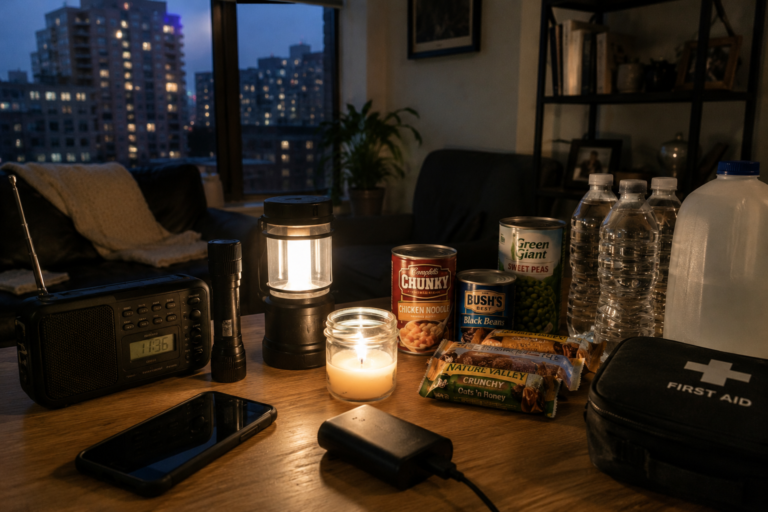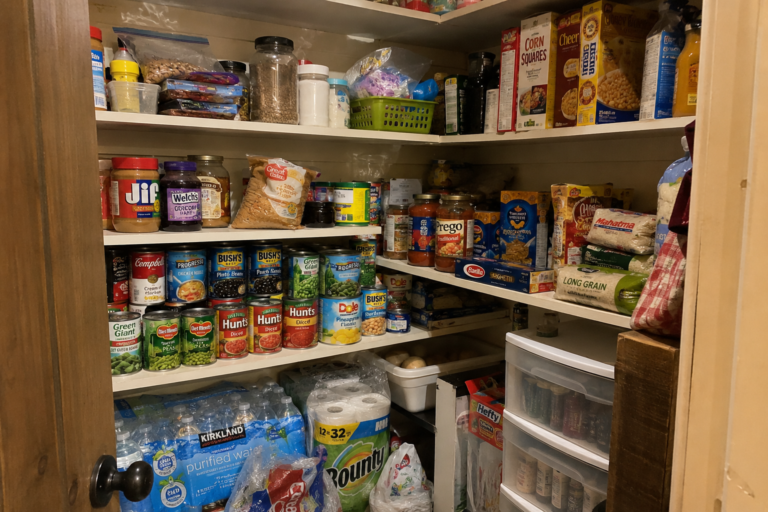

What Happens When the Grid Goes Down
A power-grid failure starts with the obvious loss of electricity, but the consequences can spread far beyond dark rooms and dead outlets. Heating and air conditioning stop, refrigerated food begins warming, home internet disappears, and electrically powered medical equipment may become unusable. If the outage continues, fuel access, water service, communications, sanitation, and local supply chains can also be affected.
This post contains affiliate links. I may earn a small commission at no extra cost to you. Learn more.
However, not every blackout becomes a complete grid-down emergency. A damaged neighborhood power line may be repaired within hours, while a major storm, equipment failure, cyberattack, or regional grid disturbance can leave a much larger area without electricity for days or longer. The size of the affected area and the extent of physical damage matter just as much as the duration.
The most important thing is recognizing that the situation changes as time passes. During the first few hours, your priorities are safety, information, lighting, and protecting refrigerated food. After the first day, water, indoor temperature, communication, medical needs, and backup power become more serious concerns. By several days, replacing supplies and obtaining fuel may become difficult.
Quick Answer: What Happens When the Grid Goes Down?
Electricity stops immediately, taking most household lighting, appliances, heating and cooling equipment, internet service, and electric water pumps offline. Cell service and municipal water may continue temporarily because of batteries, generators, storage tanks, and system pressure, but neither should be treated as guaranteed. During a prolonged regional outage, fuel stations, stores, medical services, water treatment facilities, and communication networks can become increasingly limited.
Your first priorities should be personal safety, reliable information, drinking water, temperature control, essential medical equipment, communication, and protecting your food supply.
Key Takeaways
- A local outage and a widespread grid failure can create very different conditions.
- Electric household equipment stops immediately, while water, cellular service, and public services may continue temporarily on backup systems.
- The longer an outage lasts, the more important water, indoor temperature, food safety, medical needs, sanitation, and communication become.
- There is no universal timeline for infrastructure failure; damage, outage size, location, and backup resources determine what happens.
- A practical household plan should provide at least several days of water, food, lighting, communication, medications, and backup power.
A Local Power Outage Is Not the Same as a Grid-Down Emergency
The phrase “grid down” is often used for every power outage, but there is an important difference between a temporary local outage and a widespread failure affecting multiple communities or an entire region.
A local outage may be caused by a fallen tree, damaged transformer, vehicle accident, or equipment failure. Although your home may be completely without electricity, nearby stores, gas stations, hospitals, communication networks, and utility crews can still operate. Power can often be rerouted, and replacement equipment can be brought in from outside the affected neighborhood.
A widespread grid failure is more difficult to recover from. It can affect substations, transmission lines, power plants, fuel supplies, communication networks, and utility operations across a much larger area. Repair crews may be dealing with thousands of damaged locations while also competing for equipment, fuel, lodging, and replacement parts.
Three Factors Determine How Serious an Outage Becomes
Geographic size: If surrounding towns still have electricity, you may be able to travel for fuel, food, ice, charging, or temporary shelter. During a regional outage, those nearby alternatives may not exist.
Physical damage: An outage caused by an automatic system shutdown may be restored relatively quickly once the grid is stabilized. Rebuilding damaged poles, substations, transformers, and transmission lines can take considerably longer.
Duration: A four-hour outage may be mainly an inconvenience for a prepared household, but extreme temperatures, medical needs, flooding, fire, or other hazards can make even a short outage dangerous. After 24 hours, indoor temperature, refrigeration, communication, medical equipment, and water access can become serious concerns. After several days, the problem expands beyond individual homes and begins affecting businesses, fuel distribution, healthcare, sanitation, and public services.
Plan for the Outage You Cannot Easily Escape
A practical household plan should cover at least several days without outside shopping, dependable cellular service, or immediate utility restoration. You do not need to assume that every outage will become a nationwide collapse, but you should be ready if a local emergency lasts longer and affects a wider area than expected.
Grid-Down Timeline: What Can Happen as an Outage Continues
No timeline applies perfectly to every blackout. Some systems fail immediately, while others continue operating on batteries, generators, stored fuel, elevated water tanks, or help from neighboring communities. The following timeline shows how household priorities and infrastructure problems can change when a widespread outage is not restored quickly.
| Time Without Power | Likely Household Effects | Possible Community Effects | Main Priorities |
|---|---|---|---|
| First 6 hours | Lights, appliances, HVAC equipment, Wi-Fi, and electric pumps stop working. | Traffic signals may fail, cellular networks may become congested, and some businesses may close. | Safety, information, lighting, phone conservation, and checking household members. |
| 6–24 hours | Indoor temperatures change, refrigerated food warms, and battery-powered devices lose charge. | Communication becomes less dependable, stores experience increased demand, and fuel access may be limited. | Temperature control, food protection, water storage, medical needs, and dependable updates. |
| 1–3 days | Perishable food may become unsafe, stored batteries run down, and sanitation becomes more difficult. | Fuel stations, pharmacies, water utilities, cellular sites, and emergency services may operate with restrictions. | Safe water, food, sanitation, backup power, medications, and family communication. |
| 3–7 days | Fuel, food, clean water, and replacement batteries become harder to obtain. | Supply deliveries slow, healthcare demand rises, and public services may be stretched. | Resource conservation, sanitation, security, reliable information, and community cooperation. |
| Beyond one week | Households without stored supplies or sustainable backup systems may need outside assistance or relocation. | Restoration, fuel distribution, sheltering, medical support, and water service become major community priorities. | Long-term water, food, power, medical care, waste management, and deciding whether to remain or leave. |
The situation does not automatically become dangerous at a certain hour. A well-supported community may maintain water, communications, healthcare, and public order through a lengthy outage. A heavily damaged or isolated community may experience serious problems much sooner. Use the timeline as a planning guide rather than a guaranteed countdown.
The First 6 Hours: Immediate Disruption and Safety Checks
When electricity first fails, the most noticeable effects happen inside the home. Lighting, air conditioning, electric heating equipment, cooking appliances, well pumps, sump pumps, sewage ejector pumps, medical devices, and internet equipment may stop immediately. Homes connected to municipal water may still have pressure, but private wells generally cannot pump additional water without backup electricity.
Outside the home, traffic lights may be dark, businesses may close, and cellular networks can become congested as people call relatives and search for information. Cellular service does not always fail immediately, but heavy demand can make calls and mobile data unreliable.
Confirm How Widespread the Outage Is
Look outside to determine whether neighboring homes and streetlights have also lost power. Check your electrical panel for a tripped main breaker, but do not touch damaged equipment, enter standing water near electrical components, or repeatedly reset a breaker that trips again.
If the outage extends beyond your property, check your utility’s outage map, a battery-powered radio, or local emergency alerts. Avoid calling 911 merely to report a power outage. Emergency lines must remain available for fires, injuries, downed power lines, medical emergencies, and immediate threats to life.
Protect People and Essential Equipment First
- Locate flashlights and battery-powered lanterns before darkness makes moving around more difficult.
- Check on children, older adults, neighbors, and anyone relying on electrically powered medical equipment.
- Keep refrigerator and freezer doors closed.
- Unplug sensitive electronics that could be damaged when power is restored.
- Place phones in low-power mode and stop unnecessary streaming or browsing.
- Fill clean containers if water service is still available and the outage appears widespread.
- Make sure generators, grills, and fuel-burning stoves are never operated inside the house, garage, basement, or another enclosed area.
Watch for Immediate Hazards
Stay away from downed power lines and anything they may be touching, including fences, vehicles, trees, and standing water. Treat every fallen line as energized. If you smell gas, see sparking equipment, detect smoke, or experience symptoms of carbon monoxide exposure, leave the area and contact emergency services from a safe location.
During these opening hours, avoid using limited supplies as if restoration is guaranteed. You do not need to begin severe rationing immediately, but you should protect battery power, clean water, refrigerated food, and generator fuel until the outage’s likely duration becomes clearer.
6–24 Hours: Temperature, Food, and Communication Become Priorities
If electricity has not returned after several hours, the outage begins affecting more than convenience. Indoor temperatures continue moving toward outdoor conditions, refrigerated food approaches unsafe temperatures, phones and backup batteries lose charge, and people begin searching for fuel, ice, food, and information.
Protect Refrigerated and Frozen Food
Keep refrigerator and freezer doors closed. According to FoodSafety.gov, an unopened refrigerator normally keeps food safe for up to four hours. A full freezer can maintain a safe temperature for approximately 48 hours, while a half-full freezer generally lasts about 24 hours if the door remains closed.
Do not repeatedly open the refrigerator to check whether food still feels cold. Use an appliance thermometer if one is available. If restoration is not expected soon, move priority foods to a cooler containing ice or frozen gel packs and keep the cooler at 40°F or below. Never taste questionable food to decide whether it is safe.
For a complete food-protection plan, see how to keep your refrigerator cold during a power outage.
Pay Attention to Indoor Temperature
Extreme heat or cold can become more dangerous than the electrical outage itself. Close blinds and curtains during hot weather, limit heat-producing activities, and move household members to the coolest usable part of the home. During cold weather, close off unused rooms, wear several loose layers, and concentrate activity in a smaller living area.
If the home becomes unsafe for children, older adults, people with medical conditions, or anyone taking medications that affect temperature regulation, relocate while roads and nearby facilities remain accessible. Do not wait until someone is already showing signs of heat illness or hypothermia.
Conserve Communication Power
- Use text messages instead of lengthy calls when cellular networks are congested.
- Write down important updates rather than repeatedly checking the same websites.
- Turn off Bluetooth, background applications, and other unnecessary phone functions.
- Use one household device for updates instead of keeping every phone active.
- Listen for official instructions concerning water safety, shelters, cooling centers, road closures, and estimated restoration.
Do Not Waste Backup Power on Low-Priority Loads
A limited power station or generator should first support essential medical equipment, communication, safe lighting, refrigeration, and necessary water pumps. Televisions, decorative lighting, electric space heaters, and other high-consumption devices can drain a small backup system much faster than expected.
1–3 Days: Water, Sanitation, Fuel, and Supplies Become Harder to Manage
After a full day without electricity, a widespread outage begins placing greater pressure on both households and community services. Refrigerated perishables may need to be discarded, portable batteries require recharging, generator fuel runs lower, and stores that remain open may have limited inventory.
This does not mean every public system will fail within three days. Many water utilities, hospitals, emergency communication sites, and public-safety facilities maintain backup power. The problem is that backup systems can experience mechanical trouble, heavy demand, delayed fuel deliveries, or damage from the same event that caused the outage.
Water Service May Change Without Stopping Completely
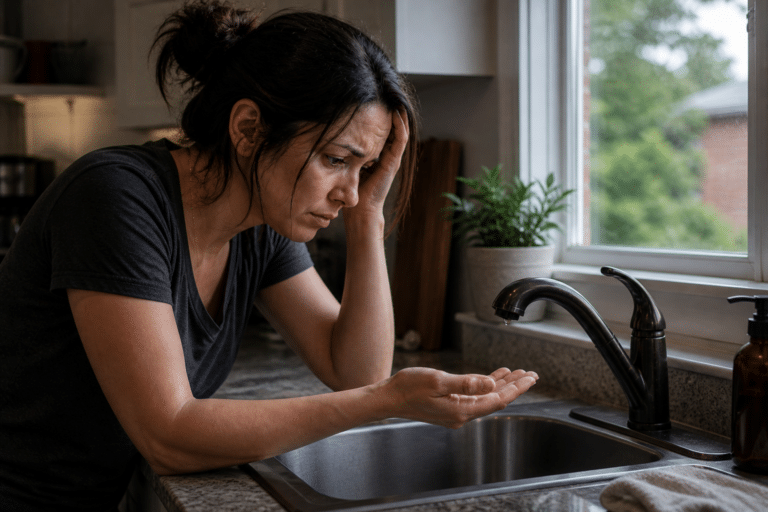
Municipal water may continue flowing because of system pressure, elevated storage tanks, generators, and gravity-fed distribution. However, customers could experience reduced pressure, conservation requests, localized service interruptions, or a boil-water advisory.
Do not assume that water is unsafe simply because the electricity is out, but pay close attention to announcements from the water utility and local health department. If officials issue a boil-water or do-not-use notice, follow its exact instructions. These notices are not interchangeable.
Homes supplied by private wells normally lose the ability to pump additional water as soon as power fails. The pressure tank may provide a limited amount, but it is not a dependable long-term water supply.
Toilets and Waste Require a Plan
Gravity-fed sewer systems may continue working during an outage, but sewage lift stations and treatment facilities can depend on backup power. Septic systems may also become unusable if they rely on an electric pump or alarm.
If toilets will not flush normally, stop adding unnecessary water and waste to the system. Keep heavy-duty trash bags, absorbent material, gloves, disinfectant, and a covered emergency toilet available. Never dispose of human waste in storm drains, streams, gardens, or near wells and stored water.
Fuel and Retail Access May Be Limited
Gas stations need electricity to operate pumps, payment terminals, lighting, and tank-monitoring equipment. Some locations have generator connections or backup power, while others close even when fuel remains underground. Long lines and increased demand can exhaust available supplies before regular deliveries resume.
- Use generator fuel only for necessary loads.
- Avoid unnecessary driving while road conditions and fuel availability are uncertain.
- Keep some cash available in case electronic payment systems are unavailable.
- Do not store or transfer gasoline inside living spaces.
- Never refuel a hot or running generator.
By this stage, your household should be operating from a deliberate plan rather than waiting for each new problem to appear. Track water, fuel, medications, battery capacity, food, and sanitation supplies so you know what is running low before it becomes an emergency.
3–7 Days: The Outage Becomes a Community-Wide Problem
When a widespread outage continues for several days, individual household preparation becomes only part of the situation. Grocery stores, pharmacies, fuel stations, banks, schools, healthcare facilities, water utilities, and emergency services may all be operating under restrictions.
Some businesses may reopen using generators or restored feeder lines, but available supplies can disappear quickly. Deliveries may be delayed by damaged roads, fuel shortages, warehouse outages, or uncertainty about which locations can receive shipments. This is why a week of food stored at home is more dependable than expecting to purchase everything after the outage begins.
Medical Needs Become More Difficult to Replace
Hospitals and emergency facilities receive priority for restoration, but they may also experience unusually high demand. People can be injured while using generators, candles, power tools, chainsaws, and improvised heating or cooking equipment. Heat illness, cold exposure, spoiled food, dehydration, and interrupted medical care can add to the workload.
Households should keep an updated medication list, insurance information, emergency contacts, and instructions for medical devices. Anyone who cannot safely remain without dependable electricity, refrigeration for medication, oxygen equipment, dialysis support, or temperature control should use an established relocation plan before travel and medical resources become more limited.
Public Services May Operate More Slowly
Police, fire departments, ambulance services, public works crews, and utility workers do not automatically stop operating during a blackout. However, damaged infrastructure, traffic problems, increased call volume, and limited communications can slow response times.
Reserve emergency calls for genuine emergencies. Handle minor problems safely when possible, but do not delay calling for help when someone faces immediate danger, serious injury, breathing difficulty, symptoms of carbon monoxide exposure, fire, or a downed electrical line.
Security Is About Awareness, Not Panic
A prolonged outage can leave streets, yards, and businesses poorly lit. Alarm systems, cameras, automatic gates, and electronic locks may stop working when their batteries are depleted. That does not mean widespread disorder is guaranteed, but it does make ordinary security habits more important.
- Lock doors, windows, sheds, vehicles, and fuel-storage areas.
- Avoid advertising how much food, fuel, or backup power you have.
- Use outdoor lighting selectively instead of illuminating the entire property.
- Coordinate with neighbors you already know and trust.
- Do not confront suspicious people unless immediate protection is necessary.
The Stay-or-Leave Decision
Remaining home is often safest when the structure is secure and you still have water, safe indoor temperatures, sanitation, medications, and reliable information. Leaving may be the better option when the home is becoming dangerously hot or cold, floodwater or fire threatens the area, medical equipment cannot be powered, authorities order an evacuation, or essential supplies cannot be replaced. Make that decision while safe routes and fuel are still available.
Beyond One Week: Long-Term Systems Matter More Than Individual Pieces of Gear
An outage lasting longer than a week is unusual for most households, but it can happen after hurricanes, ice storms, wildfires, tornadoes, floods, or extensive damage to transmission and distribution equipment. Restoration is normally uneven. One neighborhood may regain electricity while another remains without service because of damaged local lines, inaccessible roads, or specialized equipment that still needs replacement.
At this point, households relying only on disposable batteries, refrigerated food, and a small amount of generator fuel will have exhausted many of their short-term options. Long-term stability depends on systems that can be replenished or operated repeatedly.
What a Sustainable Setup Requires
- Water: Stored drinking water combined with a safe method of treating additional water.
- Food: Shelf-stable meals that do not require refrigeration and can be prepared with limited fuel.
- Power: A carefully managed generator, rechargeable battery system, solar charging, or another setup matched to essential loads.
- Sanitation: A dependable method for managing human waste, household trash, hygiene, and wastewater.
- Communication: More than one way to receive official information and contact people nearby.
- Medical care: Adequate medications, first-aid supplies, medical-device power, and a relocation option when home care is no longer safe.
Community support also becomes increasingly valuable. Neighbors may be able to share information, transportation, specialized tools, cooking equipment, charging capability, physical labor, or welfare checks. Cooperation works best when relationships and expectations already exist before the emergency.
Preparation Should Buy You Time and Options
The goal is not to remain at home at any cost. A strong preparedness plan gives you enough water, food, information, power, and fuel to avoid rushed decisions. It also gives you the ability to relocate safely if conditions at home become unsustainable.
If electricity remains unavailable after a week, reassess the household every day. Consider indoor temperature, water safety, health conditions, sanitation, remaining fuel, local hazards, road access, and the credibility of restoration estimates. A plan that was safe on day two may no longer be the best choice on day eight.
What Happens to Water and Sanitation When the Grid Fails?
A power outage does not automatically make municipal tap water unsafe. Water may continue moving through the system because of elevated tanks, stored pressure, gravity, and backup generators. However, electricity is still needed for many intake pumps, treatment processes, booster stations, monitoring systems, and wastewater pumps.
The Environmental Protection Agency warns that a loss of system pressure can allow contaminants from surrounding soil or groundwater to enter drinking-water lines. Power loss can also interfere with wastewater pumping and treatment. This is why utilities may ask customers to conserve water or issue an advisory even while water continues coming from the faucet.
Know What Type of Water Advisory Was Issued
Boil-water advisory: The water may contain disease-causing germs. Use bottled water or bring clear tap water to a rolling boil for at least one minute before using it for drinking, cooking, brushing teeth, making ice, or preparing infant formula. At elevations above 6,500 feet, the CDC recommends boiling for three minutes.
Do-not-drink advisory: Use bottled water for drinking and cooking. Boiling may not remove the chemical or toxin causing the advisory and could concentrate it.
Do-not-use advisory: Avoid contact with the tap water and use an approved alternative for all purposes. Follow instructions from local authorities because the specific restrictions depend on the contaminant.
These distinctions come from the CDC’s drinking-water advisory guidance. A household water filter does not automatically make water safe during an advisory, and boiling cannot remove fuel, toxic chemicals, or radioactive contamination.
Private Wells Require Backup Power
A conventional electric well pump stops when household power fails. Water remaining in the pressure tank may provide a few uses, but the amount depends on the tank and its starting pressure. A generator or properly sized battery-and-inverter system can operate some well pumps, but it must handle the pump’s voltage, running wattage, and startup surge.
Store Water Before You Need It
Ready.gov recommends storing at least one gallon per person per day for several days, including water for drinking and sanitation. Hot weather, pregnancy, illness, physical labor, pets, and limited sanitation can increase the amount required.
- Keep drinking water in clean, food-grade containers.
- Separate untreated water from water that is ready to drink.
- Label containers with the storage or treatment date.
- Do not ration drinking water so severely that dehydration becomes a risk.
- Reserve clean water for drinking, food preparation, medications, and essential hygiene.
Sanitation water does not always need to meet drinking-water standards, but it should never be stored where someone could mistake it for potable water. Plan separately for toilet flushing, handwashing, dishwashing, and cleaning so your drinking supply lasts longer.
What Happens to Cell Service, Internet, and Emergency Information?
Communication usually degrades unevenly during a grid failure. Your home internet may disappear immediately because the modem, router, and fiber terminal require household electricity, even when the provider’s network is still operating. Cellular service may remain available through backup batteries and generators, but physical damage, loss of network connections, depleted backup power, and unusually heavy demand can reduce coverage or slow service.
There is no dependable countdown for when cell towers will stop working. Some sites have substantial backup capability, while others may be damaged or have shorter battery runtime. A phone displaying signal bars also does not guarantee that a call or mobile-data connection will go through.
Use the Network Efficiently While It Is Available
The Federal Communications Commission recommends limiting nonemergency calls, keeping necessary calls brief, and trying text messages when voice networks are congested. Texts may still be delayed, so do not repeatedly resend the same message unless you know it failed.
- Send one short status message to a designated out-of-area contact.
- Include your location, condition, and immediate plans in the same message.
- Save screenshots of important alerts in case data service disappears.
- Keep phones charged, but do not drain limited backup power through constant use.
- Avoid streaming video or uploading large files during network congestion.
- Use 911 only for an immediate emergency.
Have a Way to Receive Information Without the Internet
A battery-powered or hand-crank radio can receive weather warnings and local emergency information when home internet and mobile data are unavailable. Keep a written list of useful local radio frequencies, utility numbers, family contacts, meeting locations, and nearby shelters with the radio.
Two-way radios can help household members or nearby neighbors communicate, but their practical range is often much shorter than the distance printed on the package. Terrain, buildings, vegetation, radio power, and antenna height all affect practical range. Licensing rules determine which channels, power levels, and radio features may legally be used.
Create the Communication Plan Before the Outage
Choose one primary meeting location, one backup location, and an out-of-area contact who can relay updates. Make sure every family member knows where to go if calls and messages stop working. For a complete setup, see how to communicate when the grid goes down.
What Happens to Food, Fuel, Stores, and Transportation?
A power outage does not instantly empty every store or stop every delivery truck. The effects depend on how large the outage is, whether roads remain open, and whether nearby warehouses, fuel terminals, payment networks, and unaffected communities can continue supporting the area.
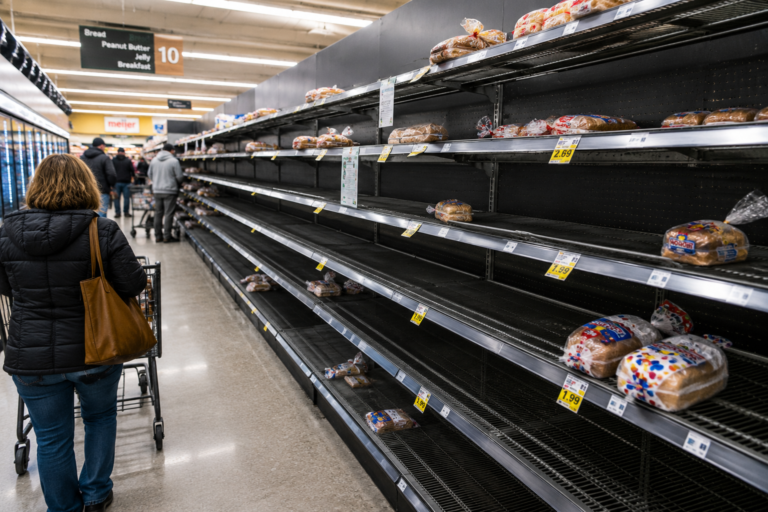
Stores may close because lighting, refrigeration, security systems, cash registers, and card-processing terminals are unavailable. Locations with generators may reopen with limited hours, but refrigerated and frozen products can be removed from sale. Increased demand for water, ice, batteries, fuel, shelf-stable food, and generator supplies can create shortages before the normal delivery schedule is restored.
Use Food in the Right Order
- Eat prepared meals and safe refrigerated foods first.
- Use food from the freezer after refrigerated perishables.
- Save canned food, dry staples, and other shelf-stable meals for later.
- Do not cook more food than your household can safely eat or store.
Keep manual can openers and a cooking method that does not depend on household electricity. Grills, camp stoves, charcoal burners, and other fuel-burning equipment must be used outdoors in an appropriate location, never inside the home or garage.
Fuel Availability Can Affect More Than Driving
Gasoline and diesel may still exist in underground tanks, but stations generally need electricity for pumps, monitoring equipment, lighting, and payments. Fuel demand also rises because utility crews, emergency services, businesses, and households are operating generators.
Conserve vehicle fuel until you know whether nearby stations are operating. Keep enough fuel available to reach a safe alternate location, but follow local storage limits and use approved containers. Never siphon fuel by mouth, mix fuels, or pour gasoline into a running or hot generator.
Do Not Begin an Outage With a Shopping Trip
The safest time to purchase water, food, medication, batteries, and fuel is before an emergency. Driving immediately after a major outage can expose you to failed traffic signals, storm debris, downed power lines, flooded roads, and long lines for supplies that may already be gone.
Medical Needs, Indoor Temperature, and Home Safety
A prolonged outage becomes especially serious when someone depends on powered medical equipment, refrigerated medication, elevators, or electrically operated mobility equipment. Make a backup plan with the person’s healthcare provider and equipment supplier before an outage occurs. Record the device’s electrical requirements, battery runtime, charging method, and the location of a safe alternate power source.
Do not assume every medication that is normally refrigerated must be discarded immediately. Storage limits vary by medication. Keep the refrigerator closed, follow the product instructions, and contact a pharmacist or healthcare provider if temperature-sensitive medicine has warmed or frozen.
Know When the House Is No Longer Safe
Without air conditioning or electric heat, indoor conditions can become dangerous even when the structure itself is undamaged. Children, older adults, pregnant people, and individuals with chronic medical conditions can be affected sooner.
During hot weather, reduce sunlight through windows, limit cooking and physical activity, drink water regularly, and use battery-powered fans appropriately. More strategies are available in how to keep your house cool during a summer power outage and how to sleep without air conditioning during a power outage.
During cold weather, wear loose layers, close unused rooms, block drafts, and use blankets and sleeping bags. Never use an oven to heat the house. Do not operate grills, charcoal burners, camp stoves, or unvented fuel-burning equipment inside unless the appliance is specifically approved for indoor use and installed according to its instructions.
Carbon Monoxide Can Kill Without Warning
Operate portable generators outdoors at least 20 feet from the house and direct the exhaust away from doors, windows, vents, and attached garages. Maintain working carbon-monoxide alarms with battery backup on every level of the home. Headache, dizziness, weakness, nausea, chest pain, or confusion can indicate exposure. Move into fresh air and seek emergency help immediately.
Relocate if the home cannot maintain safe temperatures, essential medical equipment cannot be powered, medications cannot be stored safely, carbon monoxide is suspected, or local officials order an evacuation. Backup power is useful, but it should never become a reason to remain in unsafe conditions.
What to Do When the Grid Goes Down
Your response should change with the conditions, but the first actions remain straightforward. Deal with immediate hazards, find reliable information, and protect the resources that will become difficult to replace.
- Check for danger. Look for fire, damaged electrical equipment, downed lines, flooding, gas odors, and anyone needing medical assistance.
- Determine the outage area. Check neighboring properties, your utility’s outage map, local alerts, and a battery-powered radio.
- Account for everyone. Contact household members and check on nearby relatives or neighbors who may need assistance.
- Protect cold food. Keep refrigerator and freezer doors shut and write down when the outage began.
- Secure water. If service remains available and the outage is widespread, fill clean containers while monitoring official water notices.
- Conserve power and fuel. Prioritize medical equipment, communication, refrigeration, necessary pumps, and safe lighting.
- Prepare for temperature changes. Begin cooling or warming the occupied part of the home before conditions become uncomfortable.
- Reassess before traveling. Consider road hazards, fuel availability, weather, medical needs, and whether your destination has power.
Seven-Day Grid-Down Checklist
Water and sanitation
- At least one gallon of stored water per person per day
- Food-grade storage containers and a backup treatment method
- Emergency toilet supplies, trash bags, gloves, soap, and disinfectant
Food and cooking
- Seven days of shelf-stable food your household will actually eat
- Manual can opener and basic cooking utensils
- Outdoor cooking equipment with safely stored fuel
Lighting and backup power
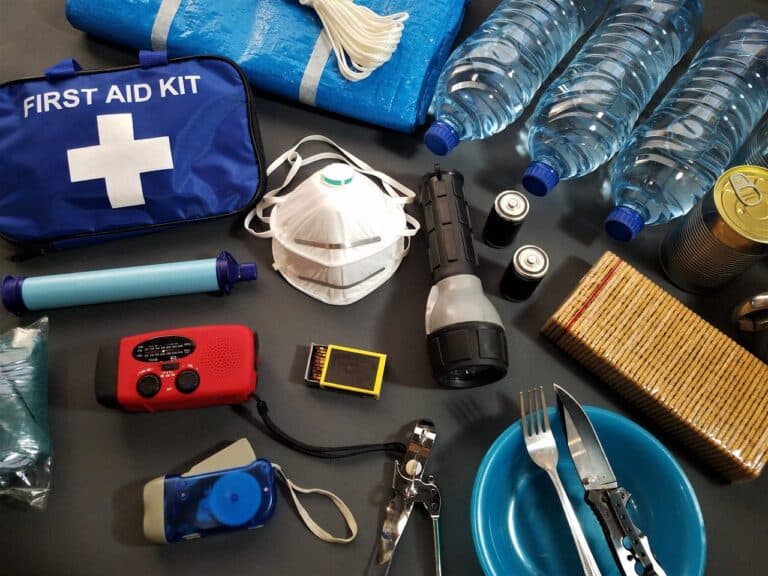
- LED flashlights, lanterns, headlamps, and replacement batteries
- Charged power banks and the correct cables for essential devices
- A generator or power station sized for clearly identified priority loads
- Working smoke and carbon-monoxide alarms with battery backup
Communication and medical needs
- Battery-powered emergency radio
- Written contacts, meeting places, and evacuation routes
- Medications, first-aid supplies, and copies of important medical information
- A backup plan for powered medical equipment and refrigerated medicine
Transportation and documents
- Vehicle fuel, paper maps, and a car charger
- Cash in small denominations
- Copies of identification, insurance information, and utility contacts
Review the checklist before severe weather or peak electricity demand is expected. Supplies stored without a plan are easy to overlook; assign each item a purpose, check expiration dates, test equipment, and make sure every adult in the household knows how to use it safely.
Recommended Grid-Down Preparedness Gear
These products cover several of the most important needs during an extended outage. Buy equipment that fits your household plan rather than collecting gear without knowing what it will power, store, or replace.
Stackable Water Storage Containers
Useful for building a drinking-water supply in closets, utility rooms, and other areas where large barrels may not fit. Filled containers become heavy, so store them on a stable surface that can support the weight.

Emergency Water Filter
A portable filter provides another option when stored water runs low, but it does not make every contaminated source safe. Filters generally do not remove fuel, salt, or all chemical contaminants.

Jackery Solar Generator 1000 v2 With 200-Watt Panel
This 1,070-watt-hour power station can support phones, lighting, communication equipment, and selected household appliances. Calculate the actual wattage and startup surge of each device before relying on it for refrigeration, pumps, medical equipment, or cooking.

Midland GXT1000VP4 Two-Way Radios
These radios can provide short-range communication when cellular service is unreliable. Real-world range depends on terrain, buildings, vegetation, antenna position, and local radio conditions—not the maximum distance advertised on the package.

Before an outage: Charge rechargeable equipment, test every device, label its cables, store printed instructions, and make sure everyone who may need the equipment knows how to operate it safely.
Frequently Asked Questions About Grid Failures
How long can a power-grid outage last?
An outage can last from minutes to several weeks. The duration depends on the cause, geographic size, physical damage, road access, weather, available repair crews, and whether specialized equipment must be replaced. Your utility’s restoration estimate is useful, but it can change as crews inspect the damage.
What stops working first when the grid goes down?
Household equipment without battery or generator backup stops immediately. This commonly includes lighting, heating and cooling equipment, refrigerators, electric cooking appliances, Wi-Fi routers, private well pumps, and plug-in medical devices. Community systems may continue temporarily through stored pressure, batteries, generators, and unaffected portions of the grid.
Will municipal water stop during a blackout?
Not necessarily. Municipal systems may maintain service using gravity, elevated tanks, system pressure, and backup generators. Water pressure or treatment can still be affected during a prolonged outage, so monitor instructions from the utility and local health department.
Will solar panels power a house when the grid is down?
Standard grid-connected solar systems commonly shut down during an outage to prevent electricity from being sent onto lines where crews may be working. A system needs approved islanding equipment, battery storage, a compatible inverter, or another specifically designed backup configuration to supply power during an outage.
Should I turn off the main breaker during an outage?
Do not automatically turn off the main breaker unless your utility, electrician, emergency officials, or generator-transfer procedure instructs you to do so. Unplug sensitive electronics and turn off high-demand appliances. Never connect a portable generator to a household outlet or backfeed the electrical panel.
How much food and water should a household store?
Ready.gov recommends at least several days of supplies, including one gallon of water per person per day for drinking and sanitation. A seven-day household supply provides more protection against delayed restoration, closed stores, and unsafe travel. Store food your family already eats and account for pets, medical diets, hot weather, and additional sanitation water.
Is it safer to stay home or evacuate?
Staying home is often safer when the structure is sound and you have safe water, tolerable indoor temperatures, sanitation, medications, and reliable information. Leave when officials order an evacuation or when fire, flooding, structural damage, medical needs, carbon monoxide, extreme temperatures, or depleted supplies make the home unsafe.
Build the Rest of Your Blackout Plan
Use these guides to prepare the systems that become most important during an extended outage:
- The First 72 Hours After a Disaster
- Complete Emergency Preparedness Plan
- How to Communicate When Phones Fail
- Grid-Down Survival Power Guide
- Does a Well Pump Work During a Power Outage?
Free Blackout Preparedness Planner
Download the free 17-page planner to organize your household’s water, food, power, fuel, medical supplies, communication plan, and evacuation strategy.
Final Thoughts
When the grid goes down, the electricity loss is only the beginning. The longer and wider the outage becomes, the more it can affect food safety, water service, communications, transportation, healthcare, sanitation, and indoor temperatures.
Those systems do not fail according to one universal timeline. Some communities maintain essential services for days, while heavily damaged areas experience serious disruptions much sooner. That is why a useful blackout plan should be based on priorities rather than predictions.
Start with safe water, essential medical needs, reliable information, temperature control, food, sanitation, and backup power. Store enough supplies to avoid unnecessary travel, test the equipment before an emergency, and know what conditions would make leaving home safer than staying.
You cannot control when the grid fails or how quickly utilities restore it. You can control whether your household has enough time, information, and options to make sound decisions while the power is out.