How Much Food Should a Family Store for 30 Days? A Practical Emergency Food Guide
How much food should a family store for 30 days? The answer depends on family size, calorie needs, and the types of foods being stored, but most households require far more food than they realize to comfortably make it through an entire month without regular grocery shopping.
This post contains affiliate links. I may earn a small commission at no extra cost to you. Learn more.
Many people assume their pantry contains enough supplies to last several weeks, only to discover that everyday meals, snacks, beverages, and cooking ingredients disappear much faster than expected when no new food is coming into the home. A cabinet that appears well stocked during normal circumstances can shrink rapidly once every member of the household depends on it for every meal.
Whether the disruption is caused by a prolonged power outage, severe weather, supply chain problems, natural disaster, or another emergency, having a 30-day food supply can provide security, flexibility, and peace of mind. Families with adequate food reserves are less likely to face empty shelves, panic buying, or last-minute trips to crowded stores when supplies become scarce.
As discussed in How Long Will Grocery Stores Have Food During an Emergency?, store inventories can disappear surprisingly quickly once people begin preparing for a developing crisis. Waiting until shortages appear often means paying higher prices, settling for limited choices, or finding that important items are no longer available.
This guide explains how much food a family should store for 30 days, how to calculate realistic needs, which pantry staples provide the most value, and how to build a practical emergency food supply without overspending or wasting storage space.
Quick Answer
Most families need far more food than they realize to comfortably last 30 days without grocery shopping. A practical emergency pantry should focus on calorie-dense staple foods, reliable protein sources, shelf-stable fruits and vegetables, and enough variety to maintain both nutrition and morale during an extended emergency.
✓ Key Takeaways
- Plan food storage by calories instead of meal counts.
- Store foods your family already eats.
- Build your pantry gradually to spread out costs.
- Include carbohydrates, protein, fats, fruits, and vegetables.
- Rotate stored food regularly to keep supplies fresh.
How Much Food Does a Family Need for 30 Days?
The amount of food a family needs for 30 days depends on the number of people in the household, activity levels, ages of family members, and the conditions surrounding the emergency. While every situation is different, calorie requirements provide the most reliable starting point when calculating food storage needs.
Most adults require somewhere between 2,000 and 2,500 calories per day to maintain normal activity levels. Children typically require fewer calories, although teenagers often consume amounts similar to or even greater than adults. During physically demanding situations that involve carrying water, cleaning storm damage, gathering supplies, or operating without many modern conveniences, calorie needs may increase beyond normal daily levels.
For planning purposes, many preparedness experts use a target of approximately 2,000 calories per person per day. This creates a reasonable baseline that can be adjusted based on individual family circumstances.
Using that figure, one person would require approximately 60,000 calories to reach a full 30-day food supply. A family of four would need roughly 240,000 calories available to maintain normal food consumption throughout an entire month.
The following chart shows how calorie requirements increase as family size grows.
| Family Size | Daily Calories | 30-Day Calories Needed |
|---|---|---|
| 1 Person | 2,000 | 60,000 |
| 2 People | 4,000 | 120,000 |
| 4 People | 8,000 | 240,000 |
| 6 People | 12,000 | 360,000 |
💡 Pro Tip
Keep a simple pantry inventory sheet taped inside your pantry door. Crossing off items as you use them makes it much easier to rotate supplies and identify what needs to be replaced before your next shopping trip.
These comparisons demonstrate why calorie-dense staples such as rice, oats, beans, and peanut butter remain foundational components of many emergency food storage plans.
Looking at food storage through the lens of calories often changes how families view their preparedness. A pantry stocked with snacks, condiments, and convenience foods may appear substantial, yet it may provide far fewer calories than expected. On the other hand, staples such as rice, beans, oats, pasta, peanut butter, and canned meats can deliver a large amount of nutrition while requiring relatively little storage space.
Another important consideration is menu fatigue. Technically having enough calories is not the same as having a practical food supply. Eating the same meal repeatedly for weeks can become difficult, particularly for children. A well-rounded emergency pantry should include a variety of foods that provide protein, carbohydrates, fats, vitamins, and familiar comfort foods that help maintain morale during stressful circumstances.
Families should also plan around foods they already consume regularly. Stocking large quantities of unfamiliar items simply because they have a long shelf life often leads to waste and unnecessary expense. The most effective emergency food storage plan is usually built around pantry staples that can be rotated into everyday meals and replaced during routine shopping trips.
Before deciding exactly which foods to store, it helps to understand why calorie planning is often more important than counting meals, servings, or buckets of emergency food marketed with impressive-looking labels.
30-Day Food Storage Chart by Family Size
One reason many families underestimate their food needs is that food storage is often discussed in terms of meals rather than quantities. A package may advertise that it contains enough servings for several weeks, but serving sizes are frequently much smaller than what people normally eat. Looking at realistic amounts of food helps create a more accurate picture of what a 30-day emergency supply should include.
The following chart provides a practical starting point for estimating food storage needs. These numbers are not meant to be exact requirements because every family has different preferences, dietary restrictions, and calorie needs. Instead, they offer a reasonable framework for building a balanced pantry capable of supporting a household for approximately one month.
| Food Category | Family of 2 | Family of 4 | Family of 6 |
|---|---|---|---|
| Rice | 20–25 lbs | 40–50 lbs | 60–75 lbs |
| Pasta | 12–15 lbs | 25–30 lbs | 35–45 lbs |
| Dried Beans | 10–15 lbs | 20–30 lbs | 30–45 lbs |
| Oats | 8–10 lbs | 15–20 lbs | 25–30 lbs |
| Canned Meat | 20–30 cans | 40–60 cans | 60–90 cans |
| Canned Vegetables | 30–40 cans | 60–80 cans | 90–120 cans |
| Canned Fruit | 15–20 cans | 30–40 cans | 45–60 cans |
| Peanut Butter | 4–6 jars | 8–12 jars | 12–18 jars |
These amounts may seem surprisingly large at first glance, but when spread across an entire month they become much more realistic. A family of four consuming rice several times each week can work through forty pounds faster than many people expect. The same principle applies to pasta, oats, canned goods, and other pantry staples.
It is also important to remember that no single food should carry the entire burden of your emergency food supply. Relying heavily on one staple can create nutritional gaps and make meals repetitive. Combining grains, proteins, fruits, vegetables, and calorie-dense foods creates a more balanced approach that supports both physical health and household morale.
Storage space is another factor that deserves consideration. Families living in apartments, townhomes, or smaller houses may not have dedicated storage rooms available. Fortunately, a 30-day supply does not necessarily require large shelving systems. Food can often be stored under beds, inside closets, beneath stairways, in unused cabinets, and in other overlooked spaces throughout the home.
Many households discover that they already possess a portion of a 30-day supply without realizing it. Pantry shelves, kitchen cabinets, freezers, and bulk purchases from warehouse stores may already contain enough food to cover a week or two. Conducting a complete inventory often reveals that the goal is closer than expected.
As discussed in What Runs Out First in a Crisis?, shortages frequently affect specific products long before every shelf becomes empty. Building a reserve before demand spikes gives families more flexibility and reduces dependence on stores during uncertain periods.
While quantity matters, focusing only on pounds of food can still lead to planning mistakes. Understanding calories provides a much clearer picture of whether a food supply can realistically sustain a household for an entire month, which is why calorie planning should form the foundation of every emergency food strategy.
Why Calories Matter More Than Meal Counts
Many emergency food products are marketed using phrases such as “30-day supply,” “one-month food kit,” or “90 servings.” Those descriptions sound reassuring, but they can be misleading if you do not examine the actual calorie content. A serving is not always equivalent to a meal, and a meal is not always enough to satisfy a person’s daily energy requirements.
For example, a freeze-dried entrée may contain only a few hundred calories per serving. Someone reading the label could assume that several buckets of food provide a complete month’s worth of meals, only to discover later that the total calorie count falls far below what their family actually needs.
This is why experienced preparedness planners often calculate food storage based on calories first and servings second. Calories represent usable energy. During an emergency, maintaining adequate energy levels can influence everything from decision-making and physical performance to mood and overall health.
A pound of white rice contains roughly 1,600 calories. A pound of dried beans contains approximately 1,500 calories. Peanut butter provides around 2,500 calories per jar, depending on size. These calorie-dense foods can significantly increase the value of a food storage program while remaining relatively affordable.
By comparison, some convenience foods take up substantial space while contributing fewer calories than people assume. Crackers, chips, snack cakes, and similar products can certainly have a place in an emergency pantry, but they should supplement a food reserve rather than form its foundation.
Another benefit of calorie-based planning is that it helps families identify weaknesses in their existing food storage. Many pantries contain plenty of ingredients for individual meals but lack enough total calories to sustain a household for several weeks. A cabinet full of canned vegetables may look impressive, yet vegetables alone provide relatively few calories compared to foods rich in carbohydrates, fats, and protein.
Fats deserve special attention because they are one of the most efficient sources of energy available. Peanut butter, cooking oils, nuts, seeds, and shelf-stable dairy products can dramatically increase calorie reserves without requiring large amounts of storage space. While grains often receive most of the attention in preparedness discussions, healthy fats play a major role in helping families maintain adequate energy intake during extended disruptions.
Protein is equally important. During stressful situations, the body still needs amino acids to maintain muscle tissue, support immune function, and assist recovery from physical exertion. Canned chicken, canned tuna, canned salmon, dried beans, lentils, powdered milk, and other protein-rich foods help create a more balanced food supply than one built entirely around grains.
A practical emergency pantry combines all three major calorie sources. Carbohydrates provide readily available energy, fats offer concentrated calories, and protein supports long-term health. When these categories work together, families are better positioned to remain healthy throughout a prolonged emergency.
Calorie planning also makes it easier to adjust for different household sizes. Instead of guessing how many boxes, cans, or packages might be required, you can calculate approximate calorie needs and then build food storage around those targets. This approach removes much of the uncertainty from preparedness planning.
The good news is that reaching those calorie goals does not require expensive specialty products. Many of the most effective emergency foods are ordinary grocery store items that families already purchase every week.
📌 Did You Know?
A typical grocery store carries tens of thousands of products, but many of the staple foods used for emergency preparedness are among the first items to disappear during panic buying because they are inexpensive, shelf-stable, and calorie dense.
Best Foods to Store for a 30-Day Emergency
The best emergency foods are typically those that provide a combination of long shelf life, nutritional value, affordability, and familiarity. While freeze-dried meals and commercial preparedness kits can play a role, most families can build a highly effective 30-day food supply using products available at local grocery stores and warehouse clubs.
Rice remains one of the most popular emergency staples because it stores well, provides substantial calories, and pairs with countless other ingredients. White rice generally stores longer than brown rice due to its lower oil content, making it a preferred option for long-term storage. It can serve as the foundation for meals that include beans, canned meats, vegetables, soups, and other pantry items.
Pasta offers many of the same advantages. It stores easily, cooks relatively quickly, and provides a familiar base for meals that most families already enjoy. Different shapes and varieties can help reduce menu fatigue while allowing meals to remain simple and inexpensive.
Dried beans and lentils deserve a place in nearly every emergency pantry. They provide protein, fiber, minerals, and additional calories while remaining affordable even when purchased in bulk quantities. Although they require cooking, their nutritional value makes them one of the most efficient preparedness foods available.
Oats are another highly versatile option. They can be used for breakfast, baking, thickening soups, and creating calorie-dense meals with ingredients such as powdered milk, honey, dried fruit, or peanut butter. Because oats are inexpensive and store well, they are often overlooked despite their usefulness.
Canned meats provide important protein sources that require little or no preparation. Chicken, tuna, salmon, ham, beef, and similar products can be eaten directly from the container if necessary, making them especially valuable during power outages or situations where cooking fuel is limited.
Canned vegetables and canned fruit help provide variety and nutritional balance. While they may not contribute large numbers of calories, they add vitamins, minerals, flavor, and meal diversity. Many preparedness plans focus so heavily on calories that they neglect the importance of maintaining a balanced diet.
Peanut butter remains one of the most efficient emergency foods available. It combines protein, fats, and calories in a compact package while requiring no cooking. Many families already keep several jars on hand, making it one of the easiest preparedness foods to stockpile gradually.
Powdered milk can support both nutrition and cooking flexibility. It can be used in baking recipes, mixed into oatmeal, added to soups, or reconstituted for drinking. Families with young children often find powdered milk particularly useful as part of a broader food storage strategy.
Sugar, honey, salt, and seasonings are frequently forgotten during preparedness planning, yet they can dramatically improve the quality of stored foods. Rice and beans may provide calories, but meals become much easier to eat consistently when flavors can be adjusted and varied.
Not all pantry foods offer the same combination of calories, shelf life, and versatility. The following staples provide some of the best overall value for emergency food storage.
Best Foods for a 30-Day Emergency Food Supply
| Food | Why It Belongs in Storage | Approximate Shelf Life |
|---|---|---|
| White Rice | High-calorie staple that pairs with countless meals | 20-30+ years (properly stored) |
| Dried Beans | Excellent source of protein and fiber | 10-30 years |
| Pasta | Affordable, filling, and easy to prepare | 2-10 years |
| Oats | Versatile breakfast and baking ingredient | 2-10 years |
| Peanut Butter | Dense calories, protein, and healthy fats | 1-2 years |
| Canned Chicken | Ready-to-eat protein source | 3-5 years |
| Canned Tuna | Long-lasting protein with minimal preparation | 3-5 years |
| Canned Vegetables | Add vitamins, minerals, and meal variety | 2-5 years |
| Canned Fruit | Provides natural sugars and dietary variety | 1-3 years |
| Powdered Milk | Useful for drinking, cooking, and baking | 2-20 years |
Calories Provided by Common Emergency Food Storage Staples
| Food | Approximate Calories Per Pound | Pounds Needed for 10,000 Calories |
|---|---|---|
| Peanut Butter | 2,660 | 3.8 lbs |
| Oats | 1,750 | 5.7 lbs |
| Pasta | 1,680 | 6.0 lbs |
| White Rice | 1,650 | 6.1 lbs |
| Dried Beans | 1,550 | 6.5 lbs |
Commercial emergency food kits can supplement a pantry-based approach, especially for households that want additional insurance against long-term disruptions. However, these products generally work best when combined with ordinary foods rather than replacing them entirely. Familiar foods tend to be easier for children and adults alike to consume during stressful circumstances.
As discussed in How Long Will Grocery Stores Have Food During an Emergency?, many of these staples are among the first items to disappear when people begin preparing for an approaching crisis. Purchasing them gradually before they are needed helps avoid shortages, panic buying, and inflated prices.
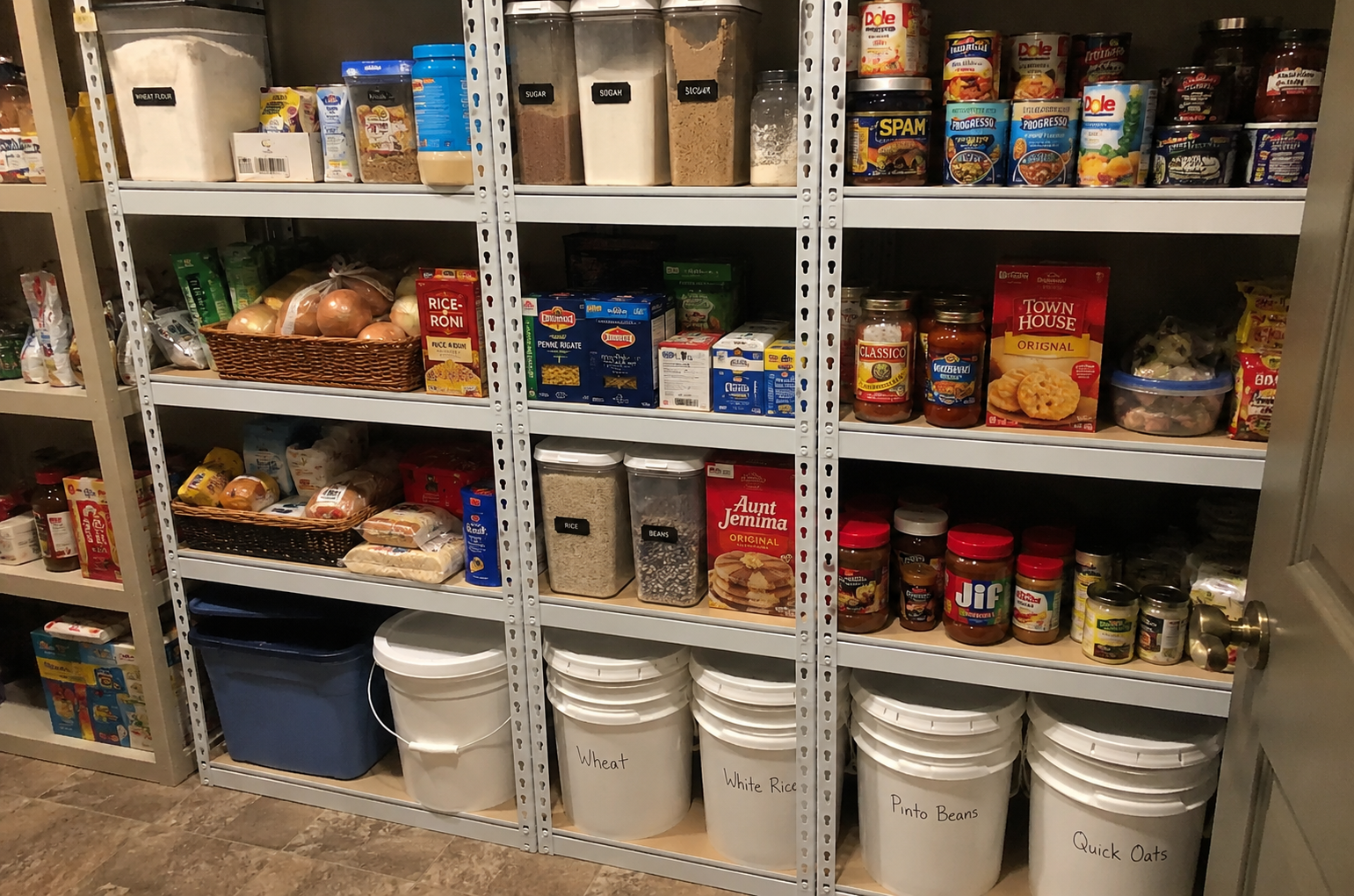
Knowing which foods to store is only part of the equation. Families also benefit from seeing what a realistic month-long food supply actually looks like when assembled for a typical household.
What a 30-Day Family Food Supply Actually Looks Like
Many preparedness articles discuss pounds of food, calorie counts, and inventory lists, but those numbers can feel abstract. Looking at a practical example often makes emergency food planning easier to understand.
Consider a family of four seeking to build a 30-day food reserve. Rather than relying entirely on one category of food, they could create a balanced supply consisting of grains, proteins, fruits, vegetables, fats, and comfort foods.
- 45 pounds of rice
- 25 pounds of pasta
- 20 pounds of oats
- 25 pounds of dried beans
- 50 cans of meat
- 70 cans of vegetables
- 35 cans of fruit
- 10 jars of peanut butter
- Powdered milk and baking supplies
- Cooking oil, sugar, honey, salt, and seasonings
- Coffee, tea, drink mixes, and morale-boosting treats
At first glance, that list may appear extensive. However, when distributed across four people and thirty days, it represents a practical and achievable goal for many households. It also provides flexibility for creating a wide variety of meals rather than forcing family members to eat the same foods repeatedly.
Most importantly, this type of pantry can be built gradually. Families do not need to purchase everything at once. Adding a few extra cans, an additional bag of rice, or several pounds of pasta during regular shopping trips allows food storage to grow steadily without placing excessive strain on a monthly budget.
Foods That Store Well Without Refrigeration
One of the most important aspects of emergency food planning is selecting foods that remain usable even if electricity becomes unavailable. Many households keep a substantial amount of food in refrigerators and freezers, but those supplies can become vulnerable during extended power outages. While frozen foods may remain safe for a limited period if doors stay closed, a 30-day preparedness plan should not depend heavily on refrigeration.
Shelf-stable foods provide significantly more flexibility because they remain accessible regardless of utility interruptions. They can be stored in closets, pantries, storage rooms, spare bedrooms, basements, and other locations without requiring electricity to preserve them.
Rice, pasta, oats, dried beans, lentils, flour, sugar, and similar staples can remain usable for extended periods when protected from moisture, pests, heat, and direct sunlight. Proper storage containers help extend shelf life even further while reducing the risk of contamination.
Canned foods are another cornerstone of emergency preparedness because they combine convenience with durability. Canned vegetables, fruit, meat, soup, chili, stew, and pasta products can remain shelf stable for years when stored under appropriate conditions. Many require little preparation, while some can be consumed directly from the container if circumstances demand it.
Nut butters offer an excellent combination of calories, protein, and convenience. Peanut butter remains one of the most commonly recommended preparedness foods because it requires no cooking, no refrigeration before opening, and very little effort to incorporate into meals.
Crackers, cereals, granola, dried fruit, trail mixes, nuts, and shelf-stable snack foods can help fill nutritional gaps while providing variety between larger meals. These foods may not serve as the foundation of a food storage plan, but they can contribute valuable calories and improve morale during stressful periods.
Powdered ingredients also deserve consideration. Powdered milk, drink mixes, instant potatoes, dehydrated vegetables, soup bases, and baking ingredients can expand meal options considerably without consuming excessive storage space.
For families interested in longer storage periods, packaging dry goods in Mylar bags with oxygen absorbers and storing them inside food-grade buckets can dramatically extend shelf life. This approach is particularly popular for rice, beans, oats, pasta, and other staple foods that form the backbone of many preparedness plans.
Regardless of which foods are chosen, storage conditions matter. Heat is one of the biggest enemies of long-term food storage. Products stored in cool, dry locations generally maintain quality much longer than those exposed to garages, sheds, attics, or other areas that experience significant temperature fluctuations.
Building a food reserve that remains usable without refrigeration helps ensure that a family can continue eating even if electrical service remains unavailable for days or weeks. However, food alone is not enough. Families must also consider how they will prepare meals and where the necessary water will come from.
⚠ Important Warning
Do not rely entirely on foods that require long cooking times unless you also have enough water and backup cooking fuel. During a prolonged power outage, fuel and clean water may become just as valuable as the food itself.
Don’t Forget Cooking Fuel and Water
Many food storage plans focus entirely on what will be eaten while overlooking how those foods will actually be prepared. During normal circumstances, preparing a meal is often as simple as turning on a stove, microwave, oven, or other appliance. During a prolonged emergency, those options may not be available.
This is particularly important for foods such as rice, pasta, dried beans, and oats, which typically require both water and heat. A pantry full of ingredients becomes much less useful if there is no practical method for cooking them.
Families should evaluate their backup cooking options long before they are needed. Camp stoves, propane stoves, rocket stoves, outdoor grills, and similar devices can provide alternative cooking capabilities when household utilities become unavailable.
Fuel storage deserves the same level of planning as food storage. A camp stove without sufficient fuel may only support a few meals before becoming unusable. Estimating fuel needs based on anticipated cooking requirements helps prevent unpleasant surprises during an actual emergency.
Water is equally important. Food storage and water storage are closely connected because many emergency foods require water for preparation. In addition, every member of the household needs water for drinking, sanitation, and other daily tasks.
As discussed in How Much Water Does a Family Need for 30 Days?, many families underestimate their water requirements far more than their food requirements. A well-stocked pantry may provide sufficient calories for a month, yet inadequate water supplies can create serious challenges much sooner.
Water filtration and purification equipment can add another layer of resilience. Even households with stored water may eventually need additional sources if a disruption lasts longer than expected.
Food, water, and cooking capability should be viewed as a single preparedness system rather than separate categories. When one element is missing, the effectiveness of the others is reduced. Families that plan for all three components are generally far better positioned to handle extended disruptions than those that focus on food alone.
Another decision many households face is whether to build their emergency food supply primarily from grocery store products or purchase commercial emergency food kits marketed specifically toward preparedness.
🛒 Recommended Food Storage Gear
These are the food storage products I recommend for building a dependable 30-day emergency pantry. Each one helps improve organization, food protection, or long-term storage reliability.
Long-Term Emergency Food Kit
Provides additional meal variety and long shelf life beyond everyday pantry foods.

Mylar Bags with Oxygen Absorbers
Excellent for extending the storage life of rice, beans, oats, pasta, and other dry foods.

Food-Grade Storage Buckets
Protect bulk foods from moisture, insects, and rodents during long-term storage.

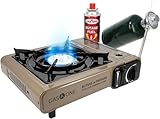
Portable Camp Stove
Allows you to prepare stored foods when household utilities are unavailable.

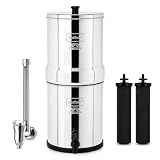
Emergency Water Filter
Ensures you have clean water for drinking and preparing stored food.
Emergency Food Buckets vs Grocery Store Food
Preparedness companies often advertise emergency food buckets containing weeks or months of meals in compact containers. These products can certainly serve a purpose, particularly for households seeking long shelf life and convenient storage. However, they are not always the best solution for every family.
One advantage of emergency food buckets is simplicity. A household can purchase a complete package and immediately increase its preparedness level without spending time creating detailed food inventories. Many products also feature shelf lives measured in decades when stored properly.
The primary drawback is cost. Commercial emergency foods often cost significantly more per calorie than ordinary grocery store staples. A family may spend hundreds of dollars on packaged preparedness meals while obtaining substantially more food by purchasing rice, beans, pasta, canned meats, and similar products locally.
Another consideration is familiarity. During stressful situations, people generally prefer foods they already know and enjoy. Children especially may resist unfamiliar meals, making grocery-based food storage an attractive option for many households.
The most balanced approach is often a combination of both methods. Grocery store foods can provide the foundation of a practical emergency pantry, while specialized preparedness products offer additional insurance against longer disruptions and expand overall storage capacity.
Neither approach is inherently wrong. The best choice depends on budget, available storage space, family preferences, and preparedness goals. What matters most is having sufficient food available before an emergency occurs rather than waiting until shortages begin to develop.
🚨 Imagine This…
A major ice storm closes roads for two weeks. Grocery shelves empty within days, delivery trucks cannot reach your community, and restaurants remain closed. Families that built a 30-day pantry continue eating familiar meals while everyone else struggles to find basic groceries.
Common Mistakes Families Make With 30-Day Food Storage
Building a 30-day food supply is not particularly complicated, yet many families make mistakes that reduce the effectiveness of their preparations. In many cases, these errors are not discovered until a power outage, severe storm, supply shortage, or other emergency forces people to depend on the food they have stored.
One of the most common mistakes is purchasing foods solely because they have a long shelf life while ignoring whether anyone in the household actually enjoys eating them. A closet full of unfamiliar products may look impressive from a preparedness standpoint, but if family members refuse to eat those foods, the investment becomes far less valuable. Emergency food storage should be built around meals and ingredients that already fit naturally into a household’s normal eating habits.
Another frequent error involves storing too many low-calorie foods while failing to stock enough calorie-dense staples. A pantry filled with canned vegetables, soup, and snack foods may appear well supplied, yet it may not provide enough energy to sustain a family for an entire month. Effective food storage balances nutritional variety with sufficient calories to support daily activities.
Many households also underestimate their protein requirements. Rice, pasta, and oats are excellent staples, but relying too heavily on carbohydrates can leave a food supply feeling incomplete. Protein sources such as canned meat, beans, lentils, peanut butter, and powdered dairy products help create a more balanced reserve capable of supporting long-term health.
Failing to rotate stored food is another issue that affects many preparedness plans. Food storage should function as an extension of the pantry rather than a forgotten collection of supplies hidden in the back of a closet. Using older items first and replacing them during routine shopping trips helps maintain freshness while reducing waste.
Some families focus exclusively on food while overlooking the equipment needed to prepare it. Can openers, cooking fuel, water containers, utensils, manual kitchen tools, and backup cooking methods can become surprisingly important during an emergency. A pantry full of food loses value if meals cannot be prepared when needed.
Storage conditions can create problems as well. Excessive heat, moisture, humidity, and pest activity shorten shelf life and increase the likelihood of spoilage. Foods stored in cool, dry environments generally maintain quality much longer than those exposed to harsh conditions.
Another mistake involves ignoring family preferences and special dietary needs. Young children, elderly family members, and individuals with food allergies or medical conditions may require specific foods that should be included in preparedness planning. Emergency food storage works best when it reflects the actual needs of everyone who may depend upon it.
Finally, many people postpone building food storage because they believe the project requires a large financial investment. In reality, a 30-day food supply can be assembled gradually. Adding a few extra items during each shopping trip often produces impressive results over the course of several months without straining a household budget.
Simple 30-Day Food Storage Plan for Beginners
Families who are just beginning often feel overwhelmed by the idea of building a month’s worth of food. Fortunately, the process becomes much more manageable when divided into smaller steps.
During the first week, focus on staple foods that provide substantial calories at a reasonable cost. Rice, pasta, oats, peanut butter, canned vegetables, canned fruit, and canned meats create a strong foundation that can support a wide variety of meals.
During the second week, expand protein sources and increase meal diversity. Additional canned meats, dried beans, lentils, powdered milk, soups, and cooking ingredients help transform basic staples into more complete meal options.
During the third week, evaluate water storage, cooking methods, and food preparation needs. This is also a good time to identify gaps in your inventory and purchase any missing items that would improve overall preparedness.
During the fourth week, add extra quantities of the foods your family consumes most often. The goal is to create a reserve that feels like a natural extension of your pantry rather than a separate collection of emergency supplies.
As discussed in Blackout Preparedness Buyer’s Guide, preparedness works best when essential supplies are gathered before they become difficult to find. Building food storage gradually allows families to spread costs over time while steadily increasing their resilience.
Once a 30-day supply has been established, maintaining it becomes much easier than creating it. Regular rotation and occasional replenishment can keep a food reserve ready for years while continuing to support normal household meals.
☑ 30-Day Pantry Success Checklist
- ☑ Calculate your family’s calorie needs.
- ☑ Store foods your family already enjoys.
- ☑ Include grains, proteins, fruits, vegetables, and fats.
- ☑ Maintain enough water for cooking and drinking.
- ☑ Keep backup cooking equipment and fuel.
- ☑ Rotate stored food using first-in, first-out.
- ☑ Review your pantry inventory every month.
Frequently Asked Questions
How much food should a family of four store for 30 days?
A family of four should plan for approximately 240,000 calories over a 30-day period based on an average of 2,000 calories per person per day. In practical terms, that often includes a combination of rice, pasta, beans, canned meats, canned vegetables, fruits, peanut butter, and other pantry staples that provide balanced nutrition and sufficient calories.
What foods are best for a 30-day emergency food supply?
Some of the best foods for emergency storage include white rice, dried beans, pasta, oats, peanut butter, canned chicken, canned tuna, canned vegetables, canned fruit, powdered milk, cooking oil, and shelf-stable seasonings. These foods offer a combination of long shelf life, affordability, nutritional value, and versatility.
Should I buy emergency food buckets or build my own pantry?
Many families find that a combination of both approaches works best. Grocery store staples are usually more affordable and familiar, while emergency food buckets provide convenience and exceptionally long shelf lives. Building a pantry around foods your family already eats is often the most practical starting point.
How much water should I store with a 30-day food supply?
Most preparedness plans recommend storing at least one gallon of water per person per day for drinking and basic sanitation. Additional water may be needed for cooking, cleaning, pets, and personal hygiene. Families storing foods such as rice, beans, pasta, and oats should account for the extra water required to prepare those meals.
Can I build a 30-day food supply on a budget?
Yes. Many families successfully build emergency food reserves by purchasing a few extra items during regular grocery trips. Staple foods such as rice, beans, pasta, oats, canned goods, and peanut butter provide a large number of calories at a relatively low cost, allowing a food supply to grow steadily over time without requiring a large upfront investment.
How often should emergency food be rotated?
Food storage should be rotated regularly using a first-in, first-out system. Older items should be consumed first and replaced during normal shopping trips. This helps maintain freshness, reduces waste, and ensures that your emergency food supply remains ready when it is needed.
📚 Continue Reading
Continue building your family’s complete emergency preparedness plan.
Final Thoughts
Determining how much food a family should store for 30 days is not about preparing for the most extreme scenario imaginable. It is about creating a practical buffer that allows a household to remain comfortable and self-sufficient during disruptions that may affect stores, transportation networks, utilities, or local supply chains.
For most families, a realistic 30-day food supply consists of calorie-dense staples, reliable protein sources, shelf-stable fruits and vegetables, cooking essentials, and enough variety to maintain morale throughout an extended emergency. The exact quantities will vary depending on household size and dietary preferences, but the underlying principle remains the same: having food available before it is needed provides options when circumstances become uncertain.
A month of food storage also serves as a foundation that can be expanded over time. Families who successfully build a 30-day supply often discover that maintaining additional reserves becomes much easier because the systems, storage space, and purchasing habits are already in place.
Food should never be viewed as a standalone preparedness category. Water, cooking capability, sanitation, communication, and emergency planning all work together to support a household during challenging situations. A well-stocked pantry becomes far more valuable when paired with the resources necessary to use it effectively.
If you have not started building a food reserve yet, begin with the foods your family already eats and add a little extra during each shopping trip. Consistent progress is usually more effective than attempting to purchase everything at once. Over time, those small additions can grow into a substantial emergency food supply capable of supporting your family through a wide range of unexpected events.
For additional preparedness planning, see How Much Water Does a Family Need for 30 Days?, How to Cook During a Power Outage, and What Runs Out First in a Crisis? to build a more complete emergency preparedness plan.