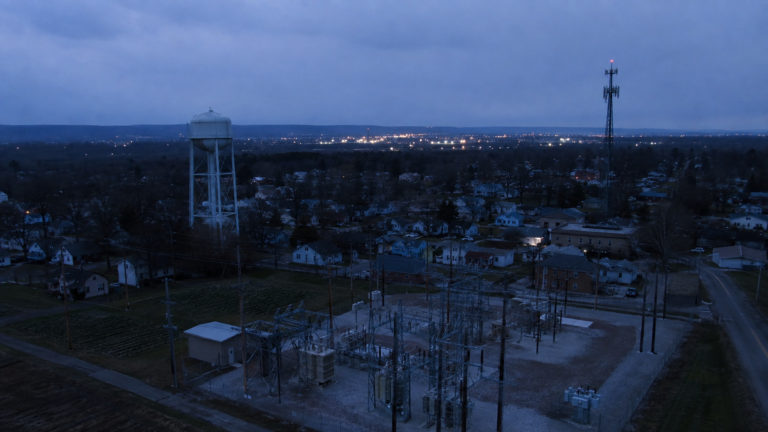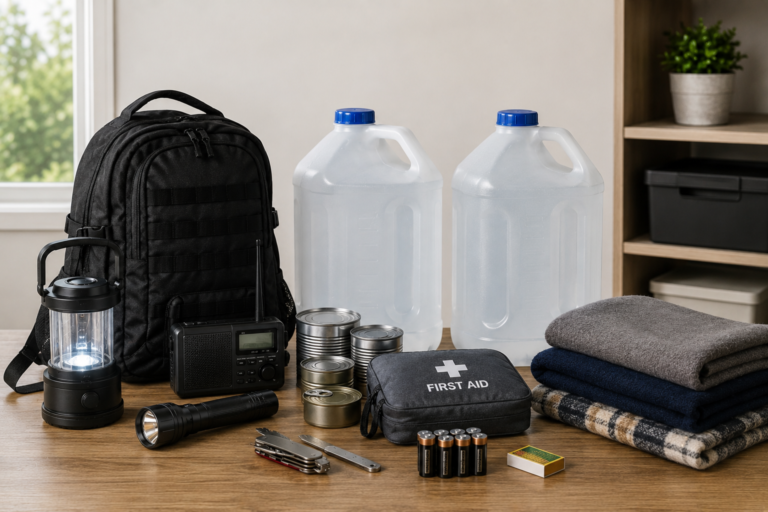
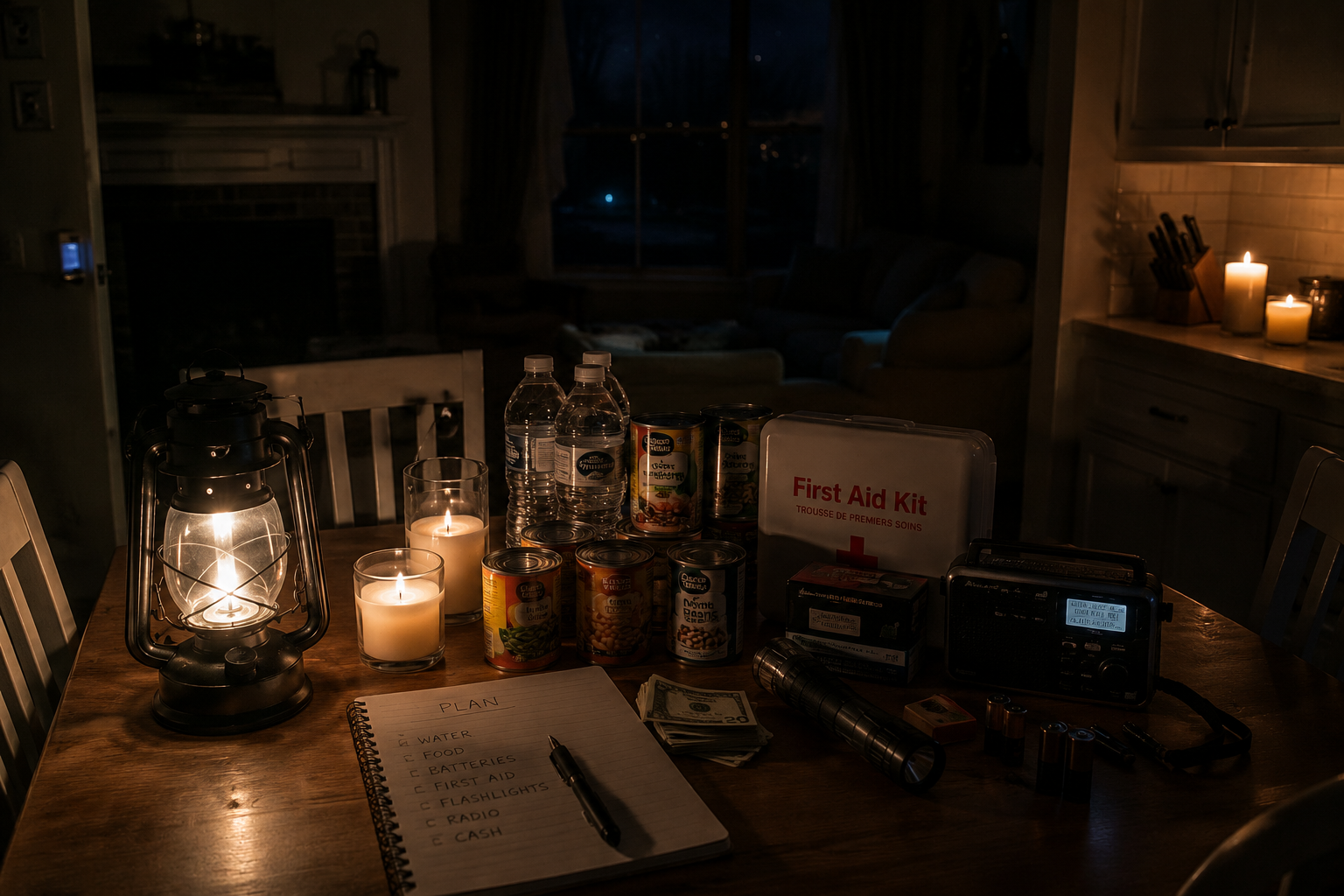
The First 24 Hours of a Blackout: What Actually Happens (Hour by Hour)
When the power first goes out, most people assume it’s temporary.
This post contains affiliate links. I may earn a small commission at no extra cost to you. Learn more.
They check the breaker. Look outside. Refresh weather apps. Maybe light a candle and wait for things to come back on.
But large-scale blackouts don’t behave like normal outages.
The first 24 hours of a blackout are when modern systems begin failing in ways most people never think about until it’s happening in real time. Communication networks overload. Gas stations stop functioning. Grocery store shelves empty fast. Refrigerated food starts warming. Traffic systems become chaotic. Water pressure can begin weakening depending on the scale of the outage.
And the people who prepared beforehand immediately separate themselves from everyone else.
Most families are not ready for how quickly inconvenience turns into stress once electricity disappears for an entire day.
This guide breaks down what actually happens during the first 24 hours of a major blackout — hour by hour — and what prepared households do differently before conditions start getting worse.
If you haven’t already built a complete preparedness system.
Quick Answer
The first 24 hours without power are the setup phase of a blackout. This is when you should check for immediate hazards, preserve refrigerated food, store water while it is still available, gather backup lighting before dark, charge essential devices, monitor reliable updates, and avoid wasting batteries, fuel, food, or phone power too early. If the outage ends quickly, you are simply better organized. If it continues overnight, those early steps can keep your household ahead of the crowds, shortages, and stress that usually build as the blackout continues.
✓ Key Takeaways
- The first few hours determine how difficult the rest of the blackout will become.
- Take action immediately by charging devices, storing water, organizing lighting, and preserving refrigerated food.
- Avoid unnecessary trips once crowds begin forming at grocery stores and gas stations.
- Conserve batteries, fuel, food, and water early instead of waiting until supplies become limited.
- Prepared households focus on stability during the first day instead of reacting to every new problem.
Hour 0–1: Confusion and False Confidence
The first hour is usually calm.
Most people assume the outage is temporary. They check the breaker. Look outside. Refresh weather apps. Maybe light a candle and wait.
At first, it doesn’t feel dangerous.
It feels inconvenient.
Phones come out immediately as people search for answers. Neighbors step outside to see who still has power. A few generators kick on in the distance. Traffic increases slowly as people begin driving toward stores and gas stations.
This is also when most families make their first major mistake:
They wait too long to take the outage seriously.
Prepared households move immediately while systems are still functioning. They charge phones. Fill water containers. Check backup lighting. Fuel vehicles if necessary. Lower refrigerator use before food temperatures start rising.
Because once people realize the outage may last longer than expected, conditions begin changing fast.
Stores become crowded. Communication networks overload. Fuel lines begin forming.
👉 If communication systems become unreliable, backup options matter fast:
How to Communicate When the Grid Goes Down
💡 Pro Tip
Don’t wait for confirmation that the outage will last overnight before preparing. The first hour is your best opportunity to charge essential devices, fill water containers, gather emergency lighting, and organize supplies while stores are still open and basic services are still functioning. If power returns quickly, you’ve lost nothing. If it doesn’t, you’ll already be ahead of the majority of households.
Hour 1–3: The Rush Begins
Once people realize the outage is widespread, behavior changes quickly.
The first real signs usually appear at gas stations and grocery stores.
Traffic increases almost immediately as people rush out to buy supplies before conditions get worse. Long lines begin forming at fuel pumps. Parking lots fill faster than normal. Inside stores, carts start piling up with bottled water, batteries, bread, propane, and anything people think they might need if the outage continues.
At this stage, most households are still thinking short-term.
They are not preparing for a week without power.
They are preparing for “just in case.”
But that mindset changes fast once shelves start emptying.
Modern stores are not built to handle sudden panic buying. Most keep limited back-stock inventory, especially on emergency supplies. Once crowds begin stripping shelves, essential items disappear far quicker than most people expect.
Gas stations become another major problem.
Most modern pumps require electricity to function. Even stations with backup generators can become overwhelmed quickly as drivers begin topping off every vehicle and gas can they own.
This is usually the point where people begin realizing how dependent daily life is on uninterrupted power.
Prepared households often avoid these crowds completely because they already stocked the basics beforehand:
- water
- shelf-stable food
- batteries
- lighting
- backup cooking options
- fuel reserves
That preparation creates something extremely valuable during the first few hours of a blackout:
Time.
Instead of fighting crowds and shortages, prepared families can focus on stabilizing their situation while everyone else is scrambling.
Hour 3–6: Communication Networks Begin Struggling
Cell networks rarely fail all at once during a blackout.
Instead, they slowly become overloaded.
As more people start calling family, checking outage maps, streaming local news, and posting updates online, mobile networks begin struggling under the sudden surge in traffic.
At first, the problems seem minor.
Texts send slower than normal. Calls randomly fail. Videos buffer endlessly. Internet speeds crawl.
Then things start getting worse.
People begin realizing they can no longer reliably contact friends or family. Rumors spread faster than verified information. Social media fills with conflicting reports, estimated restoration times, and panic-driven speculation.
This is where communication starts becoming a real survival issue instead of a convenience problem.
Most people now rely entirely on smartphones for:
- news
- maps
- emergency alerts
- weather updates
- communication
- banking
- navigation
And during a blackout, every one of those systems depends on battery life and overloaded infrastructure.
Meanwhile, backup batteries at local cell towers are already draining.
Prepared households usually start conserving power early instead of waiting until devices are nearly dead.
Phones get switched to low-power mode. Battery banks are rotated carefully. Unnecessary apps and streaming stop immediately.
This is also when backup communication tools start becoming extremely valuable.


📌 Did You Know?
Most cell towers have backup batteries, but those batteries are designed to keep towers running for a limited time—not indefinitely. During a widespread outage, overloaded networks often become unreliable long before the backup power is exhausted, making battery conservation and backup communication methods increasingly important.
One overlooked problem during this phase is misinformation.
People begin sharing screenshots, rumors, and worst-case scenarios long before official information is confirmed. The longer the outage continues, the harder it becomes to separate real updates from panic.
That’s why experienced preparedness planners rely on multiple information sources instead of social media alone.
👉 This guide breaks down exactly how communication systems begin failing during outages:
Communication Failure Timeline (0–72 Hours)
Hour 6–12: Refrigerated Food Starts Becoming a Problem
By this point, the blackout starts feeling less temporary.
Homes become quieter. Batteries begin draining. Refrigerators slowly warm every hour the power stays off.
And people begin asking the same question:
“How long is our food actually going to last?”
This is usually when the first real stress begins inside households.
Most refrigerators only keep food safely cold for around four hours if left unopened. A full freezer can last much longer, but only if the door stays shut as much as possible.
That becomes harder than most people expect.
People constantly open refrigerators to:
- check temperatures
- move food around
- grab drinks
- see what still looks safe
- decide what needs cooked first
Every time the refrigerator or freezer door is opened, valuable cold air escapes and the internal temperature begins rising, reducing the amount of time perishable food can remain safe to eat. As the hours pass and the power remains off, uncertainty starts replacing confidence, leaving many families wondering whether meat should be cooked immediately, if milk and other dairy products are still safe, how much longer frozen food will stay solid, and what will happen if electricity is not restored before the next morning.
Households that prepare for blackouts ahead of time usually avoid much of this uncertainty because they already have a plan for preserving food during an extended outage. Rather than opening the refrigerator repeatedly or making rushed decisions, they prioritize using the most perishable items first, keep refrigerator and freezer doors closed as much as possible to retain cold temperatures, transfer essential foods to coolers only when necessary, and have backup cooking equipment ready so meals can be prepared before valuable food is lost to spoilage.


⚠ Important Warning
Never use a portable generator, charcoal grill, camp stove, or propane heater inside your home, garage, basement, shed, crawlspace, or any enclosed space. Every major blackout results in preventable carbon monoxide poisonings because people try to bring fuel-burning equipment indoors. Always operate generators well away from doors, windows, and vents according to the manufacturer’s safety recommendations.
This is also when generators become highly noticeable throughout neighborhoods.
The sound of one running house stands out immediately in a dark, quiet area.
At first, that attention may simply mean neighbors asking to charge phones or store medication. But during larger outages, visible preparedness can quickly attract unwanted attention.
That’s why experienced preparedness planners often focus on low-profile systems instead of broadcasting exactly what supplies they have.
👉 This guide explains exactly how long refrigerated and frozen food actually lasts during outages:
How Long Food Lasts Without Power (Fridge, Freezer & Pantry Breakdown)
Hour 12–18: Stress Starts Replacing Convenience
By the second half of the first day, the blackout no longer feels like a temporary inconvenience.
It starts affecting routines.
Homes become uncomfortable. Phone batteries drop lower. Refrigerators warm further. Traffic stays heavier than normal. Updates from utility companies often become vague or inconsistent.
And this is usually when anxiety starts building inside households that were not prepared.
People begin realizing they may not have:
- enough water
- enough food
- enough fuel
- enough lighting
- enough backup power
The uncertainty becomes the hardest part.
Humans handle short problems fairly well. What creates stress is not knowing how long the situation will continue.
That uncertainty changes behavior fast.
Tempers rise easier. Patience gets shorter. Parents worry more. Sleep schedules begin breaking down before night even arrives.
Meanwhile, stores that remained open earlier in the day now look very different.
Shelves are thinner. Ice becomes harder to find. Fuel lines grow longer. Employees often have little information themselves. Some businesses begin closing early because payment systems, refrigeration, or staffing problems become harder to manage.
Prepared households usually respond differently during this phase.
Instead of chasing supplies, they shift into conservation mode.
Lighting gets used strategically. Devices are charged only when necessary. Water use becomes more deliberate. Backup systems are checked again before nighttime arrives.
Most importantly, prepared families already know what their next steps are if the outage continues longer.
That structure reduces panic dramatically.


🚨 Emergency Scenario
Imagine a powerful storm knocks out electricity across your entire county at 2:00 p.m. By early evening, grocery stores have nearly empty shelves, fuel stations have lines stretching into the road, and your phone battery is below 30 percent because you’ve been checking outage updates all day. As darkness approaches, you realize the power may not return until tomorrow—or even later. Families who prepared beforehand are already using lanterns, conserving batteries, cooking with backup equipment, and staying home, while everyone else is still searching for supplies that are quickly disappearing.
One overlooked problem during this stage is mental exhaustion.
People spend the entire day absorbing stress, uncertainty, noise, rumors, and disruption. By late afternoon or evening, decision-making starts getting worse simply because people are mentally drained.
And the blackout still hasn’t even reached the first full night yet.
Hour 18–24: The First Night Changes Everything
Darkness changes the mood of a blackout fast.
During the day, most people still feel connected to normal life. Stores are open. Cars are moving. Phones still partially work. Sunlight hides how much infrastructure has already stopped functioning.
But once night arrives, the situation feels very different.
Neighborhoods that are normally filled with light become unusually dark and quiet. Traffic slows. Businesses close. Streetlights disappear. Houses running generators suddenly stand out across entire blocks.
And this is usually the moment when the outage finally feels real.
Inside homes, stress increases quickly.
People begin realizing:
- the power may not return overnight
- refrigerators are warming further
- fuel may become harder to find tomorrow
- phones may not last another full day
- stores may be emptier in the morning
Sleep also becomes harder than most people expect.
Homes get hotter or colder without climate control. Generator noise echoes through neighborhoods. Families stay awake checking updates or worrying about how long conditions will last.
Even simple things become frustrating:
- moving through dark rooms
- charging devices
- cooking meals
- keeping children calm
- managing limited lighting

This is also when security awareness starts increasing.
Most blackouts do not immediately turn dangerous, but darkness changes behavior. Alarm systems fail without backup batteries. Parking lots become harder to monitor. Opportunistic theft becomes easier in areas with little lighting or reduced police presence.
Prepared households usually avoid drawing unnecessary attention during this stage.
Bright lights, loud generators, and visible supplies can unintentionally advertise exactly who still has resources available.
The families who handle the first night best are usually the ones who already expected disruption before it happened.
Because by the end of the first 24 hours, the blackout is no longer just an inconvenience.
It becomes a test of how prepared people really were before the lights went out.
👉 If the outage continues beyond the first day, conditions usually begin changing much faster:
First 72 Hours After a Disaster: What Actually Happens (And How to Survive It)
Why Water Problems Can Start Earlier Than Most People Think
One of the biggest misconceptions during blackouts is that water will continue working normally no matter how long the outage lasts.
Sometimes it does.
Sometimes it doesn’t.
Most municipal water systems depend heavily on electric pumps, treatment facilities, and pressure systems to keep water moving through entire communities. Backup generators help temporarily, but widespread outages put increasing strain on infrastructure the longer they continue.
During the first several hours, most people assume water is not a problem because faucets still run.
That creates a false sense of security.
What many households fail to realize is that water pressure can begin weakening gradually depending on:
- the size of the outage
- fuel availability
- pump station failures
- infrastructure damage
- system demand
And once pressure starts dropping, panic buying of bottled water becomes even worse.
Prepared households usually start storing additional water immediately while the system is still functioning normally. Bathtubs get filled. Containers are topped off. Drinking water is separated from sanitation water before shortages become a problem.
Because once water access becomes unreliable, everyday life gets difficult very quickly.
Cooking becomes harder. Hygiene becomes harder. Cleaning becomes harder. Toilets become a serious concern. Even basic comfort inside the home starts disappearing faster than most people expect.


Another overlooked issue is contamination risk.
As infrastructure struggles, water quality can eventually become less reliable in certain situations. That’s one reason experienced preparedness planners rely on multiple layers:
- stored water
- filtration systems
- purification backups
- emergency collection options
The first 24 hours are usually when smart households begin protecting water early — before shortages and pressure problems begin affecting everyone else.
👉 This guide breaks down exactly what happens when water systems start failing during emergencies:
When Water Stops Running: What Happens in the First 72 Hours
What Prepared Families Do Differently During the First 24 Hours
The biggest difference during a blackout is usually not gear.
It’s behavior.
Most unprepared households spend the first 24 hours reacting to whatever problem appears next. They rush crowded stores, burn through batteries too fast, open refrigerators constantly, and waste time searching social media for answers while rumors spread.
Prepared households usually move differently.
They focus on stabilization first.
Instead of trying to maintain normal life perfectly, they begin conserving resources early while systems are still partially functional.
That often means:
- limiting unnecessary travel
- reducing refrigerator use immediately
- charging devices before networks overload
- organizing lighting before nightfall
- conserving water early
- preparing backup cooking options before food becomes critical
Prepared families understand the first day is about buying time and creating stability before conditions get worse.

One of the biggest mistakes during the first 24 hours is waiting too long to take the outage seriously.
By the time many households realize conditions may continue for days instead of hours, supplies are already harder to find, fuel lines are longer, and stress levels are much higher.
Prepared households move early while options still exist — and that alone can completely change how difficult the following days become.
| First 24-Hour Problem | What Most People Do | What Prepared Families Do |
|---|---|---|
| Water Storage | Wait until water pressure drops or stores run out. | Fill containers immediately while tap water is still available. |
| Refrigerated Food | Open the refrigerator and freezer repeatedly. | Keep doors closed as much as possible and manage food strategically. |
| Communication | Drain phone batteries scrolling social media. | Conserve battery power and use backup communication methods. |
| Fuel Shortages | Wait in long gas station lines. | Rely on stored fuel and avoid unnecessary trips. |
| Lighting | Use flashlights until batteries are quickly depleted. | Rotate lanterns, headlamps, flashlights, and spare batteries efficiently. |
| Panic Buying | Rush to crowded stores after shelves begin emptying. | Stay home with emergency supplies already organized. |
| Information | Rely on rumors and conflicting social media posts. | Verify updates through multiple reliable information sources. |
| Nightfall | Scramble to find lighting after dark. | Prepare lighting and backup systems before sunset. |
| Stress & Decision-Making | React emotionally as new problems appear. | Stay focused on stabilization, conservation, and planning. |
| The First 24 Hours Overall | Treat the outage as a short-term inconvenience. | Prepare early before conditions begin getting worse. |
☑ First 24 Hours Without Power Checklist
- ☑ Confirm whether the outage is limited to your home or affecting the surrounding area.
- ☑ Check for immediate hazards such as damaged power lines, gas leaks, smoke, or flooding.
- ☑ Charge phones, power banks, rechargeable lights, and medical devices while backup power is available.
- ☑ Fill sinks, bathtubs, and clean containers with water before pressure begins dropping.
- ☑ Keep refrigerator and freezer doors closed as much as possible.
- ☑ Gather flashlights, lanterns, batteries, first aid supplies, and medications before sunset.
- ☑ Switch phones to Low Power Mode and avoid unnecessary streaming or social media.
- ☑ Prepare backup cooking equipment before refrigerated food becomes unsafe.
- ☑ Check on children, older adults, neighbors, and anyone who depends on electricity for medical equipment.
- ☑ Review your blackout plan before the first night begins.
The First 24 Hours Determine Everything After That
Most major blackout problems do not fully appear during the first day.
The first 24 hours are the setup phase.
This is when people either begin gaining control of the situation — or start falling behind immediately.
Supplies disappear quickly. Fuel becomes harder to find. Communication networks grow less reliable.
Refrigerated food begins spoiling. Stress starts affecting decision-making. Sleep becomes harder before the first night even ends.
And the longer the outage continues, the faster those problems begin compounding.
That’s why the first day matters so much.
Families who burn through resources emotionally during the opening hours often struggle badly later.
Batteries drain too fast. Fuel gets wasted. Water storage starts too late. Food management becomes disorganized.
Meanwhile, prepared households are usually focused on something much simpler:
Stability.
They understand the first day is not about surviving dramatic Hollywood-style chaos. It’s about slowing problems down before they start accelerating.
That means:
- conserving resources early
- avoiding panic crowds
- organizing supplies before nightfall
- protecting communication options
- maintaining routines as much as possible
- thinking beyond just the next few hours
Once shortages begin spreading across stores, fuel stations, and essential services, while uncertainty continues growing with every passing hour, catching up becomes far more difficult than simply preparing ahead of time because the supplies, information, and resources people need most are often the same things everyone else is suddenly trying to obtain.
Fortunately, most power outages are restored within a relatively short period of time, allowing life to return to normal before serious long-term consequences develop. Even so, every blackout has a way of exposing weaknesses that many households never realized existed until they were forced to rely on their emergency preparations instead of the conveniences they use every day.
For some families, that means discovering their backup lighting provides only a few hours of illumination before batteries are exhausted. Others realize they have very little safe drinking water stored, not enough shelf-stable food to last beyond a couple of days, no reliable way to communicate if cellular networks become unavailable, little or no fuel reserved for generators or vehicles, and an overall dependence on smartphones, internet access, and modern infrastructure that leaves them vulnerable when those systems stop functioning.
For many households, the first 24 hours of a major blackout become the turning point that changes the way they think about emergency preparedness because they experience firsthand just how quickly ordinary routines can unravel once electricity is no longer available. What initially seems like a temporary inconvenience often reveals how interconnected modern life has become and how many essential services rely on a stable electrical grid to continue operating.
Preparing for the first day without power is an excellent place to start, but understanding what happens if the outage continues for several more days is just as important for building a complete emergency plan.
⚡ Free Blackout Preparedness Planner
Not sure where your blackout plan is weak? Download the FREE 17-page planner and organize your water, food, fuel, medical supplies, communication plan, and evacuation strategy.
Final Takeaway
Most people think of blackouts as temporary inconveniences that amount to nothing more than a few hours without electricity, a dead phone battery that needs charging, or a refrigerator full of food that may eventually have to be thrown away. While those problems are certainly frustrating, they only scratch the surface of what begins happening once the systems that support everyday life start failing at the same time.
The first 24 hours of a widespread blackout often reveal just how dependent modern households have become on electricity for communication, transportation, banking, water, food storage, medical equipment, and access to reliable information. As power remains unavailable, communication networks begin experiencing problems, fuel becomes increasingly difficult to obtain, grocery store shelves empty as people rush to buy remaining supplies, questions about water safety become more important, and uncertainty quickly replaces the routines that normally make daily life predictable.
As the outage continues, these challenges rarely remain isolated because each new problem creates additional obstacles that make the next one even harder to manage, causing small inconveniences to grow into much larger issues for families that waited until the emergency began before making a plan.
That is why emergency preparedness matters long before severe weather, equipment failures, or other unexpected events interrupt the electrical grid, not because every blackout becomes a catastrophic disaster, but because preparing in advance provides something that cannot be purchased after the lights go out: valuable time to make informed decisions, greater stability while essential services remain disrupted, and more options than families who are forced to react without the supplies or knowledge they need.
Families who navigate extended blackouts with the least amount of stress are rarely the ones scrambling to find supplies after stores have already been picked over or searching for answers after communication systems become unreliable. Instead, they are usually the households that quietly prepared while everything was still operating normally, allowing them to focus on adapting to the situation rather than competing for increasingly limited resources.
Once the lights go out, the first 24 hours often set the course for everything that follows, making the decisions you make before an emergency just as important as the actions you take after it begins.
📚 Continue Reading
Continue building your blackout preparedness with these related survival guides.
- How Fast Society Changes During a Long-Term Power Outage
- What Stops Working First in a Long-Term Blackout?
- How Long Will Municipal Water Systems Work During a Blackout?
- How Long Will Internet Service Work During a Blackout?
- When ATMs and Credit Cards Stop Working During a Blackout
- 2-Week Blackout Survival Plan