What Happens After 7 Days Without Power?
After 7 days without power, most people discover that modern life becomes far more difficult than they expected.
This post contains affiliate links. I may earn a small commission at no extra cost to you. Learn more.
Most people prepare for a few hours without electricity. Some prepare for a few days. Very few stop to consider what life would actually look like after an entire week without power.
The first twenty-four hours of a blackout are usually inconvenient. Flashlights come out, phones are charged from backup batteries, and most people assume utility crews will have everything restored soon. By the third day, routines begin breaking down as fuel supplies shrink, refrigerated food spoils, and communication becomes more difficult.
After seven days, however, the situation enters an entirely different phase.
A week without electricity affects nearly every part of modern life. Grocery stores struggle to restock shelves, fuel stations become unreliable, cell networks may operate with reduced capacity, medications become harder to obtain, and many families discover that the supplies they thought would last much longer are disappearing faster than expected.
The severity depends on the cause of the outage, the weather, the location, and how many people are affected, but one thing remains consistent: the longer the blackout continues, the more dependent people become on whatever preparations they made before the lights went out.
Understanding what typically happens after seven days without power helps families prepare realistically instead of relying on assumptions. Knowing what systems begin failing, what supplies become difficult to obtain, and what challenges emerge during the second week can make the difference between staying comfortable and facing unnecessary hardship.
In this guide, we’ll examine what life often looks like after a full week without electricity, which systems are likely to be struggling, and how prepared households can stay ahead of the problems that catch most people off guard.
After 7 days without power, many families begin facing challenges involving food storage, water supplies, communication, fuel availability, and daily routines. Understanding what happens during a week-long blackout can help you prepare before an emergency occurs.
Quick Answer
After seven days without power, many families begin facing serious challenges involving food, water, fuel, communication, sanitation, and medical needs. Households that prepared with emergency supplies, backup power, and a realistic plan are usually far better positioned than those relying on stores and public services.
✓ Key Takeaways
- Food and water management become daily priorities.
- Fuel shortages become more noticeable after the first week.
- Communication networks may become less reliable.
- Medical and sanitation challenges increase over time.
- Preparing for two weeks provides a significant advantage.
The First Week Changes Everything
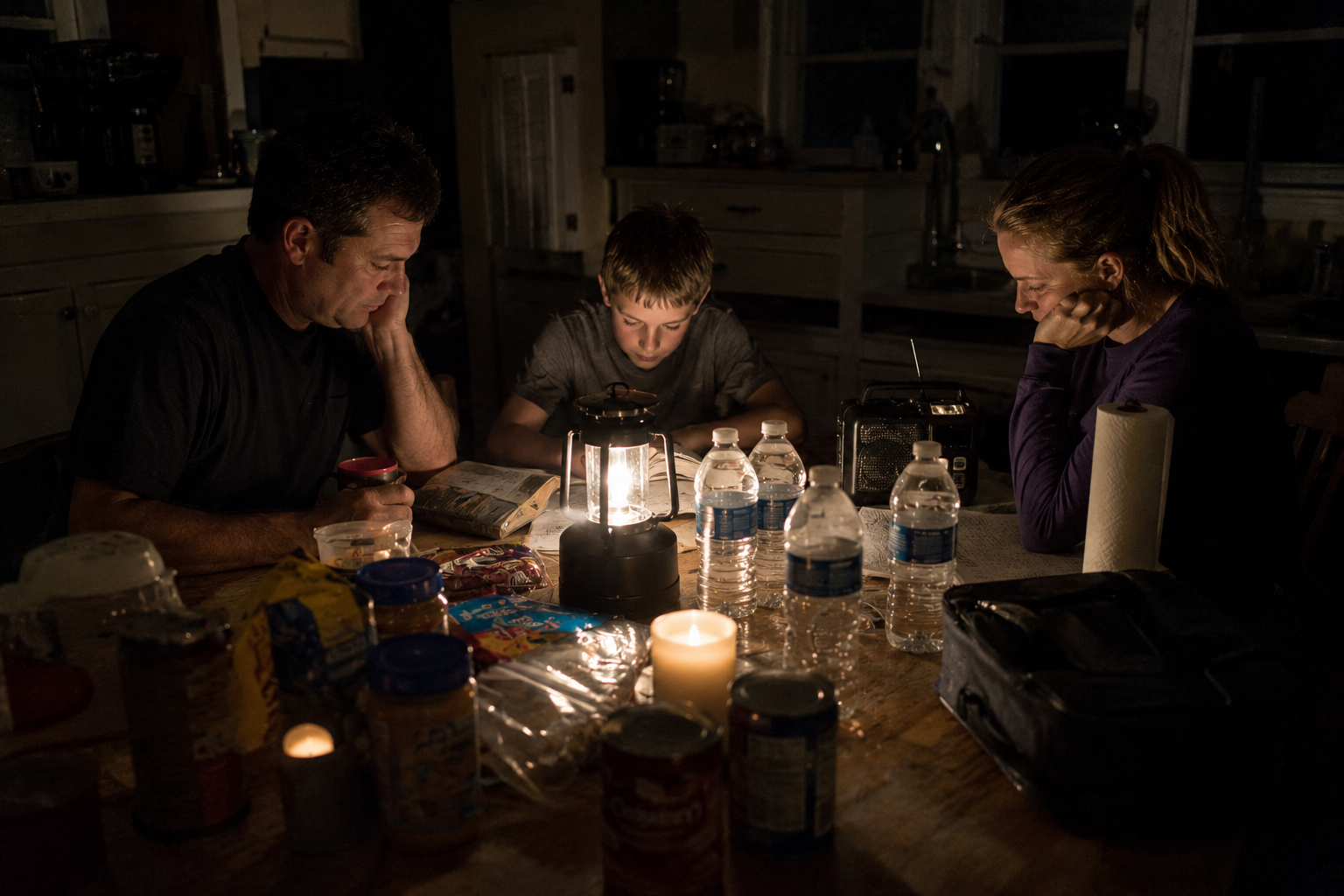
Most people think about a power outage in terms of hours, not days. They imagine candles on the kitchen table, a flashlight by the bed, and perhaps a few inconveniences while waiting for utility crews to restore service. What many families fail to realize is that the challenges of a long-term blackout do not increase in a straight line. Conditions often change slowly at first and then begin accelerating as more systems fail and resources become harder to replace.
During the first twenty-four hours, most households are still operating on stored convenience. Refrigerators remain cold for a while, phones still have battery life, gas stations may have backup generators, and people generally assume normal life will return soon. The atmosphere is often calm because many believe the disruption is temporary.
By the second and third day, cracks begin appearing in everyday routines. Refrigerated food starts becoming questionable, fuel supplies shrink, and families begin paying closer attention to how quickly they are using batteries, drinking water, and other necessities. At this point, preparedness starts separating those who planned ahead from those who did not.
As the outage continues, uncertainty becomes one of the biggest challenges. People who expected power to return quickly begin adjusting their expectations. Small inconveniences become larger problems. A missing flashlight battery, a nearly empty propane tank, or a lack of cash suddenly matters far more than it did a few days earlier.
After seven days, many communities enter an entirely different stage of the emergency. Supply chains have been disrupted for an extended period. Businesses may be operating under limited conditions. Fuel deliveries can become inconsistent. Communication systems may be strained. Families who were relying on grocery stores, restaurants, and daily deliveries begin realizing they must depend more heavily on what they already have available.
This shift is not only physical but psychological. People become tired. Sleep schedules change. Stress increases. Decision-making often becomes more difficult because every remaining resource feels more valuable. Something as simple as deciding whether to drive across town for supplies suddenly involves fuel consumption, road conditions, and uncertainty about what will actually be available when you arrive.
The longer a blackout continues, the more society begins transitioning from convenience-based living to resource-based living. Instead of asking what people want, the question becomes what people can access. Families begin tracking water, food, fuel, batteries, medications, and cash much more carefully than they would under normal circumstances.
Many of these changes occur well before a complete societal breakdown. In fact, most week-long blackouts never reach that point. However, they do reveal how dependent modern life has become on reliable electricity. Everything from communication networks to food distribution systems depends on power somewhere along the chain.
As discussed in How Fast Society Changes During a Long-Term Power Outage, the biggest surprise for many people is not how quickly things stop working, but how many systems are interconnected. When electricity disappears for an extended period, problems begin stacking on top of one another until even simple daily tasks become more difficult.
By the seventh day, the question is no longer how to get through tonight. The question becomes how to continue functioning if the outage lasts another week.
Food Supplies Are Becoming a Serious Concern
After seven days without power, food becomes one of the most visible challenges facing both households and communities. The issue is rarely that every grocery store shelf is completely empty. Instead, the problem is that supplies become increasingly unpredictable, making it difficult for families to replace what they consume each day.
Most refrigerated and frozen foods were already lost during the first several days of the outage unless families had access to generators, portable power stations, or alternative cooling methods. By the end of the first week, many households have transitioned almost entirely to shelf-stable foods, canned goods, dry foods, and whatever emergency supplies they stored beforehand.
For families that did not maintain a food reserve, the situation can become stressful. Grocery stores are designed around constant deliveries rather than massive backroom inventories. Under normal conditions, products arrive regularly and shelves are replenished quickly. During a prolonged blackout, however, transportation problems, fuel shortages, communication disruptions, and increased consumer demand can all interfere with that process.
As explained in How Long Will Grocery Stores Have Food During an Emergency?, stores often experience shortages of specific products long before they run out of food entirely. Bottled water, ready-to-eat meals, batteries, baby supplies, pet food, canned meats, and comfort foods frequently disappear first as shoppers focus on items that require little preparation.
Another challenge after a week without power is food variety. Even households that planned ahead may begin experiencing menu fatigue. Eating the same foods repeatedly can affect morale, especially for children. This is one reason many experienced preparedness-minded families store a wide range of foods rather than relying exclusively on rice, beans, or a handful of emergency rations.
Communities can also see increased competition for available supplies. Deliveries that would normally satisfy demand may sell out within hours. Stores that remain open may limit quantities on essential items, forcing families to visit multiple locations to find what they need.
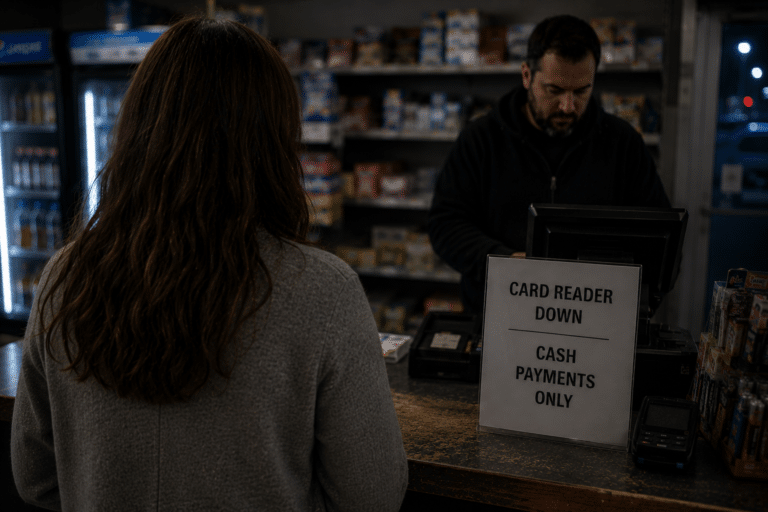
The situation becomes even more complicated if electronic payment systems remain unreliable. A store may still have food available, but purchasing it becomes difficult if card readers are offline or internet connections remain unstable. Families with emergency cash often have more options during these situations than those relying entirely on electronic payments.
Many of the products that disappear first are discussed in First Supplies to Disappear During an Emergency. Understanding these patterns can help families prepare before a crisis instead of competing with everyone else once shortages begin appearing.
After seven days without power, food is no longer simply about convenience. It becomes a resource that must be managed carefully. Families with a well-stocked pantry often remain relatively comfortable, while those depending on frequent shopping trips may find themselves facing difficult choices as supplies become harder to replace.
Water Problems Start Growing Fast
Food shortages often receive most of the attention during a prolonged blackout, but water can become a much more immediate concern. After seven days without power, many families begin realizing that water is not simply something they drink. It is needed for cooking, cleaning, sanitation, personal hygiene, medical needs, and countless daily tasks that normally happen without a second thought.
The impact depends heavily on the cause of the outage and the local water infrastructure. Some municipal water systems can continue operating for extended periods using backup generators and emergency power systems. Others may experience pressure problems, service interruptions, boil-water advisories, or reduced treatment capacity if the outage affects pumping stations or treatment facilities.
Even when water continues flowing from household taps, families often become concerned about how long that reliability will last. As uncertainty grows, many people begin filling containers, bathtubs, sinks, and anything else capable of storing water. This sudden increase in demand can create additional strain on local systems.
For households that prepared in advance, the first week is often manageable because they have already stored drinking water and emergency supplies. Those who failed to prepare may find themselves relying on bottled water purchases, community distribution points, or assistance from friends and family.
One of the biggest mistakes people make during a long-term outage is underestimating how much water they actually use each day. Drinking water is only part of the equation. Washing hands, preparing meals, cleaning dishes, brushing teeth, basic sanitation, and caring for pets can consume far more water than most families expect. A water supply that seems generous at first can begin shrinking surprisingly fast once every daily need is taken into account.
Water quality also becomes a growing concern after a week without power. Families may begin looking for alternative water sources such as rainwater collection, nearby ponds, streams, or stored non-potable water. However, untreated water can introduce serious health risks if proper filtration and purification methods are not available.
By the seventh day, water management often becomes a daily routine rather than an occasional task. Families begin tracking consumption more carefully, reusing water when appropriate, and prioritizing the most important needs first. Those who planned ahead with adequate storage, filtration, and purification options are usually far more comfortable than those attempting to solve water problems after the emergency has already begun.
Communication Networks Become Less Reliable
After seven days without power, communication becomes one of the most important and potentially frustrating challenges facing families. During the early stages of an outage, many people assume their phones will continue working indefinitely as long as they can keep them charged. In reality, cellular networks depend on a complex infrastructure that requires both electricity and fuel to remain operational.
Most cell towers have some form of battery backup, and certain locations may also have generators available. These systems help keep networks functioning during short-term disruptions, but they are not designed to operate forever without support. As outages continue, backup systems begin reaching their limits, maintenance crews face increasing challenges, and fuel deliveries may become less reliable.
Even when cell towers remain online, network performance often suffers. Thousands of people may be attempting to make calls, send messages, check news updates, contact family members, and access emergency information at the same time. This increased demand can overwhelm portions of the network, resulting in dropped calls, delayed messages, and slower data speeds.
As discussed in How Long Will Cell Towers Work During a Blackout?, the answer varies significantly depending on the region, available backup power, and the scale of the emergency. Some areas may maintain service longer than expected, while others experience interruptions much sooner.
A week into a blackout, families that established alternative communication methods often have a significant advantage. Two-way radios, emergency weather radios, neighborhood communication plans, and pre-arranged check-in procedures can provide valuable information even when cellular networks become unreliable.
This is one reason every household should have a communication strategy before an emergency occurs. Waiting until networks become overloaded is rarely the ideal time to decide how family members will stay in contact. Having designated meeting locations, emergency contacts, and backup communication methods can reduce confusion when normal systems become difficult to use.
The importance of planning ahead is discussed in Family Emergency Communication Plan, where simple preparation steps can make a major difference during extended emergencies.
By the seventh day, communication is no longer simply about convenience. Access to reliable information can influence decisions about food, fuel, medical care, travel, and personal safety. Families that maintain multiple ways to receive information and communicate with others are often better positioned to adapt as conditions continue changing.
📌 Did You Know?
During extended blackouts, text messages often continue working longer than voice calls because they require much less network bandwidth and can be queued for delivery when the network is congested.
Fuel Shortages Become More Noticeable
After seven days without power, fuel often becomes one of the most valuable resources in an affected area. While food and water receive much of the attention during emergency planning discussions, fuel powers many of the systems families depend on to remain comfortable, informed, and mobile during a prolonged blackout.
During the first few days of an outage, many people rely heavily on generators, vehicles, and backup equipment. This increased demand can quickly reduce local fuel supplies, especially if deliveries are disrupted or gas stations cannot operate normally. By the end of the first week, families that failed to plan ahead may find themselves searching for fuel at the same time as everyone else in the community.
The challenge is not always a complete lack of gasoline or diesel. In many situations, fuel still exists within the supply chain. The problem is getting it to where it is needed. Transportation delays, damaged infrastructure, communication issues, and increased demand can all create shortages even when fuel reserves remain available elsewhere.
As explained in How Long Will Gas Stations Work During a Blackout?, many stations depend on electricity to operate pumps, payment systems, and other critical equipment. A station may have thousands of gallons of fuel stored underground but still be unable to serve customers if power remains unavailable.
Generator owners often feel this pressure first. Running a generator around the clock can consume a surprising amount of fuel over the course of a week. Families that expected a few gallons to last indefinitely may discover they underestimated how much fuel extended operation actually requires.
Vehicle fuel also becomes more important as the outage continues. Trips that once seemed routine now carry a greater cost because replacing that fuel may not be easy. Families begin combining errands, reducing unnecessary travel, and carefully considering whether each trip is worth the fuel it consumes.
Payment methods can create additional complications. Even when fuel is available, card processing systems may remain unreliable if internet and communication networks are struggling. This is one reason many preparedness-minded families maintain some emergency cash. As discussed in Emergency Cash: How Much Should You Keep at Home?, having physical currency available can provide additional options when electronic payments become difficult or impossible.
By the seventh day, fuel is no longer just a convenience item. It influences transportation, communication, refrigeration, medical equipment, generators, and countless other aspects of daily life. Families that planned ahead with fuel storage, fuel-efficient equipment, and realistic usage expectations are often far better positioned than those attempting to secure fuel after shortages have already begun appearing.
💡 Pro Tip
Begin rationing fuel before it becomes scarce. Conserving gasoline early gives you greater flexibility if fuel deliveries are delayed or local stations cannot operate.
Medical and Prescription Challenges Increase
After seven days without power, medical concerns often become more serious than many families initially expect. While healthy individuals may be focused primarily on food, water, and comfort, those who depend on medications, medical devices, or ongoing treatments can face additional challenges as the outage continues.
One of the first concerns involves prescription medications. Many households maintain only a limited supply of essential prescriptions, expecting pharmacies to remain accessible whenever refills are needed. During a prolonged blackout, however, pharmacies may operate under reduced hours, experience inventory shortages, or encounter communication problems that delay prescription processing.
Certain medications present even greater challenges because they require refrigeration. Insulin, some injectable medications, and other temperature-sensitive treatments may become difficult to store safely once refrigerators and freezers lose power. Families relying on these medications often need backup cooling plans long before an emergency occurs.
Medical equipment can also become a growing concern after a week without electricity. Devices such as CPAP machines, oxygen concentrators, mobility equipment chargers, and other electrically powered medical tools may require alternative power sources if utility service remains unavailable. Portable power stations, backup batteries, and generator plans can become critical for households that depend on this equipment.
The physical effects of a long-term blackout can further increase health risks. Heat, cold, dehydration, poor sanitation, interrupted sleep, and increased stress all place additional strain on the body. Minor medical issues that would normally be easy to manage can become more complicated when access to healthcare services is limited.
Families caring for elderly relatives, young children, or individuals with chronic health conditions often need to prepare more extensively than the average household. What may be an inconvenience for one person can become a serious health concern for another.
These challenges become even more important when planning for outages that extend beyond a single week. As discussed in 2-Week Blackout Survival Plan, preparing for longer disruptions means thinking beyond immediate survival and considering how essential medical needs will be met if normal services remain unavailable.
By the seventh day, health and medical preparedness are no longer theoretical concerns. They become an active part of daily decision-making, reinforcing the importance of planning ahead before an emergency ever occurs.
⚠ Important Warning
Do not wait until the first week of a blackout to replace medications, refill fuel, or purchase emergency supplies. By that point, shortages, transportation problems, and increased demand may limit your options.
Sanitation and Hygiene Become Daily Priorities
One of the most overlooked challenges of a prolonged power outage is maintaining proper sanitation and hygiene. During the first few days, most households are focused on food, water, communication, and staying comfortable. By the end of the first week, however, cleanliness becomes increasingly important because poor sanitation can quickly create additional health problems.
If municipal water systems are operating normally, maintaining hygiene may remain relatively manageable. If water pressure becomes unreliable or service is interrupted, simple tasks such as washing hands, flushing toilets, bathing, and cleaning dishes become much more difficult. Families may find themselves using stored water not only for drinking but also for basic sanitation needs.
Toilet usage often becomes a major concern during extended outages. Homes connected to municipal sewer systems may continue functioning normally for a time, but properties that rely on electric well pumps or certain septic system components can experience additional complications. Understanding how your home’s plumbing functions before an emergency occurs can prevent unpleasant surprises later.
Trash accumulation also becomes more noticeable after seven days without power. Food packaging, disposable supplies, spoiled food, and everyday household waste continue piling up even when normal collection services are delayed. Improperly stored garbage can attract insects, rodents, and other pests while creating unpleasant odors around the home.
Hand washing remains one of the most important habits during any emergency. Even when water supplies are limited, maintaining clean hands can significantly reduce the spread of illness within a household. Alcohol-based hand sanitizers, disinfecting wipes, and other cleaning supplies can help supplement normal hygiene practices when water must be conserved.
Laundry becomes another challenge many families underestimate. Clothing, towels, bedding, and other fabrics continue requiring cleaning regardless of whether power is available. After a week without electricity, households often begin looking for alternative methods to wash and dry essential items.
Good sanitation is not simply about comfort. It plays a direct role in preventing illness during a prolonged emergency. Minor hygiene issues can become larger problems when medical services are limited, supplies are difficult to replace, and multiple family members are living in close quarters for an extended period.
By the seventh day, successful households are typically treating sanitation as a daily priority rather than an afterthought. Maintaining cleanliness, managing waste, and protecting water supplies can help prevent avoidable problems that make an already difficult situation even more challenging.
How People Behave After a Week Without Power
One of the most unpredictable aspects of a prolonged blackout is human behavior. Infrastructure problems, supply shortages, and communication disruptions are often easier to anticipate than how individuals and communities will react after living without reliable electricity for an entire week.
Most people remain cooperative during the early stages of an emergency. Neighbors check on one another, families share information, and communities often come together to solve immediate problems. However, as days turn into a full week, stress begins affecting decision-making. Sleep deprivation, uncertainty, financial concerns, fuel shortages, and limited access to normal routines can create frustration that was not present during the first few days.
Some households adapt well because they prepared in advance. Others may find themselves struggling as supplies run low and options become more limited. This difference in preparedness can sometimes create tension, especially if one family planned ahead while another expected help to arrive quickly.
Rumors and misinformation also become more common during extended outages. When communication systems are unreliable and official updates are limited, people often fill information gaps with assumptions, speculation, or unverified reports. This can cause unnecessary panic and lead individuals to make poor decisions based on inaccurate information.
At the same time, many communities demonstrate remarkable resilience. Neighborhoods frequently organize informal support networks, share resources, check on vulnerable residents, and work together to address common challenges. These relationships can become one of the most valuable resources available during a prolonged emergency.
This is one reason the lone-wolf approach is often less effective than many people assume. As discussed in Neighborhood Preparedness: Why Lone-Wolf Survival Usually Fails, trusted neighbors can provide information, assistance, skills, and support that are difficult for any single household to replace on its own.
After seven days without power, the strongest advantage is often not the biggest generator or the largest food supply. It is the ability to remain calm, think clearly, and work effectively with the people around you while conditions continue evolving.
🚨 Imagine This…
It has been seven days since the power failed. Your pantry is still stocked, your family communication plan is working, and your backup power keeps essential devices running. While many people are searching for food and fuel, your family is focused on conserving resources and preparing for another week if necessary.
Preparing for Week Two and Beyond
By the seventh day of a major power outage, families should begin thinking beyond immediate survival and start planning for the possibility that conditions may continue for another week or longer. Even if restoration efforts are underway, extended disruptions can take time to resolve, especially when large areas are affected.
The focus during the second week shifts from consuming resources to managing them. Families often begin taking a closer look at remaining food supplies, water reserves, fuel levels, batteries, medications, and other essentials. Understanding exactly what remains available can help prevent shortages later.
At this stage, conserving resources becomes just as important as acquiring them. Every gallon of fuel, every stored meal, and every charged battery may need to last longer than originally expected. Small adjustments in daily habits can significantly extend available supplies.
Longer outages also require realistic decision-making. If local conditions continue deteriorating, families may need to evaluate whether staying in place remains the best option. Factors such as safety, available resources, medical needs, and support networks all become increasingly important as the emergency continues.
As discussed in What Stops Working First in a Long-Term Blackout?, many critical systems continue becoming less reliable as time passes. Understanding these risks helps families prioritize preparations before problems become emergencies.
For households preparing for longer disruptions, resources such as the 2-Week Blackout Survival Plan and Should You Stay or Bug Out? can help guide planning decisions. The goal is not to predict exactly what will happen, but to remain flexible enough to adapt as conditions change.
Families that prepare for two weeks often find themselves far more comfortable after one week than those who planned for only a few days. The extra margin provides options, and options become increasingly valuable as an outage continues.
Families dealing with 7 days without power often discover that preparation matters far more than expensive equipment. Planning ahead gives you options when normal services become unreliable.
🛒 Recommended Week-Long Blackout Gear
After a full week without electricity, reliable power, communication, and long-term emergency supplies become increasingly important. These products support the challenges covered throughout this guide and help families remain prepared if outages continue.
Emergency Food Supply
A long-term emergency food supply helps reduce dependence on grocery stores and provides shelf-stable meals when fresh food is no longer available.

Emergency Communication Equipment
Reliable communication equipment helps your family receive important information and stay connected when cellular networks become unreliable during extended outages.

Long-Term Emergency Preparedness Gear
As outages extend into the second week, dependable emergency equipment becomes even more valuable for maintaining comfort, safety, and self-sufficiency.

☑ 7-Day Blackout Checklist
- ☑ Inventory remaining food and water supplies.
- ☑ Conserve fuel and backup power.
- ☑ Monitor emergency information daily.
- ☑ Check on neighbors and vulnerable family members.
- ☑ Review medical supplies and prescriptions.
- ☑ Maintain sanitation and hygiene.
- ☑ Prepare for another week if power has not been restored.
📚 Continue Reading
Continue building your long-term blackout preparedness with these related guides.
Final Thoughts
After seven days without power, life looks very different than it did when the outage first began. What started as an inconvenience has likely become a daily challenge involving food management, water conservation, fuel concerns, communication difficulties, and careful planning for the days ahead.
The good news is that most of the problems people face during a week-long blackout are predictable. Food supplies run low. Fuel becomes harder to find. Communication networks become less reliable. Medical needs require more attention. None of these challenges are surprises if you have taken the time to prepare before an emergency occurs.
The families that handle extended outages most successfully are rarely the ones with the most expensive equipment. They are usually the ones who planned ahead, stored essential supplies, developed backup options, and understood how quickly modern conveniences can disappear when electricity is unavailable.
A seven-day blackout is long enough to expose weaknesses in almost any preparedness plan, but it is also manageable for households that prepare realistically. By understanding what typically happens during the first week and taking steps to address those challenges now, you can place your family in a much stronger position if the lights ever stay off longer than expected.
For readers looking to prepare beyond the first week, our 2-Week Blackout Survival Plan provides a more detailed roadmap.