Winter Blackout Survival Guide: How to Stay Warm, Fed, and Powered When the Grid Goes Down
Emergency Preparedness • 2025 Edition
This post contains affiliate links. I may earn a small commission at no extra cost to you. Learn more.
Winter power outages are one of the most dangerous emergencies a household can face. When temperatures drop below freezing and the grid fails, homes lose heat, water systems freeze, and everyday comforts disappear within hours. Without preparation, a simple blackout can quickly turn into a life-threatening situation.
This guide explains how to survive a winter blackout safely. You’ll learn how to heat your home without electricity, maintain reliable lighting, power critical devices, cook hot meals, secure clean water, and stay connected when normal infrastructure fails.
The Moment the Grid Fails in Sub-Zero Weather
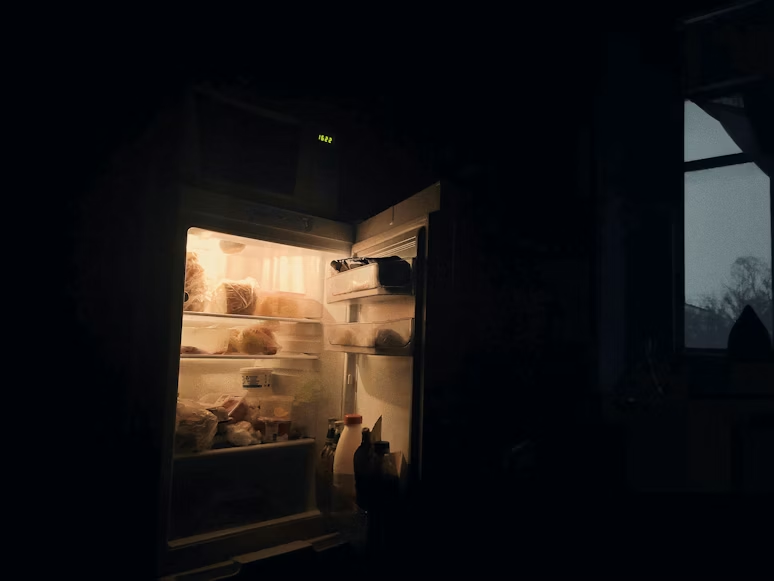
One flicker of the lights and your home goes from refuge to freezer box. The hum of the furnace dies, faucets freeze, and the comfort you counted on disappears.
Most assume outages last hours. Increasingly, they stretch into days—or weeks—after ice storms, cyber attacks, or overloaded grids. Comfort turns to survival fast.
This guide shows exactly how to endure those long, dark days—how to heat your home safely, light your rooms without risk, cook real meals, maintain clean water, and stay connected when the world outside goes silent.
Whether you’re sheltering in place or running a grid-down plan, this is your blueprint for control instead of chaos.
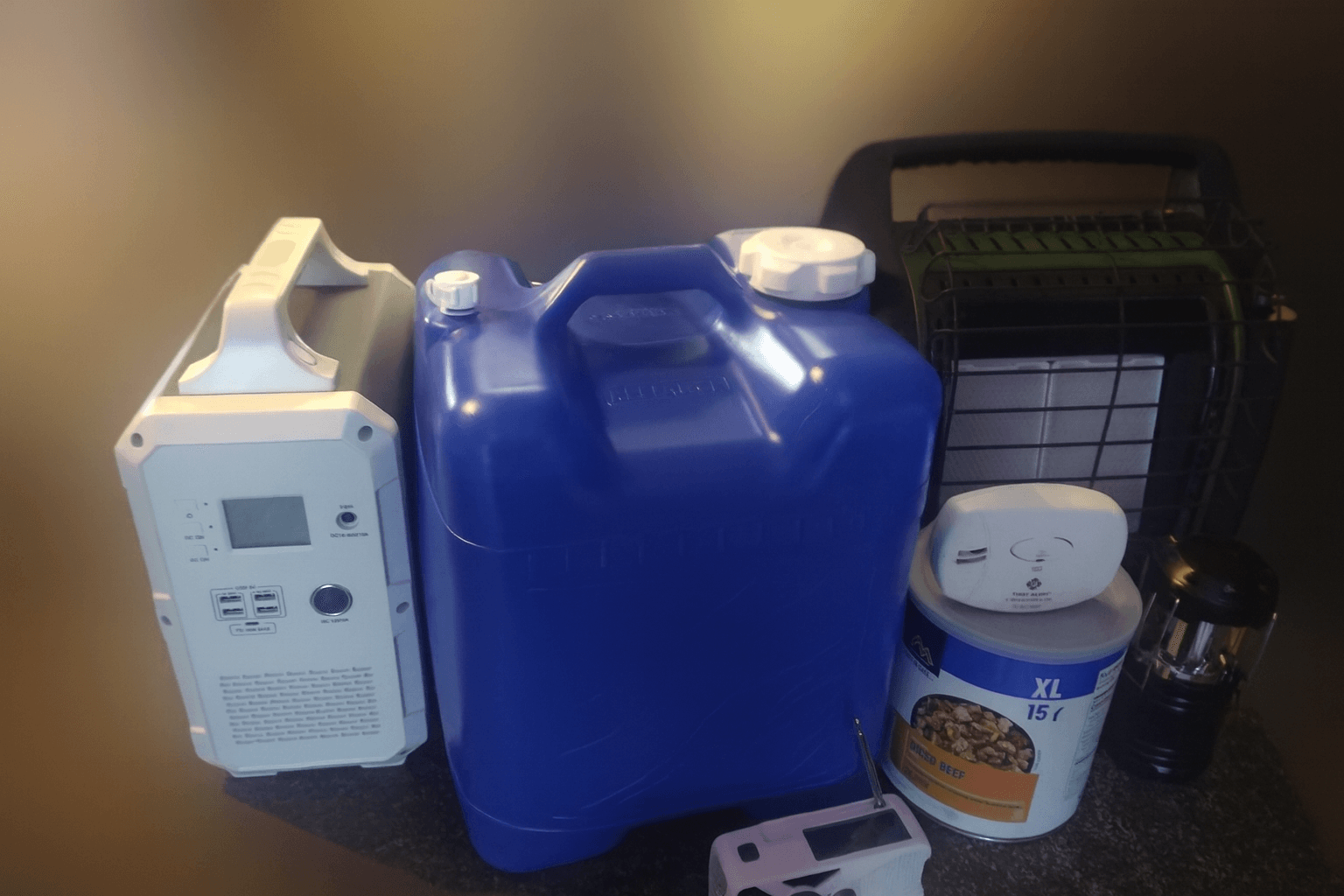
Quick Picks for Winter Blackouts
- Best Indoor Heater: Mr. Heater Enerco MH18B Big Buddy Indoor/Outdoor Propane...
- Best Lantern: Lighthouse 600 Multi Functional Adjustable Light Perfect for...
- Best Power Station: EF ECOFLOW Portable Power Station Delta 2, 1024Wh, 1800W...
- Best Emergency Food: Mountain House Diced Chicken #10 Can Freeze Dried Survival...
- Best Emergency Radio: Midland - ER310, Emergency Crank Weather AM/FM Radio...
1. Stay Warm Indoors
When power fails in midwinter, your home loses heat faster than you think. Without a working furnace, temperatures inside can match the outdoors within hours. Cold isn’t just discomfort—it’s danger.
Why Heat Comes First
Hypothermia can begin inside your home once temps drop below 50°F. Even with blankets, your core temperature declines and morale collapses. Independent, indoor-safe heat isn’t optional—it’s survival.
Mr. Heater Buddy — Safe Heat Anywhere
Most portable heaters can kill you indoors. The Mr. Heater Buddy is the exception—built with automatic shut-offs and oxygen sensors for safe indoor operation.
✅ Runs without electricity
✅ Uses 1-lb propane bottles or 20-lb tanks with adapter
✅ Heats 4,000–9,000 BTU, perfect for single rooms
✅ Proven reliability during blackouts and blizzards


Mr. Heater Big Buddy — When You Need Whole-Room Warmth
For larger spaces, the Big Buddy pushes up to 18,000 BTU and connects to dual tanks for overnight runtime. It’s the model preppers rely on when the furnace stays dead for days.
Mr. Heater Big Buddy — View on Amazon → Mr. Heater Enerco MH18B Big Buddy Indoor/Outdoor Propane...
Creating a Warm Zone
Seal off one interior room, cover doors with blankets, and insulate windows with emergency foil or bubble wrap. Sleep low to the floor and layer rugs or mats beneath bedding to reduce radiant loss.
Pro tip: Keep a battery-powered carbon monoxide detector in your warm room. It’s the cheapest life insurance you’ll ever buy.
2. Light the Darkness
The first night without power is always the hardest. Darkness isolates and disorients, and accidents happen fast when people rely on candles or lighters.
Why Reliable Light Matters
Candles and oil lamps are fire hazards. You need safe, efficient LEDs that last for days, recharge easily, and illuminate wide areas.
Vont LED Collapsible Lanterns — Simple, Proven
Lightweight, collapsible, and weather-resistant, Vont LED Lanterns deliver full 360-degree illumination for more than 30 hours on a single set of batteries. Built tough for heavy storms and harsh conditions, they’re bright enough to light an entire room without breaking a sweat.
Vont 2 Pack LED Camping Lantern, Super Bright Portable...Goal Zero Lighthouse 600 — Light That Never Dies
For extended outages, the Goal Zero Lighthouse 600 recharges via solar, hand crank, or power station. It doubles as a phone charger, meaning you never lose contact or light.

Lighting Strategy
Place one lantern centrally in your main shelter room, give each person a flashlight or headlamp, and keep a low-glow light near heaters or hallways for safety. Use low-brightness modes to stretch runtime—efficiency beats brightness when you’re off-grid.
Light isn’t luxury—it’s control. It keeps morale up, prevents injuries, and restores normalcy when everything else feels lost.
3. Power Your Essentials
Electricity keeps the modern world running—and without it, everything stops. Food spoils, furnaces stall, phones die, and medical gear fails. Backup power isn’t convenience—it’s capability.
Why You Need Backup Power
Even gas heaters rely on electric igniters. Without stored or generated power, you lose communication, lighting, and heating support. Portable power stations fill that gap safely indoors.
EcoFlow DELTA 2 — The Heart of a Blackout Plan
With over 1,000 Wh of storage, the EcoFlow DELTA 2 runs lights, phones, laptops, and radios quietly and safely indoors. It recharges fast from solar, wall, or vehicle and keeps life running when the grid doesn’t.
For a full breakdown of backup energy systems during outages, see our guide to grid-down survival power systems.

Bluetti EB3A — Compact Backup
Light, efficient, and solar-compatible, the Bluetti EB3A keeps communication gear and lighting powered indefinitely with minimal solar input.
BLUETTI EB3A Portable Power Station, 268Wh Solar Generator...Anker PowerHouse 521 — Compact Emergency Power
For shorter outages or as part of a layered blackout power plan, the Anker PowerHouse 521 delivers portable, quiet backup energy to keep your phones, lanterns, and radios charged. Its compact size and clean power output make it a smart choice for emergency kits and vehicle storage alike.
Anker 521 Portable Power Station Upgraded with LiFePO...If you only choose ONE power option:
- Apartments / medical devices → Bluetti EB3A
- Family + multi-day outage → EcoFlow DELTA 2
- Vehicle / grab-and-go backup → Anker 521
Smart Power Discipline
Run high-draw items by day when solar power’s available, charge priority gear first, and rotate devices. Build layers: a main power station, a compact unit, and solar panels or crank systems for long-term sustainability.
Power isn’t about luxury—it’s about options. The ones who can recharge stay informed and calm; everyone else waits in the dark.
Related guide: Grid-Down Survival Power (2025)
4. Eat Hot, Stay Strong
Cold food drains morale and calories. Hot food restores both. You burn more energy in freezing weather, and warm meals keep your body and focus stable.
Mountain House Freeze-Dried Meals — Zero Prep, Real Fuel
Shelf-stable for 30 years and ready with nothing but hot water, Mountain House meals are blackout gold. Balanced calories, fast prep, and real taste make them the standard for emergency storage.

Jetboil Flash Cooking System — Boil Water Anywhere
The Jetboil Flash boils water in under two minutes using compact fuel canisters. Small, efficient, and field-proven, it turns cold rations into hot morale.
Jetboil Flash — View on Amazon → Jetboil Flash 1.0L Portable Fast Boil Stove for Camping and...
Efficient Cooking
If fuel’s limited, insulate pots or use a thermal cooker to finish cooking with stored heat. Keep backup stoves like the GasOne Dual Fuel for longer outages or family cooking needs.
GasOne 15,000 BTU Propane or Butane Stove Dual Fuel Stove...Food Rotation Plan
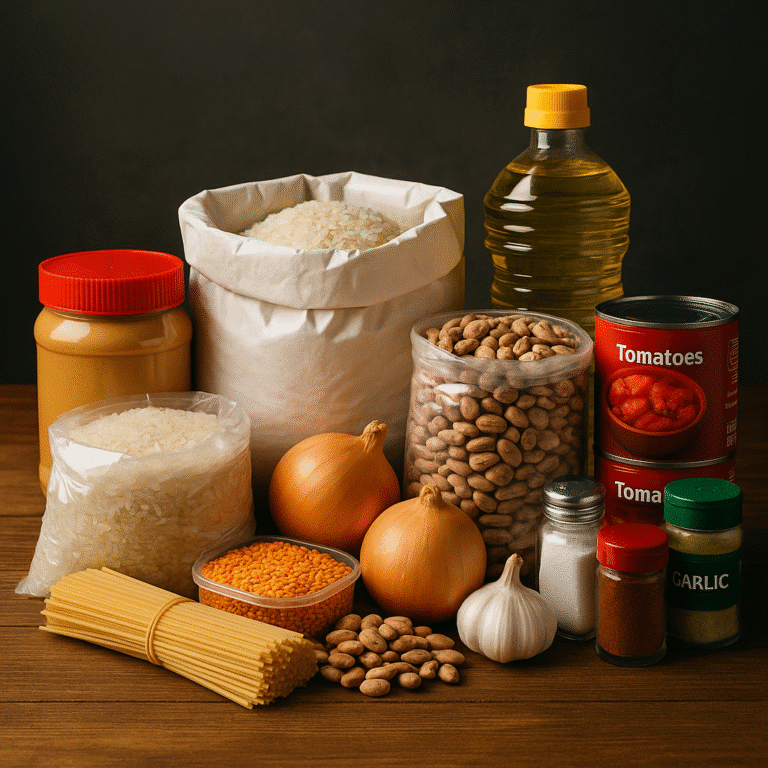
Keep three tiers:
- Immediate-use: freeze-dried meals & protein bars
- Short-term: canned soups & stews
- Long-term: sealed dry goods (rice, lentils, pasta)
Rotate every six months. You’ll always have fresh stock when the next storm hits.
A hot meal is more than calories—it’s control, confidence, and warmth from the inside out.
5. Water & Hygiene When Pipes Freeze
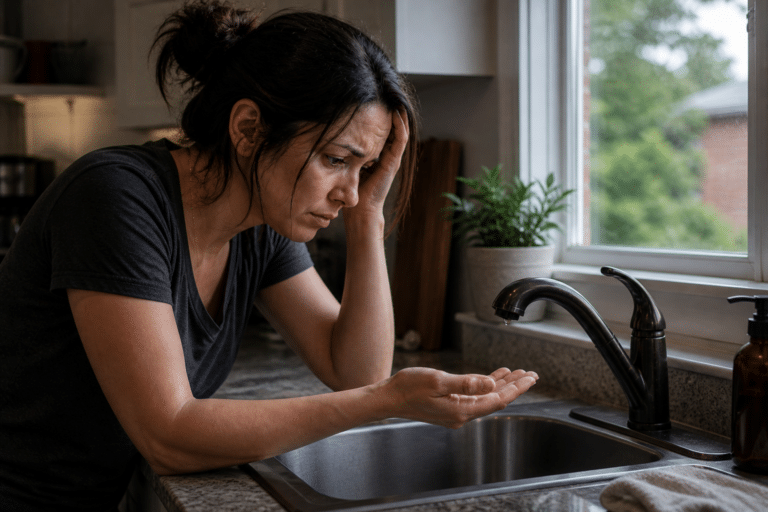
You can last weeks without food but only three days without water—and in freezing weather, dehydration creeps in faster than thirst. Once pipes freeze, you lose not only water but sanitation.
Safe Storage and Creation
Fill tubs, jugs, and bottles at the first outage warning. Once plumbing’s frozen, melt snow or ice in a stainless pot and always filter before drinking—ten cups of snow yield one cup of water.
Stainless steel water storage container — View on Amazon → Reliance Products Aqua-Tainer 7 Gallon Rigid Water...
Filter & Purify
A personal water filter straw turns melted snow or runoff into safe drinking water instantly.
LifeStraw Peak Series - Personal Water Filter Straw for...For families, a gravity-fed filter handles gallons at a time without power.
ProOne Big+ Gravity Water Filter System - High Capacity...Disinfection
Keep unscented bleach or purification tablets—eight drops per gallon of clear water kills most pathogens. Always filter first, then purify, then boil if possible.
Water purification tablets — View on Amazon → Aquatabs Water Purification Tablets, 397mg 100 Pack, Camping...
Hygiene Basics
Stock no-rinse wipes, sanitizer, and heavy trash bags. A small bucket toilet setup prevents contamination when plumbing fails. Warm a pot of water daily for sponge baths and dishwashing if you have heat available.
Water isn’t optional—it’s your fastest-depleting survival asset. Secure it early, purify it correctly, and guard it like fuel.
6. Comms & Safety
When the grid collapses, information becomes lifeline #1. Without it, you’re blind to weather alerts, rescue updates, or new threats. Reliable communication gear turns isolation into awareness.
Hand-Crank / Solar Radios — Your Outside Link
If you’re comparing options, see our full guide to the best emergency solar radios for blackout communication.
The Midland ER310 keeps you connected to NOAA weather alerts and local broadcasts without batteries. Crank, solar, or USB charging options make it a self-powered signal hub.

Built-in flashlight, siren, and phone charging port make it a true all-in-one emergency radio.
Two-Way Radios — Keep Your Circle Connected
The Baofeng UV-5R and similar units let family or neighbors stay in contact when cell towers fail. They transmit several miles and can coordinate safety checks or supply runs.
BAOFENG UV-5R Ham Radio Handheld Walkie Talkie Long-Range...Communication Routine
Set morning and evening radio check-ins to conserve battery. Keep a printed contact list with frequencies and emergency numbers. Paper doesn’t crash or lose signal.
Safety Add-Ons
Store flashlights, whistles, and reflective tape in every major room. A whistle carries farther than your voice in snowstorms. Keep signaling mirrors for daylight rescues.
Emergency signaling whistle & mirror — View on Amazon → LED Flashlight High Lumens, Tactical Flashlight Battery...
Information and coordination prevent panic. The ones who stay informed stay alive.
7. Blackout-Proof Your Home
Survival in a winter blackout isn’t luck—it’s preparation. The homes that stay functional are the ones pre-organized for failure long before it happens.
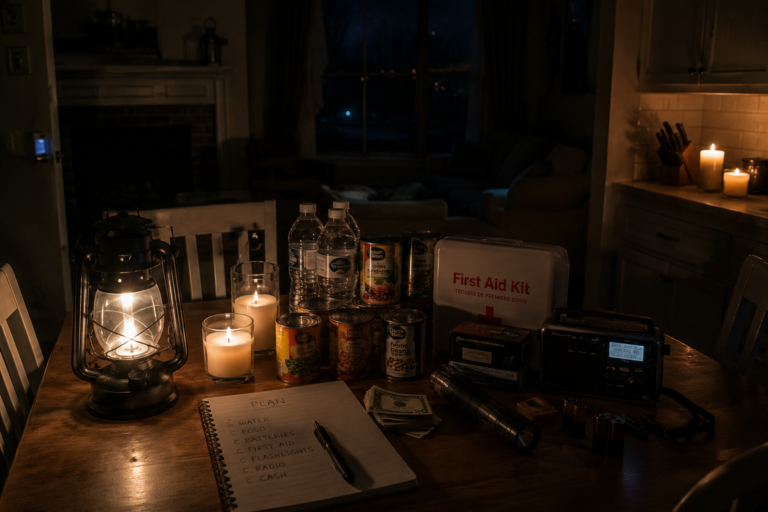
The Blackout Bin System
Create labeled bins and keep them together in your warmest room:
- Heat: propane heater, matches, detectors
- Light: lanterns, flashlights, batteries
- Power: cords, chargers, solar panels
- Water & Hygiene: filters, wipes, bleach
- Comms & Safety: radios, first-aid, whistles
When the lights go out, everything’s already organized and ready.
Redundancy
Follow the rule: one is none, two is one.
Have two of everything that matters—heat, light, power, and water methods. Redundancy removes single points of failure.
Maintenance
Quarterly, test all heaters, radios, and lanterns. Recharge power stations, rotate food, and replace old batteries. Neglect kills gear faster than use.
Passive Defenses
Add insulation film to windows, draft blockers to doors, and rugs to bare floors before winter hits. Mount solar motion lights outside—they recharge automatically and deter prowlers during outages.
Tuffenough Solar Outdoor Lights 2500LM 210 LED Security...Install battery-backed smoke and CO detectors, and keep a multipurpose fire extinguisher next to any heater.
Kidde Carbon Monoxide Detector, AA Battery Powered, Portable...Preparedness isn’t panic—it’s engineering comfort into chaos.
Conclusion: Turn Cold Chaos Into Control
When the grid dies in sub-zero weather, you don’t have time to think—only time to act.
Those who’ve planned don’t scramble; they execute.
Heat. Light. Power. Food. Water. Communication. Every piece works together to maintain one thing: control.
Winter blackouts don’t just test infrastructure—they test preparation. The difference between a cold, chaotic week and a stable one is a few bins of gear, a power station, and foresight.
Preparation doesn’t take heroics—just commitment. A few propane bottles, rechargeable lanterns, and freeze-dried meals can turn your home into a fortress when the world outside freezes over.
Survival isn’t luck. It’s readiness.
Explore More Survival Guides
- Emergency Heat Without Electricity
- Best Emergency Lights for Power Outages (2025)
- Grid-Down Camp Setup (2025 Edition)
- Top 10 Bug-Out Bags 2025
Before the next freeze:
If you don’t already have indoor-safe heat, backup power, and shelf-stable food, fix that now — not when the grid is already down.
🛒 Stock Up Before It’s Too Late
Visit The Savvy Survivalist Shop for field-tested gear built to perform when the grid goes dark:
Gear up. Stay ready. Look prepared.