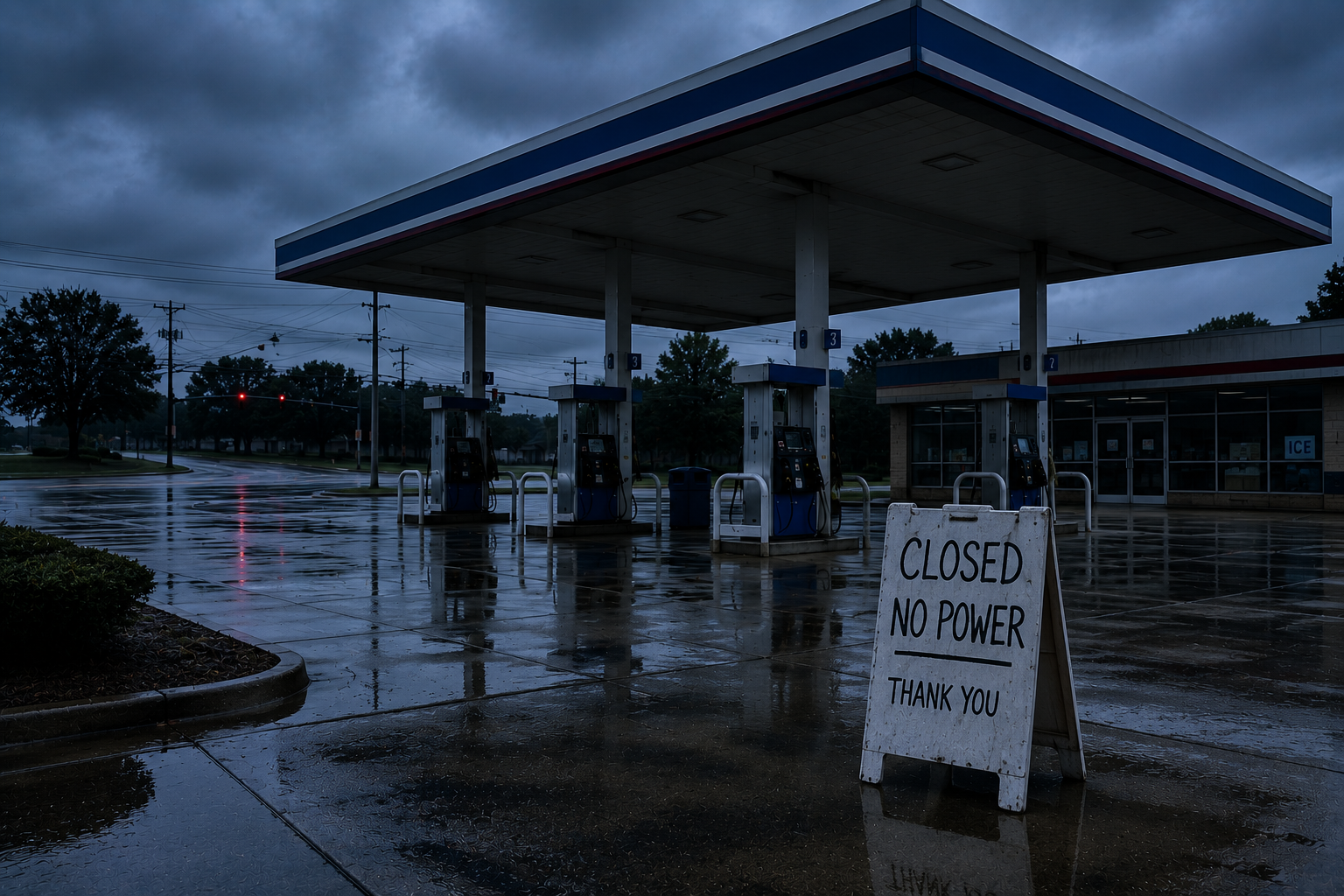
How Long Will Gas Stations Work During a Blackout?
How long will gas stations work during a blackout? Most people assume that as long as there is fuel stored underground, gas stations will keep operating normally, but the reality is very different.
This post contains affiliate links. I may earn a small commission at no extra cost to you. Learn more.
Modern gas stations depend on electricity for almost everything they do. The pumps that move fuel from underground storage tanks, the payment systems that process transactions, the lights that illuminate the property, and the computers that track inventory all require power. When electricity goes out, many gas stations stop functioning almost immediately, even though thousands of gallons of gasoline and diesel may still be sitting beneath the pavement.
We’ve seen this happen during hurricanes, winter storms, regional blackouts, and other major emergencies. Drivers often arrive expecting to fill their tanks only to discover that the pumps are offline, credit card systems are unavailable, or long lines have already formed at the few stations that remain operational.
The situation becomes even more complicated as a blackout continues. Fuel deliveries may be delayed, backup generators require their own fuel supplies, and increasing demand can quickly overwhelm the stations that stay open. What begins as a simple power outage can rapidly turn into a transportation problem that affects commuting, emergency response, grocery deliveries, and nearly every other part of daily life.
Understanding how long gas stations can realistically operate during a blackout can help families prepare before an emergency occurs rather than joining long lines after fuel becomes difficult to obtain.
Quick Answer
Most gas stations stop pumping fuel almost immediately when the power goes out because modern fuel pumps, payment systems, and computers all depend on electricity. Stations equipped with backup generators may continue operating for hours or days, but fuel shortages and heavy demand can quickly limit availability during an extended blackout.
✓ Key Takeaways
- Most gas stations cannot pump fuel without electricity.
- Backup generators allow some stations to remain open.
- Long lines often form within the first few hours.
- Cash may become necessary if payment systems fail.
- Keeping your fuel tank above half full improves preparedness.
Why Gas Stations Need Electricity to Pump Fuel
One of the biggest misconceptions about gas stations during a blackout is that fuel remains available as long as there is gasoline stored underground. While the fuel may still be there, accessing it is another matter entirely.
Modern gas stations rely on electric pumps to move fuel from underground storage tanks to the dispensers where customers fill their vehicles. Without electricity, those pumps cannot operate. A station may have tens of thousands of gallons of fuel stored beneath the property, but drivers cannot access it if the pumping system loses power.
Electricity is also required for far more than simply moving fuel. Most stations depend on computerized point-of-sale systems, inventory management software, security cameras, lighting systems, refrigeration equipment, and payment processing networks. Even if a station owner wanted to manually sell fuel during a blackout, the systems required to track sales and process transactions may no longer function.
Credit and debit card processing create another major vulnerability. Electronic payments depend on internet connections, cellular networks, financial institutions, and data centers that may be affected by the same outage. In some situations, fuel may technically be available, but customers are unable to pay because electronic payment systems are offline.
This is why many gas stations shut down almost immediately when power fails. The issue is often not a lack of fuel but a lack of electricity to operate the equipment needed to pump and sell it.
The exceptions are stations equipped with backup generators. These locations can often continue operating during an outage, which is why they frequently become some of the busiest and most valuable businesses in an affected area.
How Long Gas Stations Usually Work During a Blackout?
The answer depends largely on the size of the outage, whether fuel stations have backup generators, and how long utility companies need to restore power. In some cases, gas stations may only be affected for a few minutes. In others, fuel access can become a major problem for days or even weeks.
Short Outages (Minutes to Several Hours)
During brief outages, most gas stations stop operating almost immediately. Fuel pumps, payment terminals, and other essential systems lose power, forcing stations to suspend fuel sales until electricity returns.
If utility crews restore power quickly, the disruption may be little more than an inconvenience. Customers who arrive during the outage may need to wait, but fuel supplies themselves are usually unaffected.
Blackouts Lasting Several Hours
As outages extend beyond a few hours, conditions often begin changing rapidly. Drivers who need fuel for generators, emergency travel, work commutes, or evacuation plans may begin filling tanks sooner than they normally would.
This sudden increase in demand can create long lines at stations that remain operational. Locations with backup generators often become crowded as drivers search for places where fuel is still available.
Multi-Day Blackouts
When power outages continue for several days, the difference between generator-equipped stations and those without backup power becomes increasingly important. Stations without generators may remain completely closed until utility service is restored.
Meanwhile, the stations that stay open often face heavy demand. Fuel inventories can drop quickly, and replacement deliveries may not arrive on their normal schedules. Drivers who wait until their tanks are nearly empty frequently discover that finding fuel has become much more difficult than expected.
At this stage, the question is no longer whether fuel exists underground. The question becomes whether local stations can continue pumping, processing payments, and receiving new deliveries while the blackout continues.
💡 Pro Tip
Treat half a tank as your personal minimum. Keeping your vehicle above half full provides a useful fuel reserve if a blackout or severe weather event suddenly limits access to operating gas stations.
Which Gas Stations Stay Open the Longest During a Blackout?
Not all gas stations are affected equally during a power outage. While many locations shut down almost immediately when electricity fails, others may continue operating for hours or even days depending on their equipment, fuel supplies, and role within the local community.
Gas Stations With Backup Generators
Stations equipped with backup generators generally have the best chance of remaining operational during a blackout. These generators can provide enough electricity to operate fuel pumps, payment systems, lighting, and other critical equipment.
However, having a generator does not guarantee unlimited fuel sales. Generators require maintenance and fuel of their own, and stations can still run out of gasoline or diesel if customer demand becomes unusually high.
Emergency Priority Locations
Some gas stations are considered critical infrastructure because they support emergency services, utility crews, government operations, and transportation networks. These locations may receive priority attention during recovery efforts and are often among the first businesses to regain power.
In major disasters, emergency management agencies sometimes coordinate fuel access for first responders and utility workers before normal operations fully resume.
Truck Stops Often Have Advantages
Large truck stops frequently have greater fuel storage capacity than typical neighborhood gas stations. Many also have backup power systems because interruptions can affect commercial transportation across entire regions.
While truck stops are not immune to shortages, they often have more resources available to maintain operations during extended outages.
📌 Did You Know?
Several states require selected gas stations along evacuation routes to have backup generators so fuel remains available during hurricanes and other major disasters.
Rural vs. Urban Areas
Urban areas usually have more gas stations, giving drivers additional options if one location closes. However, higher population density can also create much greater demand during an emergency.
Rural communities often have fewer stations to begin with. If one or two locations lose power or run out of fuel, residents may need to travel significantly farther to find gasoline. This can become especially challenging if road conditions are poor or communications are disrupted.
Regardless of location, the stations most likely to remain open are typically the ones with backup power, reliable fuel deliveries, and a plan for operating during emergencies. Unfortunately, these are also the stations that tend to attract the longest lines once a blackout begins.
Why Credit Cards Often Stop Working Before Fuel Runs Out
Many drivers assume that if a gas station remains open during a blackout, purchasing fuel will be straightforward. In reality, payment systems often become one of the first major obstacles. Long before a station completely runs out of gasoline, customers may discover that credit and debit card transactions no longer work reliably.
Modern fuel sales depend on a surprisingly complex network of technology. When a customer inserts a credit card at the pump, the transaction typically passes through internet connections, payment processors, banking networks, and various verification systems before approval is granted. If any part of that chain fails, the transaction may be declined even if the station still has fuel available.
Power outages can disrupt internet service providers, cellular networks, and local communications infrastructure. This becomes especially noticeable during widespread blackouts when thousands of businesses and households are competing for limited backup resources.
Many gas stations have backup generators capable of powering fuel pumps, but that does not necessarily mean payment networks remain functional. A station may be fully capable of pumping fuel while still being unable to process electronic payments.
Communication failures often become more common as outages continue. Cellular networks depend on backup batteries and generators of their own, which is one reason many people wonder How Long Will Cell Towers Work During a Blackout? As communication systems become strained, electronic transactions can become slower, less reliable, or unavailable altogether.
During major disasters, some gas stations switch to cash-only operations. Customers who arrive expecting to use a credit card may be turned away despite fuel being available. This situation has occurred repeatedly during hurricanes, ice storms, and regional blackouts across the United States.
Cash becomes increasingly valuable in these situations because it allows transactions to continue even when electronic systems fail. Emergency planners often recommend keeping a modest amount of cash at home specifically for situations where card processing networks become unavailable.
The lesson is simple: fuel availability and fuel access are not always the same thing. A station may still have gasoline underground and operational pumps above ground, yet customers can still face difficulties if the systems needed to process payments stop working.
⚠ Important Warning
Never assume that a station with working pumps can process electronic payments. During widespread outages, cash may be the only accepted payment method even if fuel remains available.
The First 24 Hours: What Happens When Drivers Rush to Fill Up?
The first day of a major blackout often determines how severe fuel shortages become in the days ahead. Even if most gas stations still have fuel available, customer behavior can change dramatically once people realize the outage may not be resolved quickly.
Many drivers who would normally wait until their tanks are nearly empty suddenly decide to fill up immediately. Others begin purchasing fuel for generators, chainsaws, emergency equipment, and spare gas cans. This surge in demand can place enormous pressure on local fuel supplies within a matter of hours.
Long Lines Form Quickly
One of the most visible signs of a developing fuel shortage is the appearance of long lines at gas stations. Drivers who hear reports of outages, severe weather, or potential supply disruptions often begin topping off their tanks as a precaution.
The problem is that gas stations are designed to handle normal daily demand, not several days’ worth of purchases compressed into a few hours. Even stations with plenty of fuel can become overwhelmed by the sheer number of customers trying to buy gas at the same time.
As lines grow longer, wait times increase. What would normally be a five-minute stop can turn into a wait lasting thirty minutes or more.
Generator Owners Add More Demand
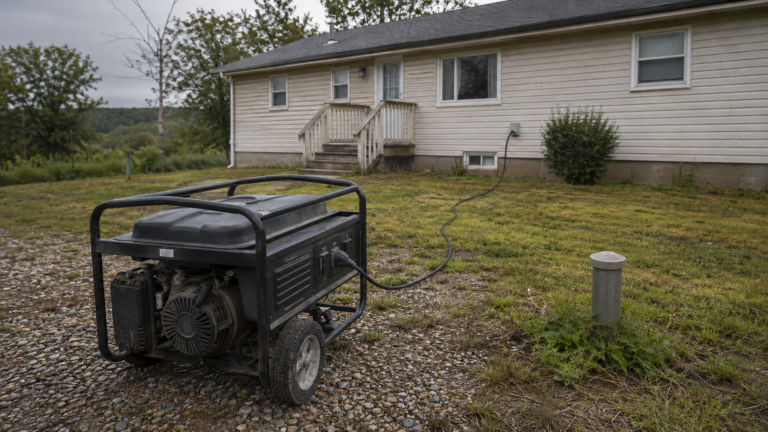
Blackouts create another source of fuel demand that many people overlook. Homeowners with portable generators often need gasoline to keep refrigerators, freezers, lights, medical devices, and other equipment running.
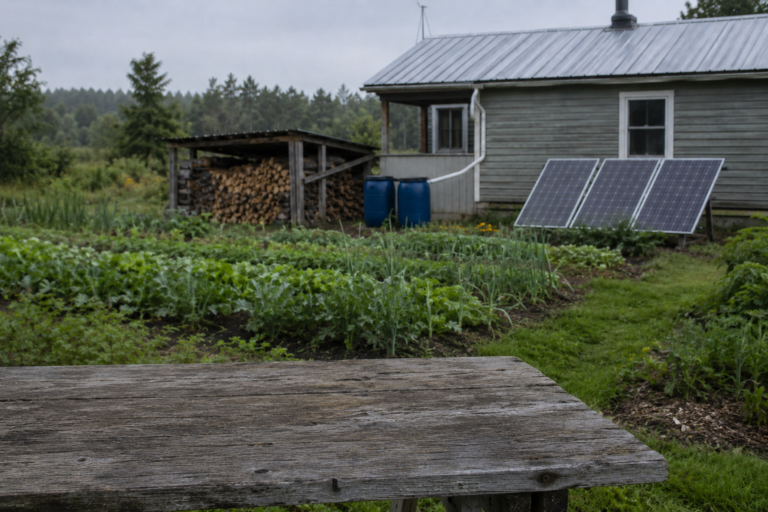
This is also why many families compare a solar generator vs gas generator before relying entirely on gasoline during a blackout.
A generator can consume several gallons of fuel per day depending on its size and how heavily it is used. When thousands of households begin refueling generators simultaneously, local fuel inventories can decline much faster than normal.
This is one reason fuel shortages often appear during major outages even when transportation systems remain mostly functional.
Gas Cans Start Disappearing
It is not just gasoline that becomes difficult to find. Portable fuel containers frequently sell out as people attempt to store additional fuel at home.
Hardware stores, farm supply stores, and big-box retailers often experience a run on gas cans shortly after a major blackout begins. Customers who planned ahead may already have fuel storage containers available, while others find themselves searching multiple stores for supplies.
This pattern closely resembles what happens with bottled water, batteries, and other emergency essentials during the first stages of a disaster.
Stations With Generators Become Hotspots
As more stations lose power, the few locations that remain operational often attract customers from a much larger area. Drivers may travel several miles out of their way simply because a station has working pumps and functioning payment systems.
These locations frequently become gathering points for long lines and heavy traffic. In some cases, local law enforcement may even be required to help manage congestion around busy intersections and fuel stations.
The result is that fuel can become difficult to obtain long before a community actually runs out of gasoline. The combination of panic buying, generator use, and limited operating stations can create shortages within the first 24 hours of a significant blackout.
After 72 Hours: Fuel Supplies Start Feeling the Pressure
By the third day of a major blackout, the situation often begins shifting from short-term panic buying to larger supply chain concerns. During the first 24 hours, the biggest problem is usually demand. After 72 hours, the focus increasingly turns toward whether stations can continue receiving fuel and maintaining operations.
Many of the drivers who initially rushed to fill their tanks have already done so. Unfortunately, that does not mean the pressure on fuel supplies disappears. Generator owners continue consuming gasoline, emergency crews remain active, and businesses that depend on transportation are still trying to operate under difficult conditions.
Fuel Deliveries Become Less Predictable
Gas stations rely on a constant flow of tanker trucks to replenish underground storage tanks. Under normal conditions, these deliveries follow predictable schedules based on customer demand and inventory levels.
During a widespread blackout, those schedules can quickly become disrupted. Traffic signals may be out, communications systems may be unreliable, and fuel terminals may be operating under limited capacity. Even if fuel exists within the broader supply chain, getting it to individual stations becomes more challenging.
A station that normally receives deliveries every day may suddenly wait several days for its next shipment. As inventories shrink, some locations begin running out of specific fuel grades while others may temporarily run out of fuel entirely.
Generator Fuel Becomes a Growing Concern
Backup generators can keep gas stations operational during outages, but generators create their own challenges. They require fuel, maintenance, and continuous monitoring.
The longer a blackout lasts, the more fuel station operators must dedicate to keeping critical systems running. In some situations, maintaining electricity for pumps, lighting, security systems, and payment terminals becomes increasingly difficult as generator fuel supplies decline.
This creates a situation where a station may still have gasoline available for customers but faces challenges keeping the equipment needed to sell that fuel operational.
More Drivers Begin Conserving Fuel
As reports of shortages spread, many people change their driving habits. Unnecessary trips are postponed, errands are combined, and commuting plans may be adjusted.
While fuel conservation helps reduce demand, it also reflects growing uncertainty about future availability. Drivers who normally would not think twice about a half-empty tank often begin monitoring fuel levels much more closely.
For households that depend on commuting long distances for work, fuel availability can quickly become one of the most important concerns during an extended blackout.
Emergency Services Receive Priority
Hospitals, police departments, fire departments, utility crews, and emergency management agencies all depend on fuel to continue operating during a crisis.
As outages continue, priority is often placed on ensuring these critical services have access to the fuel they need. Utility repair crews restoring power, emergency responders assisting residents, and medical transportation services all require reliable fuel supplies.
Most communities would rather see fuel directed toward restoring infrastructure and supporting emergency operations than toward nonessential travel.
The Effects Begin Spreading Beyond Transportation
Fuel shortages affect far more than personal vehicles. Delivery trucks, supply chains, maintenance crews, contractors, and service providers all rely on transportation to do their jobs.
As fuel becomes harder to obtain, secondary effects often begin appearing throughout the local economy. Deliveries slow down, repair services become less available, and businesses struggle to maintain normal operations.
This is one reason prolonged blackouts often affect grocery stores, pharmacies, and other essential services. Transportation is a critical link connecting nearly every part of modern life, and fuel shortages place additional stress on systems that are already dealing with power outages and communication problems.
After One Week: Fuel Availability Becomes Unpredictable
If a blackout continues for a full week, fuel shortages can evolve from a temporary inconvenience into a serious community-wide problem. At this stage, the issue is no longer simply whether local gas stations have fuel available today. The larger concern becomes whether the systems responsible for producing, transporting, and distributing fuel can continue functioning under prolonged stress.
Many people assume fuel shortages happen because stations run out of gasoline. In reality, the bigger problem is often that the supply chain responsible for replenishing those stations begins struggling to keep up. Refineries, fuel terminals, pipelines, tanker trucks, distribution centers, and retail stations all depend on electricity, communications, transportation, and labor.
When multiple parts of that system are disrupted at the same time, fuel availability becomes increasingly difficult to predict.
🚨 Imagine This…
Seven days into a regional blackout, most nearby stations have either exhausted their fuel or remain closed without power. Because your vehicle stayed above half a tank and you safely stored emergency fuel before the outage, you can still travel for medical needs, check on family members, and obtain essential supplies while many others remain stranded.
Stations Begin Running Out of Specific Fuel Grades
One of the first signs of a developing fuel shortage is that certain fuel grades become unavailable. A station may still have regular unleaded available while premium gasoline is sold out. Diesel supplies may become limited even though gasoline remains available.
This occurs because demand rarely affects every product equally. Generator owners may increase gasoline purchases, while commercial transportation companies continue consuming large quantities of diesel fuel. As inventories become uneven, stations often prioritize whichever products they can obtain most reliably.
Customers who normally insist on a specific fuel grade may find themselves purchasing whatever remains available.
Delivery Delays Create Ripple Effects
Fuel shortages rarely remain isolated to one community. If tanker trucks experience delays, multiple stations across an entire region may receive deliveries later than expected.
A delay that seems minor at a fuel terminal can create significant problems several days later. Stations operating with reduced inventories may suddenly experience long lines when customers hear reports of shortages. Increased demand accelerates fuel consumption, causing inventories to fall even faster.
This cycle can repeat itself throughout an affected area, creating fuel shortages in locations that initially appeared well supplied.
Businesses Begin Feeling the Impact
By the one-week mark, fuel shortages often begin affecting more than individual drivers. Businesses that depend on transportation may struggle to maintain normal operations.
Delivery companies, contractors, maintenance crews, landscapers, home service providers, and countless other businesses rely on fuel every day. If employees spend hours searching for gasoline or waiting in line at fuel stations, productivity declines quickly.
The economic effects of a prolonged blackout become increasingly visible as transportation becomes less reliable and operating costs continue rising.
Emergency Fuel Supplies Become More Important
Households that prepared before the outage generally have a significant advantage at this stage. Drivers who maintain fuller fuel tanks and safely store a limited emergency fuel supply are often under less pressure than those who waited until shortages developed.
This is one reason preparedness experts frequently recommend avoiding the habit of driving until the tank is nearly empty. Maintaining a larger fuel reserve inside the vehicle itself provides flexibility when stations become crowded or temporarily unavailable.
Many of the same preparedness principles discussed in a 2-Week Blackout Survival Plan become increasingly important as outages stretch beyond several days.
The Recovery Process Can Take Time
Even when power is restored, fuel supplies do not necessarily return to normal overnight. Stations must receive deliveries, replenish underground storage tanks, restock convenience stores, and process the backlog of demand that accumulated during the outage.
This often surprises people who assume everything will immediately return to normal once electricity comes back on. In reality, recovery can take several days or even weeks depending on the size of the outage and the condition of local infrastructure.
The longer a blackout lasts, the more important it becomes to view fuel as a limited resource rather than something that will always be available on demand. That shift in mindset can help families make better decisions long before shortages become severe.
How Much Fuel Should Families Store Before a Blackout?
Preparing for a blackout involves more than knowing which stations remain open—it also requires planning how much fuel your household should store in advance. Safe fuel storage allows families to maintain essential operations, such as running generators, powering emergency equipment, and ensuring mobility for necessary trips.
Determine Your Household Needs
Start by calculating how much fuel your household consumes under normal conditions. Include generators, vehicles, and any other equipment that relies on gasoline or diesel. Factor in how many days you might reasonably need to maintain essential operations during a prolonged outage.
For example, a 5,000-watt generator running for six hours a day might consume 2–3 gallons of gasoline per day. A standard vehicle with a 15-gallon tank may need refueling once or twice depending on travel requirements. Add these figures together to estimate a practical reserve.
Rotate Fuel Regularly
Stored gasoline and diesel degrade over time. To maintain usability, rotate your fuel supply every 6–12 months. Use older fuel in vehicles or equipment and replace it with fresh fuel in storage containers. Fuel stabilizers can extend shelf life but do not eliminate the need for periodic replacement.
Follow Safety Guidelines
Store fuel in approved containers designed for gasoline or diesel. Keep containers in well-ventilated areas away from heat sources, open flames, or living spaces. Never store large quantities inside a home or garage without proper safety precautions. Local fire codes and regulations may limit the amount of fuel that can be stored on residential property.
For a deeper breakdown of storage safety, rotation, and container rules, see How to Store Gasoline Safely for Emergencies.
Consider Legal and Practical Limits
Some municipalities and homeowners associations have restrictions on how much fuel can be stored. Review local regulations before purchasing and storing large quantities. If limitations exist, consider dividing your fuel supply across multiple approved containers and locations.


Backup fuel storage is only part of the preparedness equation. Families should also ensure that generators are properly maintained, vehicles are ready, and essential emergency equipment is operational before an outage occurs.
What Happens If Gas Stations Cannot Reopen?
In the event that gas stations remain closed for multiple days, the effects extend far beyond individual drivers. Transportation-dependent services—including delivery trucks, emergency responders, grocery stores, and maintenance crews—begin to feel the impact, creating ripple effects across communities.
Commuting and Daily Travel Becomes Limited
Without access to fuel, commuting for work, school, and essential errands becomes difficult or impossible. Families may need to consolidate trips, postpone nonessential travel, or rely on walking, cycling, or carpooling if vehicles cannot be fueled.
Deliveries and Supply Chains Slow Down
Fuel shortages quickly affect the movement of goods. Grocery deliveries, mail and package shipments, and commercial transportation services all slow as drivers struggle to obtain fuel.
Stores may experience empty shelves even if products exist in distribution centers, which connects directly to what happens when grocery stores have limited food during an emergency.
Emergency Response Is Impacted
Police, fire departments, hospitals, and utility crews all depend on fuel to maintain operations. Prolonged closure of gas stations can limit the ability of emergency services to respond quickly to incidents, worsening the overall impact of the blackout.
Long-Term Effects on Communities
As fuel becomes scarce, economic activity slows. Businesses that rely on transportation may temporarily close, deliveries may be delayed, and essential services may be disrupted. Communities may face compounding challenges as transportation difficulties intersect with other infrastructure failures caused by the blackout.
Understanding these risks highlights why preemptive fuel storage, generator readiness, and careful trip planning are essential during extended power outages. Families and businesses that plan ahead are better equipped to navigate these challenges without experiencing severe disruptions.
So, how long will gas stations work during a blackout? In many cases, stations without backup power stop operating immediately, while generator-equipped locations may remain open for days depending on fuel supplies, demand, and delivery schedules.
🛒 Recommended Fuel Preparedness Gear
Reliable transportation during a blackout depends on more than having fuel in your vehicle. These preparedness products help you safely store fuel, maintain emergency power, and stay informed when normal infrastructure begins failing.
Jackery Portable Power Station with Solar Panel
Provides quiet backup power for communication equipment, lighting, and other essential electronics while reducing dependence on gasoline generators for smaller electrical needs.

Emergency Weather Radio
Keeps you informed about evacuation orders, road conditions, severe weather, and emergency broadcasts when internet service or cellular networks become unreliable.

Midland GMRS Two-Way Radios
Allow dependable communication between family members without relying on cellular networks, making coordination easier during evacuations and fuel shortages.

☑ Fuel Preparedness Checklist
- ☑ Keep vehicle fuel tanks at least half full.
- ☑ Store emergency fuel safely in approved containers.
- ☑ Rotate stored fuel regularly.
- ☑ Keep cash available for fuel purchases.
- ☑ Know which local stations have backup generators.
- ☑ Maintain your generator before storm season.
- ☑ Reduce unnecessary driving during extended outages.
📚 Continue Reading
Strengthen your blackout preparedness with these related guides.
Final Thoughts
Many people assume that gas stations will continue operating during a blackout as long as fuel exists underground. In reality, access to fuel depends on a complex system that includes electric pumps, payment systems, delivery schedules, and backup power. Even when gasoline is available, drivers may find it impossible to purchase fuel if critical systems fail.
Short-term outages may cause minor inconveniences, but prolonged blackouts create more serious challenges. Stations with generators often become critical hubs, lines grow long, and fuel deliveries can become unpredictable. Credit card processing may fail, making cash increasingly important for accessing fuel. Communities can experience widespread transportation disruptions, affecting emergency services, deliveries, and daily life.
Families that prepare in advance by storing emergency fuel safely, maintaining vehicles and generators, and planning trips strategically are far better positioned to handle extended outages. The goal is not to hoard fuel indefinitely but to ensure sufficient access for essential transportation and emergency needs.
Ultimately, understanding how long gas stations can realistically operate during a blackout allows households to plan ahead and avoid unnecessary stress when access to fuel becomes limited. By combining practical fuel storage, awareness of station capabilities, and emergency planning, families can navigate blackouts with greater confidence and security.