How to Store 100–500 Gallons of Emergency Water at Home
Large emergency water storage is essential for households preparing for extended power outages, natural disasters, and interruptions to municipal or private well water supplies. A household can have months of emergency food, backup electricity, medical supplies, and alternative heating equipment, yet still face a serious emergency when the faucets stop working. Without a dependable supply of clean water, drinking, cooking, personal hygiene, sanitation, and basic household tasks become increasingly difficult.
This post contains affiliate links. I may earn a small commission at no extra cost to you. Learn more.
Municipal water systems depend on pumping stations, treatment facilities, electrical infrastructure, and distribution networks. Private wells have their own vulnerabilities, particularly when an electrical outage prevents the well pump from operating. Frozen pipes, contaminated water sources, drought, damaged water mains, and natural disasters can also interrupt normal service.
While a few cases of bottled water can help during a short disruption, they are not a practical solution for every household facing an extended emergency. Establishing a reserve of 100 to 500 gallons provides considerably more flexibility without requiring an elaborate off-grid water system.
This guide explains how to calculate household water requirements, select appropriate storage containers, prepare large tanks for drinking water, prevent contamination and freezing, and access stored supplies when electricity is unavailable. Larger installations capable of holding 1,000 gallons are also covered for households preparing for prolonged disruptions.
Why Most Households Underestimate Emergency Water Requirements
Water consumption is easy to overlook when every sink, shower, and appliance is connected to a dependable supply. During a service interruption, activities that normally require little thought suddenly become major decisions.
A meal prepared from dried beans, rice, or pasta requires water. Washing cooking utensils requires additional water. Basic handwashing, cleaning minor injuries, caring for pets, and maintaining sanitary living conditions place further demands on available reserves.
Even households that drastically reduce consumption may discover that their initial supply disappears sooner than expected.
Several events can create an immediate need for independently stored water:
- Extended electrical outages affecting municipal pumping equipment.
- Private well pump failures.
- Frozen or ruptured household plumbing.
- Flooding that contaminates wells and public distribution systems.
- Earthquakes, hurricanes, tornadoes, and severe winter storms.
- Water treatment facility malfunctions.
- Drought-related supply restrictions.
- Damage to underground water mains.
- Cyberattacks or other disruptions affecting critical infrastructure.
Not every electrical outage causes a water shortage. Some municipal systems retain pressure through elevated storage tanks, backup generators, and redundant infrastructure. However, those safeguards have limitations, and individual households cannot always determine how long service will remain reliable.
Maintaining an independent reserve removes the immediate pressure to locate bottled water, travel during dangerous conditions, or depend on emergency distribution centers.
Water storage should form part of a broader household emergency preparedness strategy rather than an isolated purchase made shortly before severe weather arrives.
How Much Emergency Water Should You Store?
Start by calculating how much water each household member will need during an emergency. The Centers for Disease Control and Prevention recommends storing at least one gallon per person per day for three days, with a two-week supply whenever possible.
This minimum is intended for emergency conditions rather than normal residential consumption. More generous allowances make it easier to prepare food, maintain hygiene, and accommodate individual requirements.
Three Practical Water Consumption Levels
| Planning Level | Daily Water Per Person | Intended Use |
|---|---|---|
| Minimum emergency allowance | 1 gallon | Drinking, food preparation, essential needs |
| Conservative household allowance | 2 gallons | Drinking, cooking, limited hygiene |
| Expanded emergency allowance | 3–5 gallons | Additional washing and sanitation |
The expanded allowance is still significantly below conventional household usage. Flushing a standard toilet several times each day can consume much of this amount by itself.
For extended emergencies, separating potable supplies from water intended for toilet flushing and other non-drinking purposes can preserve the most valuable portion of the reserve.
Factors That Increase Water Requirements
Some households need more than a basic calculation suggests. Hot weather, strenuous outdoor work, illness, pregnancy, breastfeeding, medical conditions, and the presence of infants can change daily requirements.
Animals must also be included. Dogs and cats require reliable drinking water, while livestock and poultry can consume substantial quantities depending on their size, number, and environmental conditions.
Food storage choices influence consumption as well. Canned meals generally require less preparation water than dehydrated ingredients or dried staples. During an emergency, a combination of ready-to-eat foods and conventional pantry supplies can reduce pressure on stored resources.
Establish a water budget that reflects actual household circumstances instead of relying exclusively on a minimum recommendation.
How Long Will 100 to 500 Gallons of Water Last?
Storage duration can be calculated by dividing the total available volume by the number of gallons consumed each day.
Water Storage Formula
Days of available water = Total stored gallons ÷ Total daily household consumption
Example: A family consuming eight gallons daily can make a 250-gallon reserve last approximately 31 days.
Estimated Water Storage Duration by Household Size
The following calculations use a conservative allowance of two gallons per person daily. Water for pets, livestock, conventional toilet flushing, and extensive cleaning is not included.
| Stored Water | 1 Person | 2 People | 4 People | 6 People |
|---|---|---|---|---|
| 55 gallons | 27 days | 13 days | 6 days | 4 days |
| 100 gallons | 50 days | 25 days | 12 days | 8 days |
| 250 gallons | 125 days | 62 days | 31 days | 20 days |
| 500 gallons | 250 days | 125 days | 62 days | 41 days |
| 1,000 gallons | 500 days | 250 days | 125 days | 83 days |
Values represent complete days of theoretical consumption, rounded down. Actual usable volume may be reduced by tank design, sediment, leakage, maintenance, and additional requirements. Calculations do not represent guaranteed drinking water shelf life.
For a four-person household, a 250-gallon supply represents approximately one month of carefully managed consumption. Increasing capacity to 500 gallons extends that period to around two months under the same assumptions.
Preparing for a long-term power outage requires considering both finite reserves and renewable sources. Even a substantial tank eventually becomes empty unless it can be replenished safely.
Choosing Containers for Large Emergency Water Storage
The most important consideration when selecting a container is whether its construction is suitable for prolonged contact with drinking water. Capacity, appearance, and price are secondary to material safety.
High-density polyethylene, commonly identified as HDPE or recycling code 2, is frequently used in potable water containers. However, the recycling symbol alone does not establish that every product made from this plastic is suitable for drinking water.
Manufacturing additives, pigments, previous contents, fittings, and intended applications must also be considered.
Features to Look For
- Manufacturer confirmation of suitability for potable water.
- Durable construction appropriate for the intended installation.
- Secure lids and properly protected openings.
- UV resistance for outdoor applications.
- Opaque walls that limit light penetration.
- Accessible drainage and filling connections.
- Replaceable fittings where practical.
- Relevant drinking water material compliance or certification.
- A design that allows inspection, cleaning, and maintenance.
NSF/ANSI/CAN 61 addresses health effects associated with materials and components that contact drinking water. Where a manufacturer advertises certification, verify that it applies to the specific tank or component being purchased.
A container intended for agricultural chemicals, wastewater, fuel, or industrial liquids should not be repurposed for potable storage simply because it appears clean.
Water can remain in contact with container surfaces for months. Selecting appropriate materials from the beginning is considerably easier than trying to correct contamination after installation.
Using 55-Gallon Water Storage Barrels
Food-grade 55-gallon barrels offer a practical starting point for homeowners who want meaningful capacity without installing a permanent cistern or oversized outdoor tank.
They can be purchased individually, distributed across suitable locations, and added gradually as available space and budget permit.
Some designs feature two threaded openings for filling, venting, and extracting water through a compatible manual pump. Opaque polyethylene walls also help protect the contents from light exposure.
How Many Barrels Are Needed?
| Number of Barrels | Total Capacity | Water Weight |
|---|---|---|
| 2 | 110 gallons | 917 lbs. |
| 3 | 165 gallons | 1,376 lbs. |
| 5 | 275 gallons | 2,294 lbs. |
| 7 | 385 gallons | 3,211 lbs. |
| 10 | 550 gallons | 4,587 lbs. |
Approximate weight of the water alone. Empty barrels, pumps, and supporting structures add further weight.
Advantages of Multiple Barrels
Dividing supplies among independent containers reduces the consequences of a defective fitting, accidental contamination, or damaged barrel. Individual units can also be emptied and maintained without taking the entire reserve out of service.
This modular arrangement is particularly valuable for beginners because storage can expand without replacing existing equipment.
Limitations of Barrel Storage
A completely filled 55-gallon barrel contains approximately 459 pounds of water. Moving one without appropriate equipment is difficult and potentially dangerous.
Multiple barrels also occupy substantial floor space. Unless a product is specifically designed for stacking when filled, placing one barrel on top of another can create structural and stability hazards.
Choose the installation location before filling, leave access around openings, and confirm that the supporting surface can safely carry the combined load.
Stackable Water Containers for Smaller Spaces
Large stationary tanks are excellent for bulk reserves but cannot easily accompany a household during an evacuation. Smaller containers fill that gap by allowing manageable quantities to be transported wherever needed.
Five-gallon stackable containers are useful in apartments, storage rooms, cabins, recreational vehicles, and homes where installing a permanent tank is impractical.
They also make convenient transfer containers for distributing water from a larger barrel or cistern to kitchens, bathrooms, and other areas.

A collection of 20 five-gallon containers provides a combined capacity of 100 gallons. Although this arrangement may cost more than two large barrels, individual containers are easier to transport, distribute, and refill.
Best Uses for Portable Containers
- Transporting potable water from distribution centers.
- Maintaining a separate evacuation supply.
- Storing reserves throughout smaller living spaces.
- Carrying water from a gravity-fed tank to the kitchen.
- Providing independent supplies for individual family members.
- Rotating stored water without draining a large installation.
Five gallons of water weigh approximately 42 pounds before adding the container itself. Older adults, children, and individuals with limited mobility may find smaller two- or three-gallon containers more manageable.
Always follow the manufacturer’s instructions regarding filled stacking height. Secure containers against movement when transporting them in a vehicle and avoid positioning heavy supplies on unstable shelves.
A balanced installation might combine two 55-gallon barrels with four or more portable containers, providing both substantial stationary capacity and an accessible transportation method.
Are IBC Totes Suitable for Emergency Drinking Water?
Intermediate bulk containers, commonly called IBC totes, typically consist of a large polyethylene tank enclosed within a protective metal cage. Common residentially accessible sizes include 275 and 330 gallons.
Their popularity among homesteaders and gardeners comes from their substantial capacity, integrated outlet fittings, and relatively compact footprint compared with numerous individual barrels.
Used totes can sometimes be purchased at attractive prices. Unfortunately, a low price does not establish that a container is appropriate for drinking water.
When an IBC Tote May Be Appropriate
A new tote manufactured for potable water applications is preferable. A secondhand unit should only be considered when its suitability, complete previous use, and appropriate reconditioning can be established.
A food-grade label does not reveal everything that happened to a container after manufacture. Damage, incompatible cleaning chemicals, unknown previous contents, and unsuitable replacement fittings can introduce additional risks.
Protecting an Outdoor IBC Tote
Many totes have translucent walls, allowing sunlight to reach their contents. This makes them less desirable for uncovered outdoor installations.
A suitable opaque, UV-resistant cover or protective shelter can reduce light exposure. The enclosure should allow inspection, maintenance access, ventilation, and drainage while preventing insects and debris from entering the tank.
IBC totes must be supported according to their design specifications. Do not elevate a filled unit using improvised wooden platforms or loosely stacked blocks.
A 275-gallon tote contains approximately 2,294 pounds of water, while a 330-gallon model holds roughly 2,752 pounds. The cage and pallet increase the total load further.
For non-potable applications, an appropriately selected tote can support garden irrigation, outdoor cleaning, and certain sanitation requirements, allowing drinking reserves to be conserved for essential uses.
Installing a 250-, 500-, or 1,000-Gallon Water Storage Tank
A dedicated vertical potable water tank becomes increasingly attractive when storage requirements exceed what individual barrels can conveniently accommodate.
These tanks are commonly manufactured from rotationally molded polyethylene and feature larger access openings, threaded connections, and reinforced construction designed to support substantial volumes.
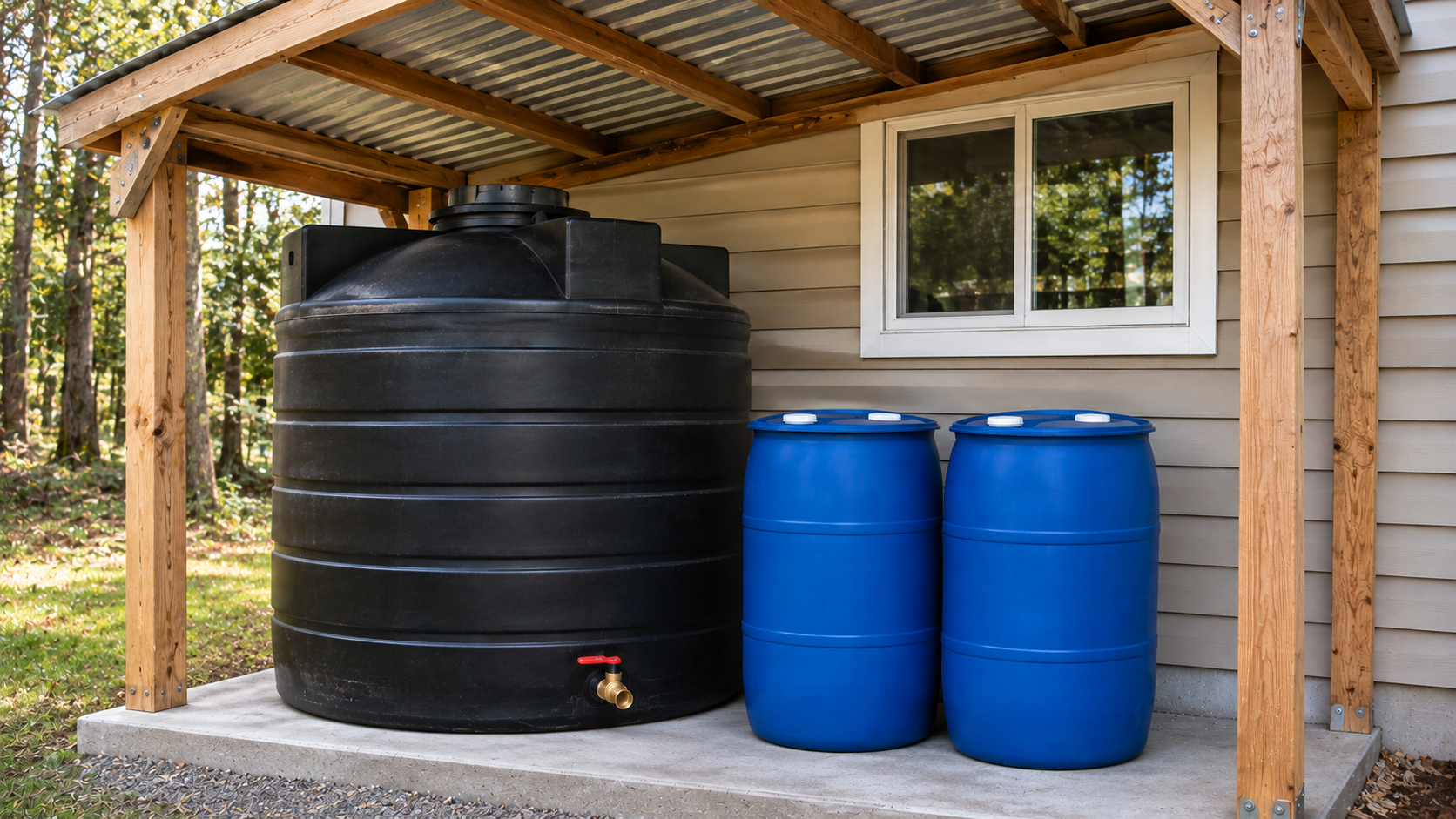
A 250-gallon installation can work well for households with limited outdoor space. A 500-gallon model increases the reserve without requiring frequent purchases of smaller containers. Properties with adequate room and suitable foundations may accommodate tanks holding 1,000 gallons or more.
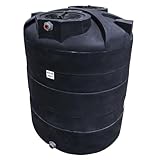

The Elkhart Plastics 1,000-gallon vertical tank represents an expanded storage option for properties capable of supporting its size and weight. Its product listing describes UV-resistant virgin polyethylene construction and compliance with applicable drinking water material standards.
Planning the Installation
Before purchasing a large tank, determine whether delivery equipment can reach the intended location. Narrow gates, fences, overhead obstructions, steep grades, and limited vehicle access can complicate placement.
Measure the available space carefully, allowing additional clearance for plumbing connections, inspection, overflow management, and future maintenance.
Aboveground Versus Underground Tanks
Aboveground tanks provide relatively straightforward installation and convenient visual inspection. Their contents may also be accessible through a low-mounted outlet without an electrical pump.
Underground cisterns offer protection from sunlight, reduced exposure to temperature fluctuations, and less visible equipment. However, excavation, groundwater conditions, soil pressure, drainage, access risers, and pumping arrangements make installation more complex.
Only tanks specifically engineered for underground installation should be buried. An ordinary aboveground polyethylene tank is not designed to resist surrounding soil pressure and may deform or collapse.
Buried installations should follow local regulations, manufacturer requirements, and appropriate professional engineering recommendations, particularly where groundwater could cause an empty tank to float or shift.
Do Not Overlook the Weight
One thousand gallons of water weigh approximately 8,340 pounds, or more than four US tons. Even a comparatively modest 250-gallon installation holds over one ton.
That load requires a properly prepared foundation. The capacity of a deck, wooden floor, ordinary shelving unit, or decorative patio cannot be assumed from its appearance.
Comparing Large Water Storage Options
There is no universally ideal container. Selecting equipment involves balancing portability, installation requirements, maintenance, available space, and total ownership costs.
| Storage Type | Typical Capacity | Illustrative Purchase Cost | Cost Per Gallon | Best Application |
|---|---|---|---|---|
| Portable container | 5 gallons | $25 | $5.00 | Transportation and flexible storage |
| Water barrel | 55 gallons | $120 | $2.18 | Expandable household reserve |
| Potable-rated IBC tote | 275 gallons | $450 | $1.64 | Bulk storage and homesteads |
| Vertical water tank | 500 gallons | $850 | $1.70 | Dedicated residential reserve |
| Large vertical tank | 1,000 gallons | $1,600 | $1.60 | Extensive household or homestead storage |
Prices are illustrative budgeting examples, not guaranteed retail offers. Freight, installation, plumbing, pumps, foundations, and protective enclosures are excluded.
Large containers often provide better value per gallon, but their lower unit cost can be offset by delivery charges or construction expenses.
Local agricultural suppliers, plumbing distributors, and tank dealers may offer more economical purchasing options than shipping oversized equipment through online retailers. Comparing the total delivered price is more useful than comparing advertised tank prices alone.
Where to Store Hundreds of Gallons of Emergency Water
Location influences accessibility, structural safety, maintenance requirements, and protection from environmental conditions. A poorly chosen installation site can undermine an otherwise dependable system.
Garage Storage
An attached or detached garage with a suitable concrete slab can accommodate multiple barrels while keeping supplies relatively accessible.
Evaluate seasonal temperatures before committing to this arrangement. An unheated garage may freeze during prolonged winter weather, while summer temperatures can become excessive.
Gasoline, automotive chemicals, pesticides, and solvents should be stored separately from potable containers.
Basement Storage
Basements often provide stable temperatures and protection from sunlight. A suitable slab can make them attractive for moderate quantities.
Potential complications include flooding, restricted access, drainage difficulties, and the challenge of lifting water upstairs without powered equipment.
Install a practical extraction method and establish where accidental leaks would drain before placing large containers indoors.
Outdoor Storage
Outdoor installations accommodate capacities that would be impractical inside most homes. A protected area near the house can simplify filling and distribution while preserving valuable indoor space.
The foundation must be level, stable, and appropriate for the container’s fully loaded weight. Follow the tank manufacturer’s requirements regarding continuous support beneath the base, anchoring, and plumbing connections.
Consider security, falling branches, vehicle impacts, drainage away from buildings, and exposure to extreme weather.
Approximate Water Weight by Capacity
| Capacity | Water Weight |
|---|---|
| 5 gallons | 42 lbs. |
| 100 gallons | 834 lbs. |
| 250 gallons | 2,085 lbs. |
| 500 gallons | 4,170 lbs. |
| 1,000 gallons | 8,340 lbs. |
Container and equipment weight must be added when evaluating structural requirements.
Suspended residential floors and decks deserve particular caution. Consult a qualified structural professional whenever the installation exceeds verified load-bearing capacity.
How to Prepare Water Storage Containers Before Filling
New containers may contain manufacturing residue, dust, or contaminants introduced during handling and transportation. Preparing them correctly establishes a sanitary starting point.
Step 1: Inspect the Container
Check the interior and exterior for cracks, damage, foreign material, defective threads, and missing seals. Confirm that the tank, outlet fittings, and accessories are suitable for their intended drinking water application.
Step 2: Wash and Rinse
Clean accessible interior surfaces using an appropriate detergent and rinse away all residue. Large installations may require specialized equipment or professional cleaning services.
Step 3: Sanitize Interior Surfaces
For manageable containers, CDC guidance specifies a sanitizing mixture of one teaspoon of plain, unscented household chlorine bleach containing 5–9 percent sodium hypochlorite per quart of water.
Ensure the solution contacts the interior surfaces for at least 30 seconds before emptying it and allowing the container to air-dry.
For large stationary tanks, follow applicable manufacturer and public health procedures for complete surface sanitation and safe disposal of cleaning solutions. Never enter a storage tank to clean it without appropriate confined-space procedures and professional equipment.
Step 4: Fill With Safe Water
Use a confirmed potable source. A dedicated drinking-water-safe hose is preferable to a conventional garden hose that may contain unsuitable materials or residues.
Prevent the hose opening from contacting contaminated surfaces. Maintain appropriate backflow protection, and avoid creating a direct unprotected connection between the storage system and household drinking water plumbing.
Step 5: Secure and Label the Container
Protect openings against debris, rodents, insects, and unauthorized access. Maintain any ventilation required by the manufacturer, using appropriate sanitary vent protection.
Record the filling date and identify whether the contents are potable or non-potable. Clear labeling prevents confusion when different sources are being used during an emergency.
How Long Can Stored Drinking Water Last?
Water does not spoil in the same manner as fresh food. Nevertheless, contamination, unsuitable container materials, damaged seals, and poor storage conditions can affect its safety.
The CDC recommends replacing household-filled emergency drinking water every six months. This maintenance interval provides a practical opportunity to inspect equipment, refresh supplies, and identify problems before an emergency occurs.
Whenever possible, store emergency drinking water in a cool location between 50°F and 70°F (10°C to 21°C), away from direct sunlight, gasoline, pesticides, and other hazardous substances. Inspect seals, valves, and container surfaces periodically for signs of deterioration.
Does Stored Tap Water Need Additional Bleach?
Water collected from a confirmed safe municipal supply does not automatically require additional chlorine before being placed in a properly prepared container.
Private well water should be appropriately tested and, when necessary, treated before storage. Adding chemicals without understanding the original water quality can introduce unnecessary risks and does not address every type of contaminant.
Commercial water preservation products should be used only according to their intended application and instructions. Claims that a product can preserve water for multiple years should not replace routine inspection or established public health guidance.
Creating a Practical Rotation Schedule
Rotating hundreds of gallons at once may seem wasteful, especially during dry conditions. Scheduling maintenance around ordinary household activities can reduce unnecessary disposal.
When appropriate for the water quality and local requirements, outgoing supplies can be used for garden irrigation, outdoor cleaning, or other suitable non-drinking purposes.
Multiple independent containers allow staggered rotation. For example, five barrels can be assigned different maintenance dates so that only one needs servicing at a time.
Do not assume clear, odorless water is necessarily safe. If contamination is suspected, discontinue drinking use until the source of the problem has been evaluated.
How to Access Stored Water Without Electricity
A large emergency reserve offers little practical benefit if the only extraction method depends on household electricity.
Every installation should include a manual or gravity-operated alternative capable of delivering water throughout an extended outage.
Manual Barrel Pumps
A compatible hand-operated pump allows water to be transferred from the upper opening of a drum into smaller containers without lifting or tipping the barrel.
Select equipment specifically intended for drinking water, with compatible threads, tubing length, and construction materials.

Manual pumps should be cleaned and maintained according to their instructions. A dedicated potable water pump must never be shared with gasoline, diesel, agricultural chemicals, or other incompatible liquids.
Gravity-Fed Tank Outlets
Many vertical tanks incorporate a fitting near the bottom. Adding suitable potable-rated valves and connections can establish a direct collection point.
Gravity flow depends on the difference in elevation between the water surface and the outlet. Pressure decreases as the tank empties, and ordinary ground-level installations generally cannot operate household fixtures at conventional municipal pressure.
Raising a tank solely to improve pressure introduces structural concerns. Any elevated platform must be engineered to support the complete load safely.
Electric Transfer Pumps
A properly selected transfer or pressure pump can make distribution more convenient, especially when supplying water over longer distances.
Battery-powered equipment and appropriately sized backup power systems may operate compatible pumps during an outage. However, manual extraction should remain available if the electrical equipment fails or stored energy becomes depleted.
Connecting a reserve to existing household plumbing requires appropriate pressure control, isolation, backflow prevention, and compliance with local plumbing requirements. An improvised connection can contaminate both the stored supply and the public distribution system.
Preventing Emergency Water Storage From Freezing
Cold climates introduce a problem that becomes particularly important during prolonged electrical outages. Water expands by approximately nine percent when it freezes, potentially damaging containers and fittings.
A large outdoor tank usually takes longer to freeze completely than a small jug, but its outlet valve, exposed pipes, and narrow connections can become unusable much sooner.
Choose a Protected Storage Location
An insulated utility room, suitable basement, frost-protected enclosure, or other sheltered area can reduce exposure to sustained cold.
Do not rely entirely on normal household heating. The same outage that interrupts water delivery may also disable the equipment intended to protect the reserve from freezing.
Protect Vulnerable Plumbing
Exposed valves and rigid pipes deserve special attention. Insulate appropriate fittings, minimize unnecessary exterior plumbing, and design drainable lines where practical.
Disconnect hoses that could trap water and ensure that drainage does not create ice hazards around the installation.
Allow for Expansion Where Required
Follow manufacturer guidance concerning winter operation, maximum fill levels, and expansion allowances. Leaving empty space can reduce some pressure associated with freezing, but it does not guarantee that the container, fittings, or internal connections will survive.
Insulation slows heat loss rather than producing heat. During sufficiently long periods of severe cold, an unheated insulated tank can still freeze.
Maintain an Indoor Reserve
Keeping several portable containers inside a protected living area provides an additional supply if the main installation becomes inaccessible.
This arrangement is particularly useful during ice storms, when travel may be hazardous and outdoor equipment difficult to reach.
Never add automotive antifreeze, plumbing antifreeze, salt, or other freezing-point depressants to potable reserves intended for drinking. These substances can render the contents unsafe.
Using Rainwater to Supplement Emergency Water Supplies
Stored municipal or properly treated well water provides an immediately usable reserve. Rainwater harvesting introduces the possibility of replenishing other supplies during a prolonged emergency.
Roof catchment systems typically direct runoff through gutters and downspouts into barrels, tanks, or cisterns.
The amount collected depends on roof area, rainfall, collection efficiency, and available capacity.
Calculating Potential Rainwater Collection
Rainwater Collection Formula
Collected gallons = Horizontal roof catchment area in square feet × Rainfall in inches × 0.623 × Collection efficiency
Collection efficiency is expressed as a decimal. An estimated efficiency of 80 percent would be entered as 0.80.
A roof with a horizontal catchment area of 1,000 square feet could theoretically produce approximately 623 gallons from one inch of rainfall. At 80 percent collection efficiency, the estimated usable collection volume would be about 498 gallons, before considering available tank space or water quality.
Essential Rainwater Collection Components
- Appropriate roof catchment materials.
- Well-maintained gutters and downspouts.
- Debris screening.
- First-flush diversion where appropriate.
- Protected tank inlets and vents.
- Overflow drainage directed away from foundations.
- Suitable extraction equipment.
- Treatment systems matched to the intended use.
Rainwater can acquire microorganisms, bird and animal waste, metals, airborne pollutants, and chemicals from roofing materials. Maintaining a covered collection system and discarding initial runoff can reduce certain contaminants but does not establish drinking water safety.
Households should generally prioritize untreated harvested water for appropriate non-potable activities rather than mixing it directly into established drinking reserves.
Using collected water for suitable outdoor tasks or toilet flushing can extend the life of potable supplies considerably. Check local requirements before constructing a collection system, particularly when potable use or connections to existing plumbing are contemplated.
Filtering and Disinfecting Stored Water During an Emergency
A correctly maintained reserve filled from a safe source is the first line of defense. Treatment equipment provides an additional option when water quality becomes questionable or alternative sources must be used.
Filtration and disinfection are distinct processes. Some filters capture particles and certain microorganisms, while disinfectants are intended to inactivate susceptible pathogens. Neither method automatically addresses every possible contaminant.
Gravity-Fed Filtration
Gravity water filters operate without household electricity. Water passes through filter elements into a lower collection chamber, where it can be dispensed as needed.
These systems can be useful for treating water from appropriate sources, provided their installed elements have verified performance claims relevant to the contaminants present.

The Big Berkey is an example of a countertop gravity-fed filtration system. Performance depends on the specific installed filter elements, their condition, maintenance, and the quality of the incoming water.
Do not assume a gravity filter alone makes untreated rainwater, floodwater, or water from an unknown source safe. Check current independent testing, applicable regulatory information, and the manufacturer’s limitations before depending on any filtration system for pathogen removal.
Boiling Water
When microbial contamination is suspected, boiling can provide a reliable treatment option. Bring the water to a vigorous boil for one minute, increasing the duration to three minutes above 6,500 feet in elevation under CDC guidance.
If the water is cloudy, allow suspended particles to settle or filter the water through a clean cloth, paper towel, or coffee filter before boiling. Allow the boiled water to cool naturally and store it in a clean, covered container.
Boiling does not remove dissolved salts, heavy metals, fuels, or most chemical contaminants. It may increase the concentration of some substances as water evaporates.
Chemical Disinfection
Approved household chlorine bleach and appropriate water disinfection tablets can serve as alternatives when boiling is impractical.
Effective treatment depends on the active ingredient, concentration, water temperature, clarity, and required contact time. Follow the product’s drinking water disinfection instructions or current EPA and CDC guidance rather than applying a universal bleach dose.
Chlorine treatment has limitations against certain parasites and is not a remedy for hazardous chemical contamination.
Keeping multiple appropriate treatment methods available provides greater flexibility when one method is unsuitable, but prevention and reliable source selection remain essential.
Building a Redundant Emergency Water Supply
Storing all emergency water in one tank creates a single point of failure. A damaged valve, leaking connection, or contamination incident could compromise the entire reserve.
A layered arrangement combines separate storage methods, alternative extraction equipment, and supplementary sources.
Layer 1: Immediately Accessible Drinking Water
Maintain commercially bottled water and manageable portable containers where they can be reached quickly. These supplies should remain available even if outdoor equipment is damaged, frozen, or inaccessible.
Layer 2: Main Household Reserve
Use larger barrels, potable-rated totes, or dedicated tanks to provide most of the storage capacity. Independent containers or properly isolated sections can reduce the consequences of equipment failure.
Layer 3: Supplementary Non-Potable Supply
Separate appropriately collected rainwater or other suitable non-drinking sources from the main potable system. Clearly identify connections and containers to prevent accidental mixing.
Layer 4: Renewable Water Access
Properties with reliable wells may benefit from appropriately configured backup pumping equipment. Rainwater harvesting can provide additional capacity where climate, collection area, and local regulations permit.
Neither source should be treated as an unlimited guarantee. Wells can become contaminated or run dry, and rainfall may be absent when it is needed most.
Example Storage Configurations
| System | Configuration | Total Capacity |
|---|---|---|
| Starter reserve | Two 55-gallon barrels and four 5-gallon containers | 130 gallons |
| Intermediate reserve | One 250-gallon tank, one 55-gallon barrel, and four 5-gallon containers | 325 gallons |
| Extended reserve | One 500-gallon tank, two 55-gallon barrels, and four 5-gallon containers | 630 gallons |
| Homestead reserve | One 1,000-gallon tank, two 55-gallon barrels, and eight 5-gallon containers | 1,150 gallons |
These configurations illustrate how capacity can grow without abandoning equipment purchased earlier. Begin at a manageable level and expand when household requirements, installation space, and finances justify the investment.
Managing Stored Water During an Extended Emergency
Once conventional service is interrupted, consumption should be monitored from the beginning. Waiting until a tank is nearly empty leaves fewer options and increases dependence on uncertain replacement supplies.
Assign Water According to Its Intended Use
Protect the highest-quality supplies for drinking, preparing meals, brushing teeth, and other activities involving potential ingestion or sensitive hygiene requirements.
Suitable non-potable sources can be allocated to toilet flushing and selected outdoor tasks. Follow local health instructions whenever contamination or a public water advisory is involved.
Choose Meals That Require Less Water
Preparing dehydrated meals, soaking dry beans, and washing numerous cooking utensils can increase consumption. Ready-to-eat canned foods and simpler meal preparation help reduce these demands.
A pantry designed around an outage should account for water requirements as well as calories and shelf life. Combining convenient meals with long-lasting survival foods provides more flexibility.
Track Daily Consumption
Use calibrated containers, tank-level indicators, or written records to monitor withdrawals. Recalculate the remaining duration whenever consumption changes significantly.
Mechanical indicators and accessible visual markings are particularly helpful when electronic monitoring equipment is unavailable.
Establish a Replenishment Threshold
Determine beforehand when alternative sources will need to be activated. A household may decide to begin collecting supplementary supplies when the main reserve reaches half its capacity rather than postponing action until the final few gallons remain.
Conservation should reduce avoidable waste, not necessary hydration. Never deliberately restrict essential fluid intake below individual health needs to extend the calculated storage duration.
Emergency Water Storage Maintenance Checklist
A storage system requires occasional attention even when normal utilities remain dependable. Regular inspections reveal developing problems while replacement parts, safe water, and professional assistance are readily available.
Monthly Inspections
- Check containers for cracks, deformation, or leakage.
- Inspect outlet valves and accessible connections.
- Confirm that lids and protected vents remain secure.
- Look for evidence of insects, rodents, or other pests.
- Verify that the hand pump is accessible and operational.
- Inspect foundations for settling or movement.
Seasonal Maintenance
- Evaluate winter protection before freezing temperatures arrive.
- Inspect outdoor tanks for excessive sunlight exposure or physical damage.
- Clear debris from rainwater collection equipment.
- Check drainage and overflow routes.
- Test manual and battery-powered transfer equipment.
- Review the household’s water requirements.
Scheduled Water Rotation
- Review container filling dates.
- Refresh household-filled potable reserves at the recommended interval.
- Complete required cleaning and sanitation procedures.
- Replace worn seals and unsuitable fittings.
- Review treatment equipment instructions and replacement schedules.
Maintain a small collection of compatible accessories, including spare seals, appropriate fittings, serviceable hoses, and tools required for normal maintenance. A damaged inexpensive component should not make hundreds of gallons inaccessible.
Frequently Asked Questions
Is 100 Gallons of Emergency Water Enough?
One hundred gallons can provide a useful household reserve for temporary disruptions. Its adequacy depends on the number of users, daily consumption, sanitation arrangements, and the availability of replacement sources. Larger families and households planning for extended outages may benefit from substantially greater capacity.
Can You Store Drinking Water in a Regular Rain Barrel?
Only if the container and its components are suitable for potable storage and have been properly prepared. Ordinary rain barrels may use materials or fittings intended exclusively for irrigation. Water collected through a rooftop system also requires an appropriate assessment before drinking.
What Color Water Storage Tank Is Best?
Opaque black, dark green, and other light-blocking designs are frequently selected for outdoor installations because they limit sunlight penetration. Lighter colors can absorb less solar heat, particularly in hot climates. Material suitability, UV resistance, and installation conditions are more important than color alone.
Can a Polyethylene Water Tank Be Buried?
Only when the specific model is designed and approved for underground installation. Ordinary aboveground tanks may lack the structural strength required to resist soil and groundwater pressures.
Is It Safe to Store Drinking Water in a Garage?
A garage can be appropriate when temperatures remain suitable, the floor can support the load, and potable containers are protected from fuels, chemicals, pests, and physical damage. Seasonal temperature extremes may require additional precautions.
Can You Connect a Storage Tank Directly to Your House?
Residential backup water systems can be integrated with plumbing through properly designed pumping, isolation, and backflow prevention equipment. A qualified plumbing professional should evaluate the installation to ensure that stored supplies cannot contaminate the municipal system or create unsafe operating pressures.
Can Stored Water Be Used for Flushing Toilets?
Water suitable for non-potable sanitation can often be used for toilet flushing when the wastewater system remains operational. Avoid unnecessary consumption of high-quality drinking reserves when a separate appropriate source is available.
Should a Large Water Tank Be Kept Airtight?
Potable installations must prevent contaminant entry while maintaining required venting. A conventional nonpressurized tank needs an appropriate means of admitting and releasing air as the water level changes. Blocking necessary vents can interfere with operation and damage equipment.
Do Emergency Water Containers Need to Be Expensive?
No. A suitable inexpensive container can provide dependable storage when its materials, condition, intended application, and maintenance requirements are appropriate. Compare safety, capacity, durability, and total ownership costs rather than assuming premium pricing guarantees better performance.
What Is the Cheapest Way to Store 500 Gallons of Water?
A dedicated bulk tank or appropriately selected potable-rated IBC containers may offer a lower purchase cost per gallon than individual portable jugs. Local availability, freight charges, foundation requirements, and accessories ultimately determine which arrangement is most economical.
Final Thoughts
Establishing a substantial emergency water reserve is one of the most practical investments a household can make in its ability to withstand prolonged infrastructure disruptions.
The process does not need to begin with an expensive permanent installation. A pair of food-grade barrels and several portable containers can establish meaningful capacity, while larger equipment can be introduced as available space and finances permit.
For households preparing beyond a short-term emergency, 250 to 500 gallons offers a useful balance between storage duration and installation demands. Properties capable of accommodating greater volumes may benefit from a dedicated cistern supported by independent portable supplies.
Capacity alone is not enough. Appropriate container materials, reliable extraction methods, safe filling procedures, protected installation locations, and scheduled maintenance determine whether a reserve will remain useful when conventional services fail.
Combining stored drinking water with carefully managed supplementary sources creates a more adaptable system than relying entirely on bottled supplies or a single stationary tank.
The objective is not to recreate unlimited municipal water service. It is to maintain essential household functions, protect health, and provide sufficient time to respond effectively while normal infrastructure remains unavailable.
Further Reading
Build a complete emergency water system with these additional guides, resources, and calculators covering water storage, purification, rainwater collection, and backup water access.
- Water Purification & Storage Systems – Complete Emergency Water Preparedness Hub
- Long-Term Water Storage: Complete Prepper Guide
- Emergency Water Storage Calculator – How Much Water Does Your Family Need?
- Rainwater Collection Calculator – Estimate Your Roof’s Water Collection Potential
- How to Run a Well Pump During a Power Outage
- Free Emergency Preparedness Calculators
External References
- Centers for Disease Control and Prevention – How to Create an Emergency Water Supply
- Centers for Disease Control and Prevention – How to Make Water Safe in an Emergency
- Environmental Protection Agency – Emergency Disinfection of Drinking Water
- Ready.gov – Emergency Water Preparedness
- Centers for Disease Control and Prevention – Safe Water Storage
- University of Missouri Extension – Safe Drinking Water in an Emergency