How to Run a Space Heater on a Generator During a Power Outage
A winter power outage can turn an ordinary home into an uncomfortable and potentially dangerous place surprisingly quickly. When the central heating system stops working, one possible backup option is to run an electric space heater using a portable generator. But how much generator power does a space heater actually need, how much fuel will it consume, and is this a practical way to stay warm during a prolonged blackout?
This post contains affiliate links. I may earn a small commission at no extra cost to you. Learn more.
The short answer is that you can run a space heater on a generator if the generator has sufficient continuous output and the electrical connection is safe. However, electric resistance heaters consume substantial power. A typical 1,500-watt space heater may use more electricity than several essential household appliances combined.
That makes generator-powered heating possible, but not always the most economical or efficient emergency heating solution.
This guide explains generator sizing, heater wattage, electrical connections, fuel consumption, cold-weather operation, and safer ways to keep one room warm. It also includes practical calculations, comparison tables, and equipment considerations for preparing before the next major winter storm.
Quick Answer: A 1,500-watt electric space heater requires at least 1,500 watts of continuous generator output for the heater alone. A generator with approximately 2,000–2,500 running watts may provide useful capacity for a single heater, but additional appliances and startup surges require more capacity. A 3,000–4,500-running-watt generator offers greater flexibility for selected household essentials. Always check the generator’s actual running-watt rating and use an approved electrical connection.
Can You Run a Space Heater on a Generator?
Yes. A portable generator can supply electricity to an electric space heater, provided the generator produces the correct voltage, has adequate continuous capacity, and is connected according to applicable electrical codes and the equipment manufacturers’ instructions.
Most ordinary household space heaters operate on 120-volt electricity. Many models offer two heating settings, commonly around 750 watts and 1,500 watts, although actual settings vary.
Unlike refrigerators, pumps, and air conditioners, a basic electric resistance heater generally does not require a large motor-starting surge. Its main electrical demand comes from continuously converting electricity into heat.
That constant demand is the biggest challenge.
A refrigerator may cycle on and off throughout the day. LED lights consume relatively little electricity. A 1,500-watt heater, however, can draw approximately 1,500 watts continuously whenever its heating element is energized.
Running one heater for eight hours at full output consumes approximately 12 kilowatt-hours of electricity.
During a prolonged blackout, that energy demand translates into additional generator operating hours, fuel consumption, maintenance, and expense.
For a broader look at concentrating backup heat in a smaller space, read How to Heat One Room During a Power Outage.
How Many Watts Does an Electric Space Heater Use?
The first step is understanding the heater’s actual electrical requirements.
Electric space heaters are usually labeled with their maximum wattage. Some also list amperage, voltage, and separate power settings.
Common portable heater power levels include:
| Heater Setting | Power Consumption | Approximate Heat Output |
|---|---|---|
| Low | 500 watts | 1,706 BTU/hr |
| Medium | 750 watts | 2,559 BTU/hr |
| Higher setting | 1,000 watts | 3,412 BTU/hr |
| Maximum | 1,500 watts | 5,118 BTU/hr |
These figures illustrate common wattages rather than the exact settings of every heater. Heat output is calculated using approximately 3.412 BTU per hour for each watt of electrical input.
How Many Amps Does a 1,500-Watt Heater Draw?
At 120 volts, a 1,500-watt resistance heater draws approximately 12.5 amps.
Amps = Watts ÷ Volts
1,500 ÷ 120 = 12.5 amps.
This is a substantial load on a standard 15-amp household circuit. A heater should not share a heavily loaded circuit with other appliances, and the circuit, wiring, receptacle, and generator connection must all be suitable for the load.
Continuous electrical loads may also be subject to circuit-sizing requirements under applicable electrical codes. Do not assume that a 15-amp circuit can safely support any combination of appliances totaling 15 amps for extended operation.
Does a Thermostat Reduce Generator Power Consumption?
A thermostat can reduce total energy consumption by switching the heating element off once the desired temperature is reached.
However, the generator still needs to support the heater’s full electrical demand whenever the heating element turns on.
For example, a 1,500-watt heater operating at full output for four hours during an eight-hour period uses approximately 6 kWh rather than 12 kWh.
Actual cycling depends on room temperature, insulation, outside conditions, thermostat settings, and heater design.
Example Electric Space Heater
A compact ceramic space heater is one option for providing supplemental warmth in a designated room. Look for a model with an appropriate safety certification, overheat protection, stable construction, and tip-over protection.
Check the specific model’s wattage and instructions before using it with backup power.


Choose a heater appropriate for the room and electrical supply. Never assume that a compact heater is automatically low-wattage simply because it is physically small.
What Size Generator Do You Need to Run a Space Heater?
Generator sizing should be based on continuous running watts, not the larger starting-watt number commonly displayed in product names and advertising.
A generator advertised as producing 4,500 watts may have a lower continuous rating. Dual-fuel generators may also produce different amounts of power when operating on gasoline versus propane.
Start by calculating the heater’s demand, then add the other equipment that may operate simultaneously.
Generator Size for One 1,500-Watt Heater
A generator with 2,000 watts of continuous output could theoretically support a 1,500-watt heater by itself, leaving 500 watts of capacity.
However, that remaining capacity may not be enough for additional appliances, and operating close to maximum output for extended periods may increase fuel use, noise, and mechanical strain.
A larger generator can provide more flexibility, particularly if refrigeration, lighting, communication equipment, or other essential loads must operate at the same time.
| Generator Running Output | 1,500W Heater Load | Remaining Running Capacity | Practical Consideration |
|---|---|---|---|
| 1,800W | 83% | 300W | Limited reserve |
| 2,200W | 68% | 700W | Suitable capacity for one heater, subject to ratings |
| 3,000W | 50% | 1,500W | More flexibility for additional loads |
| 4,000W | 38% | 2,500W | Additional household capacity |
| 5,000W | 30% | 3,500W | Greater flexibility, with higher potential fuel demand |
Remaining capacity is not a guarantee that every additional appliance can be operated. Motor-driven equipment may require substantial startup power, and outlet or circuit limits can be lower than the generator’s total rating.
What If You Want to Run a Refrigerator Too?
Suppose a household wants to operate a 1,500-watt heater, a refrigerator drawing 200 watts while running, several LED lights totaling 60 watts, and a 100-watt electronics charging load.
The combined running load would be:
1,500 + 200 + 60 + 100 = 1,860 watts.
That does not include the refrigerator compressor’s starting surge, which may temporarily increase the generator’s required output.
Rather than purchasing a generator based solely on the heater, calculate all equipment that may operate together.
Use the free Generator Size Calculator to estimate running loads, starting requirements, and an appropriate capacity margin.
Dual-Fuel Generator Option
A dual-fuel generator can offer useful flexibility during extended outages because it can operate on gasoline or propane when configured according to its manufacturer’s instructions.
Propane stores differently from gasoline and may be convenient for households already maintaining an emergency fuel supply. However, propane operation often produces a lower rated electrical output than gasoline operation on the same generator.

Before choosing a generator, confirm its continuous output on each fuel, available 120-volt receptacles, fuel consumption, maintenance requirements, and suitability for the appliances you intend to power.
How to Connect a Space Heater to a Generator Safely
Electrical connections are one of the most important parts of generator-powered heating.
A generator can produce enough power for a heater and still create a serious hazard if the wiring, receptacles, cords, or connection method are unsuitable.
The safest practical arrangement for many homes is a properly installed generator inlet and transfer switch or listed interlock arrangement, allowing selected household circuits to receive generator power while remaining isolated from the utility supply.
Option 1: Use a Professionally Installed Generator Inlet and Transfer Equipment
With an appropriate installation, the portable generator remains outdoors and supplies selected circuits through approved generator connection equipment.
The space heater can then be plugged directly into a suitable wall receptacle on an energized circuit, following the heater manufacturer’s instructions.
This approach avoids the need to connect the space heater itself to an extension cord.
However, the installation must be designed for the generator, household electrical system, grounding and bonding configuration, circuit loads, and applicable electrical codes.
A qualified electrician should determine the correct inlet, transfer equipment, circuit protection, and wiring.
Electrical Safety Warning: Never connect a generator to a household receptacle using a male-to-male cord or other improvised backfeeding method. Backfeeding can energize utility lines, endanger electrical workers, and cause fires or equipment damage. Use only an approved connection arrangement installed for the electrical system.
Option 2: Direct Generator Connections for Approved Appliances
Portable generators are commonly used with heavy-duty outdoor-rated extension cords for compatible appliances and equipment.
However, many portable electric space-heater manufacturers specifically prohibit extension cords and power strips. Their instructions typically require the heater to be plugged directly into a suitable wall outlet.
Do not disregard that restriction simply because an extension cord is labeled heavy-duty.
For a space heater whose manual requires a wall receptacle, use an approved generator-fed household circuit rather than improvising a long cord connection.
Choosing an Outdoor-Rated Generator Cord
Generator cords still have an important role in emergency power systems, including supplying compatible appliances or connecting approved generator equipment.
When selecting a cord, verify its wire gauge, conductor count, current rating, length, plug configuration, weather rating, and compatibility with the intended equipment.
A 12/3 outdoor-rated cord is commonly used for certain 120-volt applications, but its suitability depends on the actual circuit and load.

Longer cords can introduce additional voltage drop. Damaged insulation, loose connections, undersized conductors, and overloaded receptacles can create overheating and fire hazards.
Never route cords through standing water, pinch them under doors, or cover them with rugs or other materials that trap heat.
For a permanent generator inlet, use the cord type and connection arrangement specified for the installed equipment rather than substituting an ordinary household extension cord.
How Much Fuel Does a Generator Use Running a Space Heater?
Fuel consumption is often the deciding factor when evaluating generator-powered electric heat.
A space heater may be relatively inexpensive to purchase, but operating it for many hours every day can require substantial generator fuel.
The exact fuel consumption depends on generator size, engine efficiency, fuel type, electrical load, operating temperature, and maintenance condition.
Why Generator Wattage Alone Cannot Predict Fuel Use
Two generators with identical rated output may consume different amounts of fuel while supplying the same 1,500-watt load.
Inverter generators may reduce engine speed at lighter loads, while conventional generators often operate at a relatively fixed engine speed.
Generator efficiency also changes with loading. A large generator supplying a small heater may burn more fuel than a smaller, appropriately sized inverter generator under the same conditions.
The best estimate comes from the manufacturer’s fuel-consumption chart at a load close to the expected operating level.
Example Gasoline Consumption
The following table illustrates how fuel requirements change with different hypothetical consumption rates. These are calculation examples, not verified fuel-consumption figures for a particular generator.
| Fuel Consumption | 8 Hours | 24 Hours | 72 Hours |
|---|---|---|---|
| 0.25 gal/hr | 2 gallons | 6 gallons | 18 gallons |
| 0.40 gal/hr | 3.2 gallons | 9.6 gallons | 28.8 gallons |
| 0.60 gal/hr | 4.8 gallons | 14.4 gallons | 43.2 gallons |
| 0.80 gal/hr | 6.4 gallons | 19.2 gallons | 57.6 gallons |
The table assumes the generator operates continuously at the stated hourly fuel-consumption rate. A thermostatically controlled heater may cycle off, changing the generator load and fuel use.
What Would It Cost to Run a Heater for Eight Hours?
Suppose a generator consumes 0.4 gallon of gasoline per hour at the relevant load.
Over eight hours, it would use approximately 3.2 gallons.
At an illustrative gasoline price of $3.50 per gallon:
3.2 × $3.50 = $11.20 for eight hours.
Operating at that same rate for three eight-hour heating periods would consume 9.6 gallons, costing approximately $33.60 at the example price.
These are hypothetical operating costs. Actual prices and consumption vary.
For more accurate planning, use the Generator Runtime and Fuel Calculator. Enter the generator’s manufacturer-rated fuel consumption, available fuel, and planned daily operating hours.
What About Propane?
A dual-fuel generator can operate on propane if the specific model supports it. Propane is often convenient for emergency storage, especially where gasoline availability becomes uncertain.
However, propane does not eliminate the inefficiency of converting fuel into electricity and then converting that electricity into resistance heat.
Cold temperatures can also reduce the rate at which a propane cylinder can vaporize fuel, particularly when the cylinder is small, partly empty, or supplying a large engine.
Use the generator manufacturer’s approved regulator, hose, and fuel connection. Never bring a propane cylinder indoors to warm it, and never apply an open flame or improvised heater to the cylinder.
Can You Run Two Space Heaters on One Generator?
Running two heaters is possible when the generator and electrical distribution system are properly sized, but the power requirement increases rapidly.
Two 1,500-watt heaters require approximately 3,000 watts whenever both heating elements are operating at full output.
Three would require 4,500 watts.
| Number of Heaters | Combined Load | Energy Used in 8 Hours at Full Output |
|---|---|---|
| 1 | 1,500W | 12 kWh |
| 2 | 3,000W | 24 kWh |
| 3 | 4,500W | 36 kWh |
Each heater also needs an appropriately rated circuit and receptacle. Two high-wattage heaters should not simply be connected to the same household circuit.
Even when a generator has enough total output, individual outlets, circuit breakers, and connected wiring may have lower limits.
For emergency preparedness, heating one suitable room is often more practical than operating several electric heaters throughout the house.
How to Measure the Actual Power Used by Your Appliances
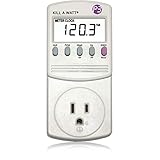
Electrical usage monitors can help homeowners understand how much power individual appliances consume.
A plug-in watt meter can measure many compatible 120-volt appliances, displaying watts and accumulated energy consumption.
This information can be useful when calculating the combined generator load for refrigerators, televisions, fans, lighting, and other equipment.
Using an Electricity Usage Monitor
Before using a meter, verify its maximum current and power ratings, plug configuration, and permitted applications.
Follow the meter and appliance manufacturers’ instructions. Do not place a plug-in meter between a space heater and the wall if doing so would violate the heater’s direct-to-wall connection requirement or the meter’s restrictions.
For a resistance heater, the manufacturer’s wattage rating is usually the safer basis for generator sizing.
When measuring compatible equipment, remember that some appliances cycle on and off. A refrigerator may draw much more power while its compressor is running than it does while idle.
A consumer watt meter may not capture every brief startup surge. Use manufacturer specifications when calculating motor-starting requirements.
How Much Heat Can a 1,500-Watt Space Heater Produce?
A 1,500-watt electric resistance heater produces approximately 5,118 BTU of heat per hour while operating at full output.
Whether that is enough to warm a room depends on the room’s heat loss.
Insulation, air leakage, window area, outdoor temperature, ceiling height, and the number of exterior walls all affect how quickly heat escapes.
A well-insulated bedroom may retain warmth much better than a drafty living room with several large windows.
Why Room Size Alone Is Not Enough
It is tempting to select a heater based on a simple square-footage rating. However, advertised coverage areas are usually based on assumptions that may not match winter emergency conditions.
A heater that maintains a comfortable temperature during mild weather may struggle when outdoor temperatures drop far below freezing.
During severe cold, a room can lose heat faster than a 1,500-watt heater replaces it.
This is especially important in homes with poor insulation, older windows, or significant air leaks.
Choose a Smaller Heating Area
Instead of attempting to heat the entire house, identify one suitable room where family members can gather.
Ideally, the room should have:
- A door that can be closed without interfering with required ventilation.
- Reasonably good insulation and limited drafts.
- Enough space to maintain heater clearances.
- A suitable electrical receptacle on a properly rated circuit.
- Safe exits and working smoke and carbon monoxide alarms.
- Space for bedding, warm clothing, and emergency supplies.
Closing curtains after sunset, sealing ordinary drafts, and keeping unused rooms closed can reduce heat loss.
However, never block ventilation openings required by fuel-burning equipment or interfere with emergency exits.
Where Should You Place a Generator During Winter Weather?
A portable generator must operate outdoors in a location that prevents exhaust from entering the home.
According to the Centers for Disease Control and Prevention, portable generators should be positioned at least 20 feet away from doors, windows, and vents, with exhaust directed away from the building.
Never operate a generator inside a house, basement, garage, carport, shed, or other enclosed or partially enclosed structure.
Opening a garage door does not make indoor generator operation safe.
Carbon Monoxide Warning: Generator exhaust contains carbon monoxide, a poisonous gas that cannot be seen or smelled. Keep the generator outdoors, at least 20 feet from building openings, and use working battery-powered or battery-backup carbon monoxide alarms inside the home. If an alarm sounds, evacuate immediately and contact emergency services.
Protecting a Generator From Rain and Snow
Generators must be protected from precipitation without restricting the ventilation and cooling needed for safe operation.
Never cover a running generator with an ordinary tarp, blanket, plastic sheet, or improvised enclosure.
These materials can obstruct airflow, trap exhaust, contact hot engine components, and create fire hazards.
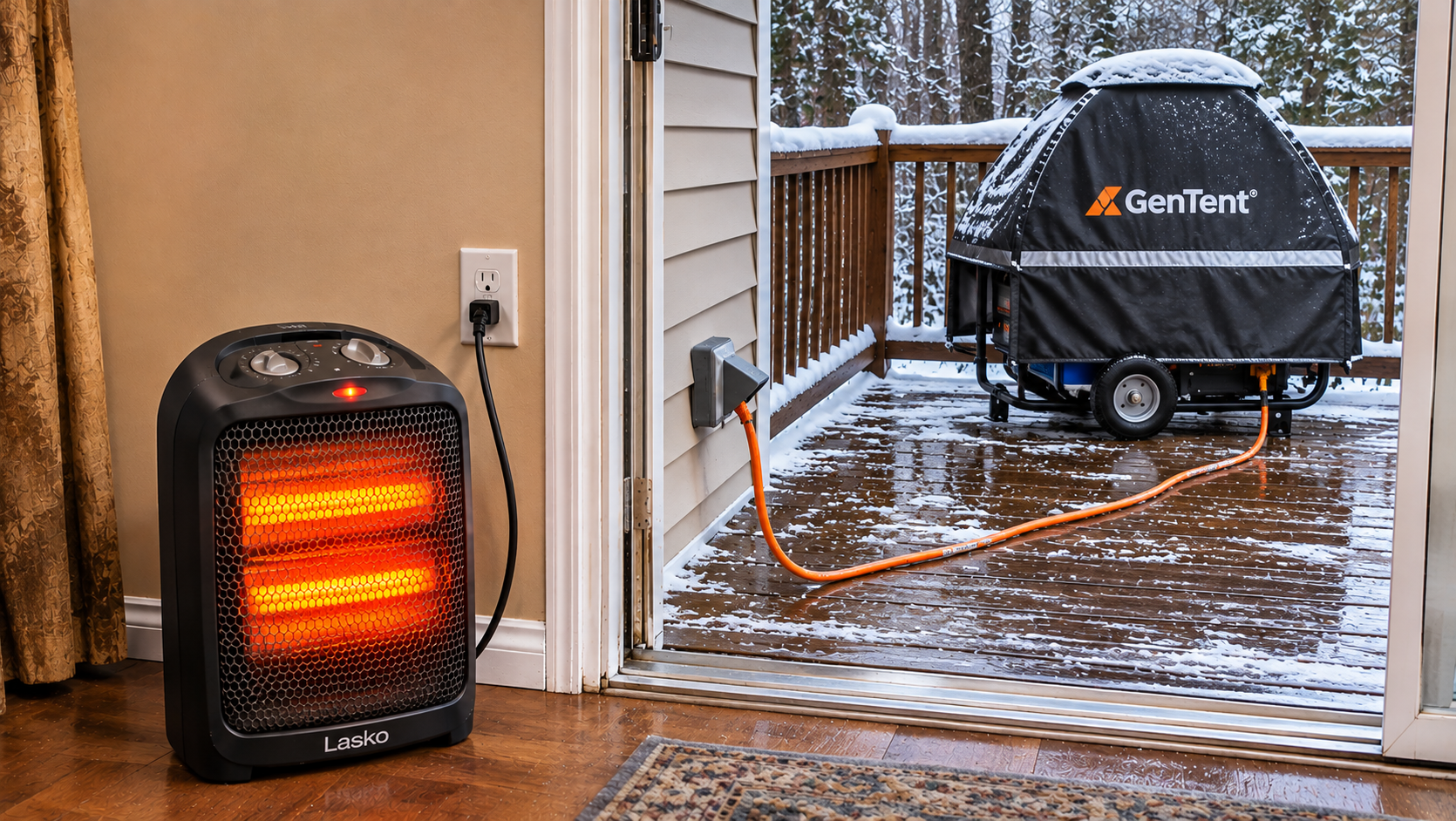
A purpose-designed running cover may be an option if it is explicitly approved for the exact generator model and operating conditions.
Generator Running Cover
When evaluating a generator running shelter, verify compatibility with the generator’s dimensions, exhaust orientation, cooling-air requirements, and manufacturer instructions.

A generator running cover does not make a garage, attached porch, carport, shed, or other enclosed or partially enclosed location safe for operation. Position the generator outdoors at least 20 feet from doors, windows, and vents, with the exhaust directed away from the house. Use only a running cover approved for the specific generator model, and follow both manufacturers’ instructions.
Keep the unit above standing water on a suitable stable surface, and prevent snow accumulation from obstructing exhaust or ventilation openings.
Will a Generator Start and Run in Freezing Temperatures?
Many portable generators can operate in cold weather, but freezing conditions can make starting and maintenance more difficult.
Engine oil becomes thicker as temperatures fall. Batteries used for electric starting may deliver less power, and fuel systems can be affected by moisture, stale gasoline, or cold-weather fuel limitations.
Preparation before a storm is more reliable than trying to troubleshoot an unfamiliar generator during an ice storm.
Use the Correct Engine Oil
Check the generator owner’s manual for approved oil viscosity and temperature ranges.
Some engines specify different oil grades for cold-weather operation. Using oil outside the manufacturer’s recommendations may affect starting and lubrication.
Do not assume that the oil used during summer is appropriate for every winter temperature.
Maintain the Starting Battery
If the generator uses electric starting, inspect and maintain the starting battery according to the manufacturer’s instructions.
A weak battery may fail to crank the engine during freezing weather even when the generator operated normally in warmer conditions.
Know whether the generator has a manual recoil-start option and how to use it.
Keep Fuel in Good Condition
Store gasoline only in approved containers, in a safe location away from living spaces and ignition sources.
Follow the generator manufacturer’s recommendations for fuel age, storage, and stabilizer use.
For propane operation, confirm that the cylinder and regulator arrangement can provide adequate fuel vaporization at the expected temperature and load.
Test the Generator Before an Emergency
Perform routine maintenance and periodic test runs according to the manual.
A useful test includes checking the generator’s operation under an appropriate electrical load, verifying connections, and observing whether it maintains stable output.
Do not wait until the electricity has already failed to discover that the generator will not start.
Is a Generator-Powered Space Heater Worth the Fuel?
Electric resistance heating is straightforward, but using an engine-driven generator to produce that electricity introduces substantial energy losses.
The generator converts only part of the fuel’s chemical energy into electrical output. The rest becomes engine heat, exhaust heat, and other losses outdoors.
The space heater then converts its electrical input into heat inside the room.
This arrangement can work, but it may consume more fuel than a purpose-built heating appliance that uses fuel directly to produce useful heat.
When Generator-Powered Heat Makes Sense
A generator-powered space heater may be reasonable when:
- A properly installed generator connection is already available.
- The generator has sufficient unused electrical capacity.
- Only one smaller room needs supplemental heating.
- Fuel supplies are adequate for the expected outage.
- The heater can operate on a suitable circuit without extension cords or adapters prohibited by its manufacturer.
- Backup heat is needed for limited periods rather than continuous multi-day operation.
When Another Heating Method May Be Better
For extended winter outages, a properly installed wood stove, approved direct-vent gas heater, or another suitable dedicated heating system may offer more practical long-duration heating.
Some gas heating appliances can operate without grid electricity, but others require electric ignition, controls, or fans. Their exact specifications and installation requirements matter.
Portable propane heaters also require careful attention to indoor-use approval, ventilation, clearances, fuel-cylinder restrictions, and supervision.
For additional information on safely connecting a portable generator to household electrical systems, see the Generator Grounding and Bonding: Safe Setup Guide.
Can a Portable Power Station Run a Space Heater Instead?
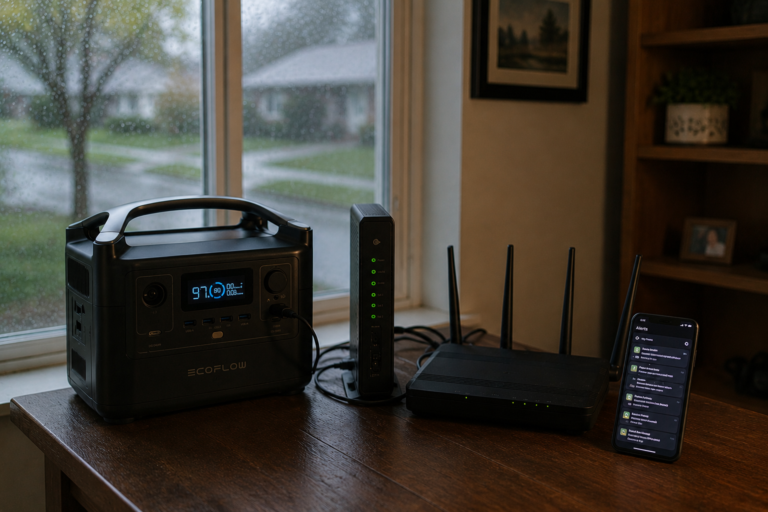
A portable power station avoids generator exhaust and can operate indoors when used according to its manufacturer’s instructions.
However, battery capacity becomes the limiting factor when powering a high-wattage resistance heater.
For example, a power station with 2,000 watt-hours of nominal stored energy would theoretically supply a 1,500-watt heater for about 1.33 hours before accounting for inverter losses and unusable battery capacity.
Actual runtime would generally be shorter.
| Battery Capacity | Theoretical Runtime at 1,500W | Practical Limitation |
|---|---|---|
| 1,000Wh | 0.67 hour | Less after losses |
| 2,000Wh | 1.33 hours | Less after losses |
| 3,000Wh | 2 hours | Less after losses |
| 5,000Wh | 3.33 hours | Less after losses |
These calculations assume the heating element operates continuously at 1,500 watts. They also assume the power station has sufficient continuous AC output to support the heater.
Not every power station can supply a 1,500-watt appliance, even if its battery capacity appears adequate.
Power stations may be more useful for refrigeration, communications, lighting, medical equipment, and other essential electrical needs than for prolonged resistance heating.
How to Make Generator-Powered Heating More Efficient
When fuel is limited, reducing heat loss is often more effective than simply purchasing a larger generator.
1. Heat Only the Room You Need
Choose one room where household members can remain together comfortably and safely.
A smaller heating area may require less energy than attempting to maintain normal temperatures throughout the entire house.
2. Close Curtains and Reduce Drafts
Close curtains after sunset, use weatherstripping around drafty doors, and address obvious air leaks where doing so does not interfere with required ventilation.
Sunlight through windows may provide some passive warmth during the day.
3. Use Warm Clothing and Bedding
Thermal clothing, insulated socks, blankets, and sleeping bags reduce the need to maintain a high room temperature.
Insulated sleeping pads can also reduce heat loss to cold flooring.
Keep bedding and other combustible materials well away from the heater.
4. Use the Heater’s Thermostat
Where available, use the thermostat to maintain an appropriate temperature rather than running the heater continuously at maximum output.
Actual fuel savings depend on how frequently the heating element cycles off and how generator efficiency changes with load.
5. Coordinate Other Electrical Loads
Plan when refrigerators, freezers, battery chargers, and other equipment need power.
Some loads can be operated at different times to avoid exceeding generator capacity.
However, never compromise food safety, necessary medical equipment, or essential heating simply to reduce generator usage.
6. Monitor Indoor Temperature
Use a reliable indoor thermometer in the occupied room.
A thermometer helps identify when conditions are becoming too cold, especially overnight or when the heater is not operating.
Keep it away from direct heater airflow for a more representative reading.
Important Generator and Space Heater Safety Rules
Emergency heating equipment must be operated carefully. An electrical overload, fire, or carbon monoxide incident can quickly turn a winter outage into a much more serious emergency.
- Keep generators outdoors: Maintain at least 20 feet of separation from doors, windows, and vents, with exhaust directed away from buildings.
- Install carbon monoxide alarms: Use working battery-powered or battery-backup alarms inside the home.
- Never backfeed household wiring: Use properly installed and approved transfer equipment.
- Follow space-heater instructions: Plug the heater directly into a suitable wall receptacle when required by the manufacturer.
- Avoid overloaded circuits: Confirm running loads, outlet ratings, circuit protection, and generator capacity.
- Maintain heater clearances: Keep curtains, blankets, furniture, paper, and other combustibles away from the heater.
- Never leave portable space heaters unattended: Turn off the heater before leaving the room or going to sleep. Keep children and pets away from the heater, and maintain the manufacturer’s required clearance from combustible materials.
- Keep electrical equipment dry: Never operate damaged or wet equipment.
- Refuel safely: Shut down the generator and allow it to cool before refueling, following the manufacturer’s instructions.
- Keep exits accessible: Do not arrange cords, furniture, or heating equipment where they obstruct evacuation routes.
Emergency Warning: Headache, dizziness, nausea, weakness, confusion, or unusual sleepiness may indicate carbon monoxide exposure. If a carbon monoxide alarm activates or poisoning is suspected, move everyone outdoors into fresh air immediately and call emergency services. Do not reenter until responders confirm it is safe.
Step-by-Step: Preparing to Heat One Room With a Generator
Setting up emergency heat before winter weather arrives reduces the chances of discovering an equipment problem during an outage.
Step 1: Select the Heating Room
Choose a suitable room with good insulation, a safe heater location, working alarms, and a properly rated electrical circuit.
Step 2: Confirm the Heater’s Electrical Rating
Check the manufacturer’s label and instructions for voltage, wattage, amperage, clearance requirements, and connection restrictions.
Step 3: Calculate the Total Generator Load
Add the running watts of all appliances expected to operate together. Include motor-starting requirements for equipment such as refrigerators and pumps.
Step 4: Verify the Electrical Connection
Confirm that a qualified electrician has installed suitable generator inlet and transfer equipment if household circuits will be powered.
Never improvise a generator connection through an ordinary wall receptacle.
Step 5: Prepare the Outdoor Generator Location
Select a location at least 20 feet from building openings, away from standing water, with safe exhaust direction and weather protection approved for the equipment.
Step 6: Inspect Fuel and Maintenance Supplies
Check available fuel, oil, filters, starting equipment, and maintenance intervals. Estimate how long the generator can operate at the planned load.
Step 7: Perform a Controlled Test
Before an emergency, test the generator and approved connection under realistic operating conditions while following all manufacturer instructions.
Confirm that the heater operates normally and that the generator remains within its rated output.
Step 8: Establish a Backup Plan
Have additional warm clothing, bedding, a thermometer, emergency lighting, and a safe relocation option available.
A generator can fail, fuel can run out, and severe weather can prevent safe operation. Emergency heat should never depend on a single piece of equipment.
Frequently Asked Questions
Will a 2,000-Watt Generator Run a 1,500-Watt Space Heater?
Possibly, if the generator actually provides at least 1,500 watts of continuous output at the required voltage and the connection is suitable. A generator with 2,000 running watts would have only 500 watts of remaining running capacity while the heater operates at full output. Check the generator’s continuous rating, outlet limitations, and other loads.
Can a 3,500-Watt Generator Run Two Space Heaters?
A generator with 3,500 continuous running watts could theoretically supply two 1,500-watt heaters, leaving 500 watts of running capacity. However, the electrical distribution system must support both loads on appropriately rated circuits. Running two heaters may also increase fuel consumption considerably.
Can You Plug a Space Heater Directly Into a Generator?
Some generator outlets may have enough electrical capacity to operate a space heater, but that does not automatically make the connection safe or manufacturer-approved. Many portable space heaters require a direct connection to a properly installed wall receptacle and prohibit extension cords or power strips. For household backup power, a professionally installed generator inlet and transfer switch or approved interlock system can supply a suitable wall circuit while keeping the generator outdoors. Always follow the heater and generator manufacturers’ instructions.
How Long Will a Generator Run a Space Heater?
Runtime depends on the generator’s fuel capacity, fuel-consumption rate, electrical load, and operating schedule. Divide usable fuel by the manufacturer’s hourly fuel-consumption figure at the expected load to estimate operating hours.
Is a Ceramic Heater Better Than an Oil-Filled Heater for Generator Use?
Both are electric resistance heaters, so models using the same wattage produce approximately the same amount of total heat. They distribute heat differently, and their thermostats may cycle differently, but neither type produces substantially more heat from the same electrical input.
Can You Leave a Generator Running Overnight?
Some generators are designed for extended operation when maintained and operated according to their manuals. However, overnight use introduces additional concerns about fuel, weather, maintenance, exhaust, noise, and unattended operation. Never run a generator indoors or in an enclosed or partially enclosed structure. Do not leave a portable space heater operating unattended or while sleeping contrary to its instructions.
Will a 1,500-Watt Heater Keep a Bedroom Warm During an Ice Storm?
It may maintain a comfortable temperature in a reasonably insulated room, but performance depends on outdoor temperature, drafts, windows, room dimensions, and heat loss. A 1,500-watt heater provides approximately 5,118 BTU per hour at full output. It cannot guarantee a particular indoor temperature during extreme cold.
Is Propane or Gasoline Better for Running a Generator in Winter?
Both can work when the generator supports the fuel and is maintained correctly. Gasoline performance depends on fuel quality and engine condition, while propane operation can be affected by cylinder temperature and vaporization capacity. Dual-fuel models provide flexibility, but their electrical output and runtime may differ between fuels.
Is It Cheaper to Use a Generator or a Propane Heater?
A properly installed, suitable direct-fuel heating appliance may use fuel more efficiently than a generator supplying an electric resistance heater. Actual operating costs depend on local fuel prices, appliance efficiency, heating demand, and operating time. Safety, installation requirements, and indoor-use restrictions must be evaluated before comparing costs.
Final Thoughts
Running an electric space heater on a portable generator can provide useful emergency warmth during a winter blackout, particularly when the household already has an appropriately sized generator and an approved electrical connection.
However, a 1,500-watt heater represents a substantial continuous electrical load. Running it for several hours every day can consume significant amounts of gasoline or propane, leaving less generator capacity and fuel available for other essential needs.
The most practical approach is to calculate the heater’s electrical demand, size the generator for all simultaneous loads, establish safe electrical connections, and concentrate heating in one suitable room.
Reducing drafts, using insulated clothing and bedding, and maintaining a realistic fuel supply can make emergency heating more manageable.
For households preparing for extended winter outages, generator-powered electric heat is best considered one part of a broader backup heating plan rather than the only source of warmth.
Above all, keep generator exhaust outside, follow the heater manufacturer’s electrical requirements, and never sacrifice fire or carbon monoxide safety to stay warm.
Further Reading
More From The Savvy Survivalist
- How to Heat One Room During a Power Outage — Alternative emergency heating methods and ways to conserve warmth.
- Generator Size Calculator — Calculate running watts, starting loads, and recommended generator capacity.
- Generator Runtime and Fuel Calculator — Estimate fuel consumption and operating time during an outage.
- How to Prepare for an Ice Storm: Complete Home Emergency Checklist — Prepare your home, supplies, and backup systems before severe winter weather.
Official Safety and Reference Sources
- Centers for Disease Control and Prevention: Carbon Monoxide Poisoning Basics — Generator placement and carbon monoxide prevention.
- CDC: What to Do to Protect Yourself During a Power Outage — Generator operation and emergency electrical safety.
- CDC: Safety Guidelines During and After a Winter Storm — Heating, generator, and winter emergency precautions.
- U.S. Department of Energy: Electrical Safety Program Manual — Portable electric heater safety requirements, including restrictions on extension cords.