How Long Will Internet Service Work During a Blackout?
How long will internet service work during a blackout? Internet service can stop working the moment the power goes out, but it can also keep working for hours if the right equipment has backup power and the local internet provider still has electricity somewhere upstream. That is what makes this question confusing for most households. Some people lose WiFi instantly during a short outage, while someone a few streets over may plug their modem into a battery backup and stay online without a problem.
This post contains affiliate links. I may earn a small commission at no extra cost to you. Learn more.
The difference usually comes down to where the failure happens. Your home internet connection depends on several pieces working at the same time, including the modem, router, fiber terminal, cable line, neighborhood equipment, provider backup batteries, data centers, and the devices inside your house. If any one of those pieces loses power, your internet can disappear even when the physical cable outside is still intact.
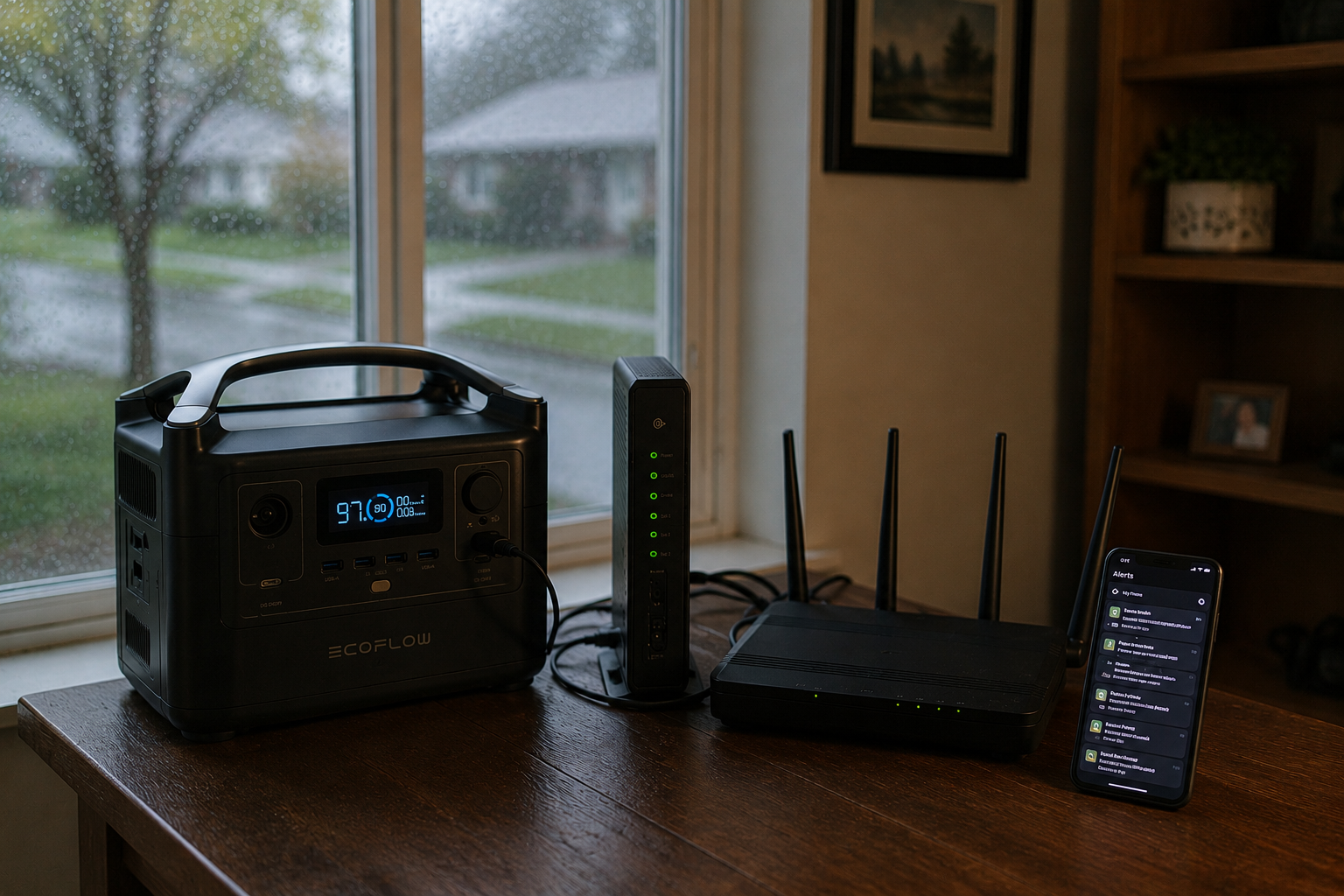
For a small local power outage, home internet often remains available if your modem and router are powered by a UPS battery backup or portable power station. For a larger blackout that affects utility poles, fiber cabinets, cable nodes, cellular towers, and provider facilities, internet service becomes much less reliable and may fail after backup batteries are drained or generators run out of fuel.
That means the honest answer is this: internet service may last anywhere from zero minutes to several days during a blackout, depending on the type of internet connection, the size of the outage, your backup power setup, and how prepared your internet provider is. A short neighborhood outage is very different from a multi-day regional blackout where fuel deliveries, repair crews, and communication networks are all under pressure.
During a serious outage, internet service can fade in stages, and by the time most people realize it is gone, they may already be cut off from the tools they use every day.
If you are building a blackout plan, internet backup belongs in the same category as lighting, water, cooking, communication, and cash. It is not just about streaming movies or scrolling online. Internet access affects payment systems, security cameras, medical devices, work access, school updates, weather alerts, banking, online maps, and messaging apps. Once it fails, a household can feel isolated much faster than expected.
This article breaks down how long internet service may work during a blackout, why different connection types fail at different times, what equipment needs backup power, and how to build a realistic home internet backup plan without assuming the grid will cooperate.
Quick Answer
Internet service may continue working anywhere from a few minutes to several days during a blackout, depending on your home’s backup power, your internet provider’s infrastructure, and the size of the outage. Keeping your modem, router, and ONT powered with a UPS or portable power station greatly improves your chances of staying connected during short outages.
✓ Key Takeaways
- Internet may outlast your home’s electricity.
- Your modem, router, and ONT all need backup power.
- Neighborhood infrastructure can fail after batteries run down.
- Cellular internet is useful but may become congested.
- Always have backup communication methods.
Your Internet Depends on More Than the Power Grid
Most people assume internet service either works or it does not, but the reality is far more complicated. Unlike a lamp, refrigerator, or television that stops the moment electricity disappears, internet access relies on an entire chain of equipment spread across homes, neighborhoods, utility easements, communication hubs, and regional infrastructure. As long as every link in that chain continues operating, internet service can remain available even during a power outage. The problem is that each link has its own vulnerabilities, backup systems, and limitations.
Think of your internet connection as a relay stretching from your device all the way to distant servers located hundreds or even thousands of miles away. Data travels through routers, switches, fiber lines, cable systems, data centers, and network facilities before reaching the websites, applications, and services people use every day. If one piece of that network loses power, becomes damaged, overheats, exhausts its backup batteries, or loses generator support, the entire connection can be interrupted.
That is why two families living only a few blocks apart may have completely different experiences during the same blackout. One household may have internet service available for most of the day because their provider’s equipment remains powered and their modem is connected to a battery backup. Another household may lose access immediately because a nearby cable node or fiber cabinet serving their street shuts down as soon as utility power disappears.
Internet providers understand that outages happen and many critical facilities include backup batteries, generators, redundant connections, and emergency procedures designed to keep customers connected. These safeguards help prevent every power outage from becoming a communications outage. However, backup systems are not unlimited. Batteries eventually discharge, generators require fuel, equipment can fail, and repair crews may have difficulty reaching damaged infrastructure during severe weather or widespread emergencies.
Many people also underestimate how dependent modern life has become on internet connectivity. Banking, shopping, navigation, communication, entertainment, security systems, weather alerts, cloud storage, remote work, and even some telephone services rely on functioning data networks. During normal conditions these systems feel permanent and invisible because they operate continuously in the background. A blackout exposes just how many everyday activities depend on equipment most people never think about.
In a short outage lasting a few hours, internet service often remains available somewhere in the community even if many homes lose access because their routers and modems are not receiving electricity. In a prolonged emergency, however, the situation changes. As backup systems are depleted and network congestion increases, connectivity becomes less predictable. Some services may function intermittently, speeds may slow dramatically, and outages may become more frequent as providers prioritize critical infrastructure and emergency repairs.
The type of connection entering your home also plays a major role. Fiber internet, cable internet, DSL service, satellite systems, and cellular-based home internet all operate differently behind the scenes. Each technology has unique strengths and weaknesses when utility power fails. Some can remain operational surprisingly long under favorable conditions, while others depend heavily on local equipment that may shut down quickly once backup power is exhausted.
Another common misconception is that internet and WiFi are the same thing. They are not. A provider may still be delivering internet service to your house while your wireless network appears completely dead because the router has lost power. In other situations, your router may be functioning perfectly while the provider’s infrastructure farther upstream has already failed. Understanding the difference can help troubleshoot outages and determine whether backup equipment is likely to restore connectivity.
Families that depend entirely on online communication, digital payments, cloud-based information, or smartphone applications may find themselves at a disadvantage if connectivity disappears unexpectedly. That is one reason a comprehensive emergency plan should include alternative ways to receive information, contact family members, access maps, and stay informed.
As discussed in Family Emergency Communication Plan, households that establish multiple communication options before an emergency are usually far better positioned than those relying on a single technology. Internet access can be an extremely valuable tool during a blackout, but it should be viewed as one layer of preparedness rather than the entire plan.
Why Your Internet May Stop Immediately During a Power Outage
One of the biggest surprises during a blackout is discovering that the internet provider may still be operating normally while internet access inside the home has already disappeared. Many people assume the service itself failed when, in reality, the problem is much closer. The modem, router, gateway, fiber terminal, or other equipment inside the house simply no longer has electricity.
Unlike older telephone systems that could often continue functioning through the phone line itself, modern internet equipment requires power at the customer location. The moment utility power fails, every device connected to a standard wall outlet shuts down unless it is connected to a battery backup system or alternative power source. When that happens, the pathway between the internet provider and the devices inside the home is broken even if the provider’s network remains fully operational.
For many households, the first casualty is the wireless router. The router is responsible for distributing internet access throughout the home and creating the WiFi network that phones, tablets, televisions, laptops, gaming systems, cameras, and smart devices use. Once the router loses power, the wireless network disappears. To many people it appears that the internet has failed, even though the provider may still be delivering service to the modem.
In fiber-optic systems, there is often another critical component called an Optical Network Terminal, commonly referred to as an ONT. This device converts light signals traveling through the fiber line into data that home equipment can use. Although fiber cables themselves do not require electricity to transmit information, the ONT absolutely does. If the ONT loses power, the fiber connection effectively becomes unusable regardless of how healthy the provider’s network may be.
Cable internet customers face a similar situation. A cable modem must remain powered in order to communicate with the provider’s network. Even if nearby cable infrastructure continues operating through batteries or generators, the connection ends at the modem. Without electricity reaching that device, internet access stops at the wall.
The same principle applies to DSL connections. While older copper telephone networks were once known for remaining operational during outages, modern DSL internet still relies on powered equipment inside the home. A functioning telephone line does not automatically mean the internet modem can continue operating without electricity.
Many homeowners also forget about the additional equipment connected to their internet network. Mesh WiFi nodes, network switches, security cameras, smart home hubs, voice assistants, wireless access points, and cloud-connected devices all require power. Even if internet service itself remains available, parts of the network may become unusable because supporting equipment has shut down.
This is one reason short blackouts can create immediate communication problems. A family may still have working smartphones, charged laptops, and a healthy internet connection entering the property, but without powered networking equipment those devices can no longer reach the outside world through the home’s normal connection.
Another factor is that modern households increasingly depend on internet-connected services without realizing it. Smart thermostats, cloud-based security systems, video doorbells, streaming television platforms, home automation devices, and even some alarm systems rely on continuous connectivity. When the modem or router loses power, these services can stop functioning instantly despite appearing completely unrelated to internet access.
For people working remotely, the impact can be even more immediate. Video meetings disconnect, cloud documents become inaccessible, remote desktop sessions terminate, and online communication platforms go offline. What feels like a simple power outage can quickly become a productivity problem if backup power for networking equipment is not available.
This is where battery backups begin to make a significant difference. A small UPS can often keep a modem, router, and fiber terminal running for several hours because networking equipment uses relatively little electricity compared to appliances, air conditioners, refrigerators, or other household loads.
Even so, powering equipment inside the home only solves one part of the problem. Internet service must also survive beyond the house itself. Neighborhood infrastructure, provider facilities, communication hubs, and regional networks all need electricity as well. If any of those systems fail, your equipment may still be running perfectly while internet access disappears anyway.
Understanding that distinction is important because it explains why internet service can remain available during some outages and vanish immediately during others. The answer depends not only on what happens inside your home but also on what is happening throughout the broader communications network supporting your connection.
What Has to Stay Powered for Home Internet to Work?
When most people think about internet service, they picture the modem sitting on a shelf or the router blinking in a corner of the living room. In reality, those devices represent only a tiny portion of a much larger system. A functioning internet connection depends on multiple layers of infrastructure operating simultaneously, and a blackout can interrupt any one of those layers.
The first layer is the equipment inside your home. This usually includes a modem, router, gateway, fiber ONT, mesh network devices, and the computers or smartphones connecting to the network. If these devices lose power, internet access ends immediately regardless of what is happening elsewhere in the provider’s network.
The second layer consists of the physical connection leaving the home. Depending on the service type, this could be a fiber-optic line, coaxial cable, copper telephone line, fixed wireless connection, or satellite terminal. These connections carry data between your property and the provider’s infrastructure. While many people focus on the cables themselves, the supporting equipment connected to those lines is often far more important during a blackout.
Beyond the home sits neighborhood infrastructure. Cable providers use nodes, amplifiers, and distribution equipment that help move data through local service areas. Fiber providers rely on network cabinets, switching facilities, and optical equipment positioned throughout the community. Cellular-based internet services depend on nearby towers, antennas, and supporting communication hardware. Every one of these components requires electricity.
Many providers install backup batteries at key locations to help bridge short outages. These systems are designed to keep communication services available long enough for utility power to return or for generators to be deployed. However, battery capacity varies significantly between locations. Some sites may remain operational for several hours, while others can last much longer depending on their design and maintenance schedules.
The next layer involves larger provider facilities such as headends, central offices, switching centers, and regional network hubs. These facilities serve as major traffic points where data is routed between customers and the wider internet. Because they support large numbers of subscribers, providers often invest heavily in backup generators, fuel reserves, redundant power systems, and emergency procedures.
Even if local infrastructure remains operational, data must still travel through regional and national networks. Internet traffic is constantly moving between carriers, exchange points, cloud providers, and data centers scattered across the country. Major internet companies maintain extensive redundancy, but large-scale blackouts, severe weather events, cyber incidents, or infrastructure damage can still create bottlenecks and service disruptions.
Finally, the destination itself must remain operational. When you visit a website, stream a video, check email, or use an online application, the servers hosting that service must also have power and connectivity. Large cloud providers typically maintain robust backup systems, but outages affecting data centers or network routes can still impact access even when your local internet connection appears healthy.
This layered structure explains why internet service often fails in stages rather than all at once. During a short outage, home equipment is usually the first problem because most households do not have backup power for networking devices. If that issue is solved with a UPS or portable power station, the next vulnerability becomes neighborhood infrastructure. If local provider equipment remains online, the focus shifts to regional facilities and long-distance networks.
In a small outage affecting only a few streets, provider infrastructure may continue functioning without interruption because the broader network still has power. In a larger emergency affecting entire cities or multiple counties, backup batteries begin discharging, generators consume fuel, repair crews become stretched thin, and the likelihood of communication disruptions increases substantially.
This gradual progression is similar to what occurs with other critical services during a prolonged blackout. As discussed in What Stops Working First in a Long-Term Blackout?, systems rarely collapse simultaneously. Instead, they weaken in layers as backup resources are consumed and infrastructure becomes more difficult to maintain.
Understanding these layers also highlights why preparedness efforts should focus on realistic expectations. Keeping a router powered is relatively easy. Keeping an entire regional communications network operating during a multi-day blackout is far more challenging. The farther you move from your own equipment, the less control you have over whether internet service remains available.
That is why preparedness plans should treat internet access as a valuable resource but never an absolute certainty. Backup power can dramatically increase the odds of staying connected during shorter outages, yet no amount of preparation inside the home can guarantee that provider infrastructure miles away will remain operational indefinitely.
💡 Pro Tip
Label the plugs for your modem, router, ONT, and network switch so they can be quickly connected to a UPS or portable power station during a blackout without guessing which cables matter.
Cable Internet During a Blackout
Cable internet is one of the most common forms of residential internet service, which means it is also the connection type many households are relying on when the power goes out. Unfortunately, there is no simple answer for how long cable internet will continue working during a blackout because the outcome depends on several layers of equipment located both inside and outside the home.
The first thing to understand is that cable internet does not travel directly from a provider’s main facility to your modem. Instead, the signal passes through a network of nodes, amplifiers, distribution equipment, and neighborhood infrastructure before eventually reaching individual homes. Every piece of that network requires electricity somewhere along the path.
Inside the home, the cable modem is usually the first point of failure. Without backup power, the modem shuts down immediately when utility power is lost. Many people assume their internet provider stopped working when this happens, but in reality the service may still be active outside. The modem simply no longer has the ability to communicate with the provider’s network.
If the modem and router are connected to a UPS battery backup or portable power station, cable internet may continue functioning normally for a period of time. Whether that period lasts minutes, hours, or longer depends largely on the condition of the provider’s local infrastructure.
Throughout most cable systems, neighborhood nodes act as collection points that connect groups of homes to the wider network. These nodes often include battery backup systems designed to keep communications operating during short-term outages. In many cases, providers anticipate brief power interruptions caused by storms, vehicle accidents, equipment failures, or utility maintenance. Backup batteries help prevent every small outage from immediately disconnecting customers.
During a short neighborhood blackout lasting an hour or two, there is a good chance cable internet can remain available if your own networking equipment has backup power. The provider’s batteries may continue supplying electricity to nearby infrastructure while utility crews restore service. Many customers never realize the neighborhood equipment was running on emergency power because internet performance appears normal.
The situation changes as outages become longer. Backup batteries are not designed to run indefinitely. Once those reserves are exhausted, nodes and amplifiers begin shutting down unless portable generators or other backup systems are deployed. At that point, customers who still have powered modems and routers may suddenly lose internet access despite everything inside the home functioning correctly.
Severe weather can create additional complications. Hurricanes, ice storms, tornadoes, straight-line winds, and falling trees can physically damage communication lines and utility poles. In those situations, the issue may not be battery capacity at all. Internet service can fail because portions of the network have been damaged and require repair before connectivity can be restored.
Another factor many people overlook is network congestion. During a widespread outage, thousands of customers may simultaneously begin using internet connections to contact family members, stream news coverage, monitor weather reports, upload photos, access emergency information, or work remotely. Even when the infrastructure remains operational, increased demand can slow performance significantly.
In large regional blackouts, providers often face multiple challenges at the same time. Batteries begin discharging, generators require fuel deliveries, crews are responding to damaged infrastructure, roads may be blocked, and communication facilities are operating under unusual stress. Under those conditions, internet service becomes progressively less predictable the longer the outage continues.
For preparedness planning, it is helpful to think of cable internet in three stages. During the first few hours, the biggest concern is usually powering equipment inside the home. During the next phase, neighborhood infrastructure becomes the primary vulnerability as batteries begin running down. During prolonged outages lasting days rather than hours, regional infrastructure, fuel supplies, repair efforts, and network congestion become increasingly important factors.
This layered failure pattern is similar to what happens with other critical services during extended emergencies. As discussed in What Stops Working First in a Long-Term Blackout?, systems that appear stable during the early stages of an outage often become less reliable as backup resources are depleted and infrastructure operators face mounting challenges.
The good news is that cable internet equipment uses relatively little electricity compared to most household appliances. A small battery backup can often keep a modem and router operating for several hours, while a larger portable power station may extend that runtime dramatically. This means many households can remain connected through short outages if the provider’s network stays online.
The bad news is that no amount of backup power inside your home can guarantee that the cable company’s equipment throughout the neighborhood will continue operating indefinitely. Once the infrastructure beyond your property begins losing power or sustaining damage, internet service may disappear regardless of how well prepared you are.
For that reason, cable internet should be viewed as a valuable resource during a blackout but not an unlimited one. It may remain available longer than many people expect during a localized outage, yet it can also vanish unexpectedly if conditions worsen or emergency backup systems begin reaching their limits.
📌 Did You Know?
Many internet outages blamed on the provider are actually caused by an unpowered modem, router, or fiber ONT inside the home. A small UPS can often prevent this problem during short outages.
Fiber Internet During a Blackout
Fiber internet is often viewed as the most reliable type of residential internet service available today, and under normal conditions that reputation is well deserved. Fiber connections can deliver extremely fast speeds, handle large amounts of traffic, and are generally less susceptible to many of the signal problems that affect older technologies. During a blackout, however, fiber internet is not immune to power-related failures. While the fiber cable itself may continue carrying light signals without issue, the equipment supporting that connection still depends on electricity.
One reason fiber internet creates confusion during outages is that many people hear that fiber lines do not require power to transmit data. Technically that is true. Information travels through pulses of light moving along strands of glass rather than electrical signals moving through copper wire. The cable itself does not need electricity running through it to carry information. Unfortunately, every device responsible for creating, receiving, amplifying, routing, and converting those signals does require power.
The most important piece of fiber equipment inside the home is usually the Optical Network Terminal, commonly called an ONT. This device serves as the bridge between the fiber network outside and the devices inside the house. Without a powered ONT, the incoming fiber connection cannot be converted into usable internet service. Even if the provider’s network remains fully operational, a powerless ONT means the customer is offline.
Many homeowners are unaware that they even have an ONT because the device is often mounted in a utility area, garage, exterior box, equipment closet, or near the point where the fiber line enters the home. During a blackout, keeping only the WiFi router powered may not be enough. The ONT must remain energized as well or the connection will fail.
This is one of the reasons some people are surprised when their backup power setup does not restore internet access. They successfully power the router and modem equivalent but forget that the fiber terminal itself also requires electricity. A complete backup solution must account for every component involved in delivering the connection.
When both the ONT and router are connected to a UPS or portable power station, fiber internet can often continue operating during shorter outages. In fact, fiber providers sometimes have an advantage because much of the network infrastructure is centralized and designed with significant redundancy. Large communication facilities frequently include substantial battery systems, standby generators, and emergency operating procedures intended to maintain service during disruptions.
That does not mean fiber networks are immune from extended outages. The farther electricity has to travel through backup systems, the more opportunities there are for failures to occur. Neighborhood cabinets, distribution equipment, switching facilities, and regional network hubs all depend on power. If any critical point in that chain loses electricity for too long or experiences physical damage, internet service can still be interrupted.
Fiber systems are often remarkably resilient during localized outages affecting a small number of homes. In many cases, the provider’s infrastructure remains operational while only customer equipment loses power. A homeowner with a battery-backed ONT and router may continue using the internet while neighbors without backup power assume the service is unavailable.
The situation becomes more complicated during major storms or widespread blackouts. Large-scale emergencies can affect numerous facilities simultaneously, placing greater demands on batteries, generators, fuel supplies, maintenance personnel, and repair crews. Even highly redundant networks eventually depend on resources that are finite.
Physical damage can also play a role. Fiber cables are durable, but they are not indestructible. Falling trees, vehicle accidents, construction incidents, severe weather, and damaged utility poles can all interrupt service. Unlike a simple power outage where backup systems may bridge the gap, damaged infrastructure often requires crews to locate the problem, repair the line, test the connection, and restore service before customers come back online.
Another advantage fiber customers sometimes notice is improved performance during periods of heavy usage. Because fiber networks generally have substantial capacity, they may handle increased traffic more effectively than some other technologies. That does not eliminate congestion entirely, but it can help maintain better performance when large numbers of people are simultaneously seeking information during an emergency.
For preparedness purposes, fiber internet is often one of the better options during short and moderate-duration outages, provided customer equipment remains powered. A UPS can frequently keep an ONT and router operating for several hours because these devices consume relatively little electricity compared to larger household loads.
For longer disruptions, a portable power station can extend runtime significantly while also supporting phones, laptops, radios, and other communication devices. This approach can be particularly valuable for households that work remotely, depend on online communication, or use internet-based services as part of their emergency plans.
That is why a layered communication strategy remains important. As discussed in Family Emergency Communication Plan, relying on a single method of communication creates unnecessary risk. Fiber internet may remain available longer than many people expect, but households should still prepare for the possibility that even the most advanced connection can eventually disappear during a major emergency.
Cellular Home Internet and Hotspots During a Blackout
Cellular internet occupies a unique position during a blackout because it does not rely on the same physical cables that deliver cable, fiber, or DSL service to homes. Instead, it uses nearby cell towers to transmit data wirelessly between devices and the provider’s network. This can make cellular internet an excellent backup option when wired services fail, but it also introduces its own set of vulnerabilities that become increasingly important as an outage continues.
Many people assume their smartphone, mobile hotspot, or cellular home internet device will continue functioning as long as the battery remains charged. While battery life is certainly part of the equation, the much larger question is whether the nearby cellular infrastructure remains operational. A phone with a full charge is not very useful if the towers serving the area are offline or overwhelmed by demand.
Most cell towers include some form of backup power. Batteries are commonly installed to help maintain service during brief interruptions, and critical locations may also have generators available. These systems are designed to keep communications operating when utility power fails, but they are not intended to provide unlimited runtime.
During a short blackout lasting a few hours, cellular networks often continue functioning normally. In fact, many households use their phones as internet hotspots during these situations because it can be faster and easier than setting up other backup solutions. If the towers remain powered and network congestion is manageable, users may notice little difference compared to normal conditions.
The challenge begins when outages become larger or longer. As backup batteries discharge and generators consume fuel, providers must work to keep critical infrastructure operational. In a localized outage affecting a small area, this is often manageable. In a widespread regional emergency affecting hundreds of towers and communication facilities simultaneously, maintaining uninterrupted service becomes far more difficult.
Network congestion presents another major issue. During a blackout, people naturally turn to their phones for information. News updates, weather alerts, social media activity, messaging applications, video calls, map services, and emergency communication all place additional demand on the network. Thousands of users who normally rely on home WiFi may suddenly begin using cellular data at the same time.
Even when towers remain powered, this surge in usage can dramatically slow performance. Websites may load slowly, video calls may become unreliable, streaming services may buffer constantly, and data-heavy applications may struggle to function. In some cases, the network remains technically available while becoming significantly less useful than users expect.
Cellular home internet systems face similar challenges. These services use dedicated receivers that communicate with nearby towers instead of traditional wired infrastructure. If the tower remains operational, home internet may continue functioning despite a neighborhood power outage. If tower capacity becomes constrained or backup power begins running low, service quality can deteriorate rapidly.
Another factor is tower location. Some areas have multiple towers providing overlapping coverage, while rural locations may depend heavily on only one or two nearby sites. If a key tower loses power or experiences damage, customers may have fewer alternatives available. This can make cellular internet performance during a blackout highly dependent on local infrastructure conditions.
Weather-related emergencies can create additional complications. Hurricanes, tornadoes, ice storms, and severe wind events sometimes damage antennas, communication equipment, backhaul connections, or power systems serving cellular facilities. Even if the tower itself remains standing, supporting infrastructure elsewhere in the network may be affected.
For many preparedness-minded households, a cellular hotspot serves as an important secondary communication tool rather than a primary internet solution. It can provide valuable connectivity when cable or fiber service fails, but it should not be viewed as immune to the same broader challenges affecting other communication networks.
This is especially important because many critical activities increasingly depend on internet access. Banking, online purchases, work communications, emergency alerts, navigation, and digital payment systems may all rely on a functioning connection. As discussed in When ATMs and Credit Cards Stop Working During a Blackout, disruptions affecting communications networks can quickly create secondary problems throughout everyday life.
Households that rely heavily on cellular connectivity should also pay attention to device charging. A hotspot with excellent signal strength is useless if the battery is depleted. Portable power banks, vehicle charging options, solar charging systems, and portable power stations can all help extend communication capabilities during longer outages.
One of the best preparedness strategies is maintaining multiple communication options. If cable internet fails, cellular service may remain available. If cellular networks become overloaded, other resources such as emergency radios or prearranged communication plans may become more important. The goal is not to predict exactly which system will survive the longest but to avoid depending entirely on any single technology.
For a deeper look at how long cellular infrastructure may continue operating during an outage, see How Long Will Cell Towers Work During a Blackout?. Understanding those limitations helps set realistic expectations for hotspots, smartphones, and wireless home internet services when the power grid goes down.
⚠ Important Warning
Do not assume a cellular hotspot will always work during a widespread blackout. Cell towers can become overloaded, lose backup power, or suffer physical damage, making internet service unreliable.
How Long a UPS Can Keep Your Modem and Router Running?
One of the easiest and most affordable ways to keep internet access available during a blackout is by using an Uninterruptible Power Supply, commonly known as a UPS. These devices contain internal batteries that automatically provide electricity when utility power fails, allowing connected equipment to continue operating without interruption.
Most people associate UPS units with office computers and business equipment, but they can be extremely useful for home preparedness as well. Unlike generators or large portable power stations, a UPS requires very little setup. Once installed, it simply sits between the wall outlet and your equipment, charging its internal battery and waiting for an outage to occur.
The reason UPS systems work so well for internet equipment is that modems, routers, ONTs, and network switches typically consume very little electricity. A refrigerator may require hundreds of watts, while a modem and router combination often uses only a fraction of that amount. Because the power draw is relatively small, even a modest battery backup can provide surprisingly long runtime.
In many households, a basic UPS can keep essential networking equipment operating for several hours. The exact runtime depends on battery capacity, equipment efficiency, battery age, and the number of devices connected. A modem, router, and fiber ONT running together will consume more power than a router alone, but the load is still relatively modest compared to most household appliances.
For example, a small UPS may provide enough backup power to maintain internet access through a brief outage caused by a thunderstorm, utility repair, or vehicle accident. If utility crews restore service within a few hours, the homeowner may experience little disruption beyond losing lighting and other electrical conveniences.
Many people discover that internet connectivity becomes one of the most valuable services preserved by a UPS. Even when air conditioning, entertainment systems, kitchen appliances, and other conveniences are unavailable, maintaining communication with family members, employers, weather services, emergency alerts, and local information sources can be extremely helpful.
Another advantage is that UPS units react instantly. There is no startup delay, refueling process, pull cord, or transfer switch involved. The transition from utility power to battery power happens automatically. In many cases, the modem and router continue operating without even rebooting, which helps avoid connection interruptions.
However, homeowners should understand the limitations. UPS systems are designed primarily for short-duration outages. They excel at bridging temporary disruptions, but they are not intended to power equipment indefinitely. As battery reserves are depleted, runtime eventually reaches its limit. A unit that provides several hours of operation may not be sufficient during a blackout lasting multiple days.
Battery age also matters. Like any rechargeable battery, UPS batteries gradually lose capacity over time. A unit that could originally power networking equipment for several hours may provide significantly less runtime after years of service if the battery has not been replaced. Periodic testing can help ensure the system still performs as expected.
Another common mistake is connecting too many devices. Every additional piece of equipment reduces available runtime. Televisions, gaming systems, desktop computers, printers, and other electronics can drain a UPS much faster than networking equipment alone. During a blackout, it is usually better to reserve battery capacity for the devices that are most important.
Many preparedness-minded households dedicate a UPS specifically to communication equipment. By focusing on the modem, router, ONT, and perhaps a small network switch, they maximize runtime and improve the likelihood that internet access remains available throughout shorter outages.
For people who work remotely, operate home businesses, monitor security systems, or simply want reliable communication during emergencies, a UPS often delivers one of the best preparedness returns on investment. It addresses the most common reason internet service fails during a local outage: the loss of power inside the home.
This is why many households eventually combine a UPS with larger backup solutions. The UPS handles immediate outages automatically, while portable power stations, vehicle charging systems, or generators provide additional runtime when disruptions last longer than expected. Together, these layers create a more resilient communication plan than relying on a single piece of equipment.
For short blackouts lasting a few hours, a UPS may be all that is needed to maintain internet access. For longer emergencies measured in days rather than hours, larger energy reserves become increasingly valuable, which is where portable power stations begin to offer significant advantages.
How Long a Portable Power Station Can Keep Internet Running
While a UPS is excellent for handling short outages, a portable power station is often the better choice for households preparing for blackouts that may last a full day, several days, or even longer. These battery-powered units store significantly more energy than most UPS systems and can power a wide variety of communication devices without the noise, fuel storage, maintenance requirements, or exhaust associated with traditional generators.
One of the biggest advantages of a portable power station is efficiency. Internet equipment consumes relatively little electricity compared to major household appliances. Because modems, routers, fiber terminals, hotspots, laptops, and phone chargers draw modest amounts of power, a battery station can often keep critical communication equipment running far longer than people expect.
For example, a typical modem and router combination may use only a small amount of electricity throughout the day. A power station that would struggle to run a refrigerator for very long might keep internet equipment operating for days under the right conditions. The exact runtime depends on battery capacity, equipment efficiency, inverter losses, and the number of devices connected, but communication equipment is generally one of the easiest household loads to support.
This makes portable power stations particularly attractive for remote workers, online students, content creators, home businesses, and families that depend on internet access for communication and information gathering during emergencies. Rather than running a noisy generator simply to keep a modem and router powered, a battery station can often accomplish the same task quietly and with minimal effort.
Another major benefit is portability. Unlike permanently installed backup systems, power stations can be moved wherever electricity is needed. During a blackout, the same unit that powers networking equipment can also recharge phones, tablets, radios, flashlights, laptops, rechargeable batteries, and other essential devices.
Many preparedness-minded households view internet access as only one part of a broader communication strategy. Keeping the modem online is useful, but maintaining charged phones, emergency radios, weather receivers, and portable lighting is equally important. A larger battery system allows multiple critical devices to remain operational from a single power source.
Solar compatibility adds another layer of capability. Many modern power stations can be recharged using portable solar panels, allowing households to generate electricity even when utility power remains unavailable. During an extended blackout, this can dramatically increase communication capabilities because the battery is no longer limited to the energy stored before the outage began.
For households preparing for longer outages, having backup power for communication equipment is only one piece of the puzzle. A complete plan should also include water, food, lighting, and sanitation supplies such as those discussed in the 2-Week Blackout Survival Plan.
Weather conditions obviously influence solar performance. Clear summer days generally provide much better charging opportunities than heavily overcast winter conditions. Even so, the ability to replenish battery reserves without relying on fuel deliveries can be a significant advantage during prolonged emergencies.
Portable power stations also simplify power management. Instead of connecting separate batteries to individual devices, users can centralize critical electronics in one location. A modem, router, fiber ONT, laptop, and phone charger can all draw power from the same unit while remaining organized and easy to monitor.
This approach becomes especially useful as outages extend beyond the first day. Early in a blackout, most people focus on immediate inconveniences such as lighting, refrigeration, and cooking. As time passes, communication often becomes increasingly important. Families want weather updates, information about restoration efforts, contact with relatives, and access to emergency resources. Maintaining internet access can help provide those capabilities when other systems are becoming less reliable.
There are still limitations. A portable power station cannot keep internet service alive if the provider’s infrastructure has already failed. It can power your equipment, but it cannot restore electricity to cable nodes, fiber cabinets, communication hubs, or cell towers located miles away. If the network itself goes down, even a fully charged power station will not bring it back.
Even with that limitation, portable power stations remain one of the most practical communication-preparedness tools available. They are quiet, easy to use, require little maintenance, work indoors, and can support a wide range of essential devices. For many families, they represent the most effective way to extend communication capabilities during a blackout without the complexity of larger backup systems.
As useful as backup power can be, another reality catches many people by surprise. Internet service may continue working perfectly at first and then suddenly fail hours later. Understanding why that happens is important because it helps explain the difference between short outages and the more complicated challenges that develop during extended emergencies.
🛒 Recommended Internet Backup Gear
These backup power products help keep your home internet equipment operating during power outages and improve your ability to stay connected when the grid goes down.
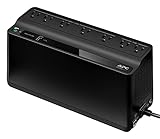
UPS Battery Backup
Keeps your modem, router, and fiber ONT running during short outages without interruption.

Portable Power Station
Provides extended runtime for networking equipment, phones, laptops, and other communication devices.

Large Portable Power Station
Ideal for longer blackouts when you need to power communication equipment for multiple days.

🚨 Imagine This…
A severe storm knocks out power across your county. Your neighbors immediately lose Wi-Fi, but your modem and router stay powered by a UPS. For several hours you continue receiving weather updates, messaging family members, and tracking restoration efforts while others have no internet access.
| Internet Type | May Work During a Blackout? | Biggest Weakness |
|---|---|---|
| Cable Internet | Often, if home equipment and provider infrastructure have backup power | Neighborhood nodes and amplifiers lose power |
| Fiber Internet | Often, if the ONT and network equipment stay powered | ONT requires electricity |
| DSL Internet | Sometimes | Home modem still needs power |
| Cellular Internet | Often during short outages | Tower congestion and battery limits |
| Satellite Internet | Usually if equipment has power | Requires powered dish and router |
☑ Internet Backup Checklist
- ☑ Test your modem and router on battery backup.
- ☑ Keep phones and laptops charged.
- ☑ Save important phone numbers offline.
- ☑ Download offline maps.
- ☑ Maintain multiple communication options.
- ☑ Keep emergency radios available.
- ☑ Know your internet provider’s outage procedures.
📚 Continue Reading
Build a complete communication and blackout preparedness plan.
Final Thoughts: Don’t Assume Internet Will Always Be There
Internet service has become so reliable that most people rarely think about what is required to keep it running. During normal conditions, websites load instantly, messages arrive in seconds, and information is available whenever it is needed. A blackout can quickly reveal how dependent modern life has become on a complex network of equipment, facilities, power systems, and communications infrastructure.
In a short outage, internet service may continue working if your modem, router, and other networking equipment have backup power. In a longer blackout, however, the situation becomes much less predictable. Neighborhood equipment, communication hubs, cellular infrastructure, batteries, generators, and fuel supplies all play a role in determining how long connectivity remains available.
The good news is that maintaining internet access during many power outages is easier than most people realize. A UPS, portable power station, charged devices, and a basic communication plan can significantly improve your ability to stay informed and connected. Even simple preparations can make the difference between losing internet immediately and remaining online long enough to receive important information.
At the same time, preparedness means recognizing that no communication system is guaranteed to work forever during a major emergency. Internet service is valuable, but it should never be the only method your family relies on for news, weather information, navigation, emergency alerts, or communication.
As discussed in Family Emergency Communication Plan, households that establish multiple ways to communicate are often better prepared when disruptions occur. Likewise, a broader preparedness strategy such as a 2-Week Blackout Survival Plan helps reduce dependence on any single system.