Propane for Long-Term Power Outages: 9 Essential Products and Fuel Storage Guide
Propane for long-term power outages is one of the most reliable emergency fuel options for households preparing for extended blackouts. Unlike gasoline, propane does not go stale when properly stored, making it an excellent choice for emergency cooking, heating, refrigeration, hot water, and backup electricity.
This post contains affiliate links. I may earn a small commission at no extra cost to you. Learn more.
With the right equipment, propane can provide heat, cook meals, refrigerate food, heat water, generate electricity, and illuminate outdoor work areas. Some propane appliances can perform these jobs without any household electricity at all.
Even more importantly, propane is one of the best long-term emergency fuels because the fuel itself does not go stale like gasoline. A properly maintained propane supply can remain usable for years without requiring fuel stabilizers or routine fuel rotation.
However, there is a major difference between owning a few propane appliances and having a complete emergency energy system. You must know which appliances need electricity, how much fuel they burn, how tanks perform in freezing weather, and what safety requirements apply.
This guide covers nine practical propane products, the advantages of long-term propane storage, realistic fuel calculations, and how to build a propane-based preparedness system without spending thousands of dollars on every appliance.
Why Propane Is One of the Best Long-Term Emergency Fuels
Fuel storage is one of the most overlooked problems in emergency preparedness.
Many households buy a gasoline generator and several fuel cans, then assume they are prepared for a prolonged blackout. But gasoline requires careful storage, has a limited usable storage life, and may become difficult to obtain when gas stations lose power or regional supplies are disrupted.
Propane solves several of those problems.
Propane Does Not Go Stale
Unlike gasoline, propane does not normally oxidize, separate, or degrade in a properly sealed storage container.
There is no need to add fuel stabilizer to propane. You do not have to empty a tank every year because the fuel has aged.
The propane itself can remain usable indefinitely under proper storage conditions. The cylinder, tank, valves, and other components are a different matter: they must remain in safe condition, and portable cylinders are subject to inspection and requalification requirements.
This distinction is important. Propane’s exceptionally long storage life is a major advantage, but it does not mean the entire fuel system is maintenance-free.
One Fuel Can Support Multiple Household Needs
Propane is unusually versatile because it can be used for several critical functions during a blackout:
- Cooking: Prepare meals and boil water with outdoor propane stoves.
- Heating: Operate certain approved supplemental heaters without grid electricity.
- Refrigeration: Keep essential food cold with suitable propane absorption refrigerators.
- Hot water: Operate battery-ignition portable water heaters or certain non-electric residential storage heaters.
- Backup electricity: Power a dual-fuel generator to operate appliances and charge batteries.
- Outdoor lighting: Illuminate cooking and work areas with a propane lantern.
That means a single fuel reserve can serve several different preparedness needs, provided each appliance has the correct tank connection, regulator, and fuel supply.
Some Propane Appliances Need No Household Electricity
This is one of propane’s greatest advantages during extended outages.
A conventional electric stove cannot cook without electricity. An electric water heater eventually loses its supply of hot water. A standard refrigerator stops cooling when its power supply fails.
Yet certain propane stoves, heaters, refrigerators, and water heaters can continue operating without a household electrical outlet.
Not every propane appliance has this capability, however. Many modern propane furnaces need electricity for their blowers. Some residential tankless water heaters require 120-volt power for controls and ignition. Propane clothes dryers still need electricity to turn their drums.
When buying propane equipment specifically for blackout preparedness, always verify its electrical requirements.
Propane Works With Small Cylinders or Large Residential Tanks
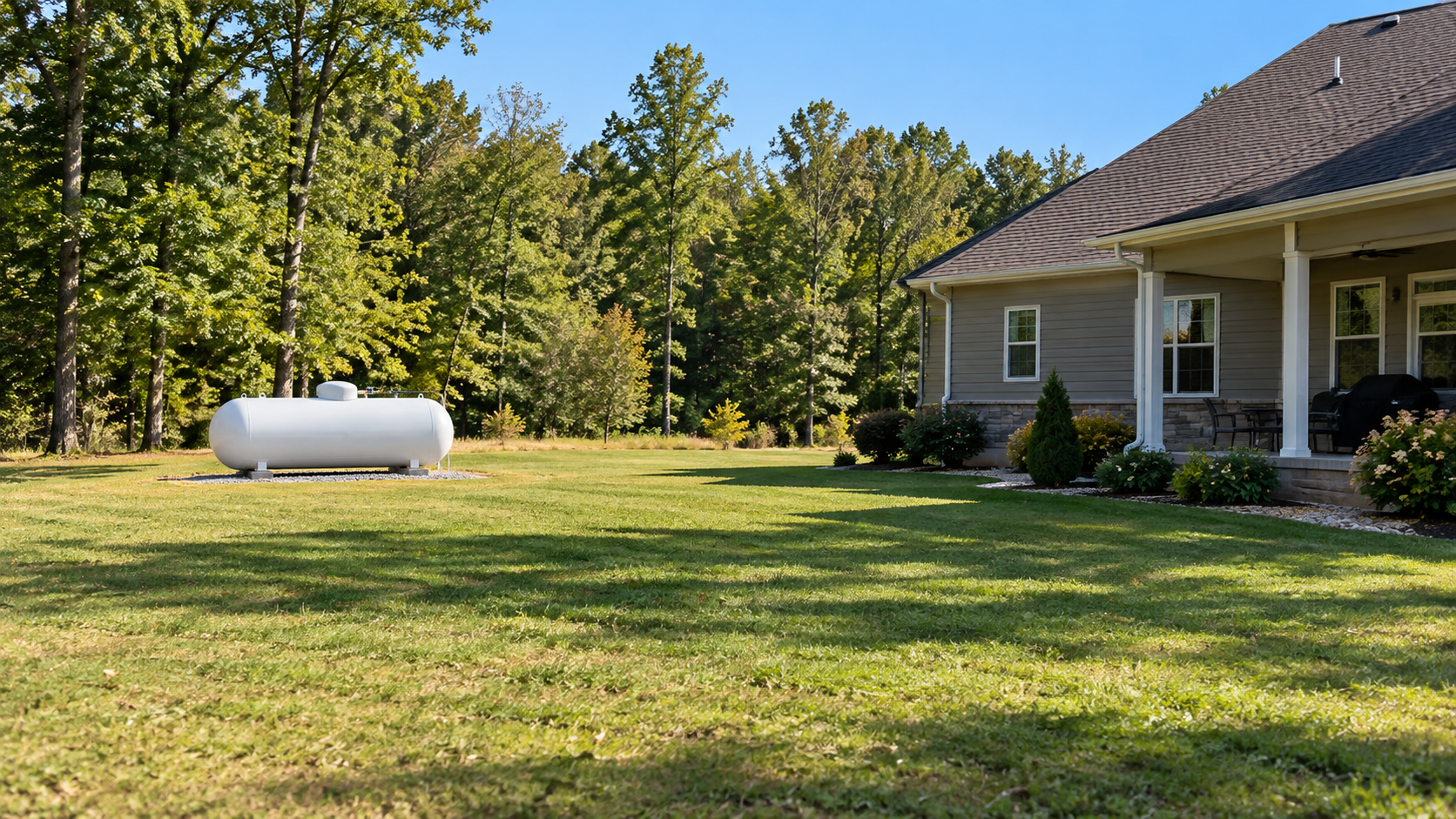
Someone preparing for a three-day outage might keep several 20-pound propane cylinders. A homeowner preparing for an extended winter emergency might choose a professionally installed 250- or 500-gallon tank.
Propane can accommodate both approaches, making it practical for everything from basic emergency cooking to a more extensive off-grid household system.
What Can Propane Power During a Long-Term Blackout?
The following comparison shows what propane can do and whether each application typically needs household electricity.
| Household Need | Propane Solution | Needs Grid Electricity? |
|---|---|---|
| Cooking | Outdoor propane stove | No |
| Food refrigeration | Propane absorption refrigerator | Some models operate without AC power |
| Supplemental heat | Approved propane space heater | Some models need none |
| Outdoor hot water | Battery-ignition tankless heater | No AC outlet; batteries required |
| Backup electricity | Propane generator | Produces electricity |
| Outdoor lighting | Propane lantern | No |
| Central heating | Conventional propane furnace | Usually yes, for blower and controls |
| Clothes drying | Propane clothes dryer | Usually yes, for motor and controls |
Let’s look at the equipment that can make propane especially valuable during a long-term outage.
1. Cook Without Electricity Using a Propane Stove
Cooking is one of the first problems households face when the power goes out.
Without electricity, electric ranges, microwaves, and many other kitchen appliances stop working. Even if you have emergency food stored, you still need a dependable way to prepare it.
A propane stove solves that problem without requiring a generator or battery bank.
Gas One Double-Burner Propane Stove
For a family emergency cooking setup, a two-burner stove is usually more useful than a tiny single-burner camping model.
The Gas One double-burner propane stove allows you to prepare two dishes at once. You might boil rice or pasta on one burner while heating soup, vegetables, or canned food on the other.


Why this stove makes sense for preparedness:
- Two burners provide more flexibility for family meals.
- It operates without household electricity.
- Adjustable heat allows different cooking methods.
- It can serve as both camping equipment and emergency cooking gear.
- It is a more affordable alternative to a complete outdoor kitchen.
A propane stove also makes it easier to boil water when necessary, although boiling does not remove chemical contaminants or make every unsafe water source drinkable.
What About a Full-Size Propane Kitchen Range?
A permanently installed propane range can be an excellent option for a home that already uses propane.
Some ranges allow manual lighting of certain surface burners during a power outage, but many modern ovens require electricity for ignition, safety controls, or operation.
Check the specific range’s manual before assuming it will work without electricity. Never attempt to bypass safety controls or use a kitchen range as a room heater.
2. Keep Food Cold With a Propane Refrigerator
Refrigeration becomes a major concern during prolonged power outages.
According to standard food-safety guidance, a closed refrigerator generally keeps food cold for only about four hours after losing power. A full freezer can often maintain safe temperatures for approximately 48 hours if unopened, or about 24 hours if half-full.
After that, preserving perishable food becomes much more difficult.
Propane absorption refrigerators offer an alternative to conventional electric compressor refrigerators.
SMAD 2.1-Cubic-Foot Three-Way Propane Refrigerator
The SMAD 2.1-cubic-foot refrigerator is a compact option for emergency food storage, camping, and appropriate off-grid installations.
Its three-way design supports multiple energy sources, including propane operation, depending on the selected operating mode.

This size will not replace a full household refrigerator. However, it may provide enough space for a limited supply of high-priority refrigerated foods.
For example, a compact propane refrigerator might be useful for keeping a small amount of meat, dairy products, eggs, or other perishables cold during an extended outage.
Before purchasing, verify the refrigerator’s ventilation requirements, propane consumption, installation restrictions, and whether its propane mode operates without household electricity.
Use a thermometer to confirm that the refrigerator maintains 40°F or below. A freezer compartment, if present, should maintain 0°F or below for long-term frozen-food storage.
Are Full-Size Propane Refrigerators Available?
Yes. Larger propane refrigerators and refrigerator-freezer combinations are available for cabins, off-grid homes, and other locations without reliable electricity.
Some provide substantially more food-storage capacity than the compact SMAD model. They are particularly appealing to households planning for long-term off-grid living.
The downside is cost. Larger propane refrigerators can cost well over $1,000, with some models costing considerably more.
For someone preparing on a budget, a smaller propane refrigerator may be a reasonable starting point. For a family planning to live without grid electricity for months, a larger properly installed model may be worth considering.
Also compare the fuel consumption and operating cost against a high-efficiency electric refrigerator powered by solar panels and batteries. The best long-term choice depends on the entire energy system.
3. Heat a Small Room With a Mr. Heater Portable Buddy
Heating is one of the most serious challenges during a winter power outage.
A home can become dangerously cold when a central heating system stops working, especially during prolonged freezing weather.
Even households with propane furnaces may lose heat because the furnace blower and electronic controls usually require electricity.
A portable propane heater can provide supplemental warmth in an emergency, subject to the manufacturer’s safety requirements and local restrictions.
Mr. Heater Portable Buddy: 4,000 to 9,000 BTU
The regular Mr. Heater Portable Buddy is a compact heater with adjustable heat output.
Its 4,000- to 9,000-BTU range makes it better suited to a small occupied area than an entire large home.
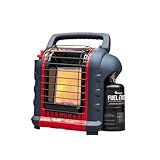
One of the Buddy heater’s main advantages is that it does not require a household electrical outlet to produce heat.
For emergency preparedness, concentrating heat in a smaller occupied area can be more practical than attempting to warm every room in a house.
However, a portable heater should not be treated as a substitute for a properly designed primary heating system.
Why We Chose the Regular Buddy Instead of the Big Buddy
The larger Big Buddy can provide up to approximately 18,000 BTU per hour, making it useful for greater heating demands.
But because this guide also includes a 30,000-BTU propane heater, the regular Buddy fills a more distinct role: portable supplemental heat for smaller spaces.
That gives households two different heating options rather than two products serving nearly the same purpose.
4. Heat a Larger Area With a 30,000-BTU Blue Flame Heater
For homeowners who need more heating capacity, a 30,000-BTU propane heater provides substantially greater output than a small portable model.
This is especially relevant during a prolonged winter blackout when a single small heater may not be adequate.
Mr. Heater 30,000-BTU Blue Flame Propane Heater
The Mr. Heater Blue Flame heater uses propane to heat surrounding air through convection.
Models designed for electricity-free operation can be useful during grid failures, provided they are properly installed and legally permitted in the intended location.

Compared with the 9,000-BTU Buddy, a 30,000-BTU heater has much greater heating capacity.
However, that higher output also comes with substantially greater propane consumption.
At its maximum input, a 30,000-BTU heater consumes approximately 0.33 gallons of propane per hour.
If it operated continuously at full output for 24 hours, it could use almost eight gallons of propane in one day.
Thermostat-controlled operation can reduce consumption when the heater cycles off, but the actual amount depends on the building’s heat loss, outdoor temperatures, and operating settings.
Understand the Difference Between Vent-Free and Direct-Vent Heating
The selected Blue Flame heater is a vent-free model.
Vent-free heaters release combustion products and water vapor into the occupied space rather than exhausting them outdoors through a dedicated vent.
They are restricted or prohibited in some jurisdictions and locations. Their use requires careful attention to combustion-air requirements, room sizing, installation instructions, and applicable codes.
For permanent long-term heating, a properly installed direct-vent propane heater is often worth considering.
Direct-vent heaters draw combustion air from outside and discharge combustion gases outdoors. Some models can operate without grid electricity, although electrical requirements vary.
5. Get Hot Water Without Household Electricity
Hot water is another important household need that becomes difficult during a prolonged blackout.
Without it, bathing, washing dishes, and maintaining personal hygiene can become uncomfortable and inconvenient.
Many modern propane tankless water heaters still require a 120-volt electrical outlet for ignition and controls.
But some portable propane water heaters use a low-voltage battery ignition system instead.
CAMPLUX BW264S 2.64 GPM Propane Tankless Water Heater
The CAMPLUX BW264S is a portable propane tankless water heater rated at 68,000 BTU per hour, with a maximum advertised flow rate of 2.64 gallons per minute.
Its specifications list a 3-volt electrical requirement, making it a useful option to investigate for off-grid hot water without a standard household outlet. Confirm the exact battery requirements in the product manual.

The CAMPLUX BW264S includes several useful features:
- 2.64 GPM rated flow: Suitable for outdoor showering under appropriate water-pressure and temperature conditions.
- 68,000 BTU/hour maximum input: Provides substantial heating capacity for a portable unit.
- 3-volt electrical requirement: Uses low-voltage power rather than a standard 120-volt household supply.
- Operating water pressure: Advertised range of 3.6 to 110 PSI.
- Flame-failure protection: Designed to stop fuel flow when flame failure is detected.
- Overtemperature protection: Includes a protective shutdown feature.
- Freeze-drain provision: Allows residual water to be drained before freezing conditions.
- Included accessories: Gas regulator, shower head, and installation components.
The manufacturer also advertises CSA certification. Buyers should confirm the exact certification and approved installation conditions for their specific model.
What the CAMPLUX Can Do During an Extended Blackout
With an appropriate propane supply, suitable water pressure, and its required ignition power, this type of portable heater can provide hot water for outdoor showering and washing.
That is a significant benefit when electricity is unavailable for an extended period.
However, the advertised 2.64 GPM is a maximum flow rating, not a guarantee that the water will reach your desired temperature at that flow in every season.
Cold incoming water requires more heating energy, which may mean reducing the flow rate to obtain sufficiently warm water.
Important Installation and Freeze-Protection Details
The CAMPLUX listing includes a warning against applying Teflon tape to the specified gas regulator-to-inlet connection. Follow the manufacturer’s exact fitting and sealing instructions rather than improvising.
Its freeze-protection provision is a drain plug. That does not mean the unit can safely remain full of water outdoors in freezing temperatures.
Drain and store it as instructed before freezing weather.
Can a Permanent Residential Propane Water Heater Work Without Electricity?
Yes. Certain conventional propane storage-tank water heaters use standing-pilot and thermopile systems that do not require household electricity.
For homeowners who want reliable indoor domestic hot water during blackouts, a properly installed and vented non-electric storage water heater may be a better permanent solution than a portable outdoor unit.
Always check the exact model because power-vented and electronically controlled propane water heaters may still require electricity.
6. Generate Backup Electricity With Propane
Even a household equipped with propane appliances will still need electricity for some tasks.
Refrigerators, communication equipment, well pumps, medical devices, battery chargers, and conventional heating-system blowers may all require electrical power.
A dual-fuel generator provides a way to turn stored propane into electricity.
Because propane does not go stale, it is particularly attractive for a generator that may sit unused between emergencies.
Champion 4,000-Watt Dual-Fuel Inverter Generator
The Champion 4,000-watt dual-fuel inverter generator can operate on either gasoline or propane.
That flexibility is useful when one fuel becomes unavailable or difficult to obtain.

For the selected Champion generator, the propane output ratings are approximately 4,000 starting watts and 2,700 continuous running watts.
It is important to understand the difference. The 4,000-watt figure refers to starting capability, not the amount of power the generator can supply continuously.
| Generator Specification | Propane Operation |
|---|---|
| Starting watts | 4,000 watts |
| Running watts | 2,700 watts |
| Advertised runtime | Up to 25 hours on a 20-lb tank at 25% load |
| Fuel options | Gasoline or propane |
| Starting method | Manual recoil |
Runtime changes with the electrical load. A generator powering several large appliances will use fuel faster than one charging batteries at a relatively low load.
Use a Generator to Recharge Batteries Instead of Running It Continuously
One effective strategy is to combine a propane generator with a portable power station.
- Operate the generator outdoors to recharge the power station.
- Run essential electrical equipment while the generator is operating, staying within its rated capacity.
- Shut down the generator when charging is complete.
- Use stored battery energy for lights, phones, radios, and other smaller loads.
- Recharge again when needed.
This can reduce generator operating hours, although actual fuel savings depend on the generator load, battery efficiency, and charging setup.
For more help building a complete backup system, see our Emergency Power & Energy Backup Guide.
7. Store More Fuel With a 100-Pound Propane Cylinder
Having propane appliances is useful, but they cannot operate without a dependable fuel reserve.
Many people start with standard 20-pound grill cylinders. These are convenient and widely available, but they may not last long when operating heaters or generators.
A 100-pound propane cylinder offers significantly more capacity.
100-Pound Propane Storage Cylinder
A full 100-pound cylinder holds approximately 23.6 gallons of propane, compared with about 4.7 gallons in a standard 20-pound cylinder.
That provides roughly five times the fuel capacity.
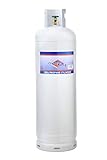
A larger cylinder can be useful for an emergency cooking system, generator, or other compatible appliance.
However, 100-pound cylinders are heavy and require proper handling, transportation, outdoor storage, and suitable equipment connections.
They are not appropriate for every portable appliance, and a larger cylinder does not eliminate the need to check regulator requirements and cold-weather vaporization capacity.
8. Use Proper Propane Hoses, Regulators, and Connections
One of the easiest mistakes in building a propane emergency system is assuming that any hose or adapter will work with any propane appliance.
That is not true.
Some outdoor burners use high-pressure regulators. Many residential appliances use regulated low-pressure gas. Portable heaters may require manufacturer-specific hose assemblies.
Using the wrong connection can create a serious fire or gas-leak hazard.
Propane Hose and Regulator Accessory

When selecting propane connections, verify the following:
- Correct fitting: The tank and appliance must use compatible connections.
- Correct pressure: The regulator must supply the pressure specified by the appliance manufacturer.
- Correct fuel flow: The regulator and hose must support the appliance’s required BTU input.
- Correct hose rating: Use only approved hoses designed for propane service.
- Manufacturer compatibility: Some appliances require specific regulators, filters, or connection assemblies.
Never remove or bypass a regulator to increase fuel flow. Do not force mismatched fittings or use unapproved adapters.
After making an approved connection, check for leaks according to the equipment instructions. Never use a flame to look for escaping propane.
Remember: The CAMPLUX water heater selected earlier already includes a regulator in its listed accessories. You should not automatically add another regulator to that appliance.
9. Light Outdoor Areas With a Propane Lantern
Lighting is another concern during a prolonged blackout.
Rechargeable LED lanterns are generally the safest and most efficient option for indoor lighting, but a propane lantern can provide strong illumination outdoors.
This can be useful around an outdoor cooking area, campsite, or work location.
Coleman 1000L Deluxe Propane Lantern
The Coleman 1000L Deluxe propane lantern offers adjustable outdoor illumination using propane fuel.

It can serve as an additional lighting option when batteries are limited or when you need bright light outdoors.
However, a propane lantern consumes fuel and produces heat, so it is not always the most efficient way to provide lighting during a lengthy emergency.
Use LED lighting indoors and reserve propane lanterns for appropriate outdoor situations.
Propane Storage for Emergencies: Why It Matters So Much
Propane has become one of the most practical long-term emergency fuel options for households preparing for extended power outages.
Its biggest advantage is not simply that it can run a generator or heater.
The real advantage is that you can store a substantial supply before an emergency and avoid many of the fuel-aging problems associated with gasoline.
When severe storms, hurricanes, ice events, or widespread power failures occur, fuel availability can change quickly.
Gas stations may be unable to pump fuel without electricity. Delivery trucks can be delayed. Roads may become impassable. Propane refill stations may also experience disruptions.
Having fuel already stored at home reduces your dependence on obtaining it during the emergency itself.
Why Propane Works So Well for Preparedness
Gasoline storage can be affected by oxidation, ethanol-related moisture problems, heat, and other factors.
Propane avoids many of those issues because it is stored as a pressurized fuel in a sealed container.
Its advantages include:
- Exceptionally long fuel storage life.
- No need for gasoline-style fuel stabilizers.
- Less fuel degradation during storage.
- Relatively clean combustion in properly functioning equipment.
- Compatibility with a wide range of emergency appliances.
- Storage options ranging from small cylinders to large residential tanks.
But propane is not completely maintenance-free. Cylinders, regulators, valves, hoses, and appliances still require inspections and appropriate servicing.
For long-term preparedness, the goal is a reliable fuel system—not simply a collection of tanks sitting unused.
Choosing the Right Propane Tank Sizes
Different propane containers serve different purposes.
Small cylinders are easy to transport and work well for camping and portable equipment. Larger cylinders provide more fuel for extended operation. Residential tanks are better suited to substantial household fuel demands.
| Tank Size | Approximate Propane Capacity | Common Emergency Use |
|---|---|---|
| 1-pound cylinder | 0.24 gallon | Small portable equipment |
| 20-pound cylinder | 4.7 gallons | Grills, portable stoves, compatible heaters and generators |
| 30-pound cylinder | 7.1 gallons | RV and portable fuel storage |
| 100-pound cylinder | 23.6 gallons | Larger emergency fuel reserve |
| 250-gallon residential tank | About 200 gallons at 80% fill | Residential heating and multiple appliances |
| 500-gallon residential tank | About 400 gallons at 80% fill | Extended household fuel reserve |
Smaller portable cylinders are commonly identified by how many pounds of propane they hold. Residential tanks are generally identified by their water capacity in gallons.
That is why a nominal 500-gallon residential tank does not normally contain 500 gallons of propane when filled. The standard maximum fill leaves expansion space.
Should You Store Several Small Tanks or One Large Tank?
There are advantages to both approaches.
Multiple smaller cylinders provide flexibility and redundancy. They may be easier to exchange, transport individually, or dedicate to separate compatible appliances.
A large residential tank offers much greater total capacity and may be more practical for substantial heating demand.
For some households, a combination works best: a professionally installed residential tank for major appliances and separate portable cylinders for approved outdoor equipment.
Do not connect multiple cylinders into a homemade manifold or modify residential propane piping. Such systems require proper engineering, approved components, and qualified installation.
Store Propane Outdoors and Inspect It Regularly
Portable propane cylinders should be stored upright in a well-ventilated outdoor location that complies with applicable safety rules.
Avoid storing them in:
- Basements.
- Garages.
- Living spaces.
- Enclosed sheds without appropriate approved storage provisions.
- Areas near ignition sources or building openings.
Inspect cylinders for damage, corrosion, and leaking valves. Check hoses and regulators for deterioration before use.
Portable DOT cylinders also have requalification requirements. An old cylinder may need inspection or replacement even though the propane inside has not degraded.
Cold Weather Can Affect Propane Performance
One of the most overlooked propane problems occurs during extreme cold.
Most propane appliances draw vapor from a tank. The liquid propane inside must absorb heat to vaporize and supply that gas.
As temperatures drop, a tank’s ability to deliver propane vapor can decrease.
Small cylinders can have difficulty supplying high-output equipment during severe winter conditions, even when fuel remains inside.
Large tanks generally have greater vaporization capacity, but they still must be sized correctly for the expected demand and lowest temperatures.
Never attempt to heat a propane cylinder with a flame or improvised heater.
For major winter heating loads, consult a qualified propane supplier about proper tank sizing and fuel delivery.
Our What Happens When the Grid Goes Down guide explains why extended outages become increasingly serious as household systems fail.
Propane Refills May Become Difficult During Emergencies
Propane stores exceptionally well, but it is still a finite fuel.
During a major emergency, refill stations and delivery services may experience:
- Power failures.
- Long lines and increased demand.
- Road closures.
- Transportation delays.
- Regional supply shortages.
- Interrupted residential deliveries.
That is why long-term preparedness should focus on having a realistic reserve before the emergency begins.
Do not assume that a propane supplier will be able to refill your tank during the first few days of a widespread disaster.
How Much Energy Does Propane Contain?
Understanding propane’s energy content makes it easier to estimate how long your fuel supply will last.
One gallon of propane contains approximately 91,500 BTU of energy.
One pound contains approximately 21,600 BTU.
BTU stands for British thermal unit, a measurement of energy commonly used to describe heating equipment and fuel consumption.
| Fuel Supply | Approximate Stored Energy |
|---|---|
| 1-pound cylinder | 21,600 BTU |
| 20-pound cylinder | 432,000 BTU |
| 100-pound cylinder | 2,160,000 BTU |
| 250-gallon tank at 80% fill | 18.3 million BTU |
| 500-gallon tank at 80% fill | 36.6 million BTU |
These figures describe the approximate energy contained in the fuel. They do not account for appliance efficiency, unusable residual fuel, or operating limitations.
How Long Will a Propane Tank Last?
Propane runtime depends on how quickly an appliance consumes fuel.
For a heater with a known BTU-per-hour input rating, a basic theoretical runtime estimate is:
Propane Runtime Formula
Total stored BTU ÷ appliance input BTU per hour = estimated operating hours
For example, a full 20-pound cylinder contains approximately 432,000 BTU.
If a heater burns 9,000 BTU per hour:
432,000 ÷ 9,000 = approximately 48 hours.
That is a theoretical continuous-burn estimate. Real-world results may be lower because of cylinder drawdown, temperature, fuel-delivery limitations, and operating conditions.
Estimated Propane Heater Runtime Chart
| Heater Input | 20-Pound Cylinder | 100-Pound Cylinder |
|---|---|---|
| 4,000 BTU/hr | 108 hours | 540 hours |
| 9,000 BTU/hr | 48 hours | 240 hours |
| 18,000 BTU/hr | 24 hours | 120 hours |
| 30,000 BTU/hr | 14.4 hours | 72 hours |
These are theoretical full-output figures, not guaranteed appliance runtimes. They assume a full cylinder and sufficient fuel-delivery capacity. Only use cylinders and connections approved for the specific appliance.
Calculate Your Actual Propane Runtime
Wondering how long a 20-pound, 100-pound, or larger propane tank will last? Instead of guessing, use our free Propane Runtime Calculator to estimate how long your fuel supply can power a heater or other propane appliance.
It’s a useful tool for planning fuel storage before a winter storm, extended blackout, or long-term off-grid emergency.
Actual fuel use may be lower when a thermostat-controlled heater cycles off, but winter weather can increase how frequently the heater runs.
How Much Propane Do You Need for a 30-, 60-, or 90-Day Outage?
This is where a long-term propane plan becomes more serious.
A household using propane only to cook meals may need relatively little fuel.
A household using propane for heating, hot water, cooking, and generator operation can consume several gallons every day.
For planning purposes, consider this hypothetical daily fuel budget:
| Propane Use | Example Daily Consumption |
|---|---|
| Outdoor cooking | 0.3 gallon |
| Supplemental heating | 2.0 gallons |
| Hot water | 0.3 gallon |
| Generator operation | 1.0 gallon |
| Total | 3.6 gallons per day |
These are illustrative consumption assumptions, not measured fuel-use figures for the recommended products.
At 3.6 gallons per day, the required propane supply would look like this:
| Outage Length | Estimated Fuel | With 20% Reserve |
|---|---|---|
| 7 days | 25.2 gallons | 30.2 gallons |
| 30 days | 108 gallons | 129.6 gallons |
| 60 days | 216 gallons | 259.2 gallons |
| 90 days | 324 gallons | 388.8 gallons |
Under this specific example, a nominal 500-gallon residential tank filled to approximately 400 gallons could theoretically support a 90-day outage with a modest reserve.
But that is not a guarantee. Severe winter heating demand could increase fuel consumption substantially.
Someone heating a poorly insulated home through freezing weather may need far more propane than someone using propane mainly for cooking and occasional generator operation.
Not sure how much propane your equipment will consume? Use our free Propane Runtime Calculator to estimate how long your fuel supply will last and help plan for a 30-, 60-, or 90-day power outage.
Can You Run an Entire House on Propane?
Yes, propane can serve as a major energy source for an entire household.
Many rural homes already use propane for central heating, water heating, cooking, and clothes drying.
Some properties also use propane-powered standby generators.
However, having propane appliances does not automatically make a house independent of the electrical grid.
Several common propane appliances still require electricity:
- Central propane furnaces: Usually need electricity for blowers, ignition, and controls.
- Modern tankless water heaters: Frequently require electricity for electronic components.
- Propane clothes dryers: Usually need electricity to operate the drum and controls.
- Some propane ovens: Depend on electronic ignition and safety systems.
- Whole-house standby generators: Produce electricity but consume substantial propane under load.
For long-term resilience, identify which appliances will operate independently and which require a generator or battery backup.
Propane vs. Gasoline, Diesel, Solar, and Firewood
Propane is an excellent long-term storage fuel, but it is not the only useful emergency energy source.
Different fuels and technologies solve different problems.
| Energy Source | Biggest Advantage | Biggest Limitation |
|---|---|---|
| Propane | Excellent long-term fuel stability and multiple appliance uses | Finite fuel supply and specialized storage requirements |
| Gasoline | Widely used in portable generators | Fuel aging and storage management |
| Diesel | Useful for larger generators and equipment | Contamination, maintenance, and cold-weather concerns |
| Solar and batteries | Can generate and store electricity without consuming fuel | Weather, battery capacity, and equipment limitations |
| Firewood | Potentially replenishable heating fuel | Requires suitable stove, chimney, dry fuel, and labor |
For many households, a layered approach is more resilient than relying on one source.
Propane can handle cooking, selected heating tasks, and generator operation. Solar panels and batteries can provide electricity without constantly burning fuel. A properly installed wood stove may offer additional heating redundancy.
The right combination depends on your home, climate, budget, and available storage space.
How to Build a Propane Emergency System on a Budget
You do not need to purchase every appliance at once.
In fact, building your system in stages is often the most practical approach.
Step 1: Start With Emergency Cooking
A dependable outdoor propane stove and an appropriate fuel supply can cover a basic need during nearly any power outage.
Make sure you have a safe outdoor cooking location, approved connections, and a way to store the equipment.
Step 2: Develop a Safe Emergency Heating Plan
Determine what will happen if your normal heating system loses electricity.
Depending on your home, a properly installed direct-vent heater, approved supplemental heater, or generator backup for the existing furnace may be appropriate.
Plan for carbon monoxide safety, ventilation, fuel consumption, and local installation requirements.
Step 3: Protect Refrigerated Food
Consider whether a propane refrigerator or generator-powered conventional refrigerator is more practical.
A compact propane refrigerator may be useful for limited emergency food storage. A larger off-grid refrigerator may make more sense for a permanent off-grid household.
Step 4: Add Backup Electricity
A dual-fuel generator provides flexibility for electrical equipment that propane cannot power directly.
Pairing a generator with a battery power station may reduce the number of hours the generator needs to operate.
Step 5: Expand Your Fuel Reserve
Once you know your approximate consumption, consider whether multiple approved portable cylinders or a professionally installed residential tank better fits your needs.
Plan around your expected outage duration and the possibility that propane deliveries may be unavailable.
Step 6: Test Everything Before the Power Goes Out
Inspect equipment, verify approved connections, learn the operating procedures, and test appliances under safe conditions.
Measure actual fuel use where practical.
There is little value in owning a propane emergency system if you discover during a winter blackout that the regulator does not fit, the generator will not start, or the heater requires electricity you do not have.
Common Mistakes When Preparing With Propane
- Assuming every propane appliance works without electricity. Many still require electronic controls or motors.
- Buying too little fuel. Heating and generators can consume several gallons per day.
- Using outdoor equipment indoors. Outdoor stoves, generators, lanterns, and portable water heaters can produce deadly carbon monoxide.
- Using the wrong regulator or hose. Incorrect pressure or incompatible fittings can create dangerous conditions.
- Ignoring cold-weather fuel delivery. Small cylinders may struggle to supply high-output equipment in freezing temperatures.
- Failing to inspect old cylinders. Propane may remain usable while its container becomes unsafe.
- Depending on emergency refills. Fuel deliveries and refill stations may be disrupted.
- Running a generator continuously without a plan. Unnecessary generator hours waste fuel.
- Ignoring water supply requirements. A propane tankless heater still needs suitable water pressure.
- Relying entirely on propane. A layered energy system provides more options if fuel runs low.
Frequently Asked Questions About Propane for Long-Term Power Outages
Does propane expire after 10 or 20 years?
Propane itself does not normally expire or go stale when stored in a properly maintained sealed container. The cylinder or tank must still remain safe, and portable cylinders may require requalification.
Is propane better than gasoline for long-term storage?
Propane has a major storage advantage because it does not degrade like gasoline. Gasoline may still be useful for certain equipment, but it generally requires more active storage management.
Can propane heat a house without electricity?
Some approved propane heaters can operate without household electricity. Most conventional propane central furnaces still require electricity for blowers and controls. Check the specific appliance and installation requirements.
Can a propane refrigerator run during a complete blackout?
Some propane absorption refrigerators can operate on propane without household AC power. Others may have electrical requirements. Always verify the exact model and maintain safe food temperatures.
Can a propane water heater work without an electrical outlet?
Yes. Some portable outdoor propane tankless water heaters use low-voltage battery ignition. Certain conventional residential propane storage water heaters also operate without household electricity. Many modern tankless models, however, require AC power.
How long does a 100-pound propane tank last?
It depends on the appliance’s fuel consumption. At a continuous input of 9,000 BTU per hour, a full 100-pound cylinder contains enough nominal energy for approximately 240 theoretical operating hours. Actual runtime may be lower.
Will a 500-gallon propane tank last three months?
Possibly. A nominal 500-gallon tank typically holds approximately 400 gallons at 80% fill. That could support three months of moderate use, but continuous winter heating or heavy generator operation could consume the supply much faster.
Can you store propane cylinders in a garage?
Portable propane cylinders should be stored outdoors in approved, well-ventilated locations rather than in garages, basements, or occupied buildings.
Is propane practical for a six-month or one-year blackout?
Propane can be an important part of a long-duration energy plan, especially with substantial storage and efficient appliances. However, stored propane is finite. For very long outages, combine propane with conservation, renewable electricity, and other appropriate backup systems.
Final Thoughts: Why Propane Belongs in a Long-Term Preparedness Plan
Propane offers a combination of advantages that few other emergency fuels can match.
It stores exceptionally well. It does not normally go stale. It can be used for cooking, heating, refrigeration, hot water, outdoor lighting, and electricity generation.
And unlike a system that depends entirely on gasoline deliveries or a limited battery reserve, a properly designed propane setup can provide multiple useful capabilities from one stored fuel source.
That does not mean propane is unlimited or completely maintenance-free. You still need safe tanks, approved connections, properly installed appliances, carbon monoxide protection, and a realistic fuel budget.
The best long-term propane plan is not necessarily the one with the most appliances. It is the one that meets your household’s essential needs while conserving fuel and operating safely.
Start with emergency cooking and a dependable heating plan. Add refrigeration, hot water, and backup electricity according to your priorities. Then size your fuel reserve based on actual consumption rather than guesswork.
The Bottom Line
For households preparing for prolonged power outages, propane is one of the strongest long-term fuel options available. Its exceptional storage stability and ability to power multiple essential systems make it especially valuable when electricity, gasoline, and normal supply chains become unreliable.
Further Reading: Emergency Power and Fuel Preparedness
Building a reliable propane backup system is just one part of preparing for an extended power outage. These additional guides will help you plan your emergency fuel supply, calculate power needs, and prepare your household for a prolonged grid failure.
- Propane Runtime Calculator – Estimate how long your propane supply will last based on your equipment’s fuel consumption.
- Emergency Power & Energy Backup Guide – Learn how to combine generators, batteries, and alternative power sources.
- Solar Generator vs. Gas Generator – Compare fuel-powered generators with battery-based backup systems.
- What Happens When the Grid Goes Down? – Understand how essential services and household systems can fail during a prolonged blackout.
- Emergency Preparedness Plan – Build a broader household preparedness strategy covering food, water, power, and other essentials.
External References
The following government resources provide additional information about propane fuel properties, safe cylinder handling, generator safety, and food preservation during extended power outages.
- U.S. Department of Energy – Alternative Fuels Data Center: Fuel Properties Comparison. Provides propane energy-content data used to estimate fuel consumption and runtime.
- U.S. Department of Transportation – PHMSA: Requalification Guidance for Propane Cylinders. Explains cylinder inspections, requalification requirements, and safety considerations.
- Centers for Disease Control and Prevention: Avoiding Carbon Monoxide Poisoning. Explains the dangers of operating generators and fuel-burning equipment inside or near buildings.
- Centers for Disease Control and Prevention: Keep Food Safe After a Disaster or Emergency. Covers refrigerator and freezer safety during power outages.