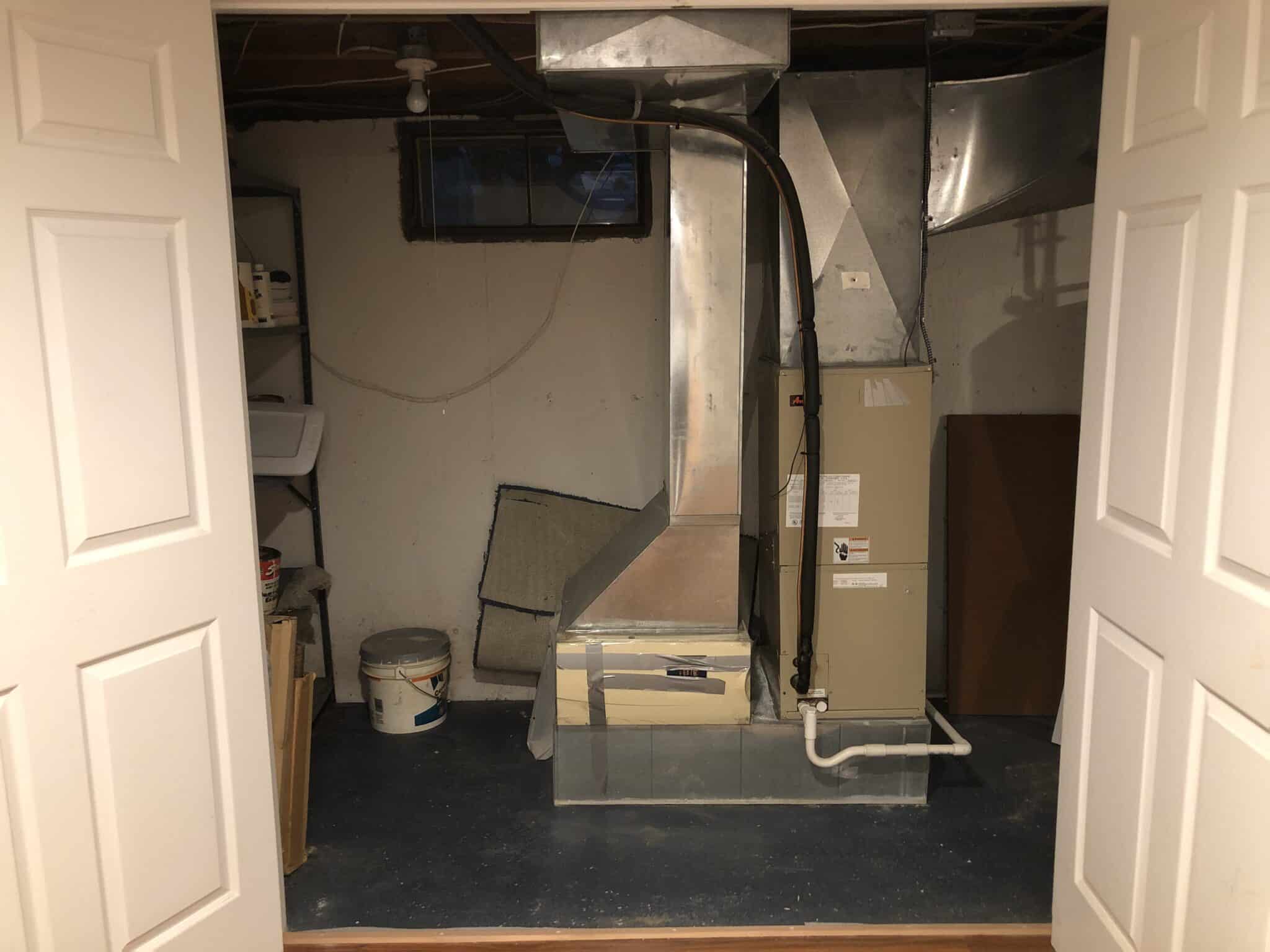
How to Run a Gas Furnace on a Generator During a Power Outage
Can you run a gas furnace on a generator during a power outage? Yes, and for many homeowners, it is one of the most practical ways to keep a house warm when the electrical grid goes down. Although a natural gas furnace burns gas to produce heat, most modern furnaces still require electricity to operate the blower motor, electronic ignition, control board, and safety systems. With a properly sized generator and an approved electrical connection, many gas furnaces can continue heating a home during an extended blackout.
This post contains affiliate links. I may earn a small commission at no extra cost to you. Learn more.
The challenge is knowing how much power your furnace actually needs, choosing a generator that can handle its starting requirements, and connecting everything without creating an electrical or carbon monoxide hazard.
A small inverter generator may be sufficient for some residential gas furnaces, while larger systems with powerful blower motors may require considerably more capacity. The right answer depends on the furnace, not simply the square footage of the house.
There is also an important difference between powering a furnace and powering an entire home. A generator that can operate a gas furnace may not have enough capacity to run a refrigerator, freezer, well pump, microwave, and other appliances simultaneously.
This guide explains how to determine your furnace’s electrical requirements, choose an appropriate generator, understand safe connection methods, estimate fuel consumption, and prepare a dependable backup heating system before the next winter storm.
Why Does a Gas Furnace Need Electricity?
A natural gas furnace uses combustion to produce heat, but that heat must be distributed throughout the house. Modern heating systems accomplish this using electrical components that work together whenever the thermostat calls for heating.
When the thermostat detects that the indoor temperature has fallen below its set point, the furnace begins a controlled startup sequence. Depending on the design, the system may activate an inducer motor, check pressure switches, energize an ignition device, open a gas valve, and then start the main circulating blower.
Each step depends on electricity.
If the electrical supply disappears, the furnace generally cannot complete its normal operating sequence, even when natural gas continues flowing through the utility pipeline.
Electrical Components Inside a Gas Furnace
Several components may contribute to a furnace’s electrical consumption:
- Blower motor: Circulates heated air through the ductwork and is often the largest electrical load.
- Draft inducer motor: Moves combustion gases through the furnace’s venting system before and during operation.
- Electronic ignition: Ignites the gas without requiring a continuously burning pilot flame.
- Control board: Coordinates the heating sequence, monitors safety devices, and controls electrical components.
- Thermostat and accessories: Communicate heating demands and may operate additional controls or accessories.
- Condensate pump: May be required on certain installations to remove water produced by a high-efficiency furnace.
The blower motor usually deserves the most attention when selecting a generator because its power consumption and starting characteristics can determine whether the generator is large enough.
Older furnaces with conventional permanent-split-capacitor blower motors may behave differently from newer furnaces equipped with electronically commutated motors, commonly called ECM motors.
However, an ECM motor does not automatically guarantee compatibility with a small generator. Actual electrical requirements depend on the complete furnace system.
How Many Watts Does a Gas Furnace Need to Run?
There is no single wattage that applies to every residential gas furnace.
Some modern, efficient systems may consume only a few hundred watts during steady operation. Others can draw substantially more, especially when equipped with larger blower motors, additional electrical accessories, or multiple heating zones.
The electrical requirements also change throughout the heating cycle. A furnace may draw one amount of power while its inducer motor is running and another amount when the circulating blower starts.
For that reason, generator sizing should account for both the furnace’s normal running load and any short-duration starting demand.
Typical Gas Furnace Electrical Requirements
The following table provides broad planning examples. These are illustrative ranges, not guaranteed specifications for any particular furnace.
| Furnace Configuration | Illustrative Running Power | Generator Consideration |
|---|---|---|
| Smaller, efficient gas furnace | Approximately 300–600 watts | Starting demand and power compatibility must still be checked. |
| Typical residential gas furnace | Approximately 500–1,000 watts | A small inverter generator may be suitable if its starting capacity is sufficient. |
| Larger furnace or higher electrical load | Approximately 1,000–1,500 watts or more | More generator capacity may be necessary. |
| Furnace with additional pumps or accessories | Varies by installation | Include all equipment required for heating. |
These ranges are useful for understanding the general scale of the electrical load. They should not replace the furnace manufacturer’s electrical specifications or an assessment by a qualified HVAC technician or electrician.
Running Watts vs. Starting Watts
Running watts describe the electrical power required while equipment operates normally.
Starting watts refer to the additional power that some electrical motors need briefly when they first begin turning.
A blower motor may require more power during startup than it uses once it reaches operating speed.
For example, consider a hypothetical furnace that uses 700 watts while running but requires a short-duration starting demand of 1,600 watts.
A generator rated for 1,000 continuous watts would not be an appropriate choice merely because the furnace normally consumes 700 watts. Its ability to handle the starting load would also have to be established.
The startup requirements of modern variable-speed motors can differ from those of traditional motors. Some systems use electronic controls that manage motor acceleration, but they can also be sensitive to electrical supply characteristics.
How to Find Your Furnace’s Actual Wattage
Start by locating the furnace’s model number and electrical rating information.
The manufacturer’s installation manual or technical documentation may list the required voltage, maximum current, minimum circuit ampacity, or other electrical information.
If the documentation provides amperage rather than watts, a basic calculation can help estimate apparent electrical load:
Volts × Amps = Volt-Amps (VA)
For example, a 120-volt circuit carrying 6 amps represents 720 volt-amps.
However, volt-amps and actual watts are not always identical because motor power factor affects the relationship between them. The nameplate’s maximum electrical rating may also differ from normal operating consumption.
A qualified professional can help determine the actual running load, starting demand, and suitable generator capacity.
Can You Measure Furnace Power Consumption With a Watt Meter?
An electricity usage monitor can be useful when measuring compatible appliances that connect through an ordinary electrical plug.
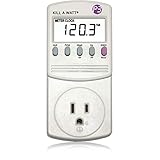
For example, the P3 International Kill A Watt monitor allows users to observe electrical consumption from compatible plug-in equipment.
This can be helpful for understanding the difference between rated electrical capacity and actual operating consumption.
However, there are important limitations.
Most residential gas furnaces are hardwired into a dedicated electrical circuit. A standard plug-in watt meter cannot be inserted into that wiring without modifying the installation.
Additionally, a basic household watt meter may not capture the full short-duration startup surge that matters when sizing a generator.
For a hardwired furnace, have a qualified electrician or HVAC technician measure its electrical load using appropriate instruments.
P3 International Kill A Watt Electricity Usage Monitor
The P3 Kill A Watt is a useful preparedness tool for checking the consumption of compatible plug-in electrical equipment.
It can help homeowners estimate energy usage for appliances that might share a generator or portable power station, such as lamps, small fans, or certain electronics.
It should not be presented as a substitute for professional testing of a hardwired furnace or as a guaranteed method of measuring motor startup demand.
What Size Generator Do You Need for a Gas Furnace?
The best generator is one that can operate the furnace reliably while leaving an appropriate margin for electrical variations and any additional equipment you intend to power.
For many households, the choice comes down to a compact inverter generator, a larger portable generator, or a whole-house standby system.
A small inverter generator is often attractive because the furnace’s electrical demand is usually much lower than that of electric resistance heating.
An electric furnace may require several thousand watts or much more to produce heat. A natural gas furnace primarily needs electricity to operate its controls and air-moving equipment.
That difference can make gas heating considerably easier to support with a portable generator.
Generator Size Comparison
| Generator Class | Potential Application | Important Limitation |
|---|---|---|
| 1,000–1,500 running watts | Certain low-demand heating systems | May not handle blower startup or larger furnaces. |
| 1,800–2,500 running watts | Many appropriately matched residential gas furnaces | Other appliances reduce available capacity. |
| 3,000–5,000 running watts | Furnace plus selected essential loads | Requires load management and compatible electrical connections. |
| Larger portable or standby generator | Multiple circuits or extensive household backup | Higher cost, installation requirements, and fuel consumption. |
Generator size categories are not a promise that every furnace will work with a generator in that range.
The actual equipment ratings, motor startup characteristics, circuit requirements, and electrical compatibility determine whether the combination is suitable.
Honda EU2200i Inverter Generator
The Honda EU2200i is a practical example of a compact inverter generator that may be suitable for certain residential gas furnaces.
Honda rates the standard EU2200i for 1,800 watts of continuous output and 2,200 watts of maximum output at 120 volts.
That makes it worth considering for homeowners whose furnace electrical requirements fall within those limits, including any necessary starting capacity.
Its relatively compact size also makes it easier to store and transport than many larger portable generators.
However, it should not be assumed that the EU2200i will operate every furnace. A larger blower motor, incompatible controls, or additional heating equipment may require a different generator.

Why an Inverter Generator May Be Better for a Gas Furnace
Inverter generators are often recommended for appliances containing electronic controls because they are designed to produce regulated AC electrical output.
Modern gas furnaces commonly contain control boards, sensors, and electronically controlled motors.
These components may have specific requirements for voltage, frequency, waveform quality, grounding, and neutral configuration.
An inverter generator can be a good choice, but the word “inverter” alone does not guarantee compatibility.
Some furnaces use flame-sensing systems that depend on proper electrical grounding and polarity. Certain furnace controls may fail to recognize a flame or may refuse to operate when supplied by an incompatible backup power source.
These problems can occur even when the generator provides enough watts.
Generator Power Quality and Furnace Electronics
A furnace designed for a nominal 120-volt, 60-hertz electrical supply needs a compatible source of electricity.
Poor voltage regulation, unstable frequency, or inappropriate wiring arrangements can interfere with furnace operation.
An electrician should also evaluate the generator’s neutral and grounding configuration, especially when connecting it through a transfer switch.
Do not assume that adding an improvised grounding connection, neutral-ground bonding plug, or modified extension cord will solve a furnace compatibility problem safely.
Those modifications can create shock hazards or interfere with protective devices.
How to Connect a Generator to a Gas Furnace Safely
The safest approach is to have an approved generator connection installed before an emergency occurs.
Most residential gas furnaces are hardwired into the home’s electrical system. That means they cannot simply be unplugged and connected to a portable generator.
A properly designed transfer arrangement allows a selected furnace circuit to receive power from a generator while preventing an unsafe connection between the generator and utility electrical lines.
The correct installation depends on the furnace, the existing electrical panel, the generator, and the type of transfer equipment being used.
Option 1: Dedicated Furnace Transfer Switch
A dedicated furnace transfer switch is designed to provide an alternate power source for a selected heating circuit.
When properly installed, it allows the furnace to operate from an approved generator connection while isolating the selected circuit from the utility supply.
This is often a practical approach for homeowners who primarily want to keep their gas furnace operating rather than power numerous household circuits.
The transfer switch must be rated for the circuit and compatible with the generator connection.
Its installation also must account for the furnace’s electrical requirements and the applicable wiring arrangement.
Reliance Controls TF201W Easy/Tran Furnace Transfer Switch
The Reliance Controls TF201W Easy/Tran is a manual, single-circuit transfer switch designed to provide backup generator power to equipment such as a residential forced-air gas furnace during an electrical outage.
Rated for 20 amps at 125 volts, the TF201W features a NEMA 5-20 generator inlet and supports a maximum electrical load of 2,500 watts. It provides a dedicated connection for a compatible portable generator while isolating the furnace circuit from utility power.
The TF201W may be suitable for use with certain 120-volt inverter generators, including the Honda EU2200i, provided the furnace’s electrical requirements, generator output, and connection equipment are compatible.
Keep in mind that the transfer switch’s 2,500-watt rating does not increase the generator’s available power. The Honda EU2200i, for example, provides 1,800 running watts and 2,200 maximum watts.
Before purchasing or installing the transfer switch, have a qualified electrician verify the furnace circuit, generator connection, extension cord requirements, and grounding configuration. Installation must follow the manufacturer’s instructions and applicable electrical requirements.

Option 2: Manual Transfer Switch for Multiple Circuits
Homeowners who want to power additional essential circuits may prefer a manual transfer switch designed to handle several selected household loads.
For example, a properly designed installation might allow a generator to supply the furnace, refrigerator, selected lighting circuits, and certain receptacles.
However, these loads cannot necessarily operate simultaneously.
The generator must have enough capacity for the combined running demand and any overlapping starting loads.
A multi-circuit installation is generally more flexible than a furnace-only arrangement, but it can also be more expensive and complex.
Option 3: Approved Generator Interlock Arrangement
Certain electrical panels can use a listed, compatible generator interlock system with an appropriately installed generator inlet and circuit breaker.
An interlock is intended to prevent the utility main breaker and generator backfeed breaker from being energized together.
This is different from plugging a generator into an ordinary household receptacle.
Not every panel supports an approved interlock arrangement, and the installation must comply with the equipment listing and applicable electrical requirements.
A qualified electrician should determine whether this option is appropriate.
What About Plug-In Gas Furnaces?
A small number of furnace installations may use an approved cord-and-plug connection rather than being permanently hardwired.
If the furnace was specifically designed and installed for this arrangement, its manufacturer may permit connection through suitable backup power equipment.
However, homeowners should not convert a hardwired furnace into a plug-in appliance simply to make generator use easier.
The furnace manufacturer’s instructions and the electrical installation requirements must control the decision.
Step-by-Step: Preparing a Gas Furnace for Generator Backup
The following process describes how to plan and use a professionally installed furnace backup system. It is not a substitute for electrical installation instructions.
Step 1: Identify Your Furnace
Locate the furnace manufacturer, model number, and electrical rating information.
Record the information in your emergency preparedness documents.
If the furnace is older or its electrical specifications are unclear, ask an HVAC professional to identify its operating requirements.
Step 2: Determine the Electrical Load
Establish the furnace’s normal operating demand and starting requirements.
Include any required condensate pump, external circulation pump, or other heating accessory.
Do not size the generator solely from the furnace’s heating output in BTUs.
A furnace rated for 80,000 BTUs of heating input does not consume 80,000 BTUs of electricity. The BTU rating describes its fuel-related heating capacity, not its electrical demand.
Step 3: Select a Compatible Generator
Choose a generator with sufficient continuous output and motor-starting capacity.
Verify the required voltage, frequency, outlet arrangement, and other compatibility requirements.
If additional appliances will share the generator, include their electrical loads in the calculation.
Step 4: Have the Transfer Equipment Installed
Arrange for a qualified electrician to install the appropriate transfer switch, inlet, or other approved connection.
The electrician should confirm the furnace circuit rating and ensure the installation prevents unsafe interaction with utility power.
The system should also be labeled clearly so household members understand how it is intended to operate.
Step 5: Test the System Before an Emergency
A backup system should be tested under controlled conditions before winter.
Follow the generator manufacturer’s operating instructions and the electrician’s instructions for the transfer equipment.
Confirm that the furnace starts normally, produces heat, operates its blower, and completes a normal heating cycle.
If the furnace displays an error code or repeatedly shuts down, stop the test and have the problem diagnosed.
Step 6: Practice Safe Generator Operation
During an outage, place the portable generator outdoors in a safe location, away from doors, windows, vents, and other building openings.
Use only the approved connection equipment installed for the system.
Follow the documented transfer procedure rather than improvising electrical connections.
Monitor generator fuel, operating condition, and the indoor temperature.
Step 7: Return to Utility Power Correctly
When utility power returns, follow the transfer equipment’s instructions for switching back to the normal electrical supply.
Do not improvise the switching sequence or connect incompatible power sources together.
After normal power is restored, confirm that the furnace resumes ordinary operation.
Generator Extension Cord Size and Safety
A generator extension cord is not just a convenience item. Its electrical rating, conductor size, length, connector configuration, and environmental suitability all matter.
An undersized cord can experience excessive voltage drop or overheating when carrying substantial electrical loads.
Long cords may also contribute to voltage drop, especially when supplying equipment with motor-starting demands.
For generator applications, homeowners should select a cord approved for the intended load and environment.
The appropriate cord depends on the generator outlet, transfer equipment inlet, circuit amperage, and installation design.
Understanding Extension Cord Wire Gauge
Extension cords are commonly identified by American Wire Gauge, or AWG.
With otherwise comparable copper conductors, a lower AWG number indicates a thicker conductor.
For example, a 12-gauge cord has thicker conductors than a 14-gauge cord.
However, gauge alone does not determine whether a cord is suitable.
The cord’s overall rating, length, insulation, connector type, and equipment instructions are equally important.
| Cord Feature | Why It Matters | What to Check |
|---|---|---|
| Wire gauge | Affects conductor resistance and voltage drop. | Use the gauge required for the circuit and cord length. |
| Cord length | Longer cords can increase voltage drop. | Use an appropriate length without compromising generator placement. |
| Amperage rating | Limits the current the cord is designed to carry. | Match the cord to the intended load and equipment. |
| Plug configuration | Determines physical and electrical compatibility. | Use matching, approved connectors without homemade adapters. |
| Outdoor rating | Indicates suitability for the intended environment. | Check the manufacturer’s environmental-use instructions. |
Southwire Heavy-Duty Extension Cord
A heavy-duty Southwire extension cord is worth considering for compatible generator-powered equipment when its published ratings match the application.
Before selecting the exact cord, verify its conductor gauge, length, amperage rating, and connector configuration.
A standard household-style extension cord may not be the correct cable for every transfer switch or generator inlet.
Do not use adapters to defeat grounding features or force incompatible connectors together.
A standard household extension cord is not a substitute for a properly rated generator-to-transfer-switch cable. The correct cable must match the generator outlet, transfer equipment inlet, and electrical requirements of the installation.

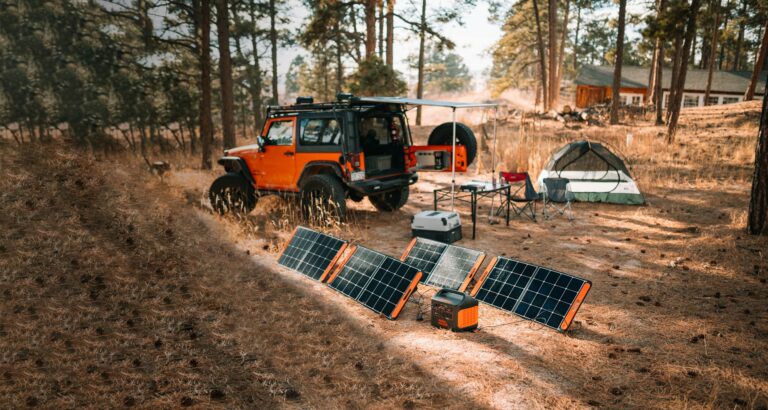
Can a Portable Power Station Run a Gas Furnace?
A portable power station can sometimes operate a gas furnace without the noise, exhaust, and fuel storage requirements associated with a gasoline generator.
This makes battery backup attractive for homeowners who want temporary heating support during a shorter outage.
However, battery capacity and inverter output are separate considerations.
A power station must deliver enough instantaneous power to operate the furnace, and it must store enough energy to support the heating system for the desired period.
It must also be electrically compatible with the furnace.
Some furnace controls may not operate properly with certain portable power stations because of neutral-ground configuration, flame-sensing requirements, or other electrical characteristics.
Understanding Watt-Hours
Battery capacity is commonly expressed in watt-hours, abbreviated Wh.
A power station with a nominal capacity of 1,000Wh theoretically stores enough energy to supply a 500-watt load for two hours.
In practice, usable runtime is lower because of inverter losses, battery management, temperature, and other operating conditions.
For example:
Estimated runtime = usable battery energy ÷ average electrical load
Suppose a power station has 1,000Wh of nominal capacity and approximately 850Wh is available for AC loads after losses.
If the furnace averages 425 watts during the period being evaluated:
850Wh ÷ 425W = approximately 2 hours.
That example assumes the average load remains at 425 watts. Actual furnace operation is more complicated because heating cycles change with indoor temperature, outdoor conditions, thermostat settings, and furnace design.
EcoFlow Portable Power Station
An EcoFlow portable power station can be an alternative to a fuel-powered generator for appropriately matched heating equipment.
The exact model’s AC output rating, battery capacity, surge capability, and electrical compatibility must be verified before using it with a furnace.
A power station should not be connected to hardwired household equipment through an improvised adapter or unauthorized wiring modification.
For a professionally configured installation, a battery system may provide quiet backup power without operating a combustion engine.

Generator vs. Portable Power Station for Furnace Backup
Both approaches can be useful, but they solve different problems.
A gasoline generator can continue operating as long as suitable fuel is available, maintenance requirements are met, and the equipment remains functional.
A battery power station operates without engine exhaust but has a finite stored-energy capacity.
For a prolonged winter outage, that difference becomes important.
| Feature | Portable Generator | Portable Power Station |
|---|---|---|
| Energy source | Gasoline, propane, or another supported fuel | Stored battery energy |
| Exhaust | Produces hazardous exhaust and must operate outdoors | No engine exhaust during battery operation |
| Noise | Engine noise | Usually much quieter |
| Extended operation | Depends on available fuel and maintenance | Depends on battery capacity and recharging |
| Electrical compatibility | Must be verified | Must be verified |
For a household preparing for a multi-day blackout, a generator may offer greater flexibility if sufficient fuel can be stored and used safely.
For shorter outages or installations with a suitable battery backup system, a power station may be more convenient.
How Long Will a Generator Run a Gas Furnace?
Generator runtime depends on the generator’s fuel capacity, engine efficiency, electrical load, and operating conditions.
A gas furnace usually does not run continuously throughout an entire day.
Instead, the thermostat cycles the heating system on and off to maintain the desired indoor temperature.
During mild weather, the furnace may operate for relatively short periods.
During a severe winter storm, the heating system may run much longer because the building loses heat more rapidly.
Honda EU2200i Runtime Example
Honda publishes approximate runtime figures for the EU2200i of 8.1 hours at one-quarter rated load and 3.2 hours at rated load.
Those figures are based on specific operating conditions and should not be interpreted as guaranteed runtime for a particular furnace.
A furnace’s cycling pattern, other connected equipment, outdoor temperature, and generator operating settings can change fuel consumption.
For long-term preparedness, it is better to estimate fuel requirements conservatively and test the actual equipment before relying on published examples.
Estimating Fuel for a Three-Day Power Outage
Consider a hypothetical generator that consumes an average of 0.15 gallons of gasoline per hour under the operating conditions being evaluated.
If it operates for 12 hours per day:
0.15 gallons × 12 hours = 1.8 gallons per day.
Over three days:
1.8 gallons × 3 days = 5.4 gallons.
This example is not a Honda-specific fuel consumption estimate. It simply illustrates the calculation.
Actual fuel planning should use the generator manufacturer’s consumption data and realistic operating assumptions.
Fuel storage also needs to account for safe container selection, storage location, fuel age, local restrictions, and the possibility that nearby gas stations will be closed during a widespread outage.
Can You Run a Gas Furnace With a Dual-Fuel Generator?
A dual-fuel generator can operate on two supported fuels, commonly gasoline and propane.
This may provide additional flexibility during an extended winter emergency.
For example, a homeowner might have gasoline stored for short-term use and propane available for longer-duration backup.
However, dual-fuel generators often produce different electrical output ratings depending on the fuel being used.
A generator that provides adequate furnace starting capacity on gasoline may have a lower output rating on propane.
Therefore, the generator must be evaluated using the published specifications for the actual fuel.
Propane Performance in Extreme Cold
Propane is stored as a pressurized liquid and must vaporize before it can fuel most portable generators.
At very low temperatures, vaporization capacity decreases.
Tank size, fuel level, withdrawal rate, and ambient temperature all affect how much vapor the tank can supply.
A small propane cylinder may struggle to support a high-demand generator during extreme cold even when liquid propane remains inside.
Larger properly installed tanks may provide greater vaporization capacity, but the equipment must still be matched to the expected operating conditions.
For a detailed explanation, see Propane for Long-Term Power Outages: Essential Products and Fuel Storage Guide.
Can You Run a Furnace and Refrigerator on the Same Generator?
Possibly, but the generator must be sized for the combined electrical loads.
A refrigerator compressor may require additional starting power, just as a furnace blower motor can.
If both appliances attempt to start simultaneously, the combined demand may exceed the generator’s available capacity.
That can cause the generator to overload, trip its protective system, or fail to supply adequate voltage.
Example of Combined Generator Loads
Consider the following hypothetical operating loads:
- Gas furnace: 650 running watts.
- Refrigerator: 180 running watts.
- LED lighting: 50 watts.
- Phone charging and small electronics: 40 watts.
The combined running load would be:
650 + 180 + 50 + 40 = 920 watts.
However, this does not account for the starting demands of the furnace blower and refrigerator compressor.
A generator with 1,000 running watts would leave very little operating margin and might not handle simultaneous motor starts.
A larger generator may be more appropriate, depending on the actual equipment.
Why Load Management Matters
Load management means controlling which appliances operate at the same time.
For example, a homeowner may prioritize furnace operation and avoid using other high-demand equipment while the blower starts.
A refrigerator may be powered during selected periods rather than continuously, provided food temperatures are monitored and safe storage conditions are maintained.
The objective is to keep essential systems operating without exceeding the generator’s electrical limits.
For additional planning, use the Generator Size Calculator to estimate generator requirements for selected household appliances.
Generator Safety During a Winter Power Outage
Generator safety becomes especially important during severe winter weather because homeowners may be tempted to move equipment closer to the house to protect it from snow, wind, or freezing temperatures.
That decision can be deadly.
Portable generators produce carbon monoxide, an invisible and odorless gas that can accumulate rapidly in enclosed or partially enclosed spaces.
Carbon monoxide can enter a home through doors, windows, vents, and other openings.
Keep Generators Outside and Away From the House
The U.S. Consumer Product Safety Commission recommends operating portable generators outdoors only, at least 20 feet from the home, with the exhaust directed away from nearby buildings.
Never operate a portable generator in:
- An attached or detached garage.
- A basement or crawlspace.
- A shed or enclosed outbuilding.
- An enclosed porch or sunroom.
- A home, hallway, or utility room.
- Any other enclosed or partially enclosed space where exhaust can accumulate.
Opening a garage door or window does not make indoor generator operation safe.
A generator should also be positioned so exhaust cannot enter neighboring buildings.
Protect the Generator From Winter Weather Safely
Snow, freezing rain, and wind can complicate generator operation.
However, protecting a generator from precipitation must not involve placing it in a dangerous enclosed location.
Use only weather-protection arrangements approved by the generator manufacturer that maintain the required ventilation, cooling, and exhaust clearances.
Do not place a tarp directly over a running generator.
Do not build a makeshift enclosure that traps exhaust or interferes with engine cooling.
Before operating a generator in snow or freezing rain, make sure its air intake, exhaust outlet, and cooling openings remain unobstructed. Follow the manufacturer’s instructions for operating in cold or wet conditions, and never sacrifice safe outdoor placement to protect the equipment from weather.
Never Refuel a Running Generator
Gasoline can ignite if spilled onto hot engine components.
Shut the generator down and allow it to cool before refueling, following the manufacturer’s instructions.
Store fuel in approved containers in suitable locations away from ignition sources.
Do not store gasoline inside occupied living spaces.
Use Carbon Monoxide Alarms
Working carbon monoxide alarms are essential in homes with fuel-burning appliances and portable generators.
Install alarms according to their manufacturer’s instructions and applicable safety guidance.
Battery-powered alarms or units with battery backup can continue providing protection during electrical outages.
A carbon monoxide alarm does not make unsafe generator placement acceptable. It is an additional protective measure, not a substitute for operating the generator outdoors.
Common Reasons a Gas Furnace Will Not Run on a Generator
Sometimes a furnace refuses to operate even though the generator appears to have enough wattage.
This can be frustrating during a winter storm, especially when the generator successfully powers lights and other household appliances.
The problem may involve electrical compatibility rather than generator capacity alone.
1. Generator Does Not Have Enough Starting Capacity
The generator may be able to supply the furnace’s running load but fail when the blower motor starts.
This can trigger overload protection or cause the furnace to shut down.
The solution is to verify the actual motor-starting requirements and generator capabilities.
2. Neutral-Ground Compatibility Problem
Some furnace flame-sensing systems depend on the electrical supply being configured correctly.
An incompatible generator or transfer arrangement may prevent the furnace from completing its ignition sequence.
Do not modify grounding or neutral connections yourself.
A qualified electrician should evaluate the installation.
3. Incorrect Voltage or Frequency
A furnace designed for a particular electrical supply may not operate properly when voltage or frequency falls outside acceptable limits.
The generator should provide electrical output compatible with the furnace manufacturer’s requirements.
4. Other Appliances Are Overloading the Generator
A generator may power the furnace successfully when nothing else is connected but overload when additional appliances start.
Reduce unnecessary loads and have the overall electrical demand evaluated.
5. Furnace Has an Existing Mechanical Problem
The problem may have nothing to do with the generator.
A failed igniter, blocked exhaust, frozen condensate drain, malfunctioning blower, or defective control component can prevent heating even when suitable electrical power is available.
Follow manufacturer-approved troubleshooting procedures and contact a qualified HVAC technician when needed.
6. Natural Gas Service Is Interrupted
A generator can provide electricity, but it cannot replace missing natural gas.
If the utility gas supply is unavailable, the furnace will not produce heat simply because its electrical components have power.
This is an important distinction during major winter emergencies.
For more information, read How Long Will Natural Gas Work During a Blackout?.
What Happens if Natural Gas and Electricity Both Go Out?
A household relying entirely on a natural gas furnace may lose heat if either the electrical supply or the gas supply fails.
A generator addresses the electrical side of the problem.
It does not solve a natural gas delivery interruption.
During widespread winter emergencies, natural gas production, transportation, and distribution systems can experience disruptions at the same time as electrical infrastructure.
For that reason, a complete winter preparedness plan should include a heating alternative that does not depend on the same natural gas supply.
Possible options include a properly installed wood-burning stove, another professionally installed alternative-fuel heating system, or access to a safe heated location.
Portable fuel-burning heaters must be approved for the intended use and operated according to all ventilation, clearance, and safety requirements.
Never use a gas cooking stove, outdoor propane heater, charcoal grill, or camping stove to heat an enclosed living space.
For additional options, see Best Backup Heating for Power Outages: 6 Ways to Stay Warm.
How to Prepare Your Furnace Before the Next Winter Storm
The best time to establish a generator-powered heating system is before an outage occurs.
Waiting until the electricity fails leaves little opportunity to evaluate electrical requirements, purchase compatible equipment, or arrange professional installation.
Schedule Furnace Maintenance
Have the heating system inspected and serviced according to the manufacturer’s recommendations.
A qualified technician can examine the blower motor, ignition system, combustion components, venting, controls, and other important equipment.
A generator cannot compensate for a furnace that is already unreliable.
Install the Backup Power Connection
Have an electrician install the selected transfer arrangement and verify compatibility with the furnace.
Keep the equipment documentation accessible.
Label controls clearly so household members understand the approved operating procedure.
Perform a Realistic Test
Test the complete backup system before winter.
A successful test should confirm that the furnace starts, ignites, operates its blower, heats the home, and completes a normal cycle while receiving power from the backup source.
If additional appliances will share the generator, their effects on available capacity should also be evaluated.
Store Fuel Appropriately
Estimate how much generator fuel may be required during a prolonged outage.
Consider realistic operating hours, the availability of fuel deliveries, and safe storage practices.
Inspect stored fuel periodically and follow the generator manufacturer’s maintenance recommendations.
Prepare for Frozen Pipes
If the furnace stops working, indoor temperatures may eventually fall low enough to threaten plumbing.
Pipes near exterior walls, crawlspaces, and poorly insulated areas can become vulnerable before the main living space feels dangerously cold.
Locate the main water shutoff valve and learn how to use it.
For additional protection strategies, read How to Keep Pipes From Freezing During a Power Outage.
Monitor Indoor Temperatures
Keep a reliable indoor thermometer available.
During an outage, monitor the temperature in occupied rooms and areas containing vulnerable plumbing.
If the heating system cannot maintain safe indoor conditions, arrange to relocate to a heated location before the situation becomes dangerous.
Frequently Asked Questions About Running a Gas Furnace on a Generator
Will a 2,000-Watt Generator Run a Gas Furnace?
It may operate certain residential gas furnaces, but compatibility depends on the furnace’s actual running demand, startup requirements, and electrical characteristics. A generator’s advertised maximum wattage should not be confused with its continuous output rating.
Will a Honda EU2200i Run a Gas Furnace?
The Honda EU2200i may operate an appropriately matched gas furnace. Honda rates the standard model at 1,800 running watts and 2,200 maximum watts. The furnace’s electrical requirements and connection compatibility must be verified before relying on it.
Can I Plug My Gas Furnace Directly Into a Generator?
Most residential gas furnaces are hardwired and cannot simply be unplugged. A hardwired furnace requires an approved electrical connection arrangement. Only furnaces specifically designed and installed for cord-and-plug operation should use that type of connection, and manufacturer requirements must be followed.
Do I Need a Transfer Switch for My Furnace?
A dedicated transfer switch is one common solution for safely powering a hardwired furnace from a generator. Other approved arrangements may be possible depending on the installation. A qualified electrician should determine the appropriate method.
Can I Run My Furnace on a Portable Power Station?
Possibly. The power station must have sufficient AC output, adequate battery capacity, and compatible electrical characteristics. Certain furnace controls may not operate with some battery inverter systems, even when the wattage appears sufficient.
How Long Will a Gas Furnace Run on a Generator?
Runtime depends on the generator’s fuel capacity, the furnace’s electrical consumption, heating cycle frequency, and any additional connected appliances. Use manufacturer fuel-consumption data and actual operating measurements for planning.
Can I Run My Furnace and Refrigerator Together?
Yes, if the generator can support the combined running loads and starting demands. The furnace blower and refrigerator compressor may both require additional power during startup.
Will a Gas Furnace Work During a Power Outage Without a Generator?
Most modern gas furnaces will not operate normally without electricity. Some older or specialized heating systems may function differently, but homeowners should verify their equipment’s requirements rather than assume gas availability guarantees heat.
Why Does My Furnace Start and Then Shut Off on Generator Power?
Possible causes include inadequate generator capacity, electrical compatibility problems, improper neutral-ground configuration, or an unrelated furnace malfunction. Stop repeated attempts and have the equipment evaluated by a qualified professional.
Can I Use a Generator Inside My Garage With the Door Open?
No. Portable generators must never operate inside a garage, even with the door open. Carbon monoxide can accumulate and enter the home. Operate the generator outdoors, at least 20 feet from the house, with exhaust directed away from buildings.
Is a Generator Better Than a Battery Backup for a Furnace?
A generator may be more practical for prolonged outages when sufficient fuel is available. A battery backup may be quieter and more convenient for shorter interruptions. Both must be appropriately sized and electrically compatible with the furnace.
Can a Generator Heat My Home if the Natural Gas Supply Stops?
Not through the existing natural gas furnace. A generator supplies electricity, but the furnace still needs natural gas to produce heat. An independent backup heating method is necessary if gas service is interrupted.
Final Thoughts
Running a gas furnace on a generator can be one of the most effective ways to maintain home heating during a winter power outage.
Because a gas furnace uses natural gas to produce heat, its electrical requirements are often much lower than those of an electric heating system. That makes generator backup practical for many households.
However, the generator must be properly matched to the furnace.
Running watts, motor-starting demand, electrical compatibility, transfer equipment, and safe generator placement all matter.
A compact inverter generator may be sufficient for some homes, while others need additional capacity or a more comprehensive backup power installation.
The most important step is to plan ahead.
Identify your furnace’s electrical requirements, have an approved backup connection installed, test the system before winter, and store enough fuel for a realistic outage scenario.
Finally, remember that generator backup protects against an electrical interruption, not a natural gas supply failure.
A dependable winter emergency plan should address both possibilities so your household has a safe way to stay warm when severe weather disrupts essential services.
Further Reading
Related Articles From The Savvy Survivalist
- How Long Will Natural Gas Work During a Blackout? — Learn when utility gas service may continue during electrical outages and why gas appliances can still stop working.
- Best Backup Heating for Power Outages: 6 Ways to Stay Warm — Compare alternative heating options for extended winter emergencies.
- Propane for Long-Term Power Outages — Explore propane-powered equipment, fuel storage, and long-duration preparedness.
- How to Keep Pipes From Freezing During a Power Outage — Protect household plumbing when indoor heating becomes unavailable.
External References and Safety Resources
- Honda Power Equipment: EU2200i Generator Specifications — Manufacturer information about generator output, fuel capacity, runtime, and operating characteristics.
- U.S. Consumer Product Safety Commission: Generator and Heating Safety — Federal recommendations for safe generator placement, carbon monoxide prevention, and winter heating safety.
- Honda Power Equipment: Generator Owner’s Manuals — Official operating instructions and safety documentation for Honda EU-series generators.
- Reliance Controls: Easy/Tran Furnace Transfer Switch Instructions — Manufacturer guidance for related Easy/Tran furnace transfer equipment. Confirm the manual for the exact purchased model before installation.
Image Credit:
Photo by Famartin,
via Wikimedia Commons.
Licensed under CC BY-SA 4.0.