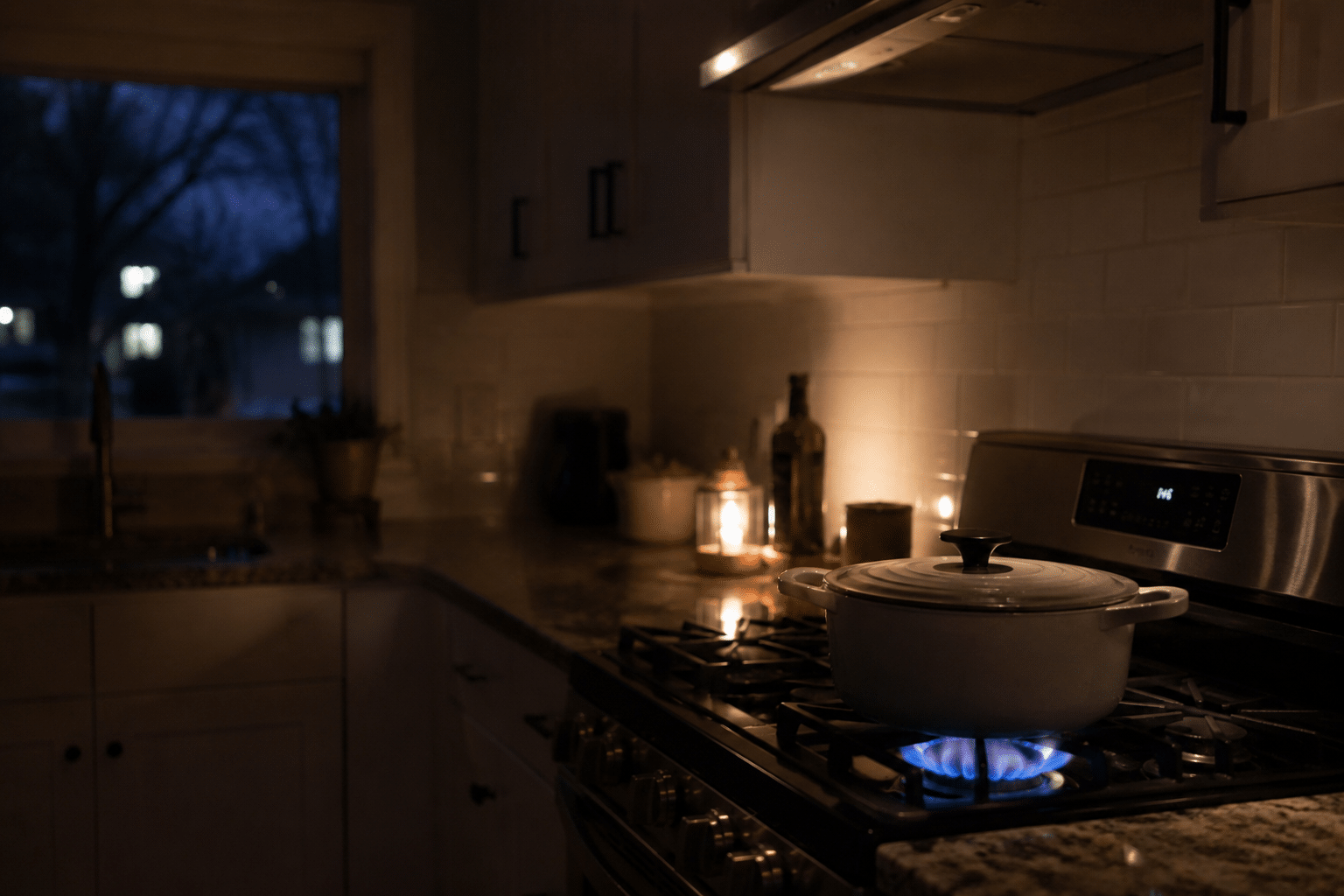
How Long Will Natural Gas Work During a Blackout?
How long will natural gas work during a blackout? In many situations, natural gas can continue flowing for days, weeks, or even longer after electricity fails, although the answer depends on the type of outage, local infrastructure, and the appliances inside your home.
This post contains affiliate links. I may earn a small commission at no extra cost to you. Learn more.
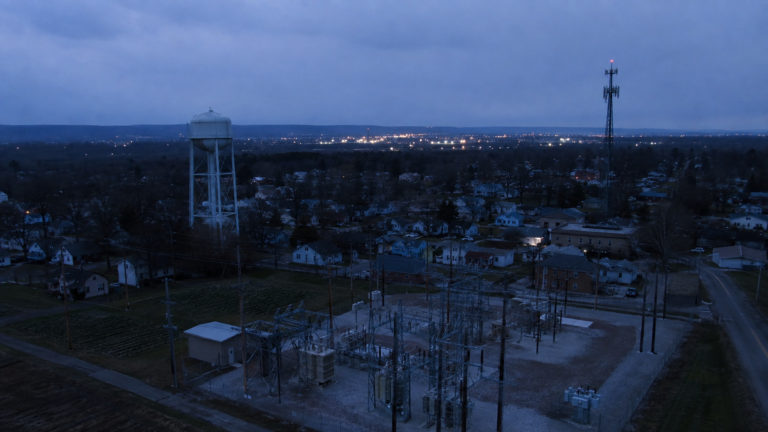
While lights, internet service, electronic payment systems, and many household appliances can become unusable within minutes of a widespread outage, natural gas distribution networks are designed differently and frequently continue delivering fuel even when surrounding infrastructure is experiencing significant disruptions.
The short answer is that natural gas may continue flowing for days, weeks, or even longer during many blackout scenarios because the fuel is transported through pressurized pipeline systems that do not rely on electricity at every stage of delivery. However, the fact that gas continues reaching your home does not automatically mean every gas appliance will continue operating. Many modern furnaces, water heaters, fireplaces, and stoves contain electronic ignition systems, safety controls, circuit boards, sensors, and blower motors that require electricity even though the fuel itself remains available.
Understanding this distinction is critical because many homeowners incorrectly assume that having natural gas means they automatically have heat, hot water, and cooking capability during an extended outage. In reality, some gas appliances can continue functioning with little interruption while others become completely unusable until electrical power is restored.
The duration of natural gas service during a blackout depends on several factors, including the size of the outage, the condition of regional infrastructure, the availability of backup power at compressor stations, the type of emergency causing the disruption, and whether utility companies can continue monitoring and maintaining system pressure throughout the event.
For families building a blackout preparedness plan, understanding how natural gas systems operate can help prevent costly assumptions and identify weaknesses before an emergency occurs. Just as many people are surprised to learn how long municipal water systems may continue operating during a blackout, natural gas often follows a very different timeline than most other utilities.
Knowing what will continue working, what will stop functioning, and what backup options should be available can make a significant difference when an outage stretches beyond a few hours and begins affecting everyday necessities.
Quick Answer
Natural gas often continues flowing during a blackout because it travels through underground pressurized pipelines that operate differently than the electrical grid. However, many modern gas appliances still require electricity for ignition, blowers, or electronic controls, meaning fuel may be available even when the appliance itself cannot operate.
✓ Key Takeaways
- Natural gas often lasts much longer than electricity.
- Many gas appliances still require electricity to operate.
- Gas stoves are often usable with manual lighting.
- Backup power greatly expands what gas appliances can do.
- Never depend on a single utility during an emergency.
How Natural Gas Behaves During a Blackout
In many situations, yes. Natural gas often continues flowing during a blackout because the fuel travels through underground pipeline networks that remain pressurized independently from the local electrical grid. Unlike electric service, which stops immediately when power lines fail, natural gas distribution systems are designed to maintain pressure and continue supplying customers even during significant outages.
For localized power outages, severe storms, and many regional emergencies, gas service may remain available throughout the entire event. Some customers experience uninterrupted gas delivery despite being without electricity for several days.
However, natural gas availability and appliance functionality are not the same thing. A gas stove with manual ignition may still be used for cooking, while a gas furnace may stop working because the blower motor, thermostat, and electronic controls require electricity. A gas water heater with a standing pilot light may continue producing hot water, while a newer model with electronic ignition may not operate at all.
Large-scale disasters, prolonged infrastructure failures, cyberattacks, major earthquakes, pipeline damage, or fuel supply disruptions can eventually affect natural gas systems as well. The longer an emergency continues and the more infrastructure involved, the greater the risk that gas pressure, maintenance capabilities, or fuel distribution networks become compromised.
This is one reason why preparedness plans should never depend entirely on a single utility. As discussed in What Happens After 7 Days Without Power?, systems that appear stable during the first few days of an emergency can become far less reliable as outages extend into longer timeframes.
The chart below provides a quick overview of which common natural gas appliances are most likely to keep working during a blackout and which typically require electricity.
| Appliance | Natural Gas Available? | Works Without Electricity? |
|---|---|---|
| Gas Stove | Usually Yes | Often Yes (Manual Lighting) |
| Gas Furnace | Usually Yes | Usually No |
| Tank Water Heater (Pilot Light) | Usually Yes | Often Yes |
| Tankless Water Heater | Usually Yes | Usually No |
| Gas Fireplace (Millivolt System) | Usually Yes | Often Yes |
| Natural Gas Generator | Usually Yes | Usually Yes |
Why Natural Gas Often Keeps Flowing During a Blackout
One of the biggest reasons natural gas frequently remains available during a blackout is that the distribution system operates very differently from the electrical grid. Most people think of utilities as a collection of services that either work together or fail together, but natural gas infrastructure was designed with a different purpose and often follows a completely separate operational timeline during emergencies.
Electricity must be generated and delivered continuously through transmission and distribution networks that require constant balancing between supply and demand. When power plants, substations, transmission lines, or local distribution equipment fail, electrical service can disappear instantly. Natural gas, by comparison, moves through a network of underground pipelines that remain pressurized and can continue transporting fuel even when nearby electrical infrastructure has stopped functioning.
The gas arriving at homes and businesses does not depend on a constant stream of electrons moving through power lines. Instead, fuel travels through a vast network of transmission pipelines, storage facilities, compressor stations, regulator stations, and local distribution lines that were specifically engineered to maintain pressure across long distances. Because these systems often include backup power capabilities, redundant infrastructure, and stored fuel reserves, they can remain operational during many emergencies that would immediately disable other utilities.
Another advantage is that much of the natural gas delivery network is located underground. While overhead power lines are vulnerable to ice storms, tornadoes, falling trees, vehicle accidents, high winds, and other physical damage, buried pipelines are generally protected from many of the hazards that commonly trigger electrical outages. A storm that leaves thousands of homes without electricity may have little direct effect on underground gas lines serving the same neighborhoods.
Compressor stations play an important role in this process. As natural gas moves through long-distance pipelines, pressure gradually decreases. Compressor facilities help maintain flow by boosting pressure and pushing fuel through the system toward population centers. Many of these facilities have backup generators, onsite fuel supplies, redundant systems, or direct access to natural gas that allows them to continue operating even when portions of the electrical grid experience disruptions.
This does not mean the system is immune to problems. Compressor stations, control facilities, and monitoring centers still rely on equipment that requires power, communications, and personnel. However, utilities recognize the importance of maintaining gas service during emergencies and typically invest heavily in resilience measures designed to keep fuel moving under adverse conditions.
Storage capacity also contributes to reliability. Unlike electricity, which must generally be generated and consumed almost simultaneously, natural gas can be stored in underground reservoirs, depleted gas fields, salt caverns, and other facilities throughout the country. These reserves help utilities manage fluctuations in demand and provide additional flexibility when disruptions occur elsewhere in the system.
For homeowners, the result is often surprising. A neighborhood may be completely dark, internet service may be unavailable, ATMs and payment systems may stop functioning, and cell service may become unreliable, as discussed in How Long Will Cell Towers Work During a Blackout?, yet natural gas may continue flowing into homes the entire time.
That continued fuel supply can provide a major advantage during an extended emergency, particularly for households that understand which appliances can operate without grid electricity and which ones cannot. Having natural gas available for cooking, heating water, or providing heat can dramatically improve comfort and safety during a prolonged outage, but only if the equipment connected to the gas supply is capable of functioning under blackout conditions.
The key takeaway is that natural gas often outlasts electricity not because it is invulnerable, but because the infrastructure was built differently. Underground pipelines, pressurized delivery systems, storage facilities, backup-powered equipment, and decades of engineering focused on reliability allow gas service to remain available during many outages that would immediately disable most other modern conveniences.
💡 Pro Tip
Take time before an emergency to identify which gas appliances in your home require electricity and which can operate independently. Knowing this ahead of time prevents dangerous assumptions during a blackout.
What Can Cause Natural Gas Service to Stop During a Blackout?
Although natural gas is often one of the most resilient utilities during a power outage, it is important to understand that continued service is never guaranteed. Many preparedness articles create the impression that natural gas will simply keep flowing indefinitely regardless of what happens around it, but the reality is far more complicated. The same infrastructure advantages that allow gas systems to survive many short-term disruptions can eventually be overwhelmed by severe damage, prolonged emergencies, equipment failures, or events that affect the broader energy sector.
The most obvious threat is physical damage to the pipeline network itself. Transmission pipelines span thousands of miles and connect production fields, storage facilities, compressor stations, and local distribution systems. While underground pipelines are generally protected from weather-related hazards that frequently damage power lines, they remain vulnerable to earthquakes, landslides, flooding, construction accidents, explosions, and other events capable of damaging critical infrastructure.
If a major transmission line is damaged, utility operators may be forced to isolate portions of the system to prevent further losses, reduce safety risks, and allow repairs to begin. Depending on the location and severity of the damage, some customers could experience reduced pressure or complete service interruptions while crews work to stabilize the network.
Compressor stations represent another potential point of failure. These facilities help maintain pressure across long-distance pipelines and ensure gas continues moving toward population centers. Many stations have backup systems and emergency power capabilities, but prolonged disruptions can still create operational challenges. Equipment failures, fuel shortages, staffing issues, communication breakdowns, or damage from natural disasters can affect their ability to maintain normal operations.
Cybersecurity threats have also become a growing concern throughout the energy sector. Modern pipeline systems rely heavily on computerized monitoring and control systems that allow operators to manage pressure, track flow rates, detect abnormalities, and coordinate maintenance activities across large geographic areas. A significant cyberattack targeting energy infrastructure could potentially disrupt operations even if the physical pipeline network remains intact.
Extreme weather can create additional problems. During severe winter storms, demand for natural gas often increases dramatically as millions of households rely on gas furnaces to stay warm. If demand rises faster than supply can be delivered, utilities may face pressure-management challenges that require temporary service reductions in some areas. While these situations are relatively uncommon, they demonstrate that even robust infrastructure has operational limits.
The widespread winter energy crisis in several regions during recent years highlighted how interconnected modern utility systems have become. Natural gas production facilities, processing plants, compressor stations, transportation networks, and electrical infrastructure frequently depend on one another. When multiple systems experience stress simultaneously, problems can cascade in unexpected ways.
Long-duration blackouts present a different set of concerns. A local outage lasting several hours is unlikely to affect natural gas service, and even regional outages lasting several days may have little impact on fuel delivery. However, emergencies measured in weeks or months can place increasing strain on maintenance operations, equipment reliability, supply chains, communications systems, and workforce availability.
This becomes particularly important when considering large-scale disasters or societal disruptions. As discussed in What Stops Working First in a Long-Term Blackout?, infrastructure systems rarely fail all at once. Instead, reliability gradually declines as repairs become more difficult, spare parts become harder to obtain, personnel shortages develop, and interconnected systems begin experiencing secondary failures.
Fuel production itself can also become a factor. Natural gas does not simply appear in pipelines. It must be extracted, processed, compressed, transported, monitored, and distributed through a complex network involving thousands of facilities and workers. If a major emergency significantly disrupts production regions, transportation infrastructure, or processing capacity, downstream customers could eventually feel the effects.
Another overlooked issue involves emergency shutdown procedures. Utilities are extremely cautious about safety when dealing with natural gas. If operators detect significant leaks, pressure abnormalities, damaged infrastructure, or other conditions that could create hazards, they may intentionally shut down sections of the system. While these decisions can temporarily interrupt service, they are designed to prevent much larger problems from developing.
For most homeowners, the practical takeaway is encouraging. In the vast majority of short-term outages, natural gas will likely remain available long after electricity disappears. However, preparedness planning should never assume that any utility is guaranteed to function indefinitely. The longer an emergency lasts and the larger the geographic area affected, the greater the likelihood that gas infrastructure may eventually encounter challenges of its own.
This is why experienced preparedness planners focus on layers of redundancy rather than depending entirely on a single system. Even households with natural gas service should maintain alternative cooking methods, emergency food supplies, stored water, backup lighting, and communication options. After all, if grocery deliveries stop, fuel stations struggle to operate, and supply chains become disrupted, as explained in How Long Will Grocery Stores Have Food During an Emergency?, having multiple options becomes far more valuable than relying on any one utility alone.
Which Natural Gas Appliances Will Continue Working During a Blackout?
One of the most common misconceptions about power outages is that every natural gas appliance automatically continues operating as long as fuel is still flowing through the pipeline. In reality, the answer depends entirely on how the appliance was designed. Some equipment can function with little or no electricity, while other systems become completely unusable despite having a steady supply of natural gas available.
This distinction becomes extremely important during extended outages because the difference between a working stove and a non-functioning furnace can dramatically affect comfort, safety, and quality of life. Understanding what equipment can still be used allows homeowners to make better preparedness decisions long before an emergency occurs.
Gas Stoves and Cooktops
Many natural gas stoves can still be used during a blackout even when electronic ignition systems stop working. If the burner receives gas and can be manually ignited with a long lighter or match, cooking may remain possible throughout the outage.
Older models are particularly likely to function because they were often designed with fewer electronic components. Newer stoves frequently use electric igniters for convenience, but the gas burners themselves can often still operate when manually lit. Homeowners should always consult their appliance manual before attempting this and follow manufacturer safety recommendations.
A functioning gas stove can provide a tremendous advantage during an emergency. While many households lose the ability to prepare meals immediately after the power goes out, homes with usable gas cooktops may continue cooking stored foods, boiling water, heating canned goods, and preparing hot meals for days or even weeks if fuel service remains available.
This capability becomes increasingly valuable as emergencies progress and normal services begin disappearing. Families who have prepared food storage plans often discover that cooking flexibility becomes just as important as food quantity once an outage extends beyond a few days.
Gas Water Heaters with Standing Pilot Lights
Many traditional gas water heaters equipped with standing pilot lights can continue producing hot water during a blackout because they do not require household electricity to ignite the burner. As long as natural gas continues flowing and the pilot remains lit, the heater may continue operating normally.
This can be a major morale booster during extended outages. Access to warm water makes cleaning easier, improves sanitation, supports basic hygiene, and provides a level of comfort that many families underestimate until it disappears.
However, not all gas water heaters are created equal. Many newer high-efficiency models rely on electronic ignition systems, digital controls, or powered venting equipment that may prevent operation during an outage. The only way to know for certain is to review the specifications for your specific unit.
Gas Fireplaces with Millivolt Systems
Some gas fireplaces are designed to operate independently of household electricity through the use of millivolt control systems. These systems generate a small amount of electricity from the pilot flame itself, allowing the fireplace to operate without external power.
In many homes, these fireplaces can continue providing supplemental heat throughout a blackout. While they may not heat an entire house, they can help maintain a comfortable living space and reduce reliance on other emergency heating methods.
Because fireplace designs vary significantly, homeowners should determine in advance whether their unit uses a millivolt system, electronic ignition, or other controls that require electricity. Waiting until the power is already out is not the ideal time to learn how your equipment functions.
Wall Heaters and Space Heaters with Standing Pilots
Certain wall-mounted natural gas heaters can continue operating during a blackout if they use standing pilot lights and do not rely on powered blowers or electronic controls. These units are often found in older homes, cabins, workshops, and rural properties.
Because heat loss becomes a serious concern during winter outages, having a heater capable of operating without electricity can significantly improve household resilience. Unlike central heating systems that depend on blowers and thermostats powered by the electrical grid, these simpler units can often provide reliable warmth as long as fuel remains available.
Even so, proper ventilation and safety precautions remain essential. Any fuel-burning appliance should be operated according to manufacturer instructions, and functioning carbon monoxide detectors should always be present in occupied living spaces.
Natural Gas Generators
Homes equipped with standby generators connected directly to natural gas lines may be in a particularly strong position during many blackout scenarios. Unlike portable generators that depend on stored gasoline or propane supplies, standby systems can often continue operating as long as both natural gas service and the generator itself remain functional.
This combination can provide power for refrigeration, lighting, communication equipment, medical devices, well pumps, and other essential systems during prolonged outages.
Of course, these systems are not immune to problems. Mechanical failures, maintenance issues, utility disruptions, and fuel delivery interruptions can still occur. Nevertheless, natural gas-powered standby generators are often considered one of the most convenient long-term backup power solutions available for residential use.
Outdoor Grills Connected to Natural Gas
Homes with permanently connected natural gas grills may also retain outdoor cooking capability during a blackout. Unlike propane grills that eventually run out of fuel, these systems can continue operating as long as gas service remains available.
Being able to cook outdoors without relying on stored fuel can reduce pressure on emergency supplies while expanding meal preparation options during longer disruptions.
Many preparedness-minded households view outdoor cooking capability as an important backup resource because it helps preserve food, improve morale, and reduce dependence on indoor cooking arrangements during warm-weather emergencies.
The Most Important Thing to Check Before an Emergency
The fact that an appliance uses natural gas does not automatically mean it will function during a blackout. The deciding factor is usually whether the appliance requires electricity for ignition, controls, sensors, fans, blowers, pumps, or safety systems.
Homeowners should take time to identify which appliances in their home can operate independently of the electrical grid and which ones cannot. This simple step can eliminate surprises and help prioritize preparedness investments.
Many families assume they have a significant advantage because their home uses natural gas, only to discover during an outage that most of their equipment depends on electricity to function. Understanding these limitations beforehand can help determine whether additional backup power solutions are necessary and how prepared a household truly is for an extended emergency.
📌 Did You Know?
Many people assume a gas furnace will still heat their home during a blackout. In reality, most modern furnaces need electricity for blower motors, thermostats, and control boards even though natural gas is still available.
Which Natural Gas Appliances Usually Stop Working During a Blackout?
One of the biggest surprises many homeowners experience during a power outage is discovering that their natural gas heating system will not turn on even though natural gas is still flowing to the house. This confusion is understandable because people often associate the fuel source with the appliance’s ability to operate. If gas is available, it seems logical that a gas appliance should continue working. Unfortunately, modern equipment is often far more dependent on electricity than many people realize.
Over the past several decades, manufacturers have incorporated electronic ignition systems, computerized controls, safety sensors, variable-speed motors, smart thermostats, digital displays, and efficiency-enhancing technology into many household appliances. These features improve performance and reduce fuel consumption under normal conditions, but they also create new dependencies during blackouts.
As a result, some of the most important gas-powered systems in a home may become completely unusable despite having an uninterrupted fuel supply.
Most Central Gas Furnaces
Perhaps the most common misconception involves residential gas furnaces. Homeowners frequently assume that because their furnace burns natural gas, it should continue producing heat during an outage. In reality, most modern furnaces require electricity for several critical components.
The blower motor that circulates warm air through the ductwork requires power. The control board that manages system operation requires power. Electronic ignition systems require power. Modern thermostats require power. Safety sensors and monitoring equipment often require power as well.
Without electricity, these components cannot operate, meaning the furnace remains inactive even though natural gas continues reaching the home.
This becomes especially important during winter emergencies. Many families expect their gas heating system to provide protection during a blackout only to discover that indoor temperatures begin falling shortly after power is lost.
For this reason, homeowners living in cold climates should carefully evaluate alternative heating options and not assume that natural gas service alone guarantees warmth during an outage.
In some cases, a properly sized backup power source can operate essential furnace components. However, homeowners should verify electrical requirements before assuming a portable power station or generator can support their specific heating system.
Most Tankless Gas Water Heaters
Tankless water heaters have become increasingly popular because they provide hot water on demand and can improve energy efficiency. However, many models rely heavily on electronics to function.
Electronic ignition systems, digital control boards, sensors, temperature regulation equipment, and safety features typically require electricity. Without power, many tankless units simply will not operate regardless of whether natural gas remains available.
This can surprise homeowners who assume that a gas-powered appliance automatically works during a blackout. In reality, many traditional tank-style water heaters with standing pilot lights are more blackout-friendly than newer tankless designs.
Anyone relying on a tankless system should review manufacturer documentation to understand how their specific model behaves during power interruptions.
Gas Boilers with Electric Circulation Pumps
Many hydronic heating systems use natural gas to heat water, which is then circulated through radiators, baseboard heaters, or in-floor heating systems. While the heat source itself may use natural gas, the circulation pumps that move heated water throughout the home usually require electricity.
When power is lost, these pumps stop operating. Without circulation, the system cannot distribute heat effectively even though the fuel source remains available.
Some older systems may have limited gravity-fed capability, but most modern installations depend heavily on powered circulation equipment.
Smart Thermostats and Advanced Control Systems
Modern homes increasingly rely on smart thermostats and network-connected climate control systems. These devices offer convenience, scheduling features, energy monitoring, remote access, and automation that many homeowners appreciate during everyday use.
During a blackout, however, advanced controls can become another point of failure.
Even if the heating equipment itself could theoretically operate, control systems often need electricity to communicate commands, monitor temperatures, and manage appliance functions. Once power disappears, those capabilities disappear as well.
Some homeowners discover that their highly automated systems are actually less resilient during emergencies than simpler equipment used decades ago.
Direct-Vent and Power-Vent Appliances
Many modern gas appliances use powered venting systems to improve efficiency and safety. Rather than relying solely on natural draft, these units use electric fans to move exhaust gases through vent pipes and maintain proper combustion conditions.
Without electricity, these fans stop operating. When that happens, built-in safety systems typically prevent the appliance from running.
This is not a design flaw. It is a safety feature intended to prevent dangerous exhaust gases from accumulating inside the home.
Water heaters, furnaces, boilers, and other appliances equipped with powered venting often fall into this category.
Modern Gas Fireplaces with Electronic Controls
Not every gas fireplace will continue operating during a blackout. While some millivolt systems can function independently of household electricity, many newer units rely on electronic ignition systems, remote-control receivers, powered blowers, lighting systems, and digital controls.
When power is lost, these features may become unavailable or prevent operation entirely depending on the design of the fireplace.
This is why preparedness planning should always focus on specific equipment rather than general assumptions. Two neighboring homes may both have natural gas fireplaces yet experience completely different outcomes during the same outage.
Why This Matters During Extended Emergencies
The distinction between fuel availability and appliance functionality becomes increasingly important as outages grow longer. During the first few hours, inconvenience may be the primary concern. After several days, however, the ability to produce heat, cook food, maintain sanitation, and support daily life becomes much more significant.
As explored in What Happens After 7 Days Without Power?, conditions often become more difficult as disruptions continue. Households that understand exactly which systems will function and which will not are generally better positioned to adapt than those relying on assumptions.
The most valuable step homeowners can take today is conducting a room-by-room review of critical equipment. Determine what requires electricity, what can operate independently, and what backup solutions may be necessary. That knowledge is far more useful during an emergency than discovering limitations after the lights have already gone out.
How Long Natural Gas May Last in Different Blackout Scenarios
When people ask how long natural gas will work during a blackout, they are often hoping for a simple answer measured in hours or days. Unfortunately, the actual timeline depends on the type of emergency causing the outage. A neighborhood power failure caused by a storm has very different implications than a regional grid collapse, major natural disaster, or long-duration infrastructure disruption.
In many cases, natural gas remains available far longer than electricity. In other situations, gas service may eventually become affected as damage spreads through interconnected infrastructure systems. Understanding the differences between these scenarios can help families make realistic preparedness plans rather than relying on assumptions.
Localized Power Outages
For the average homeowner, this is the most common blackout scenario. A vehicle strikes a utility pole, a transformer fails, severe thunderstorms move through the area, or a downed tree damages electrical lines serving part of a community.
In these situations, natural gas service is usually unaffected.
The electrical outage may last several hours or even several days depending on the extent of the damage, but underground gas pipelines often continue operating normally throughout the event. Utility crews focus on restoring power while natural gas customers continue receiving fuel without interruption.
If your home contains appliances capable of operating without electricity, you may continue cooking, heating water, or using certain heating systems even while the surrounding neighborhood remains dark.
For localized outages, it is entirely possible for natural gas service to remain available for the entire duration of the emergency.
Regional Storms and Weather Emergencies
Large ice storms, hurricanes, tornado outbreaks, and severe winter weather can affect hundreds of thousands of customers across multiple states. Electrical infrastructure often suffers widespread damage in these events because power lines, substations, transformers, and distribution equipment are exposed to weather-related hazards.
Natural gas systems generally remain operational far longer than electrical infrastructure during major weather emergencies.
Because most distribution lines are buried underground and much of the infrastructure was designed with redundancy in mind, gas service frequently remains available throughout major weather emergencies. Even when customers experience extended electrical outages, natural gas may continue flowing for days or weeks.
This is one reason many homeowners with gas stoves and compatible heating equipment often fare better during winter blackouts than households that depend entirely on electricity.
However, severe storms can still create challenges. Flooding may damage facilities. Landslides can affect pipeline routes. Extreme cold can increase demand dramatically. Transportation disruptions may make repairs more difficult. The larger the emergency becomes, the more variables enter the equation.
Extended Grid Failures Lasting Several Days
If a blackout lasts beyond the first seventy-two hours, attention begins shifting from immediate damage toward infrastructure endurance. Utility companies may still be repairing transmission systems, fuel deliveries may be delayed, communications networks may be strained, and critical services may be operating under emergency conditions.
Even under these circumstances, natural gas often remains one of the most reliable utilities available.
Many households that lose internet access, electronic payment systems, and fuel station access still maintain natural gas service throughout the outage. This can provide significant advantages for cooking, heating, and sanitation while other resources become harder to obtain.
Extreme Winter Demand Events
Winter introduces a unique challenge because millions of homes may be using natural gas simultaneously for heating. During periods of exceptionally cold weather, demand can rise dramatically as furnaces operate almost continuously.
Most utilities are prepared for seasonal demand fluctuations, but prolonged extreme conditions can place stress on production facilities, storage sites, transportation networks, and distribution systems.
In rare situations, utilities may implement pressure management strategies or emergency conservation measures designed to maintain system stability. While complete service interruptions remain uncommon, these events demonstrate that natural gas infrastructure is not immune to large-scale stress.
For preparedness purposes, homeowners should view natural gas as highly reliable but not unlimited.
Cyberattacks on Critical Infrastructure
A major cyberattack targeting energy infrastructure presents a more complex scenario. Modern pipeline systems depend on monitoring networks, communications systems, computerized controls, and operational technology that helps utilities manage gas flow safely and efficiently.
Physical pipelines may remain intact while operators struggle with monitoring or control challenges caused by digital disruptions.
The exact outcome would depend on the severity of the attack, affected systems, available backups, and the ability of operators to restore normal operations. Because utilities invest heavily in security and redundancy, service interruptions would not necessarily be immediate, but prolonged disruptions could eventually create operational challenges.
This type of event highlights why preparedness planning should include multiple layers rather than relying exclusively on any single utility.
Major Earthquakes and Infrastructure Damage
Earthquakes represent one of the few events capable of directly affecting both electrical and natural gas systems simultaneously. Significant ground movement can damage pipelines, regulator stations, distribution networks, and customer service lines.
In these circumstances, utilities may intentionally shut down sections of the system while inspections and repairs are conducted. Safety concerns become the primary focus because damaged gas lines can create fire and explosion hazards.
The duration of outages depends largely on the extent of damage and the resources available for repairs.
Unlike a typical storm-related blackout where gas service often continues uninterrupted, major seismic events can create conditions where both electricity and natural gas become unavailable.
Long-Term National Grid Collapse Scenarios
The most severe scenario discussed within preparedness circles involves a long-duration nationwide infrastructure failure affecting multiple sectors simultaneously. Whether caused by widespread physical damage, major cyber warfare, cascading infrastructure failures, or another extraordinary event, this type of emergency would create challenges extending far beyond a typical blackout.
Initially, natural gas service might continue operating because of existing system pressure, storage capacity, backup systems, and infrastructure resilience. Over time, however, maintaining production, transportation, monitoring, repairs, staffing, and distribution would become increasingly difficult.
No utility system is designed to operate indefinitely without maintenance, communications, replacement parts, and trained personnel.
This is why preparedness plans should focus on resilience rather than assumptions. Natural gas may remain available longer than electricity, but families should still maintain emergency food supplies, stored water, backup cooking methods, alternative heating options, and communication plans.
As discussed in 2-Week Blackout Survival Plan, successful preparedness is rarely about predicting exactly which system will fail first. Instead, it involves building enough redundancy that the loss of any single resource does not immediately create a crisis.
The good news is that for the overwhelming majority of blackout scenarios people are likely to experience, natural gas often remains one of the last major utilities still functioning. While there are no guarantees in any emergency, households served by natural gas infrastructure frequently enjoy a significant advantage compared to homes that depend entirely on electricity for heating, cooking, and hot water.
🚨 Imagine This…
A severe winter storm leaves your neighborhood without electricity for four days. While many homes lose heat completely, your gas stove continues working with manual ignition and your standby generator keeps essential appliances running, allowing your family to remain warm, cook meals, and stay informed.
Natural Gas Safety During Extended Power Outages
Natural gas can provide an important advantage during a blackout, but it also requires a higher level of awareness than many other emergency resources. Unlike stored food, bottled water, or battery-powered equipment, natural gas involves combustion, ventilation, and fuel distribution systems that must be used properly to avoid creating dangerous situations inside the home.
One of the most important safety rules is to never assume that an appliance is operating correctly simply because gas service is still available. Power outages can create unusual conditions, particularly during severe weather events, and homeowners should remain alert for signs of malfunction, unusual odors, pilot light problems, or ventilation issues.
If you smell natural gas inside your home, leave the area immediately and contact your utility company or emergency services from a safe location. Natural gas suppliers intentionally add odorants that create a distinctive sulfur or rotten egg smell specifically so leaks can be detected quickly. Any unexplained gas odor should be treated seriously.
Carbon monoxide represents another major concern during prolonged outages. Carbon monoxide is a colorless, odorless gas produced when fuels do not burn completely. Faulty appliances, blocked vents, damaged exhaust systems, or improper use of fuel-burning equipment can allow dangerous concentrations to accumulate indoors.
This risk often increases during emergencies because people may attempt to use equipment in ways it was never designed to be used. Outdoor grills are sometimes brought indoors. Portable generators may be operated too close to buildings. Temporary heating solutions may be installed without proper ventilation. These decisions can have deadly consequences.
Every home should have functioning carbon monoxide detectors, especially if natural gas appliances are used during a blackout. Battery-powered units provide an additional layer of protection when electrical service is unavailable and should be tested regularly as part of routine preparedness planning.
Ventilation systems also deserve attention. Snow accumulation, debris from storms, fallen branches, or other damage can sometimes obstruct vents and exhaust pathways. Homeowners should visually inspect accessible vent openings whenever it is safe to do so, particularly following severe weather.
Another important consideration involves appliance startup procedures. Some equipment may require manual relighting or resetting after service interruptions. Always follow manufacturer instructions rather than attempting improvised repairs or modifications. If there is uncertainty about safe operation, consulting a qualified technician is far preferable to risking injury or property damage.
Families should also know where their natural gas shutoff valve is located and understand when it may need to be used. In most situations, customers should not shut off gas service unless directed by emergency officials or unless there is reason to believe a leak or other hazard exists. Once shut off, restoring service often requires utility assistance.
Natural gas can be one of the most valuable resources available during a blackout, but its benefits depend on safe operation. A few minutes spent understanding appliance requirements, maintaining detectors, and reviewing emergency procedures can significantly reduce risks during a prolonged outage.
⚠ Important Warning
Never use outdoor grills, camp stoves, or portable generators inside your home or garage. Improper use can quickly produce deadly levels of carbon monoxide.
How to Prepare Your Home Before the Lights Go Out
One of the biggest mistakes people make when preparing for a blackout is assuming that natural gas alone will solve their problems. While natural gas can provide significant advantages during many outages, preparedness works best when multiple backup systems support one another. The goal is not simply to have fuel available. The goal is to understand how every critical household system will function when normal utilities become unavailable.
The first step is identifying which gas appliances in your home can actually operate without electricity. Many homeowners are surprised to discover that their gas furnace, tankless water heater, or fireplace becomes unusable when the power goes out. Spend time reviewing appliance manuals, checking manufacturer specifications, and testing emergency procedures before an outage occurs.
Knowing exactly what will and will not work removes uncertainty and helps prioritize future preparedness purchases.
Next, consider how you will handle cooking if electrical service remains unavailable for several days. A gas range that can be manually lit may provide an excellent solution, but not every home has this capability. Households without a blackout-compatible stove should evaluate alternative cooking methods before they become necessary.
Food storage should also be part of the equation. Having a way to cook is only useful if food is available. As discussed in How Long Will Grocery Stores Have Food During an Emergency?, stores can experience shortages much faster than many people expect once a crisis begins. Maintaining a practical food reserve allows families to benefit from available cooking options instead of competing for dwindling supplies.
Water deserves equal attention. Many people assume water service will continue indefinitely during a blackout, but municipal systems can eventually experience pressure losses, equipment failures, or operational challenges depending on the circumstances. A household that has natural gas for cooking but lacks sufficient drinking water remains vulnerable.
For that reason, every preparedness plan should include stored water supplies in addition to fuel considerations. If you have not already reviewed the topic, How Long Will Municipal Water Systems Work During a Blackout? explains why water reliability can change as outages become prolonged.
Backup power is another area worth evaluating. While natural gas may continue flowing, many appliances still require small amounts of electricity for controls, ignition systems, blowers, thermostats, and safety devices. A properly sized portable power station can bridge this gap and allow homeowners to take full advantage of available gas service.
For many households, a quality power station can operate furnace controls, recharge communication devices, power lighting, and support other essential equipment while preserving fuel for situations where it is truly needed.
Communication planning should not be overlooked either. Blackouts rarely affect only one utility. Cell service may become unreliable, internet access may disappear, and information can become difficult to obtain. Maintaining battery-powered radios, backup charging options, and family communication plans helps ensure everyone remains informed as conditions change.
Many families discover that communication becomes one of the biggest challenges during an extended outage. Our guide on How Long Will Cell Towers Work During a Blackout? explains what happens as backup batteries begin running down and networks become overloaded.
Preparedness is most effective when viewed as a system rather than a collection of individual supplies. Natural gas can be one layer. Stored water can be another. Backup power, emergency food, communication equipment, lighting, sanitation supplies, and contingency plans all contribute to overall resilience.
The families who weather outages most comfortably are usually not the ones with the most equipment. They are the ones who understand how their systems work together and have already addressed weaknesses before an emergency arrives.
Ultimately, the answer to how long will natural gas work during a blackout depends on the size of the emergency, the condition of regional infrastructure, and the design of the appliances in your home.
🛒 Recommended Natural Gas Blackout Gear
These products help you safely use natural gas appliances, monitor your home, and maintain essential services during extended power outages.
Natural Gas Wall Heater
Provides dependable supplemental heat that can continue operating without relying on central HVAC systems in many installations.


Portable Power Station
Powers furnace controls, communication devices, lighting, and other essential electronics that many gas appliances still require.

Battery-Powered Carbon Monoxide Detector
Adds an important layer of protection whenever fuel-burning appliances are operating during a blackout.

Natural Gas Shut-Off Wrench
Allows you to quickly shut off your home’s natural gas supply if emergency officials recommend doing so or if a leak is suspected.

Large Portable Power Station
Provides longer runtime for furnace electronics, refrigerators, communication equipment, and other household essentials during extended outages.

☑ Natural Gas Preparedness Checklist
- ☑ Know which gas appliances work without electricity.
- ☑ Test carbon monoxide detectors regularly.
- ☑ Store backup cooking equipment.
- ☑ Keep emergency lighting available.
- ☑ Maintain stored food and water.
- ☑ Have backup power for essential electronics.
- ☑ Learn where your home’s gas shutoff valve is located.
📚 Continue Reading
Continue building your complete blackout preparedness plan.
Final Thoughts
Natural gas is often one of the most reliable utilities available during a blackout, and in many situations it will continue flowing long after electricity has disappeared. Because the fuel is delivered through underground pipeline systems designed to maintain pressure and operate independently from many local electrical failures, households served by natural gas frequently enjoy advantages that all-electric homes do not.
However, one of the most important lessons from this discussion is that fuel availability and appliance functionality are not the same thing. A home may still have access to natural gas while the furnace, water heater, or fireplace remains unusable because critical components require electricity. Understanding exactly how your equipment operates before an emergency occurs can prevent unpleasant surprises when the lights go out.
For most localized outages, severe storms, and regional blackouts, natural gas service may continue without interruption. Larger disasters, infrastructure damage, extreme demand events, and long-duration emergencies introduce additional variables that can eventually affect fuel delivery. While natural gas is generally resilient, no utility should ever be viewed as guaranteed under every circumstance.
This is why experienced preparedness planners focus on redundancy instead of assumptions. A household that combines natural gas capability with stored water, emergency food, backup power, communication equipment, lighting, and alternative cooking options is far better positioned than one that depends entirely on a single resource.
Preparedness is not about predicting exactly what will happen during the next emergency. It is about reducing vulnerabilities before problems occur. The more systems you can keep functioning during a disruption, the more comfortable, safe, and adaptable your family will be if conditions worsen.
If you are building a more comprehensive blackout preparedness strategy, continue with our 2-Week Blackout Survival Plan, which outlines practical steps for handling extended outages, and What Stops Working First in a Long-Term Blackout?, which examines how critical services gradually begin failing as emergencies continue.
The bottom line is simple: natural gas will often outlast electricity during a blackout, but the households that fare best are the ones that prepare for the possibility that every utility could eventually become unreliable. Planning ahead today is far easier than trying to solve those problems in the dark.