5 Essential Survival Gear Products for Your Bug-Out Bag (2026)
A well-stocked bug-out bag can make a major difference when you need to leave home quickly during a natural disaster, extended power outage, or other emergency. But with so much survival equipment available, knowing which products deserve space in your backpack isn’t always easy.
This post contains affiliate links. I may earn a small commission at no extra cost to you. Learn more.
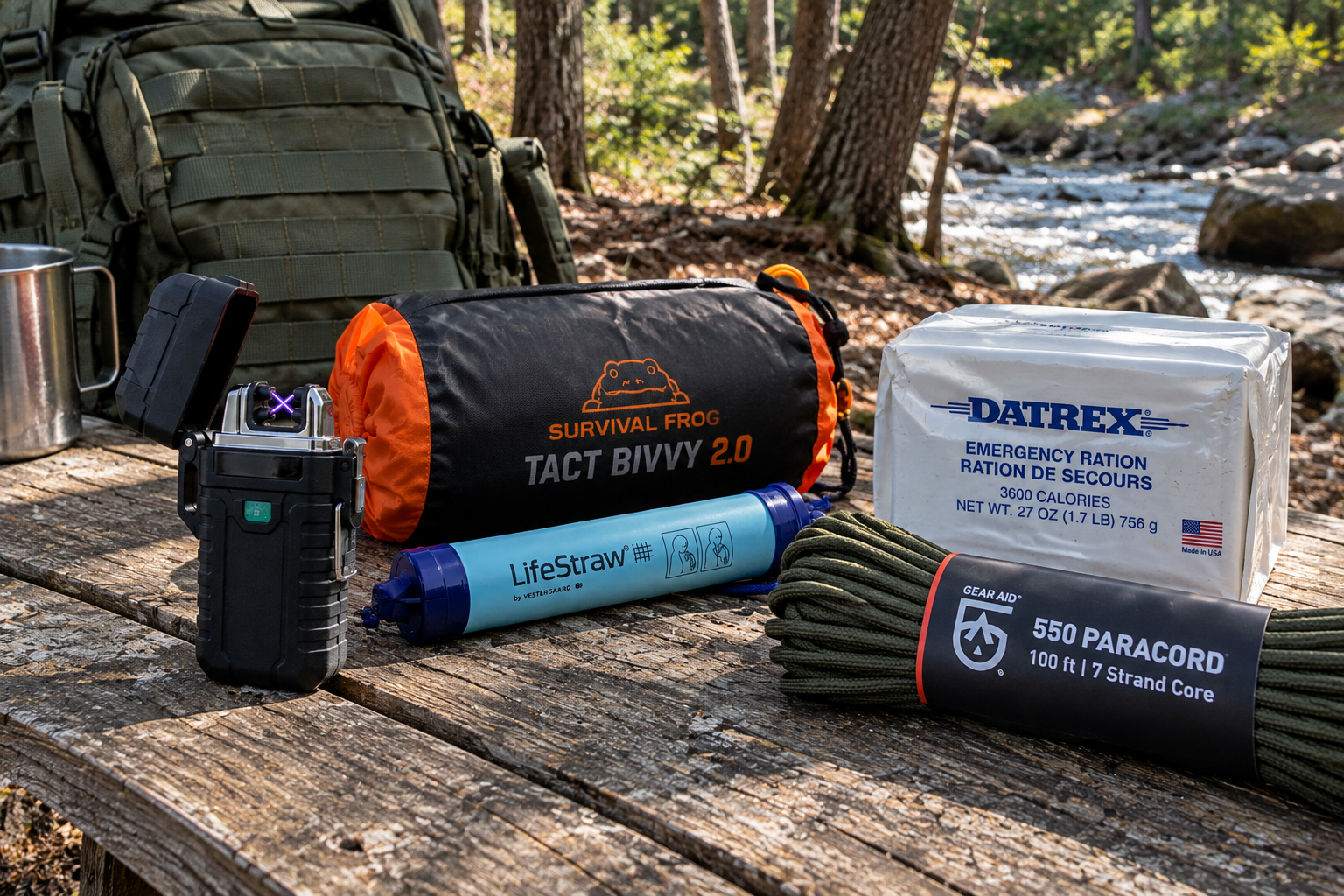
In this guide, we’re looking at five essential survival gear products for 2026. From a rechargeable fire starter and compact emergency sleeping bag to water filtration, emergency food, and paracord, each item serves a practical purpose.
For a complete approach to emergency planning, start with our Emergency Preparedness Master Plan.
The best bug-out bag gear addresses essential survival priorities: protection from the elements, safe drinking water, food, fire starting, and useful tools. Start with these fundamentals before spending money on specialty survival gadgets.
Quick Comparison: Best Bug-Out Bag Survival Gear for 2026
| Survival Gear | Primary Use | Best For |
|---|---|---|
| Survival Frog Tough Tesla Lighter 2.0 | Starting fires | Backup ignition |
| Survival Frog Tact Bivvy 2.0 | Emergency shelter | Exposure protection |
| LifeStraw Personal Water Filter | Water filtration | Outdoor water sources |
| Emergency Food Rations | Ready-to-eat calories | Emergency food backup |
| Survival Paracord | Cordage and repairs | Shelter and camp tasks |
1. Survival Frog Tough Tesla Lighter 2.0
Rechargeable Fire Starter for Emergency Preparedness
Fire is one of the most useful resources in an outdoor survival situation. It can provide warmth, help boil water, and support cooking when you have suitable equipment and fuel.
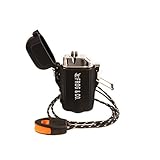
The Survival Frog Tough Tesla Lighter 2.0 is a rechargeable electric lighter designed to ignite suitable tinder without traditional lighter fluid or butane.
Unlike conventional flame lighters, electric arc lighters generate an ignition arc. This makes them useful when wind makes an ordinary flame difficult to maintain.
Key Advantages
- Rechargeable design eliminates the need for conventional lighter fuel.
- Compact enough for emergency backpacks and vehicle kits.
- Electric ignition can be useful in windy conditions.
- Can serve as a secondary fire-starting method.
Potential Drawbacks
- Requires a charged battery.
- Works best with properly prepared tinder.
- Should not replace all other fire-starting methods.
For additional techniques, read our guide on how to start a fire in wet weather.
Our Verdict: A rechargeable electric lighter is a useful addition to a bug-out bag, especially when paired with a reliable backup ignition source.
2. Survival Frog Tact Bivvy 2.0 Emergency Sleeping Bag
Compact Emergency Shelter for Cold and Wet Conditions
Exposure to cold, wind, and rain can quickly become dangerous during an evacuation or unexpected night outdoors.
The Survival Frog Tact Bivvy 2.0 is a compact reflective emergency sleeping bag intended to provide an additional layer of protection from the elements.
Unlike a traditional insulated sleeping bag, a reflective bivvy relies primarily on reducing certain forms of heat loss rather than providing thick insulation.
Key Advantages
- Lightweight and compact for emergency storage.
- Reflective material can help reduce radiant heat loss.
- Provides an additional barrier against wind and moisture.
- Useful for vehicle emergency kits and hiking backpacks.
Potential Drawbacks
- Does not provide the insulation of a quality sleeping bag.
- Condensation can develop inside reflective materials.
- May be uncomfortable during extended use.
Learn more about safe emergency heating and staying warm without electricity.
Our Verdict: A compact emergency bivvy makes sense as backup exposure protection, but it should supplement rather than replace a proper cold-weather sleep system.

3. LifeStraw Personal Water Filter
Portable Water Filtration for Survival and Emergency Kits
Access to safe drinking water is one of the highest priorities during an emergency. Even when water is available from streams, lakes, or other natural sources, it may contain harmful microorganisms.
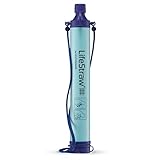
The LifeStraw Personal Water Filter is a lightweight filtration device designed for outdoor use and emergency preparedness.
Its compact design makes it easy to carry in a bug-out bag without taking up much space.
Key Advantages
- Lightweight and portable.
- Does not require batteries or electricity.
- Designed to reduce specified waterborne bacteria and parasites.
- Convenient for hiking, camping, and emergency kits.
Potential Drawbacks
- Does not reliably remove viruses.
- Not intended to make chemically contaminated water safe.
- Does not provide water storage.
- Requires proper maintenance and freeze protection.
Read our complete Survival Water Purification Guide for more information about filtering, boiling, and disinfecting water.
Our Verdict: The LifeStraw is a practical lightweight backup filter for suitable freshwater sources, particularly when paired with a water container and additional treatment options.
4. Emergency Food Rations for Bug-Out Bags
Ready-to-Eat Calories When Cooking Isn’t an Option
During an evacuation, you may not have access to a stove, refrigeration, or a reliable food supply.
Emergency food ration bars are designed to provide shelf-stable calories in convenient packaging. Many products require no cooking, making them suitable for vehicle emergency kits, evacuation backpacks, and household disaster supplies.
However, emergency rations are not all identical. Calorie counts, ingredients, shelf life, serving sizes, and storage requirements vary by manufacturer.
Key Advantages
- Convenient food that requires little or no preparation.
- Compact compared with many conventional foods.
- Useful when cooking equipment is unavailable.
- Easy to include in a short-term emergency food plan.
Potential Drawbacks
- May provide insufficient calories for strenuous activity.
- Limited variety and nutritional balance.
- Some products contain common allergens.
- Shelf life depends on packaging and storage conditions.
For more emergency food options, see our guide to long-lasting survival foods.
Our Verdict: Ready-to-eat emergency food rations are useful as backup calories, but a complete bug-out food supply should provide enough energy and nutritional variety for the people using it.

5. Survival Paracord for Emergency Shelter and Repairs
Versatile Cordage for Outdoor Survival
Paracord is one of the simplest and most versatile additions to an emergency backpack.
It can be used for securing equipment, creating temporary shelter setups, hanging lightweight gear, and performing field repairs.
Quality cordage is often more useful than complicated survival gadgets because it can serve many purposes without requiring batteries or fuel.
Key Advantages
- Lightweight and easy to pack.
- Useful for shelter setup and equipment organization.
- Can assist with temporary repairs.
- Available in different lengths and constructions.
Potential Drawbacks
- Requires knot-tying skills for effective use.
- Strength ratings vary between products.
- Not a replacement for certified climbing or rescue rope.
Explore more practical applications in our Core Wilderness Survival Skills Guide.
Our Verdict: A useful, inexpensive category of survival gear that earns its place in most outdoor emergency kits.


How to Choose the Best Survival Gear for Your Bug-Out Bag
Before purchasing equipment, consider the emergencies you are preparing for and how much weight you can realistically carry.
1. Prioritize Survival Essentials
Start with water, shelter, weather-appropriate clothing, necessary medications, food, lighting, and communication equipment. Specialty survival tools should come afterward.
2. Consider Weight and Pack Space
A bug-out bag that is too heavy may become difficult to carry during a prolonged evacuation. Select compact equipment without sacrificing essential protection.
3. Choose Equipment You Can Use
Practice using water filters, fire starters, shelter equipment, and cordage before an emergency occurs.
4. Build in Redundancy
Important systems should have backups. For example, carry stored drinking water alongside filtration equipment and use more than one fire-starting method.
5. Check Product Specifications
Verify manufacturer instructions, storage requirements, materials, dimensions, and compatibility before buying. Product listings and specifications can change.
What Else Should Be in a 72-Hour Bug-Out Bag?
These five products cover several useful categories, but they do not form a complete emergency evacuation kit.
- Stored drinking water and a durable water container.
- Enough food for the expected evacuation period.
- Weather-appropriate clothing and rain protection.
- First-aid supplies and necessary medications.
- Flashlight or headlamp with backup batteries.
- Emergency radio and communication plan.
- Navigation tools and important documents.
- Personal hygiene and sanitation supplies.
- Emergency cash and identification.
- Appropriate shelter and sleeping equipment.
For a detailed packing plan, read our 72-Hour Bug-Out Bag Guide.
Common Mistakes When Buying Survival Gear
Buying Gear Without Testing It
Equipment can fail or be difficult to use under stress. Test your supplies in controlled conditions before depending on them.
Overpacking Your Backpack
Carrying unnecessary gadgets can reduce mobility. Focus on versatile equipment that addresses realistic risks.
Ignoring Water and Shelter
These needs often deserve more attention than specialty knives, complicated multitools, or other accessories.
Depending on a Single Product
One water filter, one lighter, or one emergency shelter item should not be the only way you can meet an essential survival need.
Frequently Asked Questions
What Are the Most Important Survival Items for a Bug-Out Bag?
Safe drinking water, weather-appropriate shelter and clothing, essential medications, food, lighting, and communication equipment are among the highest priorities. The exact contents depend on your climate, household, and evacuation plan.
Are Survival Frog Products Worth Considering?
Survival Frog offers products in several useful preparedness categories, including emergency bivvies and rechargeable lighters. Evaluate each product based on its specifications, practical usefulness, and how well it fits your emergency kit.
Is a LifeStraw Enough for Emergency Water?
No. A LifeStraw can help filter certain microorganisms from suitable freshwater sources, but it does not address every type of contamination or provide water storage. Keep stored drinking water and understand the filter’s limitations.
How Much Emergency Food Should I Carry?
Carry enough food to meet your expected energy needs for the planned evacuation period, with a margin for delays. Consider dietary restrictions, physical activity, and whether cooking will be possible.
Do I Need Paracord in My Bug-Out Bag?
Paracord is not mandatory, but it is a practical multipurpose item for securing equipment, supporting temporary shelters, and handling minor repairs.
Should I Buy a Pre-Made Survival Kit or Build My Own?
Building your own kit allows you to select equipment suited to your needs, climate, and budget. Pre-made kits can provide a starting point, but their contents should always be inspected and supplemented.
Final Verdict: Which Survival Gear Is Worth Packing?
The best bug-out bag isn’t necessarily the one with the most equipment. It’s the one that provides the essentials, stays manageable to carry, and contains supplies you know how to use.
The Survival Frog Tough Tesla Lighter and Tact Bivvy can fill supporting roles in a preparedness kit. The LifeStraw offers a portable filtration option, emergency food rations provide backup calories, and paracord helps with numerous outdoor tasks.
Before buying additional equipment, make sure your household has adequate water, food, shelter, medications, and a realistic evacuation plan.
Disclosure: As an Amazon Associate, The Savvy Survivalist earns from qualifying purchases.