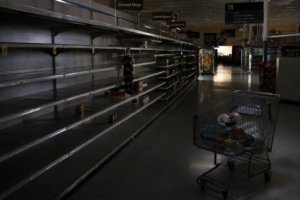
This urban survival guide organizes the critical systems required to stay prepared in city environments when infrastructure fails and stability declines.
When Water Stops Running
Urban Water Purification
Water Storage Planning
Cities rely on interconnected systems — water pressure, electrical grids, transportation flow, and communication networks. When one system fails, others follow. Urban preparedness is not about isolation. It is about reinforcing weak points before strain becomes disruption.
Layered readiness reduces panic and prevents reactive decision-making.
Urban environments concentrate people and dependency. Resources move through infrastructure, not through natural sourcing. Grocery stores restock daily. Water flows under pressure. Electricity powers climate control and communication.
When those systems falter, density magnifies impact. Planning must account for confined space, limited storage, and proximity to others.
Urban preparedness follows a predictable order: water security, backup power, physical security, communication continuity, and controlled mobility.
Each layer stabilizes the next. Water preserves cognition. Power maintains refrigeration and lighting. Security deters escalation. Communication reduces uncertainty. Mobility provides an exit if necessary.
Competence prevents chaos from spreading into your household.
Urban survival does not require spectacle. It requires discretion.
Low-profile storage, quiet power solutions, reinforced entry points, and structured evacuation plans provide control without drawing attention.
Preparedness is not loud. It is deliberate.
Urban Survival Is System Management
Urban survival is not about hiding in the dark or reacting emotionally to headlines. It is about managing systems before they fail. Cities run on infrastructure — water pressure, electrical grids, transportation corridors, communication networks, and layered security. When one system weakens, pressure transfers to the others.
A true urban survival strategy anticipates cascade failure. If power goes down, refrigeration stops. If refrigeration stops, food spoils. If food supply tightens, mobility increases as people move. If mobility increases, congestion and risk rise. Preparedness interrupts that chain before it accelerates.
Urban resilience depends on redundancy. Store water before pressure drops. Secure backup lighting before darkness limits movement. Establish family communication rules before networks overload. Map evacuation routes before traffic gridlock forms. Small preparations reduce dependence on unstable systems.
In dense population centers, movement is both a resource and a vulnerability. Knowing when to shelter in place and when to evacuate determines exposure. Urban survival is often less about brute endurance and more about timing, discretion, and deliberate action.
The objective of urban preparedness is stability. When water, power, security, communication, and mobility are structured in advance, stress decreases. Decision-making improves. Panic becomes less likely. Prepared individuals do not escalate chaos — they reduce it.
This urban survival guide is built as a structured framework. Use it to strengthen weak points, add redundancy, and build controlled resilience inside modern infrastructure. Cities are complex — but complexity can be managed with discipline.
Cities change fast. Stay ahead with the newest urban resilience and grid-down survival strategies.