How to Bug Out from the City Without Getting Stuck in Gridlock
How to bug out from the city without getting stuck in gridlock starts with one truth — if you’re leaving a dense metropolitan area in a crisis, you can’t waste time. In a true emergency, panic spreads faster than official warnings, and traffic patterns can turn from calm to catastrophic in minutes. Once that happens, every route out becomes a slow-moving hazard zone. The only way to beat the chaos is with foresight: have your apartment prepping plan ready, your blackout strategy practiced, and your alternate exits mapped long before disaster strikes.
This post contains affiliate links. I may earn a small commission at no extra cost to you. Learn more.
Evacuation planning is a critical component of any serious urban survival guide for high-density disasters.
Recommended Gear: See our complete Bug Out Bag Essentials List for recommended emergency gear, water filtration, survival tools, shelter, lighting, and rapid evacuation supplies.
The Timing Factor
Timing isn’t just important — it’s everything. Leave too late, and you’ll be boxed in with thousands of others, inching forward while danger closes in. Waiting for the official evacuation order is a mistake that has trapped countless people in past disasters. Instead, know your personal trigger points and act on them without hesitation.
For predictable threats like hurricanes or snowstorms, leaving 12–24 hours before the official call can mean open roads instead of bumper-to-bumper frustration. For sudden crises like riots, industrial accidents, or explosions, those trigger points might be a certain sound, smell, or piece of breaking news that tells you it’s time to go. Acting before the masses gives you the breathing room you need to clear the city before every lane becomes a parking lot.
🛑 Why Gridlock is Deadlier Than You Think
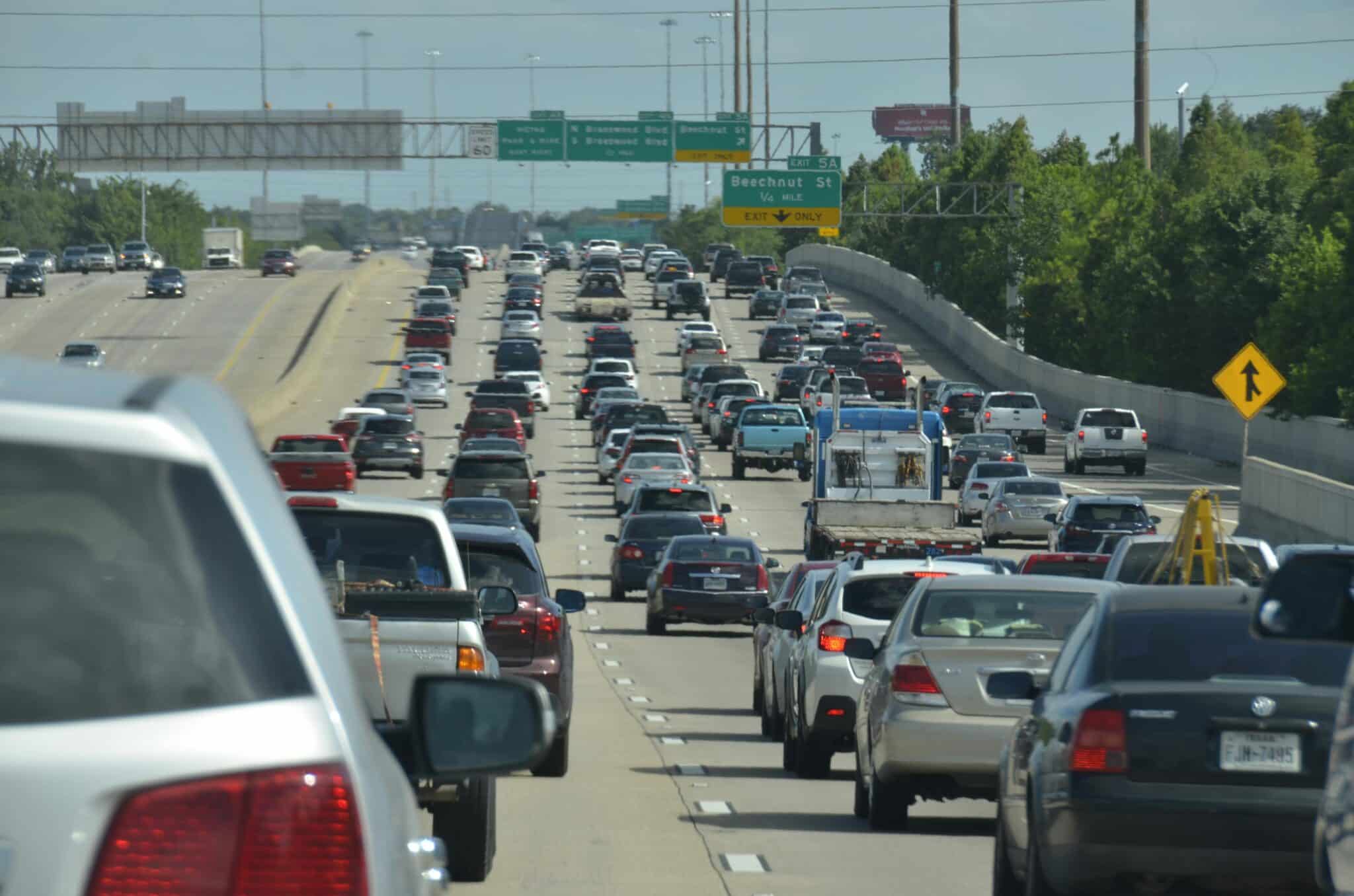
Gridlock in a survival situation is more than an inconvenience — it’s a cage. If a wildfire is bearing down, you can’t outdrive the flames. If civil unrest erupts, you’re a stationary target. If hazardous chemicals fill the air, you can’t put distance between yourself and the danger.
During Hurricane Rita in 2005, the exodus from Houston turned highways into a 100-mile traffic jam. Thousands ran out of fuel in the sweltering heat, ambulances couldn’t reach patients, and heatstroke cases soared. Once those roads locked, they stayed locked. Understanding this reality now is motivation to plan ahead — because if you wait until you see the threat, your escape window may already be gone.
⏳ Acting Before It’s Too Late
The single biggest factor in beating traffic is the moment you decide to leave. Most people stall, waiting for confirmation, but in that hesitation, the roads fill. You need to accept that sometimes you’ll leave early for what turns out to be a false alarm. That’s a small price to pay for avoiding the deadly consequences of being trapped when the real danger arrives.
The people who survive fast-moving disasters aren’t always the ones with the most gear — they’re the ones who were gone before the rest of the city realized it was time to move.
🗺 Mastering Your Escape Routes
A GPS will almost always send you where everyone else is going — right into the jam. You need to know your city’s street grid intimately: back roads, industrial cut-throughs, and even dirt connectors that bypass main arteries.
Scout these routes in advance, at different times of day, and note potential choke points like bridges or one-lane sections. Keep printed maps in your vehicle — when cell towers fail, paper is the only navigation you can count on.
For a deeper dive on blending in while moving through the city, see our Gray Man Urban Survival Gear guide — staying unnoticed can be as valuable as knowing the way out.
🚙 Vehicle Readiness: Your Rolling Lifeline
Your vehicle isn’t just transport — it’s your rolling safe zone. In a bug-out scenario, a breakdown, dead battery, or empty gas tank can trap you in the worst possible place. Keep the tank above half at all times, and if you have safe storage, keep stabilized gasoline in DOT-approved cans ready to go.
Carry a portable jump starter like the Noco Boost to avoid relying on another motorist. A sturdy air compressor, full tire repair kit, and reliable spare tire can keep you moving when service stations are closed or unreachable. Store an emergency tool for cutting seat belts and breaking windows where you can grab it instantly.
Finally, think about appearances. A roof rack stacked with gear screams “valuable target” in a chaotic evacuation. Whenever possible, store supplies inside the vehicle and keep them out of sight. A clean, unremarkable, well-maintained vehicle can slip through without drawing unwanted attention — and in survival situations, that anonymity can be as valuable as your fuel.
🕵️ Staying Low Profile in a Mass Evacuation
When the city is in chaos, you don’t want to be noticed — not by desperate civilians, not by opportunistic criminals, and not by authorities who might redirect or detain evacuees. The “gray man” principle applies just as much to your vehicle and bug-out gear as it does to personal appearance.
Blend in with everyday commuter traffic. Avoid loud paint jobs, military decals, or brand-new tactical accessories that scream “prepared.” Keep expensive equipment, weapon cases, and large packs out of sight.
If you must stop for fuel or supplies, park where your gear is hidden from casual observation. In tense situations, the less you stand out, the safer you’ll be.
🚴 Alternative Mobility: Beating the Jam on Two Wheels
Even the best escape plan can hit a wall if major routes are blocked. That’s why having an alternative mode of transportation ready can turn a failed evacuation into a successful one. Folding bicycles are ideal for urban environments — they can be stored in a trunk, deployed in seconds, and carried over obstacles if needed. Electric bikes extend your range and reduce physical strain, which is important if you’re carrying gear.
Motorcycles and scooters can navigate between lanes, bypassing stopped traffic entirely, though they require more skill and maintenance. The key is having these alternatives ready to go — in many evacuation scenarios, getting even a few miles ahead of the main bottleneck is enough to reconnect with open roads or reach a safe location.
“For maximum speed and range in a compact package, the Folding Electric Bike for Adults, 1500W Motor (Peak 2000W) delivers up to 35 MPH and 100 miles on a single charge, with 20” fat tires and hydraulic disc brakes that make it equally capable in city streets or off-road escapes.”
🎒 Gear That Keeps You Moving
Urban bug-outs often require tools and equipment tailored to city-specific hazards. Beyond your core bug-out bag essentials, certain items dramatically improve your ability to move quickly and stay safe.
A hydration system like the CamelBak M.U.L.E. keeps you drinking without stopping. A compact pry bar and folding bolt cutters let you bypass locked gates or navigate debris-blocked paths. A quality respirator mask protects against smoke, dust, and airborne hazards — something increasingly important during industrial accidents and wildfires.
Lighting is non-negotiable. A reliable flashlight such as the Fenix PD36R offers long runtimes and a beam powerful enough to cut through low visibility conditions. Headlamps are another excellent option, leaving your hands free to climb, carry, or work.
📡 Staying Ahead with Real-Time Intel
One of the most underestimated survival tools is information. In a fast-moving crisis, road closures and traffic patterns can change minute to minute. Without up-to-date intel, you could drive straight into a jam or a danger zone.
When networks go down or become unreliable, you need backup methods — here’s how to communicate when the grid goes down so you’re not making decisions blind.
Pair your mobile navigation with backup sources like a CB radio, GMRS handhelds, or a dedicated scanner for police and emergency services. Apps like Broadcastify let you monitor live dispatch channels, while AM/FM emergency broadcasts provide official updates.
The advantage is clear: if you hear about a developing blockage before it appears on a traffic map, you can reroute early and keep moving while others are forced to stop.
🏕 Choosing and Reaching Safe Zones
Escaping gridlock is only the first step — where you go afterward matters just as much. Your primary destination should be a pre-selected safe zone well outside the urban danger radius. This could be a family member’s home, a trusted friend’s property, or a cabin you maintain for emergencies.
Have at least one backup location in the opposite direction in case your first choice is inaccessible. State parks, rural motels, and public lands can serve as temporary refuges if you arrive early enough to avoid crowding. Just make sure any temporary location offers access to water, shelter, and security until you can transition to a more stable base.
🧠 Lessons from Real-World Evacuations
Hurricane Katrina, Hurricane Rita, the Paradise wildfire, and the Boston Marathon bombing all reveal the same pattern: those who left early, had alternate routes, and traveled with self-sufficiency fared far better than those who hesitated or relied solely on official evacuation orders.
A city evacuation isn’t about speed—it’s about foresight. Prep for urban blackouts, perfect your high-rise escape routes, and move like a gray man while everyone else is frozen in gridlock.
Building a reliable evacuation setup? See our recommended bug out bag essentials here.
📝 Final Word: Beating the Gridlock Before It Forms
In the end, bugging out from the city without getting stuck in gridlock isn’t about luck — it’s about readiness, timing, and control. You can’t dictate how others will react when panic hits, but you can dictate how you respond.
Know your routes cold. Keep your vehicle fueled and maintained. Have a fallback plan with alternate transportation and key survival gear ready to roll. Track real-time intel through radios, apps, and scanners. Move early, move smart, and stay gray.
Do those things, and you won’t be trapped in the chaos — you’ll be the one slipping quietly through it, long before the rest of the city realizes what’s happening.
📚 Further Reading
- ⚡ When the Lights Go Out: Blackouts, Riots & Everyday Chaos
- 🏢 Apartment Prepping: How to Store Food, Water & Gear in Tight Spaces
- 🏙️ How to Evacuate a High-Rise Apartment in an Emergency
- 👤 Gray Man Urban Survival Gear: Stay Invisible, Stay Alive in the City