
How to Evacuate a High-Rise Apartment in an Emergency
A high-rise apartment evacuation requires more planning than simply finding the nearest staircase. During a fire, earthquake, extended blackout, or other emergency, residents may encounter smoke, crowded stairwells, disabled elevators, blocked exits, and communication problems.
This post contains affiliate links. I may earn a small commission at no extra cost to you. Learn more.
Living several floors above ground level creates challenges that residents of single-story homes rarely face. You may need to descend numerous flights of stairs, help children or pets, or remain inside your apartment until firefighters provide instructions.
But evacuating immediately is not always the safest choice. Some high-rise buildings use phased evacuation procedures or fire safety plans that instruct residents in unaffected areas to remain in place temporarily. Other emergencies, including certain hazardous-material incidents, may also require sheltering indoors.
The key is knowing your building’s emergency procedures before something goes wrong.
This guide explains how to prepare a high-rise evacuation kit, identify safe stairwell routes, respond to fire and smoke, protect family members with mobility limitations, and make informed decisions during different emergencies.
Know your building’s fire safety plan, identify at least two available exit routes, keep emergency supplies accessible, and follow alarms and instructions from building personnel or emergency responders.
During a fire: If evacuation is necessary and the route is safe, use a designated exit stairwell rather than a standard elevator. If your exit is blocked by smoke or heat, do not force your way through it. Move to a safer location, close doors between yourself and the hazard, and call emergency services with your exact location.
High-rise evacuation is one part of a complete urban survival preparedness plan. Residents should also prepare for power failures, communication outages, and temporary disruptions to water and other essential services.
1. Understand Your Building’s Emergency Evacuation Plan
The first step in high-rise apartment evacuation planning is learning how your particular building is designed to respond to emergencies.
High-rise buildings vary considerably in age, construction, fire protection systems, stairwell configuration, and emergency procedures.
Some buildings use full-building evacuation. Others may have phased evacuation plans, where occupants on affected floors leave first while residents elsewhere receive different instructions.
Questions to Ask Building Management
- Where are the primary and secondary emergency stairwells?
- Does the building use full or phased evacuation procedures?
- What do the different alarm signals and announcements mean?
- Are any elevators specifically designated for emergency evacuation?
- Where are the designated outdoor assembly areas?
- Are there protected areas of refuge or other accessibility arrangements?
- Can stairwell doors be opened for re-entry, and where?
- How will residents receive emergency instructions during a power outage?
- What assistance is available for residents who cannot use stairs?
Request a copy of the building’s emergency plan if one is available to residents.
Review the evacuation diagrams posted in hallways and near stairwell entrances. These maps can help you identify alternate routes if your usual exit becomes unavailable.
Your building’s emergency procedures and instructions from firefighters take priority over general evacuation advice. Never assume every high-rise uses the same evacuation strategy.
2. Know When to Evacuate and When to Shelter in Place
Different emergencies require different responses. Understanding the hazard is essential before choosing whether to leave your apartment.
| Emergency | Typical Initial Response | Important Consideration |
|---|---|---|
| Fire or smoke | Follow the building fire plan and emergency instructions | Never enter a dangerously smoky or hot exit route |
| Power outage | Assess conditions and monitor building announcements | A blackout alone does not always require evacuation |
| Earthquake | Drop, Cover, and Hold On during shaking | Do not run into stairwells while the building is shaking |
| Hazardous chemical release | Follow hazard-specific shelter or evacuation orders | Traveling outdoors may increase exposure |
| Active threat | Escape if a safe route is available; otherwise seek protection | Avoid moving toward the threat |
| Flooding | Follow official evacuation instructions | Ground-floor exits and surrounding roads may be unsafe |
During an emergency, monitor your building’s alarm system, public address announcements, and official local alerts.
If you are in immediate danger, do not wait for a routine announcement before taking appropriate protective action. Call emergency services when possible.
3. Identify Two Safe Stairwell Routes
High-rise apartment buildings commonly have designated exit stairwells intended to provide protected evacuation routes.
However, their locations, fire protection features, and access arrangements vary.
What to Learn About Your Stairwells
- The location of your nearest designated exit stairwell.
- The location of an alternate stairwell.
- Which doors lead to the outside or another safe discharge area.
- Whether any stairwell doors restrict re-entry to floors.
- How emergency lighting and exit signs operate.
- Whether your building has protected refuge areas.
- How to report a blocked or damaged exit.
Walk the permitted evacuation routes during normal conditions so you recognize the layout.
Do not prop open fire doors, disable door closers, or enter restricted building areas while practicing.
Why Fire Doors Matter
Fire-rated doors and protected stairwells are designed to help limit the movement of fire and smoke.
Leaving a stairwell door open can compromise that protection.
When moving through an exit route, allow doors to close behind you without delaying others or obstructing emergency responders.
4. Prepare a High-Rise Apartment Evacuation Kit
A compact evacuation kit helps you leave with essential supplies without spending valuable time searching through your apartment.
Keep the kit in a convenient location near your usual exit, provided it does not obstruct the doorway or escape route.
Essential High-Rise Evacuation Supplies
- Sturdy shoes: Protect your feet from debris and broken glass.
- Flashlight or headlamp: Provides lighting when normal illumination fails.
- Mobile phone: Allows emergency communication when service is available.
- Portable power bank: Provides backup charging for compatible devices.
- Prescription medications: Include essential medication appropriate to your needs.
- Spare keys: Keep access keys or fobs readily available.
- Emergency contact card: Include important telephone numbers and household information.
- Basic first-aid supplies: Useful for minor injuries.
- Small water supply: Helpful during prolonged displacement or delays.
- Pet leash or carrier: Allows safer transport of animals.
- Important document copies: Store securely in a compact, water-resistant pouch.
A larger 72-hour emergency bag can be stored separately for situations where you have time to collect additional supplies.
During a rapidly developing fire, do not delay a safe escape to gather equipment or belongings.
Should You Buy a Smoke Escape Hood?
Some commercially available escape hoods are designed to provide limited respiratory protection during certain emergency conditions.
However, their effectiveness depends on the product’s design, tested capabilities, correct fit, storage condition, and the hazards present.
Not all escape hoods protect against carbon monoxide, oxygen-deficient atmospheres, or every toxic gas produced by a fire.
An escape hood is not a substitute for a protected exit route, a working fire alarm, or instructions from emergency responders.
If considering one, review the manufacturer’s documented testing, limitations, and applicable standards rather than relying on advertised protection times alone.
5. How to Evacuate a High-Rise Apartment During a Fire
A high-rise fire requires careful decisions because smoke and heat can make hallways and stairwells dangerous.
Follow your building’s emergency plan and any instructions issued by firefighters.
Step 1: Assess Conditions Before Opening Your Door
If you suspect fire outside your apartment, check the door and surrounding area for signs of heat or smoke.
Use the back of your hand to carefully check for unusual heat without exposing yourself unnecessarily.
If the door is hot or smoke is entering around it, do not open it.
Call 911 or your local emergency number and explain your exact floor, apartment number, and conditions.
Step 2: Check the Hallway Only If It Appears Safe
If the door is not hot and your building’s procedures call for evacuation, carefully check conditions before entering the hallway.
Stay positioned so you can close the door quickly if you encounter smoke or heat.
If the route is unsafe, return to a protected location and contact emergency services.
Step 3: Use the Designated Exit Route
When evacuation is appropriate and the stairwell is safe, proceed to the designated exit.
Use stairs rather than an ordinary passenger elevator during a fire.
Some specially designed buildings have occupant evacuation elevators that may be used under specific emergency procedures. Only use these when the building’s approved plan or emergency personnel direct you to do so.
Move carefully, use handrails, and avoid running or pushing other occupants.
Step 4: Do Not Enter a Smoke-Filled Stairwell
Before entering a stairwell, check for visible smoke, excessive heat, or other dangerous conditions.
If one exit route is unsafe, use another designated route only if it is accessible and safe.
Do not attempt to push through heavy smoke or extreme heat.
Smoke can contain toxic gases, reduce visibility, and rapidly incapacitate occupants.
Step 5: Exit the Building and Move to a Safe Assembly Area
Once outside, move away from the building to the designated assembly area or another location directed by emergency personnel.
Keep fire lanes, entrances, and emergency vehicle access points clear.
Account for household members and inform responders if someone may still be inside.
Do not re-enter until authorities confirm that it is safe.
If your exit route is blocked by smoke, fire, or extreme heat, retreat to a safer protected location when possible. Close doors, call emergency services, provide your exact location, and follow firefighter instructions.
6. What to Do If You Cannot Escape Your Apartment
Sometimes hallways or stairwells become unsafe before residents can leave.
If you cannot reach a safe exit, your immediate priority is to reduce exposure to smoke and make your location known to emergency responders.
Actions to Take If Trapped
- Close doors: Put closed doors between yourself and the fire or smoke.
- Call emergency services: Give your building address, floor, apartment number, and the number of people with you.
- Reduce smoke entry: If appropriate, use towels or other available materials to limit smoke entering around door gaps.
- Move away from smoke: Stay in the safest available room or area.
- Signal your location: If safe, make yourself visible at a window without opening it unnecessarily.
- Follow instructions: Emergency dispatchers or firefighters may provide guidance specific to your situation.
Do not break windows or open exterior doors simply to obtain fresh air. Changing airflow can worsen fire or smoke conditions.
Never jump from a high-rise window or attempt to descend the exterior of the building using improvised equipment.
Are Portable Fire Escape Ladders Safe for High-Rise Apartments?
Most portable residential fire escape ladders are designed for specific low-rise window heights and configurations.
They should not be assumed suitable for high-rise apartments, balconies, or exterior building walls.
Using an incompatible ladder several stories above ground can create a serious fall hazard.
High-rise residents should rely on the building’s approved emergency egress systems and accessibility procedures rather than purchasing a generic portable ladder as their primary escape plan.
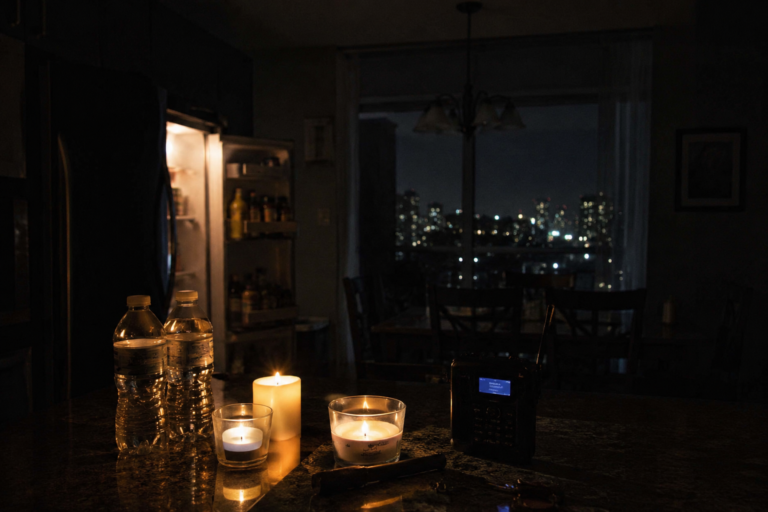
7. What Happens During a High-Rise Power Outage?
A major power failure can affect elevators, lighting, electronic access systems, ventilation, communications, and water pumping equipment.
However, modern high-rise buildings may have emergency power systems that maintain certain life-safety functions.
A power outage does not automatically mean every elevator, fire alarm, or emergency light will stop working.
High-Rise Blackout Preparedness Checklist
- Keep flashlights and backup batteries accessible.
- Maintain charged power banks for essential devices.
- Store drinking water appropriate to your household.
- Learn how building management communicates during outages.
- Know whether your building provides backup elevator or accessibility arrangements.
- Keep emergency contact information available offline.
- Monitor local conditions before deciding whether to leave.
If the building remains structurally safe and there is no evacuation order, sheltering temporarily may be more practical than descending many flights of stairs unnecessarily.
For additional preparedness strategies, read Urban Survival During Blackouts and Everyday Emergencies.
8. High-Rise Earthquake Evacuation
Earthquakes create different hazards than fires.
During strong shaking, attempting to reach a stairwell can expose you to falling objects, broken glass, and loss of balance.
During the Shaking
- Drop to your hands and knees.
- Cover your head and neck.
- Take shelter under sturdy furniture when available.
- Hold on until the shaking stops.
- Stay away from windows and objects that could fall.
- Do not run toward elevators or stairwells while shaking continues.
After the Shaking Stops
Check for injuries, smoke, fire, visible damage, and other immediate hazards.
Expect aftershocks and follow instructions from building management and emergency authorities.
If evacuation is required, use a safe designated route. Avoid damaged stairs, falling debris, and areas with obvious structural hazards.
Do not use elevators until they have been cleared for normal operation.
9. Plan for Children, Pets, and Residents With Mobility Limitations
A high-rise evacuation plan must account for every member of the household.
Young children, older adults, residents with disabilities, and people who depend on medical equipment may need additional assistance.
Families With Children
- Teach children how to recognize building alarms.
- Practice identifying safe exits during normal conditions.
- Assign an adult to assist younger children.
- Keep emergency contact information accessible.
- Choose a family meeting location outside the building.
Residents Who Cannot Use Stairs
Contact building management in advance to discuss accessible evacuation arrangements.
Ask about protected refuge locations, emergency communication systems, and any evacuation assistance procedures.
Some buildings have evacuation chairs or specially designed evacuation elevators, but their availability and proper use vary.
Evacuation chairs should only be operated by people who are appropriately trained.
Do not assume that a neighbor or family member can safely carry someone down multiple flights of stairs.
Pets
Keep leashes, carriers, and basic pet supplies accessible.
Practice placing pets in carriers during normal conditions so that emergency movement is less stressful.
Never delay an immediate life-saving escape to search extensively for an animal that cannot be located.
10. Recommended Emergency Gear for High-Rise Apartments
The following supplies can support evacuation readiness and shelter-in-place planning. They do not replace building safety systems or professional emergency guidance.
For additional emergency supplies, browse our Bug-Out Bag Essentials List on Amazon.
11. Practice a Monthly High-Rise Evacuation Drill
Practicing your plan during normal conditions can reveal missing supplies, confusing routes, and communication problems.
A short monthly review can help keep your household prepared.
Monthly High-Rise Evacuation Checklist
- Review your building’s evacuation instructions.
- Confirm the locations of designated exit stairwells.
- Check flashlights, headlamps, and spare batteries.
- Verify that emergency contacts are current.
- Inspect essential medications and supplies.
- Review the family meeting location.
- Practice gathering children and securing pets.
- Check that evacuation routes are free from obstructions.
- Review accessibility arrangements if anyone requires assistance.
- Update your plan when building procedures change.
Only practice stairwell routes where permitted by building management.
Do not simulate smoke by closing your eyes while walking, block stairwell doors, or interfere with normal building operations.
12. Common High-Rise Evacuation Mistakes to Avoid
Even well-prepared residents can make mistakes when an emergency develops quickly.
- Not knowing the building plan: Different high-rises may use different fire evacuation procedures.
- Depending on ordinary elevators during a fire: Standard elevators are not a substitute for approved fire evacuation routes.
- Entering smoke-filled stairwells: Smoke and heat can make an exit route immediately dangerous.
- Leaving fire doors open: This can compromise smoke and fire protection.
- Delaying escape for belongings: Personal property should never take priority over immediate safety.
- Ignoring accessibility needs: Assistance arrangements should be made before an emergency.
- Relying on unapproved escape ladders: Generic residential ladders are not appropriate substitutes for high-rise egress systems.
- Failing to communicate: Emergency responders need accurate information about occupants who cannot evacuate.
- Re-entering too early: Wait until emergency personnel confirm that returning is safe.
Printable High-Rise Apartment Emergency Door Checklist
Keep a simple reference card near your apartment exit so household members can quickly review the most important steps.
Building address: __________________________
Floor and apartment: ______________________
Primary stairwell: _________________________
Alternate stairwell: ________________________
Assembly location: ________________________
Emergency contact: _______________________
- Follow building alarms and emergency instructions.
- Check for heat and smoke before opening your door during a fire.
- Use a safe designated evacuation route when instructed.
- Do not enter dangerous smoke or heat.
- Close doors behind you.
- Call emergency services if trapped or unable to evacuate.
- Give responders your exact floor and apartment number.
- Do not re-enter until authorities confirm it is safe.
Frequently Asked Questions About High-Rise Apartment Evacuation
Should You Always Evacuate a High-Rise During a Fire Alarm?
Follow your building’s fire safety plan, alarm instructions, and directions from emergency personnel. Some buildings use phased evacuation or other approved procedures. If you face immediate danger, take appropriate protective action and contact emergency services.
Can You Use an Elevator During a High-Rise Fire?
Ordinary passenger elevators generally should not be used during a fire. Some buildings have specially designed occupant evacuation elevators that operate under approved emergency procedures. Use those only when instructed.
What If the Stairwell Is Filled With Smoke?
Do not enter a dangerously smoky or hot stairwell. Use another designated exit only if it is safe. Otherwise, retreat to a protected location when possible, close doors, and contact emergency services with your exact location.
What Floor Is Safest in a High-Rise Building?
There is no single safest floor for every type of emergency. Fire protection systems, structural design, exit access, and the specific hazard all affect safety. Residents should understand the protections and evacuation procedures for their own building.
What Should You Keep in a High-Rise Evacuation Kit?
Useful supplies include sturdy shoes, a flashlight or headlamp, a charged phone, backup power, necessary medications, keys, emergency contact information, and essential items for children or pets.
Can You Use a Fire Escape Ladder From a High-Rise Apartment?
Typical portable residential escape ladders are not designed for high-rise use. Do not rely on one unless it is specifically approved for the building configuration and its intended application. Follow the building’s established evacuation and rescue procedures.
What Should You Do During a High-Rise Blackout?
Use backup lighting, monitor building announcements, and evaluate whether essential services remain available. A power outage alone does not always require evacuation. Follow building management and emergency authority instructions.
How Do People With Disabilities Evacuate High-Rise Buildings?
Accessible evacuation procedures vary by building. Residents should coordinate with management in advance to identify refuge areas, communication methods, trained assistance, and any approved evacuation equipment.
Final Thoughts: Prepare Before a High-Rise Emergency
A successful high-rise apartment evacuation begins long before an alarm sounds.
Learn your building’s emergency plan, identify designated exit routes, prepare essential supplies, and make arrangements for everyone in your household.
Just as importantly, understand that different emergencies require different responses. A fire, earthquake, hazardous chemical release, and extended power outage do not all call for the same actions.
By practicing your plan and following reliable emergency guidance, you can make better decisions when conditions become stressful or dangerous.
Preparation gives you options. Knowing when and how to use them is what matters most.
Further Reading
- Urban Survival: Blackouts, Riots, and Everyday Emergencies
- How to Bug Out From the City Without Getting Stuck in Gridlock
- Urban Survival Guide: Power, Lighting, and Communication
- What Happens When the Grid Goes Down?
- Gray Man Urban Survival Gear Guide
Stay prepared. Stay sharp. Stay savvy.