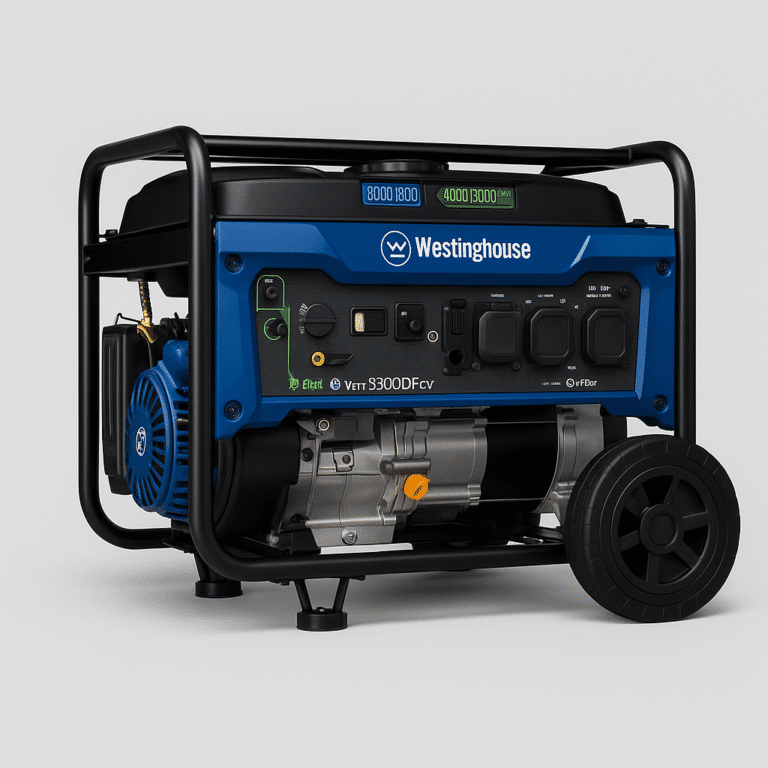

Generator Grounding and Bonding: Safe Setup Guide
Generator grounding and bonding are two of the most misunderstood parts of portable generator safety. When the power goes out, homeowners often focus on generator wattage, fuel storage, and extension cords without understanding how the generator’s neutral and grounding system affect electrical safety.
This post contains affiliate links. I may earn a small commission at no extra cost to you. Learn more.
One of the most common questions is whether a portable generator needs a separate ground rod. Another is whether a floating-neutral or bonded-neutral generator is safer when powering a house through a transfer switch.
The answers depend on how the generator is connected, how its neutral is configured, and whether the transfer equipment switches the neutral conductor.
This guide explains generator grounding and bonding in practical terms, including ground rods, neutral configurations, GFCI protection, extension cords, transfer switches, and common mistakes that can create shock or fire hazards.
Quick Answer: Does a Portable Generator Need Grounding?
Yes, a generator needs an appropriate grounding and bonding arrangement, but that does not always mean installing a separate ground rod.
When a portable generator supplies equipment through receptacles mounted on the generator, and the installation meets the applicable conditions, its frame may serve as the grounding reference without a separate grounding electrode.
When a generator connects to a home’s electrical system, the grounding and neutral-bonding requirements depend on the transfer equipment, generator design, manufacturer instructions, and applicable electrical code.
Never add or remove a neutral-ground bond, install a grounding electrode, or modify a transfer connection based solely on a general online diagram. Have a qualified electrician verify the configuration.
What Is Generator Grounding and Bonding?
Grounding and bonding are related electrical safety concepts, but they perform different functions.
What Is Grounding?
Electrical grounding connects designated parts of an electrical system to earth through a grounding electrode system.
Grounding electrodes help establish a reference to earth and address certain overvoltage conditions, including those associated with lightning and utility-system disturbances.
However, earth is not intended to serve as the normal effective fault-current return path that makes a circuit breaker trip.
That distinction matters because installing a metal rod in the ground does not automatically protect someone from an electrical shock.
What Is Bonding?
Bonding electrically connects conductive metal parts and designated grounding components to establish electrical continuity.
When properly designed, equipment bonding provides an effective fault-current path so protective devices can operate when a fault occurs.
In certain generator systems, bonding also involves the connection between the neutral conductor and the generator frame or equipment grounding system.
The location of that neutral-to-ground connection depends on the system design.
Why the Difference Matters
Consider a damaged appliance with an energized wire touching its metal enclosure.
A properly installed equipment grounding and bonding path helps carry fault current back toward the source so an overcurrent protective device can operate.
A separate ground rod, by itself, is not a substitute for that equipment grounding path.
Key distinction: Grounding electrodes connect a system to earth. Equipment bonding and grounding conductors establish the effective fault-current path required for electrical protection.
Floating-Neutral vs. Bonded-Neutral Generators
Before connecting a portable generator to a building, it is important to understand its neutral configuration.
Manufacturers generally describe portable generators as having either a floating neutral or a neutral bonded to the frame.
What Is a Floating-Neutral Generator?
In a floating-neutral generator, the neutral conductor is not intentionally bonded to the generator frame.
This arrangement may be appropriate for certain installations in which the generator supplies a building through transfer equipment that does not switch the neutral conductor.
In those systems, the neutral remains connected to the building’s grounded conductor system, and the neutral-to-ground bonding point is typically located at the service equipment.
However, a floating-neutral generator is not automatically suitable for every cord-connected application or transfer switch.
The manufacturer’s instructions and applicable electrical requirements determine the correct configuration.
What Is a Bonded-Neutral Generator?
In a bonded-neutral generator, the neutral conductor is intentionally connected to the generator frame.
Some portable generators are manufactured this way, including models intended for certain standalone applications.
A bonded-neutral generator may also be appropriate for a building connection when the transfer equipment switches the neutral and the generator is treated as a separately derived system.
Using a bonded-neutral generator with transfer equipment that does not switch the neutral can create an unintended parallel path for neutral current through grounding conductors and other bonded metal components.
That condition requires correction through an approved system design, not an improvised adapter.
Which Neutral Configuration Is Safer?
Neither floating-neutral nor bonded-neutral generators are universally safer.
The safe configuration is the one specified for the generator and its intended electrical connection.
Do not remove factory bonding connections, install jumper plugs, or alter the generator’s internal wiring unless the manufacturer specifically permits the change and a qualified professional determines it is appropriate.
Do You Need a Ground Rod for a Portable Generator?
Whether a portable generator requires a grounding electrode depends on how it is used.
There are two common residential situations: operating appliances directly from generator receptacles and connecting the generator to a building electrical system.
Scenario 1: Running Appliances With Extension Cords
For many portable generators supplying cord-and-plug-connected equipment directly from receptacles mounted on the generator, a separate ground rod is not required when the applicable conditions are met.
Under the U.S. National Electrical Code, portable generator grounding-electrode exceptions generally depend on the generator supplying only qualifying equipment and on the required bonding of non-current-carrying metal parts and receptacle grounding terminals to the generator frame.
This is not permission to ignore the generator’s equipment grounding connections.
Important safety practices:
- Follow the generator manufacturer’s grounding instructions.
- Use properly rated, grounded extension cords when required by the connected equipment.
- Inspect cords for damaged insulation, loose plugs, and exposed conductors.
- Keep connections protected from rain and standing water.
- Use GFCI protection where required.
- Never connect the generator to a household wall receptacle.
- Operate the generator outdoors, at least 20 feet from the home where practical, with exhaust directed away from openings.
Extension cord size must account for current, length, voltage drop, and the equipment being powered. There is no single wire gauge that is correct for every generator load.
Scenario 2: Connecting a Generator to a Home
When a portable generator powers household circuits through an approved transfer switch or listed interlock arrangement, grounding and bonding requirements become more complex.
The installation must account for:
- The generator’s neutral configuration
- Whether the transfer equipment switches the neutral
- The building’s existing grounding electrode system
- Equipment grounding conductor continuity
- The location of the system bonding connection
- Manufacturer requirements
- Applicable electrical code and inspection requirements
A separate grounding electrode at the generator is not automatically required for every building-connected installation.
Likewise, a separate ground rod is not automatically prohibited in every configuration.
The correct arrangement depends on whether the generator is part of a separately derived system and on the grounding electrode requirements applicable to that installation.
Bottom line: A qualified electrician should determine the grounding electrode and bonding requirements before a generator is connected to household wiring.
How Transfer Switches Affect Generator Bonding
A transfer switch isolates the utility power source from the generator source so the two cannot unintentionally energize the same household circuits.
However, transfer equipment can handle the neutral conductor in different ways.
Transfer Equipment That Does Not Switch the Neutral
Some residential transfer switches and interlock arrangements leave the neutral conductor continuously connected to the building’s electrical system.
In a typical installation of this type, the generator is not treated as a separately derived system.
The system neutral-to-ground bonding connection remains at the appropriate building service equipment.
The generator must have a compatible neutral configuration so that objectionable parallel neutral-current paths are not created.
This is why a generator with a factory-bonded neutral cannot simply be assumed compatible with every household transfer arrangement.
Transfer Equipment That Switches the Neutral
Other transfer switches disconnect the neutral from the utility-side system when generator power is selected.
Depending on the overall design, this can establish a separately derived system.
In that situation, the grounding electrode and system bonding requirements must be evaluated for the separately derived system.
The bonding point may be associated with the generator or other approved equipment, depending on the installation.
Switching the neutral does not eliminate the need for correct grounding and bonding.
What About Generator Interlock Kits?
A panel interlock is a mechanical device designed to prevent the utility main breaker and generator backfeed breaker from being energized simultaneously.
An interlock generally does not switch the neutral conductor.
Therefore, the generator’s neutral configuration must be compatible with the building’s electrical system.
Interlock kits must be specifically listed or approved for the applicable electrical panel and installed in accordance with the panel and interlock manufacturer’s instructions.
Do not purchase a generic interlock based only on the apparent shape of the breakers.
For a broader explanation of transfer equipment, read our portable generator transfer switch guide.
Generator Grounding and Bonding: Quick Reference
| Generator Setup | Ground Rod | Neutral Consideration |
|---|---|---|
| Direct cord-and-plug loads | Often not required when the portable-generator exception applies | Follow generator design and manufacturer instructions |
| Building connection with unswitched neutral | Determined by the building system and applicable code | Generator neutral configuration must be compatible with the service bonding arrangement |
| Building connection with switched neutral | Evaluate separately derived system requirements | Requires a correctly located system bonding connection |
Important: This table is an educational overview, not an installation diagram or a substitute for equipment-specific instructions.
Why Generator GFCI Outlets Trip
Ground-fault circuit interrupters, commonly called GFCIs, monitor current imbalance between circuit conductors.
When the imbalance exceeds the device’s operating threshold, the GFCI interrupts power.
This protection is particularly important around portable generators, outdoor equipment, moisture, and damaged cords.
Common Reasons for Generator GFCI Trips
- Damaged insulation: Fault current may leak through compromised wiring or equipment.
- Moisture: Wet receptacles, cords, or appliances can create leakage-current paths.
- Neutral-ground wiring problems: Incorrect connections can allow return current to bypass the monitored conductors.
- Appliance leakage: Some equipment has normal or abnormal leakage currents that can contribute to GFCI operation.
- Incompatible connections: Improper transfer arrangements or adapters can cause protection devices to operate unexpectedly.
- Defective equipment: A malfunctioning GFCI or connected appliance may require inspection or replacement.
An undersized extension cord can cause voltage drop and overheating, but voltage drop by itself is not the normal operating principle behind a GFCI trip.
What Should You Do When a GFCI Keeps Tripping?
Stop using the affected circuit until the cause is identified.
Unplugging connected appliances and checking for visible moisture or damage can help identify an obvious problem without opening electrical equipment.
Do not defeat the GFCI, use a neutral-ground jumper plug, remove grounding pins, or modify generator bonding to stop nuisance trips.
If the problem persists, have the generator, cords, and connected equipment evaluated by a qualified technician or electrician.
Dangerous Generator Grounding and Bonding Mistakes
1. Backfeeding Through a Household Outlet
Connecting a generator to a dryer outlet or other household receptacle with a male-to-male cord is extremely dangerous.
Improvised backfeeding can expose energized plug blades, damage electrical equipment, and energize circuits that should be isolated.
It can also create a deadly hazard for utility workers and others.
Use properly installed, approved transfer equipment and a compatible power inlet instead.
2. Assuming Every Generator Needs a Ground Rod
A separate ground rod is not universally required for portable generators.
Installing one without understanding the system does not replace correct equipment grounding and bonding.
Always evaluate the actual connection method and applicable requirements.
3. Creating Multiple Neutral-to-Ground Connections
Improperly placed neutral-ground bonds can create parallel paths for neutral current through equipment grounding conductors and bonded metal parts.
These conditions can produce shock hazards and interfere with protective devices.
Neutral bonding must follow the system design and applicable electrical code.
4. Removing a Factory Neutral Bond Without Authorization
Some homeowners attempt to change a generator from bonded neutral to floating neutral to make it compatible with a transfer switch.
Changing factory wiring can affect electrical protection, equipment certification, and manufacturer warranty requirements.
Do not perform this modification unless the manufacturer expressly permits it and the installation has been professionally evaluated.
5. Using Neutral-Ground Jumper Plugs
So-called bonding plugs or jumper adapters are sometimes promoted as quick solutions for generator compatibility problems.
They should not be used as a general-purpose workaround for GFCI trips or incompatible transfer equipment.
An improper connection can compromise the intended protection scheme.
6. Using an Incompatible Panel Interlock
Interlock kits are not interchangeable between electrical panels.
Breaker placement, panel construction, and approved configurations vary by manufacturer and model.
Use only equipment approved for the exact panel and installation.
7. Operating the Generator in an Enclosed Space
Carbon monoxide poisoning is one of the most serious portable generator hazards.
Never run a fuel-powered generator inside a house, garage, basement, shed, enclosed porch, or carport.
Opening doors and windows does not make these locations safe.
Recommended Generator Safety Equipment
Correctly selected accessories can make a portable generator installation safer and easier to operate. However, product compatibility must be verified before purchasing.
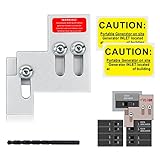
Panel Interlock Kit
A properly approved interlock can prevent simultaneous operation of the utility main breaker and generator breaker.
Important: Interlocks must match the specific electrical panel. Installation should be performed by a qualified electrician.
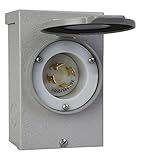
Weatherproof Generator Power Inlet Box
A properly rated inlet box provides a dedicated connection point for an approved generator transfer arrangement.
Its voltage, current rating, connector configuration, enclosure rating, and installation must match the electrical system.

30-Amp Generator Extension Cord
A suitable generator cord must match the generator receptacle, power inlet, current rating, conductor requirements, and intended outdoor conditions.
A common configuration is a four-conductor L14-30 cord for compatible 120/240-volt, 30-amp systems. Not every generator uses this connection.

Carbon Monoxide Alarm
Working carbon monoxide alarms are essential in homes where fuel-powered generators may be used during outages.
Choose alarms that meet applicable safety standards and install them according to the manufacturer’s instructions and local requirements.

Safe Generator Operation With Extension Cords
For many households, supplying a few essential appliances directly from a portable generator is simpler than installing a whole-home connection.
This approach can power certain refrigerators, freezers, lighting, and electronic devices without modifying the household electrical panel.
Follow these precautions:
- Read the generator manual and identify its rated output and receptacle limitations.
- Place the generator outdoors, away from doors, windows, vents, and other openings.
- Use appropriately rated extension cords designed for the environment.
- Keep electrical connections dry and protected from damage.
- Connect only appliances compatible with the generator’s output.
- Account for starting surges from motors and compressors.
- Never exceed generator or receptacle ratings.
- Shut down the generator and allow it to cool before refueling.
Do not route extension cords where they can be crushed by doors, create trip hazards, or contact standing water.
Follow manufacturer instructions for load connection and disconnection procedures.
Connecting a Generator to a House Safely
Powering household circuits through a transfer switch or approved interlock offers greater convenience than running multiple extension cords.
However, the installation must be designed to isolate utility and generator sources and maintain correct grounding and bonding.
A qualified electrician should verify:
- Generator voltage and output compatibility
- Transfer switch or interlock approval
- Power inlet and cord ratings
- Neutral switching configuration
- Neutral-to-ground bonding location
- Equipment grounding conductor continuity
- Applicable grounding electrode requirements
- Breaker and overcurrent protection requirements
- Permits and inspection requirements
After installation, the electrician should explain the approved operating procedure for switching between utility and generator power.
Keep those instructions near the electrical panel so household members do not have to guess during an outage.
For more information about generator connections, read Generator Power Connections Made Safe.
Generator Load Management During an Outage
Even a correctly grounded and bonded generator can become overloaded if too many appliances operate simultaneously.
Generator output is typically described using running watts and starting watts.
- Running watts: Power required while equipment operates normally.
- Starting watts: Temporary additional power required by certain motors and compressors.
Prioritize essential equipment, such as:
- Refrigerators and freezers
- Medical devices where compatible and supported by an appropriate backup plan
- Furnace blowers or heating-system controls
- Sump pumps
- Essential lighting
- Communication equipment
Large electric heaters, water heaters, ovens, and air conditioners can consume substantial generator capacity.
Calculate connected loads using equipment nameplates and manufacturer specifications.
Do not rely on a universal 80% loading rule as a substitute for the generator’s continuous-duty rating and instructions.
Carbon Monoxide Safety for Portable Generators
Carbon monoxide is an odorless, colorless gas produced by fuel-burning equipment.
It can accumulate rapidly and cause severe illness or death.
Follow these precautions whenever operating a portable generator:
- Operate fuel-powered generators outdoors only.
- Keep generators at least 20 feet from the home when possible, and follow manufacturer instructions if they require more separation.
- Direct exhaust away from doors, windows, vents, and neighboring buildings.
- Never operate a generator in a garage, basement, shed, or enclosed porch.
- Install working carbon monoxide alarms in appropriate indoor locations.
- Keep the generator away from combustible materials.
- Never refuel a running or hot generator.
If a carbon monoxide alarm sounds, move everyone to fresh air immediately, contact emergency services, and do not reenter until authorities say it is safe.
Do not rely on smelling exhaust to detect carbon monoxide. Carbon monoxide itself has no smell.
Generator Grounding and Bonding Checklist
Before using a generator, review these essential safety questions to help prevent electrical hazards, equipment damage, and unsafe connections.
- Have you read the generator manufacturer’s grounding and bonding instructions?
- Do you know whether the generator has a floating or bonded neutral?
- Are the generator’s receptacles and protective devices suitable for the intended loads?
- Are extension cords properly rated and in good condition?
- Is the generator positioned safely outdoors?
- Are working carbon monoxide alarms installed?
- If connected to a building, has the transfer arrangement been professionally verified?
- Is the neutral configuration compatible with the transfer equipment?
- Are the grounding electrode and bonding requirements addressed?
- Are generator loads within the manufacturer’s ratings?
Important Safety Reminder: If you cannot answer a question about your building connection or neutral-bonding arrangement, have the installation checked by a qualified electrician before operating the generator.
Frequently Asked Questions About Generator Grounding and Bonding
Does a portable generator need a ground rod?
Not always. Many portable generators supplying qualifying cord-and-plug-connected loads do not require a separate grounding electrode under applicable electrical code provisions. Building-connected systems require evaluation of the complete grounding and bonding arrangement.
What is the difference between generator grounding and bonding?
Grounding connects designated parts of an electrical system to earth. Bonding connects conductive components to establish electrical continuity and an effective fault-current path.
Can I use a bonded-neutral generator with a transfer switch?
Possibly, but compatibility depends on whether the transfer equipment switches the neutral and on the overall system design. A qualified electrician should verify the arrangement.
Is a floating-neutral generator better for a house?
Not universally. Floating-neutral generators are appropriate for certain installations, including some arrangements with unswitched neutrals. The correct configuration depends on the generator, transfer equipment, and applicable electrical requirements.
Will installing a ground rod stop generator GFCI trips?
Not necessarily. GFCI trips can result from leakage current, wiring faults, moisture, or incompatible neutral-ground connections. A ground rod is not a general-purpose GFCI troubleshooting solution.
Can I remove the neutral-ground bond from my generator?
Do not modify the generator’s factory bonding arrangement unless the manufacturer permits the change and a qualified professional verifies the intended installation.
Can I connect a generator directly to a dryer outlet?
No. Improvised backfeeding through household receptacles is dangerous. Use properly installed and approved transfer equipment with a compatible generator inlet.
Does a generator interlock switch the neutral?
A typical mechanical panel interlock prevents simultaneous operation of utility and generator breakers but does not switch the neutral. The neutral arrangement must be evaluated separately.
Why does my generator GFCI trip when connected to my house?
Possible causes include leakage current, incorrect neutral-ground connections, wiring faults, and incompatibility between the generator and transfer arrangement. Have the system evaluated rather than bypassing protection.
Can a portable generator run inside a garage with the door open?
No. Portable fuel-burning generators must be operated outdoors, away from the building and its openings. An open garage door does not make indoor generator operation safe.
Final Takeaway: Generator Grounding and Bonding Explained
Generator grounding and bonding are essential parts of electrical safety, but they cannot be reduced to a universal rule about installing a ground rod or choosing a particular neutral configuration.
For generators powering appliances directly through appropriate extension cords, a separate grounding electrode often is not required when the applicable conditions are satisfied.
For generators connected to household wiring, the correct grounding and bonding arrangement depends on the generator, transfer equipment, neutral switching, and electrical system design.
The safest approach is to follow manufacturer instructions, use approved equipment, avoid improvised wiring methods, and have building-connected installations verified by a qualified electrician.
With the right setup, a portable generator can provide dependable backup power without introducing unnecessary electrical hazards.
Continue planning your emergency power system with our Grid-Down Survival Power Guide.